Thessaloniki
Thessaloniki, Greece
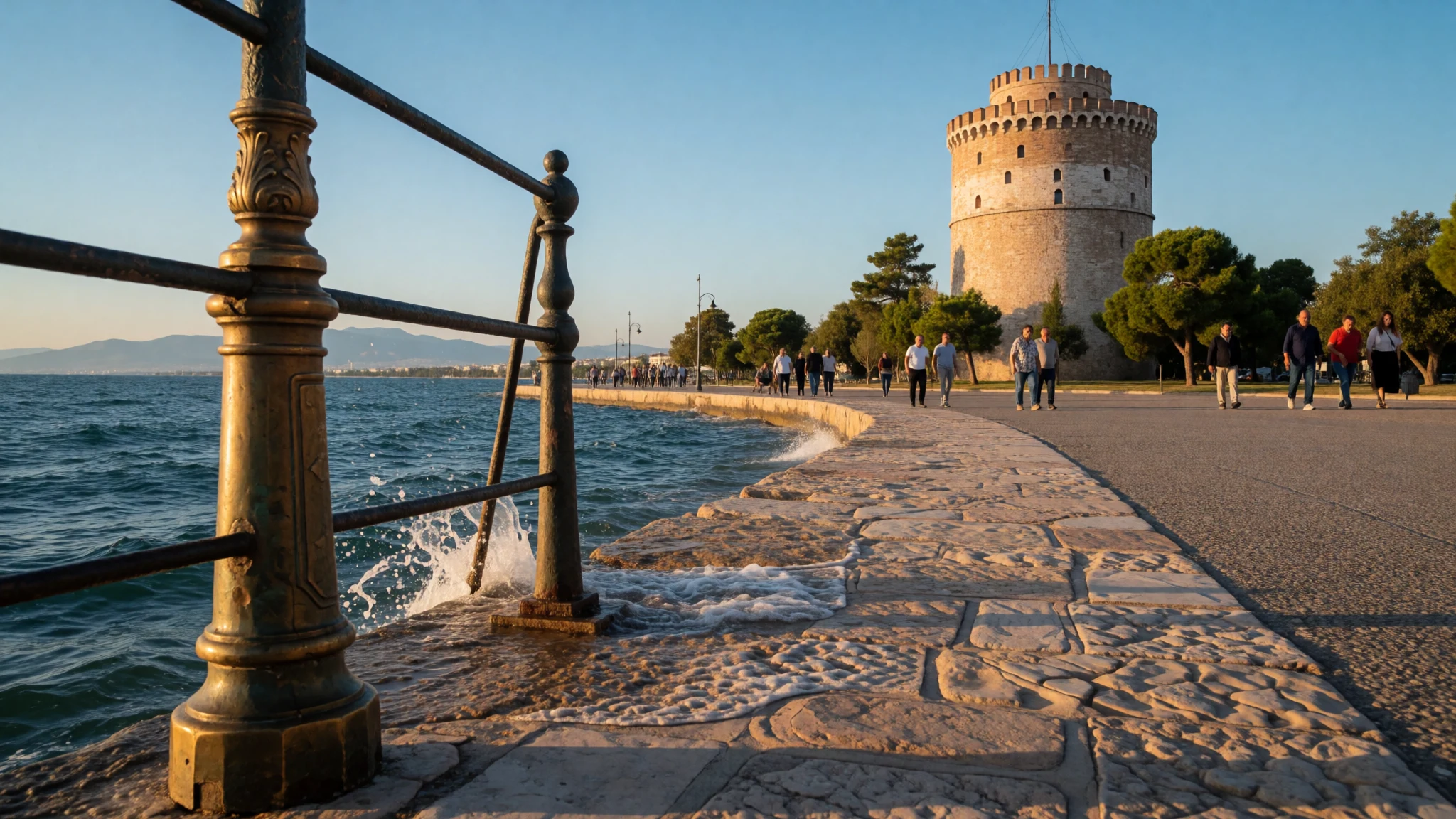
Thessaloniki layers a Roman port, Byzantine churches and a working gulf promenade into one walkable centre.
The place
Thessaloniki (Θεσσαλονίκη) is a port city in Macedonia, in northern Greece. Its streets run down to the Thermaic Gulf, with the Aegean opening beyond that shore and the Axios delta lying along the western side, so the built city is a long waterfront rather than a town folded into a deep bay. Wikidata records 309617 people and an elevation of only 6 metres, which is why the streets of the lower town feel almost level with the sea. Greeks also call it i Symprotévousa, remembering the years when it shared imperial rank with Constantinople. The historical centre is still the municipality itself: a grid of markets, churches and Roman remains pressed between the gulf and the old walls that climb toward the acropolis. Aristotelous Square opens the waterfront in a formal arc of arcades, and the White Tower stands further along the promenade as the landmark sailors and walkers use to fix their position. Inland, the ground rises toward the Heptapyrgion, a fortress whose northeastern wall still closes the upper yard. The city works as a commercial and transport hinge for Greece and southeastern Europe, with the port carrying freight and ferries and the rail lines meeting here. Day to day it is a working seafront, not a museum quarter: cafes fill the pavement, students and office workers share the same squares, and the light off the gulf turns hard and white by afternoon. For practical details, the municipal site is https://thessaloniki.gr/.
Its story
In 315 BCE Cassander of Macedon founded Thessaloniki and gave it the name of Thessalonike, the Macedonian princess he had married, Alexander's half-sister. The new grid replaced ancient Therma and a band of older villages. While the kingdom lasted, the city kept its own assembly, and Pella remained the royal seat. After Macedonia fell under Rome, Thessaloniki became the seat of that province in 128 BC. Mark Antony, in 41 BC, recognised the city's right to govern its own civic life inside the Roman Republic. Position did the rest of the work. The Via Egnatia crossed the city on its way from Dyrrhachium, on the Adriatic, to Byzantium, so goods and officials travelling between Rome and the eastern capital passed Thessaloniki's walls. A separate route followed the Morava and Axios valleys south, tying the Balkans to the rest of Greece. The places that have ruled here appear in the city's own record: the Roman Republic, the Roman Empire, Macedonia, the Byzantine Empire, the Despotate of Epirus, the Empire of Nicaea, the Kingdom of Thessalonica, the Republic of Venice and the Ottoman Empire, and then Greece. Galerius, a Roman tetrarch, left a heavy set of monuments, building a palace, a hippodrome, a triumphal arch and a round mausoleum after defeating the Sassanids. Churches raised in the early Byzantine centuries reused that Roman ground, including a great basilica for Demetrius, an officer martyred in the city. The port never stopped mattering: control of the Thermaic Gulf meant a base that could supply armies and tax the road.
What to see
- Arch of Galerius — Historic centre
The Arch of Galerius stands in central Thessaloniki, a Roman triumphal arch raised for the tetrarch after his victory over the Sassanids. The standing piers are what remains of a larger arch built to mark that victory. The reliefs sit near eye level, so the monument works as roadside propaganda for anyone who came in on the Via Egnatia.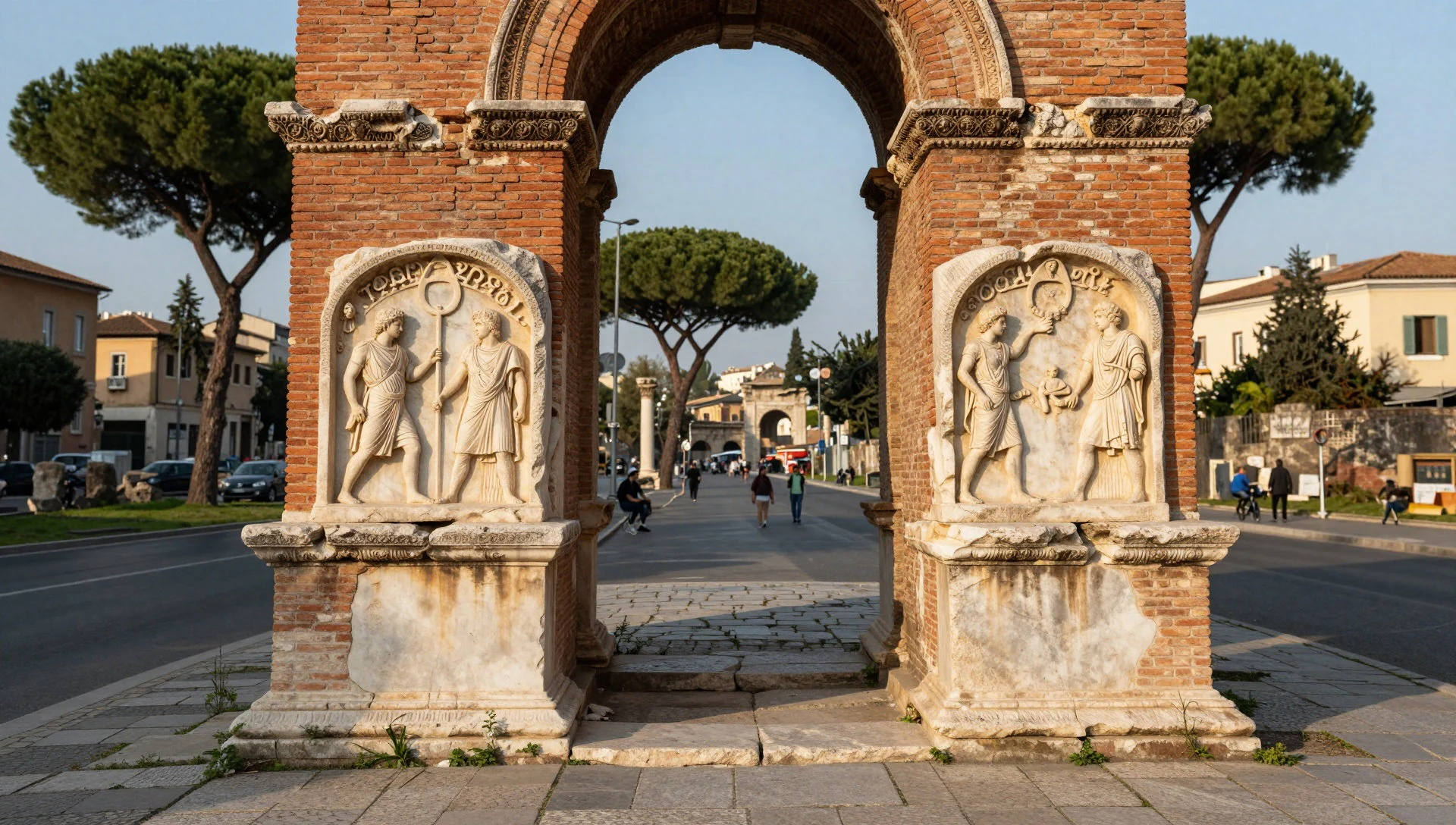
- Rotunda of Galerius — Historic centre
The Rotunda of Galerius stands in Thessaloniki near the arch, begun as a mausoleum for the tetrarch Galerius. The interior measures 24.5 metres across, and the dome reaches 30 metres, a round hall rather than a basilica nave. Later centuries turned the mausoleum over to church use. From the street it reads as a brick cylinder with a heavy silhouette.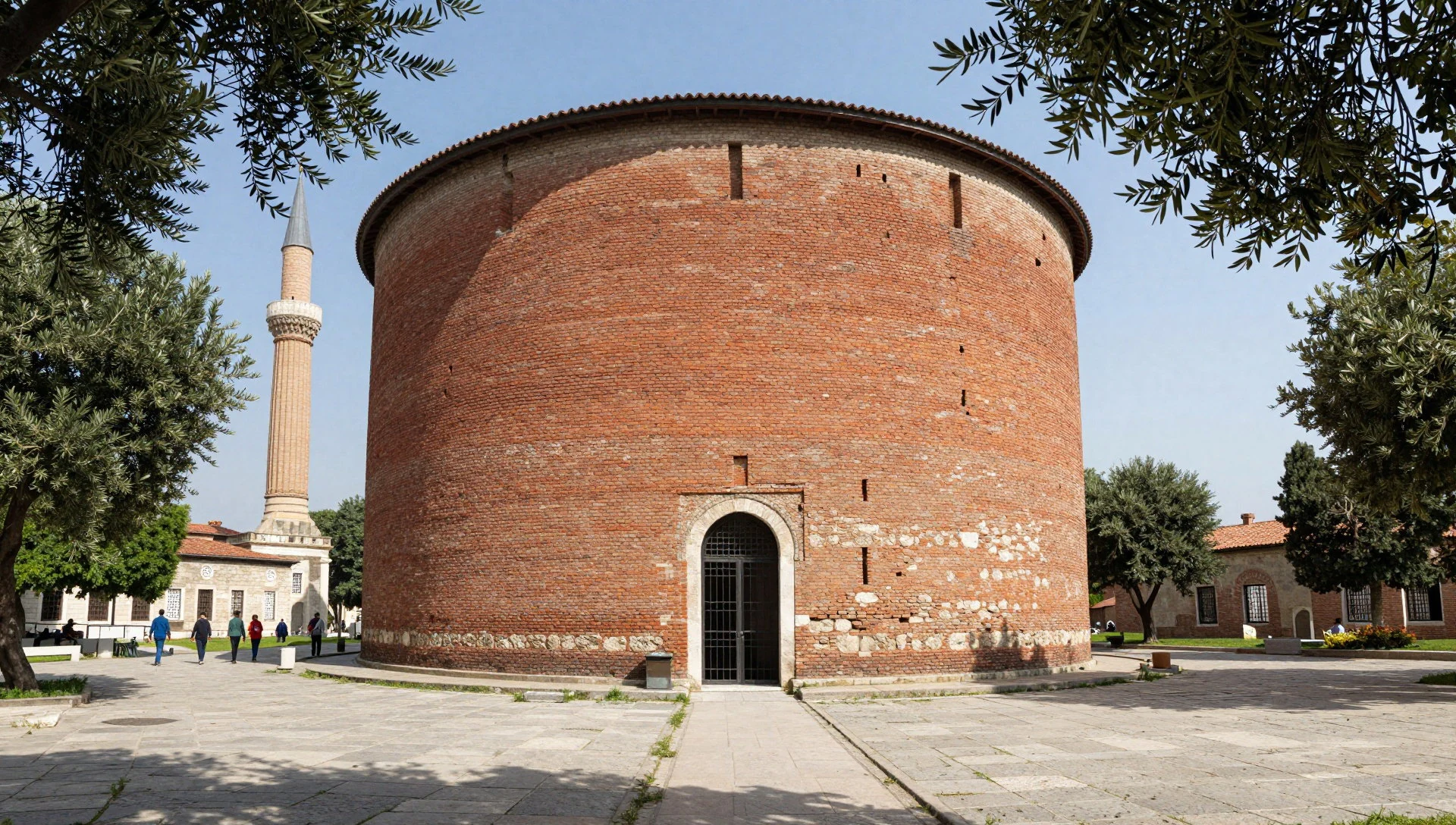
- Roman Forum — Historic centre
The Roman Forum of Thessaloniki lies in the historic centre, a complex of excavations with a museum set underneath the ruins. Columns, paving and the outline of the civic square show the Roman city's public heart, where administration and trade met away from the harbour. The underground rooms display finds from the dig, so a visit takes in the open-air plan at street level and the stored objects below.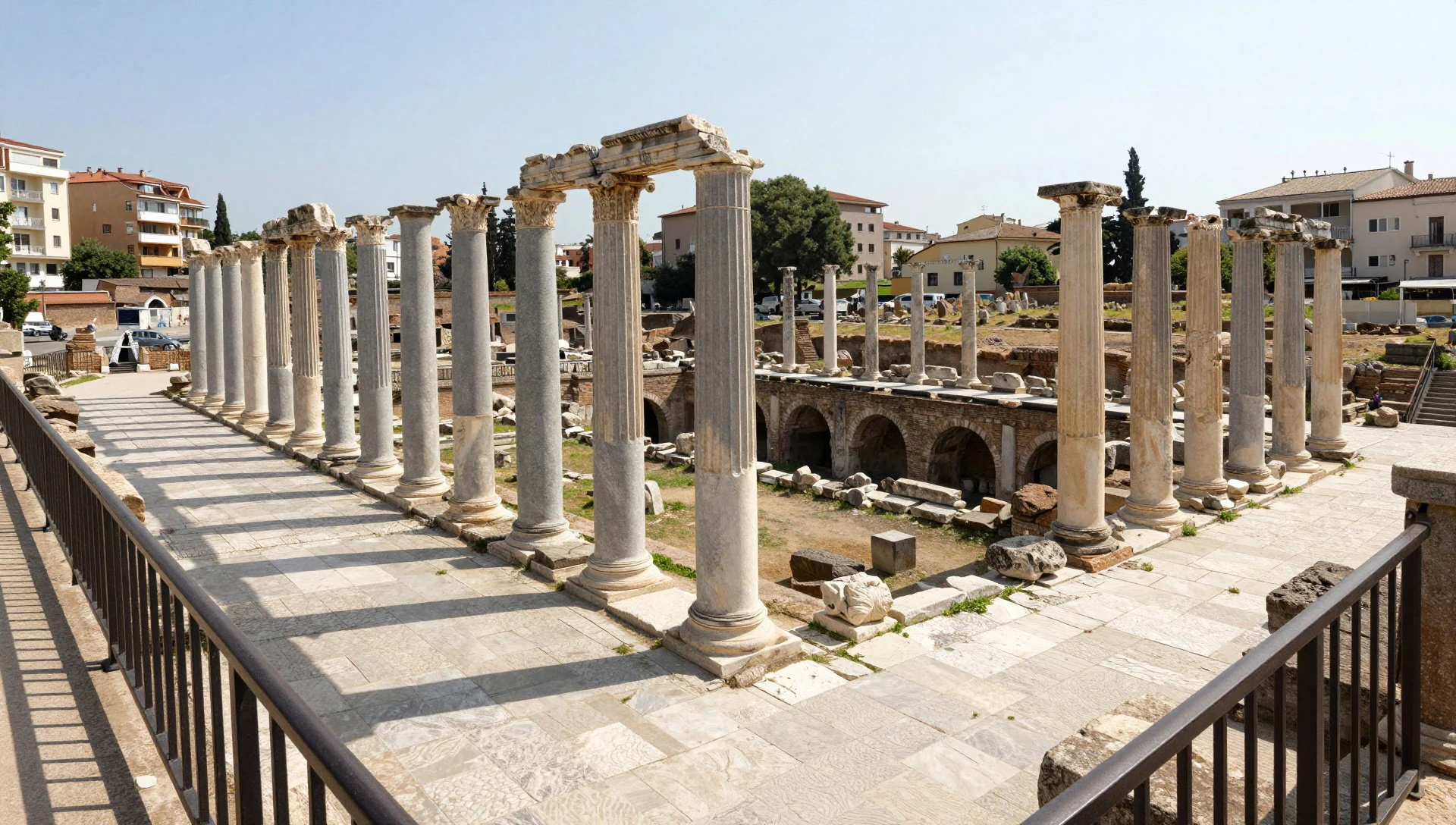
- Church of Saint Demetrios — Historic centre
The Church of Saint Demetrios in Thessaloniki honours Demetrius, a Roman officer imprisoned and martyred in the city. The basilica was built over a Roman bath complex, so the Christian church sits on imperial walls and plumbing. Worship here centres on the officer the city took as patron. The exterior is a broad brick basilica in the historic centre, a short walk from the Roman forum.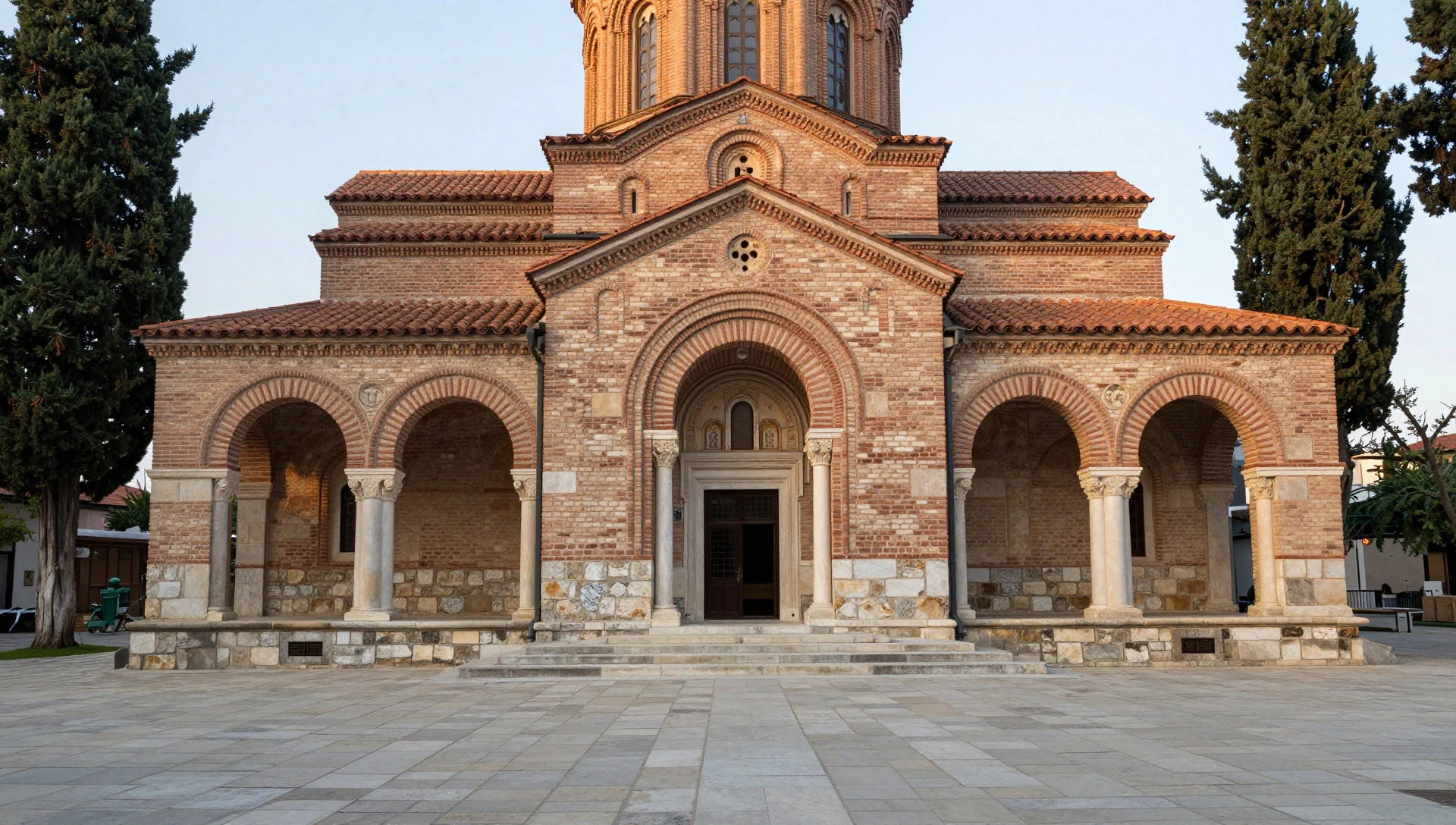
- Church of the Acheiropoietos — Lower town
The Church of the Acheiropoietos in Thessaloniki is an early Byzantine basilica with some of its first decoration still visible. Ionian capitals, green Thessalian marble columns in the tribelon and fragments of mosaic all belong to that early phase. The Greek name means an image not made by hands. The building itself is a long early Christian interior in the lower town, between the forum and Saint Demetrios.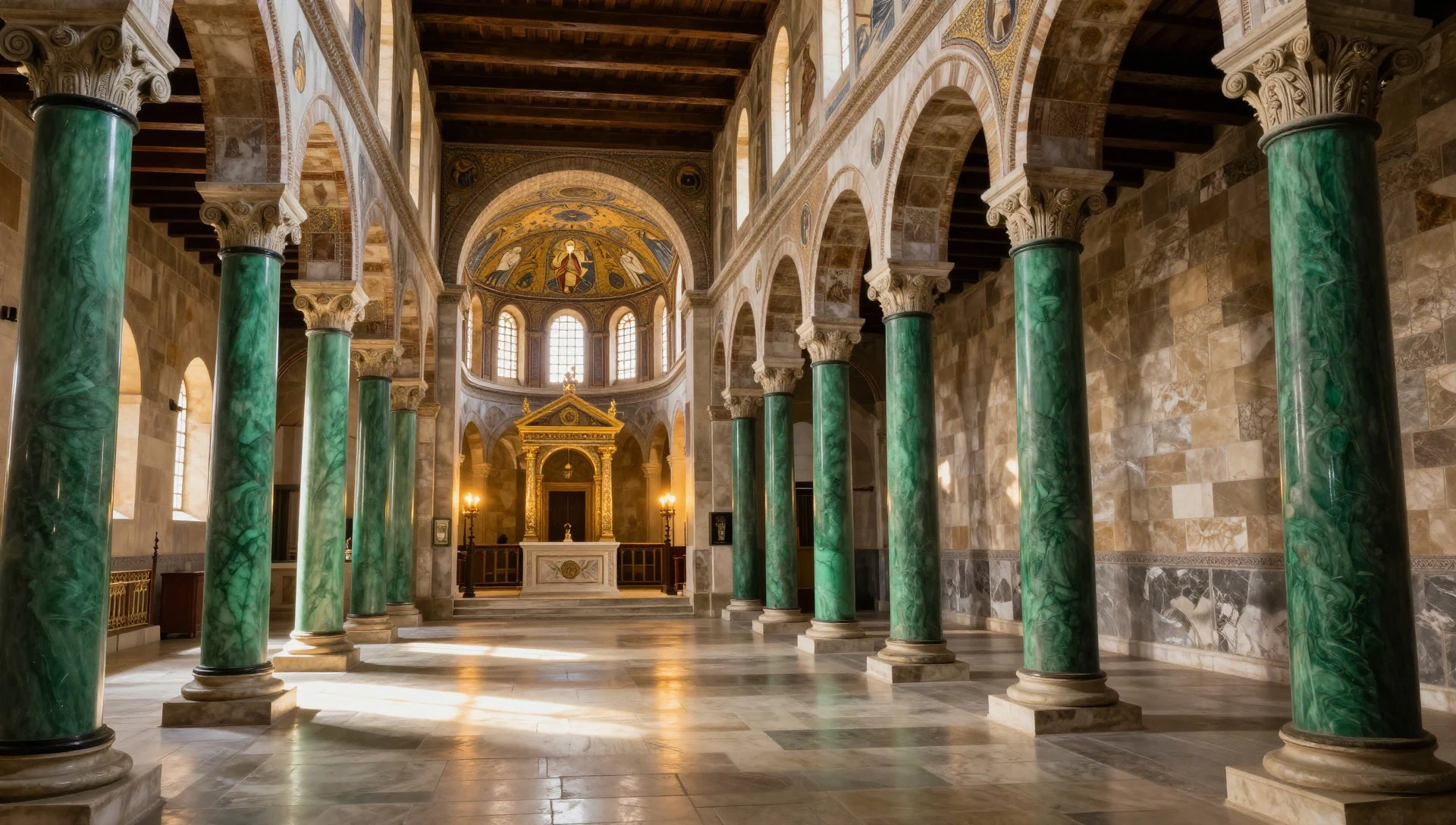
Culture
Thessaloniki treats the stage as part of ordinary civic life, not as a festival that arrives and leaves. The National Theatre of Northern Greece, founded in 1961, is the company that holds that role. Its stages include the Theatre of the Society of Macedonian Studies, where the national company is based; the Royal Theatre, its first home; Moni Lazariston; and the Earth Theatre and the Forest Theatre, both open-air amphitheatres set so the audience looks out over the city. In 1997 Thessaloniki was European Capital of Culture, and that year the city gained its first opera, now an independent section of the same national theatre. The mix suits the place: a winter season indoors in the centre, and summer nights in the open-air houses when the gulf air makes a roof unnecessary. Music, plays and opera share the calendar with church feasts and the long evening walk on the promenade, so culture here is less a district than a habit spread through the week. Crowds gather for the open-air shows, and the centre can be loud after dark. The churches still set a different tone for how public buildings expect to be entered. In Thessaloniki's churches, cover shoulders and knees, speak quietly, and ask before photographing people at prayer or the icons.
What to wear
Thessaloniki's traditional dress belongs to the wider Macedonian and northern Greek wardrobe rather than to one court uniform. For festivals and folk dance, women still wear a long linen or cotton chemise under a wool sigouni, the sleeveless over-garment, with an embroidered apron, a sash and a headscarf; silk appears on the scarf or the apron for a wedding or a saint's day. Men wear dark wool breeches with a waistcoat, a sash and a cap. Those clothes are for the stage, the parade and the village feast, not for a weekday commute. On an ordinary day the city dresses like any large Mediterranean port: cotton and linen shirts, dresses and trousers in the warmer months, wool coats, boots and scarves when the wind comes off the Thermaic Gulf, and trainers or smart shoes for the evening volta along the quay. Office clothes in the centre are straightforward European business dress. A visitor should copy that range. Bring shoes that can cope with smooth stone pavements and the uneven lanes of the upper town, a light layer for the seafront even when the sun is strong, and clothes that cover shoulders and knees for churches. Shoes should slip off easily where a monastery or a chapel asks. Beachwear belongs on the coast outside the centre, not in the basilicas or on Aristotelous Square.
What to eat
- Politika glyka — Pastry shops in the historic centre
Politika glyka are the syruped sweets Thessaloniki inherited from Greek cooks of Constantinople and the Asia Minor coast. Spoon sweets, preserved fruits and small pastries in that family turn up in old-fashioned zacharoplasteia, the pastry shops of the historic centre, often sold by the piece to take away.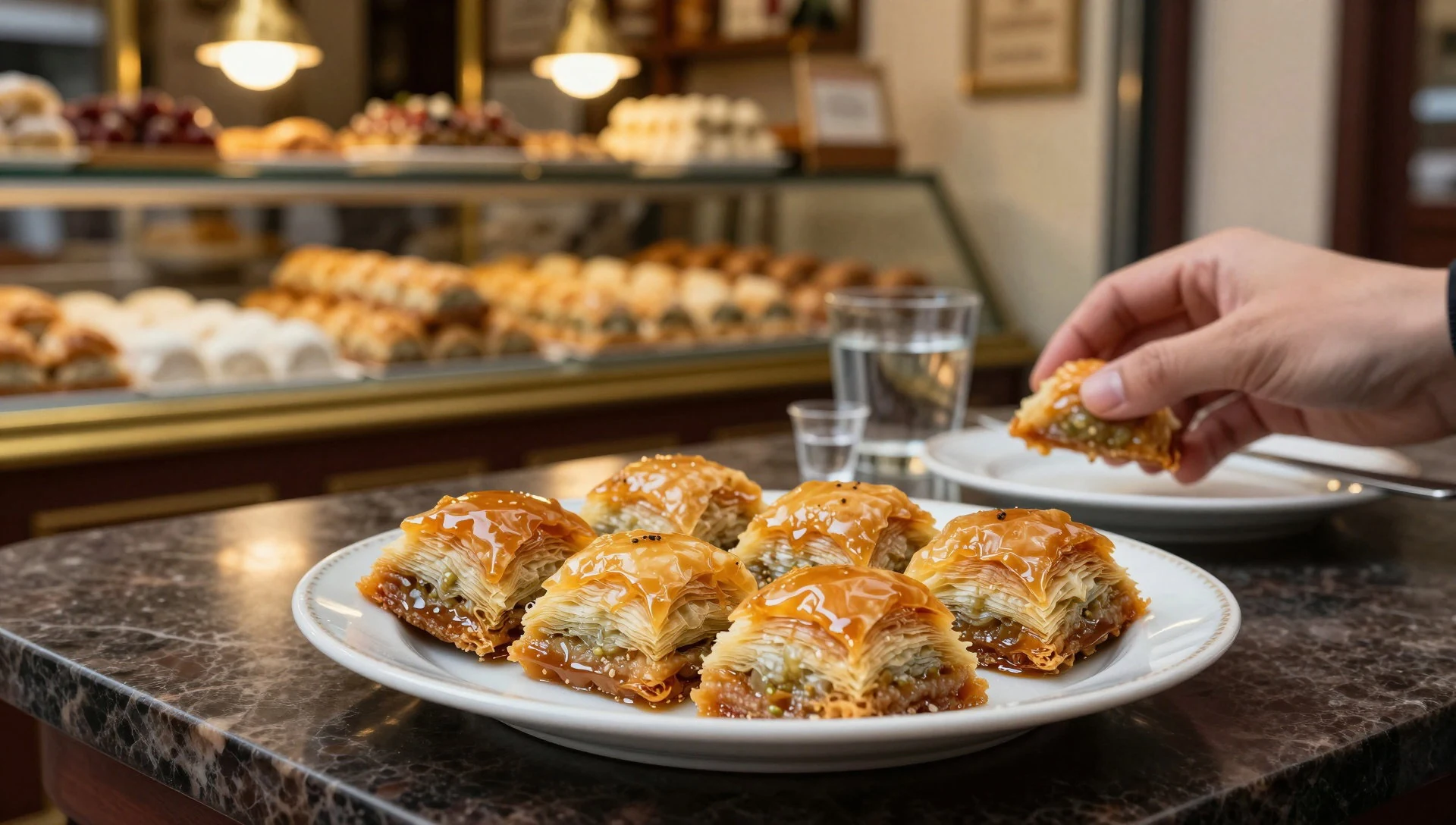
- Tsoureki — Pastry shops in the centre
Tsoureki is Thessaloniki's spiced, braided sweet bread, closer to a festive loaf than to a plain roll. Pastry shops sell it plain or filled, especially around Easter and the winter holidays, and slices sit in the centre for much of the year.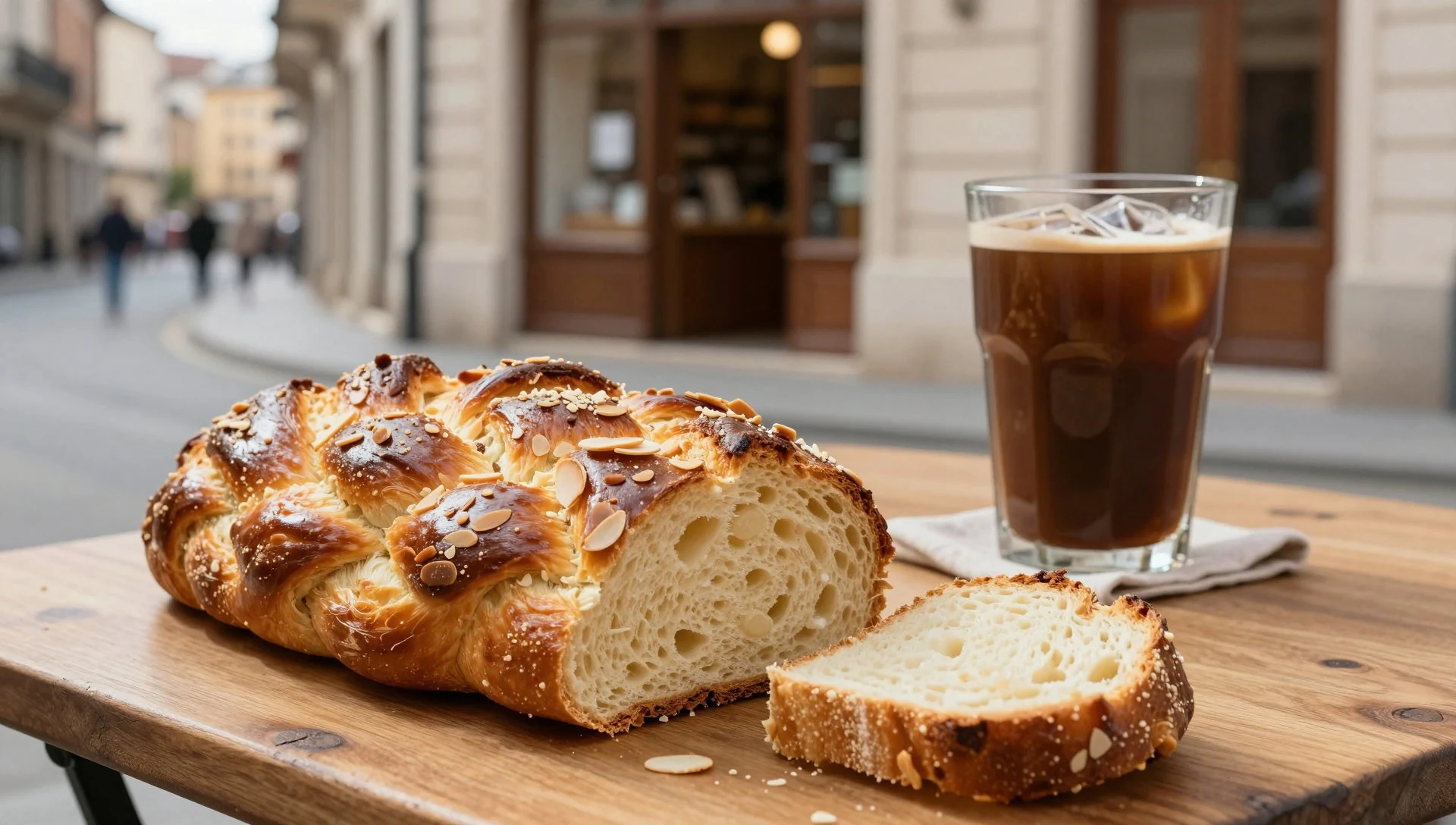
- Trigona — Historic-centre pastry shops
Trigona are Thessaloniki's cream-filled triangles of thin phyllo, a pastry-shop sweet rather than a taverna dish. The layers are crisp, the filling is thick, and the syrup is generous enough to need a fork and a napkin. Historic-centre zacharoplasteia sell them by the piece through the day. - Profiterole — Pastry shops in the historic centre
Profiterole in Thessaloniki means a choux pastry split and filled, then covered, and sold as one sweet rather than a French dessert course. It is a standard of the pastry shops that also keep tsoureki and trigona, set in the window beside the syrup sweets.
Plan it
Best time. May and September are the most comfortable months to walk Thessaloniki, July the hottest and December the wettest, when the seafront suits long stretches and the open-air theatres are opening or closing. High summer crowds the promenade; winter suits the indoor stages. Confirm conditions at https://thessaloniki.gr/.
How long. 3–4
Getting there. Thessaloniki is a rail hub. Hellenic Train runs services from Athens via Larissa, and further trains come from Alexandroupoli through Komotini, Xanthi and Serres. Flooding in 2023 cut the central stretch of the Athens line, and timings have moved while repairs continue, so check a current timetable. The city is a working port as well. For flights and the last leg into the centre, confirm connections on https://thessaloniki.gr/.
Budget. mid
Tips
- Check Hellenic Train times shortly before you travel, because repairs on the Athens line via Larissa have been changing the schedule.
- Begin at the Rotunda, the Arch of Galerius and Saint Demetrios early, before coach groups reach the historic centre.
- Carry some cash for pastry shops, small churches and kiosks; cards are widely used in the centre but not everywhere.
- Use the seafront to orient yourself: Aristotelous Square and the White Tower make the lower town simple to navigate.
- Confirm visiting days on the municipal website before you go.
Etiquette
- Cover shoulders and knees before you enter a church or monastery, and keep voices low in the nave.
- Ask before photographing worshippers, clergy or icons.
- Keep swimwear for the coast; the basilicas and Aristotelous Square expect everyday city clothes.
Nearby
Sources
- Wikidata Q17151 (CC0)
- Wikipedia (rev 1383485242) (CC BY-SA 4.0)
- Wikivoyage (rev 5422722) (CC BY-SA 4.0)
- Photo photos/01-thessalonica-montage-l.png (CC BY 3.0)
- Photo photos/02-tessaloniki-bw-2017-10-05-18-22-47.jpg (CC BY 3.0)
- Photo photos/03-tower-of-thessaloniki-panoramio.jpg (CC BY 3.0)
- Photo photos/04-thessaloniki-heptapyrgion-northeastern-wall-from-the-inner-y.jpg (CC BY-SA 4.0)
- Photo photos/05-galerius-arch-thessaloniki-cropped.jpg (CC BY-SA 4.0)
- Photo photos/06-panoramio.jpg (CC BY 3.0)
- Photo photos/07-aristotelous-plateia-2006-cropped.jpg (Public domain)
- Photo photos/08-2011-dimos-thessalonikis.png (CC BY 3.0)


