The Basilica di San Marino
The Basilica di San Marino, San Marino
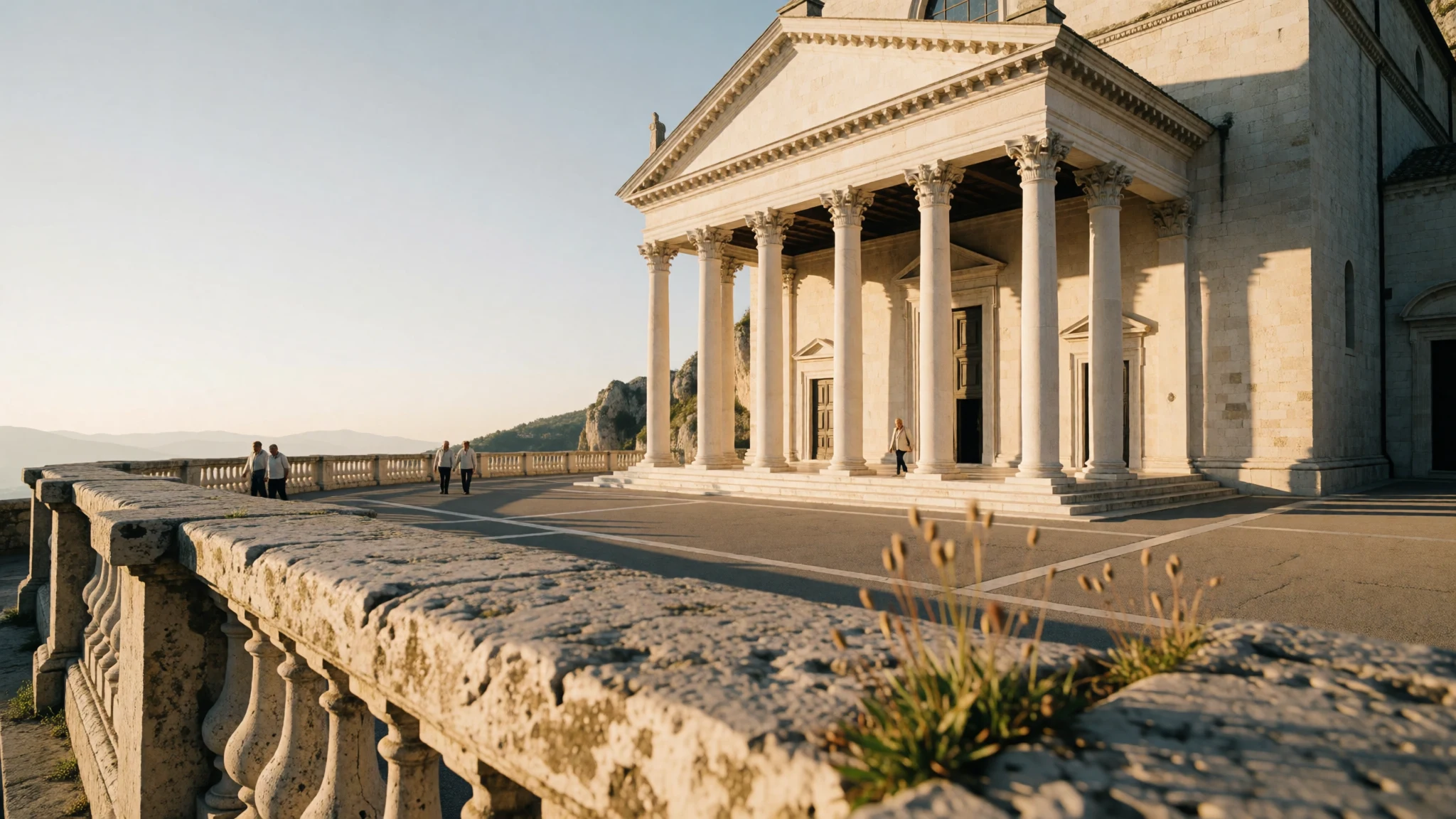
A calm neoclassical church holding the relics of San Marino's founding saint, set among steep lanes high above the Adriatic coast.
The place
The Basilica di San Marino stands at the northeastern edge of the old city of San Marino, on the slopes of Mount Titano, right beside the smaller Church of Saint Peter. It is the main church of the republic and is dedicated to Saint Marinus, the patron and legendary founder of the country. It is also a co-cathedral of the Catholic Diocese of San Marino-Montefeltro, so its role reaches beyond the microstate itself.
The building is neoclassical: a pale, composed façade behind a porch of eight Corinthian columns, with a long hall of worship behind it. Relics of the saint are enshrined inside, and that is why the basilica still feels like a working church rather than only a monument. The mood within is quiet rather than showy, a useful contrast to the souvenir shops on the lanes outside.
The setting matters as much as the architecture. The old town sits about 657 m above sea level and roughly 10 km from Rimini, so the walk up and along its steep streets is part of the visit, and the views open towards hills and the Adriatic. Cars are limited in the historic centre, and most of the walking is on stone paving that is slippery when wet.
Crowds are the honest caveat. In summer, coach parties and day-trippers from the coast fill the main streets around midday, and the lanes can feel like a bazaar. The basilica is easiest to enjoy early in the morning or late in the afternoon, when the light on the columns is softer and the pace slows. It is a short, easy stop, rewarding in about half an hour, and it combines well with the nearby square, museums and towers.
Its story
The Basilica di San Marino is the latest in a line of churches on the same spot, all tied to the cult of Saint Marinus. Tradition says he was a stonemason who climbed Mount Titano around 301 AD to found a small Christian community, away from persecution. Whatever the truth of that, written records of a church and monastery here appear in the medieval centuries, first in a document known only from a later copy, and then in a clearer record of donations from the faithful in 1113.
By the early nineteenth century the old building was in poor shape. It was pulled down in 1807, and the design of its successor went to Achille Serra, an architect from Bologna. Decisions took time: the council only confirmed in 1825 that the new church would rise on the same site, and building began in 1826. It was finished in 1838, when the Bishop of Montefeltro consecrated it in the presence of the Captains Regent, the republic's two joint heads of state. The cost was recorded down to the last small coin, which says something about how seriously a tiny state took its flagship church.
In 1926 Pope Pius XI raised the church to the rank of basilica. Pope John Paul II visited in 1982 and venerated the relics of the saint. The building also appears on San Marino's ten-cent euro coin, so many people have held an image of it without knowing. Over the centuries the church has been a point of civil argument as well as devotion, and in 1992 the Holy See issued a number of decrees on the matter.
What to see
- Basilica di San Marino — Northeastern edge of the old city
The basilica itself is the reason to come: a neoclassical façade, a porch of eight Corinthian columns and the relics of Saint Marinus inside. Spend time on the porch first, then step in quietly. Services take priority, so check local notices before planning a visit around a particular hour.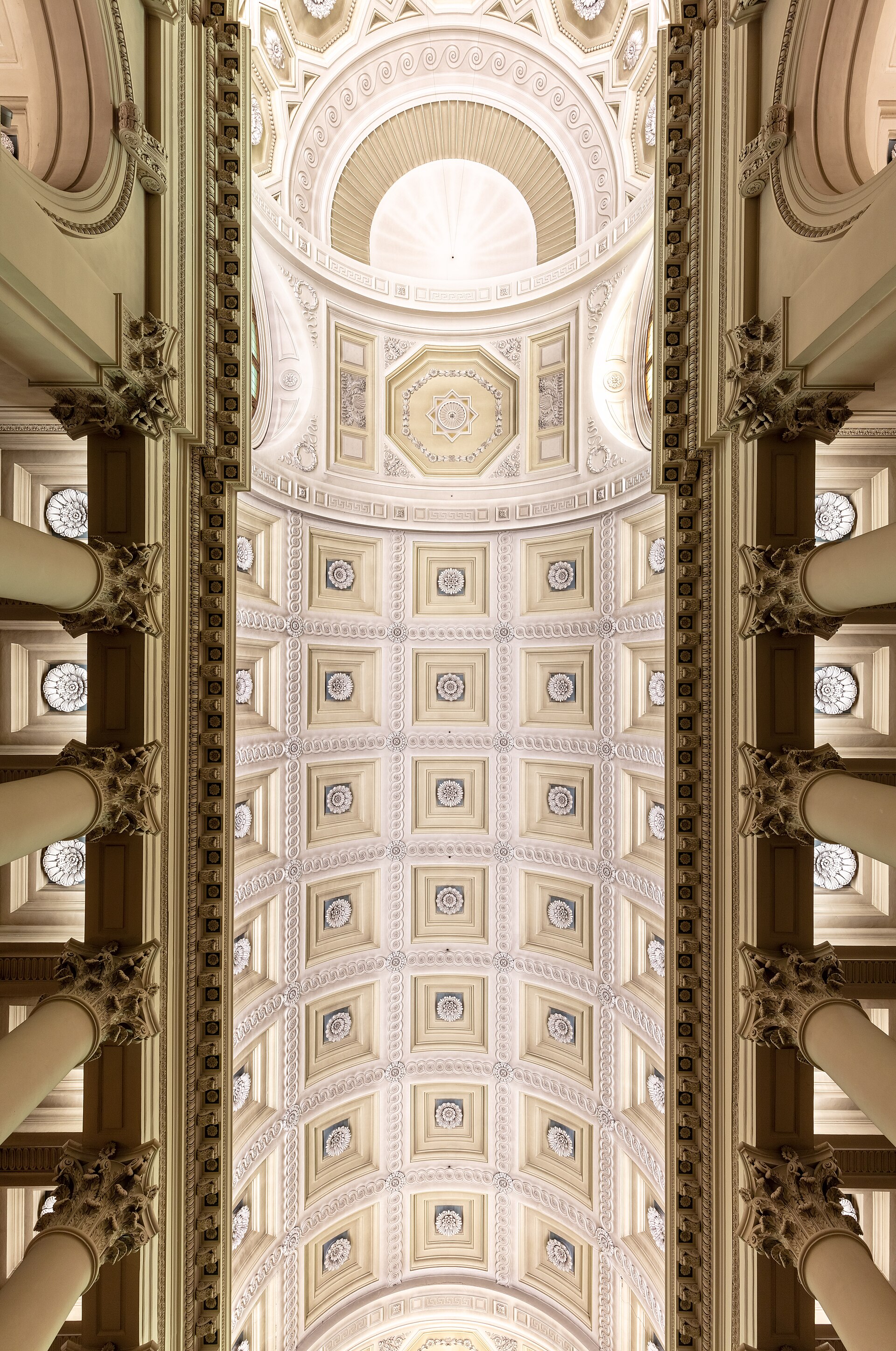
- Church of Saint Peter — Next to the basilica
The smaller Church of Saint Peter stands directly beside the basilica and is easy to miss in the rush to the larger building. It gives a sense of scale, and the two together show how compact the religious heart of the old town is. Allow ten minutes.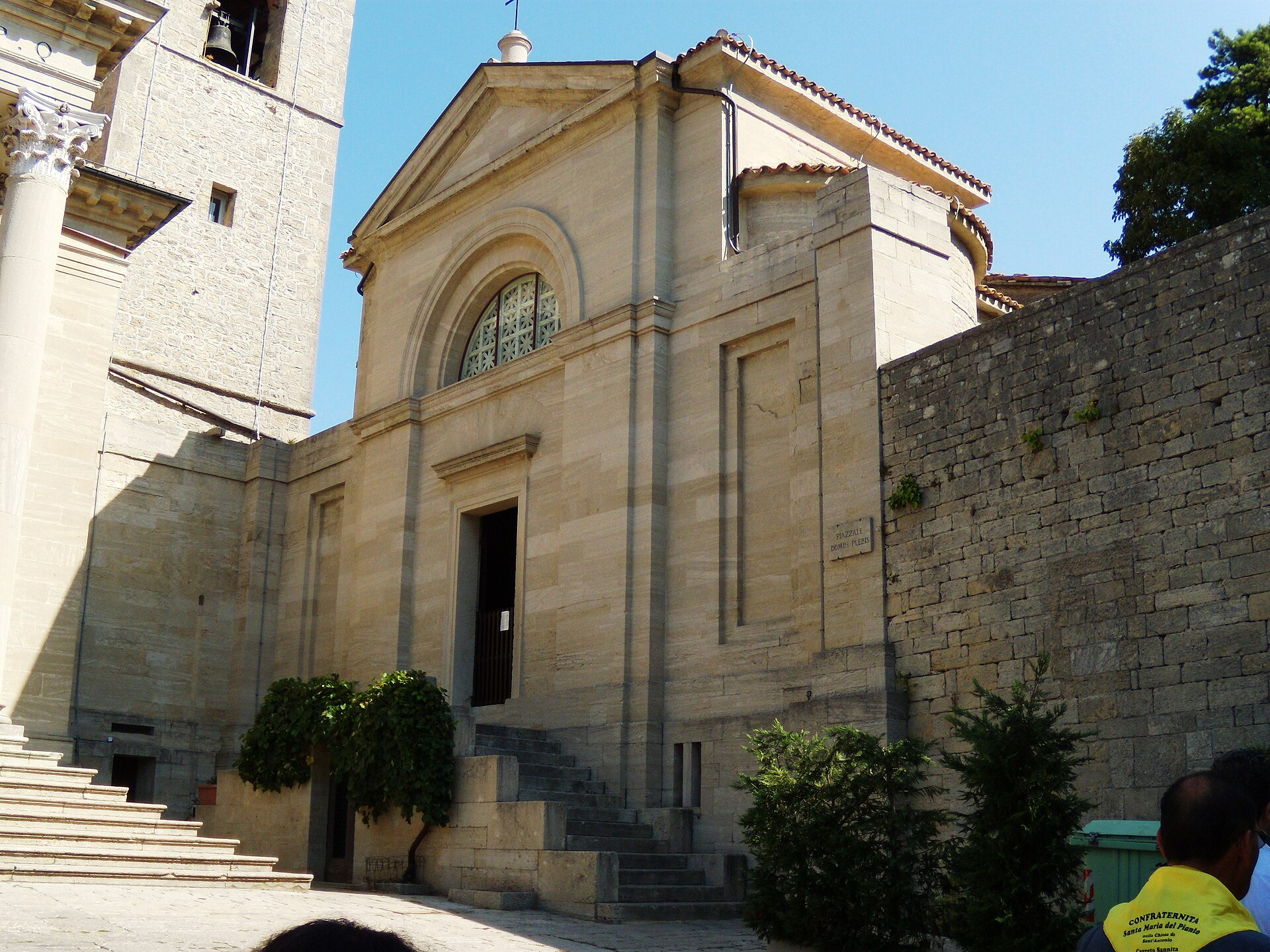
- Piazza della Libertà and Palazzo Pubblico — Historic centre, a short walk from the basilica
This small square has wide views and is flanked by government buildings, among them the Palazzo Pubblico, the town hall. Inside, the council chambers are worth seeing for their frescoes and for the seat used by the Captains Regent. It is also where guards are photographed, so expect a crowd.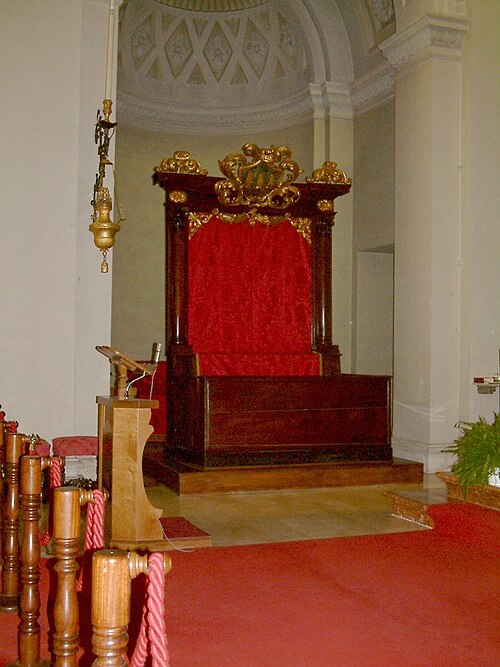
- State Museum — Historic centre
The State Museum gathers art, architecture and archaeology under one roof and is a good wet-weather option. The ticket is also valid for the Palazzo Pubblico, which makes it sensible to visit both on the same morning. Check the official site for current opening arrangements before you go. - Guaita and Cesta towers on Mount Titano — Ridge above the old town
Three towers appear on the national flag, but only the Guaita and Cesta towers are open to visitors. These small castles crown Mount Titano and give long views across San Marino, Italy and the Adriatic. The paths are steep and uneven, so wear proper shoes and go early to avoid the midday heat and crowds.
Culture
The Basilica di San Marino sits in a country that is proud of being its own state, and that pride shapes everyday manners. Italian is the official language, but the Sammarinese do not consider themselves Italians, and treating the country as a part of Italy is the quickest way to cause offence. Locals are generally friendly and welcoming, and many take their republic's politics seriously, so a respectful question about how the state is governed is usually welcome rather than rude.
Saint Marinus is the centre of civic identity here, not only of religion. The legend of the stonemason who climbed Mount Titano is told to schoolchildren, and the saint's feast and the history of the republic are bound together with public ceremony. That is why the basilica, though modest in size, carries so much weight for residents, and why Catholic practice remains visible in the old town: processions, bells and families attending services alongside the visitors.
Ceremonial guards stand outside the government buildings and are popular for photographs. A smile is welcome; hand gestures and funny faces are not, and the guards are doing a formal job.
The basilica is a place of worship first and a sight second, and the relics make that especially clear, so visitors should expect hushed voices and a slower pace than on the street. In the basilica, speak quietly, keep phones silent, step aside for anyone praying, and do not photograph worshippers or take flash pictures during a service.
What to wear
The Basilica di San Marino is not in a place with a strong everyday folk costume, and it is best to be honest about that. The clearest traditional dress in San Marino is ceremonial: uniforms and formal robes worn by guards and by the Captains Regent at state occasions in front of the government buildings, and historical costume at pageants and festivals. These outfits use heavy cloth, such as wool, and bold colours, but they belong to ceremony rather than to daily life.
What people wear now is much like northern and central Italy: neat, smart-casual clothes, with a clear preference for good shoes, tailored jackets and sunglasses. Locals dress a little better than the climate strictly requires, particularly for Sunday services, weddings and civic occasions. In summer the old town is full of day-trippers in shorts and sandals, but residents tend to look more put-together, and shopkeepers notice the difference.
Visitors should plan around three things. First, the church: cover shoulders and knees, as at any Catholic church in Italy, and carry a light scarf or shawl in summer for quick cover. Hats should come off inside. Second, the terrain: the old town is steep, with worn stone paving that becomes slippery when it rains, so comfortable shoes with grip matter far more than fashion. Third, the weather: it is hot at midday in summer and can be windy and cold on the ridge in winter, so a light jacket is useful in every season.
What to eat
- Piadina — Small piadina kiosks and snack bars in the lanes of the old town and in the lower streets
The flatbread of the Romagna coast next door, folded around cured meat, cheese or greens. It is quick, filling and inexpensive, and a fine lunch between the basilica and the towers. Look for places that fold it fresh to order. - Pizza by the slice — Pizzerias in the old town and in the newer streets below
Many pizzerias sell whole pizzas or slices with a range of toppings, so it is easy to eat a little and keep walking. Slices are good for a late snack after the towers. Ask for it warm if it has been sitting. - Cotoletta alla milanese — Family-run restaurants in the historic centre
A thin breaded veal cutlet, fried until crisp and usually served with chips or salad. It is a staple of Italian trattorie, and San Marino's restaurants serve it in generous portions. Order it with a simple salad to cut the richness. - Homemade pasta — Simple trattorie on the quieter streets and in the outlying villages
Fresh egg pasta with a meat ragù or a tomato sauce, often the best test of a trattoria. The best places cook plain, home-style dishes with good ingredients rather than elaborate ones. Follow with tender roast or grilled meat. - Gelato and panna cotta — Ice-cream shops along the main lanes; dessert menus in restaurants
Gelato is the standard treat after climbing the hill, and panna cotta with caramel is a common finish at a sit-down meal. Choose shops where the ice cream is stored in covered tubs, not piled high in bright mounds.
Plan it
Best time. May–June and September–October, when the days are mild and clear for walking up to the towers; July and August are hot and crowded with day-trippers, and winter can be cold and windy on the ridge.
How long. 1–2
Getting there. San Marino has no airport and no railway station. The nearest major airport is Federico Fellini International Airport at Rimini, and the nearest main station is Rimini, from where a bus climbs to San Marino. Bologna, Ancona and Forlì also have airports. The old town is walkable once there. Italy borders San Marino with no border controls, so check visa requirements for the Schengen area before travelling.
Budget. mid
Tips
- Visit the basilica early in the morning or late in the afternoon to avoid the midday coach crowds.
- Wear shoes with grip, as the lanes are steep and the stone is slippery when wet.
- Check the official tourist office site for opening times of the museums, towers and any services at the basilica.
- Carry a little cash for small kiosks and cafés, though cards are widely accepted.
- San Marino is an extremely safe country, but keep valuables close in the crowds at the main square.
Etiquette
- Cover shoulders and knees and remove hats inside the basilica.
- Do not treat San Marino as a part of Italy in conversation; it is a separate republic.
- Be polite when photographing the guards: a smile is fine, funny faces are not.
Nearby
Sources
- Wikidata Q810102 (CC0)
- Wikipedia: Basilica di San Marino (rev 1366919712) (CC BY-SA 4.0)
- Wikivoyage: San Marino (rev 5417169) (CC BY-SA 4.0)
- Photo: Contrada della Pieve, 1, Città di San Marino (trolvag) (CC BY 3.0)
- Photo: Cathedral San Marino - Exterior (Newbio623) (CC BY-SA 4.0)
- Photo: San Marino tron kapitanow regentow (unknown author) (CC BY 3.0)
- Photo: Sveti Marin (August Dominus) (CC0 1.0)
- Photo: Chiesa di San Pietro a San Marino (Adam91) (CC BY 3.0)
- Photo: Basilica of Saint Marinus (Diego Delso) (CC BY-SA 4.0)


