Tenerife
Tenerife, Spain
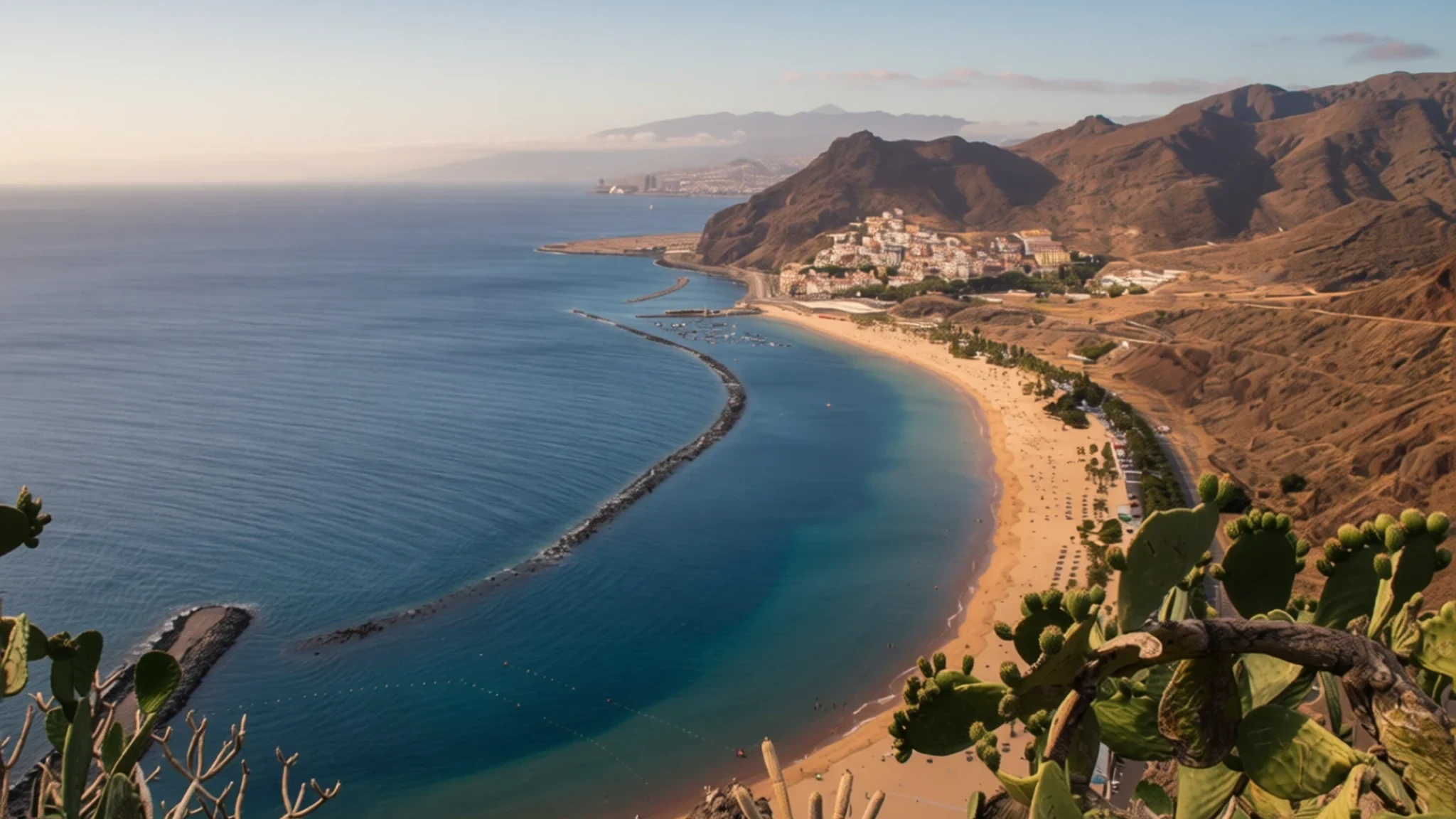
Tenerife packs volcanic peaks, pine forest, subtropical valleys and beaches into a single island.
The place
Tenerife is the largest of the Canary Islands, a Spanish autonomous community in the Atlantic, a short way off the northwest coast of Africa. At roughly 2,034 square kilometres it is also the largest island in Macaronesia, the group of Atlantic archipelagos that includes the Azores and Madeira, and it has more people than any other island in Spain. The population is about 955,000, though the figure shifts from year to year.
The island's defining feature is Teide, a volcanic peak that rises above the middle of the island and is the highest mountain in Spain. Around it lies Teide National Park, a World Heritage site, where lava fields and pumice slopes look nothing like the green hillsides further north. The landscape changes sharply across the island. Hot, dry country in the south gives way to cloud-wrapped forest and banana fields in the north and east, so a single morning's drive can cross several climates.
The capital is Santa Cruz de Tenerife, a port on the east coast that shares regional capital status with Las Palmas de Gran Canaria. Inland and uphill, San Cristóbal de La Laguna is a historic university town with colonial-era streets. Most visitors come for the coast, with resort strips in the south, quieter fishing villages in the west and dramatic cliffs in the northwest. The southern resorts are busy and built up, while the north feels greener and slower.
Its story
Tenerife was the last of the Canary Islands to be brought under Castilian control, and it took the longest to conquer. In 1464 Castile first made a move on Tenerife. Diego García de Herrera, the Lord of the Canaries, staked a claim to the island on the monarchy's behalf and negotiated pacts with a number of Guanche chiefs. Those deals did not hold, and relations between the two sides soon broke down.
In December 1493 the Catholic Monarchs, Isabella I of Castile and Ferdinand II of Aragon, gave Alonso Fernández de Lugo the right to conquer the island. In 1494 he came ashore, then launched a military push against the Guanche realms. The fighting swung back and forth, with a Guanche win at the First Battle of Acentejo and a Castilian win at the Second. The war ended in 1496, when the surviving island rulers submitted to Castilian authority.
The human cost was severe. Many Guanche people died from diseases brought by Europeans, while others married into settler families from Spain, Flanders, Italy and Germany. Over the following generations the population became a mixed one, and the island's towns grew up around new Spanish institutions.
Tenerife then became part of the Spanish empire and kept a central place in the archipelago. Its towns developed their own cultural life. Painters worked in La Laguna, Garachico, La Orotava and Puerto de la Cruz, and a line of Enlightenment writers and historians followed. Today Santa Cruz de Tenerife serves as the island's administrative centre, and La Laguna keeps much of its colonial character.
What to see
- Teide National Park — Central island, Teide National Park
Teide National Park takes in the volcanic summit and the lava and pumice fields around it, in the island's centre. It is a UNESCO World Heritage site, and the rock runs in reds, blacks and pale grey. Upper-slope access is controlled, so check the official site before planning a summit day. Go early, because cloud can roll in by midday.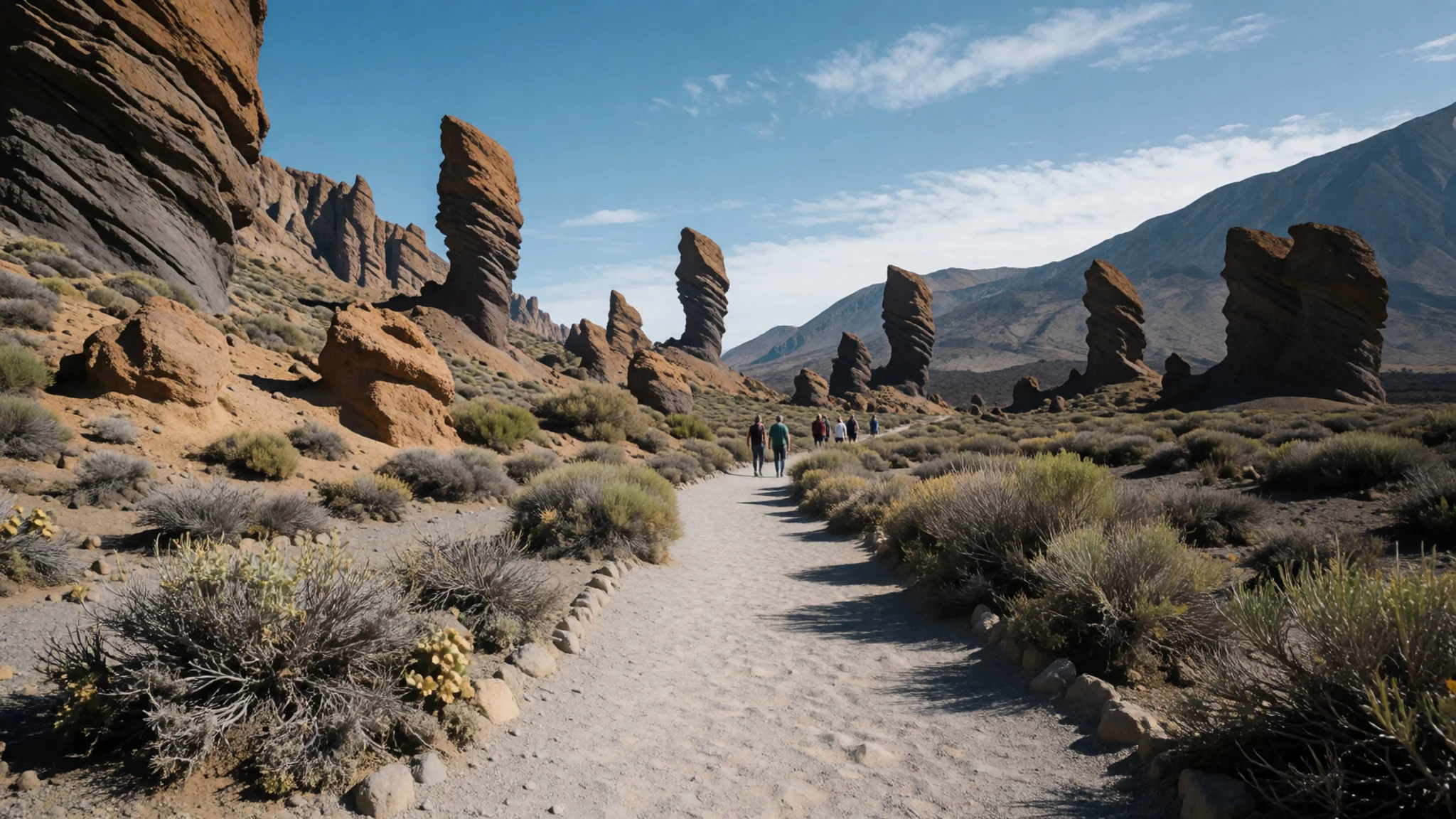
- Palm Tree Canyon — Los Gigantes area, west coast
Palm Tree Canyon lies near Los Gigantes on the west coast, a dry ravine lined with palms that stand out against the dark cliffs. The ground is uneven, so wear closed shoes and carry water. Parking near the coast fills quickly on sunny days, and the canyon is best visited in the morning before the heat builds.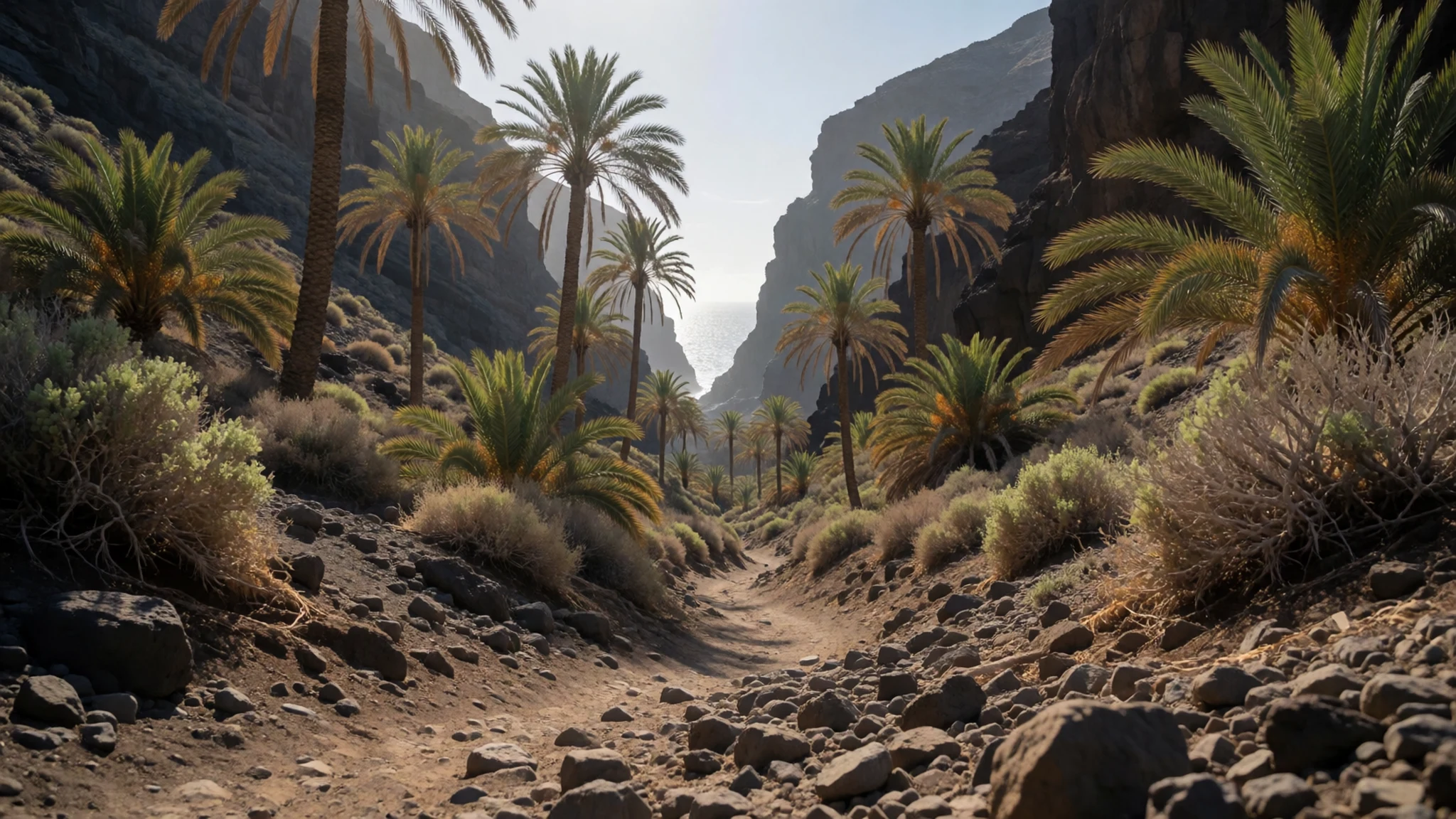
- The Orotava valley — North of the island, around La Orotava
The Orotava valley opens on the north side of the island, a green bowl of terraced farmland and banana plantations below Teide's flank. La Orotava town sits on its slopes, with old stone houses and wooden balconies. Cloud and drizzle are common here, so bring a layer. Walk the lanes between plantations rather than the main road for the best views.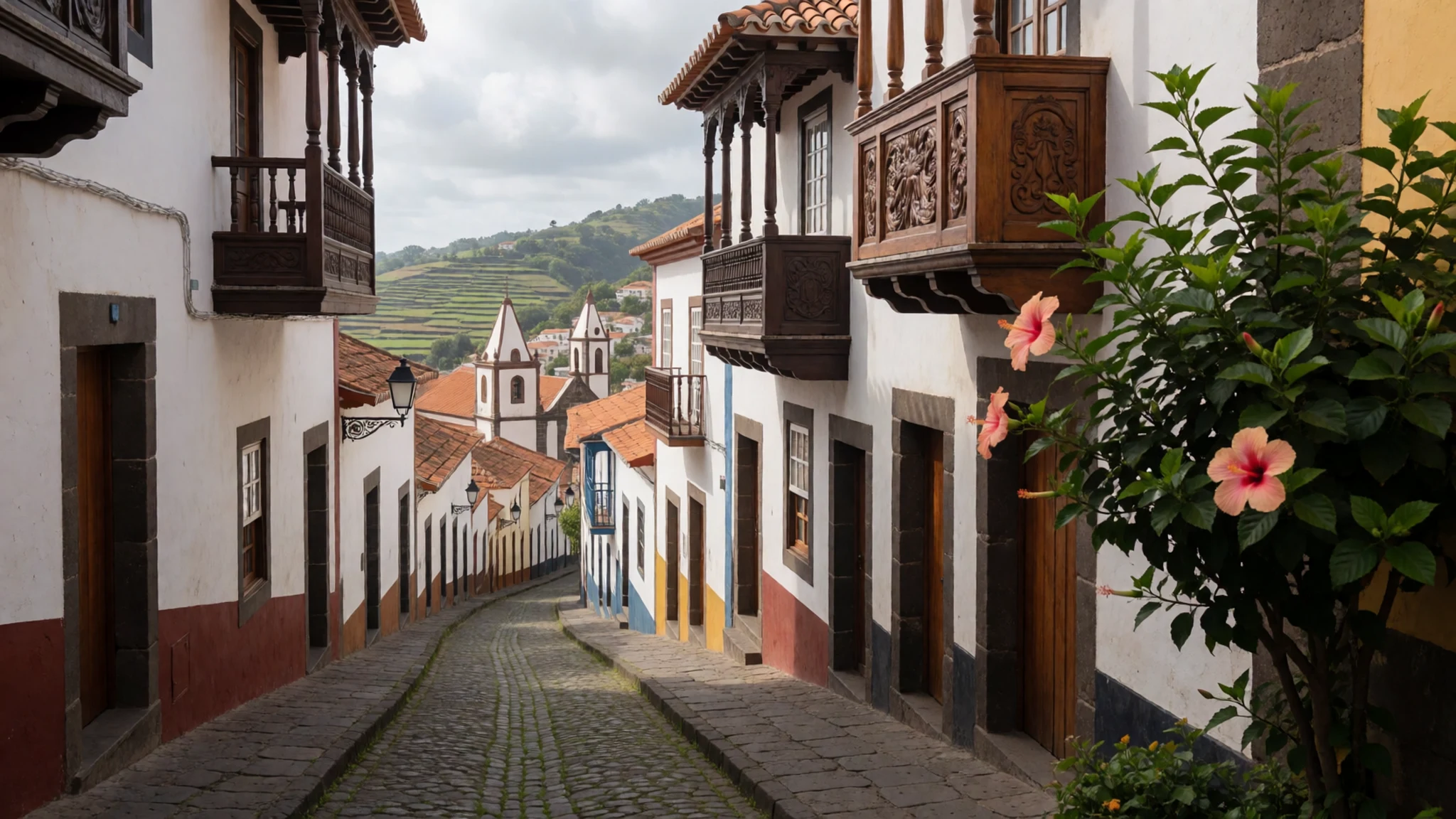
- San Cristóbal de La Laguna — North-east, historic town centre
San Cristóbal de La Laguna is a historic university town in the north-east, home to the University of La Laguna, with streets laid out in the colonial style. It is one of two sites on the island with World Heritage status. Its old centre is best explored on foot, and its churches are worth a look inside when they are open.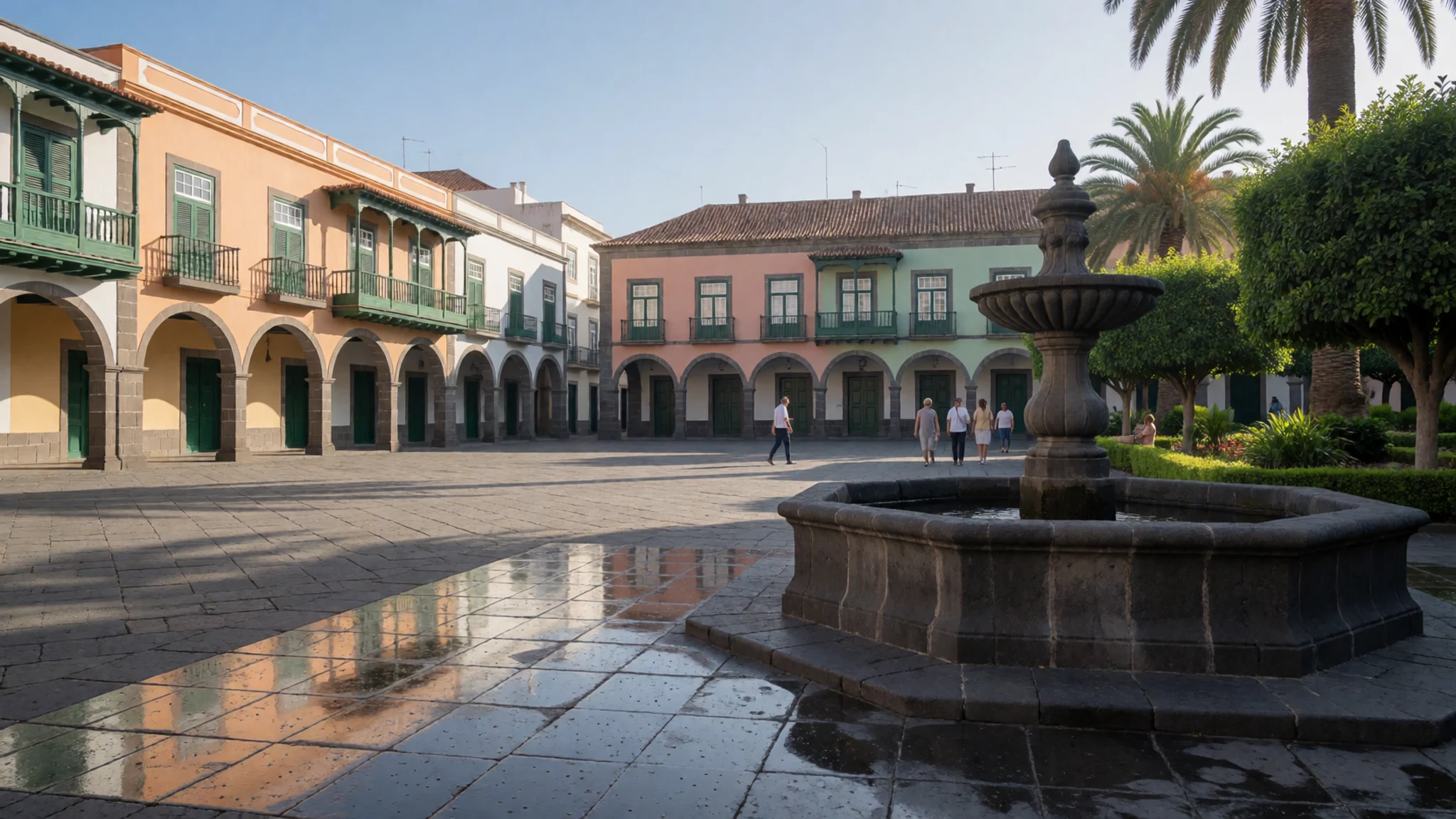
- Anaga Massif — North-east, Anaga rural park
The Anaga Massif in the north-east is a Biosphere Reserve, a rugged range of laurel forest, deep ravines and small villages. Roads wind steeply and can be slow, so allow extra time. Walks suit experienced walkers, and cloud often sits on the ridges. Local buses reach some villages, but check timetables locally.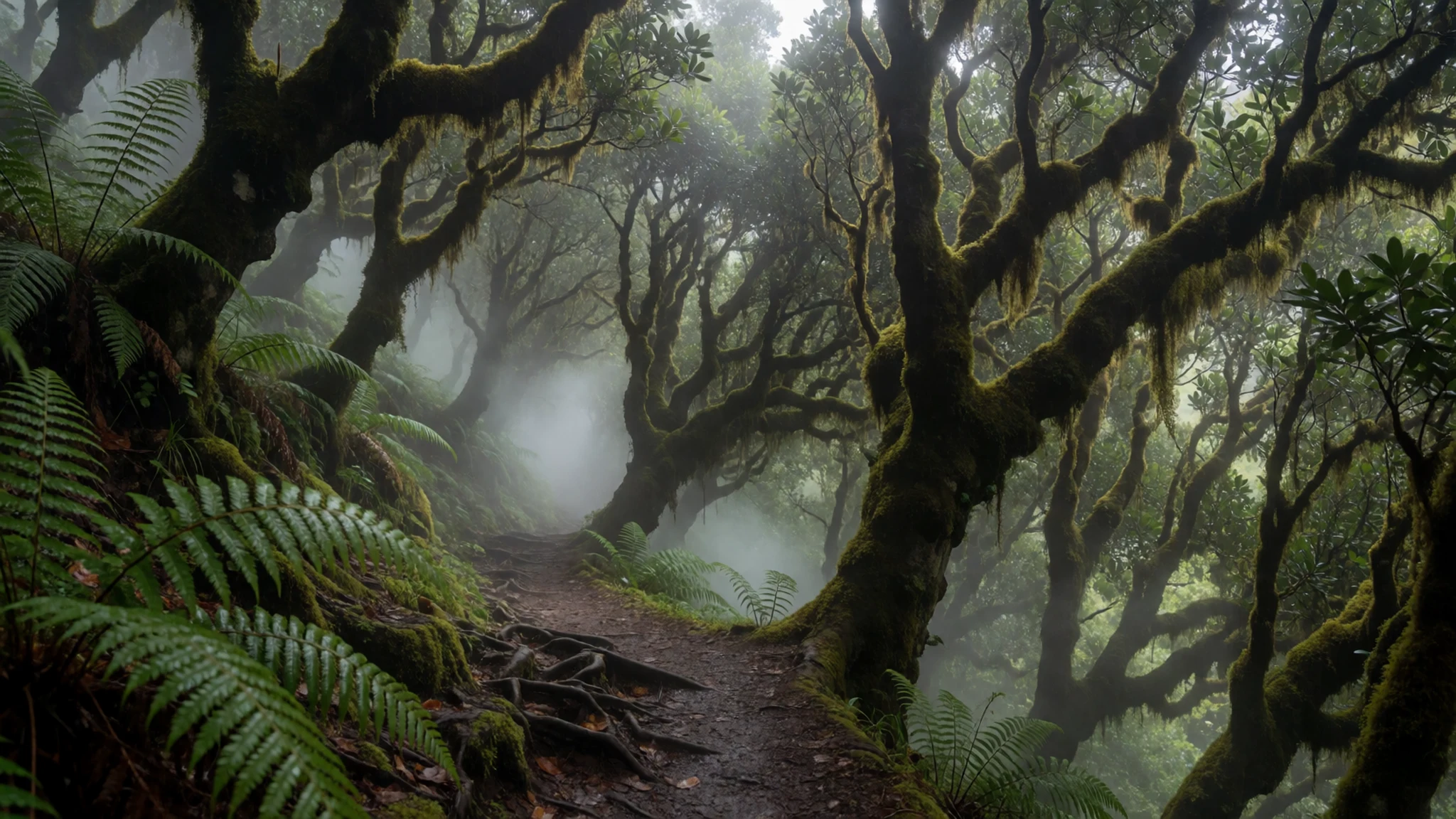
Culture
Tenerife's cultural life draws on Guanche roots, Castilian rule and centuries of settlers from elsewhere in Europe. The island produced writers from early on. During the 1500s and 1600s, Antonio de Viana, who was born in La Laguna, wrote the epic poem Antigüedades de las Islas Afortunadas, which researchers still study for its depiction of life in the Canary Islands. The Enlightenment brought historians, poets and playwrights, among them José Viera y Clavijo and Tomás de Iriarte, and painting flourished in La Laguna and in coastal towns such as Garachico and Puerto de la Cruz during the 16th century.
Everyday life across the island is friendly and fairly relaxed. Villages mark religious feast days with processions, music and food, and the evening stroll along the seafront is a long-standing habit in the coastal towns. Conversation matters in small shops and bars, and a greeting before ordering is considered polite. Spanish is the everyday language.
Festivals are the best way to see local traditions at close range. At processions, stand back when the statues pass and ask before photographing anyone in religious dress.
What to wear
Tenerife's traditional dress grew out of farming, fishing and the island's mixed climate rather than out of any court fashion. Rural costume was practical: heavy wool and homespun cloth for the cooler uplands, lighter linen for the warmer lowlands, and wide-brimmed hats against the sun. Embroidered bodices, dark skirts and shawls were the everyday pattern for women, and men wore woollen jackets and sturdy trousers for work in the fields. Some of this clothing survives in folk groups and festival processions, where it is worn with pride rather than as a costume for visitors.
Today, people across Tenerife dress much as they do elsewhere in Spain. Towns such as Santa Cruz have offices and smart shops, and in the resorts casual summer clothes are the norm. Local festivals bring out traditional outfits, and the Carnival season sees fancy dress in the streets. Light cotton, comfortable walking shoes and a jumper for the evenings make sense at any time of year.
A visitor needs layers because the island's climate changes with altitude: the coast can be warm while the slopes around Teide are cold. Pack sun protection and a hat, walking shoes with good grip for lava and rough paths, and a light waterproof for the cloudy north. Covered shoulders and knees are expected inside churches, and swimwear belongs on the beach and at the pool rather than in town streets.
What to eat
- Guachinche lunch — Country guachinches across the island, especially away from the resorts
A guachinche is a small country tavern that serves its own wine with home cooking, often grilled fish or roasted meat. Most are family-run, and they are particularly common across the island. Go for a long, unhurried lunch rather than a quick snack.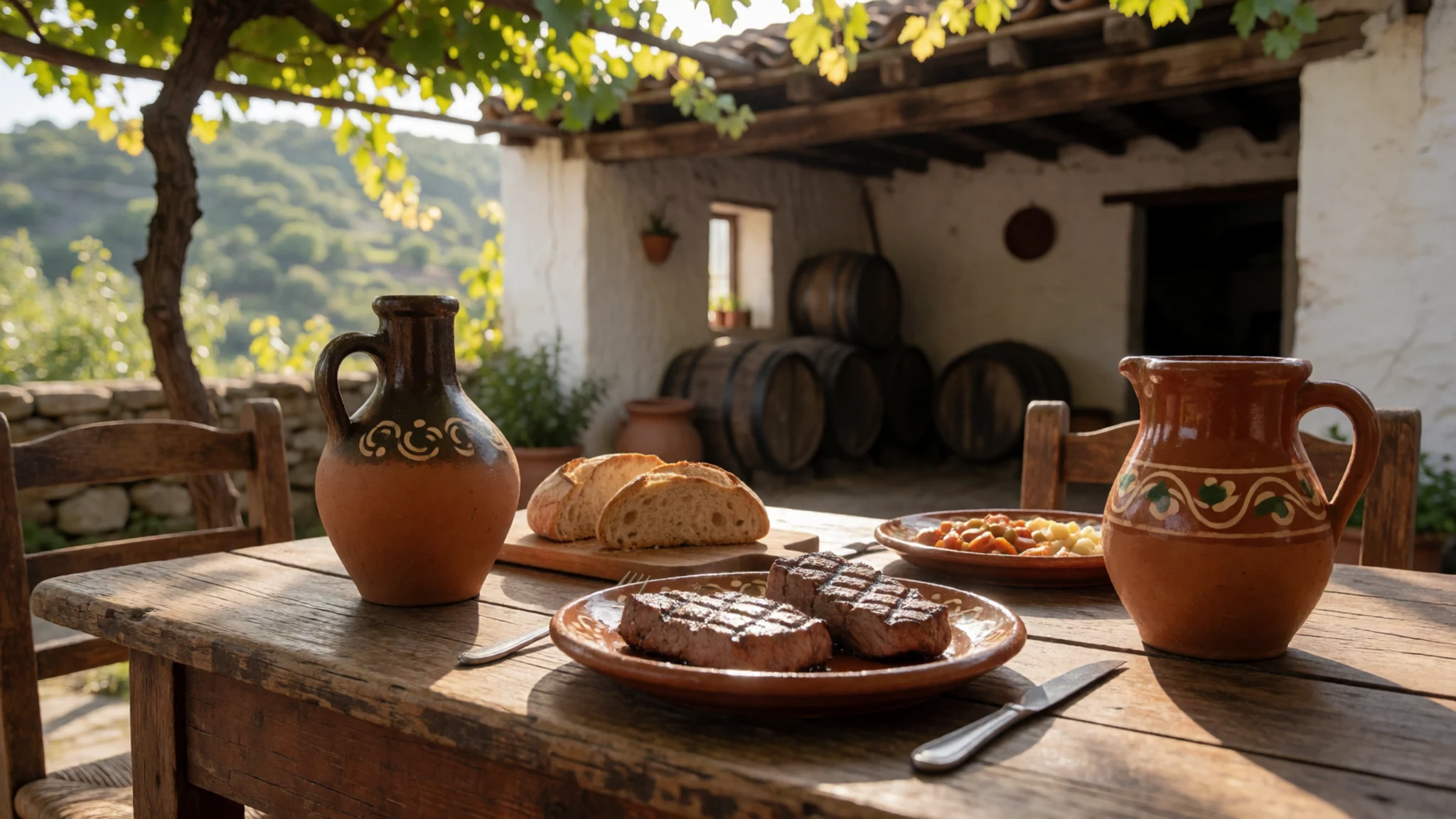
- Canarian stews — Local eateries and guachinches in towns and villages
Stews of many kinds are central to Canarian home cooking, built from potatoes, pulses, meat or fish simmered slowly until thick. They are hearty, filling and typically good value, and they appear on most menus in local eateries.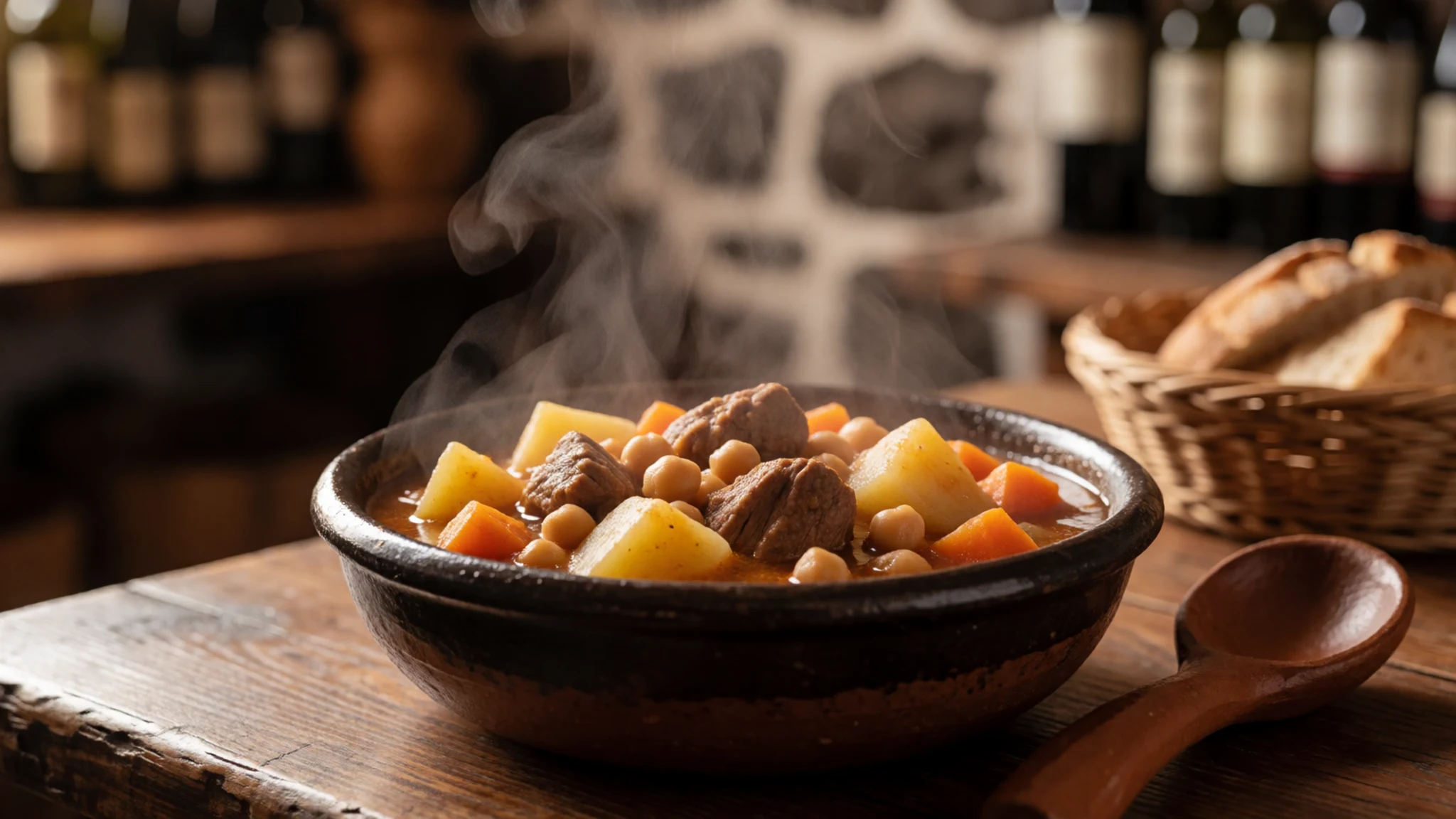
- Grilled fish on the harbour — Harbour-side eateries in the fishing ports of the west and south
Fresh fish, often grilled whole with garlic and salt, is a staple of coastal eateries. Pick a place where the catch is displayed on ice or named on the board, and order it with a simple salad or potatoes. - Papas arrugadas with mojo — Any bar or eatery with a terrace, in towns and villages
Small potatoes are boiled in their skins in heavily salted water until the skins wrinkle, then served with mojo, a garlic and pepper sauce in red or green. Wrinkled potatoes are a cheap and essential side on almost every table. - Gofio — Local grocery shops and town markets
Gofio is a flour made from toasted grains, ground fine and used in drinks, dough and as a thickener for stews. It is a link to older rural cooking, and it is still sold in grocery shops and at local markets.
Plan it
Best time. Spring and autumn, roughly April to May and October to November, suit most visitors, with milder temperatures and fewer crowds than the summer peak. Climate varies sharply by altitude and side of the island, so the coast can be warm while Teide is cold. Winter is mild on the coast but cold on the high slopes.
How long. 3–4
Getting there. Tenerife South (Reina Sofía), near Los Cristianos, and Tenerife North (Los Rodeos), near La Laguna, both serve the island; the last leg is by hire car, taxi or bus. Ferries from mainland Spain are slow, with a weekly service from Cádiz taking two days.
Budget. mid
Tips
- Hire a car for the north and the high roads, as buses are slower away from the main routes
- Check the official site for Teide access before you travel, since upper-slope entry is controlled
- Start high trails early, because cloud builds across the mountains by midday
- Do not leave valuables in a parked car, especially around Masca
- Carry water and a warm layer, since temperatures drop quickly with altitude
- Taxis are widely available in towns and reasonably priced
Etiquette
- Keep phones and bags close on the beach, and stay alert in the resort strips at night
- Cover shoulders and knees inside churches
- Stay on marked paths in Teide National Park
Nearby
Sources
- Wikidata Q40846 (CC0)
- Wikipedia: Tenerife (CC BY-SA 4.0)
- Wikivoyage: Tenerife (CC BY-SA 4.0)
- Copernicus Sentinel-2 image of Tenerife (ESA) (CC BY-SA 3.0 igo)
- Panorama of Pico de Teide (Berthold Werner) (Public domain)
- Relief of Tenerife, QGIS render (Amfeli) (CC BY 4.0)
- Christ of Humility and Patience, Amaro Pargo (anonymous) (Public domain)
- Woman of Victoria, Tenerife (Alfred Diston) (CC0 1.0)
- Palm Tree Canyon (Iven Gummelt) (CC BY 3.0)
- Orotavatal (unknown author) (CC BY 3.0)
- Teide 2007 (Christian Abend) (CC BY-SA 2.0)


