Temuco
Temuco, Chile
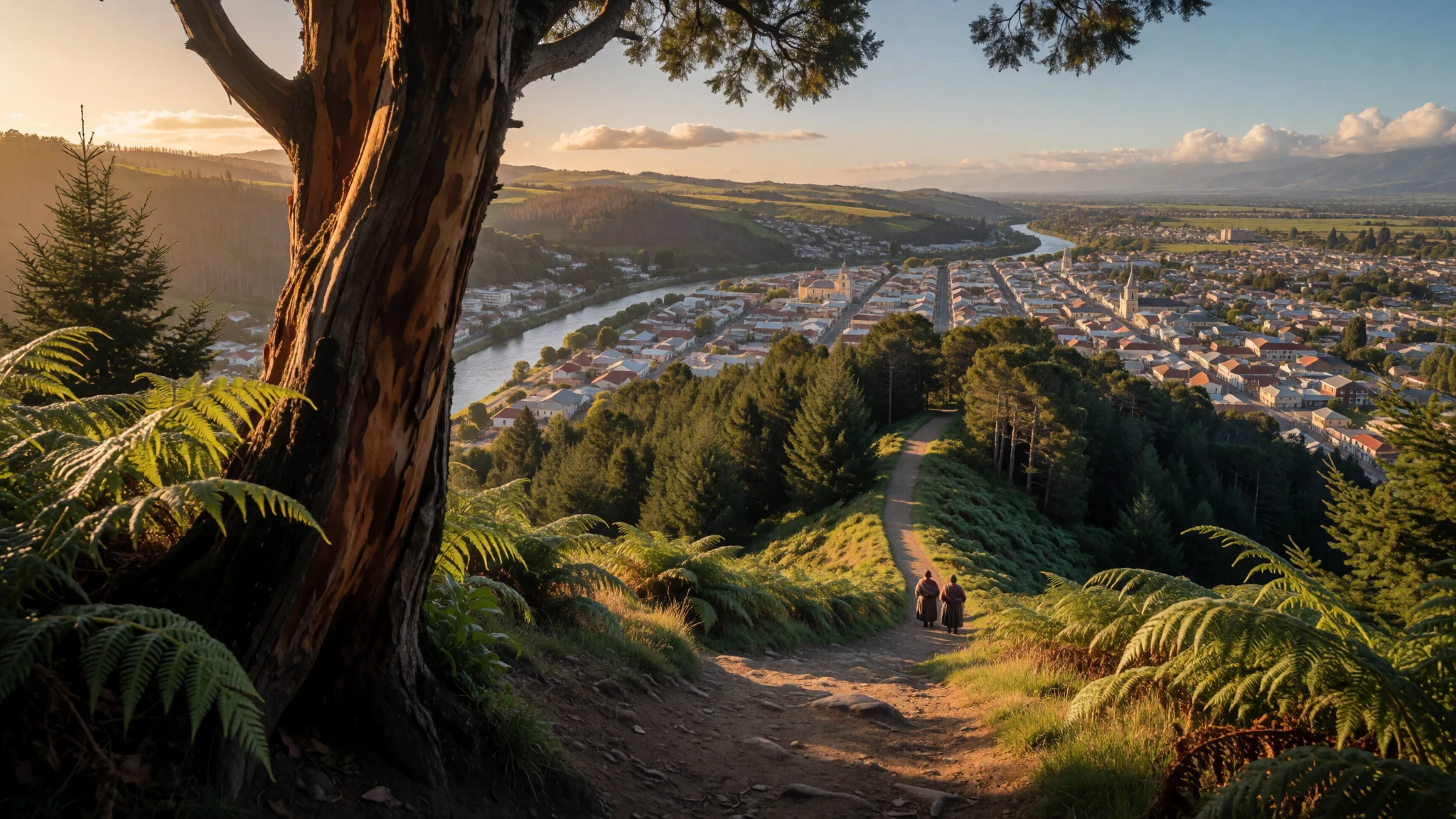
Temuco is the Mapuche heartland's working capital, a university city of markets, poets and forest hills, and the gateway to the lakes and volcanoes of southern Chile.
The place
Temuco is the capital of Chile's Araucanía Region, a busy provincial city of about 282,000 people at roughly 360 metres above sea level. It sits in a broad valley in the south-centre of the country, with the Pacific coast to the west and the Andes to the east, and the land between is a patchwork of farms, pasture and timber plantations. The city itself fills the flat ground deposited by the Cautín River, squeezed between two low hills, Ñielol and Conunhueno.
The character here is practical rather than polished. Temuco is where farmers from small towns come to sell produce, where timber and livestock businesses keep their offices, and where buses fan out towards the lakes, volcanoes and coast. Two large universities give the centre a young, student-driven rhythm, with cafés and bookshops filling up in term time and thinning out in the summer holidays.
This is also the middle of the historic Araucanía, long the homeland of the Mapuche, and their presence is visible in street names, market stalls, crafts, public offices and everyday speech. Two Nobel-winning poets, Gabriela Mistral and Pablo Neruda, both spent part of their lives here, which gives the city a literary footnote beyond its size.
The climate is temperate. Summers are warm and noticeably drier, winters are cool and wet, and rain can arrive in any month. Temuco is not a place of grand monuments. It rewards a day or two of walking, eating and talking, and works well as a base for the wider region.
Its story
Temuco began as a military post. In 1881 the Chilean army raised a fort here during its campaign to occupy the Araucanía, a territory the Mapuche had held against outsiders for centuries. The officer in charge, Manuel Recabarren, gave the place his own name, Fuerte Recabarren, and the settlement that grew around it was never meant to be graceful. It started as an encampment, and its early layout still shows that practical origin.
Non-indigenous settlers had already begun moving into nearby districts such as Labranza a few years earlier, and once the fort stood, newcomers poured in. Within a year the first proper streets were taking shape downtown. The town soon elected its first municipal officers and a first mayor, José del Rosario Muñoz, and it expanded fast on the back of farming, trade and the railway. When Cautín was made a province, Temuco became its capital.
That history is not neutral. The founding of the city is tied to the loss of Mapuche land, and the consequences are still debated in Chilean politics, in the courts and on the streets of the region. Visitors will find the story told differently depending on who is telling it.
The city also has a gentler claim in Chilean letters. Gabriela Mistral ran a girls' school here, and the teenage Neftalí Reyes, later known as Pablo Neruda, would call on her to show her his first poems. Neruda's boyhood in the rainy south, among trains, timber and mud, fed his writing for the rest of his life.
What to see
- Cerro Ñielol — Northern edge of the centre
A hill on the edge of the centre that keeps native temperate forest of the kind that once covered this latitude. Paths climb past ferns and old trees to a viewpoint over the city and the river towards Padre Las Casas. Near the top is La Patagua, a ceremonial area with real meaning for the Mapuche.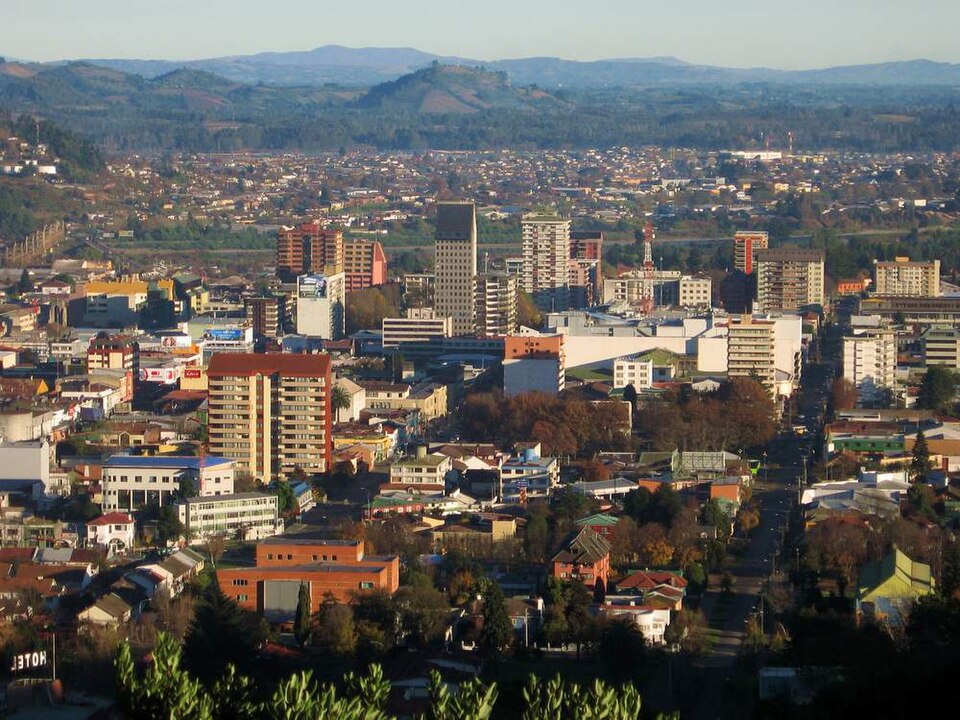
- Feria Pinto — Central Temuco
A long-running daily market where fruit and vegetables are sold by traders from the city and from farms in the surrounding countryside. It is the best place to see what the region grows through the seasons, and a good spot for a quick snack standing up. Go in the morning, when stalls are fullest. - Mercado Modelo — City centre
The central market was badly damaged by fire, leaving only its façade standing, and was then rebuilt. It remains a focus for local food, crafts and small eateries around its edges. Check the council's site, temuco.cl, for current opening arrangements before planning a visit around it. - Pablo Neruda National Railway Museum — Railway quarter, west of the centre
A museum devoted to Chile's railways, named after the poet who grew up among the trains and rain of this region. Rolling stock and station buildings recall the line that tied Temuco to the capital and shaped its growth. Opening days vary, so confirm locally before going. - Avenida Alemania — North of the centre
The city's main artery, a long road lined with shops, restaurants, apartment blocks and the occasional university building. It is more useful than pretty, but a walk along part of it shows how modern Temuco lives, shops and commutes, and it links the centre to the sports ground and residential districts.
Culture
Temuco's cultural life is shaped above all by the Mapuche, whose language, Mapudungun, and traditions remain part of the Araucanía. Their name means people of the land, and that link to territory is central to how many Mapuche communities see the region. In the city it shows in craft stalls, public art, bilingual signs and the national indigenous development agency's local office. At Cerro Ñielol, the ceremonial ground of La Patagua is a living place of meaning, not just a landmark.
The winter solstice in June is the Mapuche new year, known as We Tripantu, and is marked with gatherings and ceremonies in communities across the region. Land and recognition remain sensitive subjects, so it is better to listen than to argue.
Other traditions sit alongside this. Chilean rural life is strong here, with market days, tea and bread at midday, and football on weekends. Evangelical churches are a notable part of neighbourhood life, with community halls hosting services and gatherings. Poetry is taken seriously as local heritage, and bookshops often keep Mistral and Neruda prominent on their tables.
Be aware that regional politics can be tense, and that most daily life is calm and friendly. Ordinary courtesy goes a long way: greet shopkeepers before asking for anything, and take your time over conversations.
Always ask before photographing people, stalls or any ceremony, and treat La Patagua on Cerro Ñielol as a place of respect rather than a picnic spot.
What to wear
In Temuco, traditional dress means Mapuche dress, and it is worn mainly for ceremonies, festivals and cultural events rather than every day. Women's clothing traditionally includes the küpam, a dark wrapped dress, and the chamall, a woven shawl or mantle, both made from wool spun and woven by hand, historically on a vertical loom. Silver is the signature adornment: the trarilonko is a headband and the trapelakucha a large pendant, worn on important occasions. Weaving patterns and silverwork are skills passed down through families, and good pieces are sold at craft stalls around the city.
Day to day, people in Temuco dress much as in the rest of southern Chile: jeans, fleece or wool jumpers, waterproof jackets and sturdy shoes, with students in sportswear and hoodies. Offices tend towards smart casual rather than formal. Wool and rain gear are everyday items, not outdoor-shop costume.
Visitors should dress for changeable weather. Layers work in any season, and a waterproof jacket is sensible all year because rain can arrive in summer too. In the warmest months light cotton is fine, though evenings cool quickly. In winter, bring a warm coat, a hat and shoes that cope with wet pavements. Comfortable footwear matters for the steep, sometimes muddy paths on Cerro Ñielol. Dress is relaxed, but modest, tidy clothing is appreciated when visiting a church or attending a community event.
What to eat
- Completo — Snack counters and fast-food eateries around the central market and downtown streets
A Chilean hot dog piled with chopped tomato, mashed avocado and mayonnaise in a soft bun. It is the classic quick lunch in Temuco and comes in several loaded versions. Cheap, filling and eaten everywhere. - Churrasco — Family-run sandwich eateries near the central market
Thin grilled or pan-fried beef served in a bread roll, usually topped with tomato, avocado or green beans. It is a staple of Chilean sandwich counters, and the regional versions here are hearty and unfussy. - Cazuela — Set-lunch eateries and market food counters
A comforting broth with a large piece of meat or chicken, potato, corn and pumpkin, eaten from a deep bowl. It suits Temuco's damp, cool weather and shows up at home-style lunch places across the city. - Piñones — Feria Pinto and market stalls in autumn
The large seeds of the araucaria tree, long gathered by the Mapuche and eaten boiled or roasted. They taste a little like chestnut and are a seasonal treat in autumn, sold from stalls and bags in markets. - Merkén-spiced dishes — Craft and spice stalls in the central markets and Feria Pinto
Merkén is a smoked chilli seasoning from Mapuche cooking, often mixed with salt, coriander or cumin. It adds gentle heat and smoke to bread, cheese, meats and soups. Buy a small pack to take home.
Plan it
Best time. December to March is the best window: summer is warmer and noticeably drier, which suits the hills, lakes and volcanoes nearby. Spring and autumn are mild but wetter, and winter is cool and rainy, though the city is still pleasant for markets, food and museums.
How long. 1–2
Getting there. Fly to Temuco's own airport, Manquehue, on domestic routes, or take a long-distance bus along the Panamericana highway from Santiago to the Rodoviario bus terminal on the northern approach to town. Local buses and taxis cover the last leg into the centre.
Budget. low
Tips
- Carry a waterproof jacket in every season, since rain can come at any time
- Go to Feria Pinto in the morning, when produce and stalls are at their best
- Check opening arrangements for the Mercado Modelo and the railway museum on the official site, temuco.cl, before you go
- Take the long-distance bus overnight or by day if you want to save on flights, but book in advance during summer holidays
- Carry some cash for market stalls and small eateries, though cards are widely accepted in shops
Etiquette
- Greet shopkeepers and stallholders before asking for anything
- Ask before photographing people or ceremonies
- Treat La Patagua on Cerro Ñielol as a ceremonial place, not a picnic spot
Nearby
Sources
- Wikidata Q82128 (CC0)
- Wikipedia: Temuco (CC BY-SA 4.0)
- Wikivoyage: Temuco (CC BY-SA 4.0)
- Temuco desde mirador cerro Ñielol — Claude Cobar (CC BY-SA 2.0)
- View of Temuco from Ñielol hill — Hector Montero (CC BY-SA 2.0)
- Luma apiculata tree — Rafael Estrella (CC BY-SA 2.0)
- Arturo Prat Avenue, Temuco — Claude Cobar (CC BY-SA 2.0)
- Tucapel neighbourhood, Temuco — Juampayo Escorpio (CC BY-SA 4.0)
- CONADI building, Temuco — Juampayo Escorpio (CC BY-SA 4.0)
- Carrera Street, Temuco — Adoradores de Apolo (CC BY 4.0)
- Ampliación Amanecer Community Center, Temuco — Juampayo Escorpio (CC BY-SA 4.0)


