Temple of Heaven
Temple of Heaven, People's Republic of China
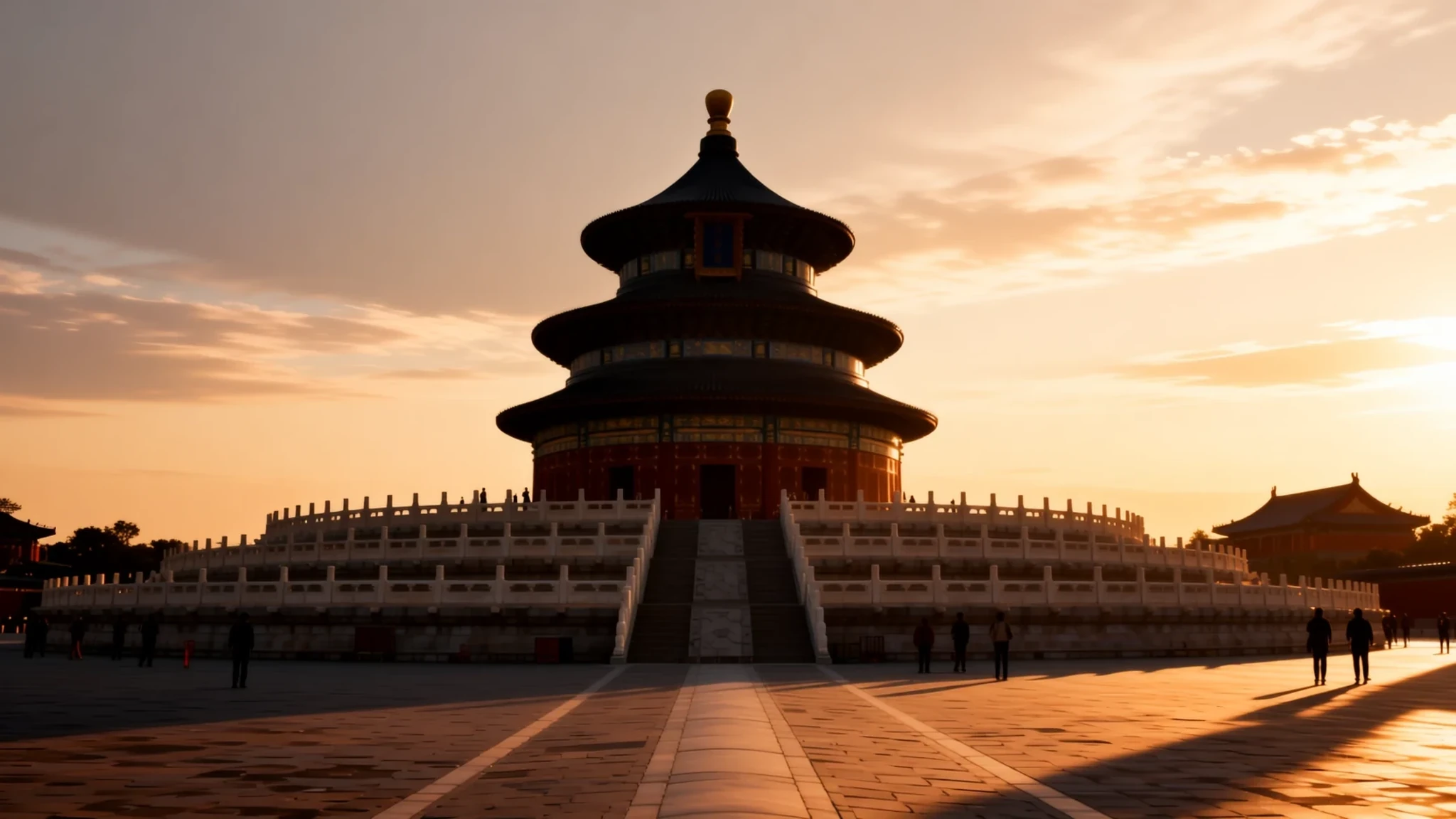
A walled park of ritual halls where emperors once prayed for good harvests, and now a place where Beijing residents still exercise and sing.
The place
The Temple of Heaven, known in Chinese as Tiantan, is a walled park of ritual halls in the southeastern part of central Beijing. It was never a temple in the everyday sense. Ming and then Qing emperors came here to pray for a good harvest and to carry out the seasonal rites that linked the court to the sky, and nearly every part of the layout serves that purpose. Round halls stand on square foundations, and the grounds are planned around the old idea of a round heaven above a square earth.
The main buildings run along a north–south line. The Hall of Prayer for Good Harvests, a circular hall with a tall blue-tiled roof on a white marble terrace, is the image most people know. Further south, the Circular Mound Altar is an open marble platform, exposed to the sky. Between and around them are cypress and pine trees, and in the early morning older Beijingers use the park for tai chi, singing and card games.
The complex draws a steady crowd. Tour groups arrive by mid-morning, and the paths narrow at the main halls, so the busiest part of the day is the least comfortable. A slower visitor can spend half a day here without feeling rushed, and the surrounding park offers a shadier, quieter route to the buildings than the open courtyards.
Its story
The Temple of Heaven was first built in 1420, in the reign of the Yongle Emperor of the Ming dynasty, the same reign that saw the Forbidden City raised. The complex grew under the Jiajing and Qianlong emperors. In 1534 the older Altar of Heaven and Earth was renamed the Temple of Heaven, part of a wider Jiajing project that also set up temples to the sun, earth and moon in other parts of the city. By 1749 the layout that visitors see today had largely taken shape under Qing rebuilding.
The imperial era did not end gently for the site. Anglo-French forces occupied it during the Second Opium War, and in 1900 the Eight-Nation Alliance made it the temporary military headquarters in Peking for about a year during the Boxer Rebellion. After the Qing fell, nobody looked after the buildings properly, and several halls collapsed through neglect in the years that followed. Restoration came slowly.
Politics kept reaching into the grounds. In 1914, Yuan Shikai, then president of the Republic of China, held a Ming-style prayer ceremony here while trying to have himself declared emperor, an episode that shows how the symbolism of heaven could still be used to claim legitimacy. Today the site works as both a monument and a public park.
UNESCO added the complex to its World Heritage list in 1998, which has helped steer its restoration and its visitor arrangements since.
What to see
- Hall of Prayer for Good Harvests — The main axis, north of the altar
The Hall of Prayer for Good Harvests is the building most photographs of the Temple of Heaven show. It is a circular hall with a tall blue-tiled roof, standing on a white marble terrace that rises in steps. The interior is worth a look, with its heavy timber and painted ceiling, but the terrace is where most visitors spend their time, and it is at its busiest from late morning.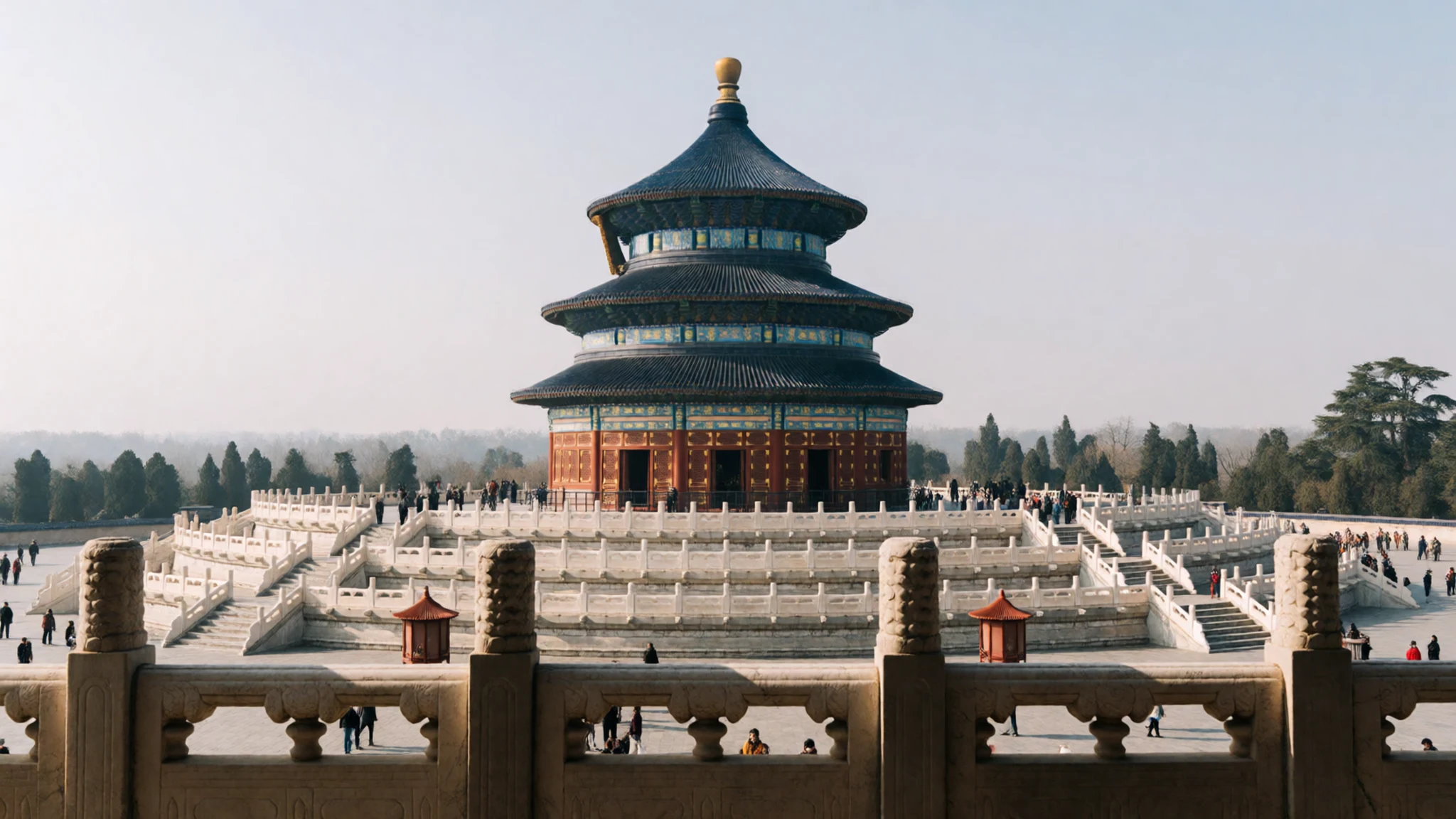
- Circular Mound Altar — The southern part of the complex
The Circular Mound Altar is a round marble platform set in its own courtyard to the south of the main hall. Here the emperor carried out sacrifices to heaven, and the paving is laid in concentric rings. The platform is open to the sky, so it is bare and hot in summer, and it rewards an unhurried look at the stonework and the views across the park.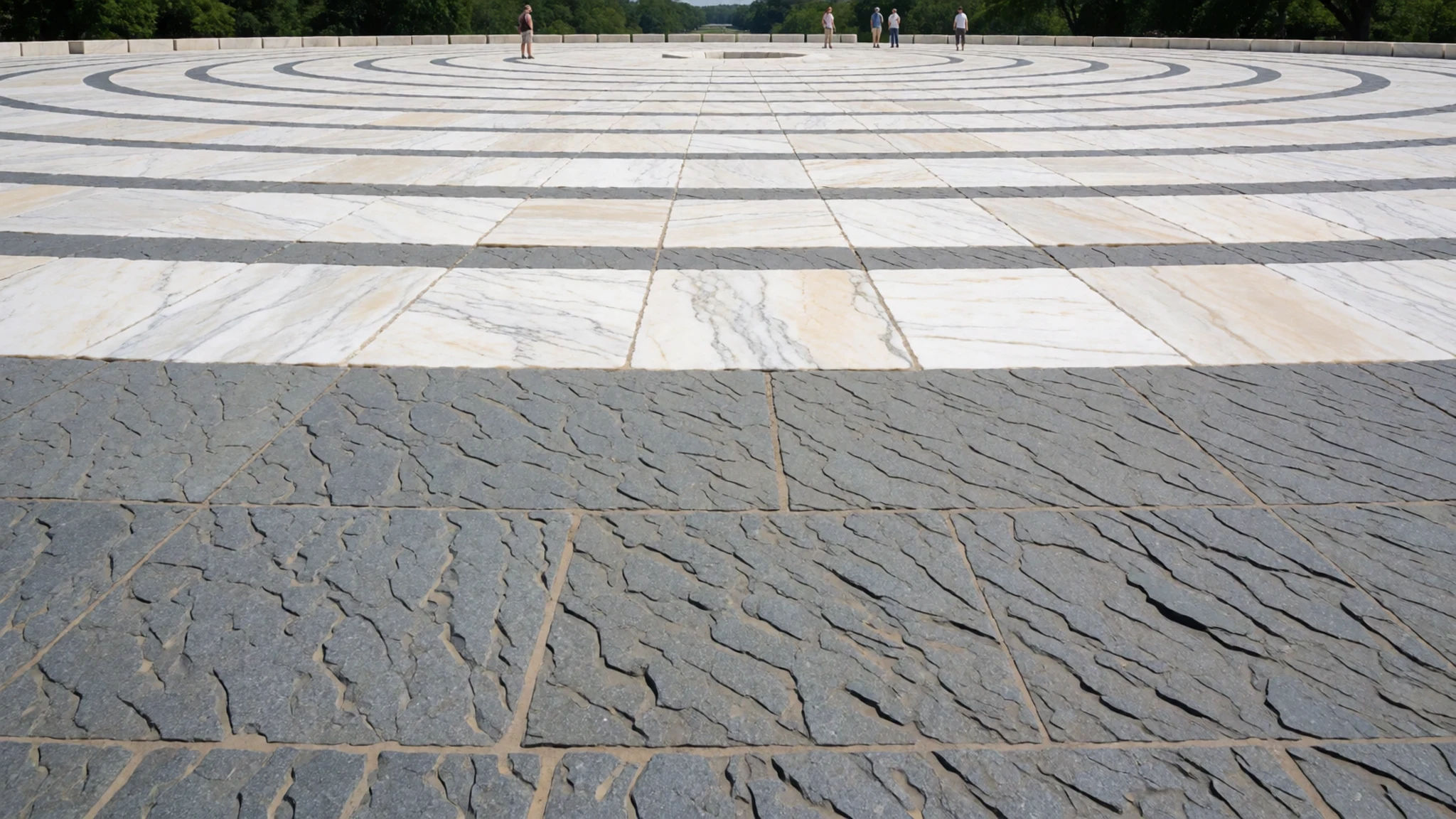
- Imperial Vault of Heaven — Between the main hall and the altar
The Imperial Vault of Heaven is a smaller round building set in its own walled courtyard, where ceremonial tablets were once kept. Visitors often test the echo along the courtyard wall, so expect some noise and a line of people waiting to try it. Go early, as the courtyard fills with tour groups after mid-morning.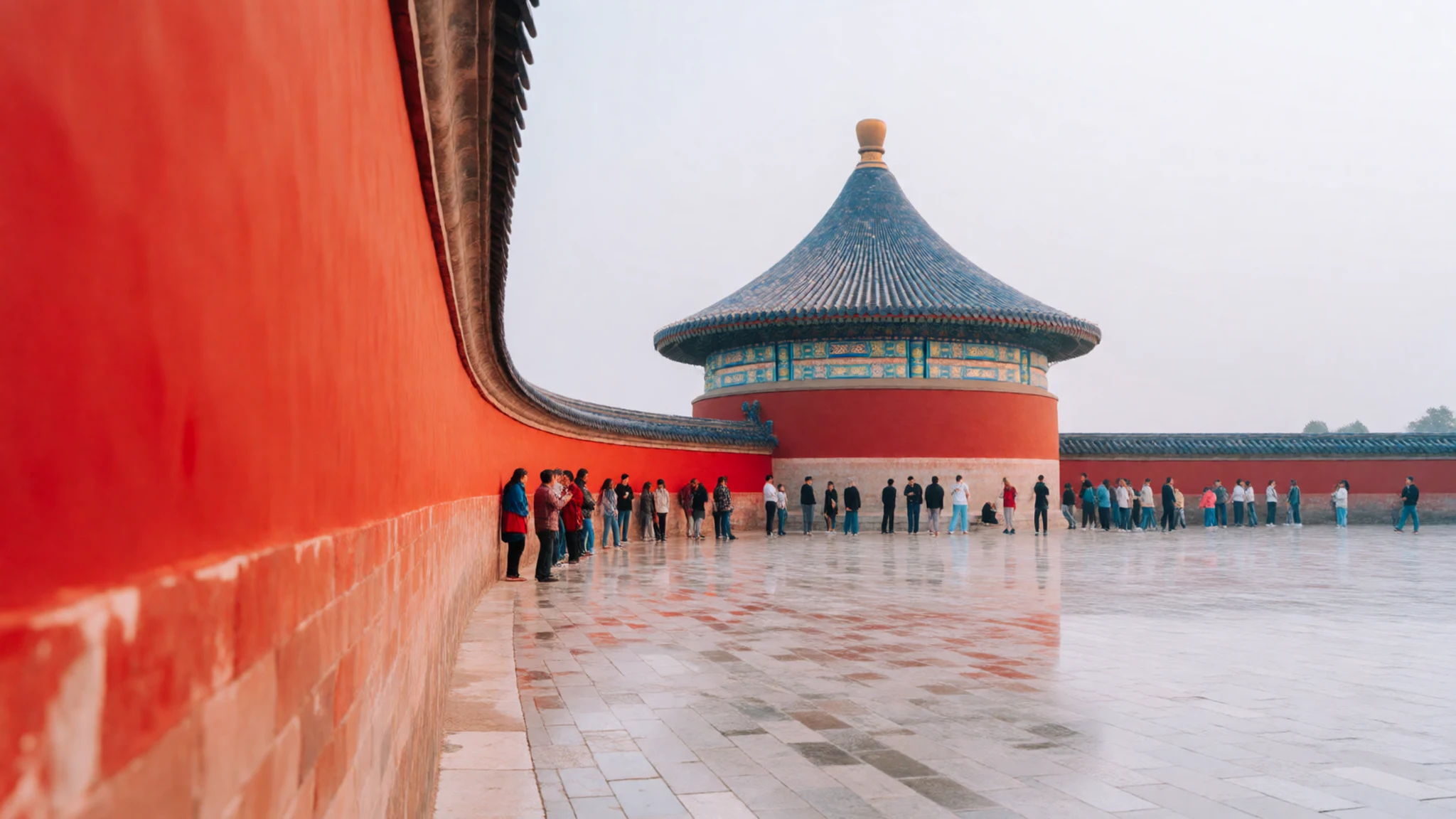
- Zhengyangmen — Central Beijing, on the old city wall line
Zhengyangmen is a gate on the old inner city wall line, outside the park grounds, built in 1419. Emperors passed through it on the way to the Temple of Heaven, so it links neatly with a visit to the park. It now houses exhibits with photos and models of the old city, which give a useful picture of how the capital was laid out.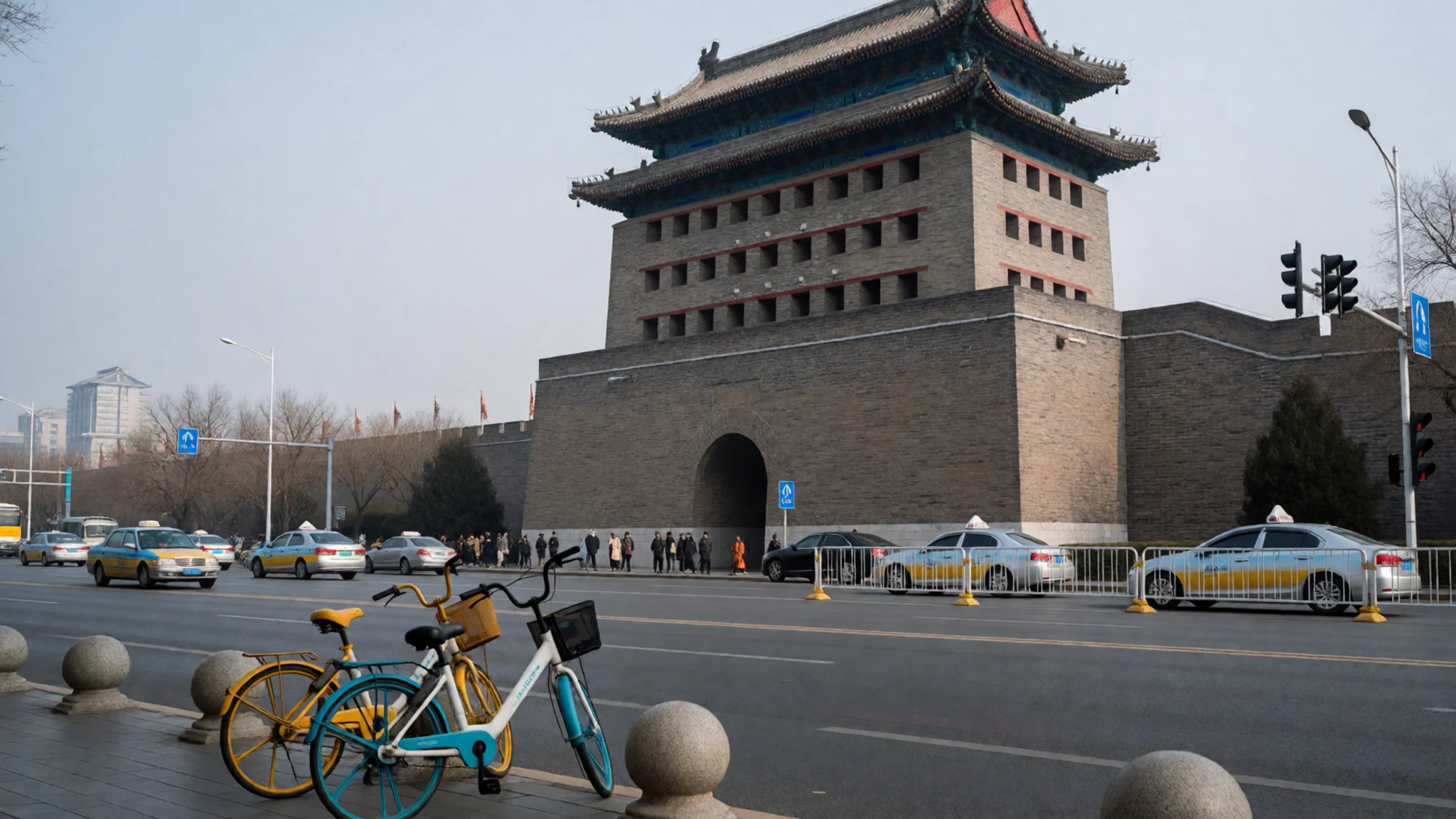
- Zhihua Temple — Central Beijing, a separate stop
Zhihua Temple is a Buddhist temple built in 1443, a quieter contrast to the Confucian halls of the Temple of Heaven. Its painted interiors and courtyards reward a slow look, and it is less busy than the main park. It is worth planning as a separate stop elsewhere in central Beijing rather than as part of the same walk.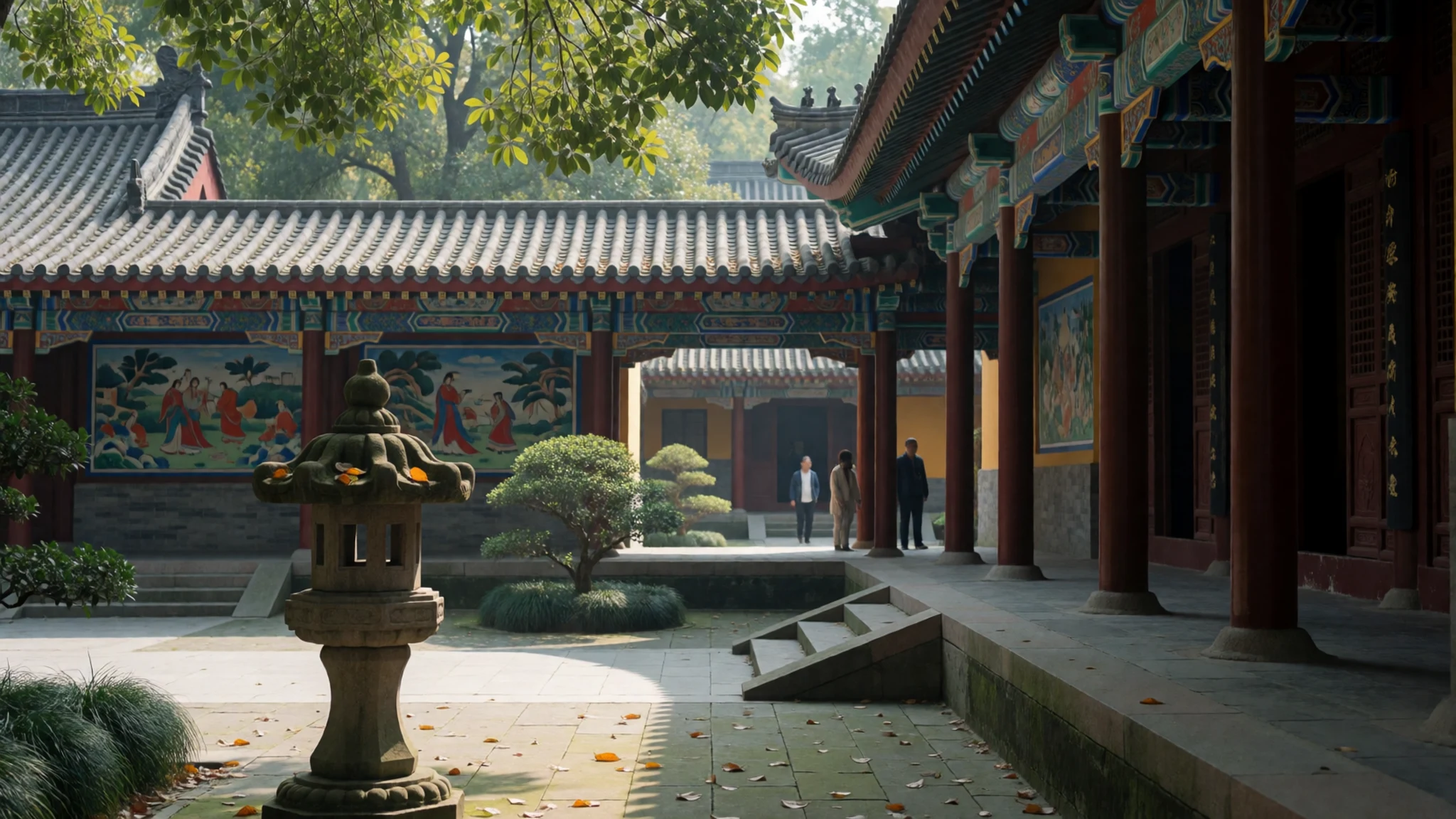
Culture
At the Temple of Heaven the buildings are still treated with respect, even though the site now works as a public park and a major sight. Many people come to the grounds for daily exercise, music and conversation, and the old halls share the space with that everyday life. Stone paths and terraces can be slippery after rain and very hot in summer, so keep to the marked routes and avoid sitting or climbing on the marble. Photographing the buildings is welcome, but ask before taking close pictures of people practising in the park. Keep your voice low around the halls and ask before photographing anyone who is practising in the park.
What to wear
At the Temple of Heaven, the traditional dress of the court was formal and heavy. Ming and Qing emperors and officials wore silk robes and embroidered ceremonial garments, with colour, pattern and rank set out by strict rules. Silk, satin and brocade were the usual materials, and dragon and cloud motifs marked imperial status. Such dress was worn for the ceremonies held here, not on ordinary days, so most visitors today see it only in museums or reconstructions.
What people wear now is practical and varied. Older Beijingers doing morning exercise in the park often wear loose cotton trousers, tracksuits and sun visors, while younger visitors dress much as they would in any big city, with jeans, trainers and light jackets. Few people dress up to visit, and nobody is expected to.
For a visit, dress for the weather and for a lot of walking on stone. Spring and autumn days can change quickly, so bring a layer you can add or remove. Summer calls for loose cotton or linen, a hat and sunscreen, since the open paved areas give little shade. Wear comfortable closed shoes, because the terraces and paths are long and hard underfoot. Modest clothing suits the site, though there is no strict dress code for visitors.
What to eat
- Beijing hot pot — A hot pot house in the central city, such as Donglaishun
Beijing hot pot is a communal pot of simmering broth at the table, with thin slices of lamb and leafy vegetables dipped briefly and eaten with sesame sauce. Donglaishun, a restaurant that has served it since 1903, is a long-established name, and the broth is rich rather than spicy.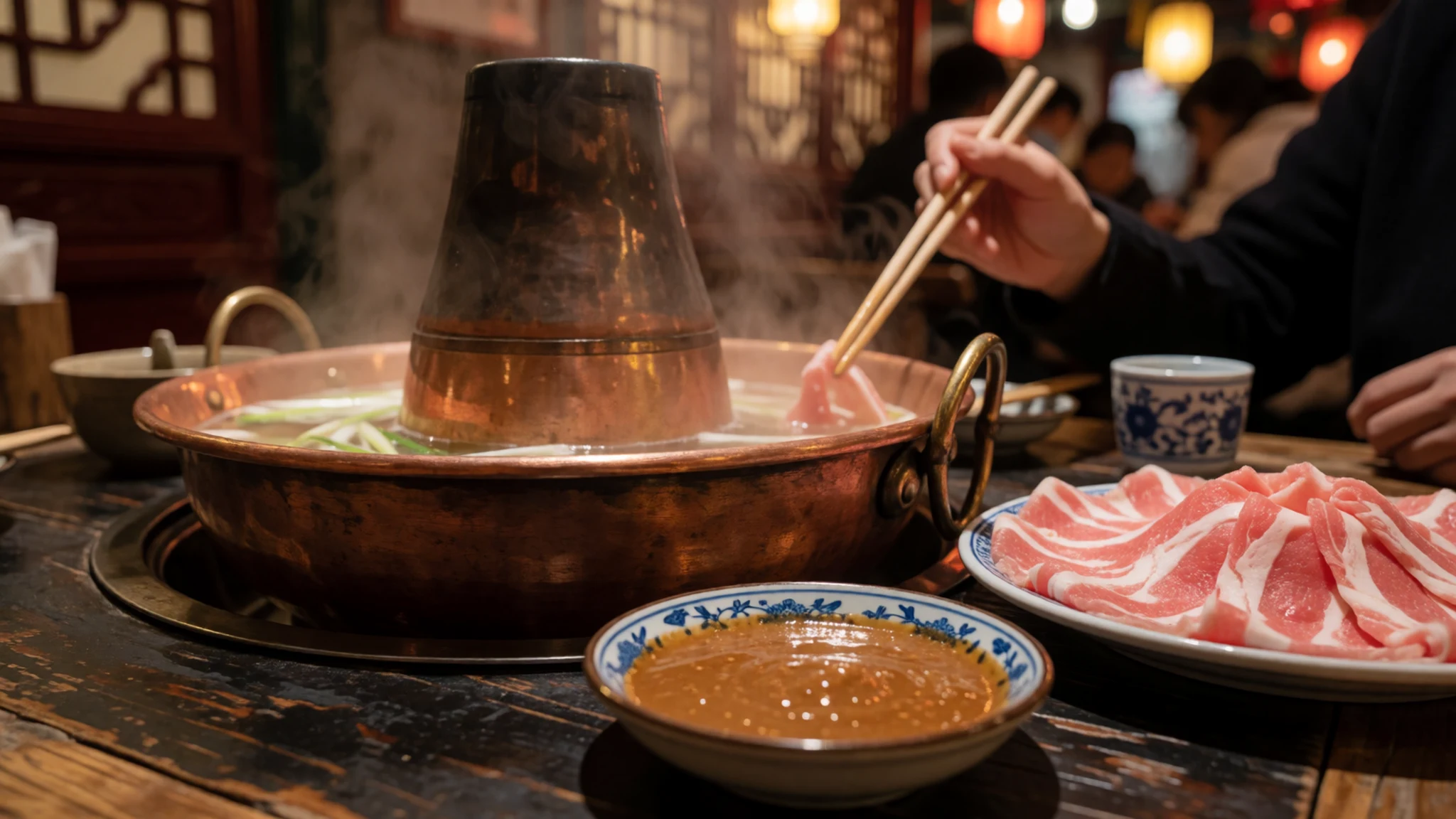
- Dongbei-style dumplings — A dumpling chain with branches across the city, or any local eatery serving boiled dumplings
Dongbei-style dumplings from the northeast are plump and generously filled, with pork and cabbage or chive fillings, boiled and dipped in black vinegar with garlic. They are cheap and filling. Oriental Dumpling King is a chain with several branches around the city, so lunch is easy to find.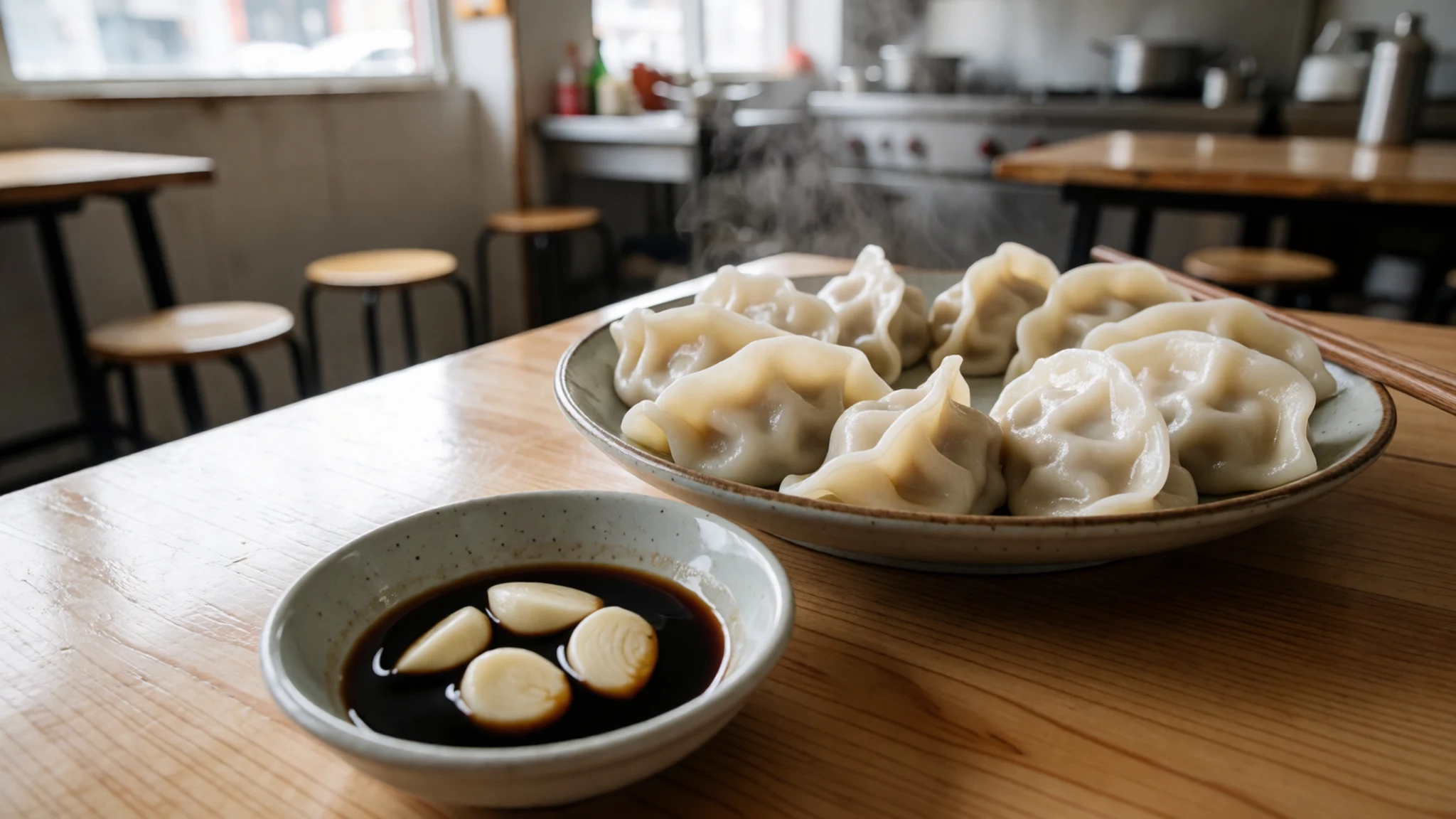
- Sweet and savoury snacks — Wangfujing Snack Street, central Beijing
Wangfujing Snack Street is a row of stalls selling Beijing-style snacks, both sweet and savoury. Expect fried dough, skewered fruit coated in hard sugar, and small pastries to eat as you walk. Go in the evening, when the lanes are lit up and the stalls are open for the crowds. - Night market skewers — The Donghuamen Night Market, central Beijing
The Donghuamen Night Market is the place for the adventurous, with skewers of scorpions, starfish and silkworm grubs on offer beside more familiar grilled meat and fruit. Most visitors try one skewer for the photograph and then move on. Go with an open mind and a bottle of water. - Coffee and a rest — A cafe in central Beijing, north of Tiananmen Square
Poetry Cafe is a small cafe with a warm, personal feel, run by an owner who enjoys travel and photography. It suits a slow coffee after the temple, and it is a good place to rest your feet before heading back out into the city.
Plan it
Best time. Late spring and October bring the most comfortable days, with far less rain than in July. July and August are hot and humid, and the open paved areas offer little shade in summer.
How long. 1–2
Getting there. Fly into one of Beijing's airports, then take the subway or a taxi. The district is well served by Lines 2, 5 and 1, and the nearest station to the park is the best final stop. Check the map before you set out.
Budget. mid
Tips
- Check the official site for current entry details and book ahead if the site asks you to
- Arrive before mid-morning, when tour groups begin to fill the main halls
- Carry some cash for small stalls and check payment options before you order
- Bring water and a hat, because the paved areas give little shade
- Allow time to walk through the park rather than heading straight for the buildings
Etiquette
- Keep to the marked routes and avoid climbing on the marble terraces
- Ask before photographing people who are practising in the park
Nearby
Sources
- Wikidata Q125445 (CC0)
- Wikipedia: Temple of Heaven (rev 1365396132) (CC BY-SA 4.0)
- Wikivoyage: Beijing/Central Dongcheng (rev 5403149) (CC BY-SA 4.0)
- Temple of Heaven - Hall of Prayer for Good Harvests (Shujianyang) (CC BY-SA 4.0)
- Temple of Heaven - Imperial Vault of Heaven 01 (xiquinhosilva) (CC BY 2.5)
- The Temple of Heaven (54391778383) (xiquinhosilva) (CC BY 2.5)
- Circular Mound Altar (Zcm11) (CC BY 3.0)
- Peking - Temple of Heaven postcard, c. 1898 (unknown author) (Public domain)
- Temple of Heaven - Hall of Prayer for Good Harvests 03 (xiquinhosilva) (CC BY 2.5)
- Temple of Heaven - Imperial Vault of Heaven 02 (xiquinhosilva) (CC BY 2.5)
- Interior of the Hall of Prayer for Good Harvests (Daniel Case) (CC BY 3.0)


