Tegallalang
Tegallalang, Indonesia
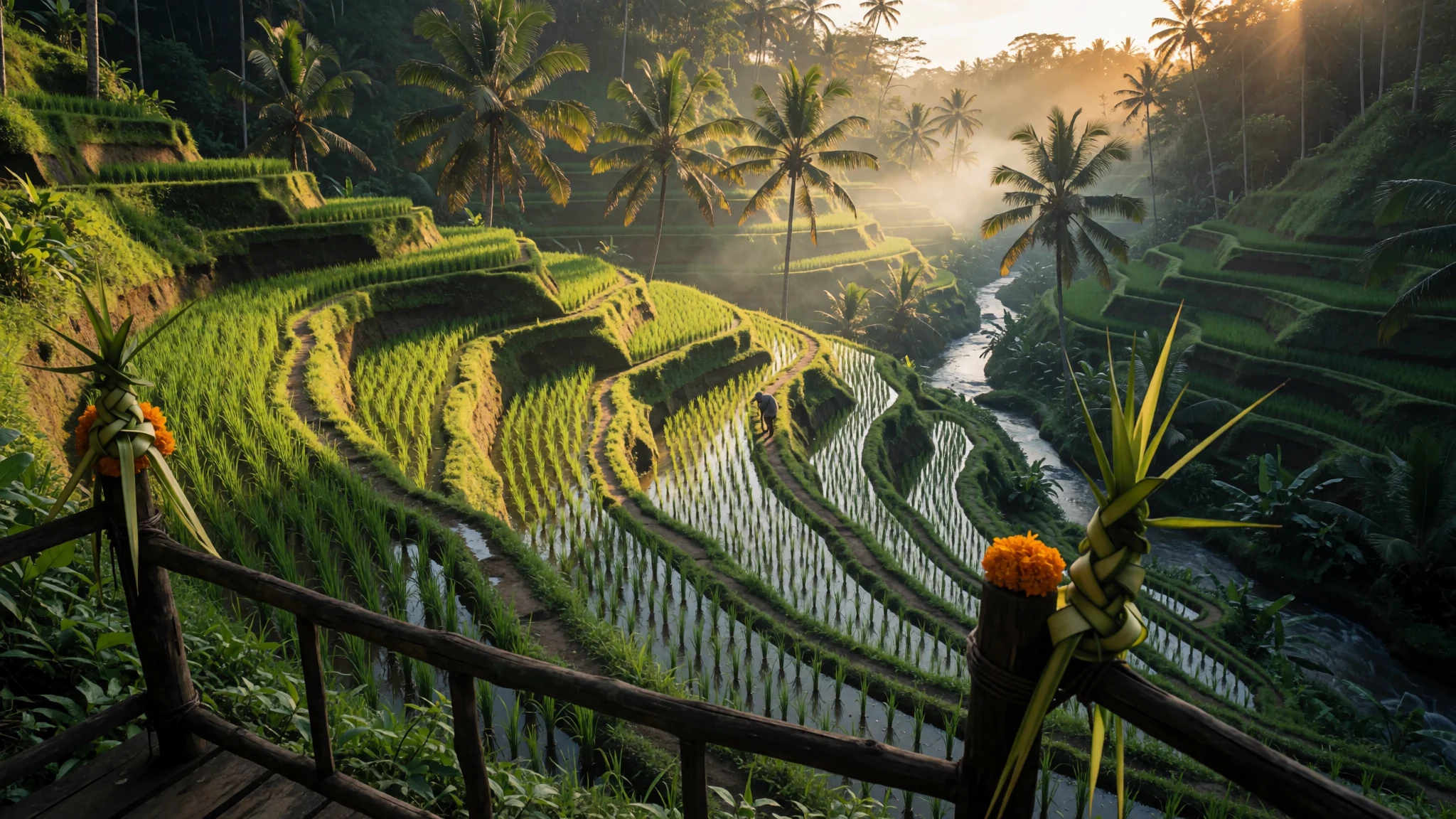
Go for the stepped rice terraces a short drive north of Ubud, and arrive early, before the coaches and the midday heat.
The place
Tegallalang is a district in Gianyar Regency, in the interior of Bali, Indonesia. It lies a short drive north of Ubud, the island's cultural hub, and its hillsides are cut into terraces of rice that step down into narrow valleys. Most visitors come for the roadside views and the photographs that go with them, and the area has grown into one of the busiest rice-field stops in central Bali. The district is home to tens of thousands of people, many of whom work the paddies, sell crafts or run small eateries along the road.
The land sits at about 83 metres above sea level, high enough to keep the air noticeably cooler than on the coast. The terraces follow the slope rather than lying flat, so each plot holds its own water level. The green is at its most intense when the paddies are full, which is why the wetter months look so lush.
Bali as a whole is one of more than 18,000 islands in the Indonesian archipelago, and its reputation for friendly people, temples and beaches has made it the main tourist destination in Indonesia. That popularity reaches even the quieter hill districts. Tegallalang works best as a morning or half-day excursion rather than a place for a long, quiet stay. The terraces are the reason to come; the traffic and shops around them are the price of that popularity.
Its story
The rice terraces of Tegallalang belong to a much older system than the tourist road that runs past them. Across Bali, villages are organised around customary law, known as adat, which governs how land, water and ceremony are shared. Each community keeps its own temples, and the planting calendar is tied to the rituals that mark the growing year. Terraces like these depend on water channelled from upland springs and rivers, so a field at the top of the slope affects the one below it.
For generations the valley was simply a working landscape. Farmers cut the steps by hand, planted and harvested the grain, and carried it to local markets along narrow ridge tracks. The shift came with the wider growth of tourism. Bali drew visitors from across the world, and the stretch north of Ubud, with its cafes, photo spots and walking paths down between the steps, became a regular stop on many itineraries. Small businesses clustered along the roadside to serve the arrivals.
The tension is visible today. The fields that draw cameras still produce rice, and the families who tend them balance income from visitors against the demands of planting and irrigation. Bali as a whole has faced problems from mass tourism, including congestion in the south and concern about behaviour at sacred sites. Tegallalang shows how a working agricultural landscape can be reshaped by visitors without quite being lost to them.
What to see
- Tegallalang rice terraces — Tegallalang, north of Ubud
The terraces that give the district its reputation are best seen early in the morning, when the light is low and mist still sits in the valley. Paths lead down between the steps, and the roadside viewpoints offer the classic panorama. Stay on the marked tracks, because the banks are soft and farmers are often still working. Small change is useful at the viewpoints. The walk down is easier than the climb back, so plan for the heat by late morning.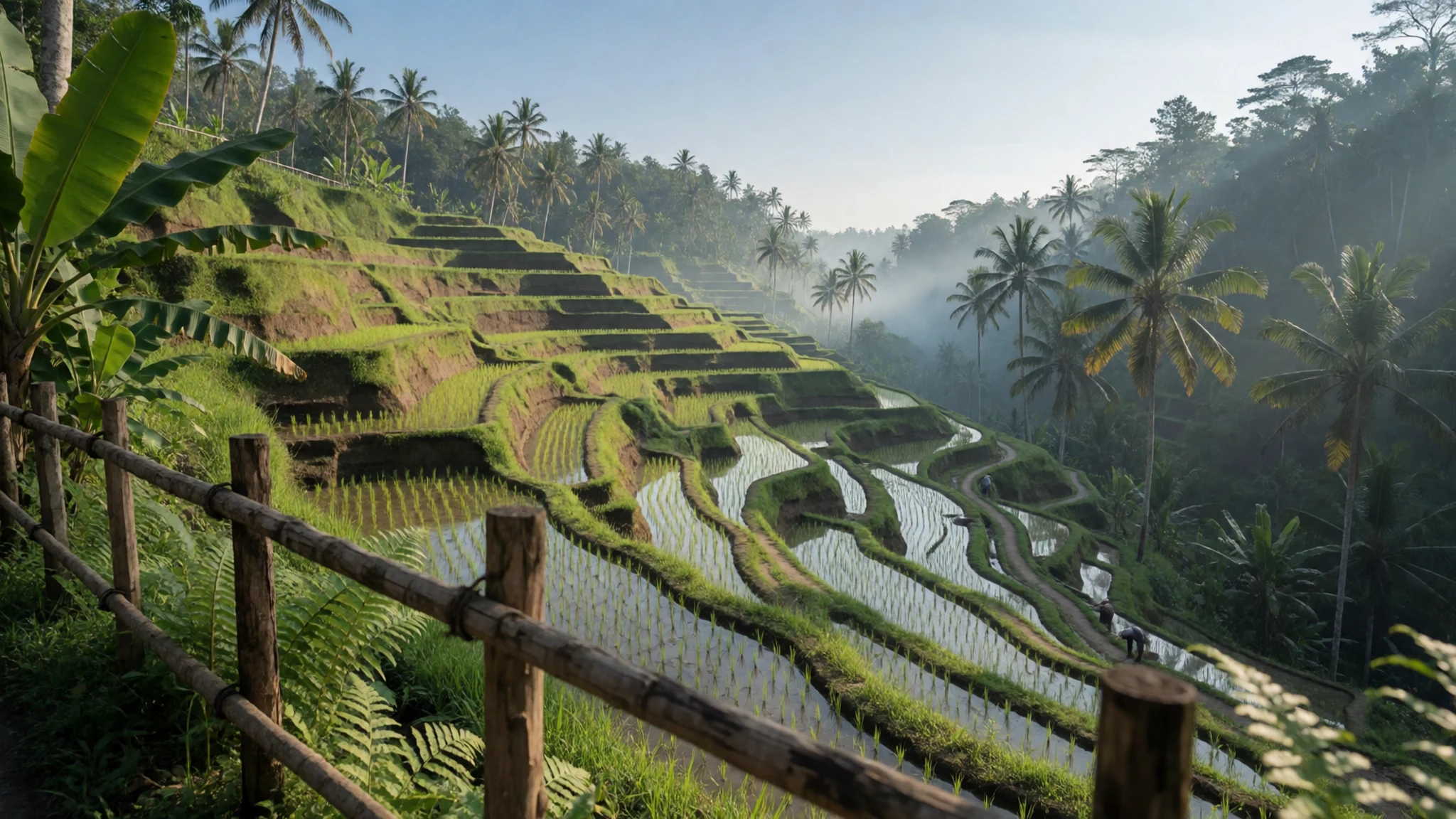
- Kedisan village — Kedisan, within the Tegallalang district
Kedisan is a village within Tegallalang whose fields appear in many photographs of the area. Its lanes are quieter than the main road, with family compounds, carved gateways and small shrines set behind walls. Walking here in the morning gives a better sense of how the terraces are worked day to day. Keep to the paths, and ask permission before entering a compound or photographing a family at work.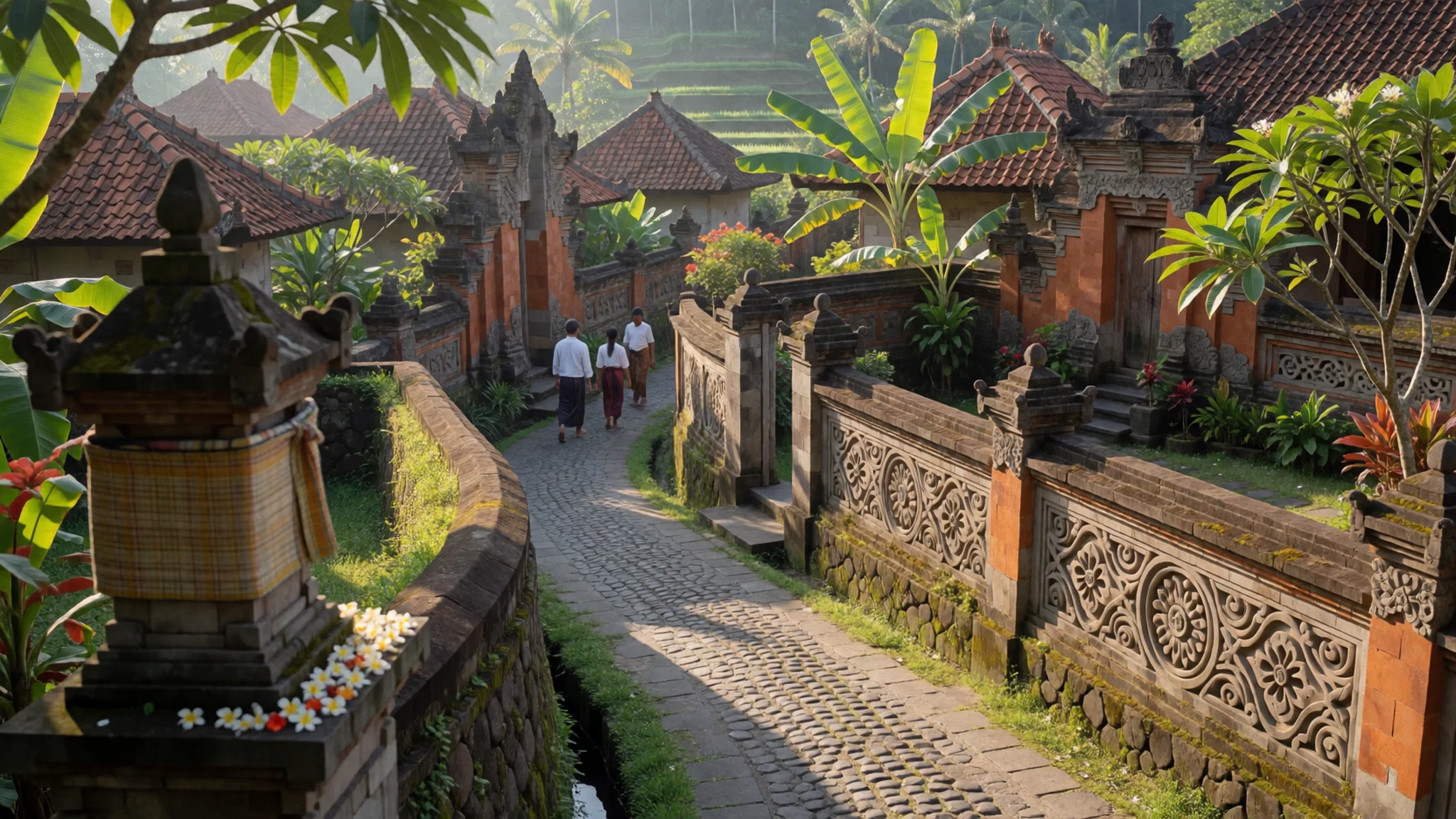
- Pura Besakih — Slopes of Mount Agung, eastern Bali
Known locally as the mother temple, Besakih is the most important of Bali's Hindu temples, climbing the slopes of Mount Agung. It is a long drive from Tegallalang, so it deserves a separate day rather than a rushed stop. Wear modest dress and a sarong at the gates, and follow the guidance of the temple staff on where to stand. Arrive early, before tour groups gather and clouds settle over the mountain.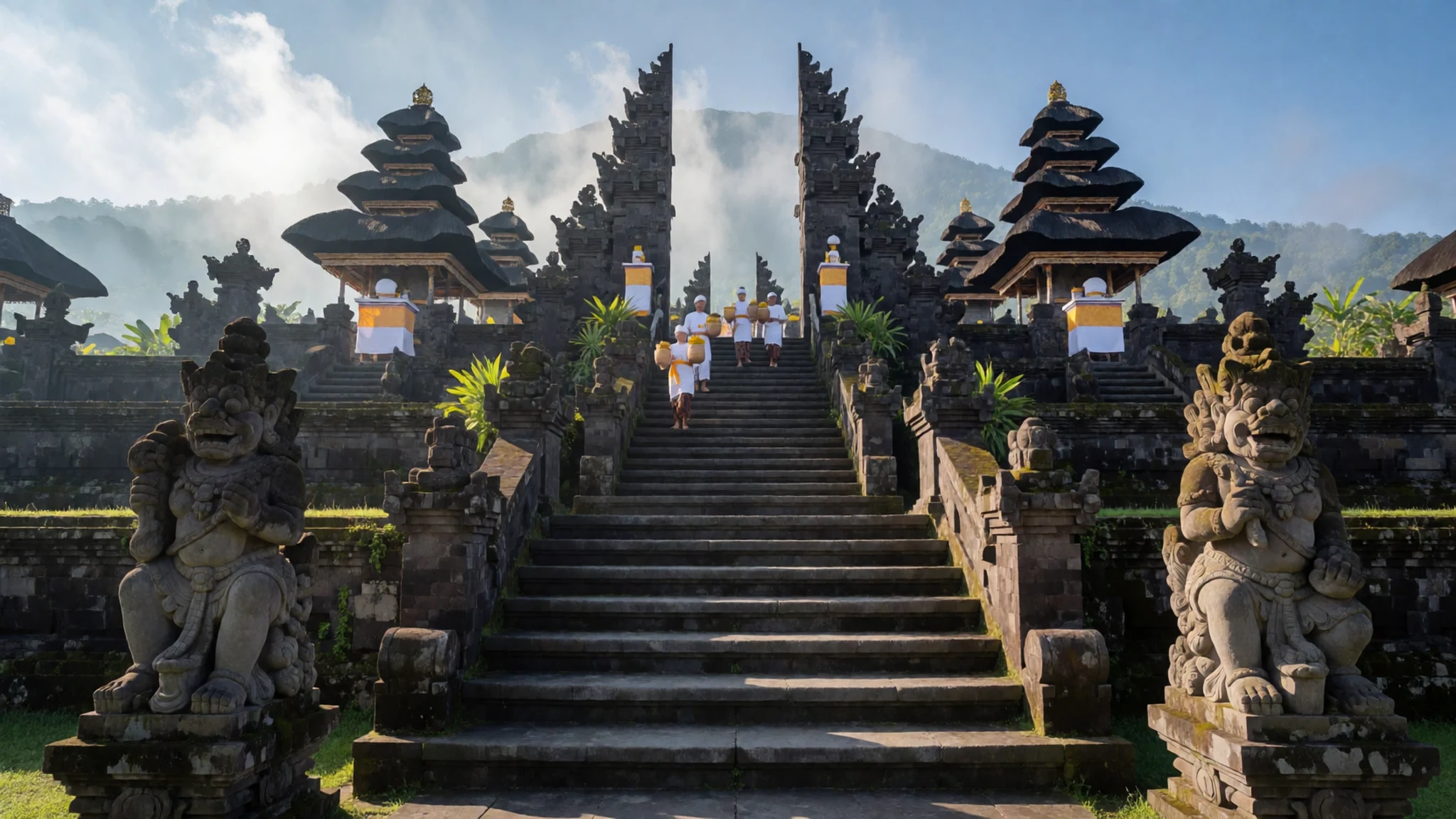
- Pura Ulun Danu Bratan — Bedugul highlands, a cooler lake district
This temple stands at the edge of a lake in the highlands, surrounded by trees and often mist. It is one of the nine directional temples, which local belief holds protect the island from dark forces. The road up from the lowlands is cooler, and the lakeshore is a welcome change from the heat of the terraces. Plan a morning here, walk the lakeshore, and return by a late lunch in the highland town.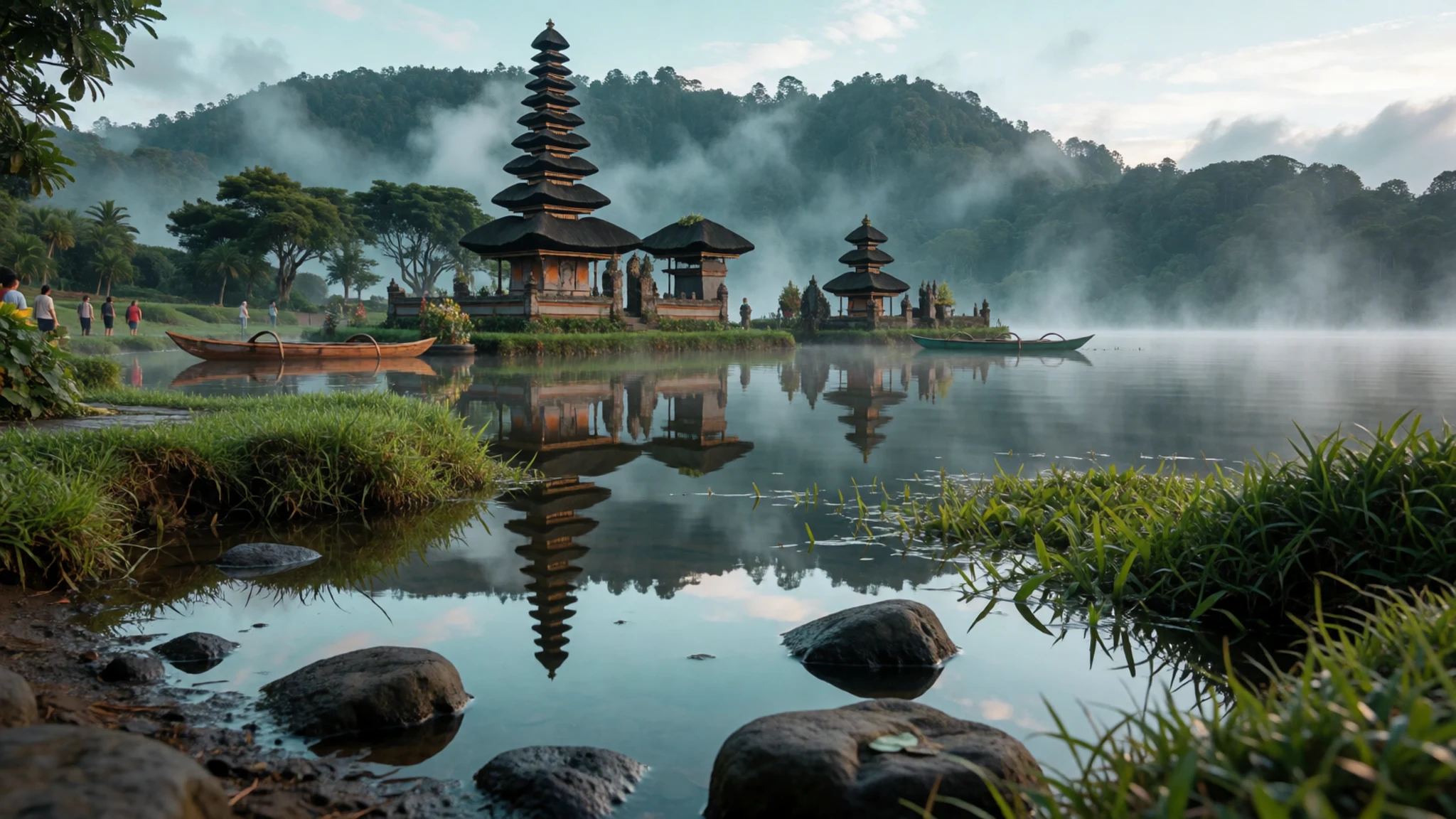
Culture
Tegallalang is a rural district, but it sits within Bali, where Hindu practice shapes daily life. Each village keeps its temples under customary law, and families maintain small shrines in their compounds, so sacred spaces are never far away, even among the fields. Daily offerings of rice, flowers and incense are placed at doorways, on the ground and at the base of shrines. They are part of ordinary life rather than a display for visitors.
Tourism has changed the mood. Bali has seen the strains of overtourism, and authorities have responded with a tourist police unit and tighter enforcement against foreigners who misbehave, including at sacred places. Visitors who overstay visas, work illegally or act disrespectfully at temples can be deported, so keeping to the rules is part of a trouble-free visit.
Politeness goes a long way. A smile and a simple greeting are welcome, and bargaining is normal at markets but less so in fixed-price shops. Calm courtesy is valued, so raised voices and public displays of anger are poorly received. Remove shoes wherever a step marks a sacred area, and never sit on temple walls. Wear a sarong and sash before entering any temple, and step around offerings rather than touching them.
What to wear
Traditional dress in Tegallalang follows the Balinese pattern seen across Gianyar. Men wear a kamben, a wrapped cloth tied at the waist, with a udeng headcloth and a sash for ceremonies, while women pair a kebaya blouse with a kamben and a sash. The cloth is often woven in endek, an ikat technique in silk or cotton, or in songket, where gold or silver thread is worked into the weave. These outfits are worn for temple festivals, weddings and rituals rather than for everyday work.
In daily life most people wear shorts, T-shirts and practical clothes in the fields, with a sarong kept at home or in the car for temple visits. Motorbike helmets, sun hats and flip-flops are common on the roads. Younger people in the towns dress in Western fashion, but the sash and sarong remain standard for religious events.
For a visit, choose light cotton or linen that covers the shoulders and knees, especially if you plan to enter a temple. A sarong and sash are needed at temple gates, and many sites keep them to lend. The terraces are steep and often muddy after rain, so closed shoes with grip work better than sandals, and a wide-brimmed hat helps in the midday sun.
What to eat
- Nasi campur — Warungs along the main road through Tegallalang
Steamed rice with small portions of vegetables, egg, tempeh and meat or fish, picked from a row of dishes at the counter. Warungs near the terraces serve it by the plate, and the turnover keeps everything fresh. It makes a filling lunch between walks.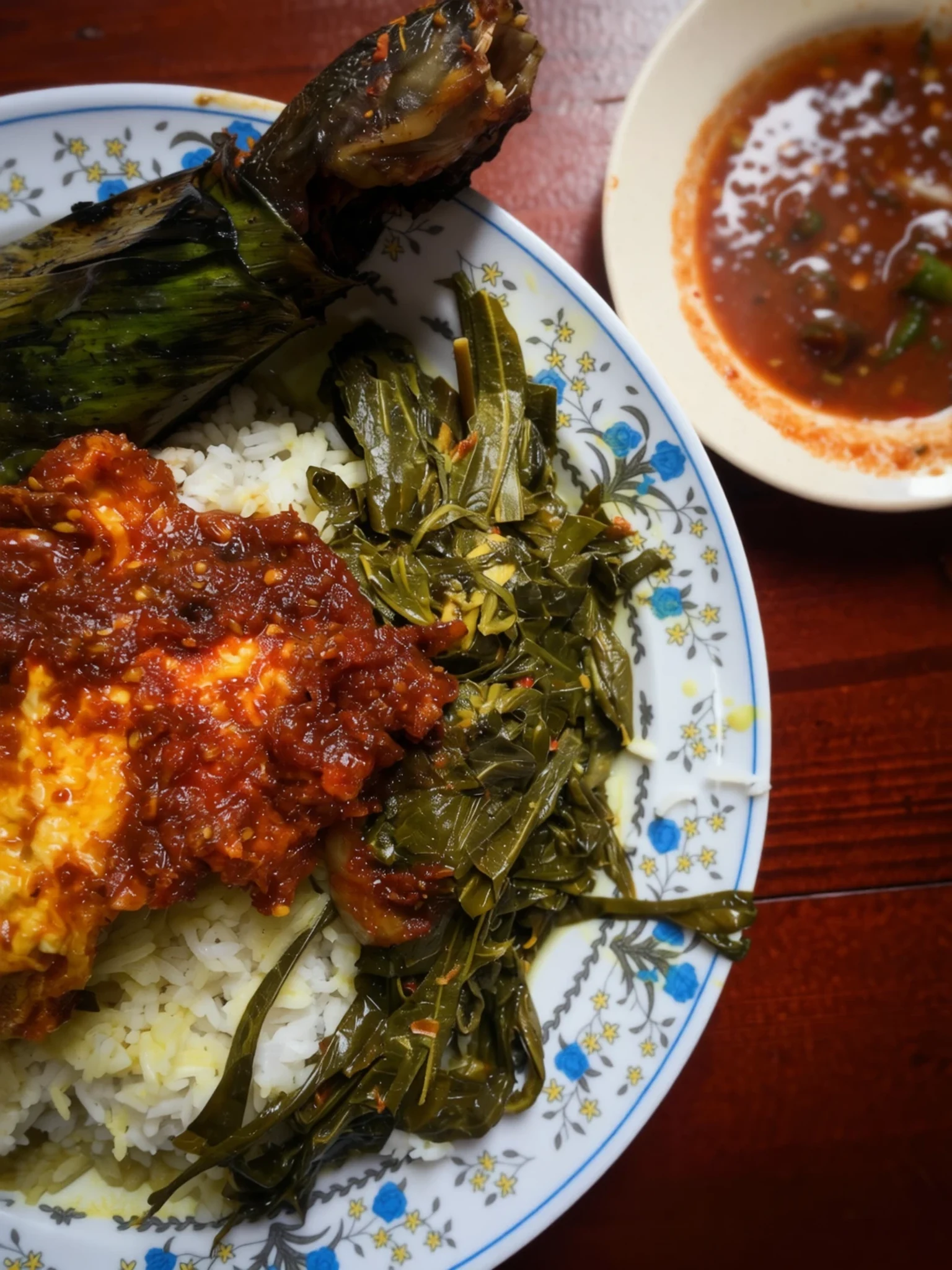
- Nasi goreng — Any warung in Tegallalang village or on the Ubud road
Fried rice cooked with sweet soy, shallot, garlic and chilli, often topped with a fried egg and prawn crackers. It is the everyday dish of Bali's small eateries and is often served all day. It is a reliable breakfast choice.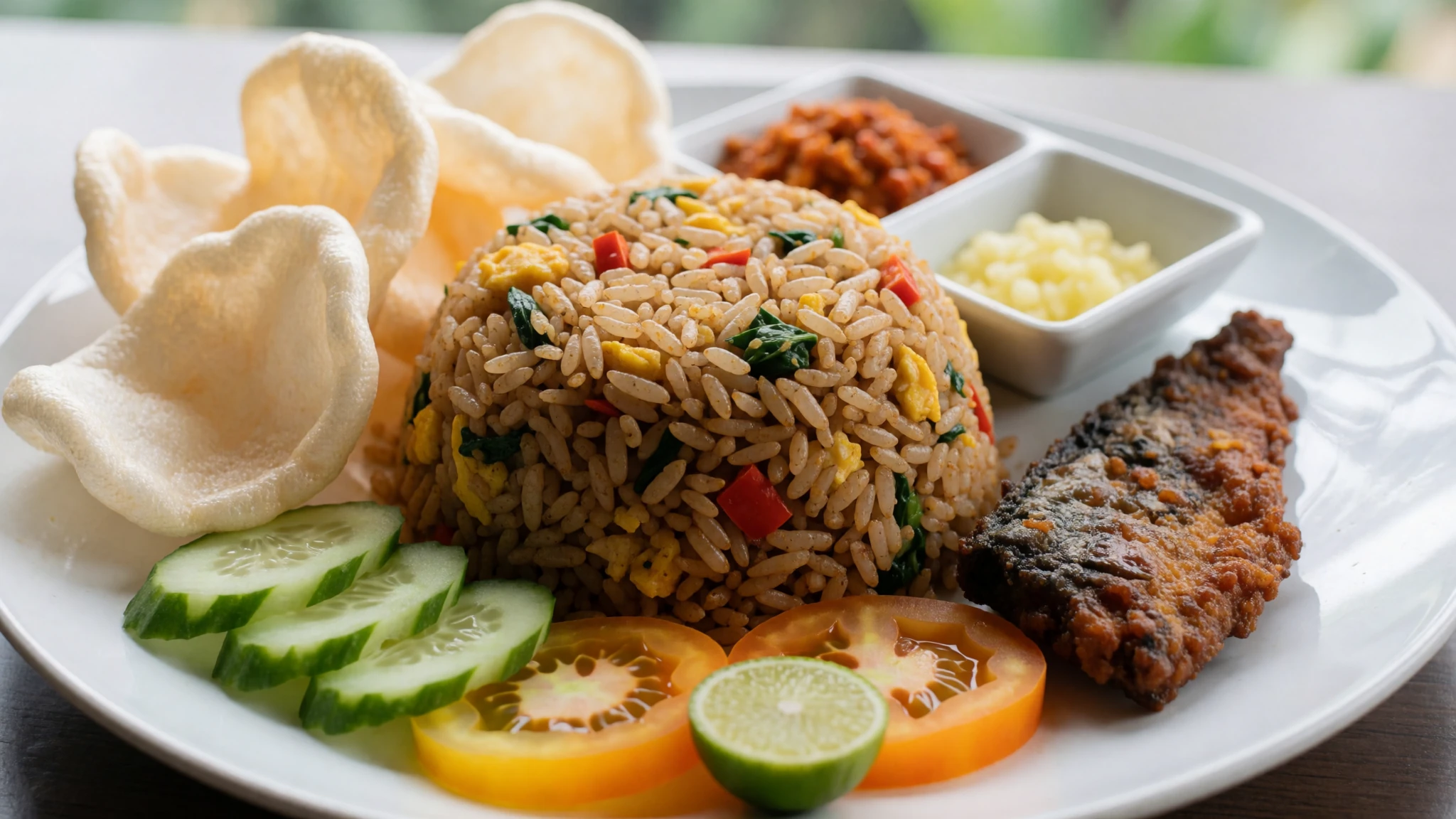
- Mie goreng — Roadside stalls and evening food carts around Ubud
Fried yellow egg noodles tossed with cabbage, egg, sliced tomato and a little sweet soy, often with chicken or prawns on top. It is cheap, quick and easy to find at roadside stalls. Ask for less chilli if you want a milder plate.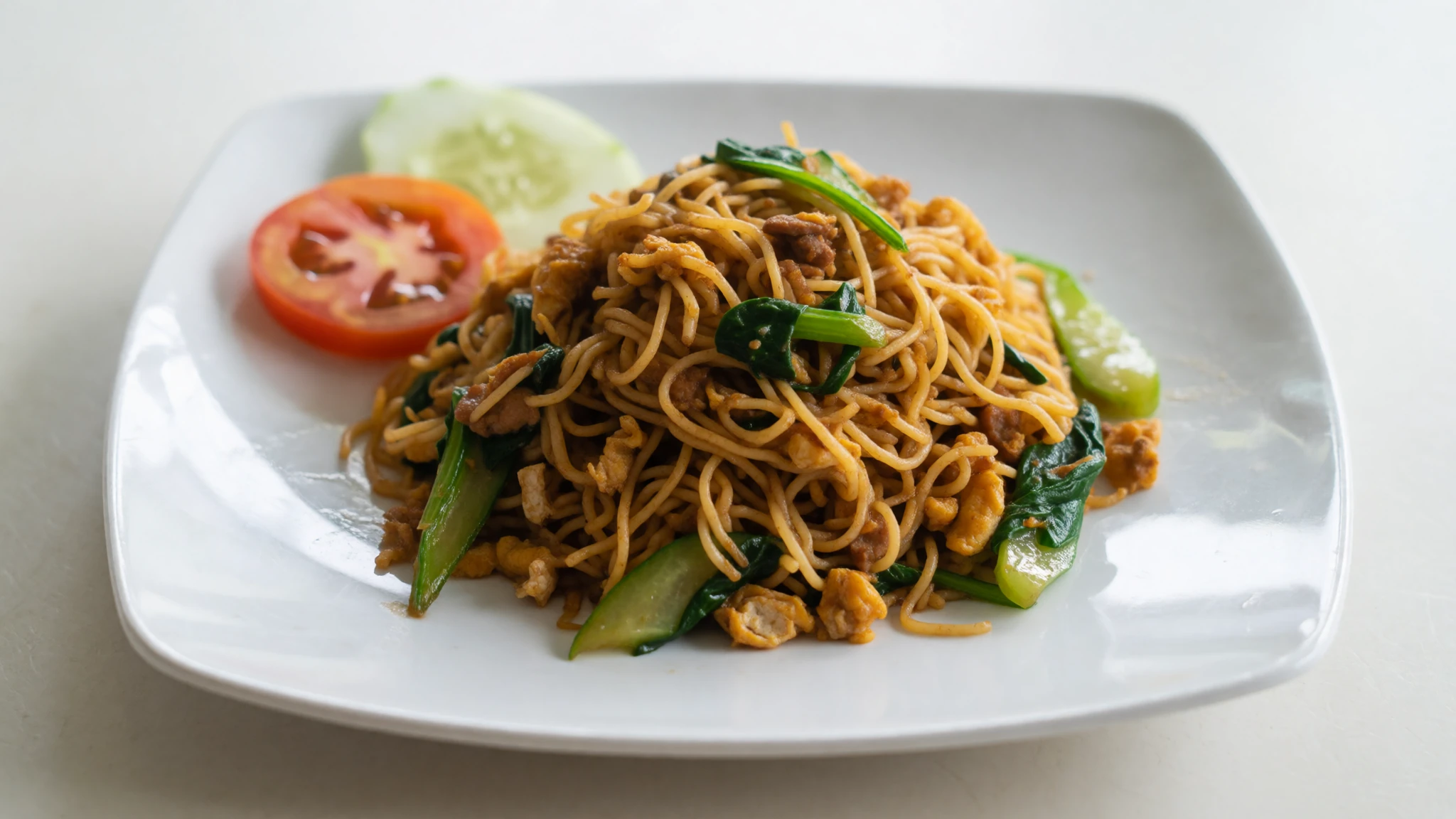
- Bakso — Kaki lima carts on roads near Ubud, especially in the evening
Bakso is a meatball and noodle soup sold from carts that roam the streets, often in the evening. The broth is clear, the meatballs are springy, and a bowl costs little. Ask a local where the evening stall is, since the carts move around.
Plan it
Best time. The dry season, roughly April to October, gives the clearest views and the sharpest colour in the terraces. November to March is the wet season, with rain often falling in the afternoon. It keeps the valley lush but can cloud the view and make the paths slippery.
How long. 2–3
Getting there. Fly into Ngurah Rai International Airport near Denpasar, then take a taxi or pre-booked transfer north to Tegallalang, roughly an hour by road depending on traffic. Use the fixed-fare taxi desk just after the arrivals exit rather than an unofficial driver.
Budget. low
Tips
- Start at the terraces in the early morning, when the light is soft and the roadside is quiet
- Carry cash in small notes for warungs, parking and roadside viewpoints
- Bring water and a hat; the walk down the steps is hot and the climb back is harder
- Visit Besakih or the highland temples on a separate day rather than squeezing them in
- Check the official site for the current arrival levy before you fly, as the rules have changed
- Wear closed shoes with grip, since paths between the steps are muddy after rain
- Agree the fare at the airport taxi desk before leaving the terminal
Etiquette
- Dress modestly and carry a sarong for temple visits
- Ask before photographing people working in the fields or taking part in ceremonies
- Stay on marked paths and keep off other people's plots
- Follow instructions from officials calmly, since tourist police now deal with foreigners who misbehave
Nearby
Sources
- Wikidata Q4200637 (CC0)
- Wikipedia: Tegallalang (CC BY-SA 4.0)
- Wikivoyage: Bali (CC BY-SA 4.0)
- Bali – Rice terrace (2687339411), William Cho (CC BY-SA 2.0)
- Bali – Rice terrace (2688147280), William Cho (CC BY-SA 2.0)
- Kedisan, Tegallalang (panoramio 1), Scorewith German (CC BY 3.0)
- Kedisan, Tegallalang (panoramio 2), Scorewith German (CC BY 3.0)
- Kedisan, Tegallalang (panoramio), Scorewith German (CC BY 3.0)
- Paddy in Tegallalang, Trudy Vianda (CC BY-SA 4.0)
- Rice terraces in Tegallalang 1, Christophe95 (CC BY-SA 4.0)
- Rice terraces in Tegallalang 2, Christophe95 (CC BY-SA 4.0)


