Taranto
Taranto, Italy
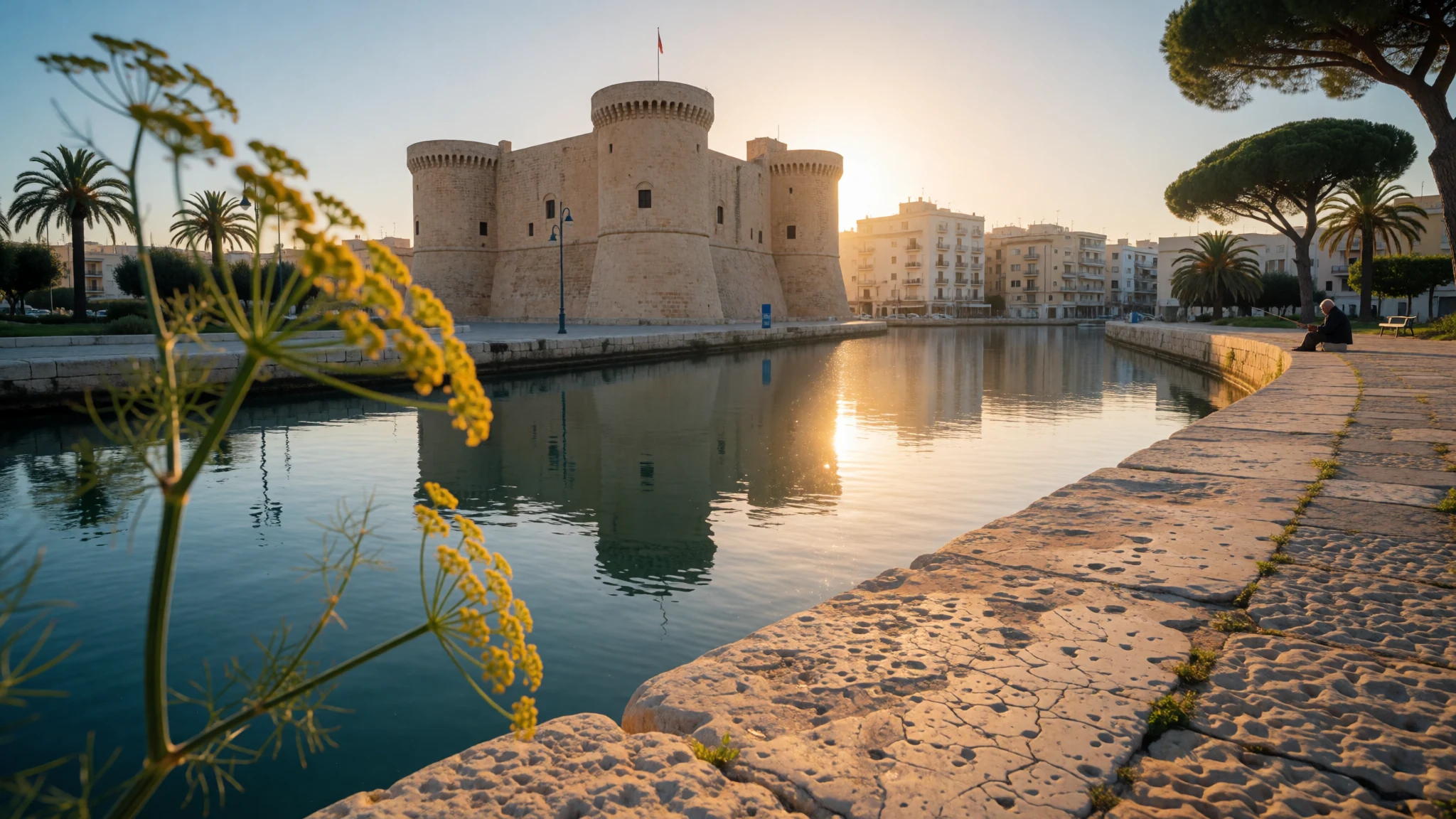
Taranto is a working naval port with a Greek founding myth, a fine archaeological museum, and mussels from its own inner sea, without the crowds of other Apulian towns.
The place
Taranto is a port city on the Gulf of Taranto, in the Italian region of Apulia, with about 188,000 residents and a centre only about 15 metres above sea level. Its shape explains most of it. The old town sits on a small island, cut off from the mainland by a navigable canal, and a swing bridge opens to let ships pass between the open gulf and the sheltered inner sea, the Mar Piccolo. The newer city of broad avenues and apartment blocks spreads across the mainland shore.
Water decides what the city does. Taranto is the main base of the Italian navy, a commercial port and the capital of its province. Steel and iron foundries, oil refineries, chemical works and shipyards sit around the urban area, and they colour the local economy, the air on some days and the public mood. Taranto is a working city rather than a polished resort, and some buildings in the old island quarter look neglected.
In return, the city offers a deep layered past, an archaeological museum rich in Greek material, a seafront promenade for the evening walk, and mussels raised in the inner sea. It draws far fewer tourists than better-known Apulian towns, so queues are short and the pace is easy. Summer is hot, though the sea breeze helps, while winter is quiet and some places close. A day or two covers the centre, and the city also works as a base for the Ionian coast and the inland towns of the province.
Its story
Taranto's own tradition dates its founding to 706 BCE, when exiles from Sparta reached this harbour. The settlers were the Partheniae, a name usually rendered as sons of virgins. They were the children of Spartan women and free men who were not full citizens, born of unions that Sparta tolerated during its long wars with Messenia in order to raise more future soldiers. When the fighting eased, the arrangement was cancelled after the fact, and the young men were left with no place at home. Their leader, Phalanthus, asked the oracle at Delphi where to go, and its cryptic reply pointed him to this bay.
The newcomers named the town Taras, after a son of the sea god Poseidon and a local nymph. Another version credits Heracles with the founding, and a third makes Taras himself the founder. The best-known image shows Taras carried ashore on a dolphin sent by his father after a shipwreck, and it remains the emblem of the city.
Under Greek rule Taranto became a leading city of Magna Graecia, the Greek-settled south of Italy. It produced philosophers, strategists, poets and athletes, among them Archytas, whose years as leader marked the city's high point. Later centuries brought Roman rule and then Byzantine and Norman control. In the Norman period Taranto became the capital of a principality that covered most of the heel of Apulia. It later belonged to the Kingdom of Naples and the Kingdom of the Two Sicilies before becoming part of Italy.
What to see
- Aragonese Castle — Old town, channel side
The Aragonese Castle guards the channel between the old island town and the mainland, facing the swing bridge. It has long been tied to the navy, so going inside may depend on arranged visits; check the city website before planning around it. The outside is easy to enjoy, especially from the opposite shore at dusk.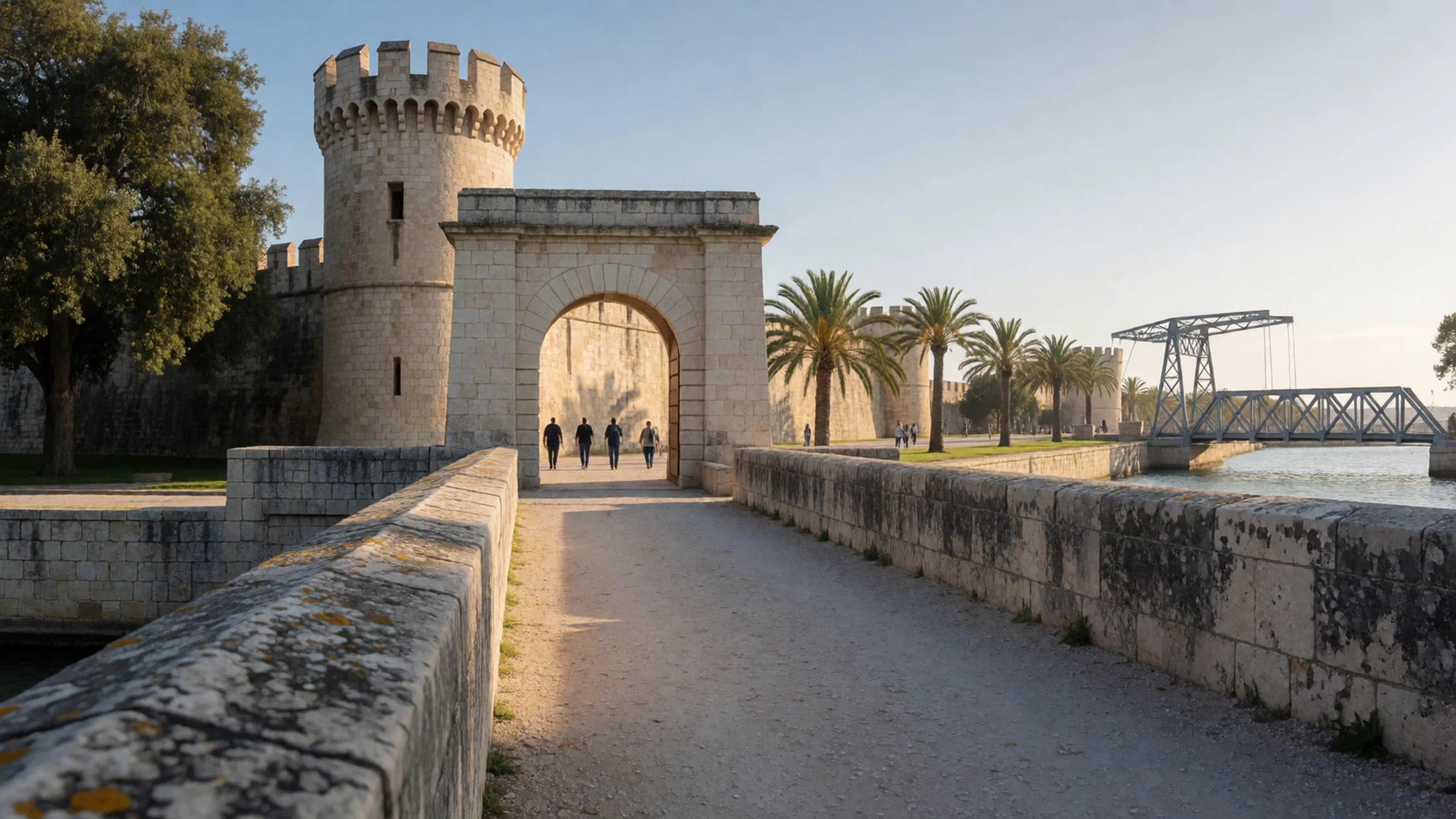
- Ponte Girevole (swing bridge) — Canal between old and new town
The Ponte Girevole is the swing bridge over the canal that separates the old island from the newer mainland city. It turns open to let naval and merchant vessels through, which gathers small crowds of onlookers. Ask locally about opening times rather than trusting a fixed schedule. Crossing on foot is the simplest way to step between the two Tarantos.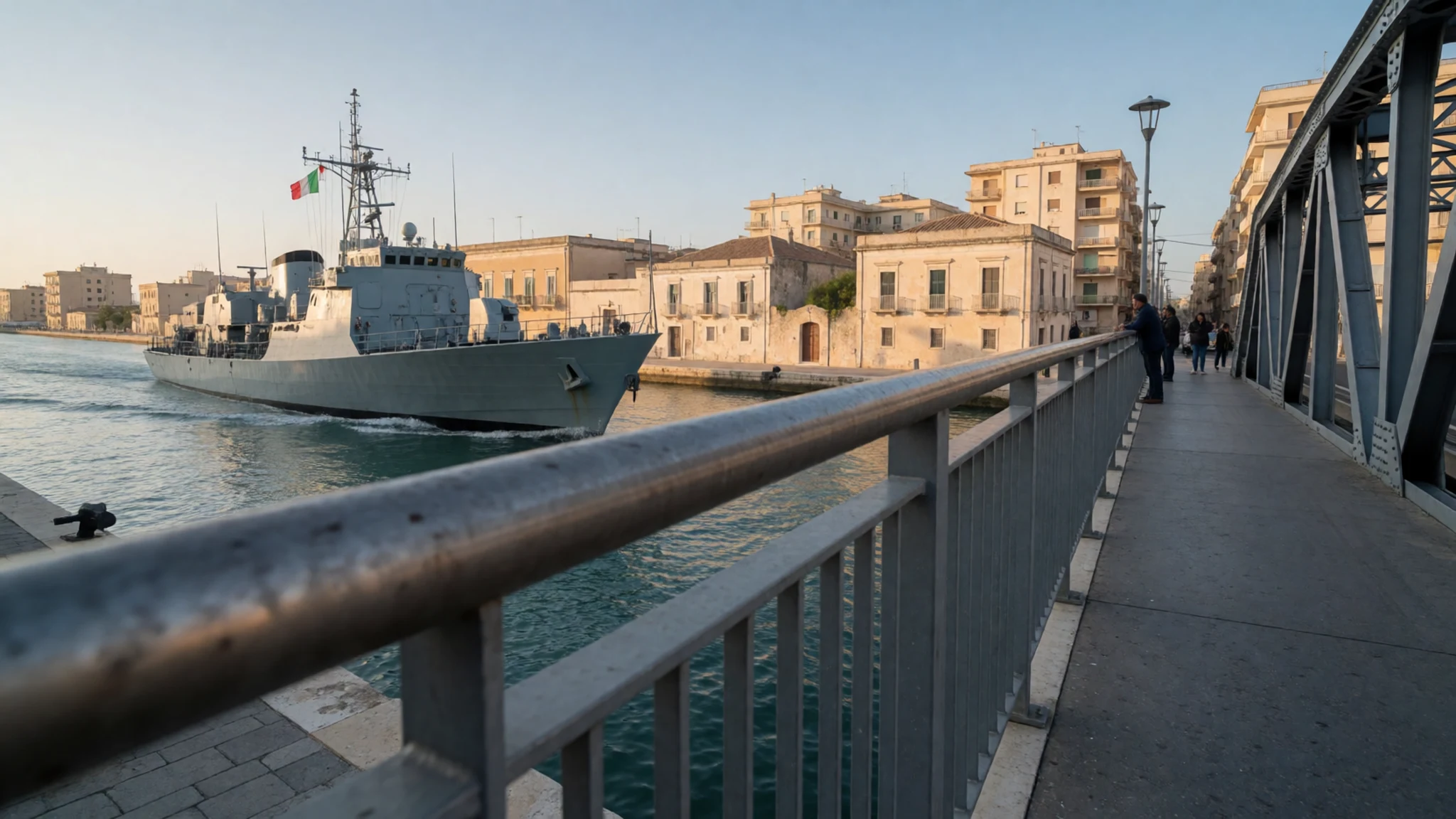
- Temple of Poseidon — Old town
Two Doric columns are all that remain of a Greek temple to the god of the seas, dating to the sixth century BCE. Stone was carried off over the centuries, which explains the gap. The columns stand among ordinary streets rather than in a park, so the visit takes minutes and pairs well with a walk through the old town.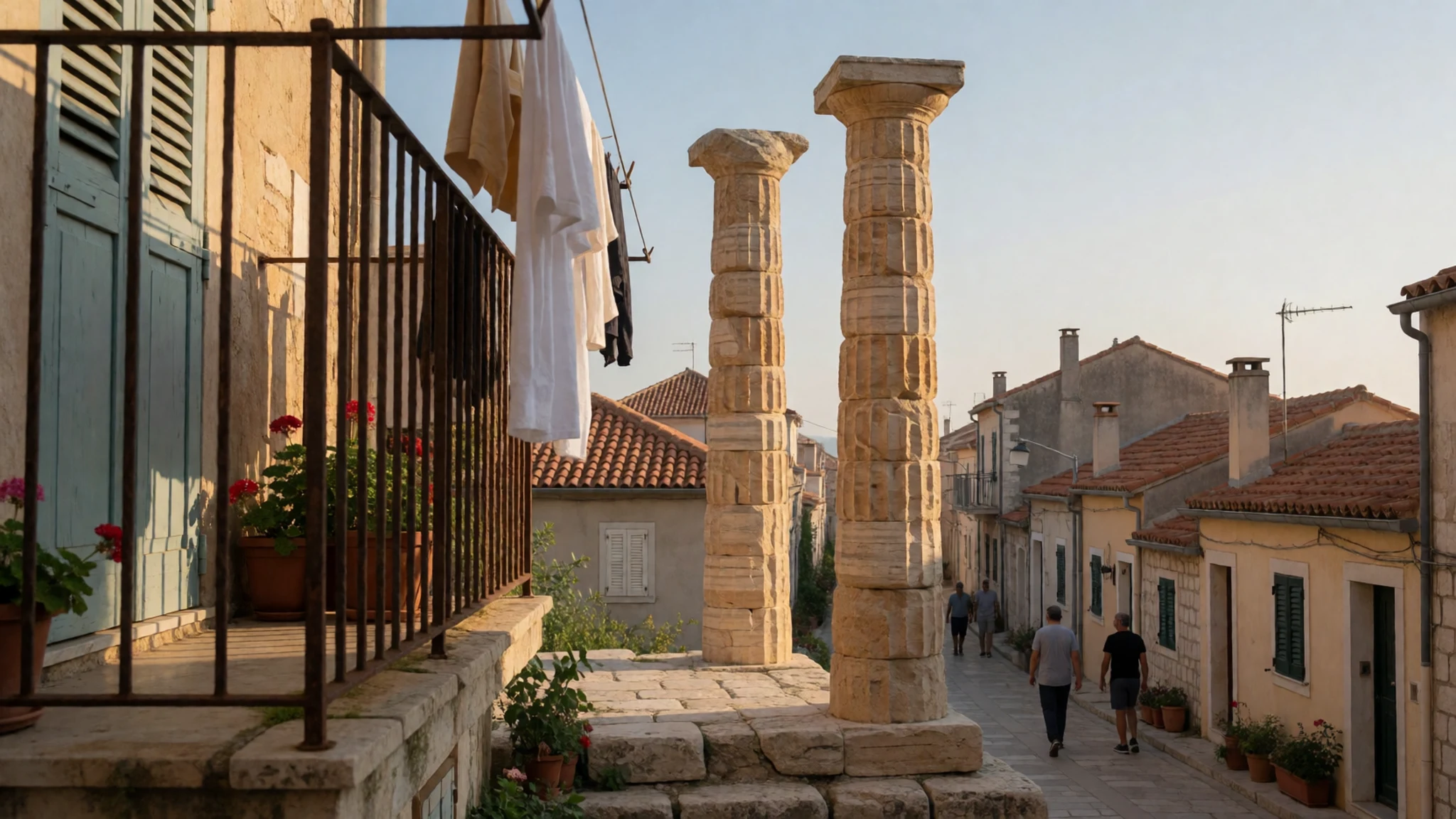
- National Archaeological Museum — Borgo, near the canal
This is the place to see what the Greek city left behind: pottery, sculpture and jewellery recovered from Taranto's tombs and streets. It gives the temple columns and the burial grounds their context, so it works best as a first stop. Opening days change, so check the official museum website before going.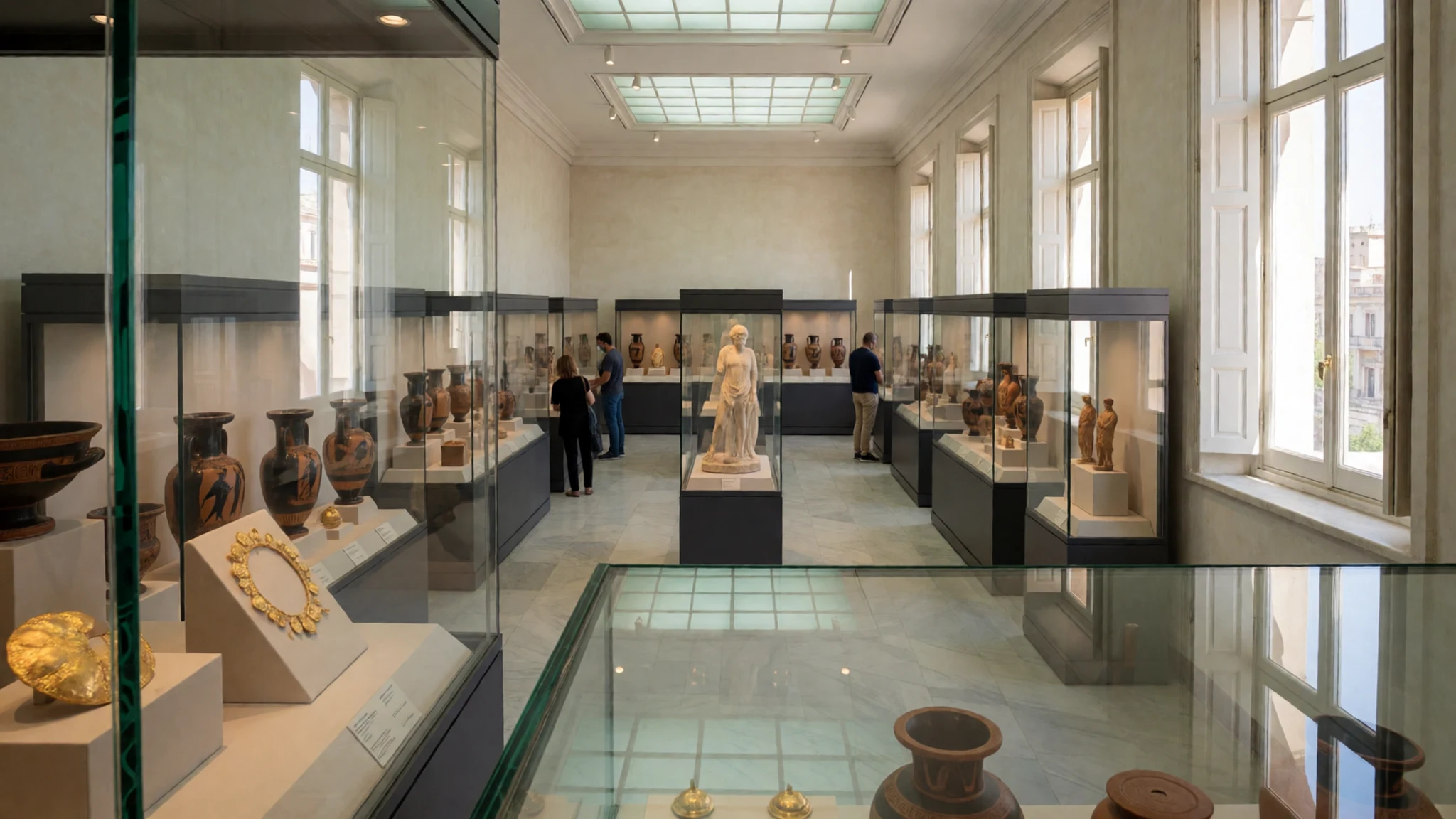
- Via Marche necropolis — Southern edge of the modern city
This burial ground holds 140 tombs of the ancient Greek city, dating from the seventh to the third century BCE, and is viewed from a walkway beneath a glass and iron roof. It lies outside the old town, so a taxi or local bus helps. Check access and guided-visit arrangements first.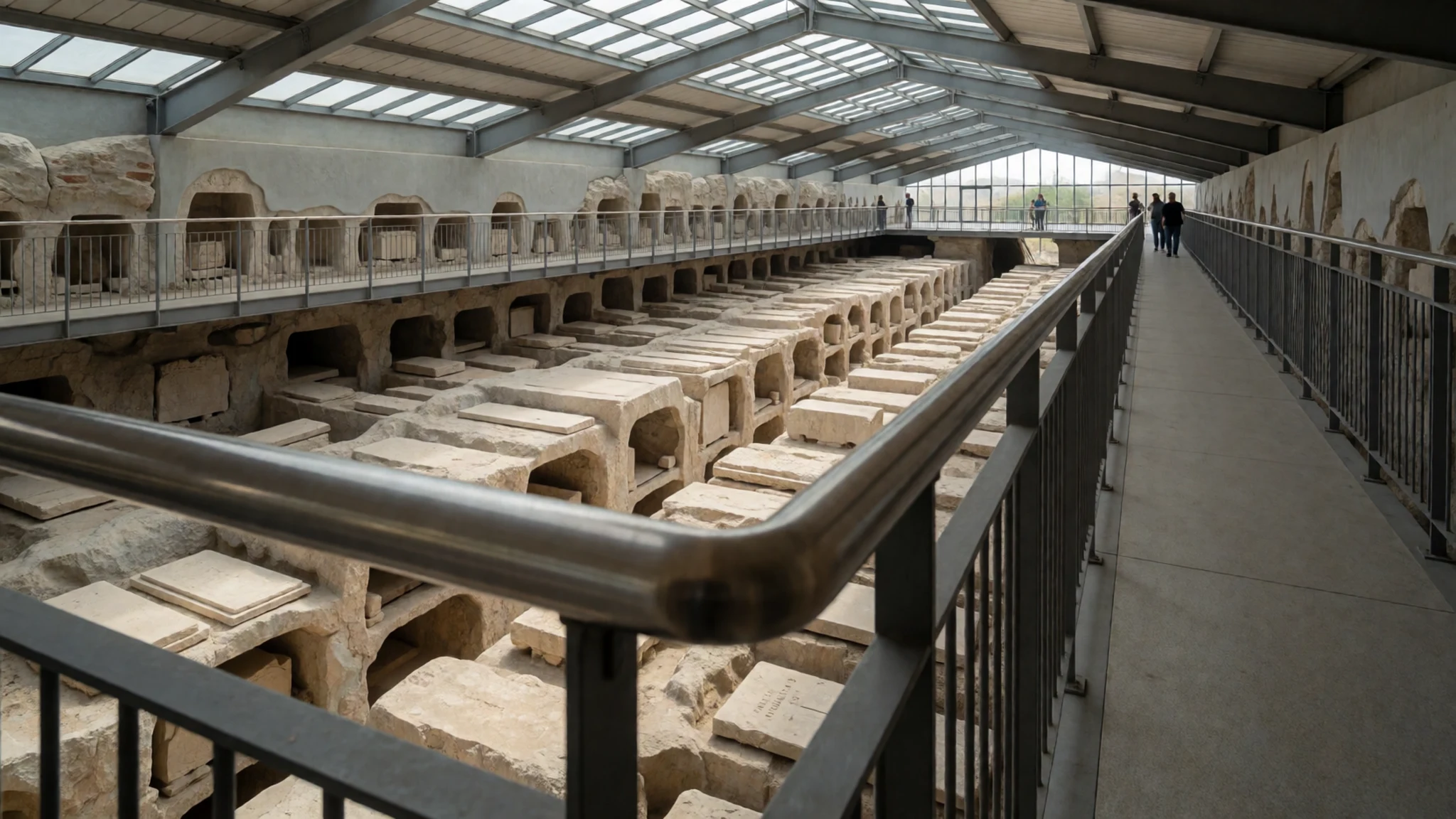
- Church of San Domenico Maggiore — Old town
A Romanesque-Gothic church from 1302, built over an earlier Byzantine church which itself stood on an ancient Greek temple. The entrance is reached by a Baroque staircase added in the eighteenth century. The layers of building make it a compact lesson in the city's history, in a quiet corner of the old quarter.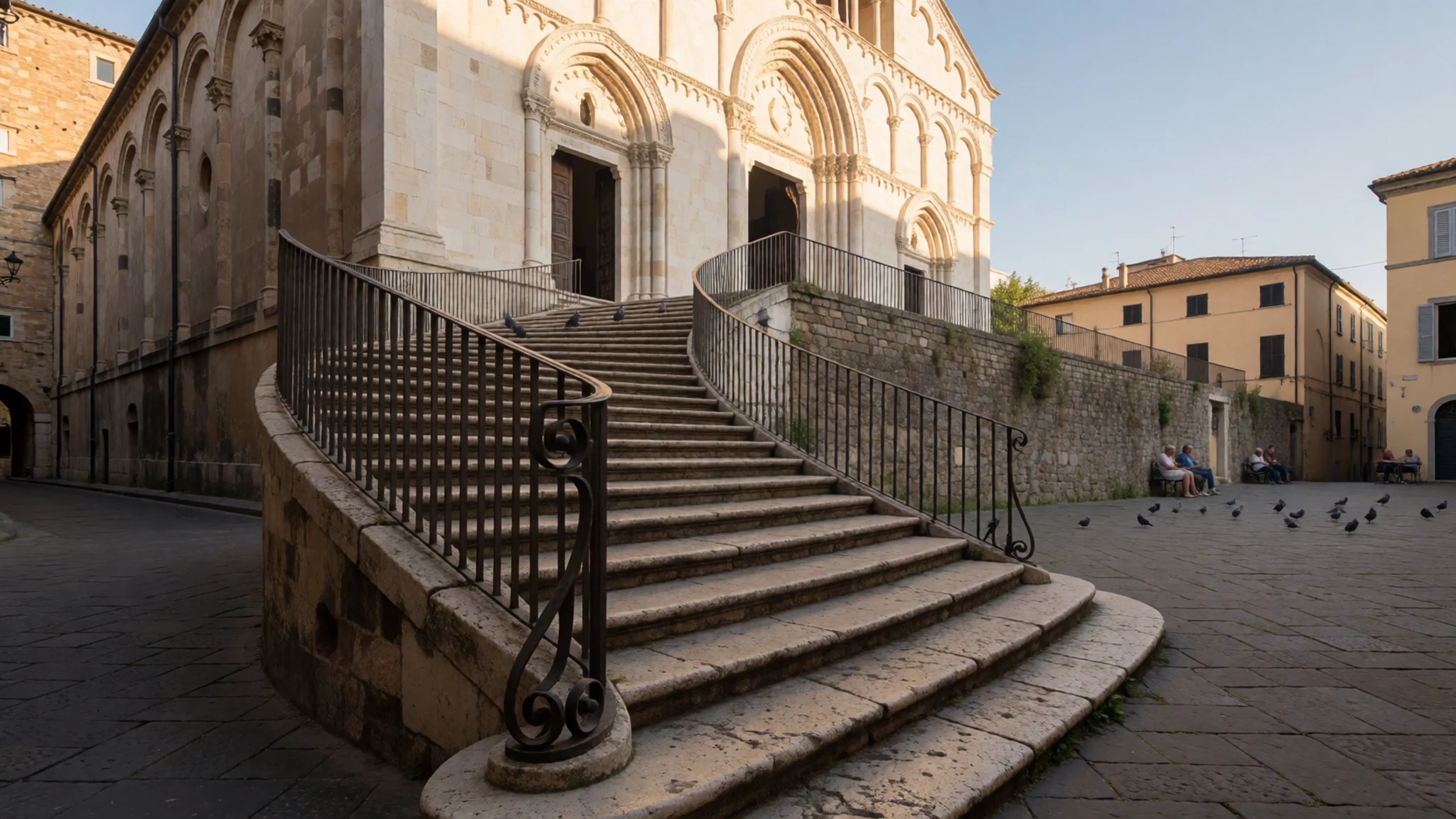
Culture
Taranto's identity rests on three things: the sea, the navy and a deep Greek memory. The dolphin rider Taras appears on civic symbols, and people talk about their Spartan origins with a mix of pride and humour. The navy gives the island quarter a uniformed rhythm, and many families have worked in the port or the steelworks for generations. That makes the argument over industry, jobs and pollution a real and tender subject, and visitors do better listening than lecturing.
Religion is lived out loud. The Holy Week processions, organised by lay brotherhoods, are the best-known local rites, with slow marches through the old town that continue into the night. Everyday life is social and centred on food: the evening stroll along the seafront, coffee taken standing at the bar, a glass of Birra Raffo, the local beer. Mussel farming in the Mar Piccolo has shaped both the diet and the working calendar of the city. People speak Italian with a strong southern accent, and some use the Tarantino dialect among themselves, so a simple greeting in Italian goes a long way.
In churches, cover your shoulders and knees, and during Holy Week processions keep back from the route, stay quiet and put the flash off.
What to wear
Taranto has no single famous costume, and traditional dress is now mostly seen on festival days and with folk groups. Historic rural and fishing-community clothing in southern Italy used linen, wool and hand-woven cotton, with embroidered bodices and aprons, headscarves for women, and dark wool jackets and caps for men. The clearest living tradition is the Holy Week brotherhoods, whose members walk in hooded robes, usually white, with sashes and capes in the colours of their confraternity.
Day to day, people in Taranto dress in neat, plain Italian style: pressed shirts, linen trousers, simple dresses and clean trainers or leather shoes. Naval uniforms are a common sight around the old town, and the evening walk on the seafront is a reason to dress up a little. Sportswear is for the gym rather than the street.
A visitor should plan for heat from late spring to early autumn: light cotton or linen, a hat, sunglasses and sun cream. The old town has stone paving that can be uneven and slippery, so comfortable closed shoes work better than flimsy sandals. For churches, carry a scarf or light cover-up for shoulders, and wear trousers or a skirt below the knee. In winter and on windy evenings by the water, a light waterproof jacket and a warm layer are useful.
What to eat
- Cozze (mussels) — Seafood restaurants and fishmongers around the old town waterfront
Mussels from the Mar Piccolo are the city's signature ingredient. They are served steamed with lemon and pepper, baked with breadcrumbs, or eaten raw by the confident. Ask for the day's catch, and eat them in cooler months when they are at their best.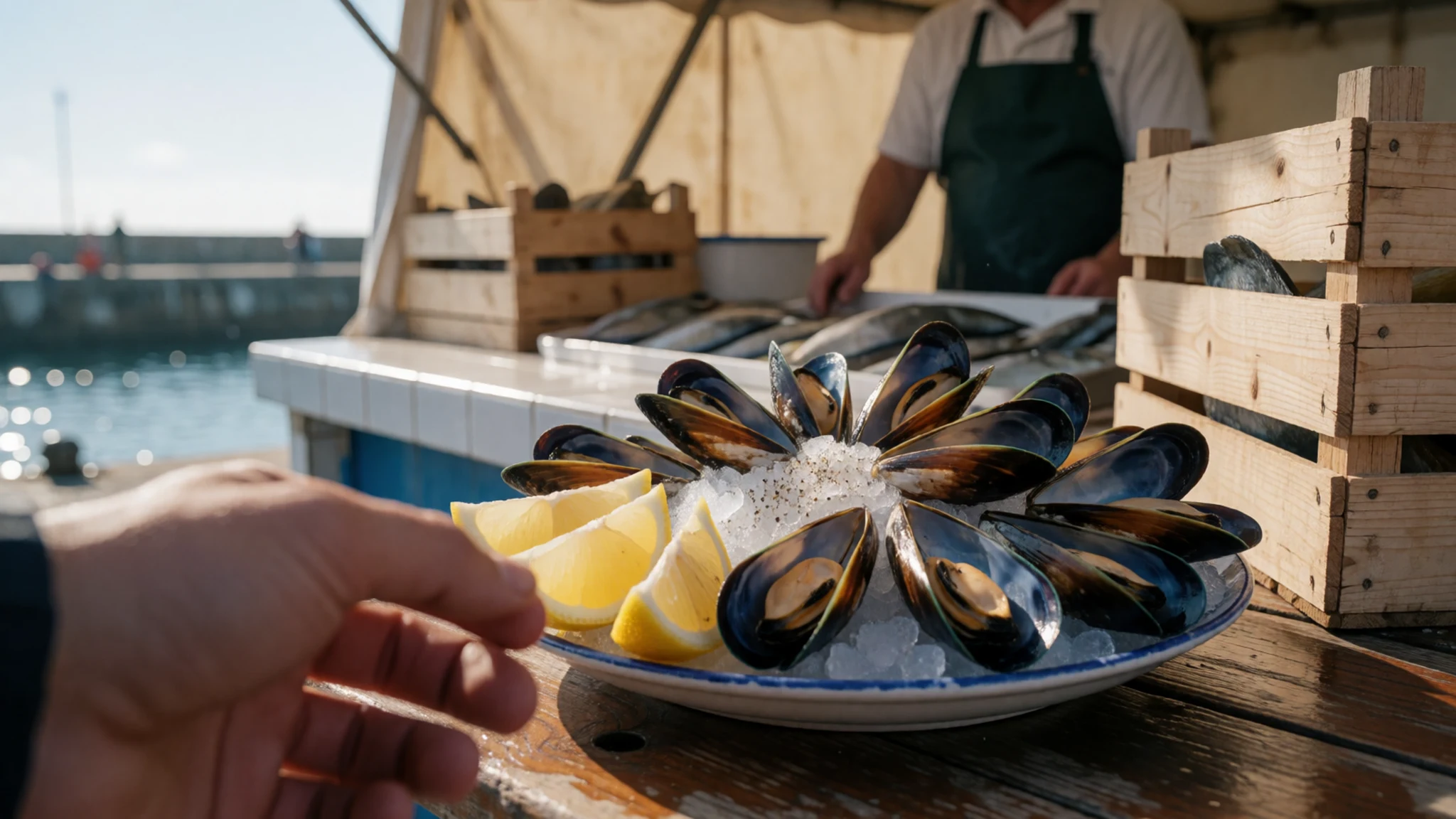
- Tiella di riso, patate e cozze — Family-run eateries and trattorie across the city
A baked dish of rice, potatoes and mussels layered in a dish, popular across Apulia and closely tied to Taranto. It is filling and homely, and often served as a first course. Order it at a trattoria that bakes it fresh instead of reheating.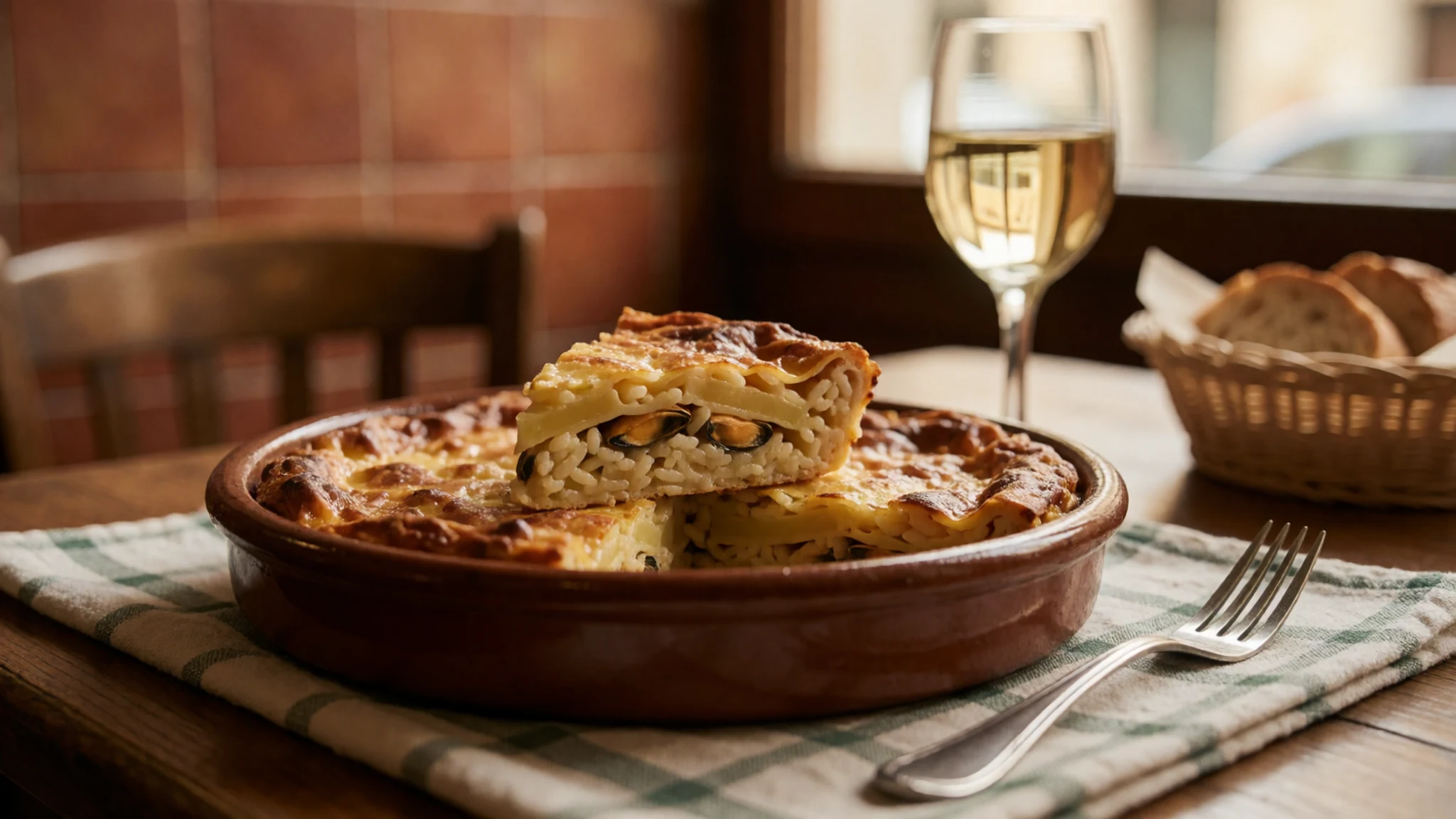
- Polpo and other seafood — Waterfront restaurants and market stalls near the old town
Octopus, squid, sardines and shrimp all feature on local menus, grilled, fried or dressed simply with olive oil and lemon. Fish comes from the gulf and the inner sea. Choose a place with a short menu and ask what came in that morning. - Panzerotti — Pizzerias and street-food counters in the mainland city
Small fried turnovers of dough, usually filled with tomato and mozzarella. They are eaten hot, in a paper wrapper, and are a cheap lunch or evening snack. Let them cool a minute, because the filling stays scalding. - Pucce and tarallini — Bakeries and street-food counters
Pucce are round bread rolls split and filled with cheese, cured meat or vegetables. Tarallini are small, crisp, ring-shaped savoury biscuits, often flavoured with fennel or pepper. Both are easy picnic food, found in almost any bakery. - Birra Raffo — Almost any bar or restaurant
Raffo is the local beer, a long-standing fixture of the city's social life that can be found in practically every bar. A cold glass with a plate of salty snacks suits the evening walk, or a hot afternoon after the museum.
Plan it
Best time. April–May and October for warm weather, comfortable walking and a calm sea; June to September are hot, and winter is mild but quiet, with some places closed.
How long. 2
Getting there. Fly to one of the Apulian airports (Bari or Brindisi, with budget flights from London, Rome and Milan; check the airports' own websites), then take a train or hire a car to Taranto. The bus terminal is on Via Cristoforo Colombo, near the commercial port. Taranto's official site is http://www.comune.taranto.it/.
Budget. mid
Tips
- Start with the National Archaeological Museum, then see the temple columns and necropolis, so the sites make sense.
- Check opening days and any guided-visit rules for the castle, museum and necropolis on the official sites before you go.
- In summer, walk in the morning and evening and rest in the hot afternoon, when many shops close.
- Carry some cash for bars, bakeries and market stalls, though most restaurants take cards.
- Book a table for weekend evenings and for Holy Week, when accommodation also fills up.
Etiquette
- Cover shoulders and knees when you enter a church.
- Greet staff and shopkeepers with buongiorno or buonasera before asking for anything.
- Keep back from religious processions and do not use flash.
Nearby
Sources
- Wikidata Q13498 (CC0)
- Wikipedia: Taranto (rev 1383094664) (CC BY-SA 4.0)
- Wikivoyage: Taranto (rev 5393030) (CC BY-SA 4.0)
- Castello Aragonese (Taranto), Livioandronico2013 (CC BY 3.0)
- Ponte Girevole, Tarento, Italy, Bernard Gagnon (CC0 1.0)
- Taranto, Saint Catald cathedral, façade, Benjamin Smith (CC BY-SA 1.0)
- City Hall of Taranto, Livioandronico2013 (CC BY-SA 4.0)
- Taranto, The Aragonese castle viewed from opposite shore, Benjamin Smith (CC BY-SA 1.0)
- Government building, Taranto, ParisTaras (CC BY-SA 4.0)
- Temple of Poseidon, Tarento, Italy, Bernard Gagnon (CC0 1.0)
- Taranto, Corso Due Mari, Benjamin Smith (CC BY-SA 1.0)


