Taos, New Mexico
Taos, New Mexico, United States
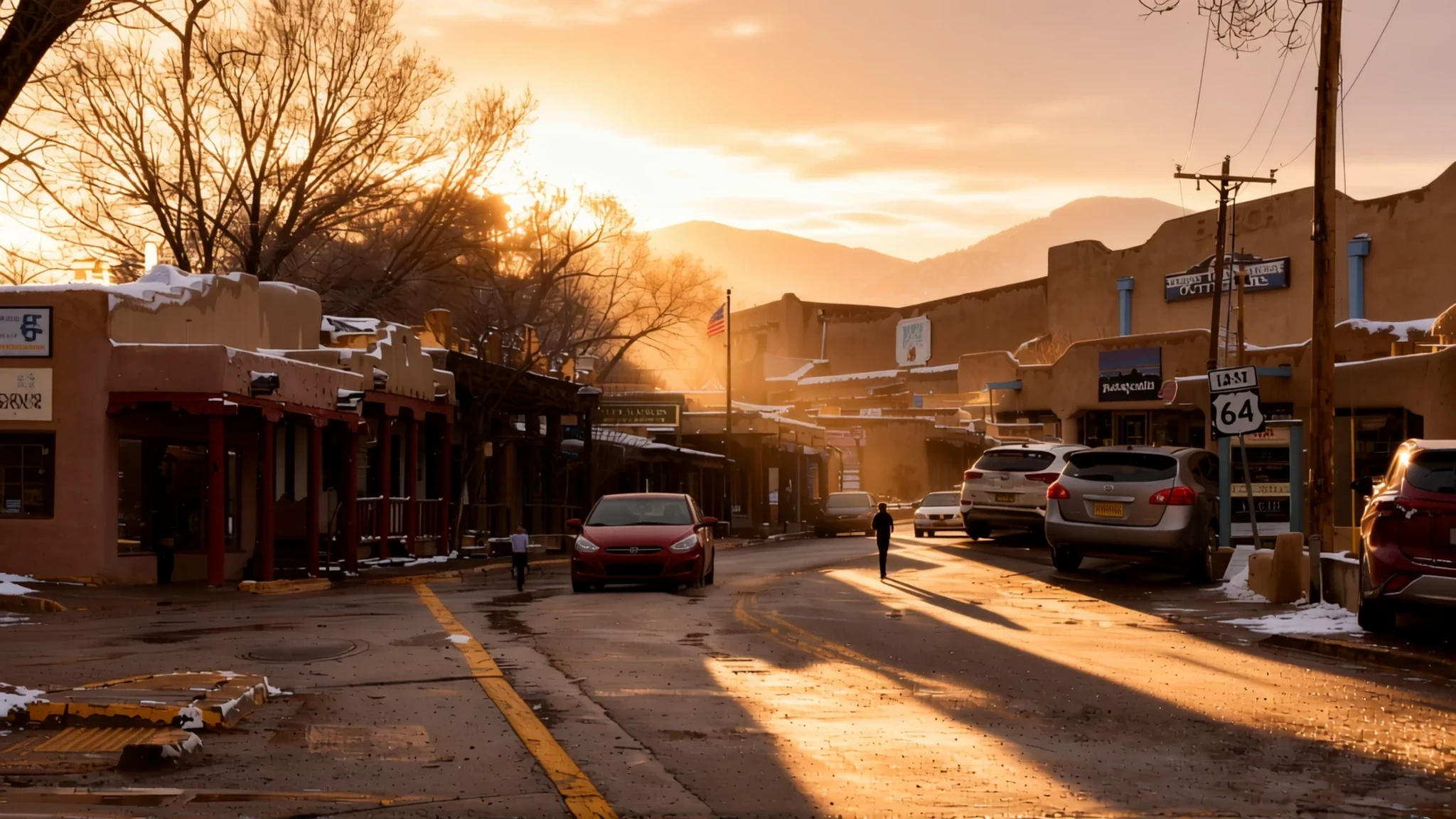
A high-desert town of adobe and mountain light, set beside a pueblo that has been lived in for close to a thousand years.
The place
Taos is a small town in north-central New Mexico, home to about 6,500 people, lying between the Rio Grande Gorge to the west and the Sangre de Cristo Mountains to the east. It is the county seat of Taos County and its largest town, roughly 80 km south of the Colorado border. At about 2,124 metres above sea level, the air is thin and dry: summer afternoons are warm, and the nights cool quickly.
The town is only part of the picture. Taos Pueblo sits at its north edge, gives the town its name, and has been home to people for close to a thousand years. Most visitors come for the adobe streets, the central plaza, the galleries and the walks into the mountains rather than for one headline sight. Taos rewards slow days: an hour at a museum, a long lunch, a short trail in the afternoon.
Art has shaped the town for more than a century. The centre is compact enough to walk in an afternoon, but the surrounding country is wide, and a car makes the difference between seeing the plaza and seeing the valleys beyond it. Shoulder seasons are quieter and cheaper than midsummer, and winter brings skiing traffic to the roads north of town.
Its story
Taos Pueblo, on the north side of the town, is the oldest thread in the story. Its multi-storey clusters of adobe were built roughly between 1000 and 1450, and the community has stayed there ever since. The houses share walls and rise in terraces, a layout that made the village easier to hold. Today more than 1,900 people belong to the wider pueblo community, though only about 150 live in the main buildings year-round. Many families keep modern homes near their fields and move back into the old buildings during cooler months. The pueblo was listed as a World Heritage Site in 1992.
The Spanish town came later. Settlers arrived around 1615 and named their settlement Don Fernando de Taos. Relations were uneasy from the start. Resentment over missionaries, and demands for tribute, led to a revolt in 1640, after which the people left the pueblo and did not return until 1661. In 1680 the pueblo joined the wider Pueblo Revolt, a rising that pushed Spanish colonists out of the region for years.
Permanent settlement arrived in 1795, when a governor set up a fortified plaza as a trading point for the pueblo and the nearby Hispano farming villages. Later decades brought American rule, a brief uprising known as the Taos Revolt, and a steady flow of American and European travellers. Taos was incorporated as a town in 1934, and the artists who came in the late nineteenth century gave it the reputation it still carries.
What to see
- Taos Pueblo — North edge of town
Taos Pueblo is a multi-storey village of adobe homes at the north edge of town, and the living community that gives the town its name. Parts of it are private homes, so keep to the marked routes and check the official site for current opening arrangements and any charges. The old church ruin and the plain earthen walls are worth a slow look, but the reason it still matters is that people still live here.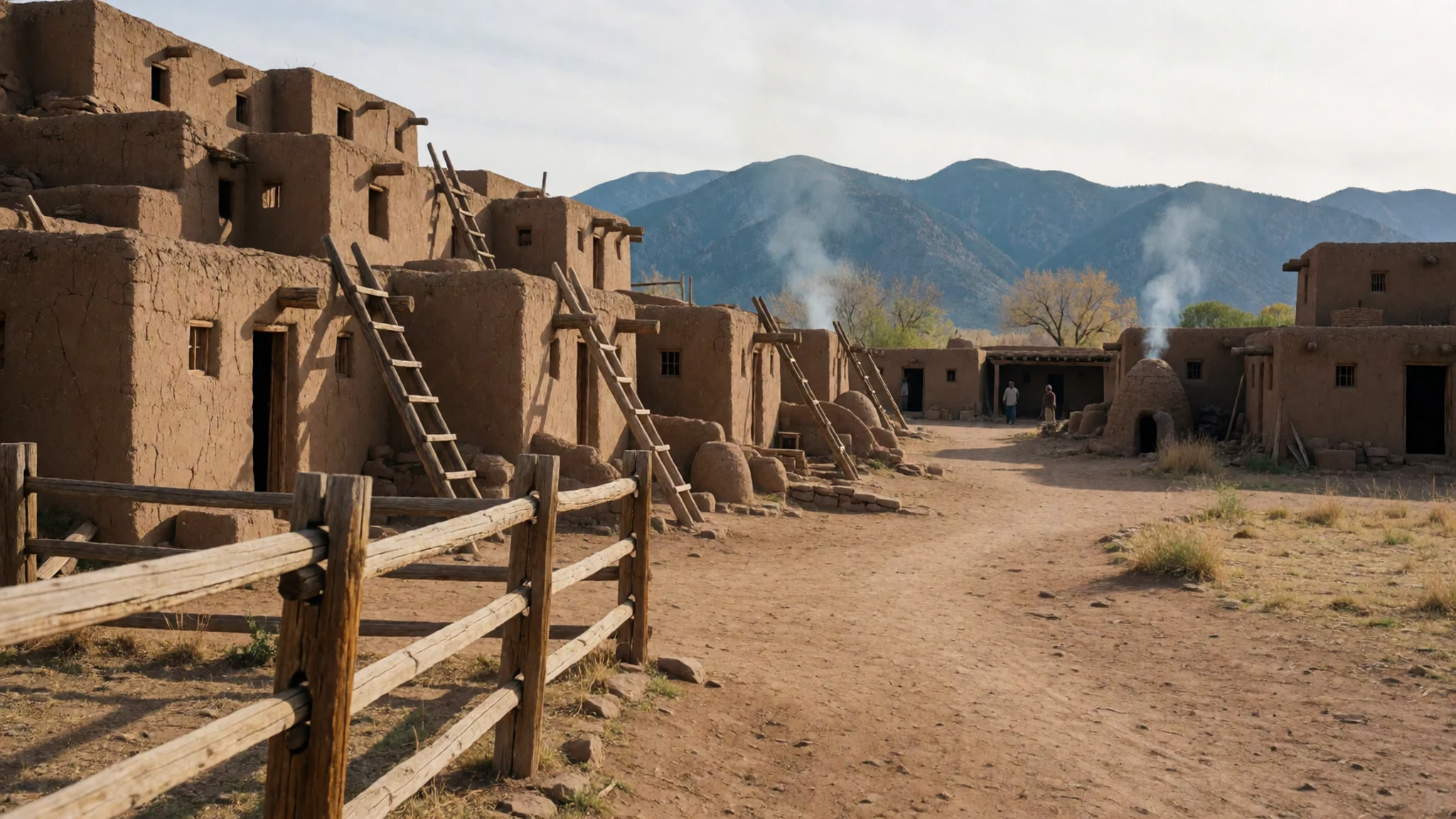
- Kit Carson Home and Museum — Central Taos, near the plaza
The Taos home of Kit Carson, a nineteenth-century frontiersman who served as an Indian agent and an Army officer. The museum traces his career and the tensions that followed American rule in the region. It is a short walk from the plaza, so it fits a slow morning. Check the official site for current opening times, since small museums change them.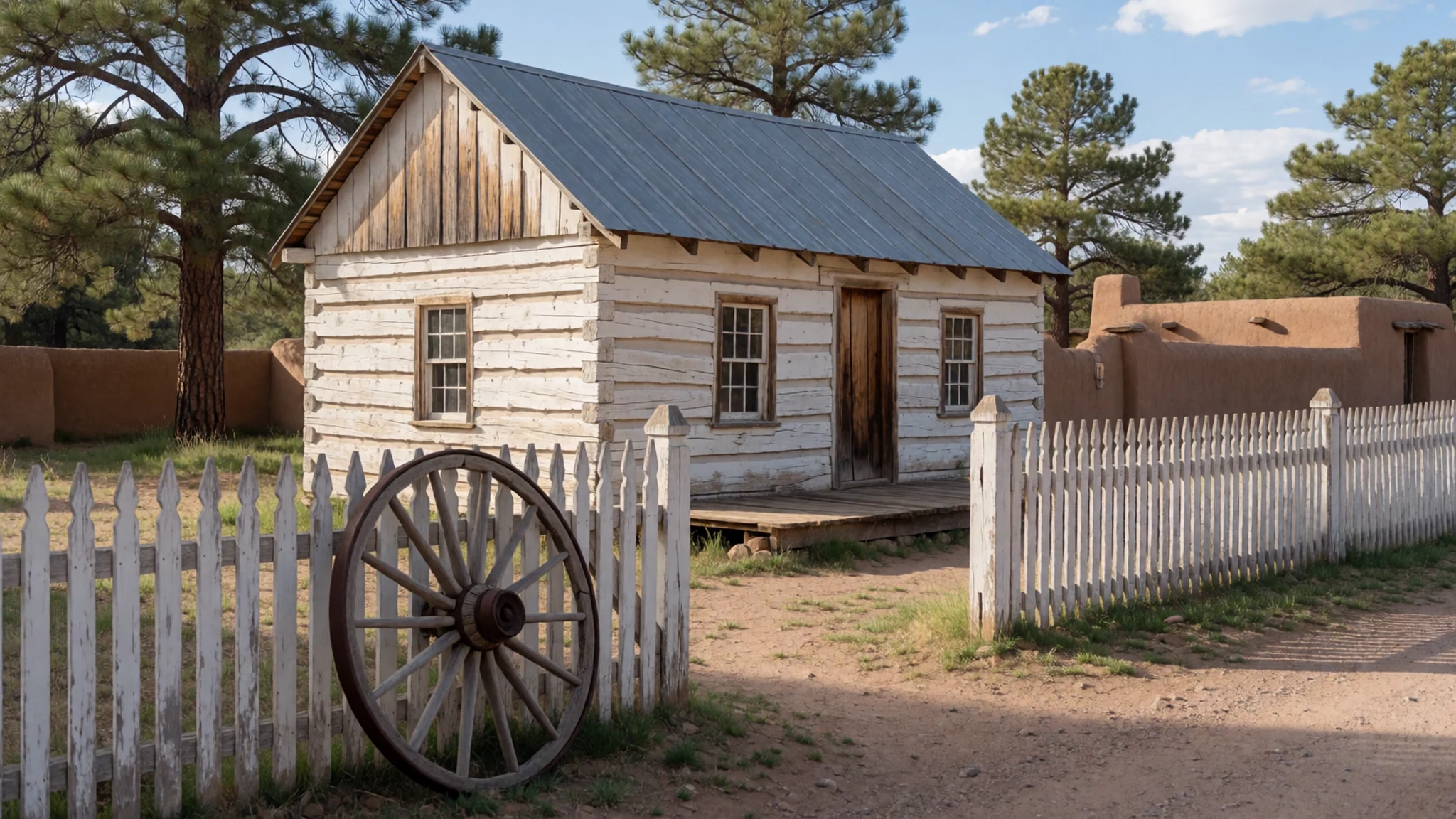
- Governor Bent Home — Central Taos
The former home of Governor Bent, the first governor of New Mexico under American rule, who was killed here during a violent protest against the new order. The house is a sober reminder that the town's history turned sharply after annexation. Go with that story in mind and read the displays slowly.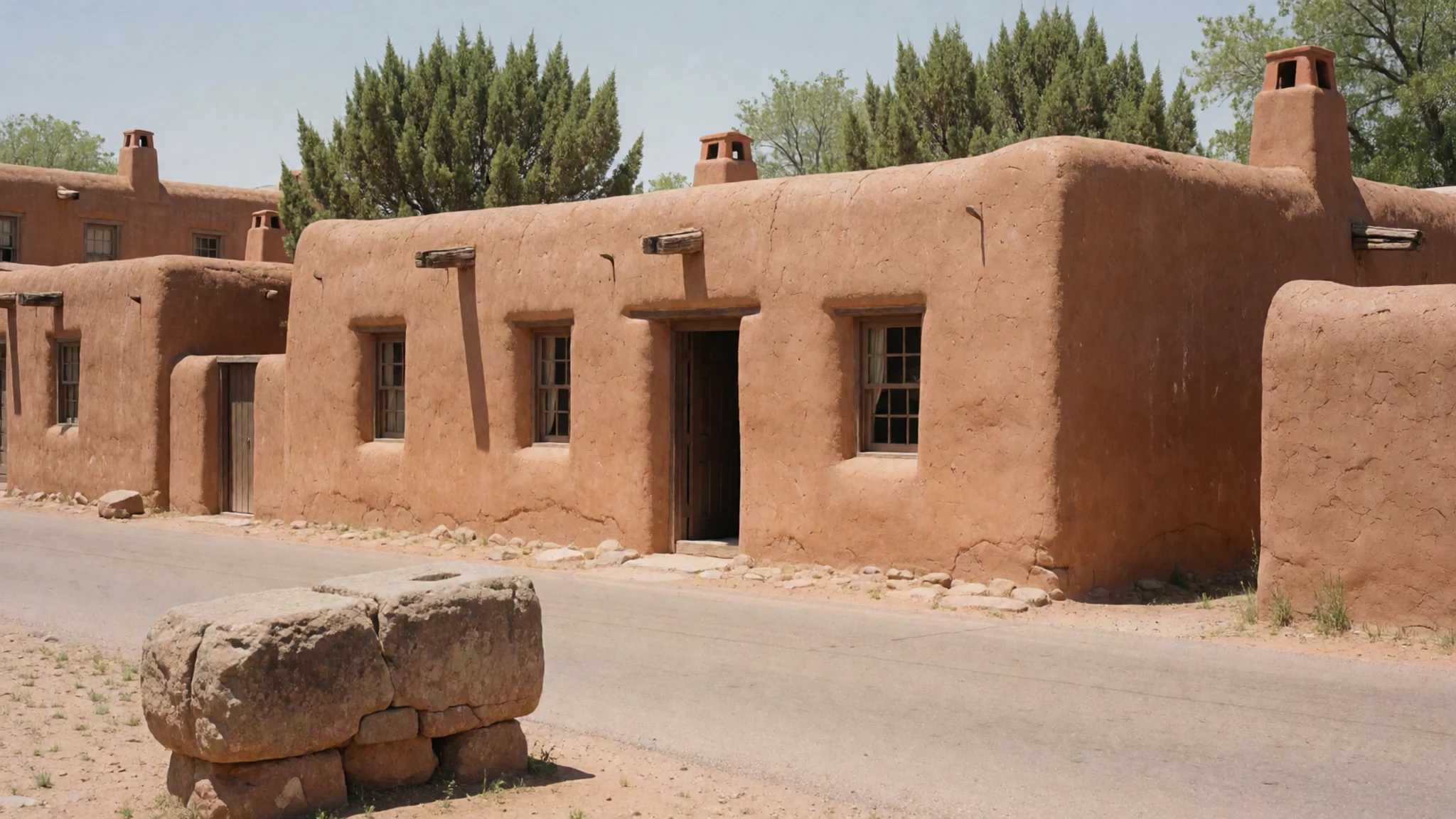
- Kit Carson Park and Cemetery — Central Taos, north of the plaza
Shaded and easy to walk, the park has fields, trails and a playground. Its cemetery holds Kit Carson's grave, those of his relatives and several other figures from the town's past. On a warm afternoon the trees are a welcome break. Keep voices low and stay on the paths among the graves.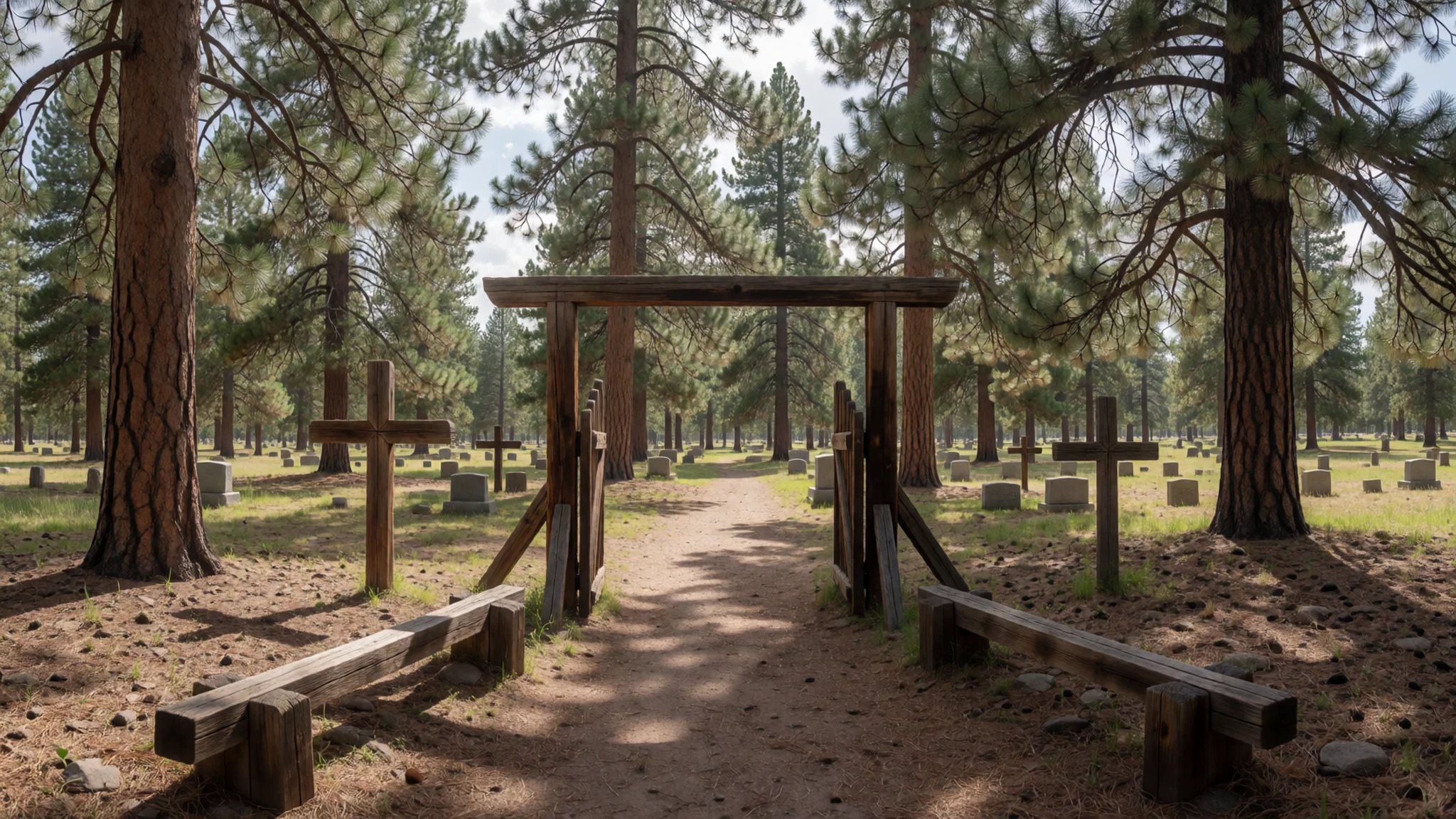
- Taos Art Museum at Fechin House — Central Taos
Once the home and studio of Nicolai Fechin, a Russian-born painter, this museum shows work by artists associated with the Taos Society of Artists. The rooms keep the feel of a working house and studio. Treat it as a half-day stop, and check the official site for current hours and admission.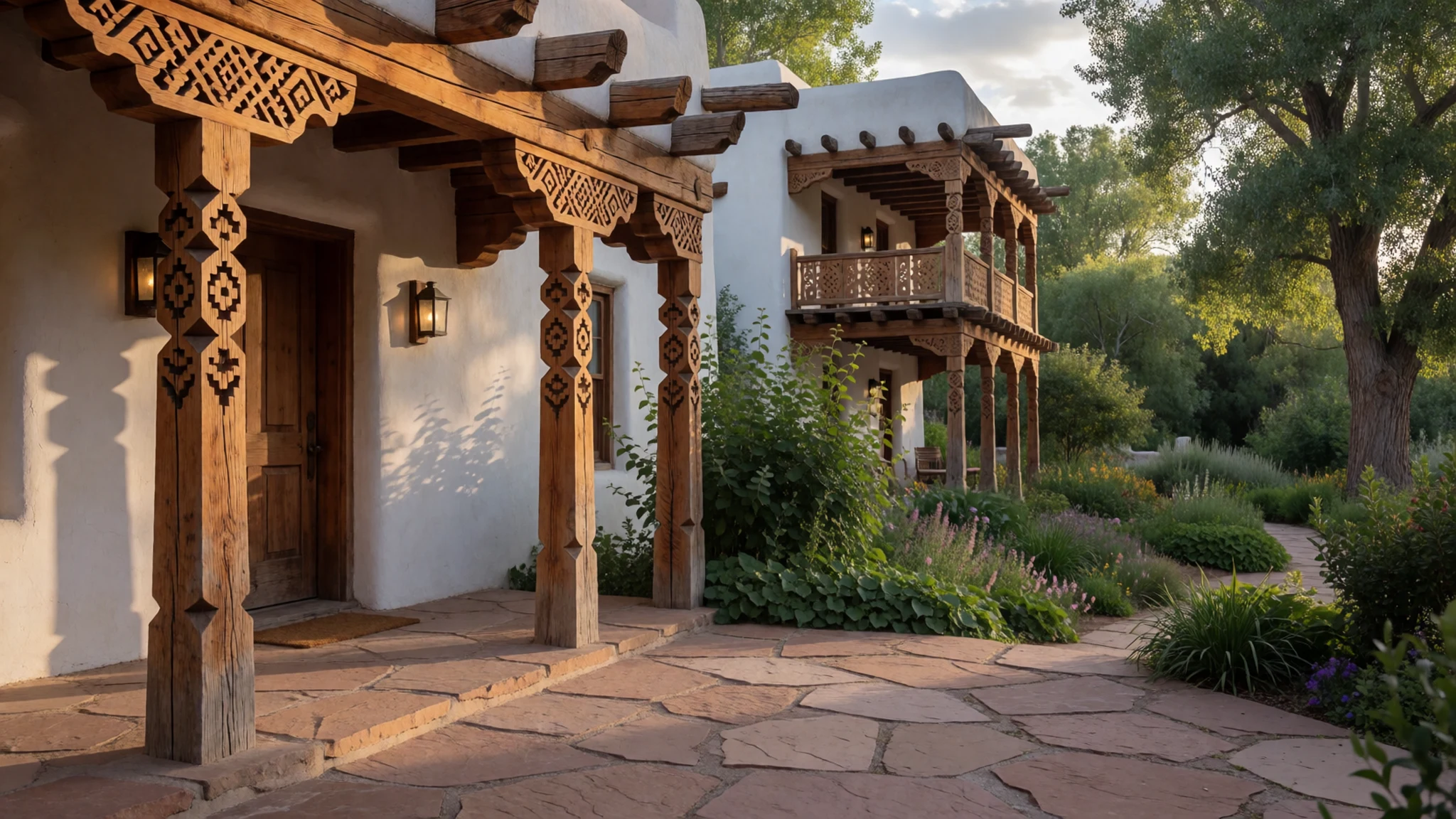
- E.L. Blumenschein Home and Museum — Central Taos, near the plaza
The former home of Ernest L. Blumenschein, one of the painters who started Taos's artist colony in the late nineteenth century. Parts of the house are old; one library section dates to 1797, which gives the building real age. The museum presents the house as a working home and studio. Check the official site for opening arrangements before you visit.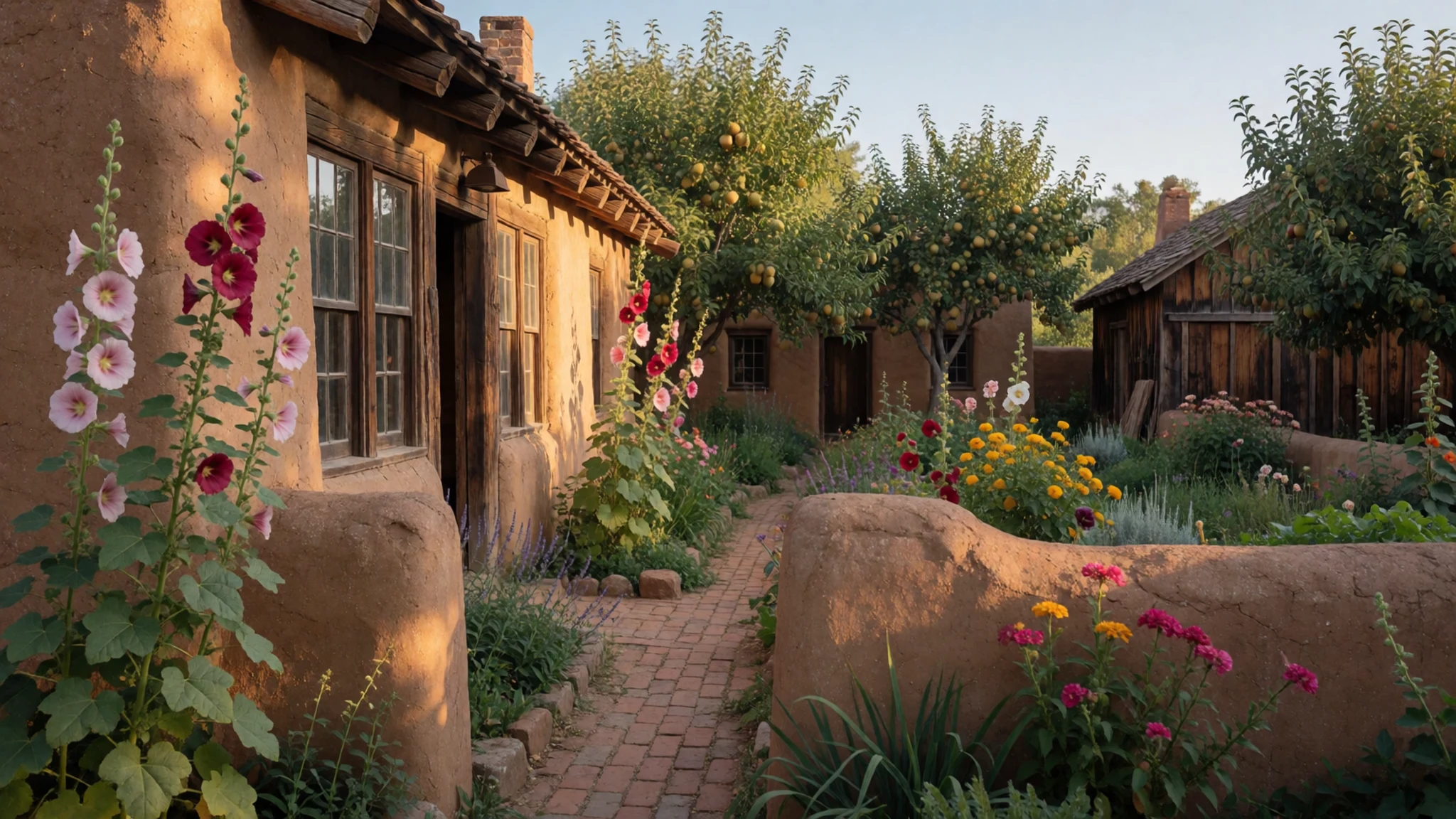
Culture
Taos is a town of several cultures: Hispano families whose roots go back to the colonial settlement, Taos Puebloans whose community predates it, and artists who began arriving in the late nineteenth century. Respect for that mix shows up in everyday life. Churches such as Our Lady of Guadalupe Parish are active places of worship, so behaviour inside should match a service rather than a sightseeing stop.
Taos Pueblo is a residence and a religious centre, not a museum. Ceremonies can close parts of the village at short notice, and the community sets the rules on entry and photography. Many residents are happy to talk about their homes, but they are not obliged to explain their customs, so treat conversations as neighbourly rather than as a tour. Take time to notice the buildings and the landscape around them.
At Taos Pueblo and in the parish churches, ask before photographing people or going inside a building, and follow every posted sign.
What to wear
Traditional dress in Taos draws on two long textile threads. At Taos Pueblo, ceremonial clothing has traditionally used hand-sewn deerskin and woven cloth, with sashes and blankets worn for dances and feast days; these appear at public events rather than in daily life. Hispano communities in the region have a historic embroidery tradition called colcha, which uses wool thread on linen or cotton and can be seen in museum collections and craft shops. Silver and turquoise jewellery, much of it made by Pueblo and Navajo makers, is worn across the region.
What people wear now is practical and relaxed. Locals wear jeans, boots and fleece, adding a heavier coat from late autumn. Western touches such as boots and bolo ties appear at rodeos and some bars, but they are not the norm everywhere.
For a visit, dress in layers. Summer days can be warm and nights cool quickly at this altitude, and the sun is strong. Wear sturdy shoes for adobe streets and dusty trails, and bring a light jacket for evenings. At Taos Pueblo and in churches, cover shoulders and knees, and take hats off inside church buildings.
What to eat
- Green chile stew — Local cafés and family kitchens, away from the plaza
A thick stew of pork or beef, potatoes and roasted green chile, typical of northern New Mexico cooking. Heat varies a lot from kitchen to kitchen, so ask whether a dish is mild or hot before you order. Warm tortillas or bread are the usual way to scoop it up.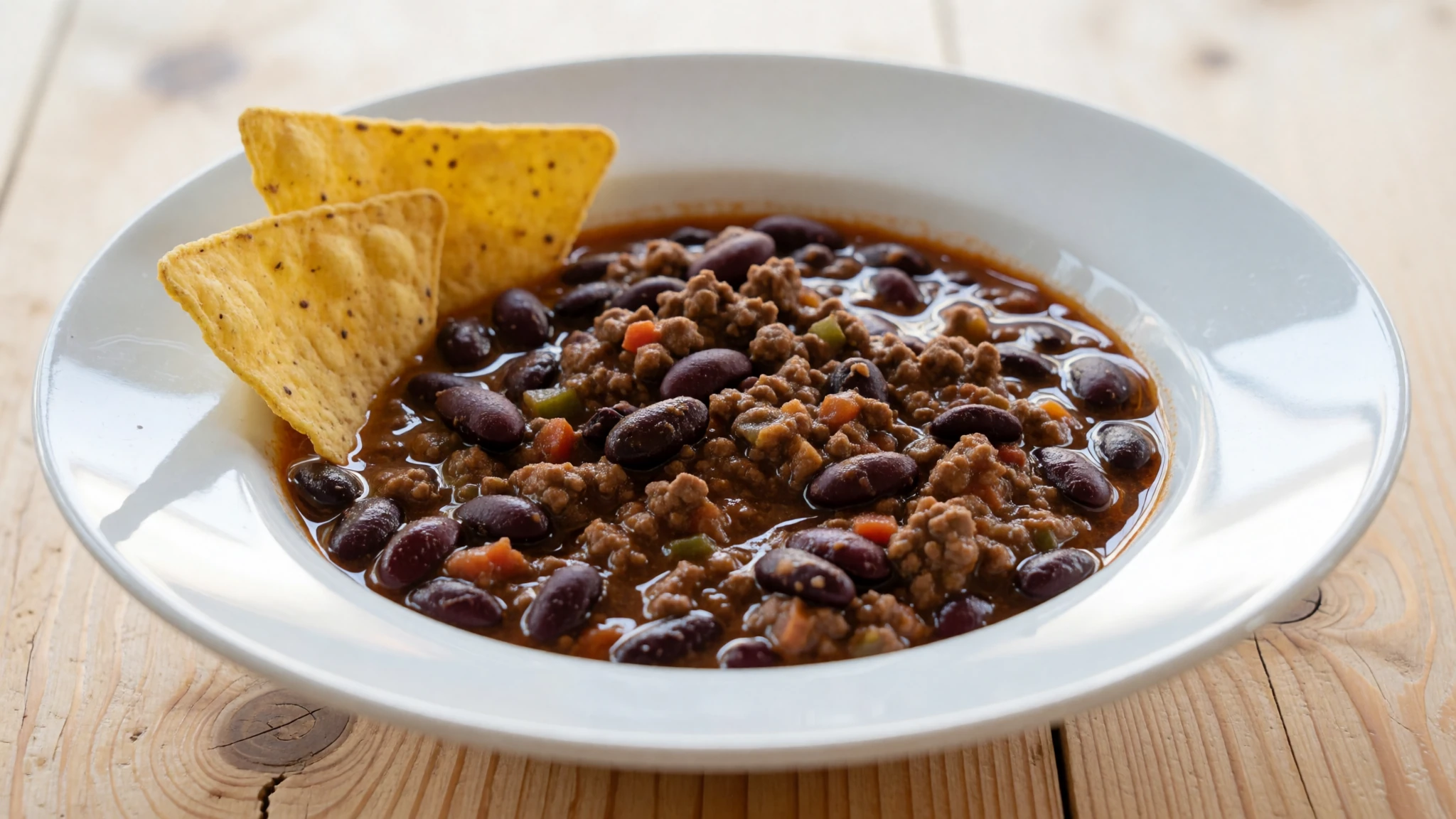
- Breakfast burrito or huevos rancheros — Busy local breakfast cafés
Eggs with chile, beans and tortillas, rolled into a burrito or served on a plate under red or green sauce. Some local cafés serve breakfast all day, which makes it an easy meal to fit around a museum visit. Expect a queue at popular spots on weekend mornings.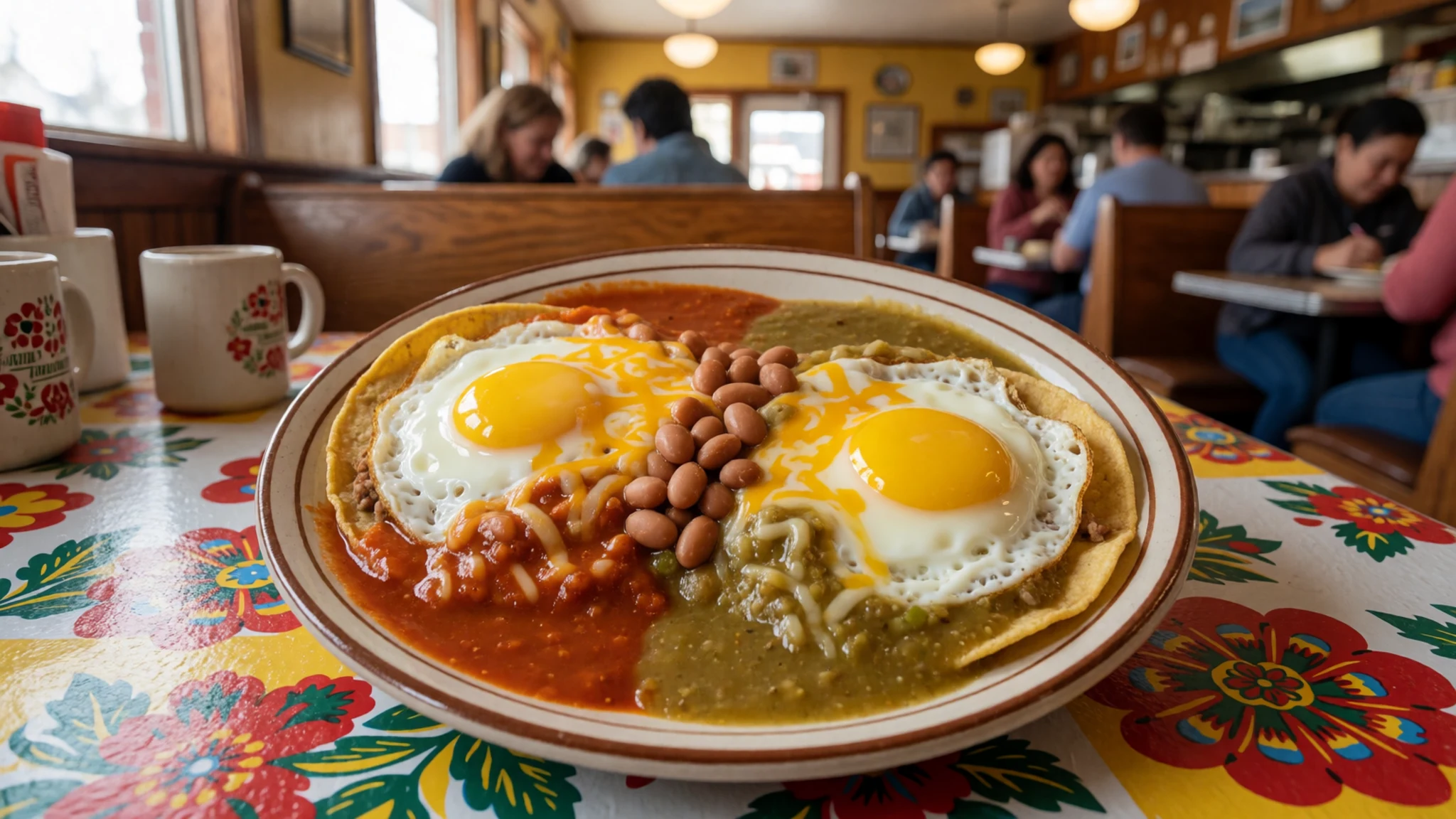
- Enchiladas with red chile — Family-run New Mexican lunch counters
Corn tortillas layered or rolled around cheese, onion and meat, then covered in chile sauce, often with a fried egg on top. Ask whether the sauce is red, green or Christmas, which means both. It is a filling lunch and a good way to taste the regional chile.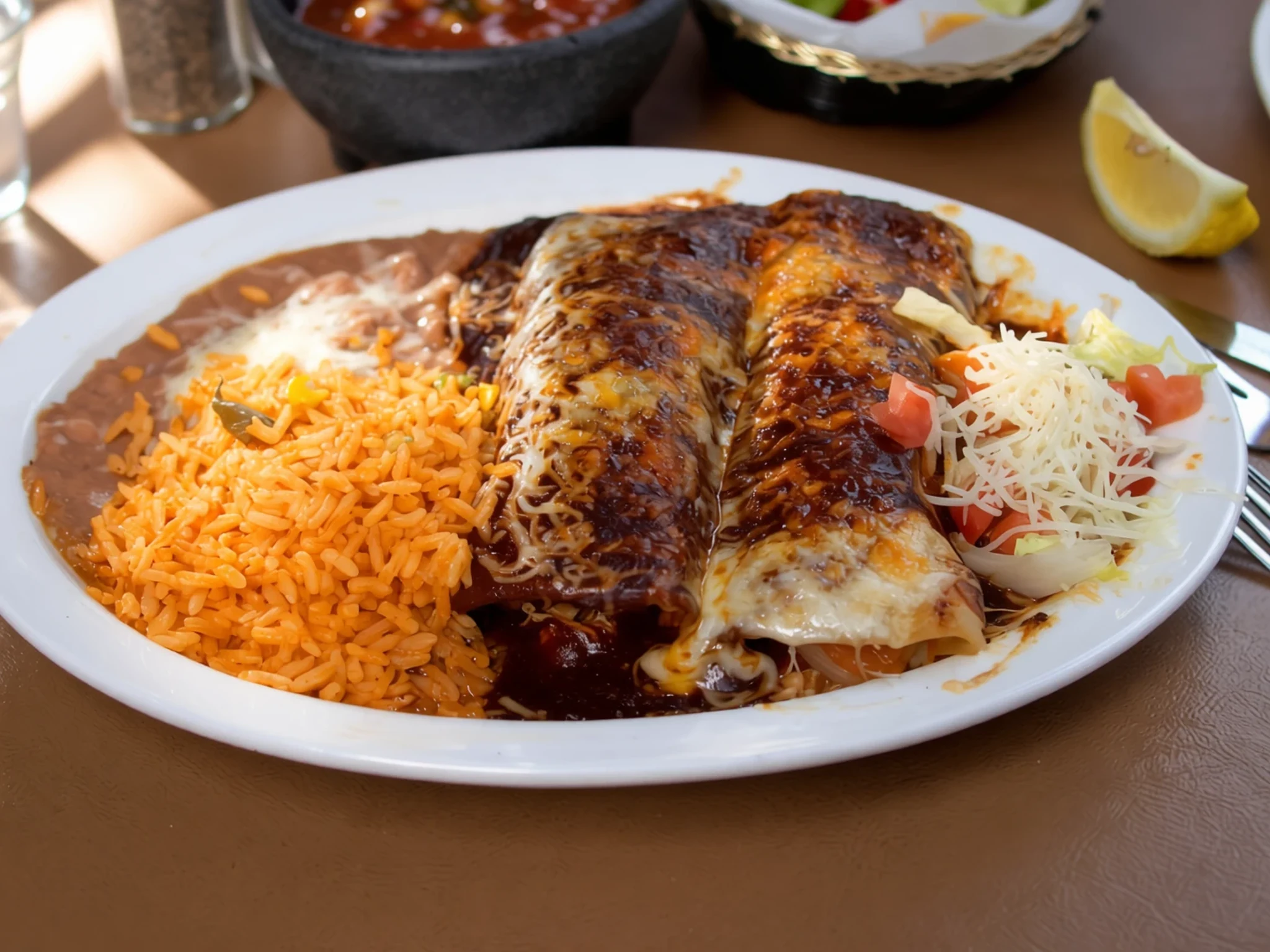
- Pizza — Neighbourhood pizzerias
Taos has its own pizza scene, and locals will argue over which pizzeria is best and whether the crust counts as New York style. Expect a relaxed, casual meal rather than a formal one. Order a pie to share, and ask what the house sauce is made with, since kitchens vary. - A patio lunch and a bakery treat — Courtyard and patio eateries near the plaza, and local bakeries
Eat outdoors where you can, since many Taos restaurants have courtyards and terraces that come into their own on warm afternoons. Pair a salad or sandwich with a pastry from a local bakery afterwards. Patio tables fill at midday, so arrive a little before the rush.
Plan it
Best time. Late May and September to October suit Taos best: warm days without the midsummer heat, and fewer visitors than July. Winter brings snow and skiing, but mountain passes can close, and July and August are busier and warmer.
How long. 2–3
Getting there. Albuquerque Sunport is about three hours' drive away, and Santa Fe Airport is about two hours by car. The last leg is a drive north, often on mountain roads, so check conditions before setting off.
Budget. mid
Tips
- Hire a car, since the town and its surroundings are spread out
- Carry water and sun protection; the altitude dries you out quickly
- Visit Taos Pueblo earlier in the day, when it tends to be quieter
- Check winter road conditions before driving over the passes
- Carry some cash for small galleries and market stalls
- Book accommodation ahead for summer weekends and festival dates
Etiquette
- Ask before photographing people, homes or ceremonies
- Keep to marked routes at Taos Pueblo and respect any closures
- Keep voices low in churches and cemeteries
Nearby
Sources
- Wikidata Q876315 (CC0)
- Wikipedia: Taos, New Mexico (CC BY-SA 4.0)
- Wikivoyage: Taos (CC BY-SA 4.0)
- Photo: Taos Plaza and Hotel La Fonda (Zeality) (CC BY 3.0)
- Photo: Church ruins at Taos Pueblo (Maralynyanco) (CC BY-SA 4.0)
- Photo: Taos Pueblo (Bobak Ha'Eri) (CC BY 3.0)
- Photo: E.L. Blumenschein House library (Yworo) (CC BY 3.0)
- Photo: Our Lady of Guadalupe Parish, Taos (newmexico.photographer) (CC BY 2.5)
- Photo: Kit Carson gravestone and burial plot (Scotwriter21) (CC BY-SA 4.0)
- Photo: View toward Taos Mountain (NASA World Wind) (Public domain)
- Photo: Taos emblem picture (Billy Hathorn) (CC BY-SA 1.0)


