Tangier
Tangier, Morocco
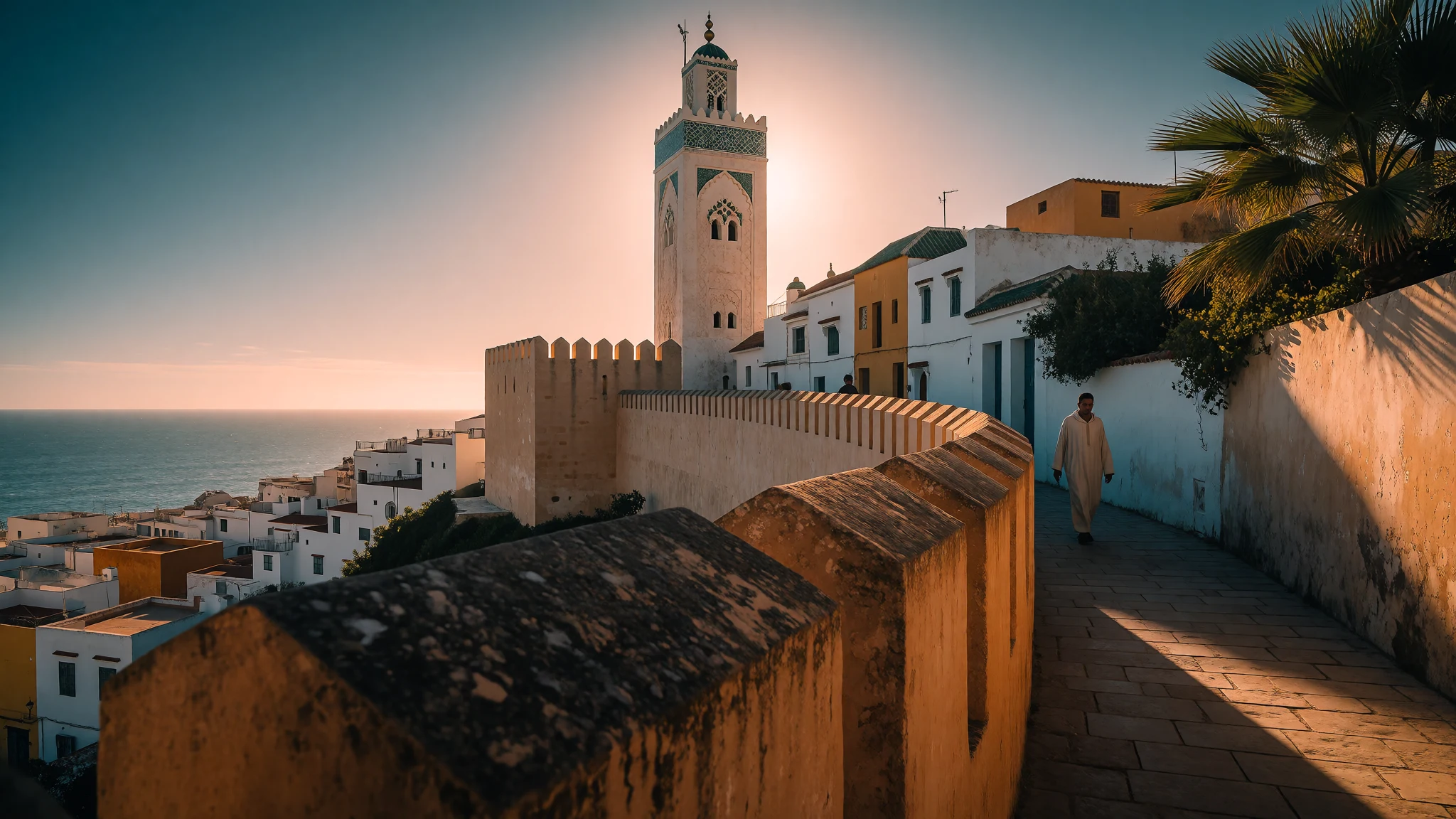
Tangier is where Africa meets Europe across a narrow strait, with a walled hilltop medina, café life and a layered, cosmopolitan past.
The place
Tangier sits at the north-western tip of Morocco, where the Atlantic meets the Mediterranean and Spain is close enough to see on a clear day. The city has about 850,000 people and stands around 56 m above sea level, spread over two hills that tilt down towards a wide bay. It is the capital of the Tanger-Tetouan-Al Hoceima region, so it works as an administrative centre as well as a gateway.
The oldest quarter is the walled medina and the kasbah above it, a tangle of steep lanes, stairways and small squares that falls towards the harbour. Below and beyond it, wide boulevards, apartment blocks and a long seafront promenade show a younger city. Tangier has been building quickly: new commercial districts, a stadium, an enlarged airport terminal and tourism projects along the bay. The Tanger-Med port, further along the coast, drives much of that growth and gives the regional economy a strong push.
The bay was once a sheltered natural harbour, until ships grew too large to dock close to shore. West of the centre, the land climbs to Cape Spartel, where the strait opens into the open Atlantic. The mood is breezy and changeable, with sea fog and wind never far off. Tangier feels less like a postcard than a working port town that happens to have a famous past, and that is much of its charm.
Its story
Tangier began as a Phoenician trading post, and its position on the strait explains almost everything that followed. Wikidata dates its founding to about 401 BCE, though traders were using the bay before then. Carthage turned it into a working port, and local coins kept Punic lettering for centuries, even under Rome, when the town was known as Tingis and its coins carried an imperial portrait on one face and the Canaanite god Baal on the other.
The Greeks preserved a local legend about the name. In their telling, Tinjis, widow of the giant Antaeus, had a son by Hercules called Sufax, who founded the port and named it after his mother. Visitors in antiquity were taken to see what was passed off as the bones and burial place of Antaeus, which makes Tangier an early stop on the sightseeing trail.
Later centuries brought Marinid, Portuguese, Spanish and English rulers in turn, and each left something in the street plan, the walls or the language. In the twentieth century the city became an international zone run jointly by several colonial powers rather than by one. That made it a refuge and a playground for diplomats, spies, writers, artists and businessmen, many of whom came for cheap living and few questions. The arrangement ended in phases as Morocco regained its independence, and the city returned to Moroccan rule. Traces of every layer survive: Phoenician and Roman finds in the Kasbah museum, a Spanish-built church and an old American legation in the medina.
What to see
- Kasbah and Kasbah Museum — Top of the medina
The Kasbah of Tangier is the old fortified quarter on the hill above the medina, where a former sultan's palace now serves as a museum. Its rooms hold finds from Phoenician times onwards, and the courtyard garden and views over the strait make it worth a slow hour.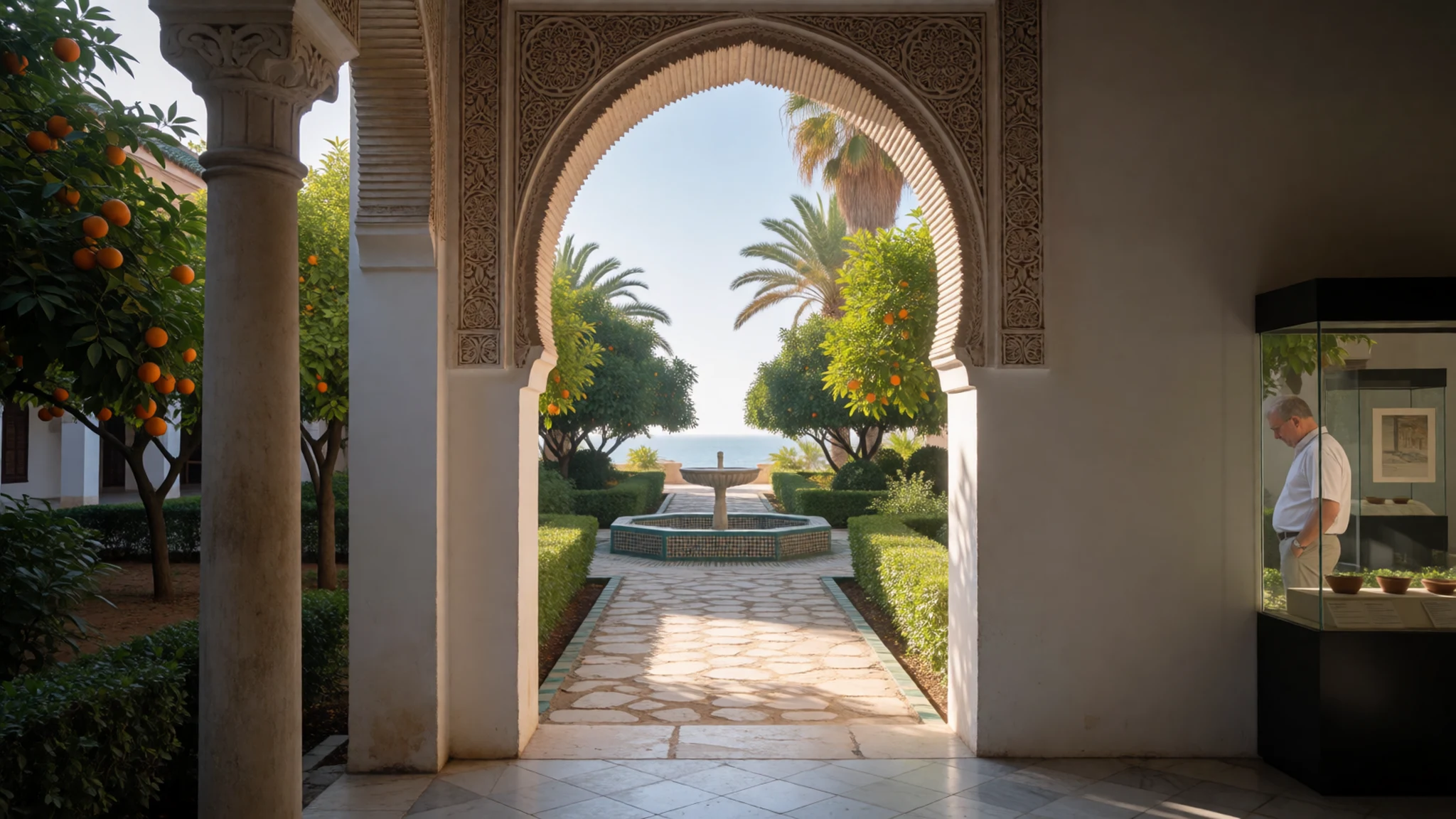
- Petit Socco — Heart of the medina
The Petit Socco is the medina's small central square, ringed by cafés where writers and wanderers of the international-zone years once sat. It is still the easiest place to watch daily life: waiters weaving between tables, men over tea, and lanes running off in every direction.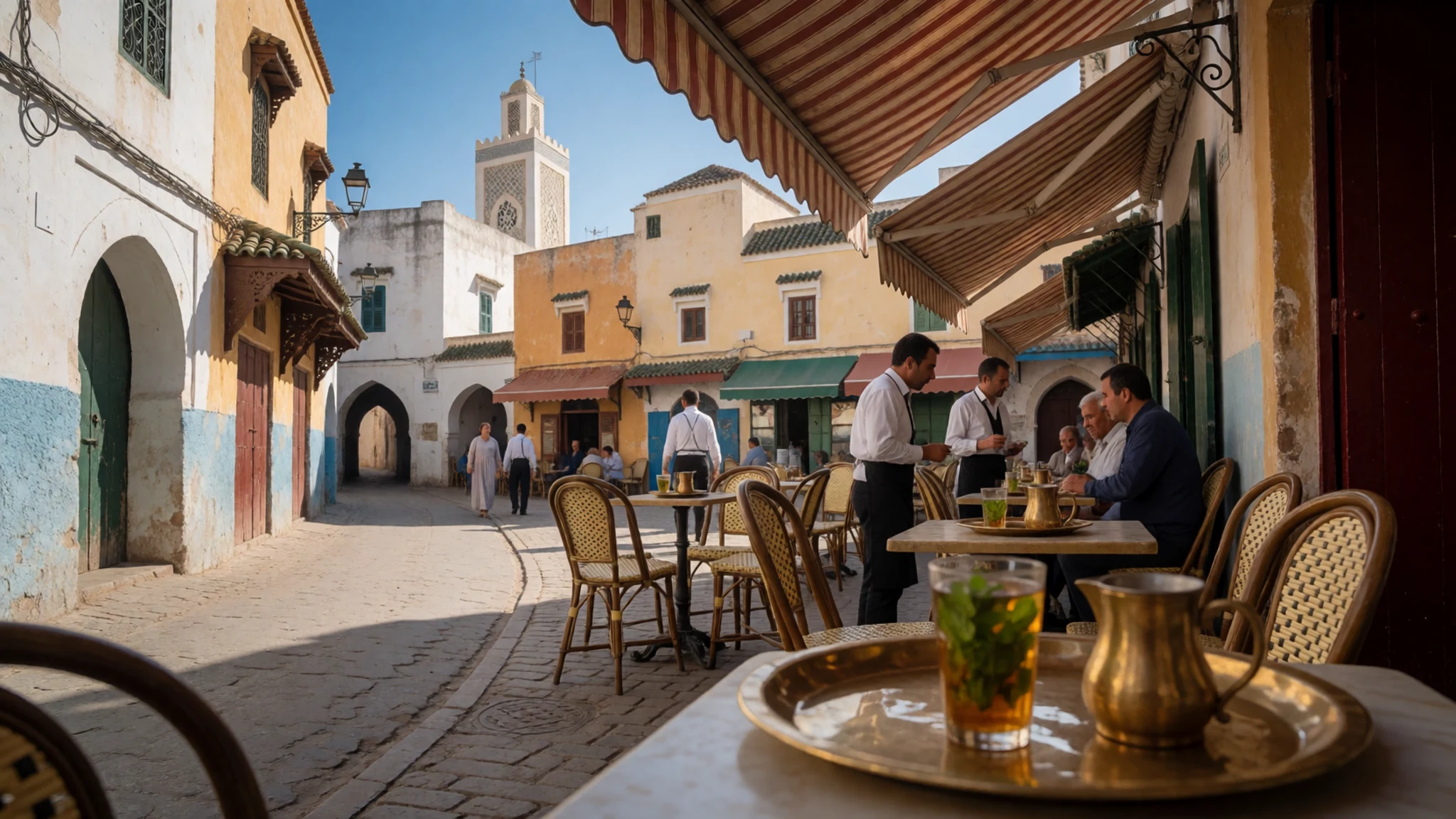
- Grande Mosquée — Medina, near the sea walls
The Grande Mosquée's minaret rises above the medina walls towards the sea. A church and a Roman temple are recorded as having stood on the same ground earlier, so the site holds several faiths' history. Non-Muslim visitors generally admire it from outside.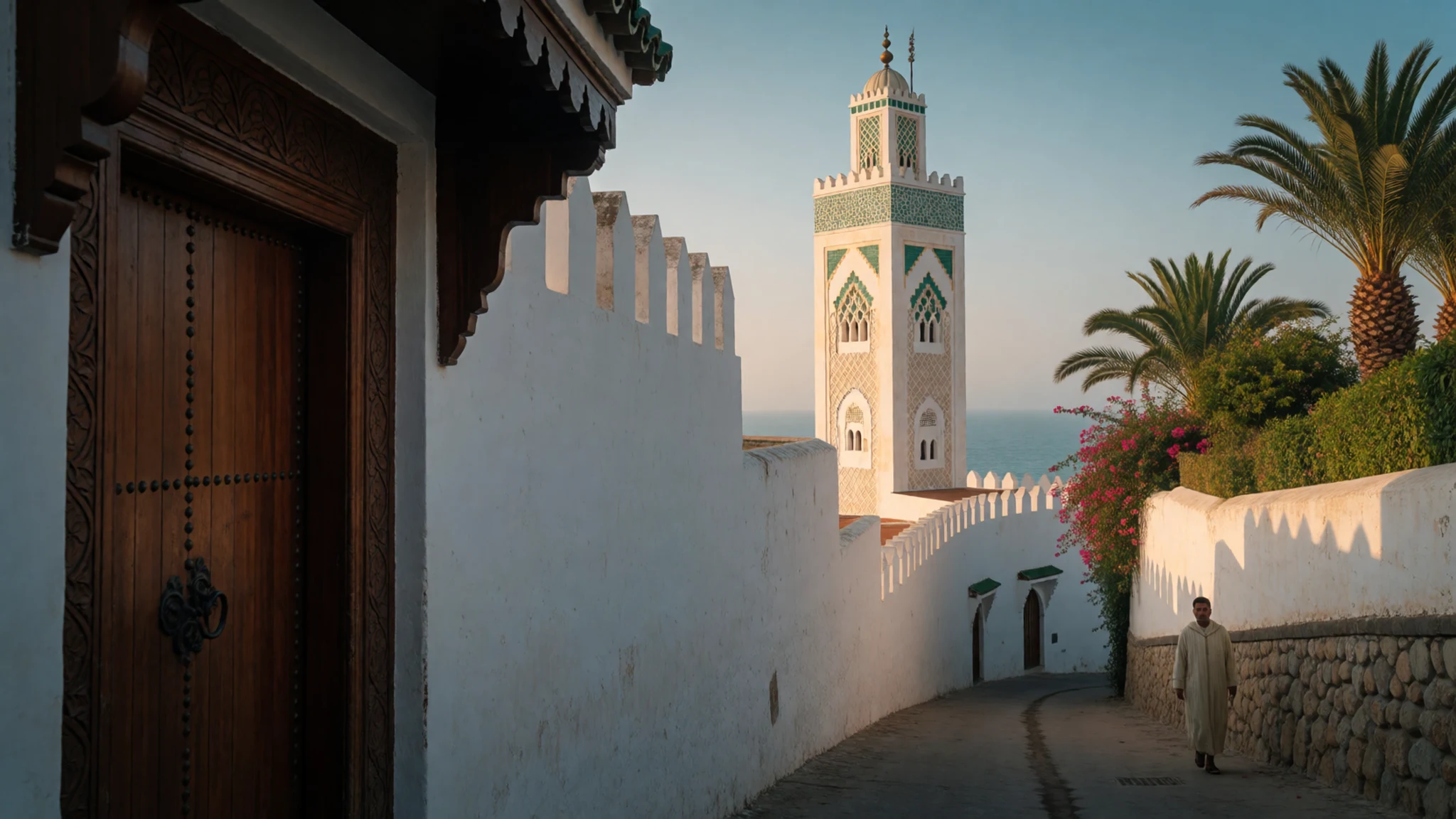
- American Legation Museum — Medina
The American Legation Museum occupies an old diplomatic residence in the heart of the medina. Rooms of maps, paintings and documents, together with a library and a cultural programme, tell the story of Morocco's diplomatic ties with America. Check the museum's current opening days before going.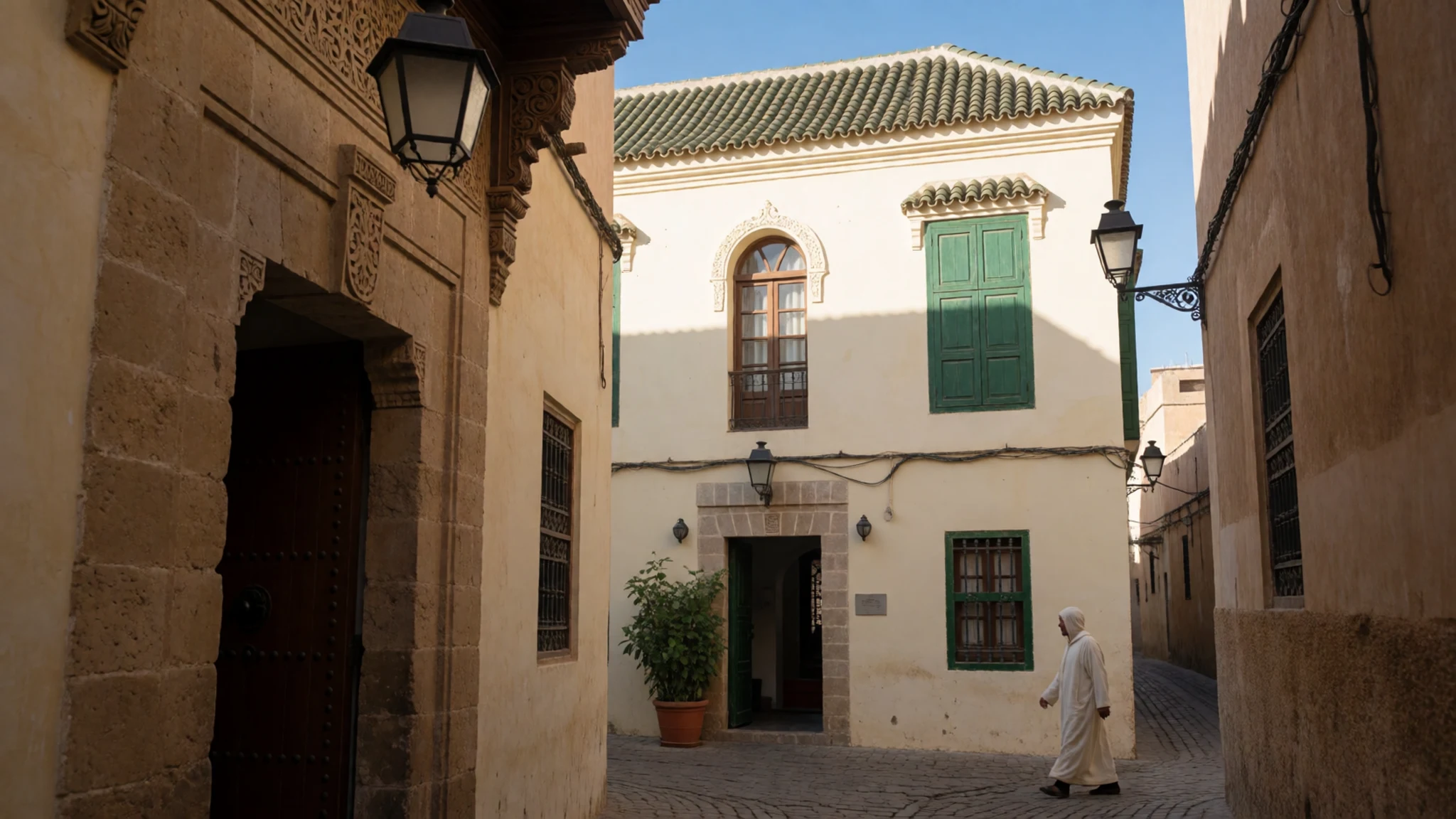
- Tomb of Ibn Battouta — Near the kasbah
The tomb of Ibn Battouta honours the medieval traveller born in Tangier, who journeyed across much of the known world. It is a small, quiet stop near the kasbah, more about the story than the architecture, and best paired with a wander through the nearby old streets.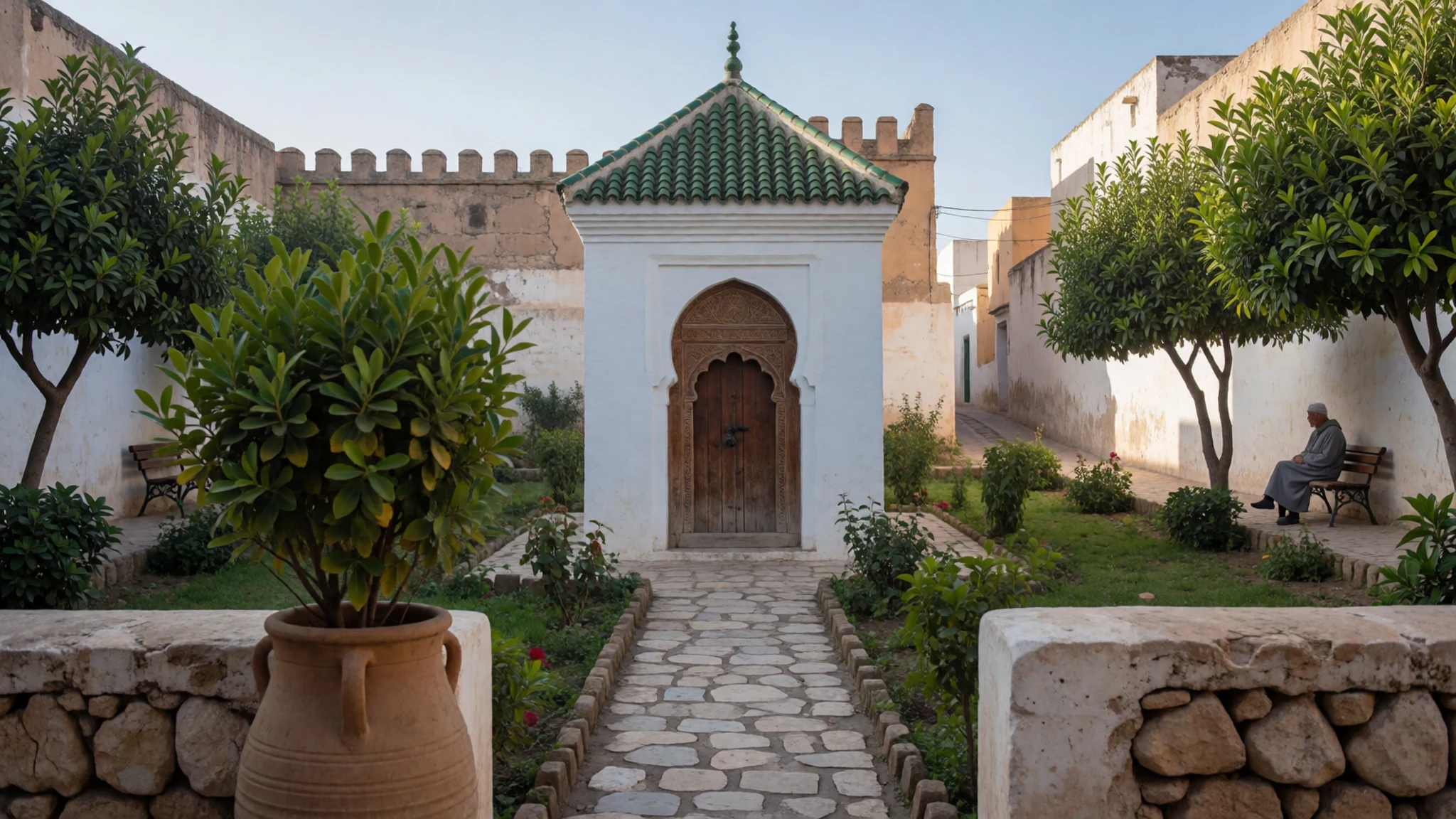
- Cape Spartel — West of the city
Cape Spartel lies west of the city centre, where Morocco's Atlantic coast meets the mouth of the strait. A lighthouse stands on the headland, and the drive out passes woodland and sea views. Go on a clear day, bring a jacket against the wind, and arrange the taxi back.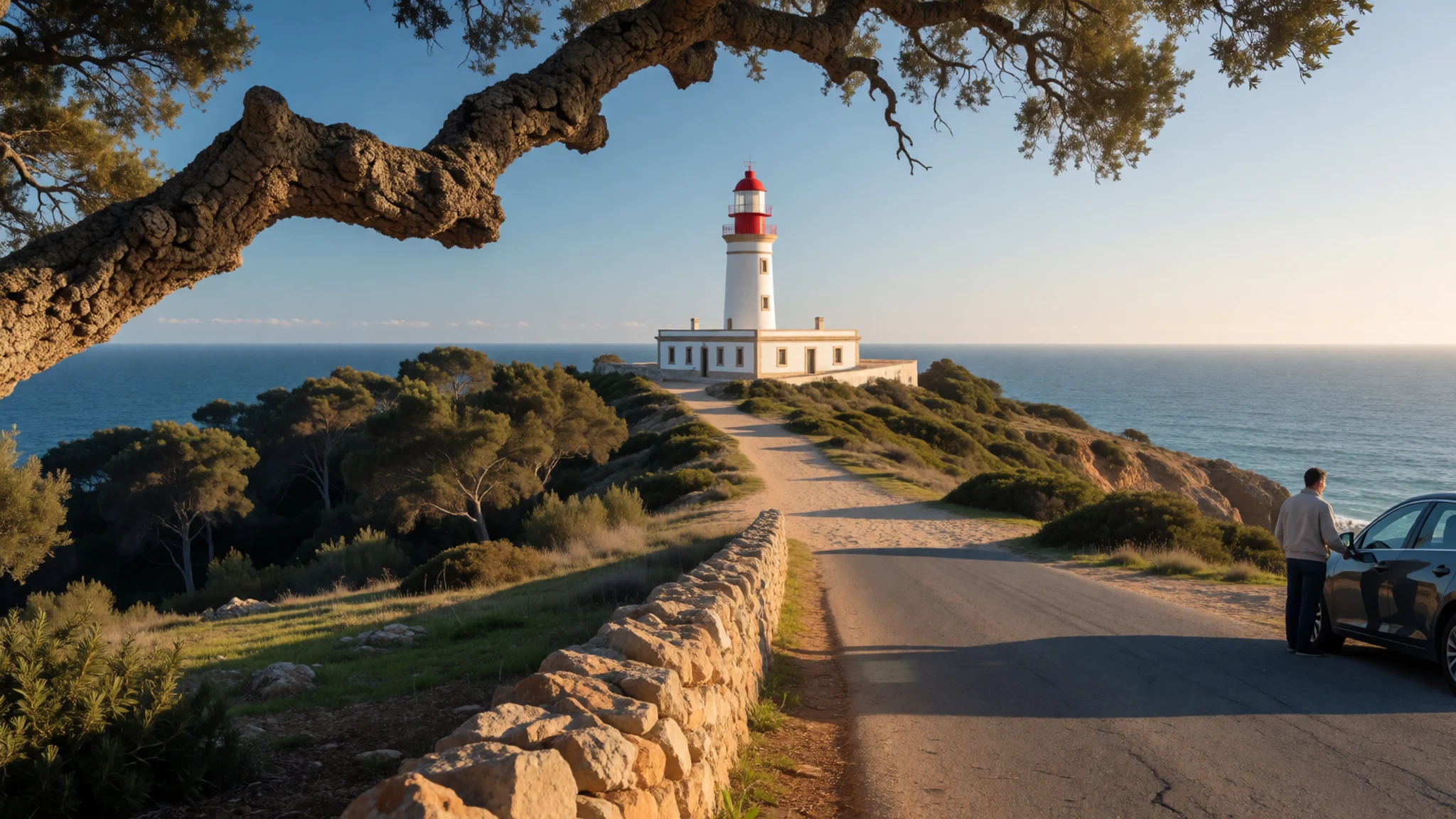
Culture
Tangier has long been a crossroads, and its culture shows it. Everyday life blends Moroccan Arabic, Amazigh heritage, Spanish and French, and café habits here lean towards the Mediterranean as much as the Maghreb. Islam shapes the rhythm of the week, with the call to prayer carrying across the medina and shops often quieter around Friday midday prayers. Ramadan changes the daily pattern: cafés are calm by day, then fill after sunset.
Artists and writers have been drawn here for generations. Eugène Delacroix came with a French diplomatic mission and filled sketchbooks with scenes of street life that fed his painting for years afterwards. In the international-zone era, American and European writers settled in the medina and the cafés around the Petit Socco, and the city still trades on that bohemian reputation through its bookshops and galleries.
Hospitality matters. Being offered mint tea is a normal courtesy, and conversation tends to begin with unhurried greetings before any business. Bargaining in the souks is expected but works best when it stays good-humoured.
Ask before photographing people, especially women and stallholders, and during Ramadan avoid eating or drinking openly in the street in daytime.
What to wear
Traditional dress in Tangier follows wider Moroccan patterns. The djellaba, a long hooded robe in wool for winter or cotton for warmer months, is worn by men and women for everyday errands, Friday prayers and festivals. The kaftan, a long, often embroidered gown in silk or brocade, appears at weddings and celebrations. Men often pair a djellaba with soft leather babouche slippers, while women from the surrounding Jebala hills have traditionally worn striped woven wraps and straw hats with woollen pompoms, now seen mostly at markets and festivals.
Day to day, the city looks quite modern. Jeans, trainers, shirts and football tops are common among younger people, and many women pair them with headscarves or loose long coats while others go bareheaded. Tailors and fabric shops in the medina still make djellabas to measure, and weddings keep the older garments in circulation.
Visitors should dress for a coastal, windy, hilly city. Loose cotton or linen layers that cover shoulders and knees suit the medina and avoid unwanted attention, and a light jacket helps with the sea wind, even on summer evenings. Pack comfortable closed shoes with grip for steep cobbled lanes, a hat for the sun, and a scarf, which is handy at any religious site that admits visitors.
What to eat
- Kefta bocadillo — Sandwich counters around the medina edges and the Grand Socco
A baguette filled with spiced minced-meat kefta, often with egg and chips, is Tangier's quick and filling street lunch. The Spanish word 'bocadillo' shows the strait's influence. Look for small sandwich counters where locals queue at midday.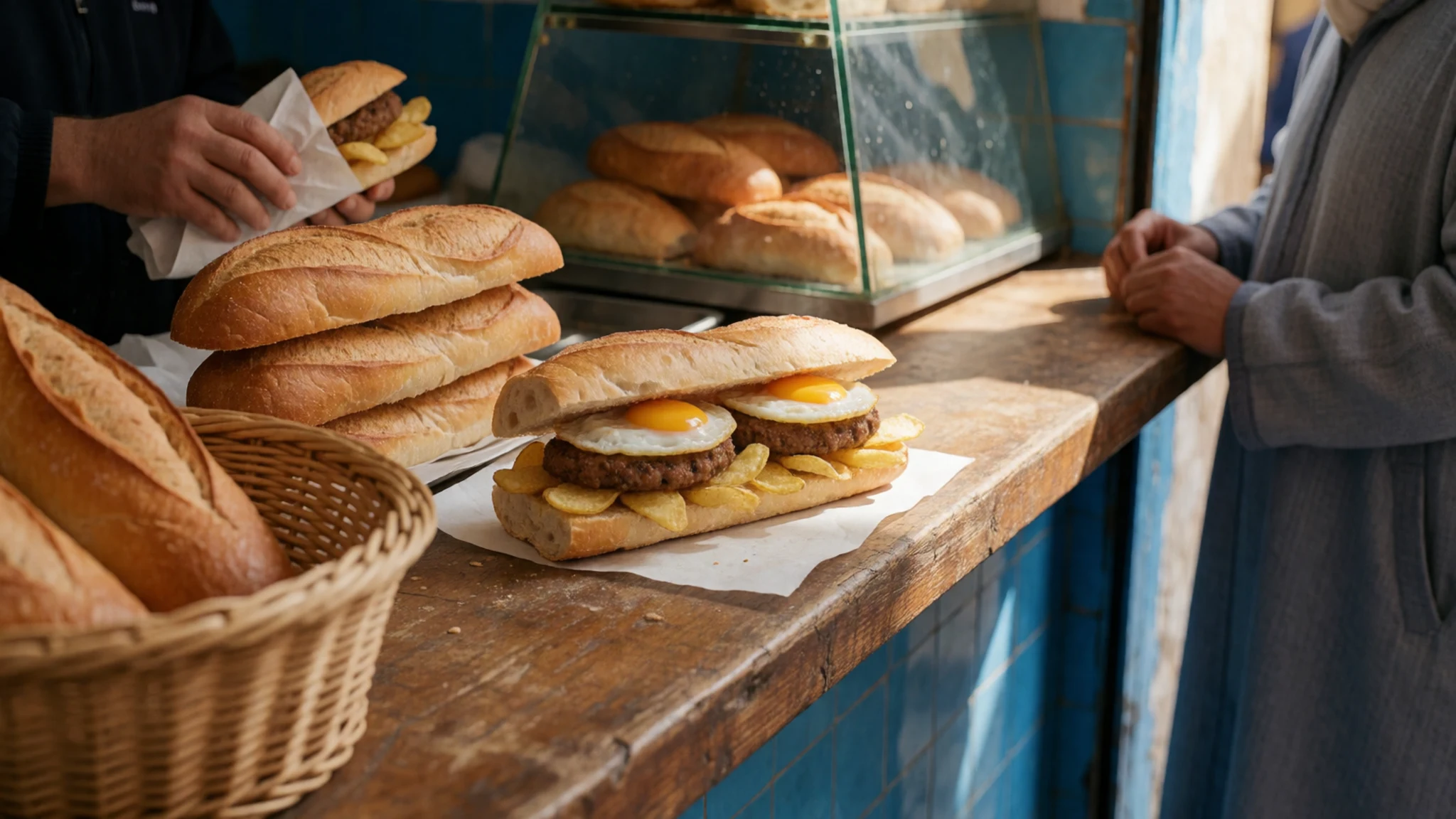
- Grilled fish — Fish eateries and stalls near the port and along the seafront
Fish straight from the port, grilled whole or fried with lemon, cumin and salad, is the city's signature meal. Sardines, sea bream and calamari are typical. Choose busy places where the catch sits on ice and is cooked to order.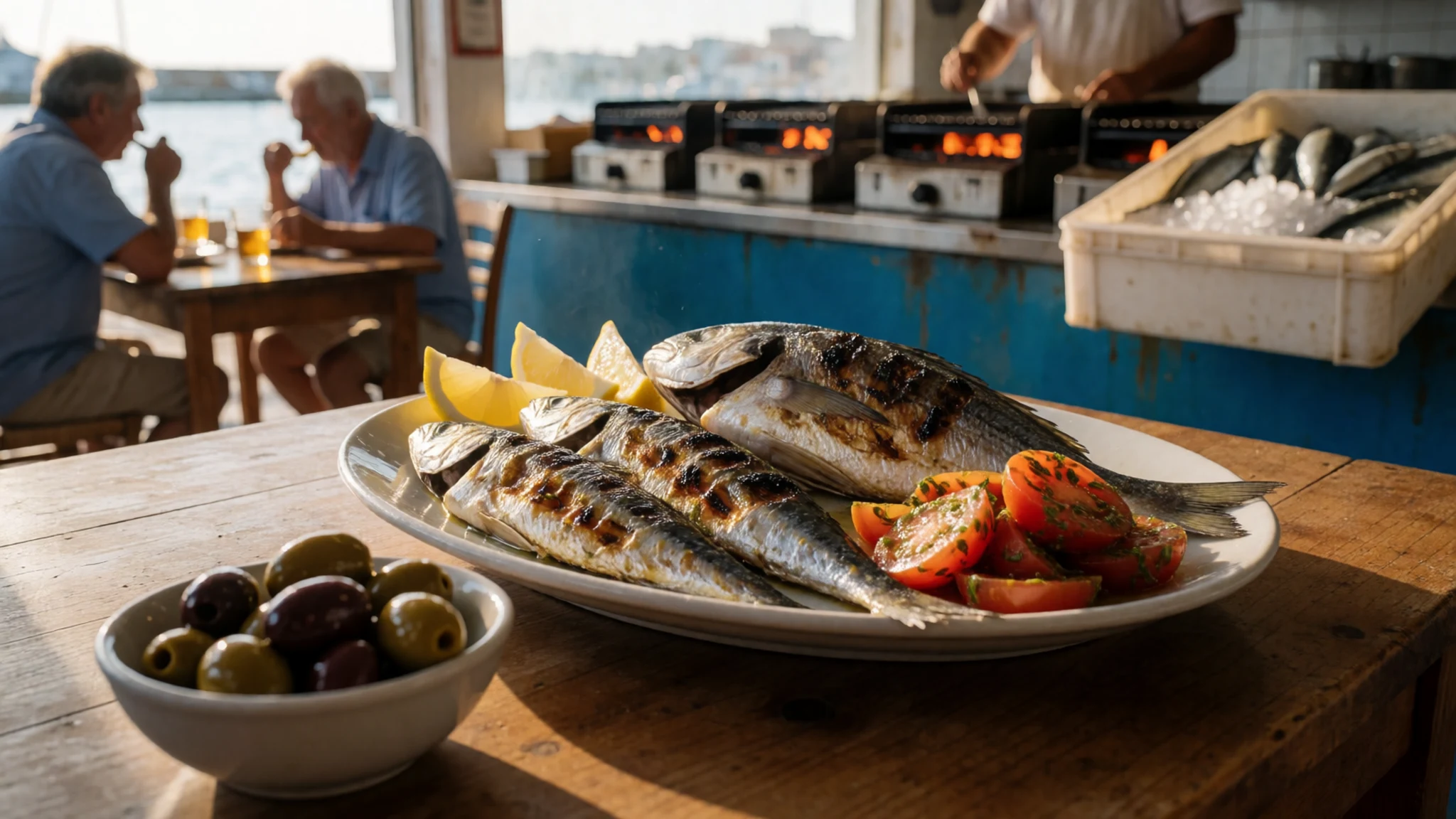
- Tagine — Family-run eateries inside the medina
A slow-cooked stew in a conical clay pot, usually lamb, chicken or fish with preserved lemon, olives or vegetables. Tangier versions often lean on herbs and fresh seafood. It is eaten with bread rather than cutlery, and is easy to share. - Harira — Cafés and small eateries in the medina, especially around sunset
A thick tomato soup with lentils, chickpeas and herbs, served hot with dates or bread. Moroccans eat it all year, and in Ramadan it breaks the fast. A bowl makes a cheap, warming start on a windy evening. - Mint tea and pastries — Café terraces and pastry shops around the Petit Socco
Sweet green tea with fresh mint, poured from a height into small glasses, is offered everywhere. Pair it with almond pastries, gazelle horns or msemen flatbread. Café terraces are the traditional place to sit and watch the square.
Plan it
Best time. April, May and October bring mild, bright weather and manageable crowds. July and August are hot and busy with holidaymakers. Winter is cooler, windier and wetter, with sea fog and rain, though the city is quieter.
How long. 2–3
Getting there. Tangier's airport receives flights from Western Europe and Moroccan cities, many on budget airlines. Alsa's AeroBus runs from the airport to the central train station, and grand taxis wait at arrivals at fixed fares, so confirm the fare before getting in. Ferries cross from southern Spain, and trains link the city to other Moroccan cities.
Budget. mid
Tips
- Explore the medina and kasbah in the morning, before the heat and tour groups
- Carry some cash in small notes for taxis, cafés and market stalls
- Politely decline unofficial guides who approach in the medina; if a guide is wanted, ask your accommodation to arrange one
- Pack a windproof layer and shoes with grip, even in warm months
- Check the city's official site, tanger.ma, and each museum's page for opening days before going
Etiquette
- Dress modestly in the medina and away from the beach
- Ask before photographing people
- Avoid eating or drinking openly in public during daytime in Ramadan
Nearby
Sources
- Wikidata Q126148 (CC0)
- Wikipedia: Tangier (rev 1385047419) (CC BY-SA 4.0)
- Wikivoyage: Tangier (rev 5419499) (CC BY-SA 4.0)
- Tangier, Mike McBey (CC BY 2.5)
- La corniche de Tangier, Ifni95 (CC BY-SA 4.0)
- Wall of Tangier, Diego Delso (CC BY-SA 4.0)
- Kasbah Mosque in Tangier, Rachidourkia (CC BY-SA 4.0)
- Petit Socco, Boubloub (CC BY-SA 4.0)
- Cape Spartel lighthouse panorama, Geertchaos (CC BY-SA 4.0)
- Coat of arms of Tangier, Visma (CC BY-SA 4.0)
- Ruines de Tingis, Rais67 (CC BY 3.0)


