Tanah Lot
Tanah Lot, Indonesia
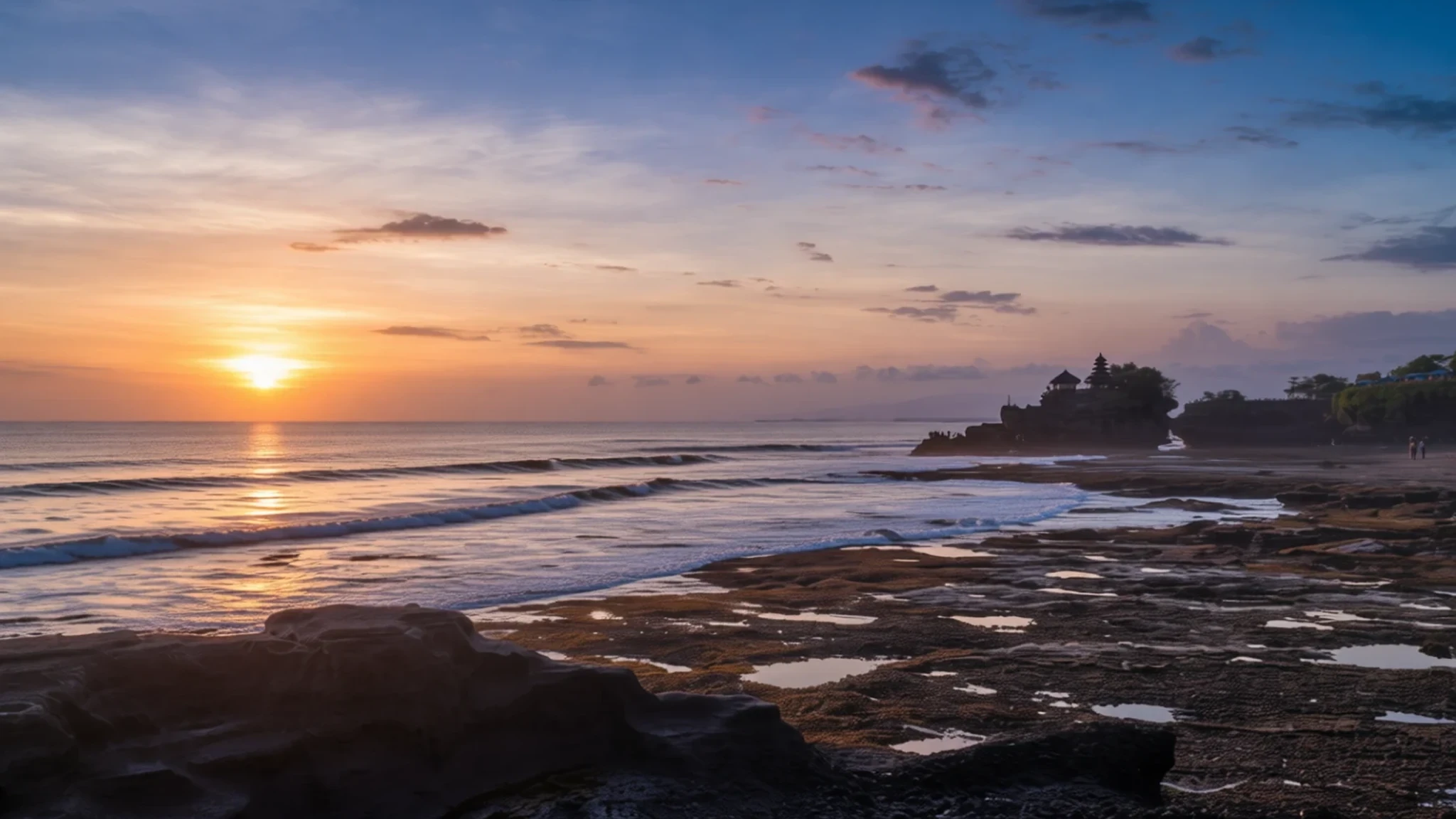
Come for sunset to see a sea temple on its offshore rock, and expect crowds along the cliffs.
The place
Tanah Lot is a rock formation standing just off the south-west coast of Bali, and the Hindu pilgrimage temple built on it, Pura Tanah Lot, is one of the island's best-known sights. In Balinese the name suggests land in the sea. At high tide the rock is cut off from the shore and the temple looks as though it floats, while at low tide a path opens across the sand and reef.
The site lies in Beraban village in the Kediri district of Tabanan Regency, a short drive north-west of Denpasar. The busy tourist areas of Kuta, Legian and Seminyak sit to the south-east, and the road to West Bali passes right by, so many visitors treat Tanah Lot as a stop on a longer loop rather than a destination in its own right.
The temple is one of the key temples in the island's spiritual geography, and its setting explains much of its appeal. Waves break against the base of the rock, and the sun drops behind the temple in the late afternoon. Most visitors arrive then. The cliff path to the south is the usual place to watch, and the car park and beach approach are lined with stalls that can make the first part of a visit feel more like a market than a shrine.
Expect heat, a steady flow of tour groups and a walk through shops before the water comes into view. Arriving well ahead of sunset gives the most room to move around the cliffs, and the restoration of the rock over recent decades is a reminder that the site is fragile as well as photogenic.
Its story
The story of Tanah Lot begins with a priest. Legend credits Nirartha, a revered Hindu priest, with travelling along the coast of southern Bali and stopping at this rock. Struck by its position, he is said to have settled there to pray and teach. Local people hold that the spot already carried sacred power, and the temple grew up around the priest's presence and the reverence that followed him. The legend is still told by guides and local families, and it shapes how people behave at the shrine.
Another thread of the tale involves a serpent. Villagers say a snake guarded the rock and the waters around it, and that the priest's arrival was welcome to some and not to others. In the telling, the serpent becomes a guardian of the shrine, and a sacred snake is still said to live in the rock's crevices. Whether or not anyone believes the details, the guardian figures carved around the site carry this idea forward.
The physical story is less mythical. Over time the sea wore away at the rock, and when it was realised that the rock was in danger of collapse, a comprehensive restoration programme began. Its work meant the inner temple was at times closed to visitors, which is one reason many people now admire the structure from the shore and the cliffs rather than climbing up to the shrine itself.
What to see
- Pura Tanah Lot, the sea temple — Offshore rock, Beraban
The temple stands on the offshore rock and is reached on foot only at low tide. Restoration after serious erosion means the inner shrine is sometimes closed, so most people admire the structure from the shore and the cliff path. Look at the shrines on the rock's edge and the way the walls meet the sea. Check the tide before you set out, and allow time for the walk back.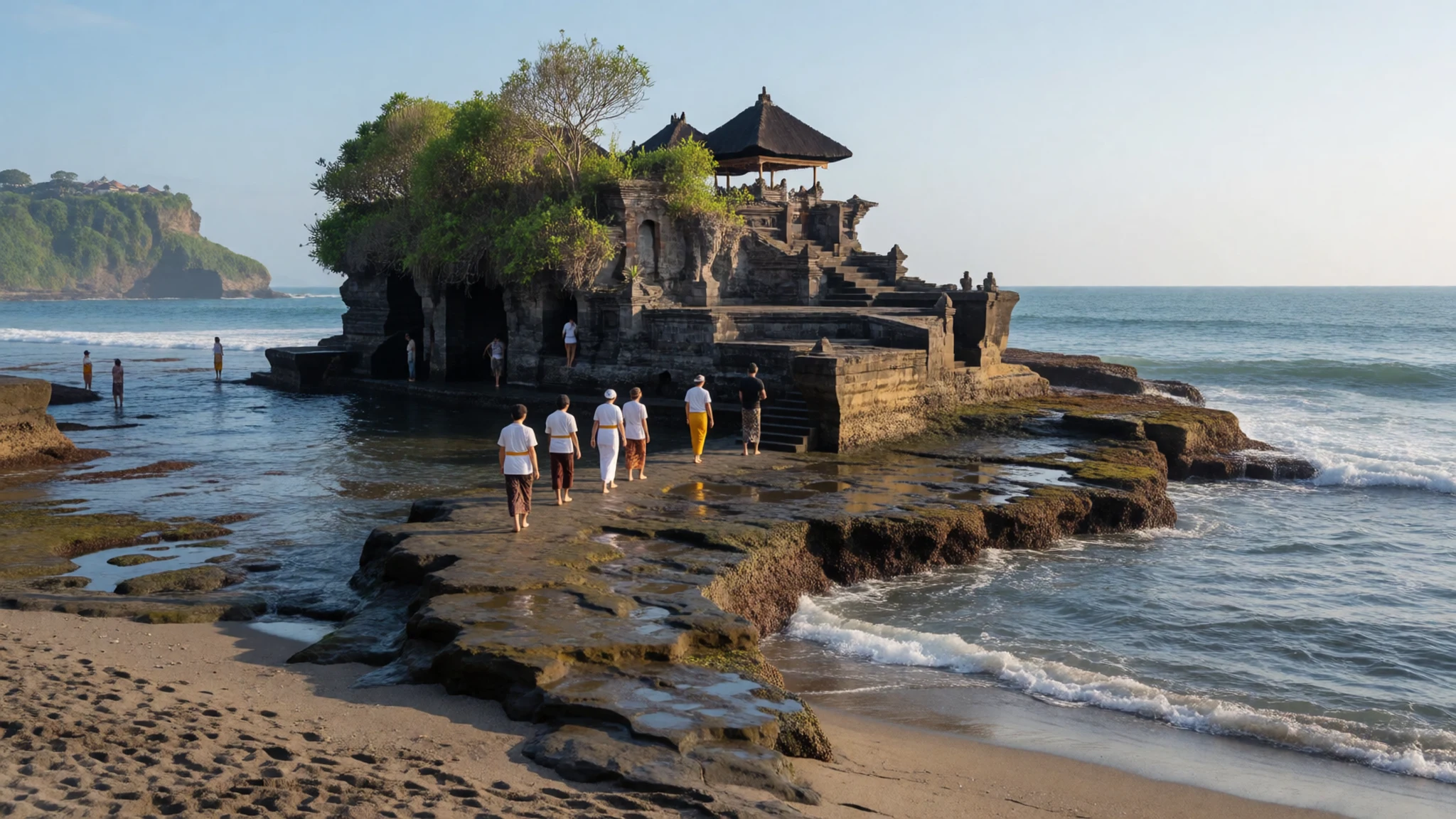
- Cliff-top viewpoint to the south — Raised cliffs south of the temple
A footpath runs to the raised cliff area south of the temple, and this is where most people settle for the sunset. From here the temple sits in front of the setting sun, and the view is the reason many visitors come. Arrive well before the late-afternoon rush to find space at the rail. A longer lens helps if you want the temple filling the frame.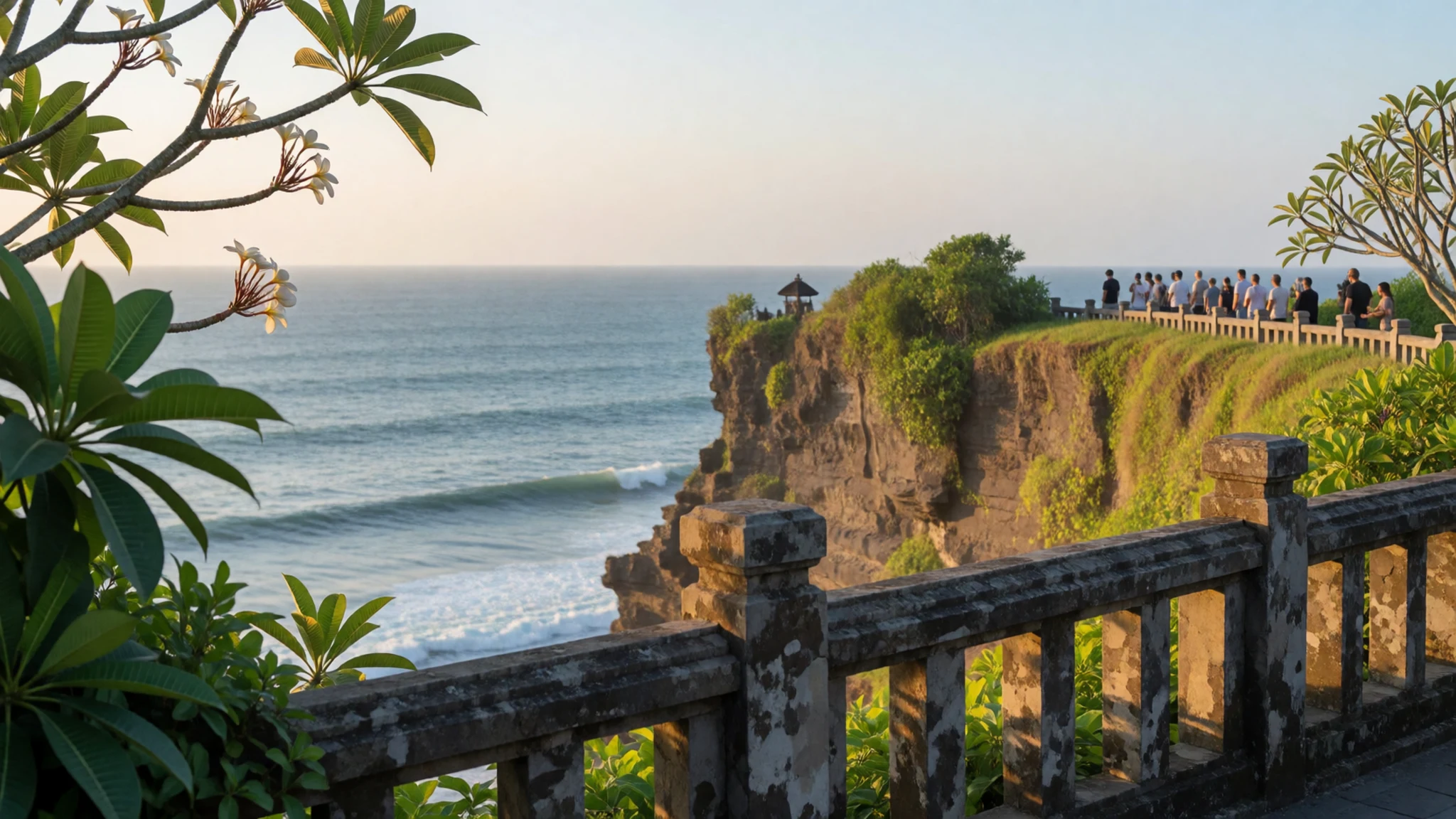
- The souvenir lane — Between the car park and the beach
Between the car park and the beach is a lane of souvenir shops selling almost every Balinese trinket: woven bags, carved wood, sarongs and small offerings. Bargaining is normal, so a friendly, unhurried approach works best. The lane is at its busiest in the late afternoon, so give yourself time to move through it slowly.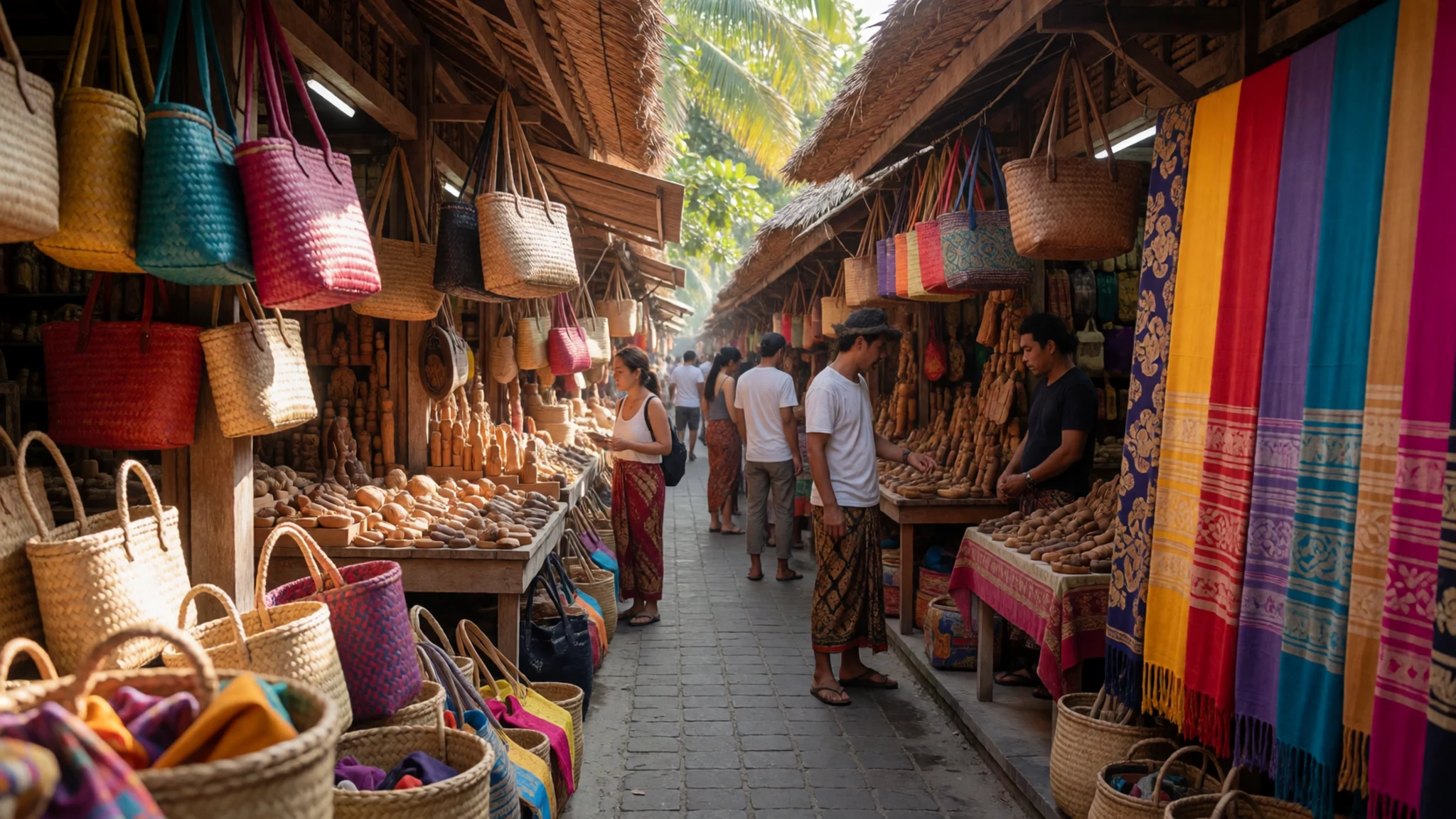
- Pura Batu Balong — A short walk north of Tanah Lot
A smaller Hindu temple stands a short walk north of Tanah Lot, and it is quieter than the main site. It is a working place of worship, so keep voices low and dress with care. Many visitors find it a calmer counterpoint to the crowds on the beach. Look at the carved gateway and the shrines among the rocks.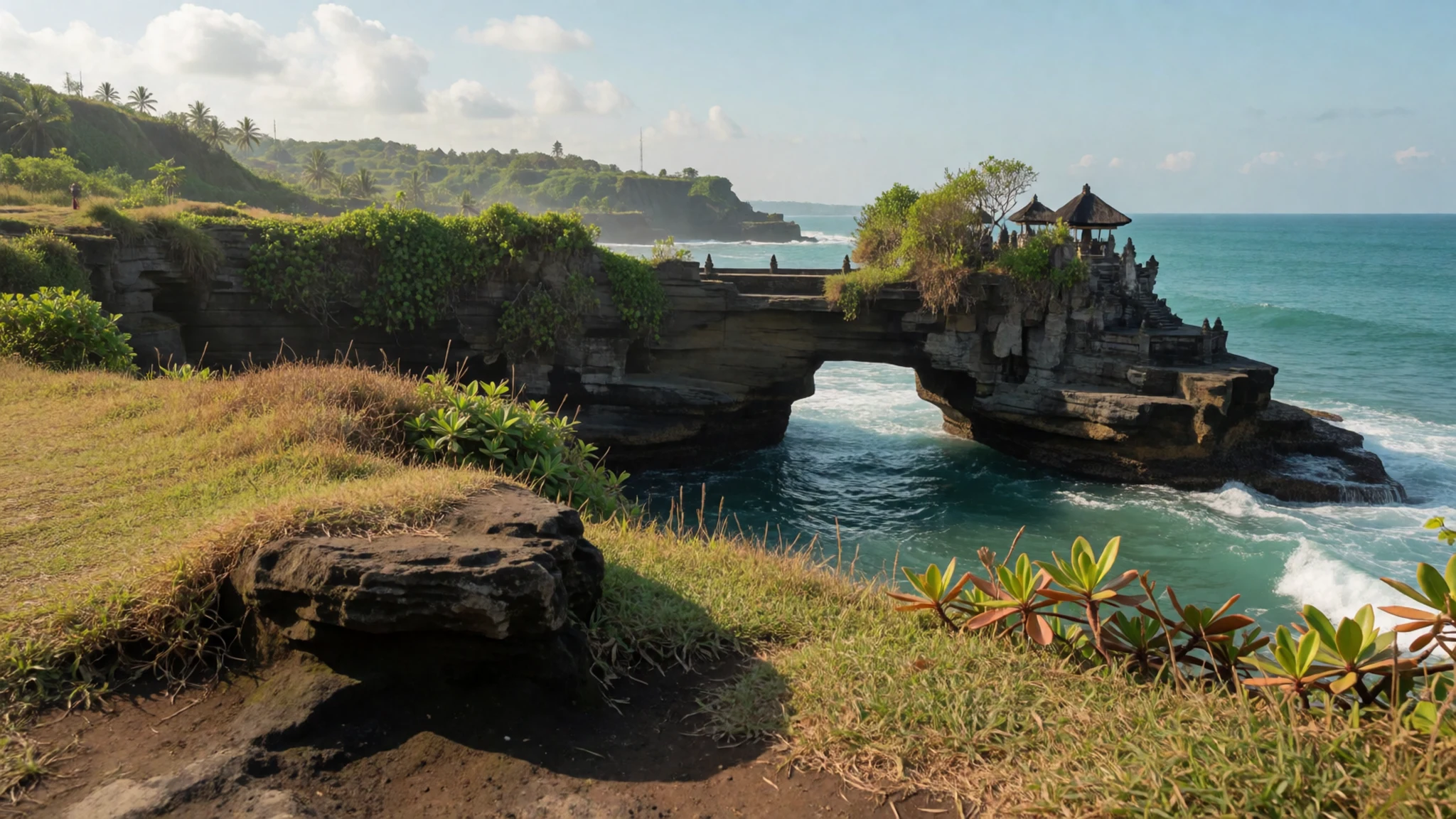
- Pejaten ceramics village — Pejaten, north of Tanah Lot
Pejaten is the centre of Bali's ceramics business and makes a worthwhile stop for anyone interested in pottery. Workshops sell everything from tableware to garden pieces, and visitors can often watch the potters at work. It offers a pleasant contrast to the coastal shops. Bargain politely, and check shipping arrangements if you plan to take large pieces home.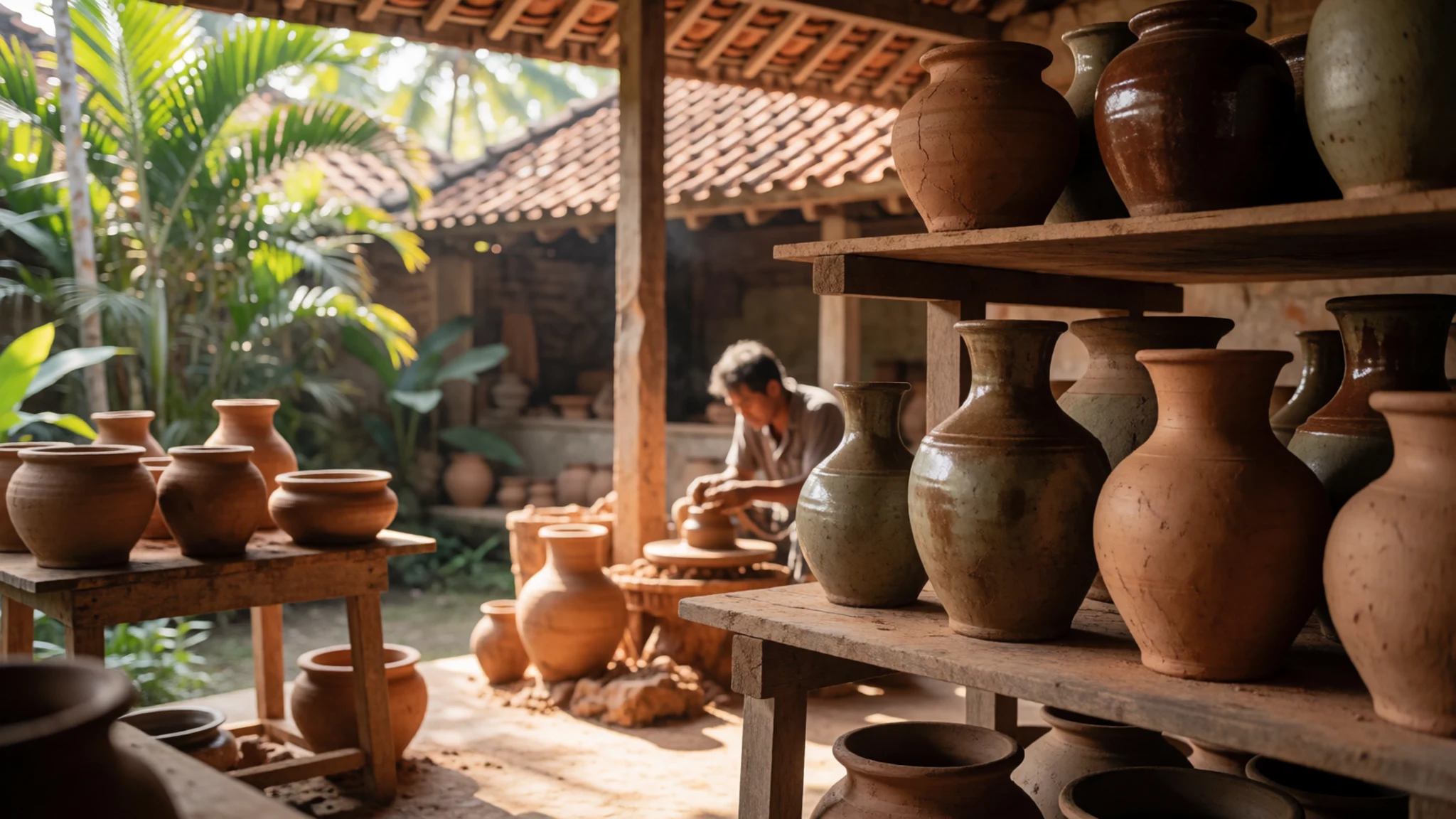
Culture
Tanah Lot is an active Hindu place of worship, not just a sunset backdrop, and the temple and its surrounding shrines follow Balinese religious practice. Offerings made of woven palm leaf, flowers and rice are placed at shrines and on the ground around the entrances, and they are part of daily devotion. Many local visitors come to pray, particularly around ceremonial dates, so the atmosphere can change quickly.
Dress is a matter of courtesy. Visitors entering the temple area are usually asked to wear a sarong, often with a sash tied at the waist, and many sites provide these at the gate for a fee. Shoulders and knees should be covered. Bare skin in a holy place is considered disrespectful.
Photography is welcome in most of the grounds, but ask before photographing people who are praying or making offerings. Keep off the shrines and do not sit on temple walls. Climbing on the rocks at the water's edge is risky and may be restricted. Keep voices down near the shrines, since the site stays a place of worship even when the cliffs are busy with sunset crowds. Step back from anyone praying and never touch or move an offering.
What to wear
Tanah Lot is a temple, so what you wear matters more here than on a beach. Traditional Balinese dress for ceremonies is built from a few pieces: a kebaya blouse or fitted top for women, a sarong (kamen) wrapped at the waist, a sash (selendang) tied over it, and for men a headcloth called udeng worn with a sarong and sash. Ceremonial cloth is often woven or embroidered, and songket, a brocade with gold or silver threads, is kept for special occasions. Wearing these pieces at a temple shows respect, and the sash is the detail most visitors notice.
Local people wear this dress for prayers and ceremonies, and the everyday version is simpler: a plain blouse or T-shirt with a cotton sarong. Many people at Tanah Lot wear shorts and vests in the heat, but a sarong and sash, when worn, signal care at a place of prayer.
For a visitor, the sensible choice is light cotton or linen in plain colours, loose enough to stay cool. Cover shoulders and knees, and bring a sarong for the temple gate even if one is provided. Choose footwear with good grip for wet rocks and sandy paths, and carry sandals that slip off easily at the temple steps. Swimwear belongs on the beach, not at the shrines.
What to eat
- Es kelapa muda — Stalls on the cliff top and along the approach lane
Chilled young coconut, served in the shell with a straw. Most stalls near the temple sell it, and it is a refreshing way to wait for sunset. Choose one with clear water and soft flesh.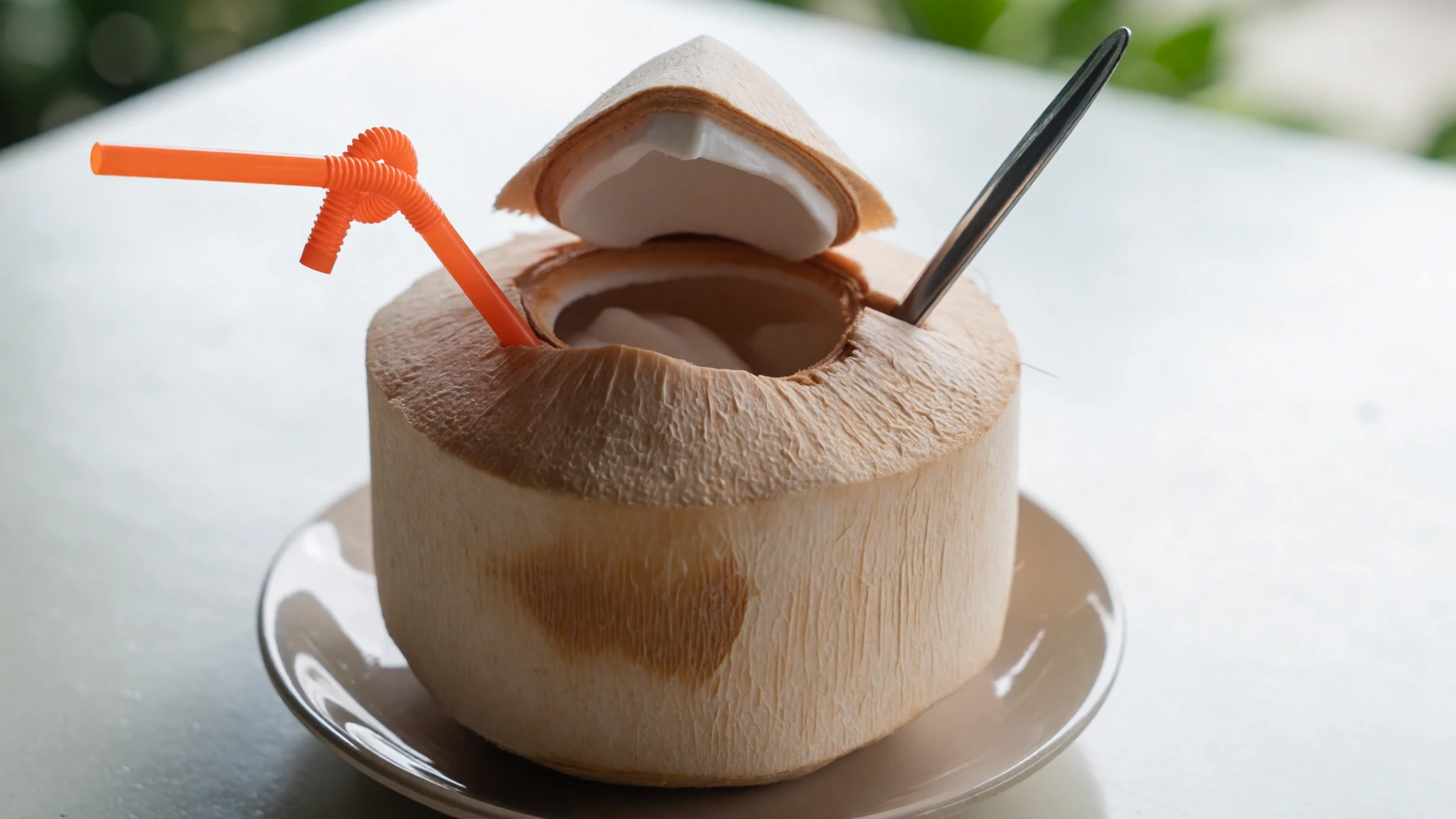
- Lawar — Local warungs away from the cliff top
A mix of finely chopped vegetables, grated coconut and spices, often with minced meat, which makes it a traditional Balinese side dish. Versions vary by village and by occasion. Check whether pork is included if that matters to you, since many versions use it.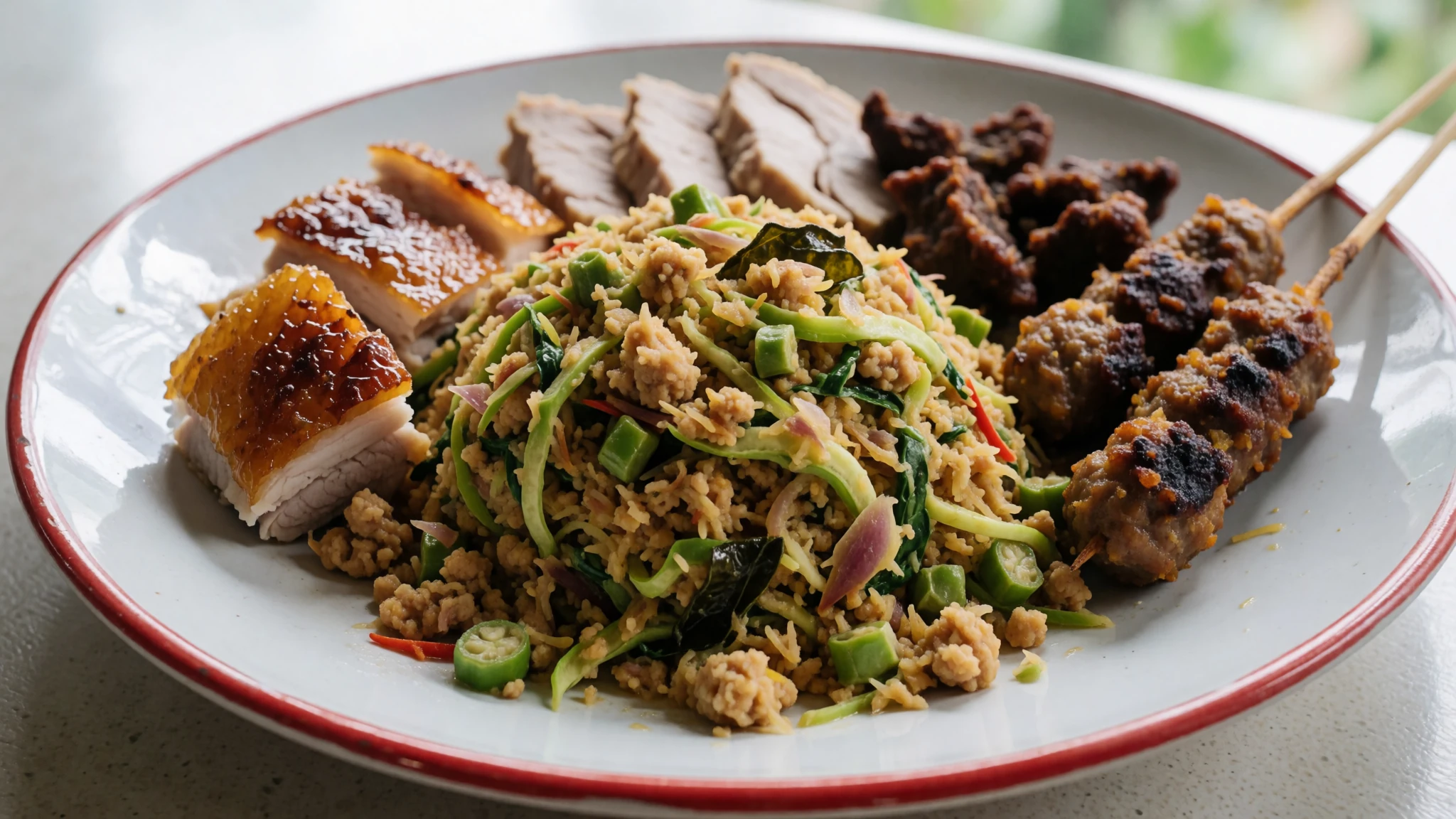
- Nasi campur — Simple warungs in Beraban and the villages around Tabanan
A plate of rice with small portions of whatever is cooked that day: vegetables, egg, sambal, and sometimes meat or fish. It is everyday Balinese food. Eat it at a local warung rather than a cliff-top restaurant, where the food tends to be better value.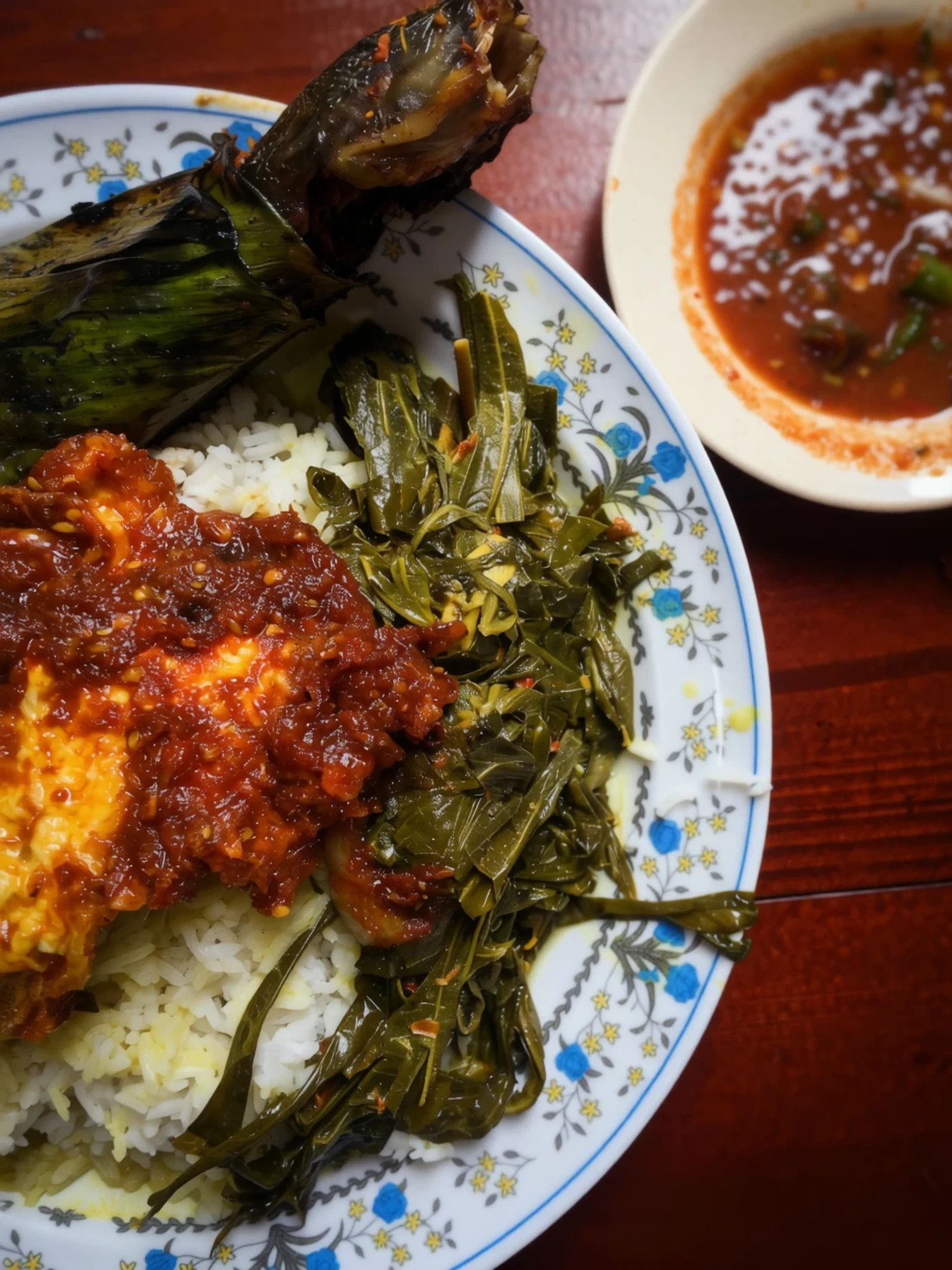
- Sate lilit — Family eateries and roadside grills in the nearby villages
Minced fish or pork mixed with grated coconut, spices and lemongrass, shaped around sticks and grilled over charcoal. It is a Balinese speciality, often served with rice. Sellers in nearby villages often grill it in the afternoon, and it is worth trying before or after your visit.
Plan it
Best time. The drier season, roughly May to October, brings clearer skies and calmer seas for the walk to the rock, with July and August the driest months. The wet season from about November to April brings heavier rain and rougher water, peaking from December to February, so it is less reliable for tidal access.
How long. Half a day
Getting there. Fly into Ngurah Rai International Airport near Denpasar, then take a taxi or driver north-west to Tanah Lot; allow plenty of time in traffic. The drive back south in the evening can be slow after sunset.
Budget. low
Tips
- Go before the late-afternoon crowds if you want space on the cliff path
- Check the tide before walking out to the rock, since it is only reachable on foot at low tide
- Carry cash for stalls, parking and entry, and bring water for the heat
- Check the official site, tanahlot.net, for current entry and access arrangements before you go
Etiquette
- Wear a sarong and sash at the temple gate
- Ask before photographing people who are praying
- Keep off the shrines and step around offerings
Nearby
Sources
- Wikidata Q515253 (CC0)
- Wikipedia: Tanah Lot (rev 1370790876) (CC BY-SA 4.0)
- Wikivoyage: Tanah Lot (rev 5342754) (CC BY-SA 4.0)
- Photo: Tanah Lot Temple at high tide, Jakub Hałun (CC BY-SA 4.0)
- Photo: Tanah Lot, Grayswoodsurrey (CC BY-SA 4.0)
- Photo: Händler vor Pura Tanah Lot, Arabsalam (CC BY-SA 4.0)
- Photo: Eingangsbereich Pura Tanah Lot, Arabsalam (CC BY-SA 4.0)
- Photo: Tanah Lot Temple at high tide, Jakub Hałun (CC BY-SA 4.0)
- Photo: Jl. Tanah Lot, Beraban, futurehorizon1 (CC BY 3.0)
- Photo: Pura Batu Balong, chensiyuan (CC BY-SA 2.0)
- Photo: 032 Guardians of the Gate, Anandajoti (CC BY-SA 4.0)


