Tampere
Tampere, Finland
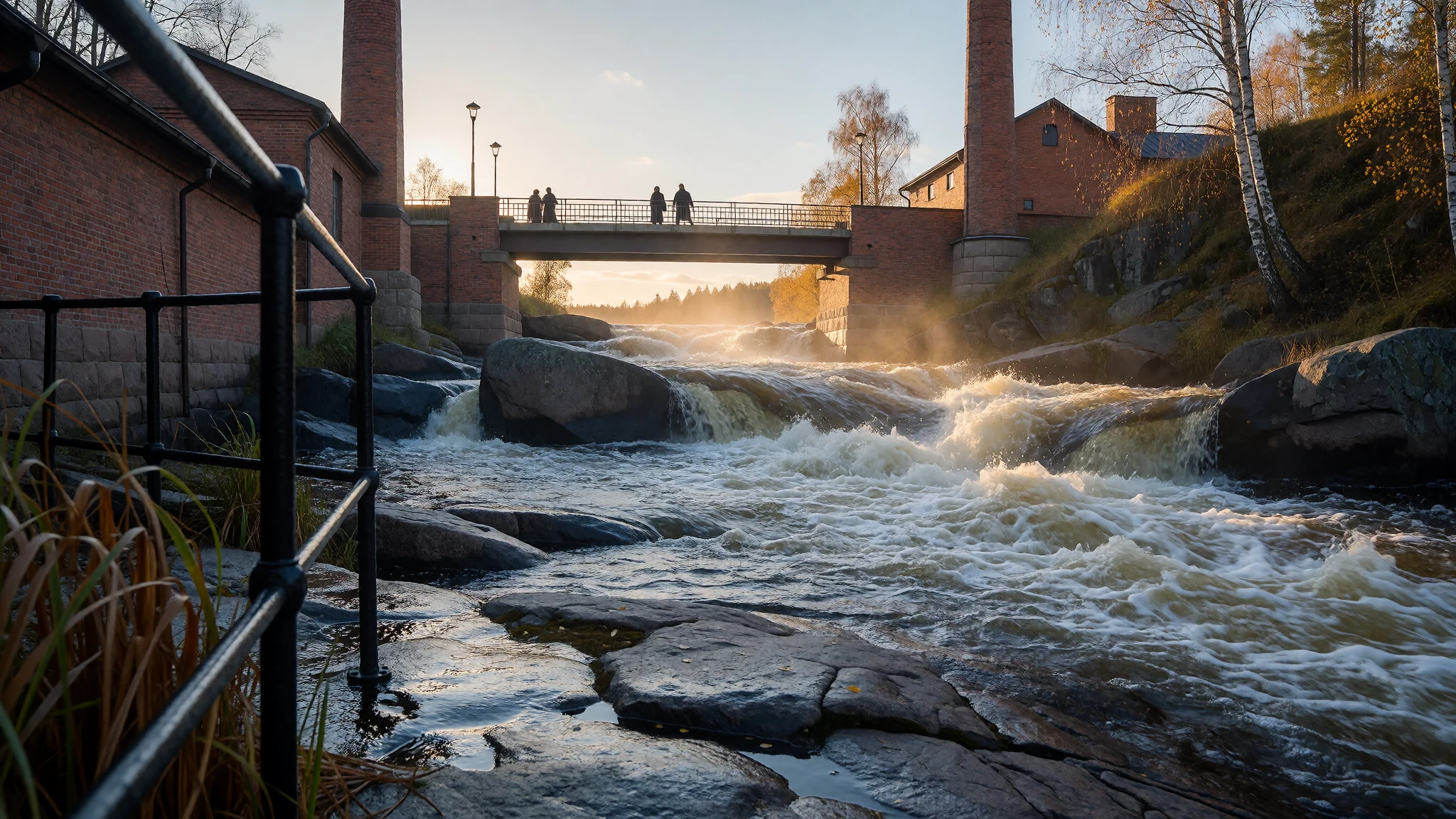
Tampere is a lakeside Finnish city of old red-brick mills, good museums and plain home cooking, with rapids running through its centre.
The place
Tampere sits in the Finnish Lakeland, the regional capital of Pirkanmaa, on a narrow strip of land between two large lakes. The Tammerkoski rapids run straight through the middle of town, and the centre is arranged around them: old mills and factories on both banks, bridges every few minutes, and a waterfront that people actually use for walking, coffee and sitting in the sun when there is some. With a population of about a quarter of a million, it is the biggest inland city in the Nordic countries, and Finns treat it as the main urban, economic and cultural centre of inland Finland. It is a working city rather than a postcard one. Brick chimneys and converted factory halls now hold museums, offices, cinemas and cafés, and the mix feels lived-in rather than staged. Pispala, the ridge-top neighbourhood between the lakes, keeps a looser, more bohemian feel, with steep lanes of wooden houses. The surrounding area has a tangled administrative history: it has been counted as part of Satakunta, of Häme (Tavastia) and finally of its own Pirkanmaa, and locals have strong views about which label fits. Tampere is a comfortable size for exploring on foot, with trams and buses covering the rest. It is also quieter and cheaper in feel than Helsinki, with fewer tourists, though summer weekends and winter holidays bring more people to the lakes and the sauna culture the region is known for.
Its story
Tampere has a short history as a town but a long one as a place. Farmers from the west settled around the Tammerkoski rapids many centuries before any town existed, and villages such as Messukylä and Pyynikkälä grew up nearby. A marketplace at Pispala drew traders from as far as Turku, and the rapids powered mills and sawmills long before factories arrived. The town itself was founded in 1779, and its real character came from what the water could do. Cotton and textile works, notably the Finlayson complex, turned the rapids into an engine of industry, and a plaque at Finlayson records the first electric light in the Nordic countries. Foundries, engineering works and paper mills followed, drawing in a large working-class population whose lives later shaped the city's writers, museums and politics. The rapids also marked a boundary: for a time they divided two provinces, and the town sat on the western bank until the eastern side was joined to it in the nineteenth century. Tampere's industrial strength made it a central place in the Finnish Civil War, and the 1918 fighting left the Tammela district in ruins; photographs of the aftermath survive. Rebuilt, and later reinvented as a city of universities, media and design, Tampere now sells its factory past as heritage rather than hiding it.
What to see
- Tammerkoski rapids — City centre
The rapids are the reason Tampere exists, and the best first walk is along both banks. Old mill buildings, a small power station and several bridges frame the water. Go at different times of day: the light on the brick is best in the evening, and the sound carries.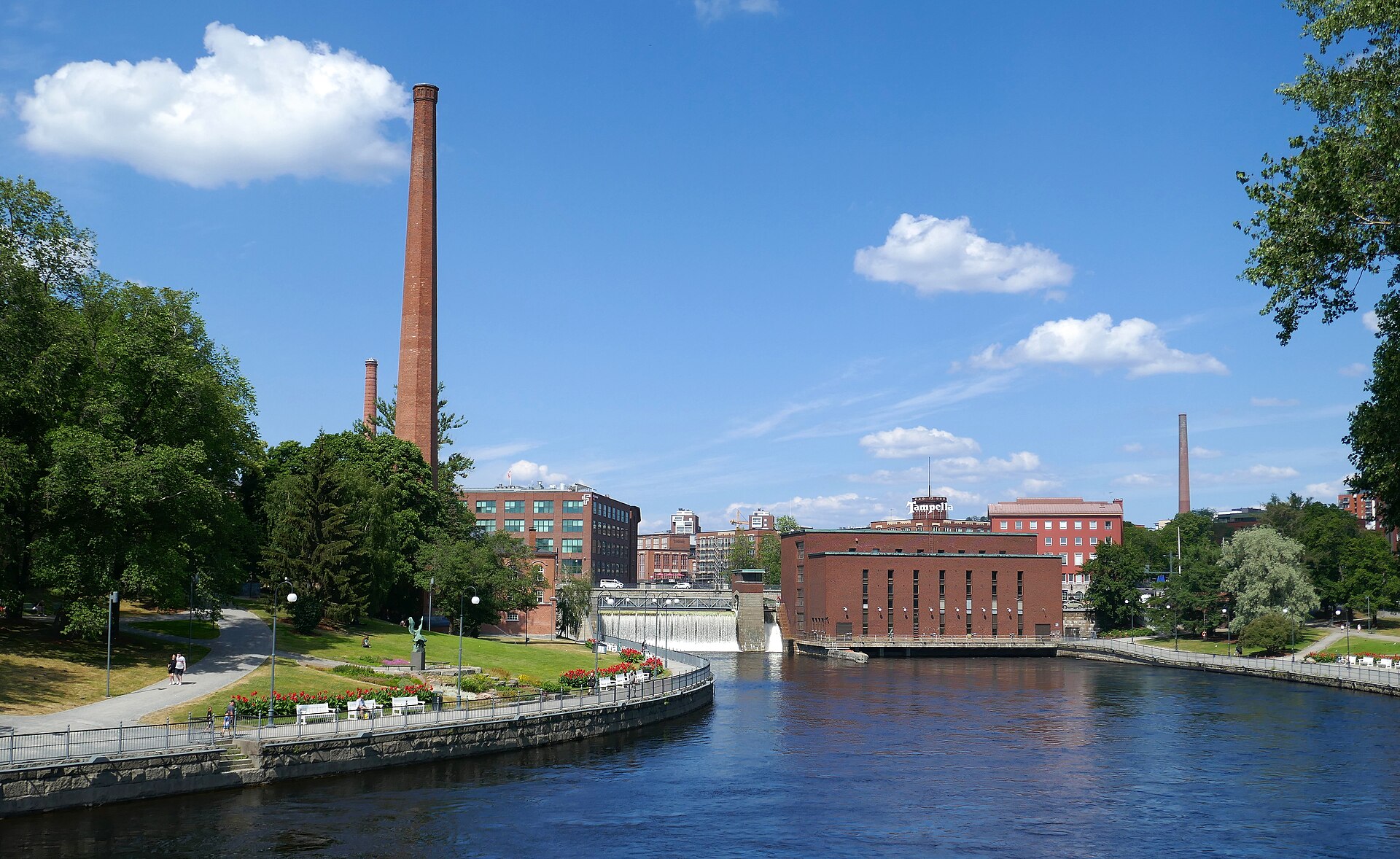
- Finnish Labour Museum Werstas — Former Finlayson mill area
Werstas tells the story of industrial Finland and the people who worked in it, from several angles at once, including workers' lives and civic organisations. It occupies a mill-era building and pairs well with a walk around the neighbouring factory complex and its plaque about early electric light. - Amuri Museum of Workers' Housing — Amuri district
Amuri is a block of wooden houses that works as an open-air museum, with rooms furnished to show how working families lived from the 1880s into the 1970s. Each flat has a different era, so you move through decades by crossing a courtyard. It is quiet, small and very human. - Moomin Museum — Near the city's main hall complex
Dedicated to Tove Jansson's Moomin characters, the museum shows original sketches and drawings alongside scenes built from her stories. It suits children and adults who grew up with the books. Allow time for the small displays, and check the official site for opening times and tickets. - Nootti, the former Lenin Museum — Central Tampere
This small, slightly quirky museum started as a Lenin museum, tied to the building where he is said to have met Stalin for the first time, and has since widened its subject. It is a short visit, a good rainy-afternoon stop, and a reminder of Tampere's political past.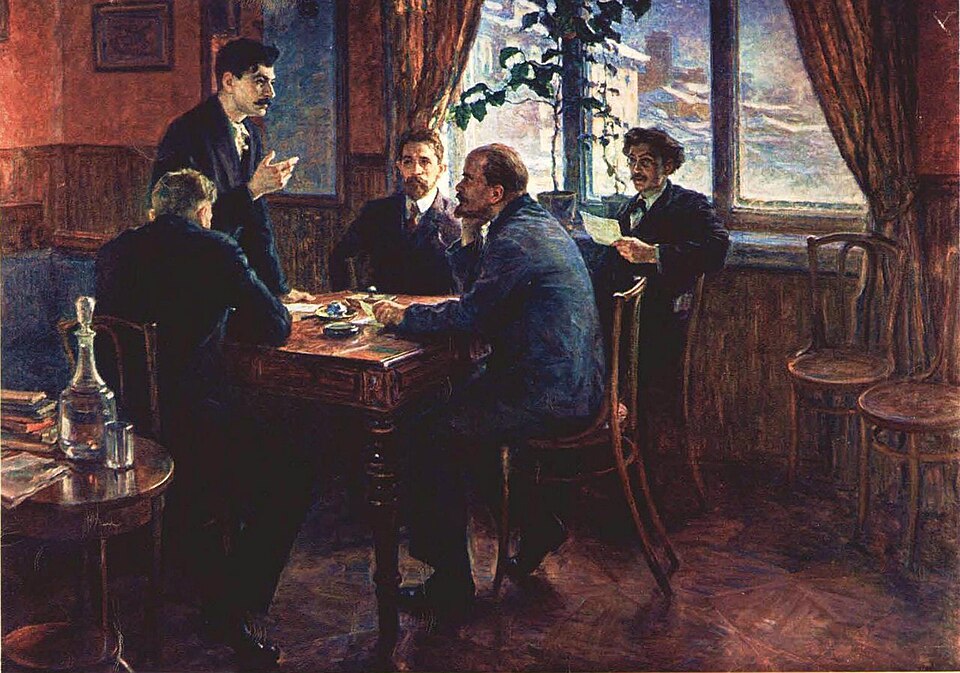
- Messukylä Old Church — Messukylä, east of the centre
Messukylä was one of the older village settlements around the rapids, long before the town existed, and its old church is a reminder of that rural layer. It is a calmer excursion away from the museums, and reachable by public transport. Check the official site for visiting times.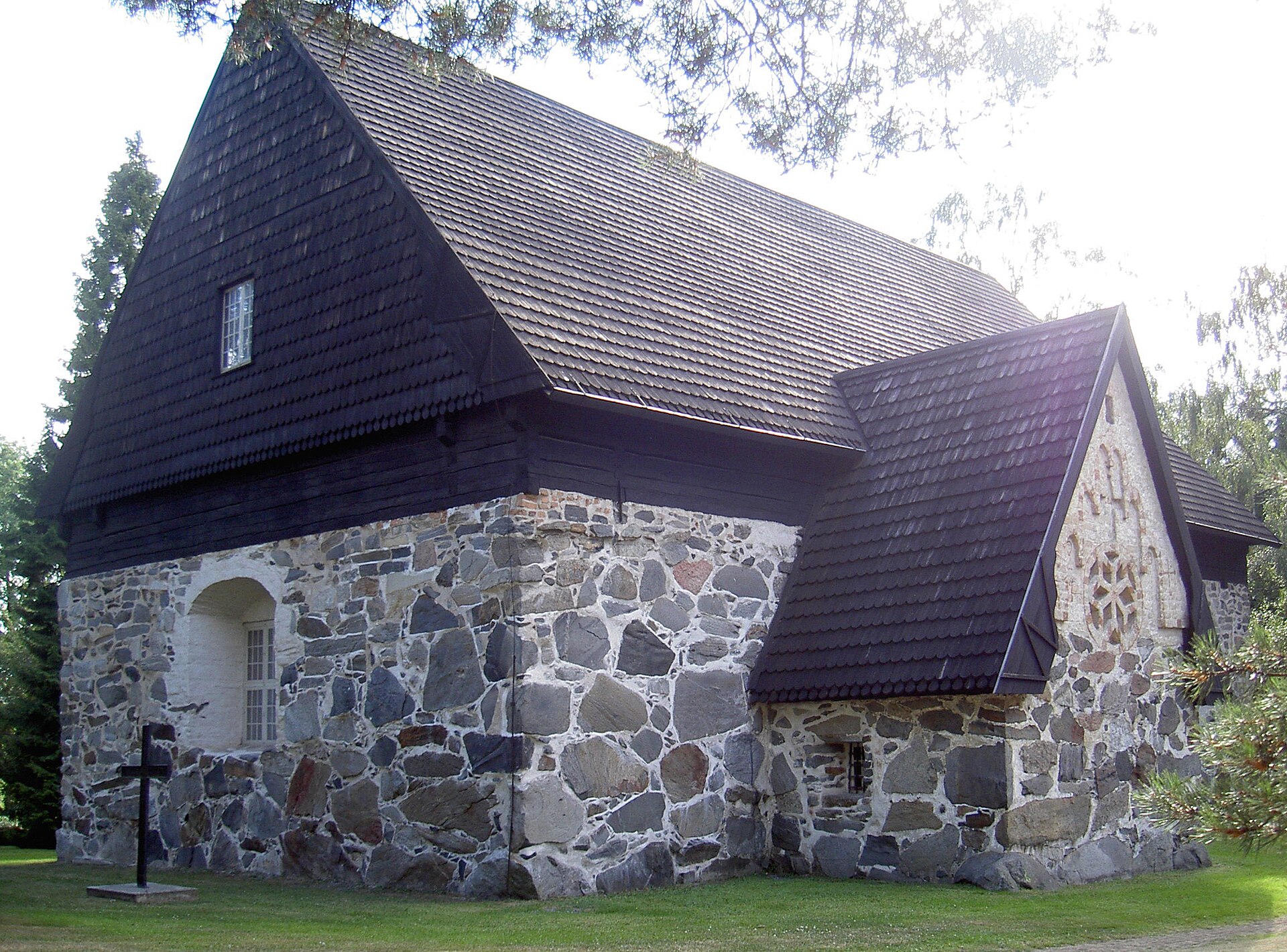
Culture
Tampere has an active cultural life, and much of it is rooted in the city's working-class history. Some of Finland's best-known writers came from here, among them Väinö Linna, Kalle Päätalo and Hannu Salama, and the poet Lauri Viita is tied to the Pispala ridge. Their stories about ordinary labour and family life explain why the city is happier celebrating its factory past than hiding it. The city holds a local day on 1 October, with public events across town. Tampere is also a media city: Finnish radio has early roots here, and the national broadcaster Yle has a large television presence in the area. In everyday life, Finnish habits apply. People are polite but reserved, small talk is brief, silence is not awkward, and personal space is respected. Punctuality matters, queues are orderly, and public transport is usually quiet. Saunas are central to social life, and the lakes are used for swimming in summer and, for the hardy, for ice-hole dips in winter. Coffee is taken seriously and often. Alcohol is mostly drunk in bars and at home rather than in the street. Visitors who follow these quiet norms find people friendly, helpful and straightforward. At a public sauna, follow the posted rules, wash first, and keep voices low, because Finns treat the sauna as a place for calm rather than conversation.
What to wear
Tampere has no single signature costume, but Finnish folk dress (kansallispuku) is the traditional layer behind local fashion. Regional versions use wool, linen and embroidered or woven trims, and they appear at weddings, folk festivals and national celebrations rather than on ordinary days. The city's own textile identity comes from its cotton mills, which clothed generations of workers and shaped everyday workwear. Today people in Tampere dress practically and simply. Dark and neutral colours, good knitwear, durable jackets and comfortable trainers or boots are the norm, with a few bright accessories or design pieces for character. The look is outdoorsy rather than formal, and no one is overdressed in a clean jacket and jeans. Visitors should dress for the weather before anything else. Winter needs a warm coat, hat, gloves, wool or thermal base layers and boots with proper grip for snow and ice. Summer is mild, so bring light layers, a rain jacket and sun protection, plus insect repellent if you plan to spend time by the lakes. Churches and museums have no strict dress codes, but covered shoulders and quiet clothing are polite at services. Comfortable walking shoes matter on cobbles and steep lanes in Pispala. Swimwear is needed for saunas, but ask about local rules.
What to eat
- Mustamakkara (black sausage) — Market hall stalls and the central market square
Tampere's best-known dish is black sausage, made from pig's blood, minced pork and rye. It is usually served hot and eaten with lingonberry jam. The flavour is rich and mild, and the texture is soft. Try it once at a market stall. - Kotilounas (home-style lunch) — The covered market hall and neighbourhood lunch restaurants
Simple home cooking is served at lunchtime in many places around the centre. A set plate usually comes with a salad buffet, bread, a drink and coffee. It is the most economical sit-down meal in Finland and the way many locals eat. - Lunch buffet with dessert — Workplace-style canteens and suburban lunch restaurants
Many lunch eateries add dessert and a hot drink to the main course. Meals tend to be mild, filling and plain: meat or fish, potatoes, sauces and vegetables. Look for local office-worker crowds around noon, because that signals good value. - Vegetarian lunch plate — Café-restaurants in the centre and near the universities
Several lunch restaurants offer a vegetarian main alongside the usual meat or fish dish, with the same salad, bread and coffee included. It is an easy choice for visitors who do not eat meat, and the portions are generous. - Munkki (doughnut) with coffee — Market stalls and old-style cafés near the central squares
A fresh, sugared ring doughnut with filter coffee is a classic Finnish snack, and Tampere cafés and market stalls serve them warm. Eat one while walking by the rapids, or sit down in a café and linger.
Plan it
Best time. June to September for long light evenings, lake swimming and outdoor cafés; December and winter months suit snow, saunas and a festive feel, but are cold, dark and icy underfoot.
How long. 2–3
Getting there. Tampere-Pirkkala airport has regular flights, with routes from Helsinki and Riga reported at the time of writing, but services change, so check the airlines. The airport bus does not go to the centre directly, so you transfer; taxis and ride-hailing are alternatives. Many visitors fly to Helsinki Airport instead and take the train via Tikkurila to Tampere railway station in the city centre.
Budget. mid
Tips
- Check airline and bus timetables close to travel, as airport services have been changing
- Buy train tickets online or at the airport machines before you board
- Lunch is the best-value meal of the day, so eat your big meal then
- Museums are small, so combine two or three in a day and check opening times on each official site
- Pack for the weather, with layers in summer and proper boots in winter
Etiquette
- Queue in order and keep voices low on public transport
- Wash before entering a sauna and follow the posted rules
- Respect quiet in residential courtyards and museums
Nearby
Sources
- Wikidata Q40840 (CC0)
- Wikipedia: Tampere (rev 1381340181) (CC BY-SA 4.0)
- Wikivoyage: Tampere (rev 5421776) (CC BY-SA 4.0)
- Photo: Tammerkoski 2021, Tiia Monto (CC BY 3.0)
- Photo: Tampere Montage 1, Ville Oksanen and others (CC BY 3.0)
- Photo: Messukylä Old Church, Marja Numminen (CC BY 2.5)
- Photo: Tampere town hall, M62 (CC BY-SA 2.0)
- Photo: Tampella, Tiia Monto (CC BY 3.0)
- Photo: Plaque about first electric light in the Nordic countries, JIP (CC BY-SA 4.0)
- Photo: Lenin at Tampere, unknown author (CC BY 1.0)
- Photo: Tampere destroyed in Civil War, unknown author (Public domain)


