Tamgaly
Tamgaly, Kazakhstan
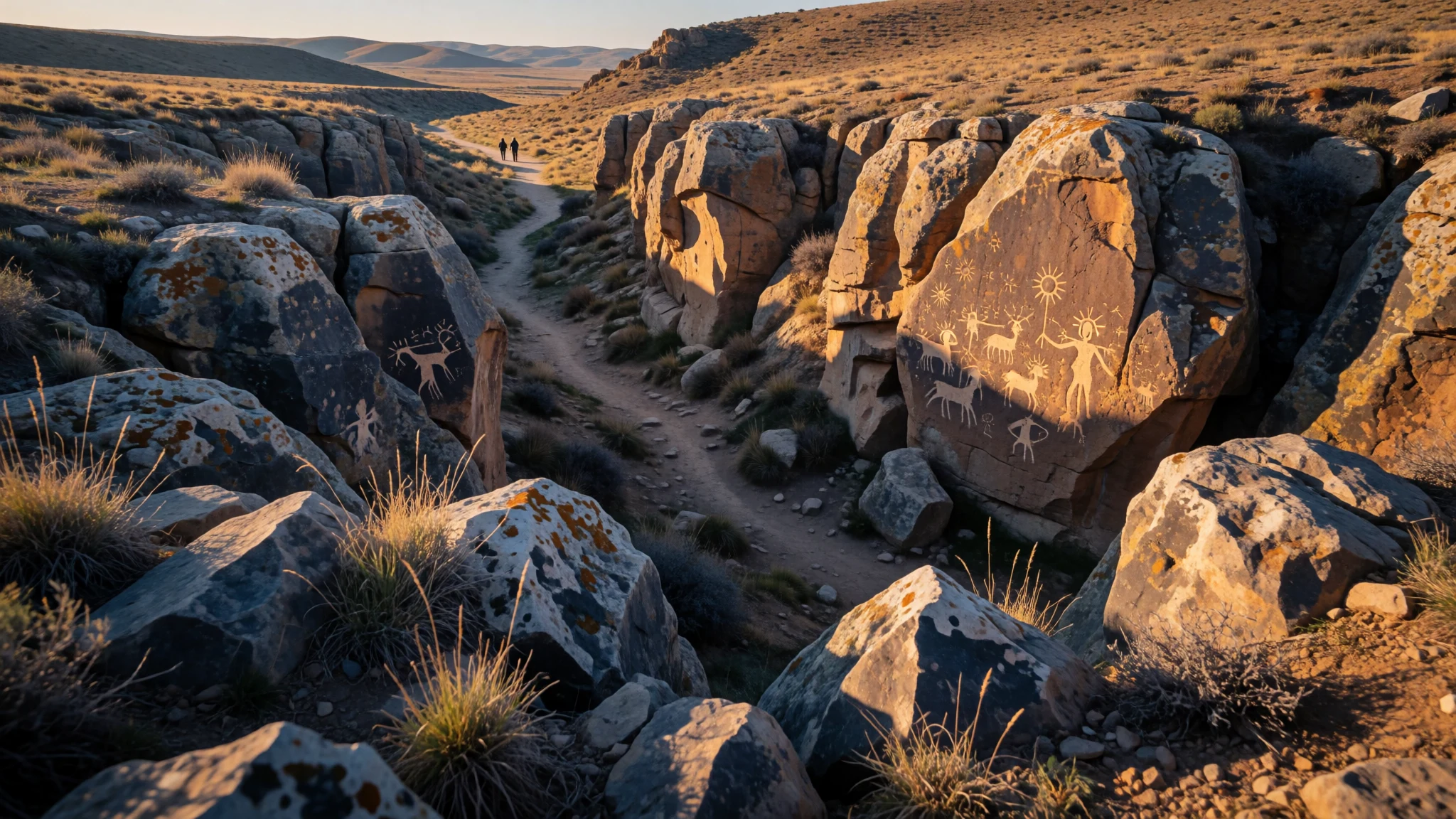
Tamgaly is a petroglyph landscape where images from different centuries sit in the same rocky canyon.
The place
Tamgaly (Kazakh: Таңбалы, romanized: Tañbalı) is an archaeological petroglyph site in Kazakhstan’s Zhetysu region. The rock carvings are spread through a canyon landscape rather than sitting in one tidy museum hall, so the experience feels like walking through time with your eyes scanning cliffs, ledges and stone ribs.
The site became a UNESCO World Heritage Site in 2004, and it’s arranged as a set of different “sites” within the wider landscape. There are approximately 5,000 petroglyphs across 48 sites. Five main clusters—designated I, II, III, IV and V—hold roughly 3,000 carvings, concentrated in the small Tamgaly canyon. The rest are distributed more widely: some secondary areas contain from 50 to 100 representations each, while smaller pockets may hold only 1 to 50 figures.
What makes Tamgaly especially absorbing is that the carvings come from different epochs. The earliest images date from the Bronze Age, while the most recent are from the 18th or 19th century. Middle Bronze Age work is often described as having the greatest aesthetic and cultural value, with naturalistic subjects: humans and animals, solar deities, armed warriors, sacrifices and scenes that blend human and animal forms. Later periods shift the emphasis, with different carving depths and smaller average sizes.
On-site, you’re not just looking at “one style” of rock art. You’re looking at changing communities and changing ways of marking belief and life—layered on the same stones, in the same rugged setting.
Its story
Tamgaly tells a long story of people using the same canyon as a kind of outdoor archive. Over thousands of years, communities returned to these rocks with new subjects, new techniques and new styles—so the place reads less like a single monument and more like a conversation across time.
The earliest carvings belong to the Bronze Age, linked to the area’s precursors to the Saka/Scythian peoples. In this older phase, some images stand out for their size and fine detail. There are solar deities (sun-heads), disguised figures, warriors and archers with wolf masks, plus animals such as bulls, asses, horses, camels, wolves and deer. Some scenes are everyday in their positioning—people holding tools or standing close to animals—while others feel ceremonial: worshippers, sacrifices and syncretic characters that blur categories.
Later carvings shift. Late Bronze Age and transitional works tend to show less variety and less technical rendering, with simpler, more pastoral scenes. Horses, bulls and wild animals remain, but the composition can feel calmer—more about herding life and fewer of the complex, standout images.
By the early Iron Age, the number of carvings increases, but the styles and subjects become more varied, reflecting a wider range of peoples and tribes. That mix is what makes walking Tamgaly tiring in the best way: you keep noticing how the “grammar” of the rock art changes—depth of carving, scale, and what kinds of stories get chosen.
It’s a place where the canyon does the curating. Even when you’re tired of squinting, the density of images in the key clusters makes it hard to stop.
What to see
- Tamgaly Canyon (clusters I–V) — Tamgaly Canyon (primary clusters I–V)
Tamgaly Canyon is where the densest rock art sits. Five primary clusters—called I, II, III, IV and V—hold about 3,000 of the carvings, so the cliffs feel “full” rather than scattered.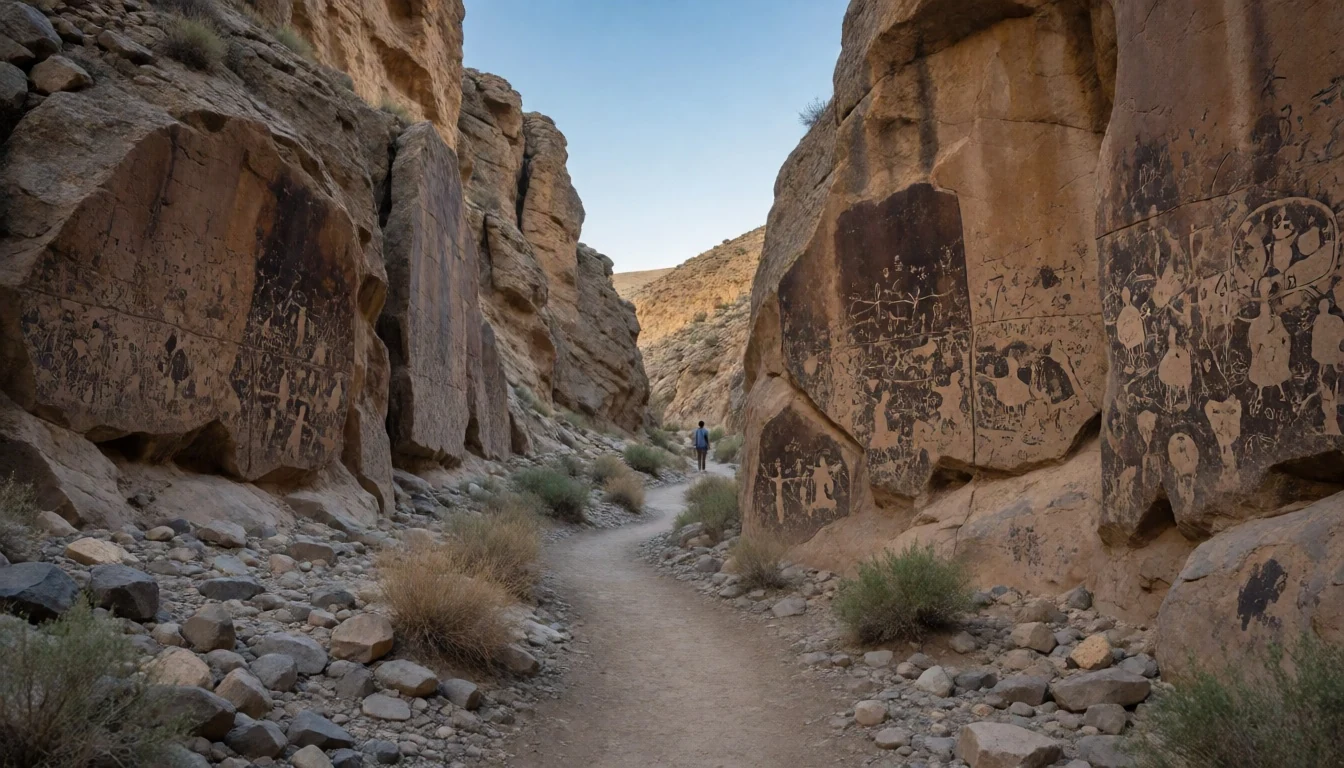
- Ravine panorama viewpoints — small ravine / canyon viewpoints
Ravine viewpoints give scale and orientation. Looking across the small ravine helps connect separate carving panels into one landscape, making it easier to understand how the rock art follows the canyon’s contours.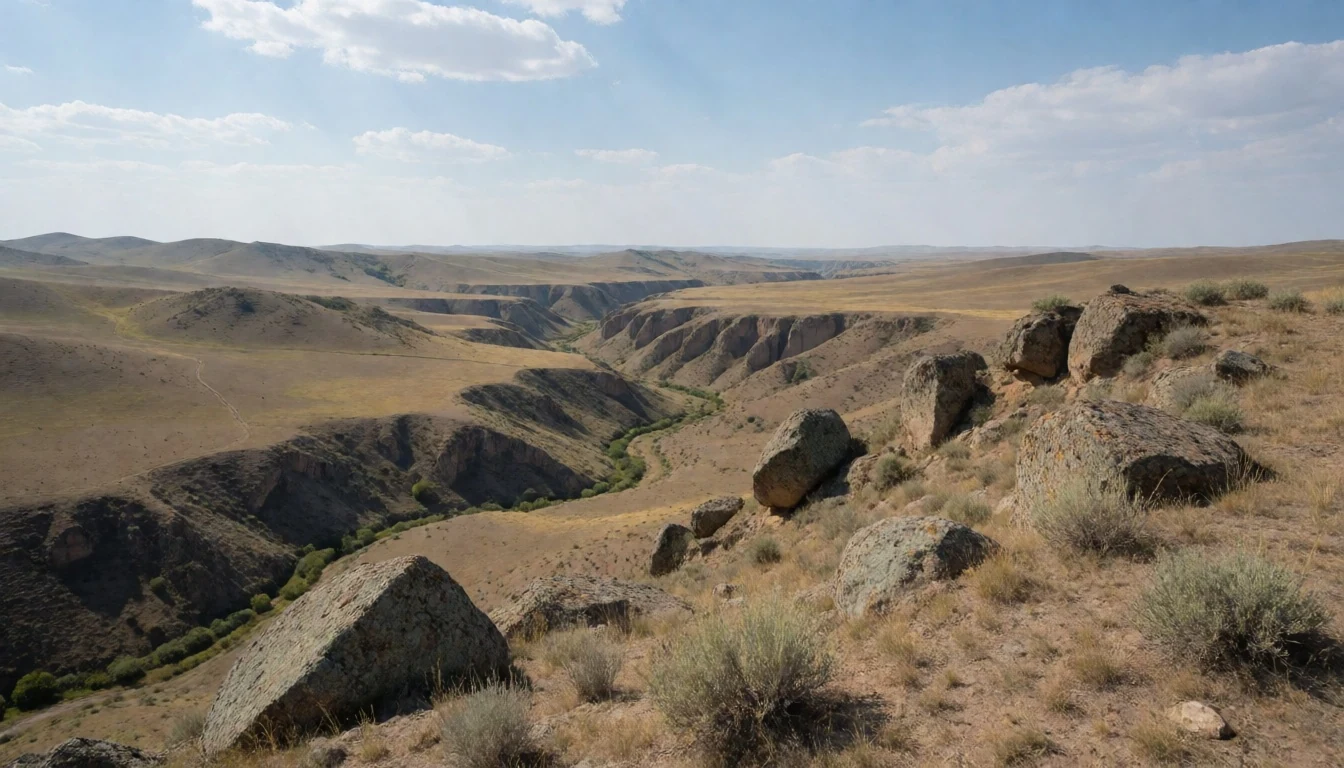
- Horse and zoomorphic motifs — main carving areas within Tamgaly Canyon
Tamgaly is rich in animal imagery—especially horses—and also includes other zoomorphic figures. These motifs repeat across epochs, so spotting differences in style becomes part of the “reading” of the site.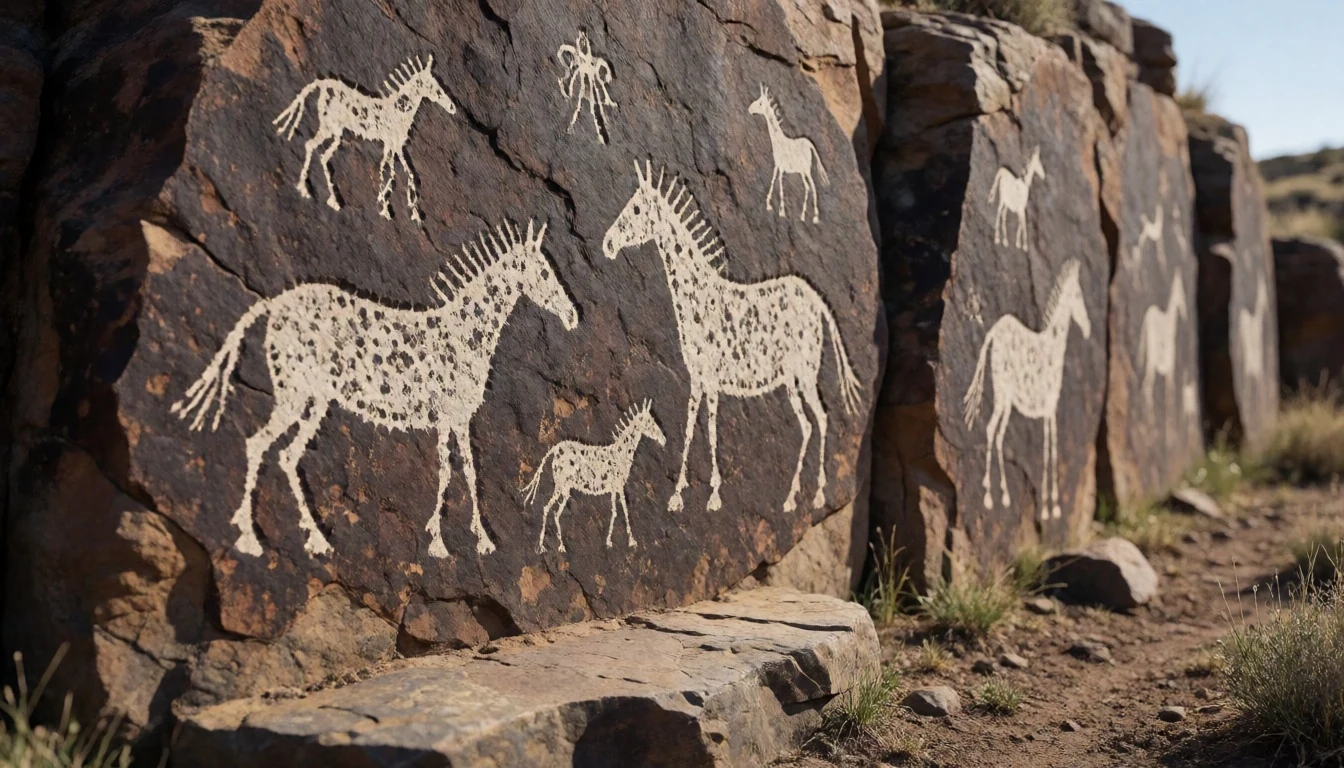
- Sacred-site concentration — largest group / sacred-site area
One area holds a particularly large group of carvings. Standing in the right spot, the concentration makes the carvings feel like a single statement rather than independent marks scattered across stone.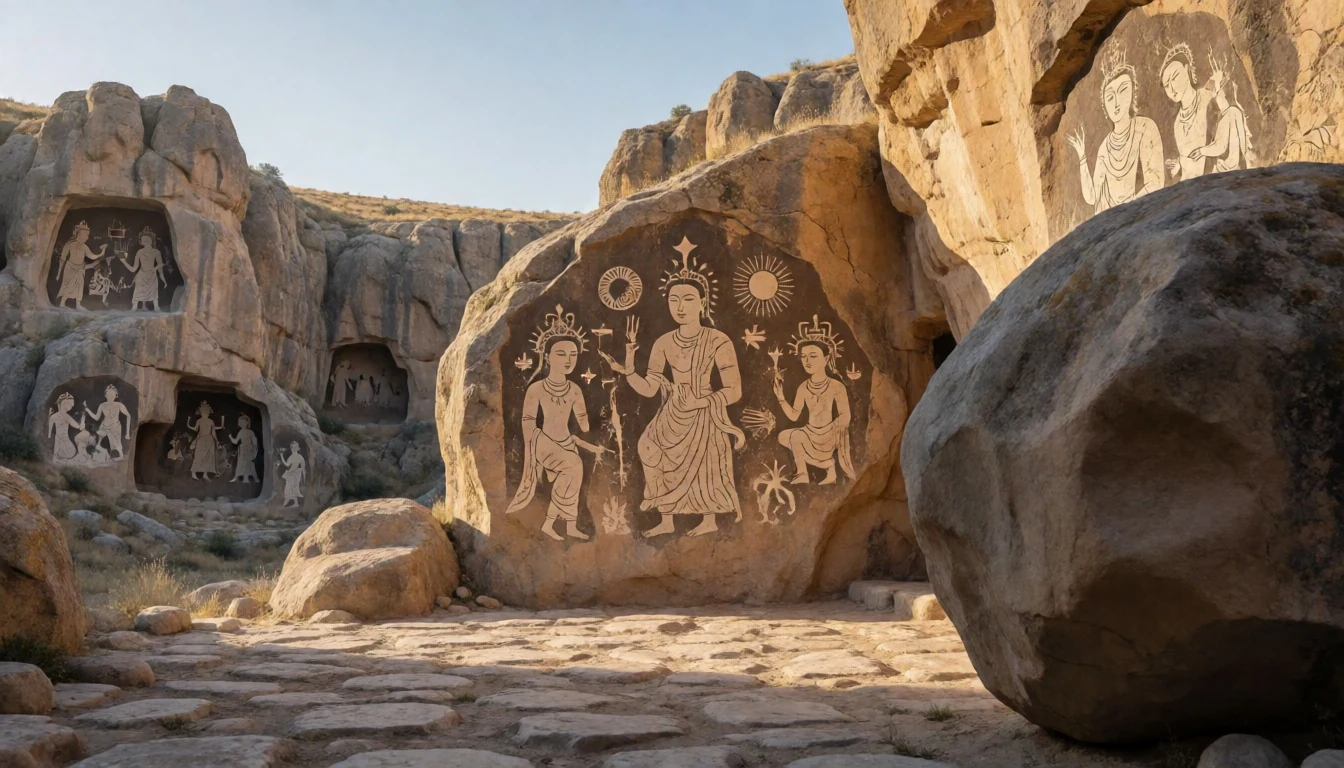
- Wider Archaeological Landscape spots — broader Archaeological Landscape zones beyond the core canyon
Not every carving sits in the tightest clusters. Secondary and smaller sites spread out, including areas with around 50–100 representations and other spots with only 1–50 figures each—useful for a calmer walk and closer inspection.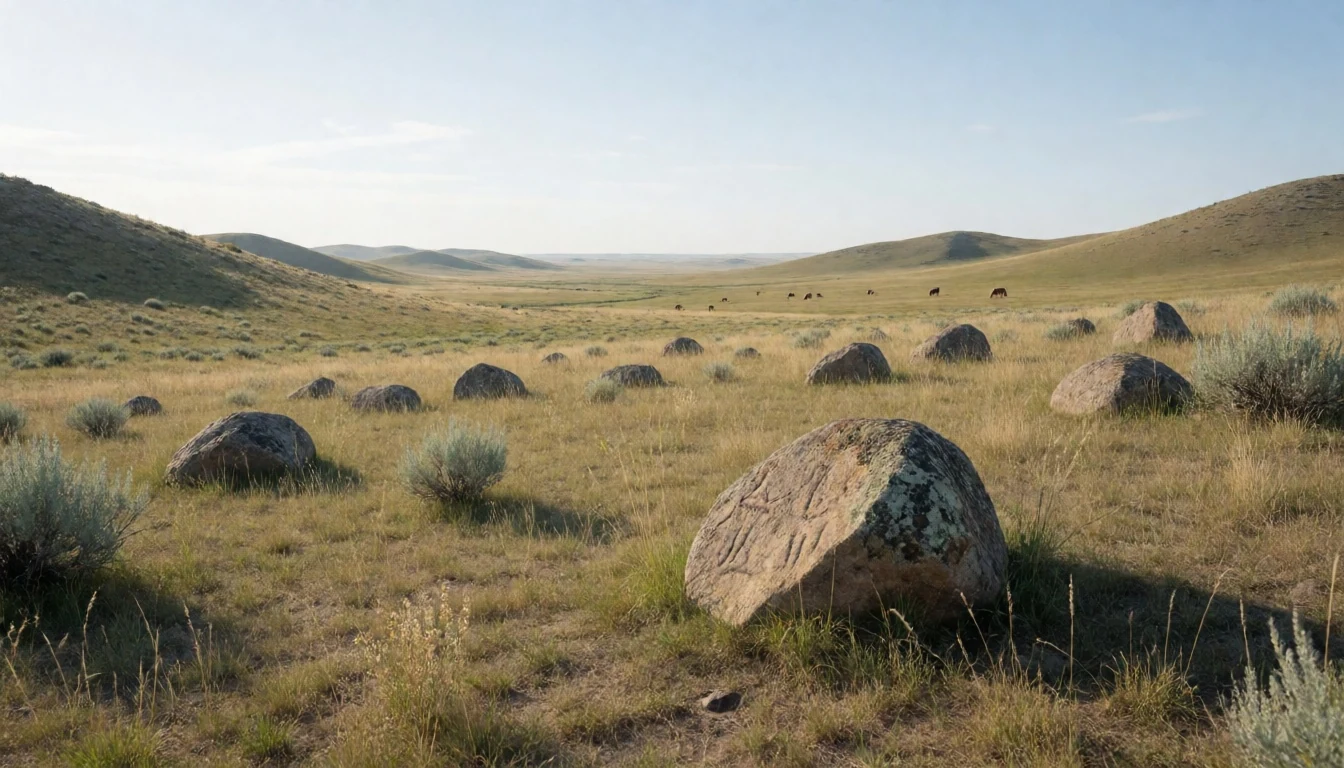
Culture
Tamgaly’s petroglyphs are open-air carvings, so the “museum rules” here are mostly about respect: don’t touch the stone, keep voices low, and give yourself time to look rather than rushing from panel to panel. The canyon setting matters—carvings sit on uneven rock faces and in spots where footing isn’t always forgiving.
Because Tamgaly spans multiple epochs (from the Bronze Age into later centuries), the carvings can feel emotionally varied: warriors and masks, animals and pastoral life, and scenes that suggest ritual or community storytelling. Approach them like a reading exercise—slow down to compare spacing, carving depth and subject matter—rather than treating each panel as a quick photo moment.
If a spot feels particularly concentrated, it probably is: the main clusters in Tamgaly Canyon contain the majority of the carvings, so the area naturally attracts the most attention. In busy moments, spacing matters for both photography and safety.
Visitor etiquette: avoid stepping onto fragile ledges or climbing for a better view, and keep hands off all petroglyph surfaces.
What to wear
At Tamgaly, clothing needs to work for a rugged, outdoor canyon visit. Traditional dress isn’t the point here, but Kazakhstan’s broader cultural context is: light layers are practical because the carvings are visited on foot and the terrain can be uneven.
What people wear now in the region is usually everyday, practical clothing—coats or jackets depending on season, long trousers or jeans, and closed shoes. For a visitor, the key is modesty and comfort around stone and sacred-feeling spaces: choose clothing that covers legs and shoulders, especially if the walk takes longer than expected.
Footwear matters most. Wear trainers or sturdy walking shoes with good grip; rocky surfaces and sandy patches can make sandals risky. Bring a cap or hat and a light rain layer when weather shifts. A small scarf can help with sun and dust, and it also works as an extra layer if temperatures drop.
In short: dress for walking on uneven ground, keep it modest around a site people consider meaningful, and prioritise grip over style.
What to eat
- Beshbarmak — Kazakh restaurants in Almaty before/after the drive
Beshbarmak (usually with noodles and meat) is a common Kazakh staple. Look for it at local eateries and Kazakh-style restaurants in Almaty, especially on days when Tamgaly trips start early.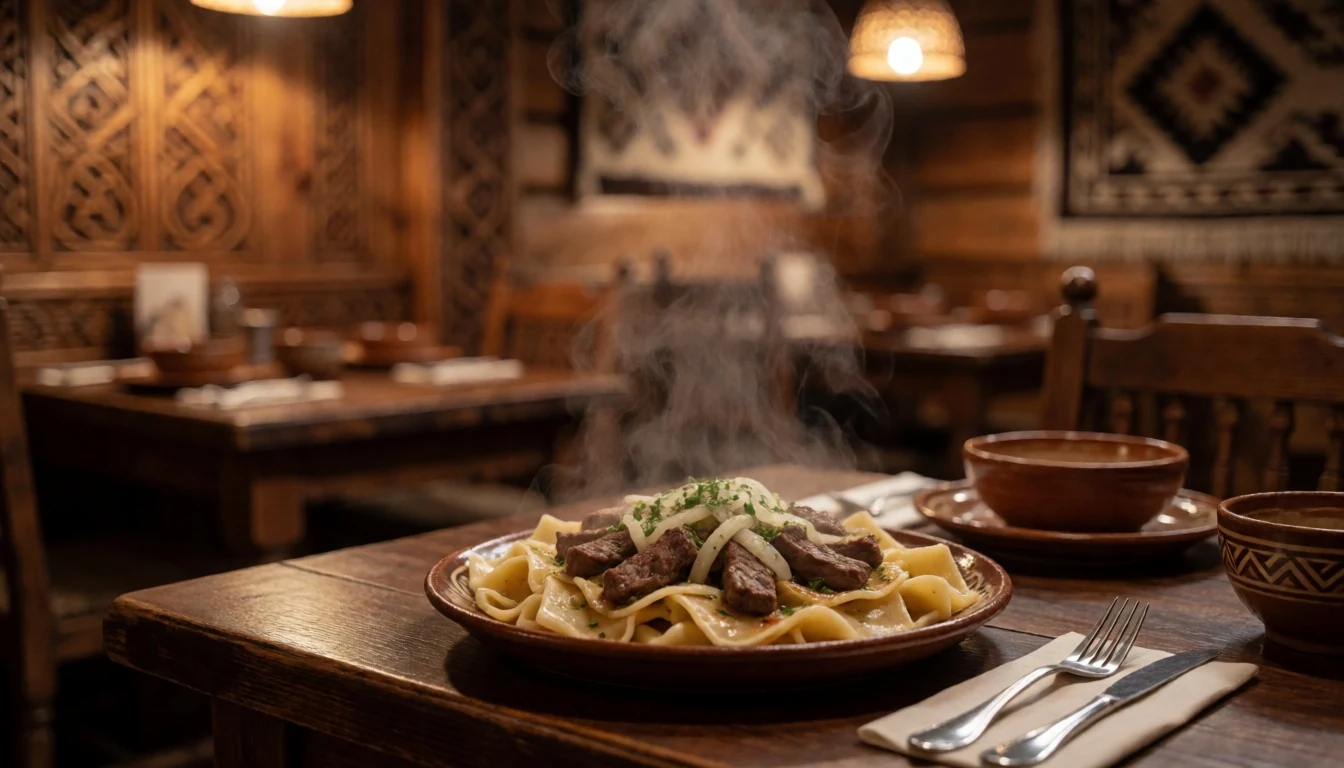
- Shashlik — Local grill stands and informal eateries around Almaty
Grilled skewers are an easy, hearty option for post-trip recovery. You’ll generally find shashlik at casual street-style grills and local food spots around Almaty and along main routes.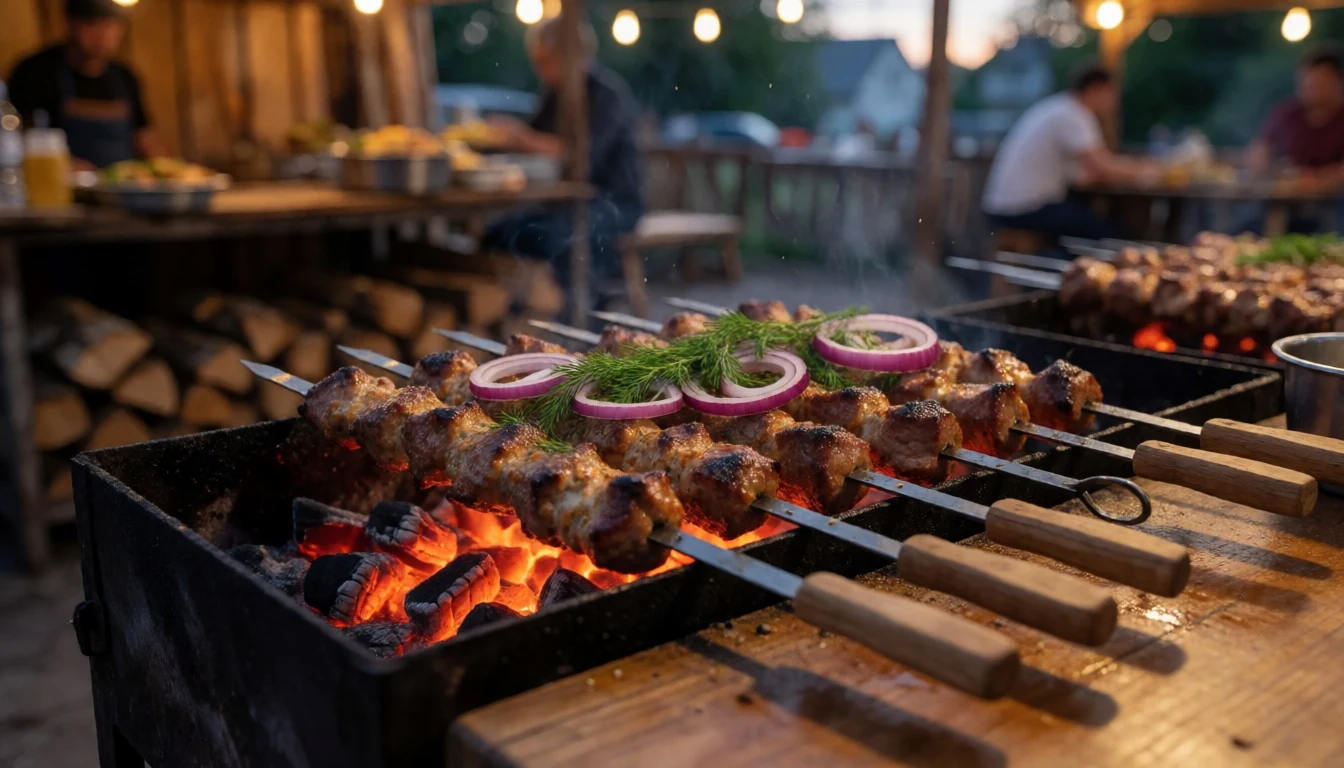
- Lagman — Everyday noodle-and-soup eateries in Almaty
Lagman is a noodle dish with a rich sauce, often served hot and filling. It’s a useful choice when temperatures feel cooler after a long canyon walk. - Plov — Casual dining and canteens in Almaty
Plov (pilaf) is widespread across the region and tends to show up at family-run restaurants and canteens. It’s a solid option for a non-fussy, filling meal before heading back to the car. - Kumis / ayran-style drinks — Cafés and restaurants that serve regional drinks
Yoghurty drinks and fermented milk options are part of everyday Central Asian eating. If offered, they can be a refreshing counterpoint after a dusty day outdoors.
Plan it
Best time. March–April and October–November are usually the most comfortable months for walking and looking steadily; summer can be hot, and winter days can be tough for outdoor hikes.
How long. 2–3
Getting there. Fly into Almaty International Airport (ALA). From there, the last leg is a road trip to Tamgaly (about 170 km by road from Almaty), usually by car or with a local driver arrangement.
Budget. mid
Tips
- Plan for a slow, close-looking pace—petroglyphs are easiest to read when you can stand still
- Start early to get softer light on the rock surfaces (helpful for seeing carved edges)
- Use a driver who knows the route and allows time for viewpoint stops
- Carry water and snacks for the canyon walk; shops aren’t the kind of thing you can count on at every stop
- Bring cash as a backup for roadside purchases and small local fees
Etiquette
- Stay off ledges and don’t climb on or touch the carvings
- Keep voices down in the dense areas where other visitors are looking closely
- Follow any posted guidance and avoid shortcuts through restricted rock
Nearby
Sources
- Wikidata Q943327 (CC0)
- Wikipedia (rev 1366156932) (CC BY-SA 4.0)
- Wikivoyage (rev 4997540) (CC BY-SA 4.0)
- Photo 01-tamgaly-petroglyph-horse.jpg (CC BY 3.0)
- Photo 02-tamgaly-ravine-panorama.jpg (CC BY 3.0)
- Photo 03-tamgaly-dancers.jpg (CC BY 3.0)
- Photo 04-tamgaly-sacred-site.jpg (CC BY 3.0)
- Photo 05-petroglyphs-in-tamgaly-kazakhstan-03.jpg (CC BY-SA 4.0)
- Photo 06-petroglyphs-in-tamgaly-kazakhstan-02.jpg (CC BY-SA 4.0)
- Photo 07-petroglyphs-within-the-archaeological-landscape-of-tamgaly-1.jpg (CC BY-SA 3.0 igo)
- Photo 08-petroglyphs-within-the-archaeological-landscape-of-tamgaly-1.jpg (CC BY-SA 3.0 igo)


