Takht-e Soleyman
Takht-e Soleyman, Iran
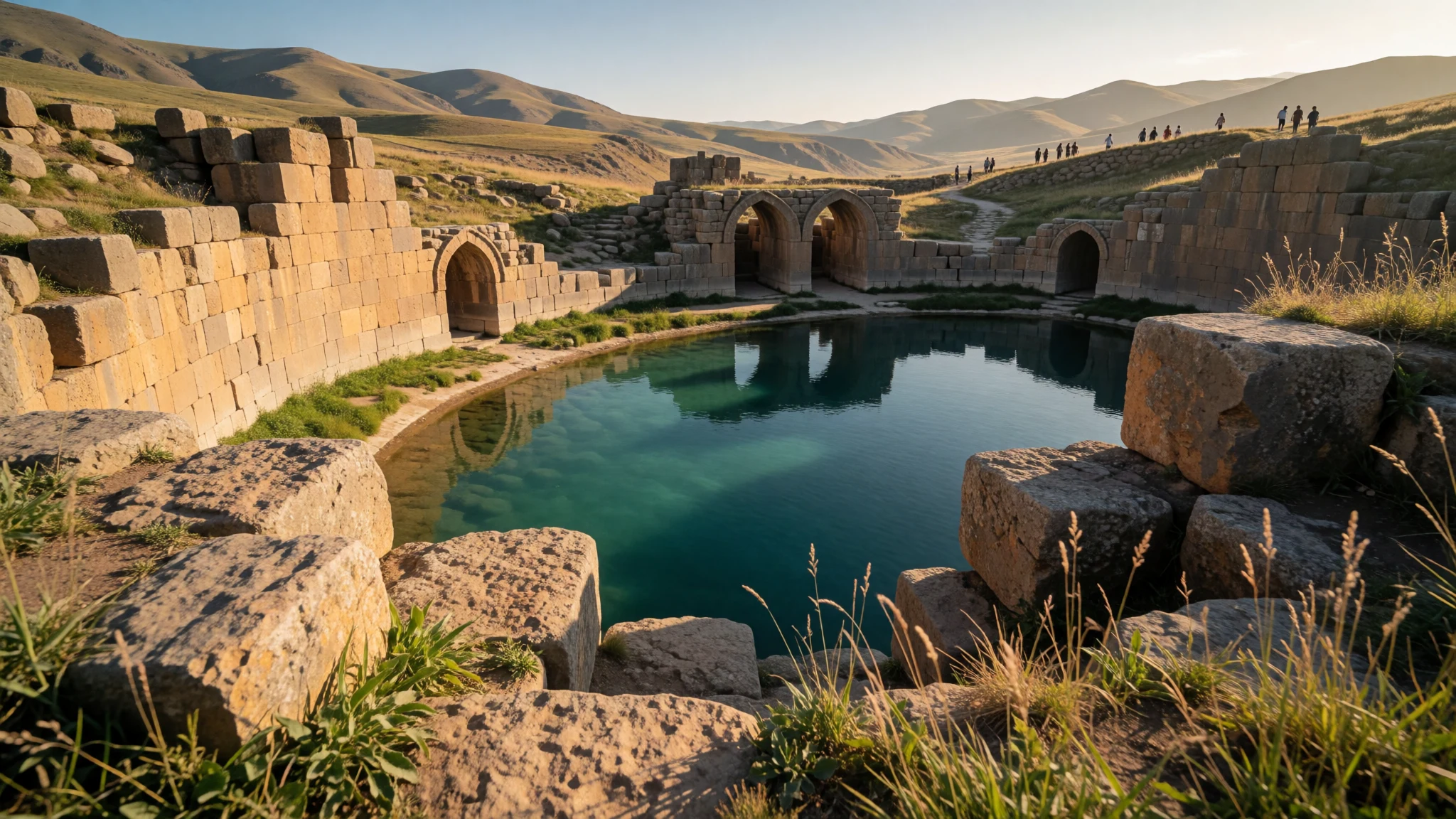
Takht-e Soleyman pairs Sasanian religious archaeology with a strange pool setting and a biblical-style legend, in a calm West Azerbaijan hill landscape.
The place
Takht-e Soleyman (Persian: تخت سلیمان, “Throne of Solomon”) is an archaeological site in Takab County, West Azerbaijan, Iran. The location rests on a hill formed by water from a calcium-rich spring, creating a unique mix of human construction and wild nature where stone buildings sit layered over the pond and the paths follow the shape of the basin.
The fortified complex dates back to the Sasanian Empire, and its core story is about fire worship. Within the citadel you can still read the idea of Adur Gushnasp, a Zoroastrian fire temple associated with one of the “Great Fires” of the era. Later periods added their own edits: the fire temple was partially rebuilt and reshaped into a mosque under the Ilkhanate.
What makes Takht-e Soleyman stand out today is the mix of layers. There are traces of earlier occupation attributed to the Achaemenid era, plus later Parthian settlement activity in the same hill-citadel space. Excavations have also turned up coins connected to Sasanian rulers and to the Byzantine emperor Theodosius II.
Modern visitors usually come for the atmosphere: a walled, hilltop circuit; the sightline down to the spring pond; and the small museum where site finds are displayed. If crowds are light (often the case outside peak travel windows), the site is the kind of place where the ground texture and springy landscape matter as much as the stones.
Its story
Takht-e Soleyman got its name the way folklore often does: after the Muslim conquest, the site was reinterpreted through a biblical lens. The archaeological reality is Sasanian—linked to Zoroastrian fire worship and to the Adur Gushnasp temple concept inside the citadel—but local storytelling gave the setting a different headline. That’s how “Throne of Solomon” stuck, and why you’ll hear about King Solomon imprisoning monsters in a nearby deep crater known as Zendan-e Soleyman (“Prison of Solomon”). Another version of the tale credits Solomon with creating the flowing pond.
In other words, the legend doesn’t replace the history so much as sit alongside it. The fortified site remains the anchor: a hill-top arrangement tied to the spring pond’s calcium-rich water and a temple space whose roots are attributed to the Sasanian period. Over time, the complex accumulated political and religious layers—so much so that you can frame it as a place of continuity and change: a Zoroastrian fire temple space later worked into an Ilkhanate-era mosque.
When I read the briefing notes and then cross-check the grounded descriptions in the source material, the pattern is consistent: Takht-e Soleyman is both a physical mound of remains and a narrative machine, producing new names as empires shift. Even the mention of a small museum fits that idea—turning the stones into a curated account.
What to see
- Takht-e Soleyman (fire temple citadel and pond setting)
Start at the fortified ruins around the calcium-rich spring pond: the layout helps explain how Adur Gushnasp’s fire-temple idea sat within the Sasanian citadel. Walk the circuit slowly so the hilltop sightlines and the water basin make sense together.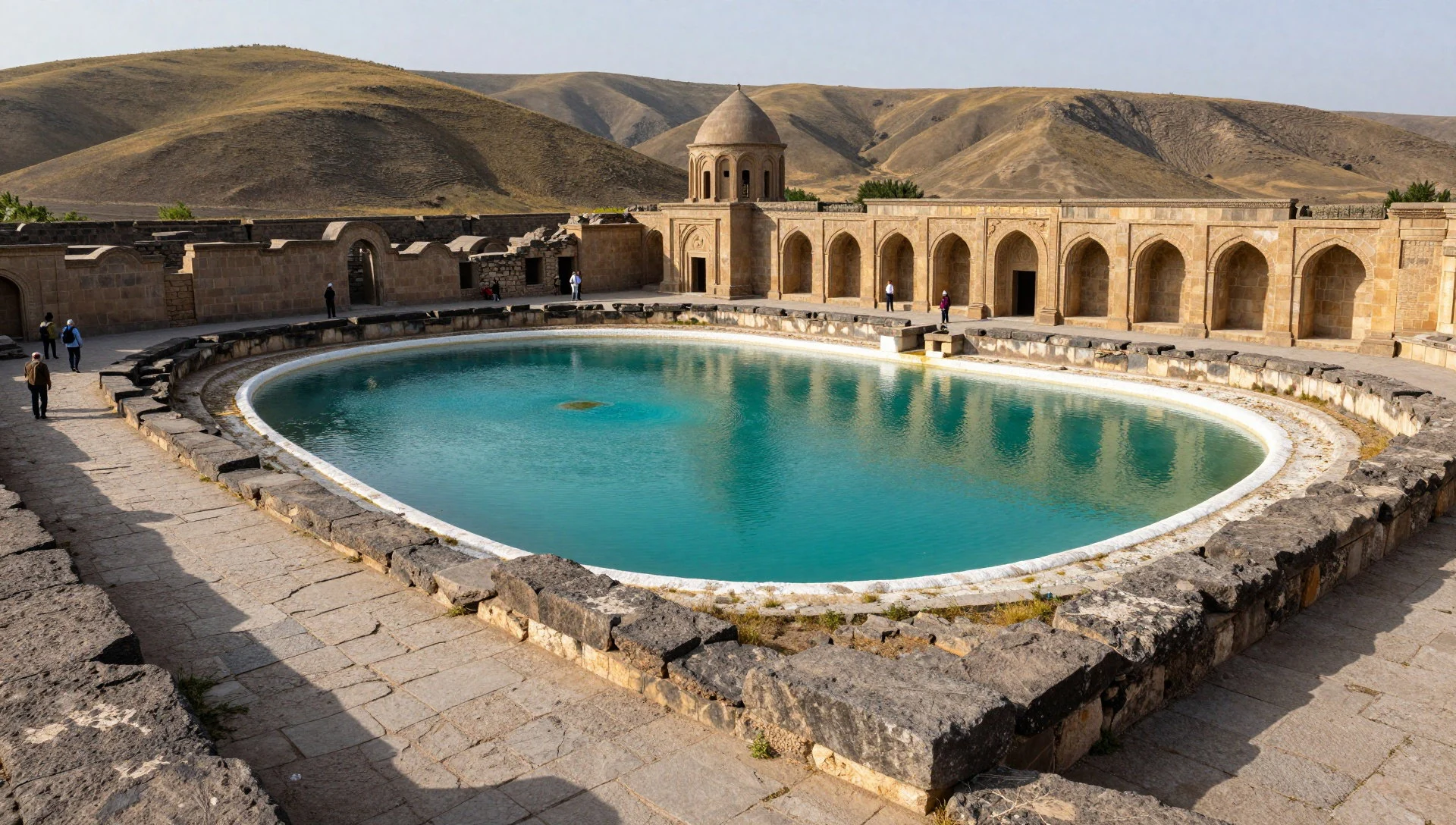
- Jameh Mosque of Takab
Look for the Jameh Mosque of Takab as a nearby architectural contrast to the Sasanian/Ilkhanate story at Takht-e Soleyman. It’s the kind of local religious landmark that helps you understand how this region’s spiritual life continued after the older periods recorded in the archaeological site.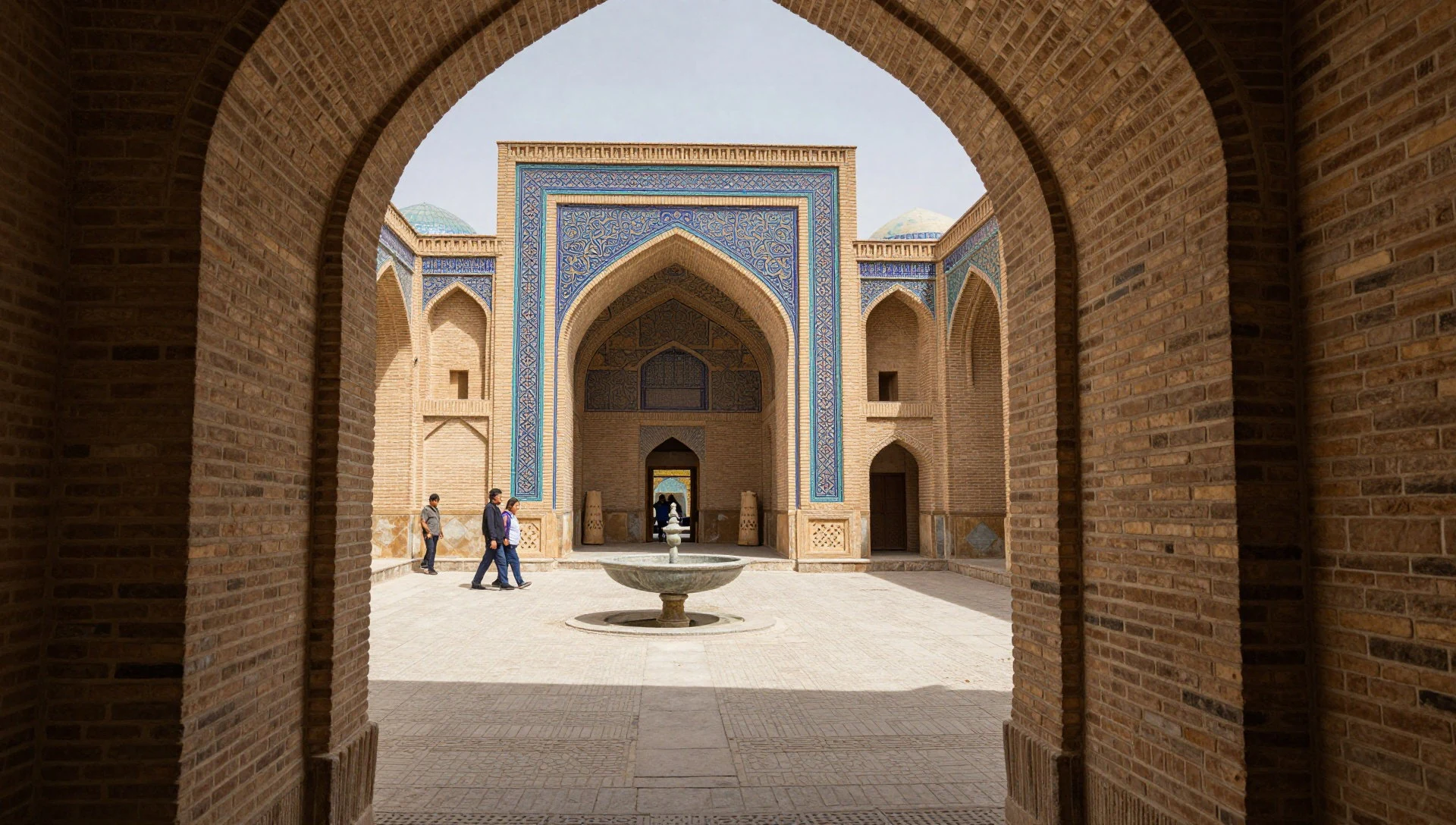
- Sardar Afshar Castle
Sardar Afshar Castle offers a more military-looking stop compared with the spring-and-temple character of Takht-e Soleyman. Even if the details differ from site archaeology, it’s useful for building context: the area’s history is full of fortifications, not just sacred spaces.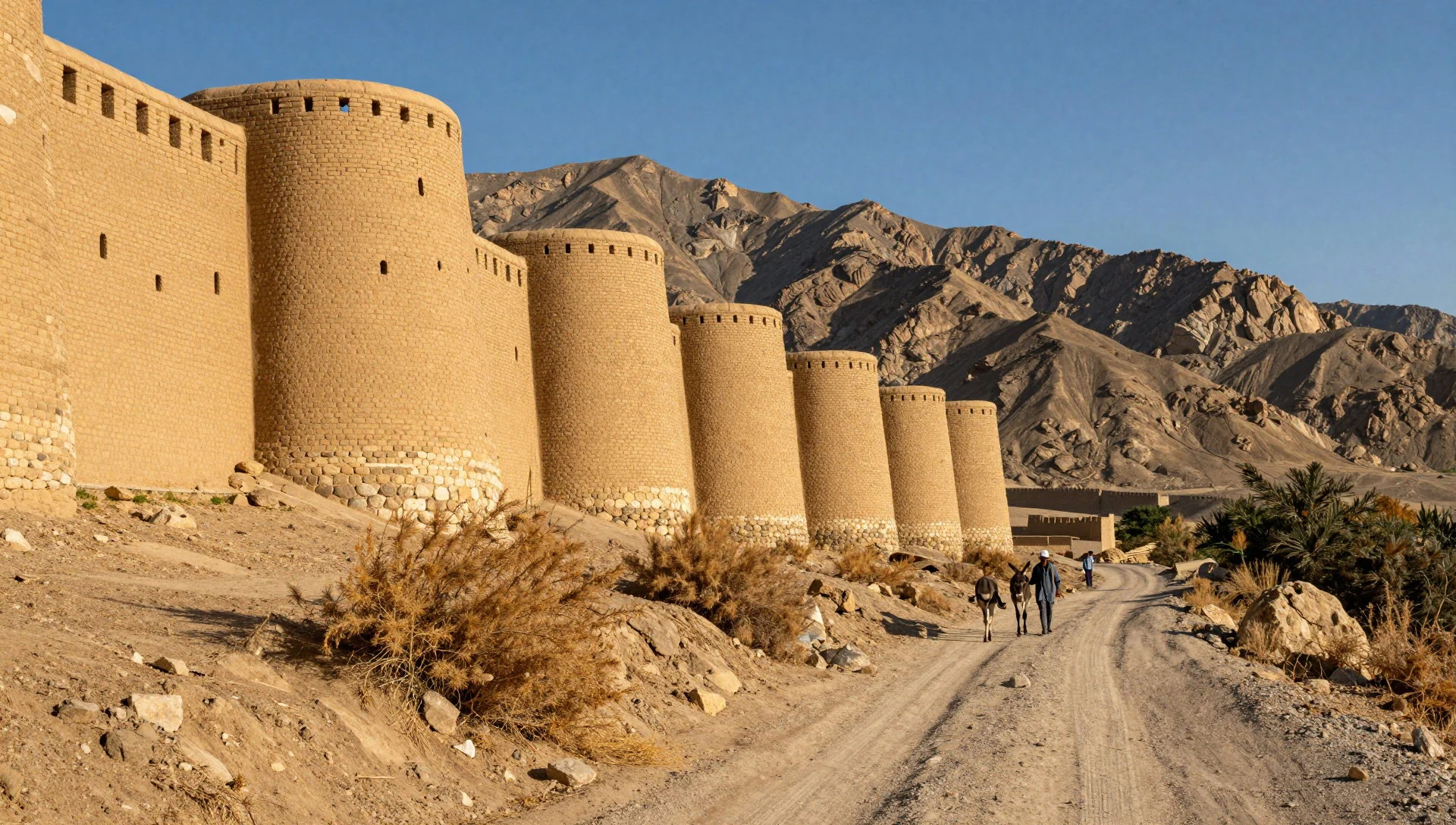
- Tomb of Ayub Ansari
The Tomb of Ayub Ansari is a calmer, visitor-facing pause after walking stone circuits. It’s also a reminder that Takab’s cultural map isn’t only about ancient empires; later religious memory has its own draw and rhythm.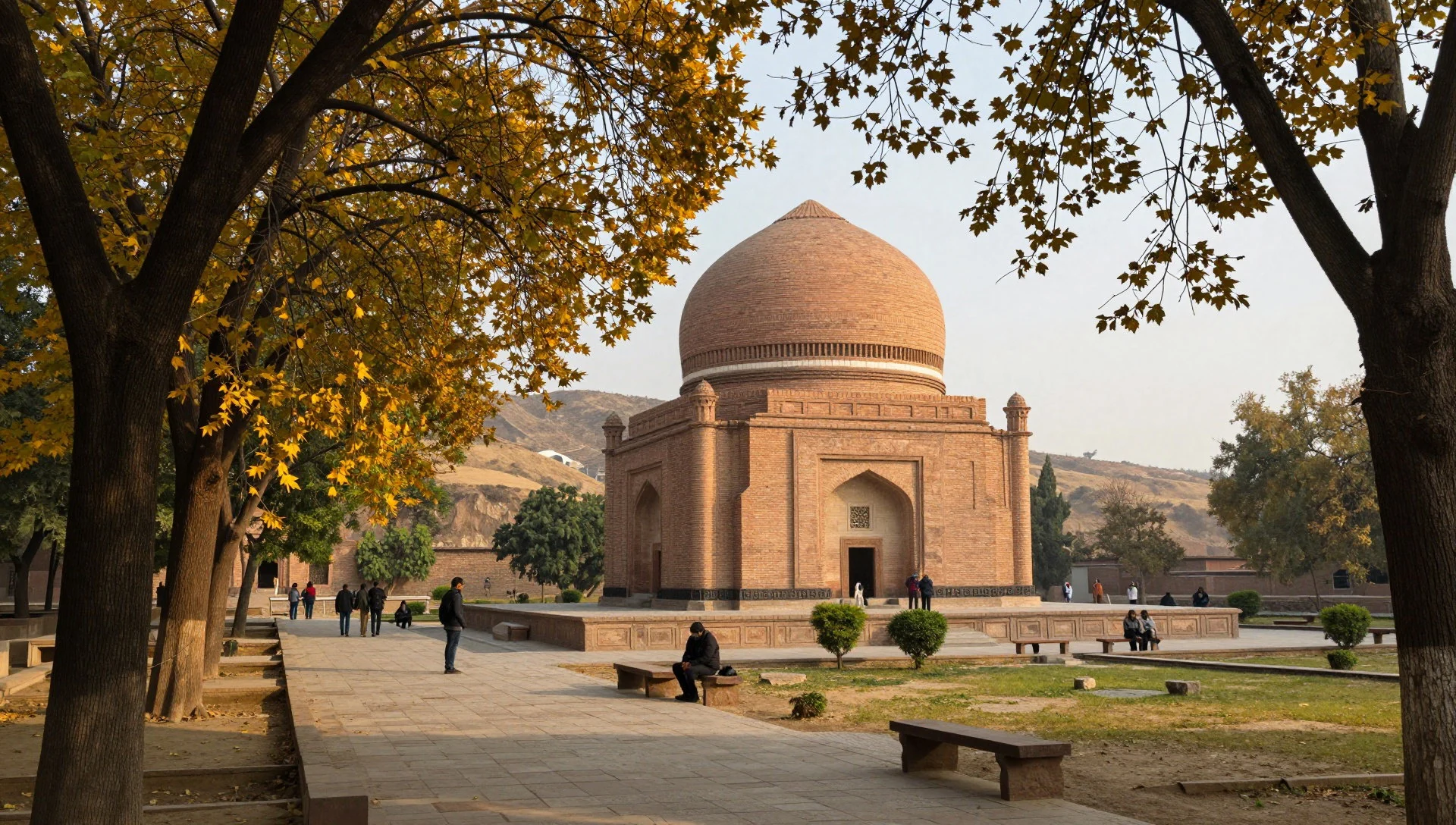
- Zendan Mountain (linked legend territory)
If you’ve come for the storytelling, Zendan Mountain is tied to the “Prison of Solomon” folklore. It’s more about landscape and legend than museum labels, so pace it like a nature walk: keep an eye on footing and plan time for views between stops.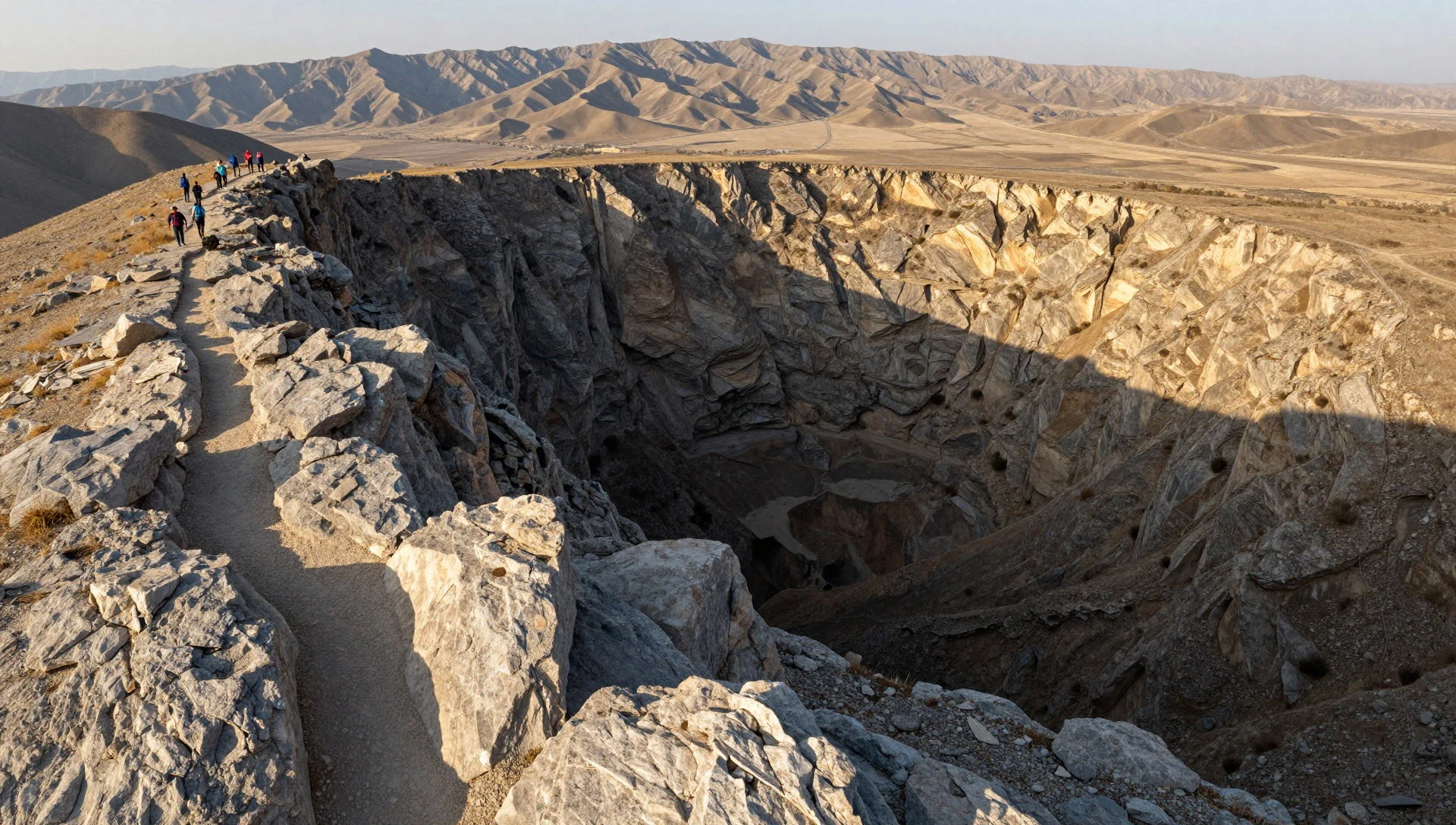
Culture
Takht-e Soleyman sits in a region where religion and history overlap in everyday ways. The site itself references Zoroastrian fire worship through the Adur Gushnasp temple concept, and later Islamic-era changes (including mosque reshaping during the Ilkhanate period) are part of the same physical footprint. That layering is why visitors should treat the ruins and any functioning religious spaces as more than “just stones”: they’re places where people can still connect to memory.
In practice, the biggest factors are simple: weather, respect, and pace. The walk follows the pond basin and hilltop layout, so take your time. There may be a small museum, which is a good way to slow down and get oriented if the site circuit feels like it’s unfolding all at once.
It’s wise to avoid blocking entrances or photographing people too closely. If someone nearby looks uncomfortable, step back without turning it into an argument.
Visitor etiquette: dress modestly and keep voices low, and do not climb on delicate ruin edges or photograph people up close without permission.
What to wear
At Takht-e Soleyman, your clothing needs to handle two things: dry, open-air walking on a hillside, and respect for religious context (the site includes a Zoroastrian fire-temple story and later mosque reshaping). Traditional dress varies across Iran, but you’ll usually see local combinations such as a long tunic or dress with a headscarf, paired with loose trousers or skirts.
What people wear day-to-day now is practical and modest: for many women, a headscarf with a long outer layer is common; for many men, long trousers with a shirt or long tunic is typical. In hotter stretches, breathable fabrics help, while in cooler mornings or evenings, a light layer makes a difference.
For visitors, aim for covered shoulders and knees, and bring footwear with grip—this is not a place for slick soles because the terrain can be uneven around stonework and the pond basin. If visiting during a sunny period, pack sunglasses and a hat; if visiting in cooler months, a warmer layer will help. Keep one modest spare layer in your day bag in case you end up staying longer than planned around the circuit and museum.
What to eat
- Dizi (stew-style dish) — Local restaurants and town-centre eateries in/near Takab
In and around Takab, dizi-style slow-cooked stew is a common comfort meal—served warm and designed for slow eating. Look for it in local eateries that serve hearty, longer-cook regional dishes.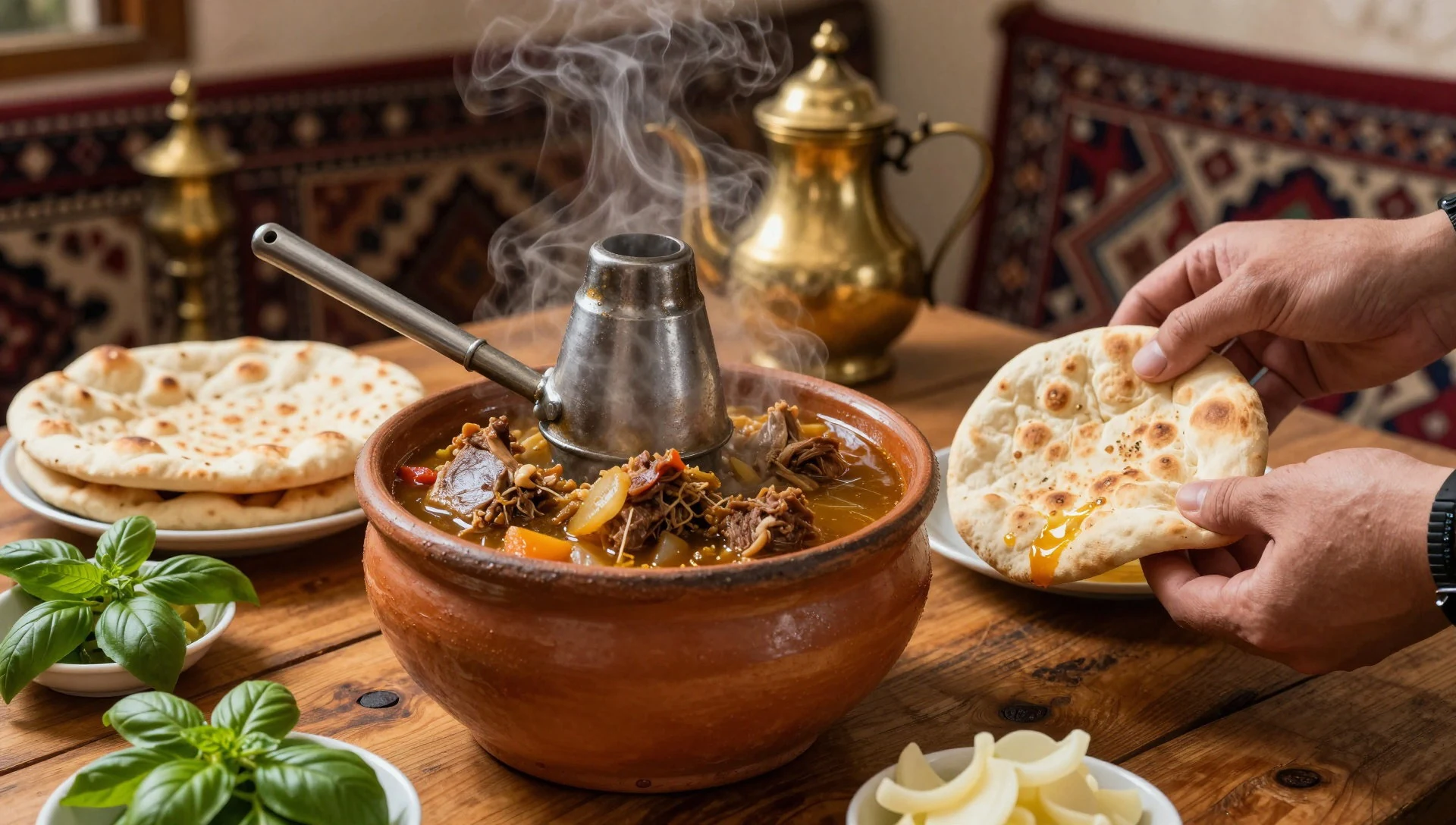
- Kebab plates — Town eateries in/near Takab
Kebab platters are a dependable choice after a long site walk: grilled meat served with basic sides and bread. For the most reliable experience, choose a straightforward restaurant where families are eating the same main dishes.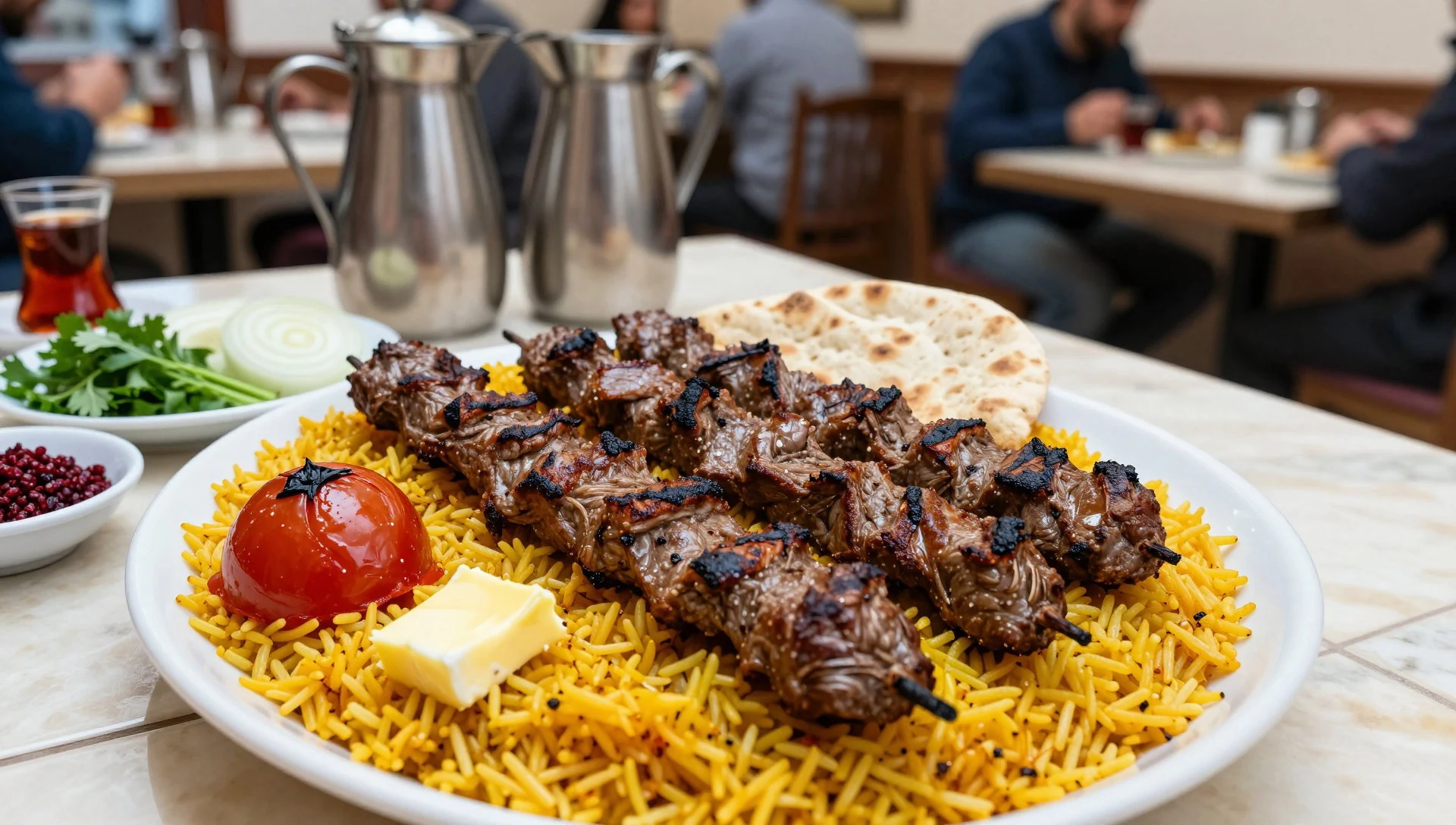
- Rice with saffron-style seasoning — Common in local restaurants across the Takab area
Rice is the backbone of many Iranian meals, often flavoured with herbs or saffron-style aromas. If you want something filling but not heavy, pair rice with grilled or stewed mains rather than trying to sample everything at once. - Flatbread and dips (mast-o / similar yoghurt mixes) — Local eateries and family-run restaurants in Takab
Expect flatbread alongside simple dips—often yoghurt-based and herby—especially as part of a starter spread. It’s a good way to balance richer stews and kebabs, and it’s usually offered by the same local places serving grilled mains. - Soup and appetisers — Restaurants and street-facing dining spots in/near Takab
Before main dishes, many restaurants offer a basic soup or appetiser to settle your stomach after travel. Order what looks local and fresh on the day, then save room for the main meal.
Plan it
Best time. March–April for mild daytime temperatures and lower rain; October for the warmest autumn weather, and November if you prefer cooler, drier walks.
How long. 2–3
Getting there. Fly to Tehran and then take ground transport west; or fly into Tabriz and continue by road to Takab County. The last leg is by car/taxi/bus through the West Azerbaijan landscape to Takab and then to Takht-e Soleyman.
Budget. mid
Tips
- Aim for an early start so the hill-citadel circuit is less punishing under strong sun.
- Bring water for the walk around the pond setting and keep snacks light—there isn’t a “big-city” rhythm at the site.
- Use the small museum to orient, then re-walk key sections with that context in mind.
- Plan time for nearby legend-linked landscape stops; they suit unhurried pacing more than rushing between points.
- Keep some cash for small purchases at local places; cards aren’t reliably accepted everywhere.
Etiquette
- Dress modestly and cover shoulders/knees, especially when moving through any religious spaces.
- Don’t climb onto ruin edges or step where signage suggests restricted areas.
- Ask before photographing people up close, and keep voices low.
Nearby
Sources
- Wikidata Q115253 (CC0)
- Wikipedia (rev 1380509626) (CC BY-SA 4.0)
- Wikivoyage (rev 4690287) (CC BY-SA 4.0)
- Photo photos/01-takhte-soleyman-5.jpg (CC BY-SA 4.0)
- Photo photos/02-jalayirid-sh-hn-ma-court-scene-tabriz-or-baghdad-ca-1370-74-.jpg (Public domain)
- Photo photos/03-wall-tile-with-dragon-made-in-iran-kashan-takht-i-sulayman-c.jpg (CC BY 2.5)
- Photo photos/04-darvaze-takht.jpg (CC BY 3.0)
- Photo photos/05-040313-takhtesoleyman-img-7280-2.jpg (CC0 1.0)
- Photo photos/06-040313-img-7263-2.jpg (CC0 1.0)
- Photo photos/07-040313-takhtesoleyman-img-7275-2.jpg (CC0 1.0)
- Photo photos/08-040313-takhtesoleyman-img-7269-2.jpg (CC0 1.0)


