Swallow's Nest
Swallow's Nest, Ukraine
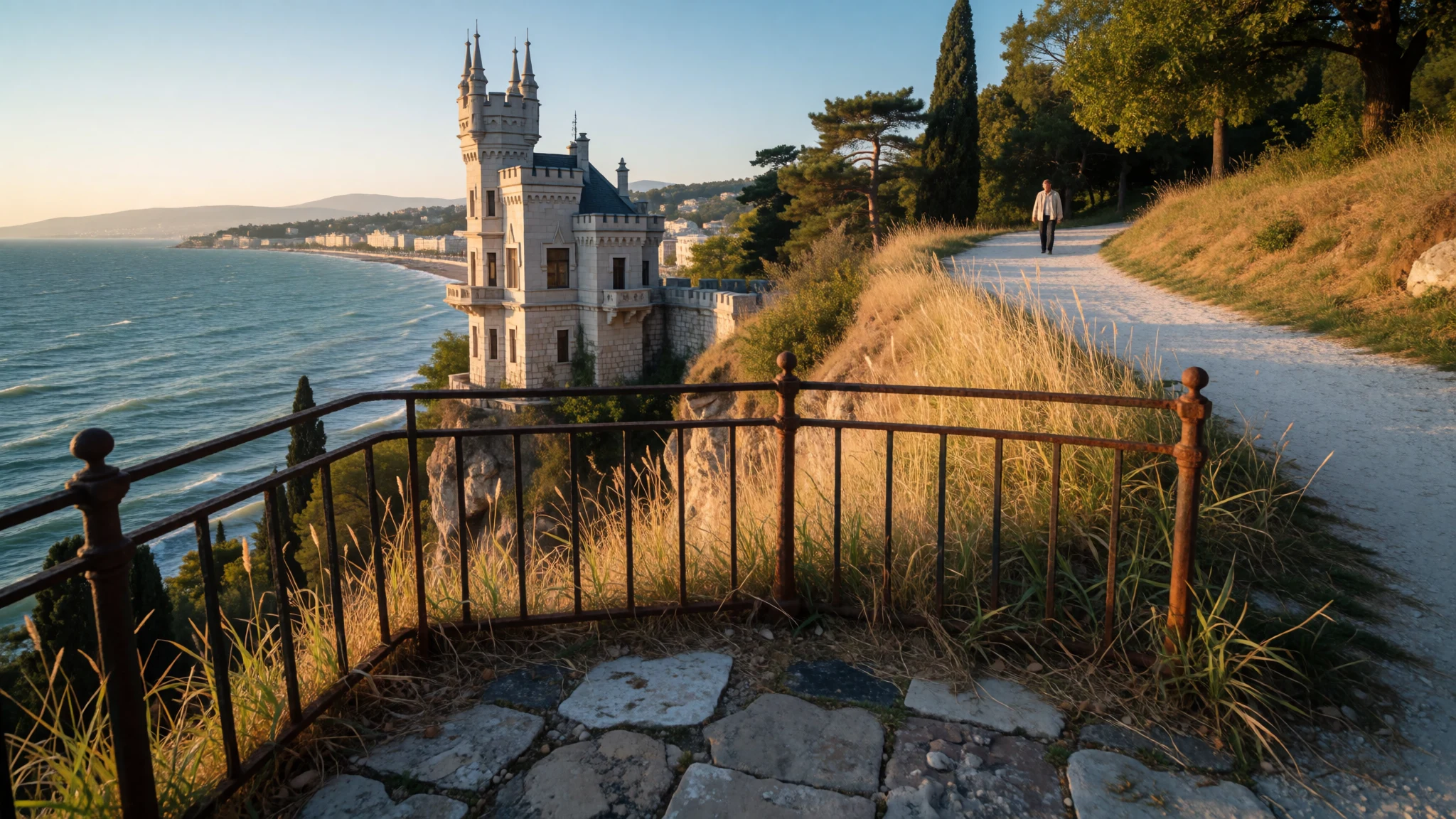
Swallow's Nest is a tiny fairy-tale castle clinging to a Black Sea cliff, worth seeing for its daring setting rather than its size.
The place
Swallow's Nest (Russian: Ласточкино гнездо; Ukrainian: Ластівчине гніздо) is a small ornamental castle on Aurora Cliff at Gaspra, a spa village on Crimea's south coast between Yalta and Alupka. It was finished in 1912 as a Neo-Gothic fantasy, and it is a true folly: nobody needed a castle here, but the cliff edge made one irresistible. The rock falls about forty metres to the Black Sea, and the walls sit so close to the drop that the building looks as if it has been placed on a shelf.
Size is the surprise. It is little more than a tower with a few rooms: an entrance hall, a guest room lined with wooden panels, and two bedrooms on different levels reached by a stair. The other rooms are plastered and painted. A narrow observation walkway runs around the outside, with open sea on one side and the faint line of Yalta's shoreline on the other.
Cape Ai-Todor lies just along the coast, and the remains of the Roman fort of Charax are close by, so the castle stands among much older layers of history than its own age suggests. Behind it rise the mountains that shelter this mild southern strip; in front is nothing but water.
The peninsula is internationally recognised as Ukrainian territory but is administered by Russia, and that shapes who can reach the castle and how. The list of countries attached to the site in Wikidata (Ukraine, Russia, the Russian Empire and the Soviet Union) reflects how often the coast has changed hands and flags.
Its story
Swallow's Nest has a more modest ancestor. Towards the end of the nineteenth century a Russian general built a wooden cottage on Aurora Cliff and romantically named it the Castle of Love. It later passed to a doctor who served at the tsar's court. Then came Baron Pavel von Steinheil (some sources spell it Steingel), a nobleman of German descent whose mother had made her fortune from oil at Baku. He had the cottage replaced with the present building, designed by Leonid Sherwood and completed in 1912, and he gave it a German name, Schwalbennest.
The style explains the name. Its closest relatives are the storybook castles of the German lands, while the perilous cliff-edge position recalls Belém Tower in Portugal and Miramare near Trieste. Crimea already had a taste for romantic architecture: Edward Blore had designed the Vorontsov Palace at Alupka with a blend of Scottish and Moorish ideas.
The baron did not keep it long. The next owner ran it as a restaurant, and after the Russian Revolution it served mainly as a curiosity for visitors. An earthquake in the interwar years spared the building but threw a slice of cliff and some small ornaments into the sea, and left a deep crack in the rock. The castle was then closed as unsafe for roughly four decades. Restoration began in the late 1960s, including a concrete slab to steady the cliff beneath, and a restaurant has operated inside for decades since. Another closure for repairs came more recently, lasting a few months.
What to see
- The observation walkway — Aurora Cliff, Gaspra
The walkway around Swallow's Nest is the main event. It is narrow and open to the wind, with the sea far below and the curve of Yalta's shoreline in the distance. The platform is small and fills quickly in summer, so early or late hours give the best chance of a clear view.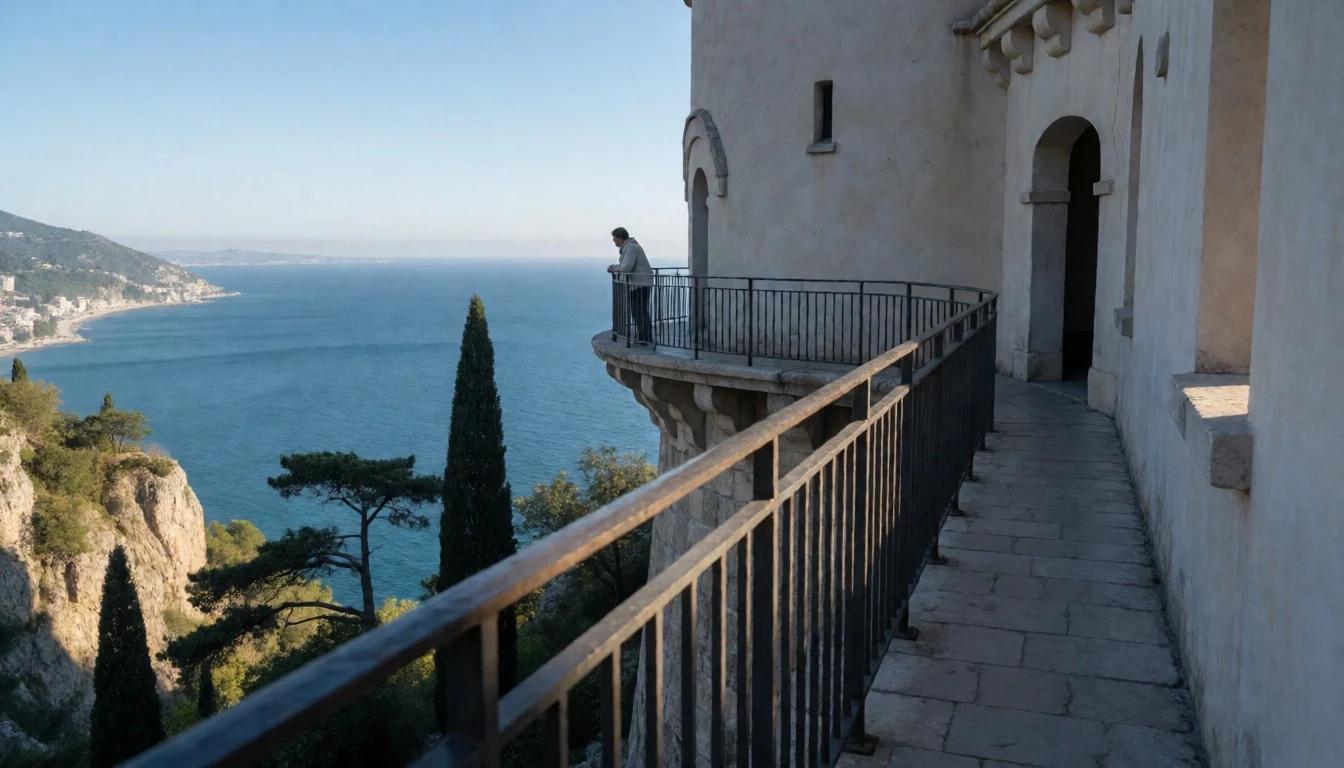
- The castle interior — Swallow's Nest, Gaspra
Inside, the castle can be taken in within minutes. The guest room is lined with wooden panels, while the hall, stair and tower bedrooms are plastered and painted. Part of the building has worked as a restaurant for decades, so access varies; check the official site before planning around the interior.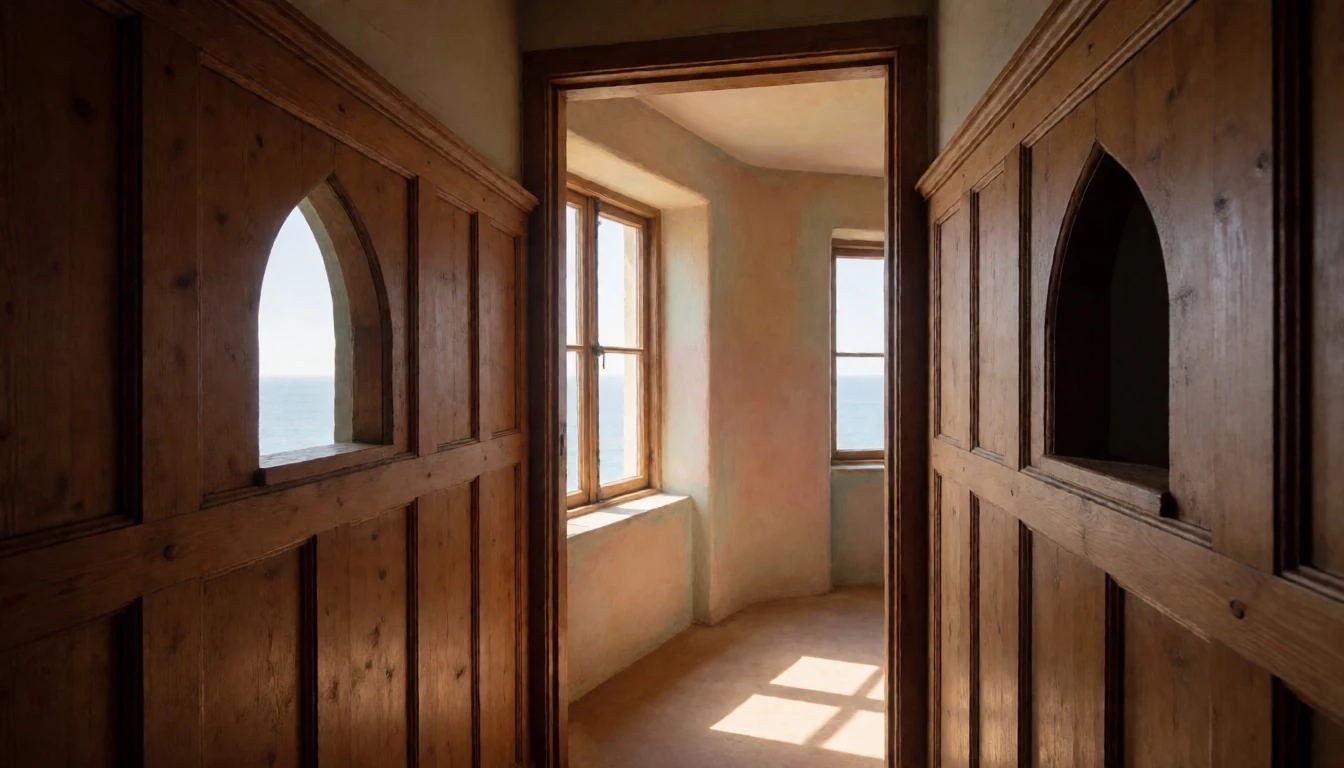
- The castle seen from the shore — Coast near Gaspra
The shape of the place only makes sense from a distance. From viewpoints along the coast near Gaspra, the building reads as a slim tower grafted onto the cliff's lip, with the drop directly beneath it. These angles also show the rock face the castle depends on. Take care on rough ground.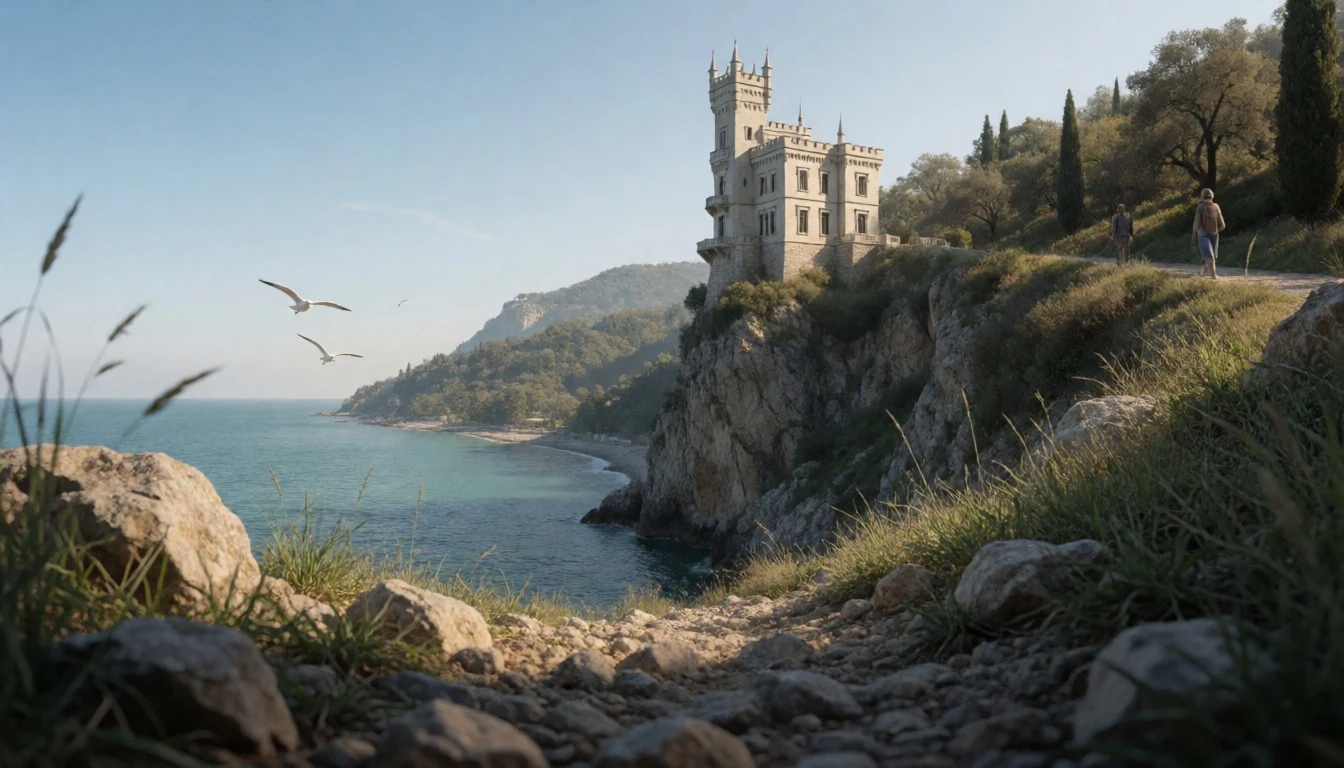
- Cape Ai-Todor — Ai-Todor, south of Gaspra
Cape Ai-Todor is the headland the castle faces, a short way along the coast. It is a quieter spot from which to look back at the cliff and the Black Sea beyond. The shore here is rocky, steep and wooded, which helps explain why a baron wanted a lookout on it.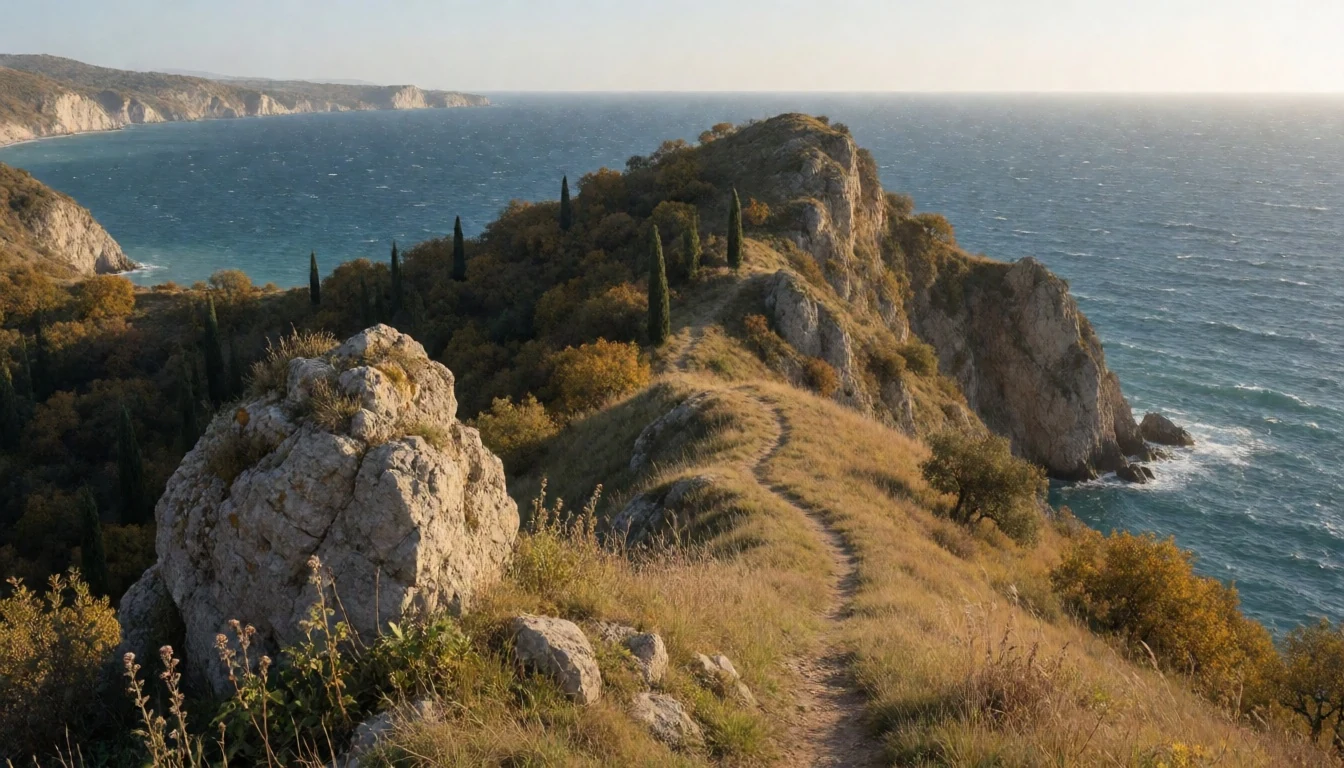
- Remains of Charax — Near Ai-Todor
Close to the castle lie the remains of Charax, a Roman fort. Compared with the folly, little survives to look at, so treat it as a short history stop and ask locally about access. It shows that people were building on this coast long before a baron commissioned a castle for show.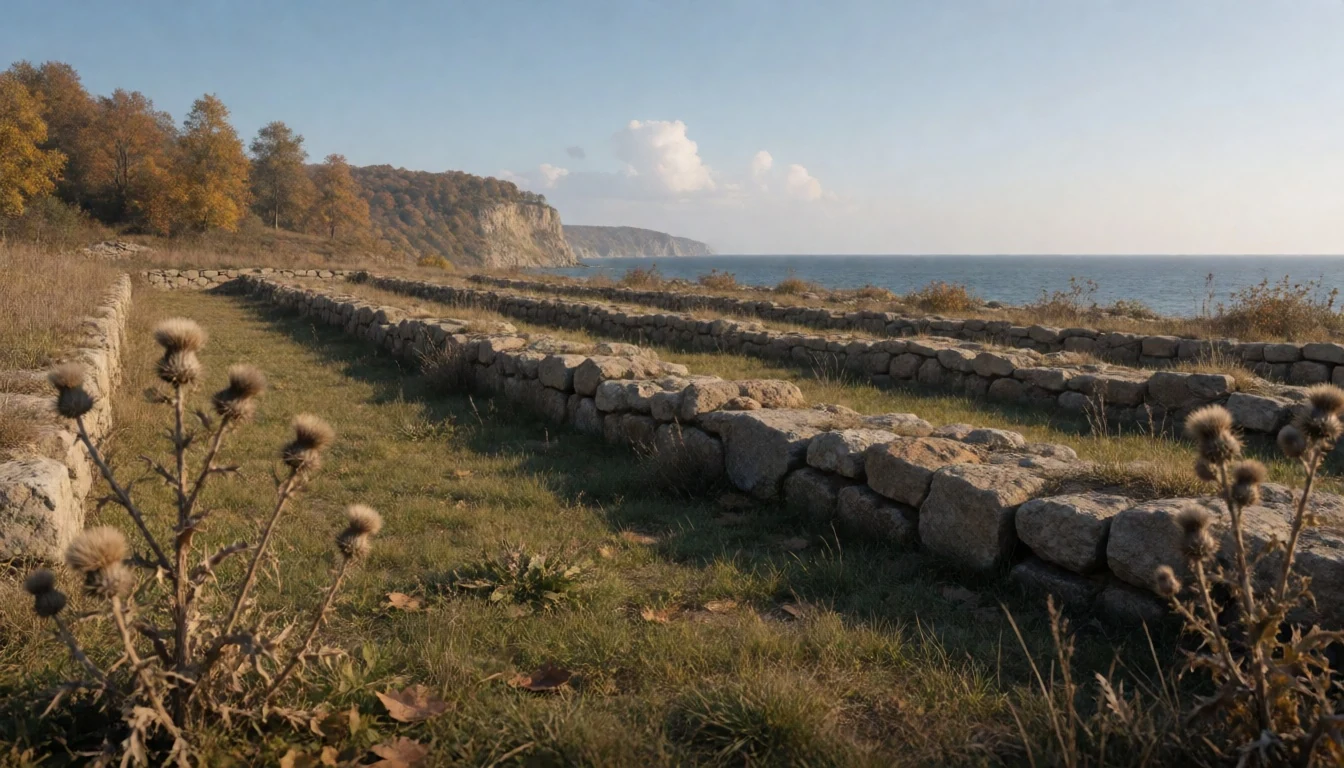
- Vorontsov Palace, Alupka — Alupka
A short way along the coast, the Vorontsov Palace at Alupka is the natural companion visit. Designed by Edward Blore, it brings Scottish and Moorish touches to the Crimean shore and explains the fashion that made a castle like Swallow's Nest imaginable. Allow a good half day and check opening times officially.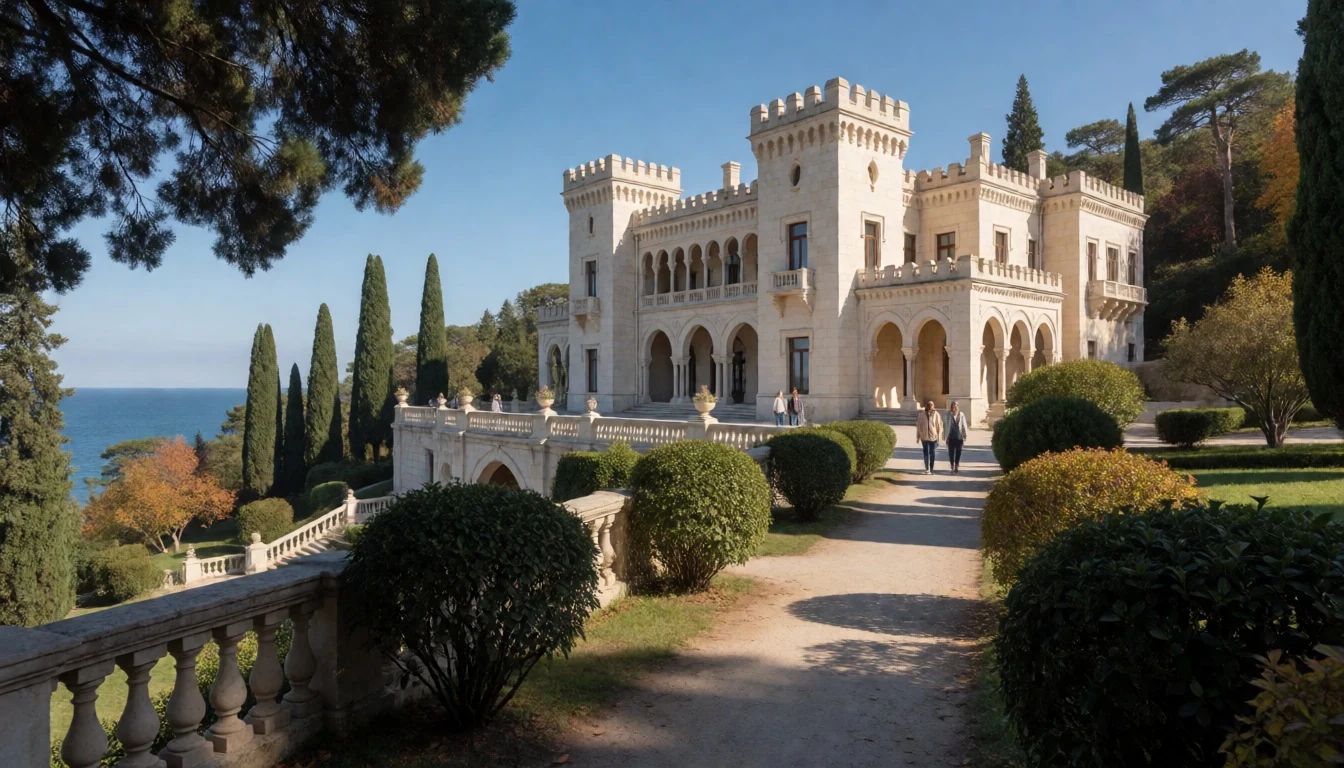
Culture
Swallow's Nest belongs to the culture of the Crimean south coast as a Black Sea resort, where nobles, doctors and merchants built villas and sanatoria for sea air and sun. Gaspra was a spa village, and the castle is a product of that leisure world: a romantic show piece meant to be looked at from the water and admired from a terrace. Over time it became the symbol of the whole coastline, appearing on postcards and souvenirs.
The peninsula itself is a crossroads. Crimean Tatar, Ukrainian, Russian and German influences have all left their mark, in architecture, in food and in names, and the castle's German name and Gothic outline are one small strand of that. Locals have strong and varied views on history and on who the peninsula belongs to, and a visitor is wise to listen more than to argue.
The site is also an active piece of heritage. It has been restored after earthquake damage and has served as a cottage, restaurant, reading club and attraction in turn. Today people come mostly for the view and the photograph, and the experience is often brief and crowded in peak season.
Visitor etiquette: stay behind the railings on the walkway, never climb the parapet for a photograph, and keep conversations about politics light and courteous with anyone you meet.
What to wear
Traditional dress on the Crimean coast reflects its mixed peoples. Crimean Tatar costume is known for velvet and silk with gold-thread embroidery, along with embroidered caps and felted outerwear for cold weather. Ukrainian vyshyvanka shirts, in embroidered linen or cotton, are worn on festivals and national days, and Russian folk dress appears at celebrations. Such clothes are seen mostly at festivals, weddings and performances, not on the street.
Day to day, people dress for a warm resort climate: light cotton, linen, shorts, sundresses and sandals in summer, with a jumper or jacket for evenings and the windy cliff tops. Around Yalta, smart casual is common for dinner, and swimwear stays on the beach.
For a visitor, the main considerations are sun, wind and terrain. A hat, sunglasses and sun cream matter from late spring to early autumn, and a light windproof layer is useful on the exposed walkway. Footwear should be flat and grippy, since the paths and steps near the cliff are steep and uneven, and sandals with no heel strap are a poor choice. Swallow's Nest itself has no strict dress code, but covering shoulders and knees is polite if you visit a church or mosque on the same trip. In winter and early spring, expect rain and chill, and pack waterproofs and warmer layers.
What to eat
- Chebureki — Street stalls and small cafés along the Yalta waterfront
A crisp, half-moon pastry of thin dough filled with minced meat and onion, fried until blistered. It is a Crimean Tatar staple and a quick snack to eat standing up, best while the pastry is still hot and the filling juicy.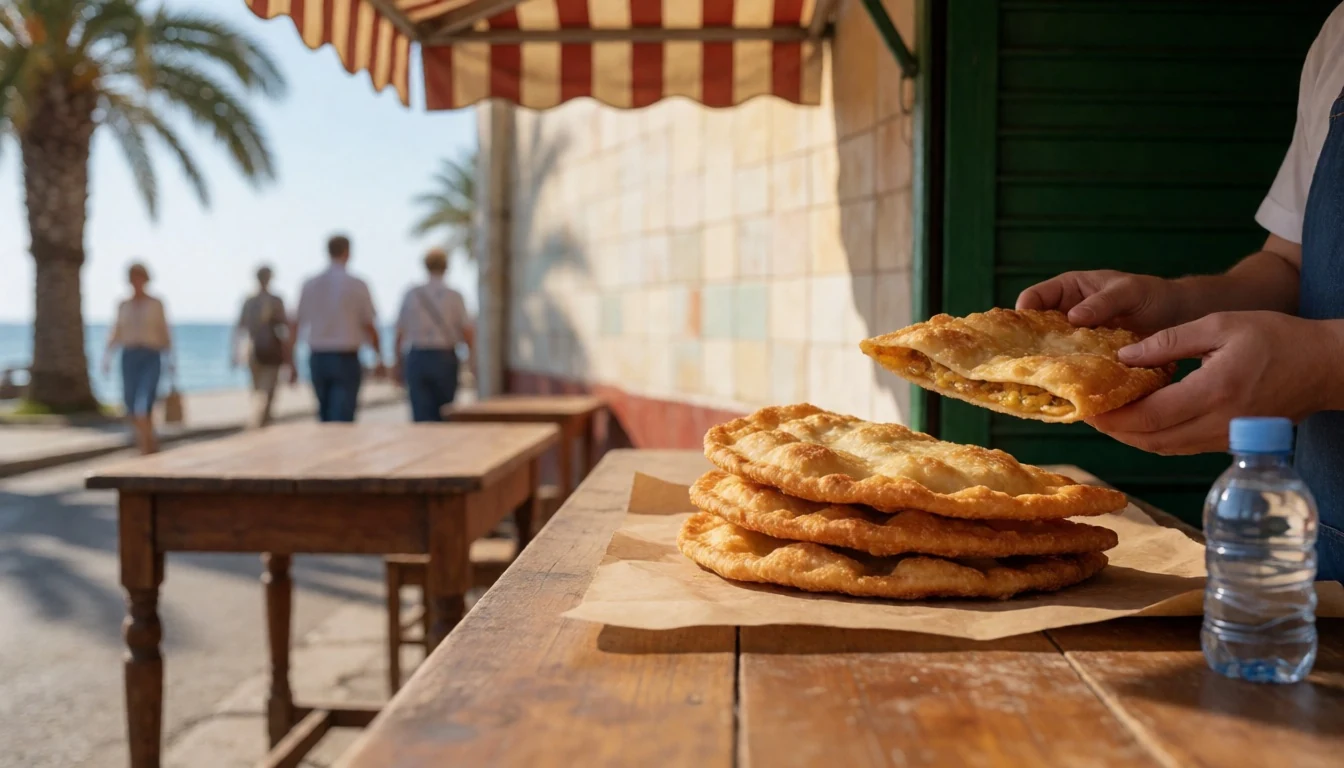
- Plov — Crimean Tatar eateries in Yalta and Alupka
Rice cooked with meat, onion and carrot in a single pot, in the central Asian and Crimean Tatar manner. It is a hearty, filling meal that shows how far this coast's cooking reaches beyond its Black Sea setting.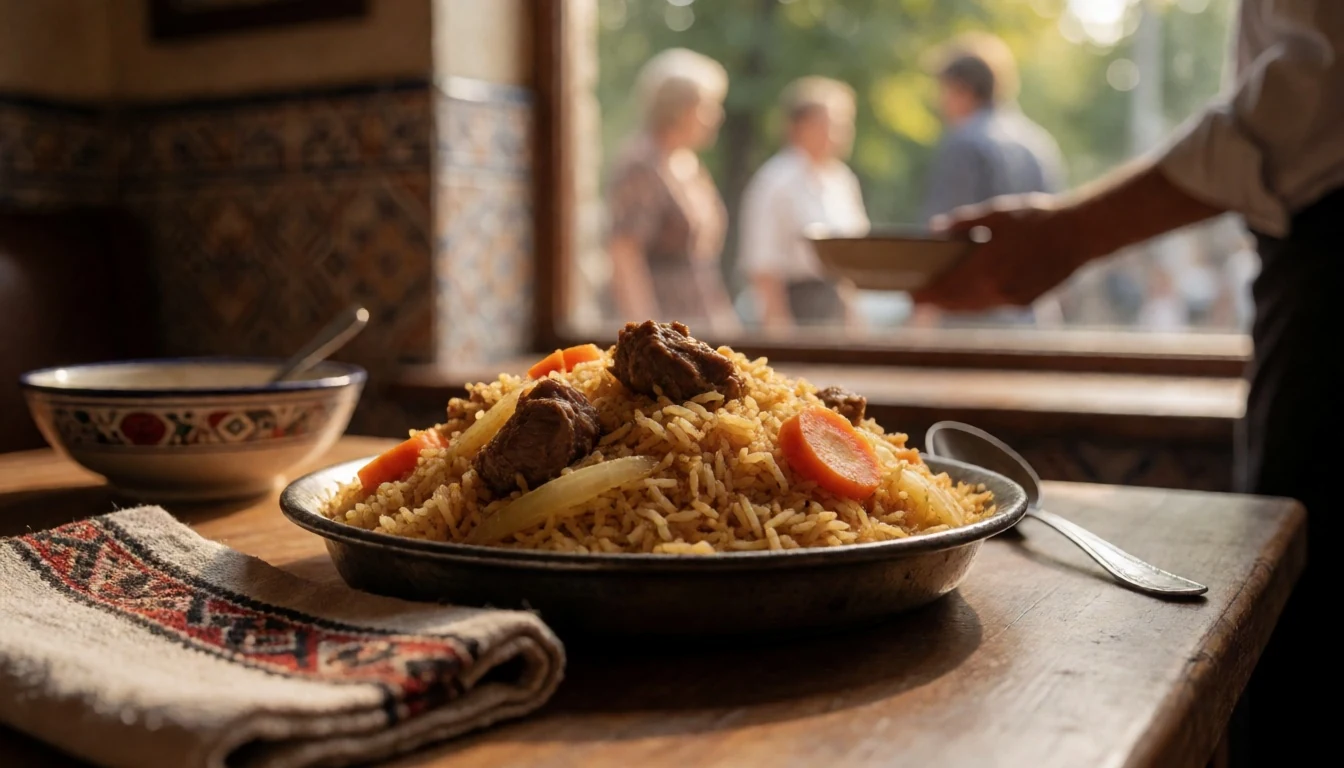
- Grilled Black Sea fish — Seafront restaurants and small harbourside eateries
Local fish, often grilled whole and served with lemon, herbs and a simple salad. Availability changes with the season and the catch, so ask what came in that day rather than expecting a fixed menu. - Yantyk — Crimean Tatar bakeries and family-run cafés
A baked pastry of thin, flaky dough wrapped around spiced meat, associated with Crimean Tatar home cooking. It is richer than chebureki and best eaten warm, often with a glass of tea or ayran on the side. - Crimean wine — Wine-tasting rooms and cellars in the Yalta area
The south coast's vineyards produce sweet dessert wines and dry reds and whites. A tasting is a pleasant way to spend an afternoon after the cliff walk, but pace yourself, since the afternoon sun is strong.
Plan it
Best time. May–June and September–October, when the coast is warm, the sea is swimmable and the crowds are thinner than at the height of summer. July and August are hot and busy, and the walkway can be packed. Winter is cold, with lows well below freezing from December to February, and it is wet and windy, with fewer services open.
How long. 1
Getting there. Check your government's current travel advice before planning any trip to Crimea, as many advise against travel and access routes are restricted. The peninsula's main airport is at Simferopol, from where road transport runs to Yalta; Gaspra lies a short drive west of Yalta along the coast road towards Alupka, with buses and taxis for the last stretch.
Budget. mid
Tips
- Check the official site (https://замок-ласточкино-гнездо.рф/) for opening times and tickets before you go
- Arrive early in the morning or late in the day to avoid the crush on the small walkway
- Carry cash as well as a card for small stalls and cafés
- Wear shoes with grip, as steps and paths near the cliff are steep and uneven
- Bring water and sun protection in summer, as there is little shade on the cliff top
Etiquette
- Stay behind railings and do not climb the parapet for a photograph
- Do not block the narrow walkway for long photo sessions when others are waiting
- Avoid heated political discussion with local people
Nearby
Sources
- Wikidata Q1353643 (CC0)
- Wikipedia — Swallow's Nest (rev 1381726997) (CC BY-SA 4.0)
- Wikivoyage — Swallow's Nest (CC BY-SA 4.0)
- Photo: Crimea South Coast 04-14 img10 Gaspra Swallows Nest (A.Savin) (CC BY-SA 2.0)
- Photo: The Swallow's Nest file 01 (Novoklimov) (CC BY-SA 4.0)
- Photo: Lastochkino Gnezdo (Prokudin-Gorsky) (Public domain)
- Photo: Palace of the Swallow's Nest, Gaspra (Vian) (CC BY-SA 4.0)
- Photo: Ласточкино гнездо 2009 – panoramio (1) (Roma Neus) (CC BY 3.0)
- Photo: Ласточкино гнездо 2009 – panoramio (2) (Roma Neus) (CC BY 3.0)
- Photo: Ласточкино гнездо 2009 – panoramio (Roma Neus) (CC BY 3.0)
- Photo: Ласточкино гнездо (Insider) (CC BY-SA 4.0)


