Suzhou
Suzhou, People's Republic of China
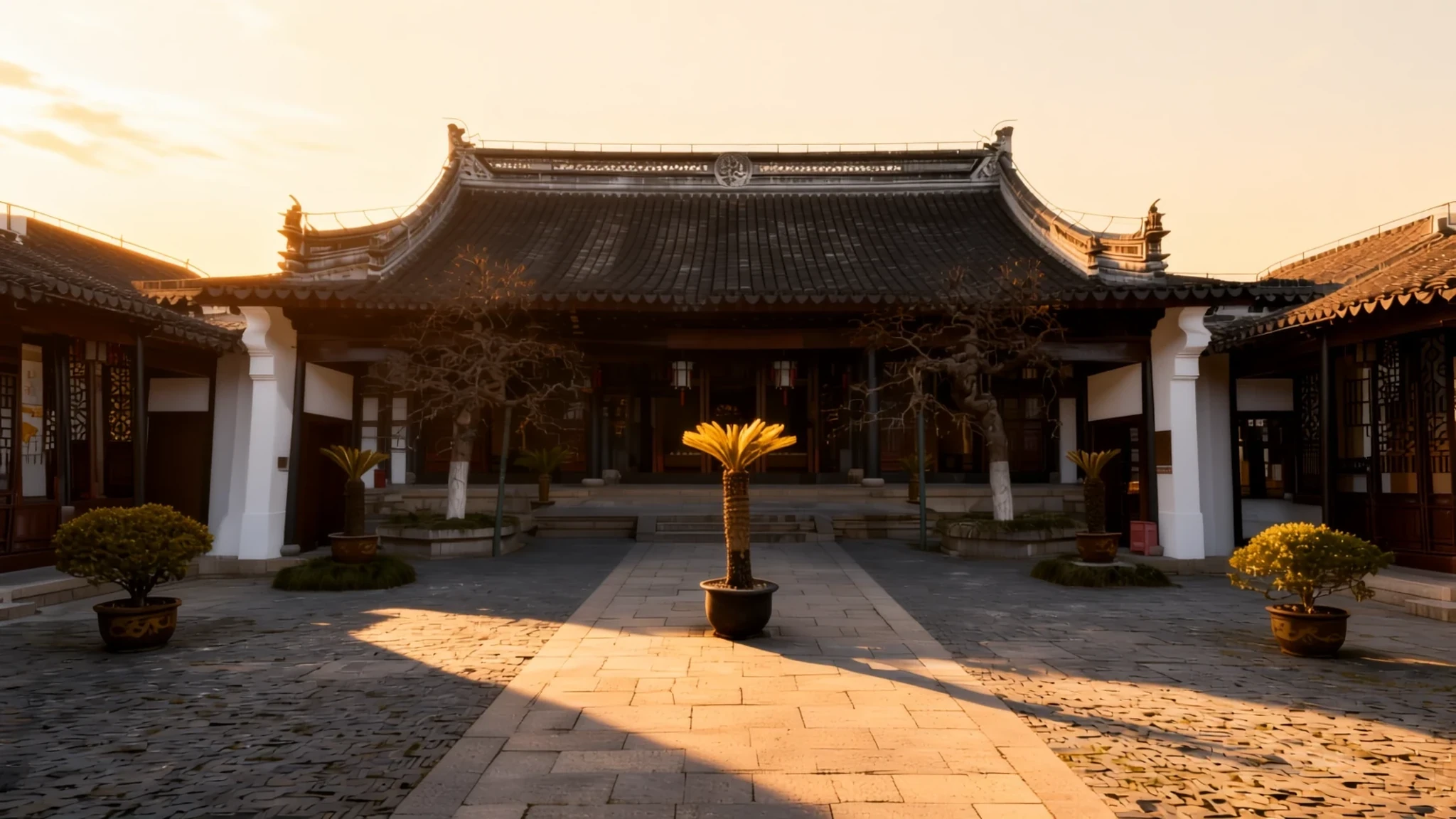
Suzhou is the place to see China's classical gardens at their most refined, set among canals, silk history and good food.
The place
Suzhou lies on the flat land of eastern Jiangsu, where the Yangtze Delta spreads towards the coast. The city has about 12.7 million people, and it sits only around 5 metres above sea level, so water is never far away. Canals run past whitewashed houses, and Lake Tai lies to the west. Much of the modern city is industrial and new, with high-speed rail links, research parks and factories making advanced equipment. Visitors who arrive expecting only old lanes are often surprised by how large and busy the outer districts are.
The historic centre is where the appeal lies. Suzhou is best known for its private gardens, built by scholars and officials who wanted a small world of rock, water, pavilions and plants. Most are walled, so the noise of the street falls away once a moon gate is passed. Several sit close together, which makes a relaxed day possible, and the canal-side lanes between them reward wandering without a fixed plan.
Silk has shaped the city's identity for centuries, and its museums, shops and textile traditions still reflect that. Opera and storytelling belong here too. Kunqu opera began in this region, and local ballad singing mixes song with spoken dialect. The streets are busiest around midday and at weekends, and the gardens are calmer and more pleasant when reached early in the day.
Its story
Suzhou is often called the cradle of Wu culture, and its roots run back to the Gou Wu, a group recorded in the area during the Spring and Autumn period. Their villages stood on the edges of hills above the wetlands around Lake Tai, where farming depended on managing water.
Traditional accounts say a Zhou-era prince introduced irrigation and farming know-how to the area and founded the state of Wu. Its seat of power was afterwards relocated to Gusu, which sits inside modern Suzhou. The settlement took its present shape in 514 BC, when King Helü relocated his court there and named the town after himself. His minister Wu Zixu helped plan it, and the walled town that grew from that plan became modern Suzhou. A tower on Gusu Hill, the high point of the site, passed into Chinese legend. King Helü was buried at Tiger Hill, which remains one of the city's landmarks.
Wu did not last. It was defeated and absorbed by Yue, and Yue was later taken over by Chu. The region kept its character regardless. Its population grew quickly during the Han era, partly because families moved south from the north. Over the centuries the city became a centre of trade, painting, poetry and scholarship, and its place on the Grand Canal made it a key stop for goods moving between north and south.
For a long stretch of history Suzhou was one of the largest cities in China outside the capital, until Shanghai overtook it. Reform and opening up, which began in the late 1970s, brought fresh industry and rapid growth, and the old canal city now sits within the wider Yangtze Delta megalopolis.
What to see
- Humble Administrator's Garden — Gusu District, north of the old city
The largest and most visited of the classical gardens, with ponds, covered walkways and carefully framed views across the water. Legend says it cost a boatload of silver to build. Guided tours run through the garden, but only in Mandarin, so go with a map or an audio guide if you do not speak the language. Arrive early, because the paths fill up quickly once tour groups arrive.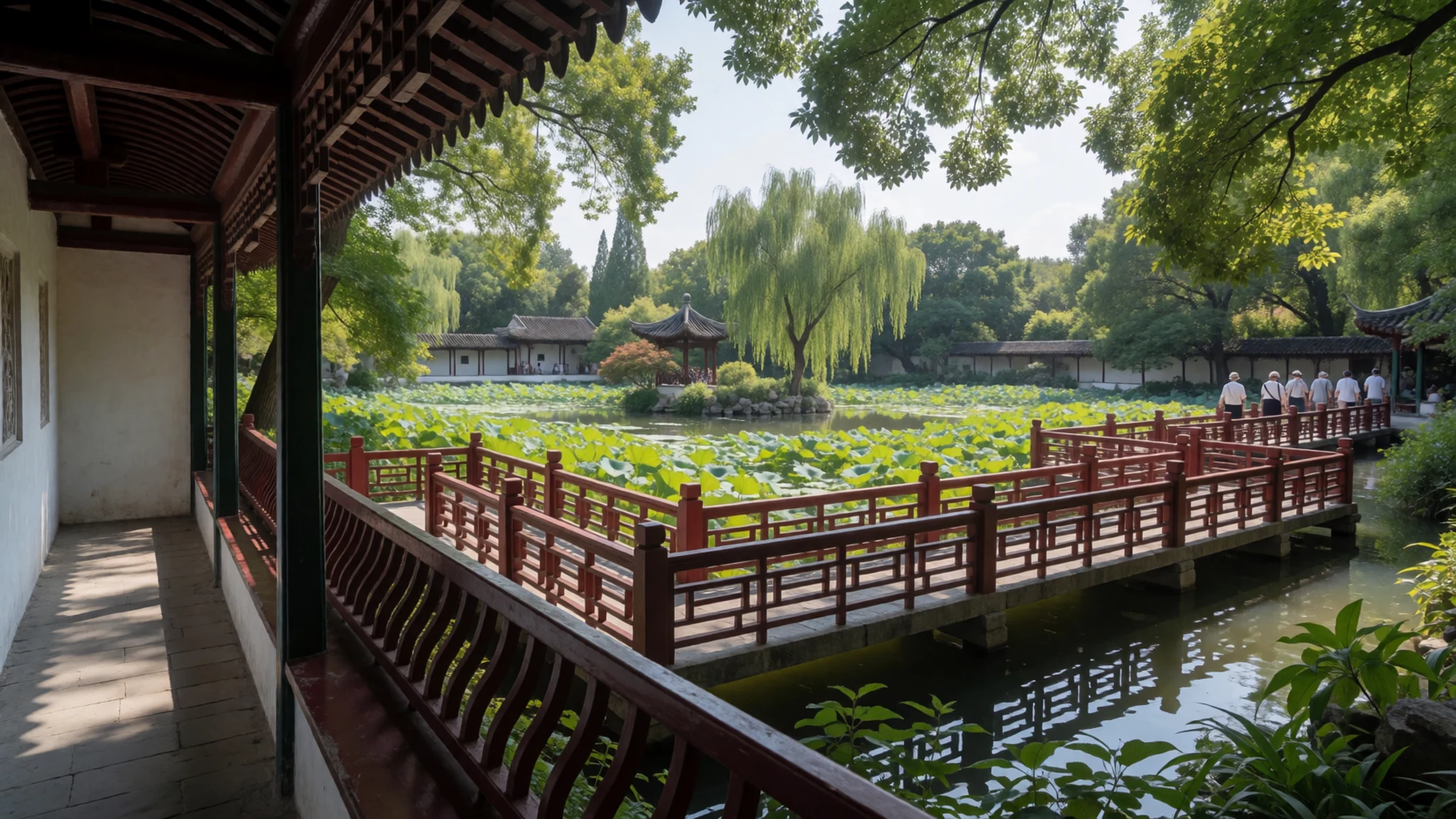
- Lingering Garden — Changmen area, west of the old city
One of the largest classical gardens in the city, arranged around a sequence of halls, courtyards and winding corridors. Its strength lies in the contrast between tight, dim passages and sudden open views over ponds and rockwork. The garden is good for a slow walk, and the corridor sections make a pleasant shelter when the weather turns.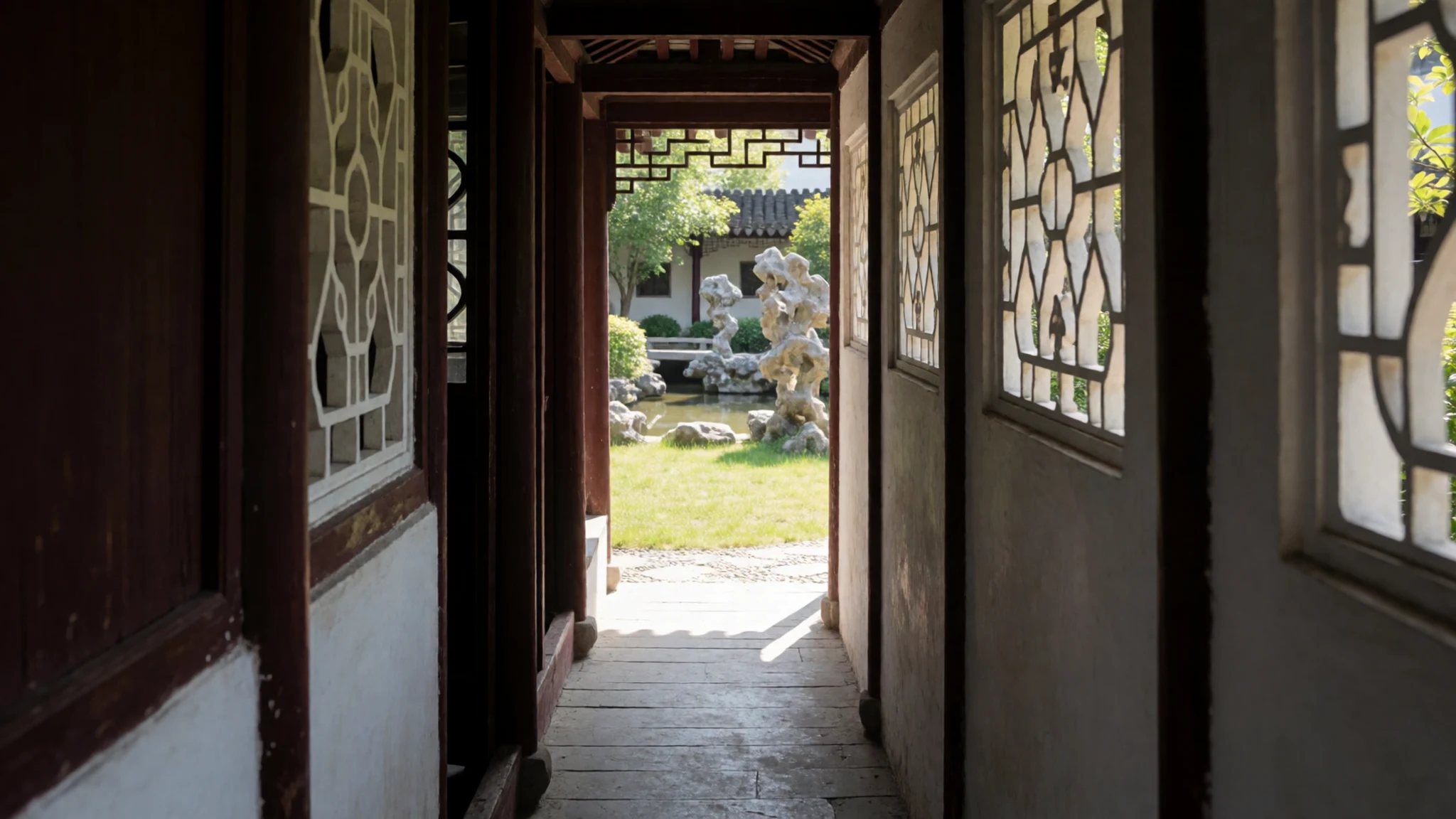
- Lion Grove Garden — Gusu District, old city centre
This garden is famous for its collection of pitted, eroded rocks, which classical Chinese scholars prized highly. It began as part of a Buddhist monastery before becoming a private garden. The stone forms, some of them looking like carved beasts, are the reason to visit, and the maze of rock paths rewards a careful, unhurried look.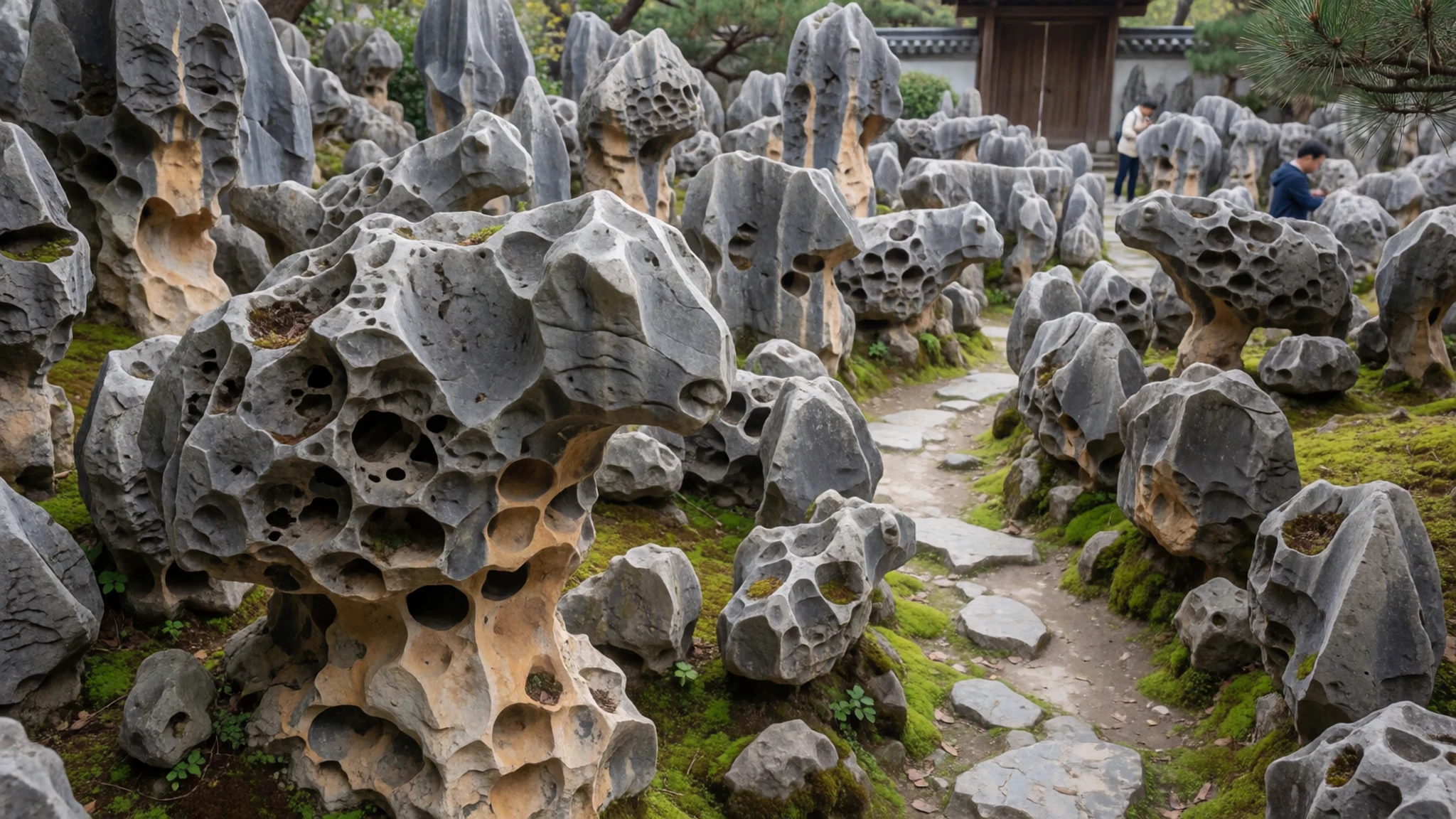
- Garden of the Master of the Nets — Pingjiang District, by the canal
A small, tightly planned complex of house and garden, and one of the most harmonious in the city. Its compact size means it is quick to explore, yet each courtyard feels distinct. It was rebuilt by an official, Song Zongyuan, who gave it much of the form it has today. It suits a quiet half-hour in the afternoon.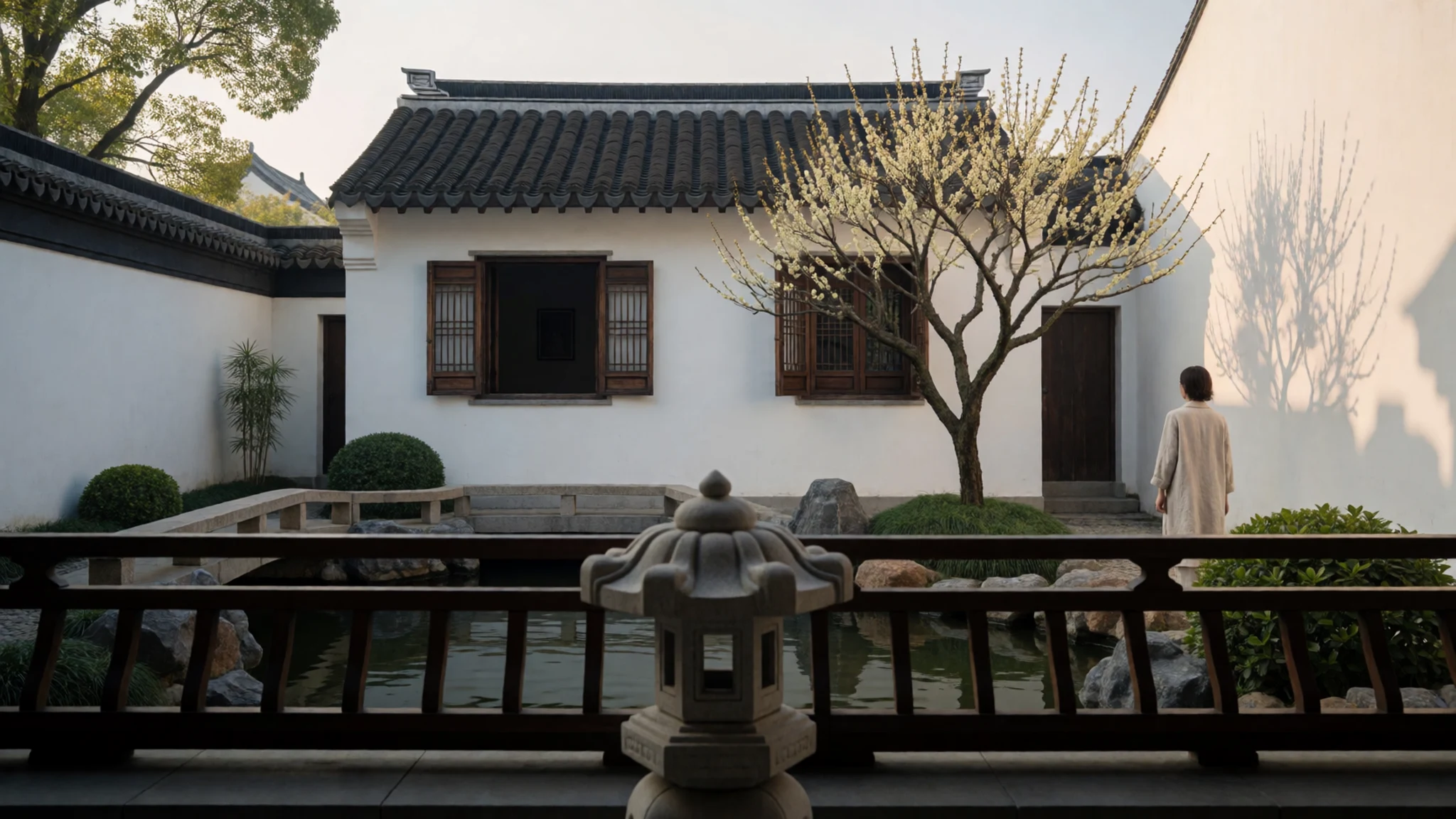
- Surging Wave Pavilion — Gusu District, southern old city
One of the oldest of the private scholar's gardens in Suzhou, set around a hillock and a pond. The pavilion sits on a rise, and the layout is simpler and more open than the grander gardens. It makes a good contrast to the busier sites, and a short walk nearby takes you to the canal lanes of the old town.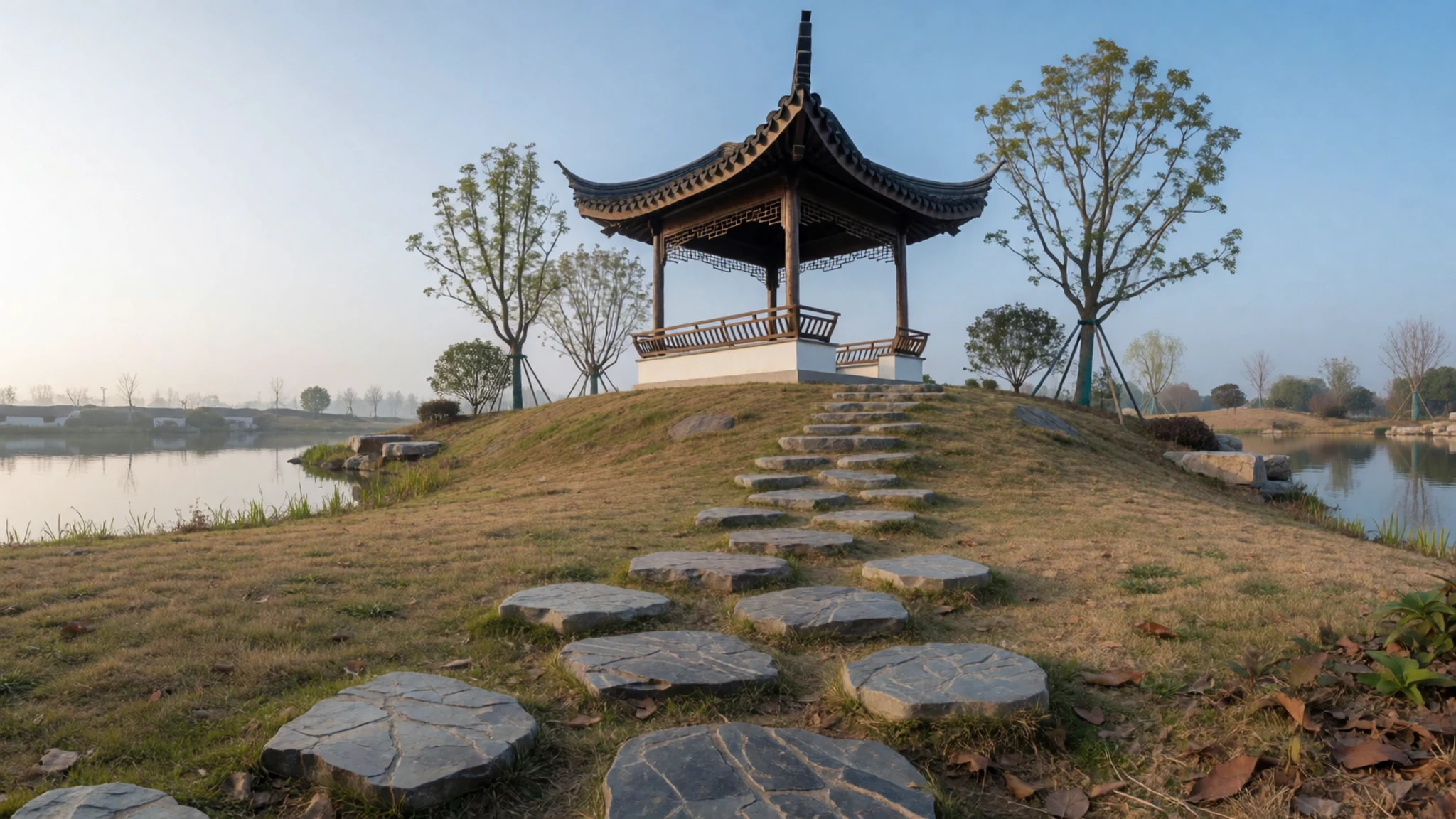
Culture
Suzhou's cultural life centres on performance and craft. Kunqu opera began in the Suzhou region, and it is one of the oldest surviving opera traditions in China, known for its slow, lyrical singing and refined staging. The later Suzhou Opera grew out of the same soil. Suzhou pingtan is a regional storytelling art that alternates between sung sections backed by the pipa and the sanxian and passages of spoken local dialect. The blend can make a show feel intimate and chatty, even to visitors who don't understand the language.
Silk has been central to the city's identity for a very long time. Suzhou silk supplied the imperial courts, and by the Song era the city was already the centre of a profitable silk trade. Suzhou Song-style brocade ranks among China's three most celebrated brocades, together with Nanjing Yun and Sichuan Shu. It is made of silk with a thin, strong structure, bright colours, fine patterns and a soft hand. Workshops and small museums keep these techniques alive, and many of them welcome visitors who want to see the looms.
The garden tradition is also part of daily life. Gardens are places for quiet reflection, so conversation is best kept low, and phones should be on silent. Ask before photographing people who are performing, weaving or working in a shop, and keep the paths clear for others by stepping aside at narrow doorways and bridges.
What to wear
Traditional dress in the Suzhou region centres on silk, the material that made the city famous. Fine silk was woven into robes for officials and scholars, and into the brocade whose patterns came to be prized across China. Song-style brocade has a thin but strong structure, bright colours and soft texture, and it is still woven today for garments, wall hangings and gifts. Older garments in local museums show how carefully silk was used for trim, lining and patterning.
What people wear now is much the same as in other large Chinese cities. Office workers favour simple tailored clothes, students wear casual trousers and sneakers, and older residents often choose loose, practical layers. Modern shopping streets carry the same international brands found across the country, but many locals still buy silk scarves and cotton garments from smaller shops.
For a visit, pack light layers that work in both heat and damp. Summers are hot and humid, so breathable cotton or linen is sensible, and a light cover for the shoulders helps inside temples and the more formal gardens. Comfortable closed shoes matter most, because the canal lanes and garden paths include worn stone, steps and occasional wet ground. A light rain jacket or umbrella is useful in spring and early summer.
What to eat
- A Bing Cangshu mutton soup — a small soup shop in the old city, the kind with a steaming pot by the door
A warming bowl of mutton soup, served at breakfast or lunch. Locals eat it with a little chilli and fresh herbs, and the broth is rich without being heavy. It is a good introduction to the city's everyday cooking, and it is inexpensive. Sit in a simple shop, order the soup and let the bowl come to you.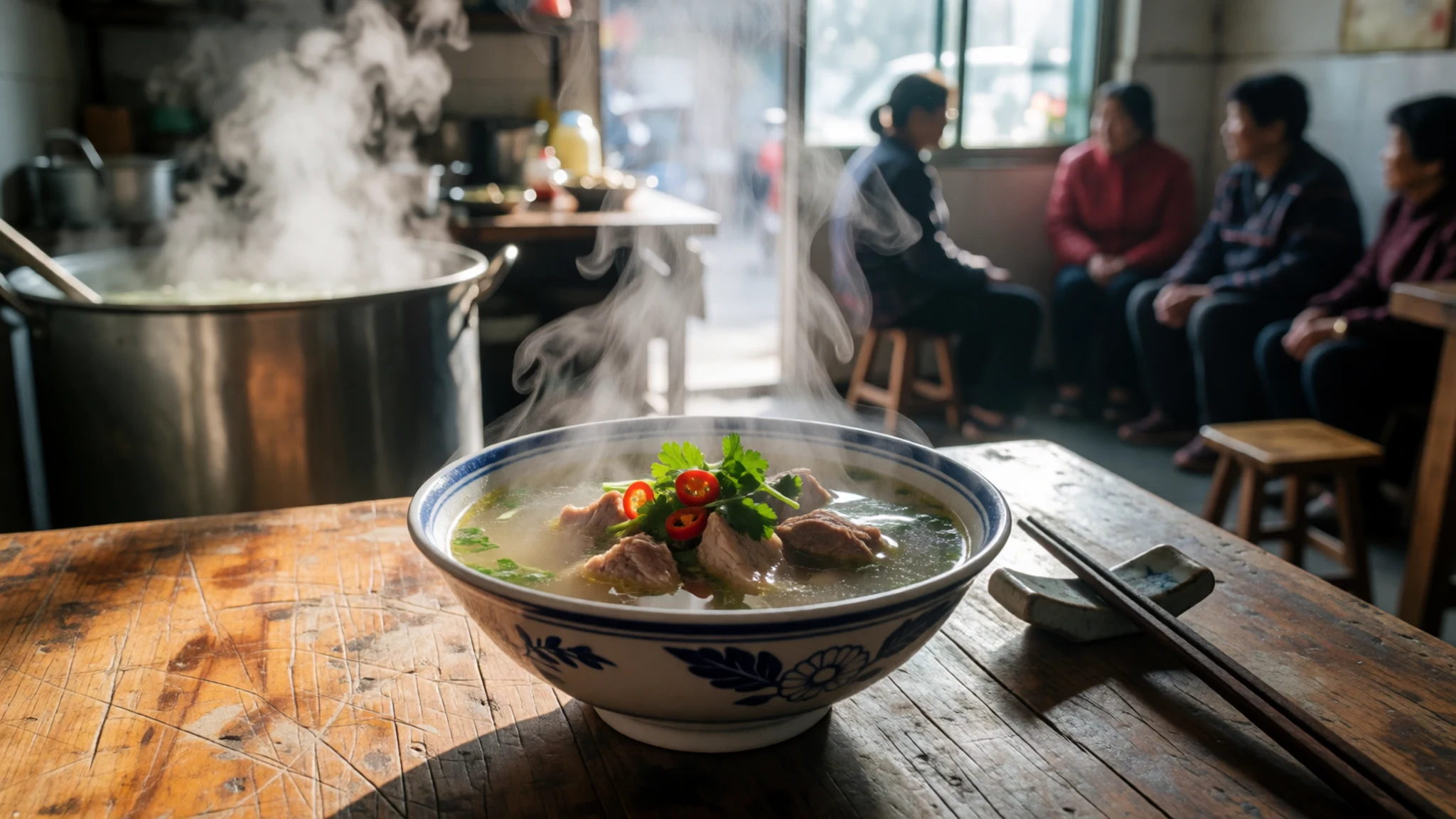
- Harbin dumplings — a dumpling shop on a busy shopping street in the centre
Boiled dumplings with a thin wrapper and generous filling, sold by the basket at dumpling shops along busy streets. They are much cheaper than the better-known Yang Yang dumplings, and locals consider them just as good. Eat them hot with a dip of black vinegar and a few slices of ginger.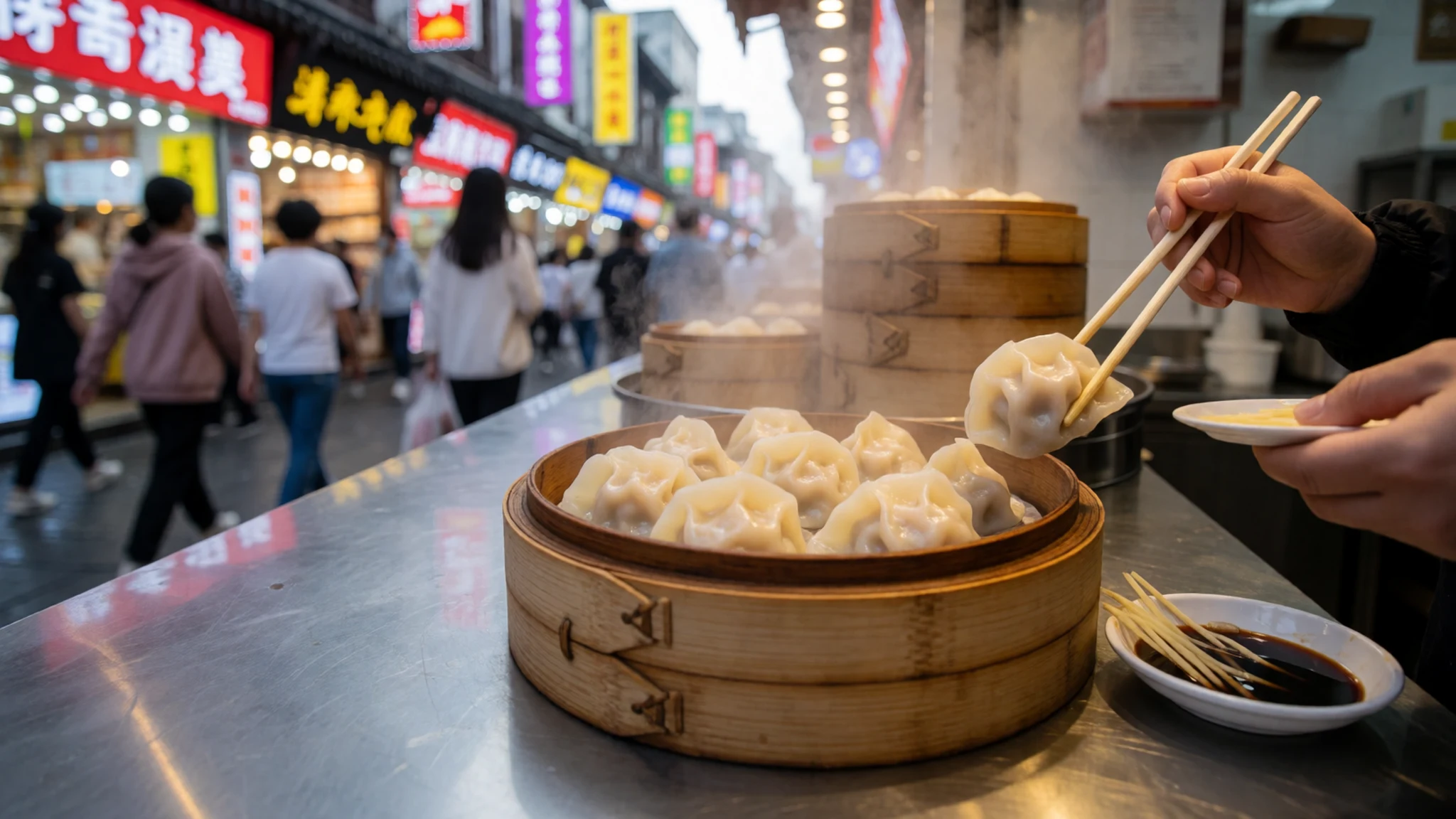
- Wontons in soup or sweet sauce — a neighbourhood eatery near a canal bridge, where the wontons are made by hand
Small pouches of minced filling served either in a clear broth or in a sweet, dark sauce. Both styles appear on local menus, and the broth version is the classic choice for a light meal. The wontons are delicate and quick to eat, which makes them a good stop between gardens. - Cantonese barbecued pork buns — a small modern Cantonese-style eatery or dim sum counter in the new town
Soft, slightly sweet steamed buns filled with barbecued pork, a staple of Hong Kong-style dim sum. Small modern Cantonese eateries in the city make them well, and they are good for a mid-morning snack. Pair one with a cup of tea and it becomes a full breakfast. - Nanjing duck noodles — a traditional noodle house on a side street in the old city
A traditional bowl of noodles with duck in the broth, and the menu often offers the choice of more parts for a higher price. Some of the less familiar duck dishes served alongside the noodles are worth trying as well. It is a filling meal at lunchtime, and a good way to taste the wider Jiangsu style of cooking.
Plan it
Best time. March and November are the most comfortable months, with highs of about 27 to 29 °C and less rain than in the summer peak, which suits walking the canals and gardens. Summers are hot and humid, with highs of 36 to 40 °C from June to August, and winters are cold, with lows often below freezing.
How long. 2–3
Getting there. Shanghai Hongqiao (SHA) is the most convenient airport, with a regular shuttle bus to Suzhou taking about an hour. Pudong (PVG) is further away, around an hour and forty minutes by bus. The easiest last leg is the bullet train from Hongqiao Railway Station, which takes under half an hour.
Budget. mid
Tips
- Book high-speed train tickets ahead for weekends and public holidays
- Visit the big gardens in the morning, before the tour groups arrive
- Carry some cash for small shops and street stalls, although cards work in larger places
- Bring water and a hat in summer, because the walking is more tiring than it looks
Etiquette
- Keep your voice low inside the gardens and temples
- Ask before photographing people who are performing or working
- Step aside at narrow doorways and bridges to keep the paths open
Nearby
Sources
- Wikidata Q42622 (CC0)
- Wikipedia: Suzhou (rev 1382322877) (CC BY-SA 4.0)
- Wikivoyage: Suzhou (rev 5387216) (CC BY-SA 4.0)
- Photo: The world's highest gate (01-1.jpg) (CC BY-SA 4.0)
- Photo: Zhouzhuang Town (02-zhouzhuang-town-21.jpg) (CC BY-SA 4.0)
- Photo: Garden of Cultivation ravine (03-china-suzhou-garden-of-cultivation-ravine.jpg) (CC BY-SA 4.0)
- Photo: Skyline of Suzhou High-speed Rail New Town (04-20230328-skyline-of-suzhou-high-speed-rail-new-town.jpg) (CC BY-SA 4.0)
- Photo: Liuyuan garden rockwork (05-panoramio.jpg) (CC BY 3.0)
- Photo: Humble Administrator's Garden (06-2024-11-1.jpg) (CC BY-SA 4.0)
- Photo: Aerial panorama of Suzhou and the Grand Canal (07-aerial-panorama-of-suzhou-and-the-grand-canal-that-runs-thro.jpg) (CC BY 4.0)
- Photo: Du Halde map of Jiangnan towns (08-du-halde-description-de-la-chine-villes-de-la-province-de-ki.jpg) (Public domain)


