Suyab
Suyab, Kyrgyzstan
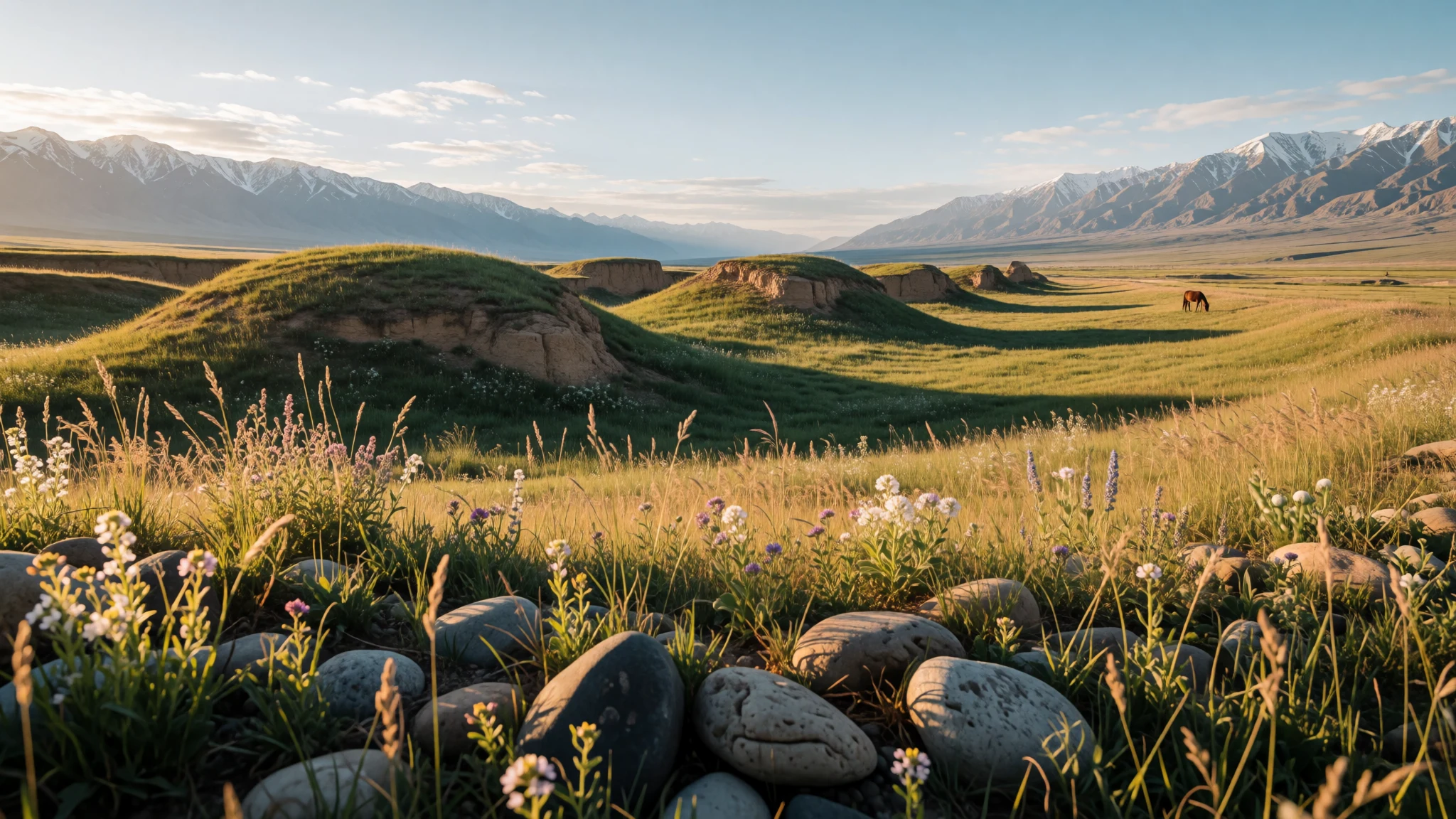
Walk through the weathered ruins of Suyab, an ancient Silk Road trading powerhouse where merchants, monks and nomadic rulers once met.
The place
Suyab stands as a quiet archaeological treasure tucked within the wide Chu river valley of present-day Kyrgyzstan. Located about 50 km east of Bishkek and just west of Tokmok, this ancient settlement preserves the physical footprint of a critical Silk Road crossroads. Modern travellers walking the grassy mounds of the site tread over centuries of compacted history where Persian traders, Chinese pilgrims and Turkic rulers once converged. The landscape around Suyab is defined by vast mountain vistas, sweeping river valleys and the changing light of the Central Asian sky. While little remains standing above ground except weathered earthworks and stone foundations, the air carries a deep sense of antiquity. The wider region balances modern post-Soviet development with ancient nomadic traditions that have shaped local life for generations. Visitors coming to Suyab find themselves surrounded by high peaks and open pasture lands that feel remarkably untouched by mass tourism. The nearby towns offer a gritty, authentic window into contemporary Kyrgyz daily life, far removed from the polished sheen of Western capitals. Exploring the ruins requires imagination, patience and an appreciation for desolate landscapes where history is written in soil and stone rather than grand marble monuments. It is a destination that rewards curious travellers willing to look past the absence of tourist infrastructure to connect with the deep currents of Eurasian history.
Its story
Suyab rose to prominence along the great overland trade routes during the 5th and 6th centuries, initially established by industrious Sogdian merchants. The name of Suyab itself traces back through Iranian roots, linking water and movement across dry expanses. In the year 629, the famous Chinese pilgrim Xuanzang journeyed through the area and recorded detailed observations of a vibrant, multi-ethnic city where foreign traders congregated among fields of red millet and grapes. During the height of the Western Turkic Khaganate, Suyab served as a principal royal capital, playing a pivotal role in regional geopolitics and diplomacy. The local rulers governed a patchwork of fortified towns across the valley, maintaining uneasy alliances and managing diverse populations that included relocated communities preserving their native customs far from home. Centuries later, the dynamics of the region shifted dramatically as imperial powers vied for control over Central Asian trade routes and pasture lands. The late 19th century brought annexation by the Russian Empire, leading to the arrival of Slavic settlers and significant demographic changes that displaced traditional pastoral communities. Through all these waves of migration, conquest and political upheaval, the foundational nomadic spirit of the Kyrgyz people endured. Today, the archaeological remains of Suyab and its sister sites along the Chang'an-Tianshan corridor are recognised internationally, preserving the memory of an era when this remote river valley connected empires from China to the Mediterranean.
What to see
- Ak-Beshim Archaeological Site — Chu river valley, near Tokmok
Wander the excavated earthen mounds and ancient foundations of Suyab at Ak-Beshim, located near Tokmok. Walking across these silent ruins offers a profound sense of connection to the merchants and soldiers who walked these very paths during the height of the Silk Road trade. - Osh Bazaar — Bishkek
Immerse yourself in the frantic energy of Osh Bazaar in Bishkek, a sprawling traditional market filled with colourful spices, fresh bread, dried fruits and everyday household goods. It serves as an essential sensory introduction to urban life in the country. - Issyk Kul — Eastern Kyrgyzstan
Discover the vast shores of Issyk Kul, the world's second largest alpine lake, surrounded by towering mountain peaks. This high-altitude inland sea offers crystal-clear waters, sandy beaches and peaceful lakeside villages that attract travellers seeking natural beauty. - Tash Rabat — Naryn Region
Journey deep into the southern mountains to explore Tash Rabat, a remarkably well-preserved stone caravanserai hidden in a remote valley. This ancient waystation provided shelter for weary merchants crossing the harsh mountain passes centuries ago. - Ala-Archa National Park — Near Bishkek
Escape the capital for a day of alpine hiking in Ala-Archa National Park, where dramatic mountain peaks rise sharply above rushing glacier rivers. Well-marked trails cater to casual walkers and serious mountaineers alike within a short drive from the city.
Culture
The people of Kyrgyzstan carry a proud heritage rooted in centuries of pastoral nomadism, combined with a modern secular outlook influenced by Soviet history. While the nation is nominally Muslim, daily life in the capital is largely westernised, and people are generally relaxed and welcoming towards foreign visitors. Hospitality is treated as a sacred duty, and guests are frequently invited to share tea, food and conversation. However, social dynamics vary significantly between urban centres and conservative rural districts, particularly in the south where traditional modesty expectations remain strong. Evening hours in larger towns can occasionally become boisterous as alcohol consumption increases around entertainment venues, so travellers should remain mindful of their surroundings after dark. When visiting Suyab and other regional sites, dress modestly and respect local customs by asking permission before photographing residents.
What to wear
Traditional Kyrgyz fashion reflects a practical response to harsh continental winters and a nomadic lifestyle on horseback. Historical garments made heavy use of felt, wool, leather and embroidered textiles, designed to provide warmth and durability against mountain winds. The iconic white felt hat, known as the ak-kalpak, remains a potent national symbol worn widely by men, featuring black felt embroidery that mirrors mountain ridges. Today, residents in Bishkek and other urban areas dress in standard contemporary Western styles, ranging from casual denim to modern office attire. Visitors exploring Suyab and travelling around Kyrgyzstan should pack versatile layers suitable for shifting weather, sturdy walking shoes for uneven archaeological terrain, and modest clothing that covers shoulders and knees when visiting rural villages or traditional family homes.
What to eat
- Besh Barmak — Traditional eateries across the country
Taste the national dish of boiled sheep or horse meat served over wide handmade noodles with a rich onion broth, traditionally eaten by hand from a shared communal platter in local family homes and traditional roadside eating houses. - Kymys — Roadside stands and yurt camps
Sample traditional fermented mare's milk, a slightly tart and effervescent drink that has sustained nomadic pastoralists for generations, found readily at roadside stands and mountain pasture yurt camps during the warm summer months. - Strong Kyrgyz Tea — Tea houses and local homes
Experience local hospitality by drinking strong brewed tea served in small ceramic bowls, mixed with hot water to your preferred strength and poured in small amounts to honour guests in homes and teahouses everywhere. - Fresh Market Bread and Fruit — City bazaars and local food stands
Purchase crisp flatbreads, sweet small melons, and flavourful mountain-grown fruits from bustling local markets and small street stalls found in every neighbourhood and town across the region.
Plan it
Best time. May to September offers the most pleasant weather for exploring archaeological sites and mountain valleys, while July and August bring warm sunshine ideal for visiting alpine lakes.
How long. 3–4
Getting there. Fly into Manas International Airport near Bishkek, then hire a private taxi or take local transport east toward Tokmok and the Chu river valley.
Budget. mid
Tips
- Carry sufficient cash, as credit cards are rarely accepted outside major hotels and supermarkets in Bishkek.
- Drink bottled or treated water rather than tap water throughout your journey.
- Start excursions to outdoor archaeological sites early in the morning to beat the afternoon heat.
- Secure any required visas online through the official eVisa system before departure.
Etiquette
- Remove your shoes whenever you step inside a traditional yurt, mosque or local home.
- Always ask permission before taking photographs of local residents, especially in rural areas.
Nearby
Sources
- Wikidata Q413452 (CC0)
- Wikipedia (Suyab) (CC BY-SA 4.0)
- Wikivoyage (Kyrgyzstan) (CC BY-SA 4.0)