Surat
Surat, India
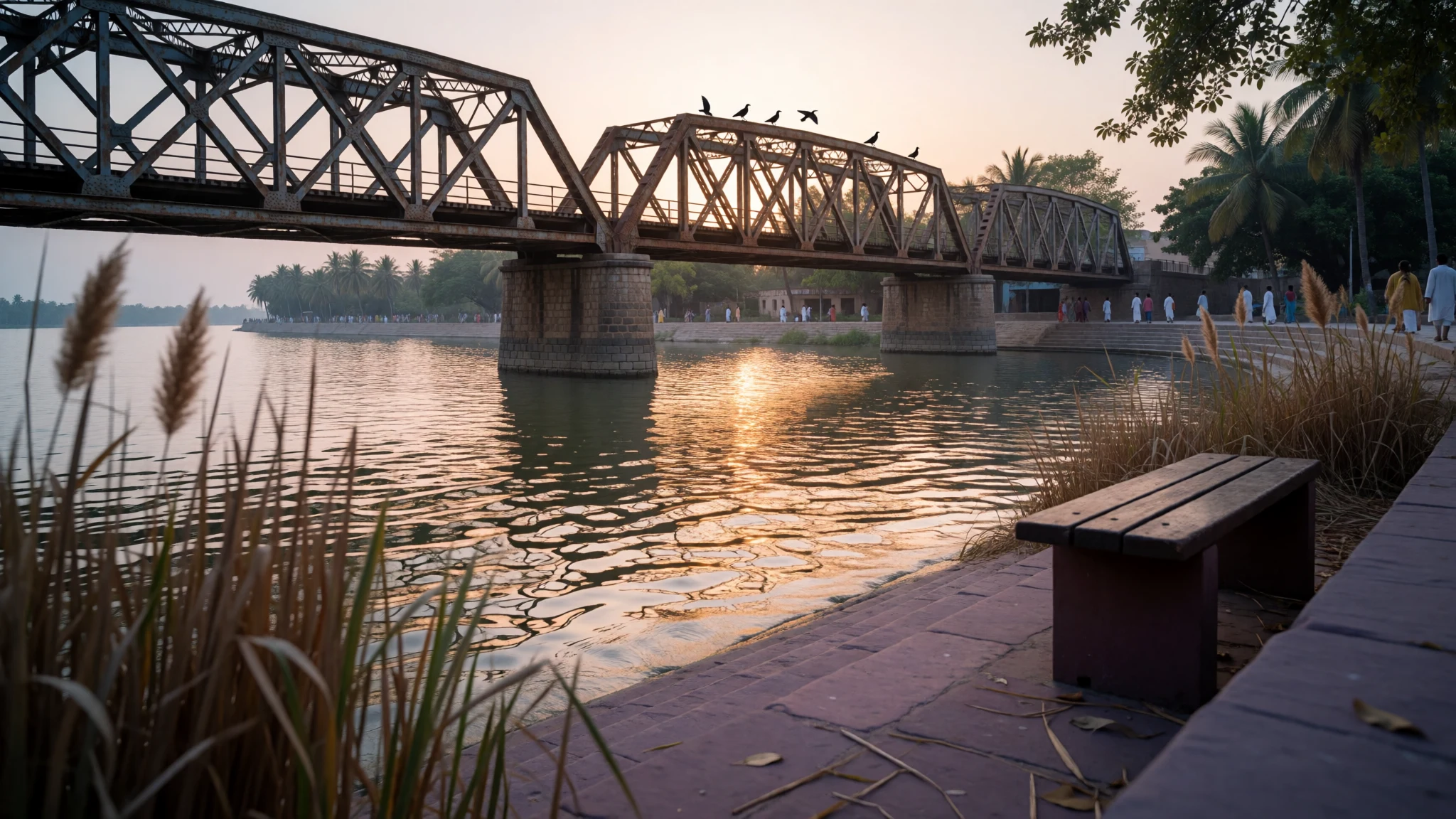
Surat is where India's diamonds are cut and its saris are traded, and where the street food is taken more seriously than the sights.
The place
Surat sits in southern Gujarat on the Tapi river (also written Tapti), a short way upstream from where it meets the Arabian Sea. It was once a major seaport, and the water still shapes daily life: the riverbank is where families stroll, snack and gather once the weather cools. Today it is a working city of about 5.9 million people, lying only 13 metres above sea level, flat, humid and built for trade rather than for postcards.
Two industries define it. Diamonds are the famous one. A very large share of the world's stones passes through the cutting and polishing workshops of the Varachha area, and a big modern bourse has been built to house the trade. Textiles are the other. Surat's markets supply saris, dress fabric and accessories to shops across India, and the city's wealth shows in new towers and wide roads in districts such as Vesu, set beside older, tighter lanes closer to the river.
Surat is not a conventional sightseeing stop. It has no single headline monument, and its interest comes in layers: merchant-era cemeteries, a Mughal travellers' inn, Jain temples, a riverside garden and, above all, the eating. The city is easy to move around by auto-rickshaw and app cab, and it makes a natural pause on the western railway line between Mumbai to the south and Ahmedabad to the north. Heat is the main challenge for much of the year, and the monsoon brings heavy rain and the occasional flooded street. Those who come for a couple of days, with an appetite and some curiosity about how Indian trade actually works, tend to leave surprised by how much there is to see.
Its story
Surat's name has a tidy origin story, though the records do not quite support it. The traditional account says a wealthy Hindu merchant called Gopi founded the town around 1500. Astrologers suggested a sun-themed name, Suryapur, and he petitioned the king of Gujarat to approve it. The Muslim ruler is said to have changed it to Surat, echoing surah, the word for a chapter of the Qur'an. The snag is that both Suryapur and Surat appear in documents earlier than Gopi's time, so the settlement and its name are older than the legend. Surat also means 'countenance' in Gujarati, Hindi and Urdu.
Before Surat rose, the nearby town of Rander was the main trading centre on this stretch of coast. Its Arab merchants sent ships to Burma, China, Malaya and Sumatra. Portuguese raids in the sixteenth century weakened Rander, and traders likely drifted to Surat, which grew into a leading port at about the same moment. References to a place called Surat go back as far as the tenth century, though they say little about what kind of settlement it was.
The centuries that followed made Surat a meeting point of empires. Mughal rule, Portuguese pressure, then Dutch and English trading interests and eventually Company rule and the British Raj all left their mark. European traders spelled the name in many ways, from Suratt to Sourratte, and their tombs still stand in the city's old cemeteries, a quiet reminder of how international this river port once was.
What to see
- Dutch, English and Armenian cemeteries — Karatgam Road
These burial grounds on Karatgam Road hold the domed and obelisk-topped tombs of European and Armenian traders who lived and died in Surat's port-city days. They are weathered, sometimes overgrown, and easy to visit in half an hour. Go in the morning, when the light is soft and the heat has not built up.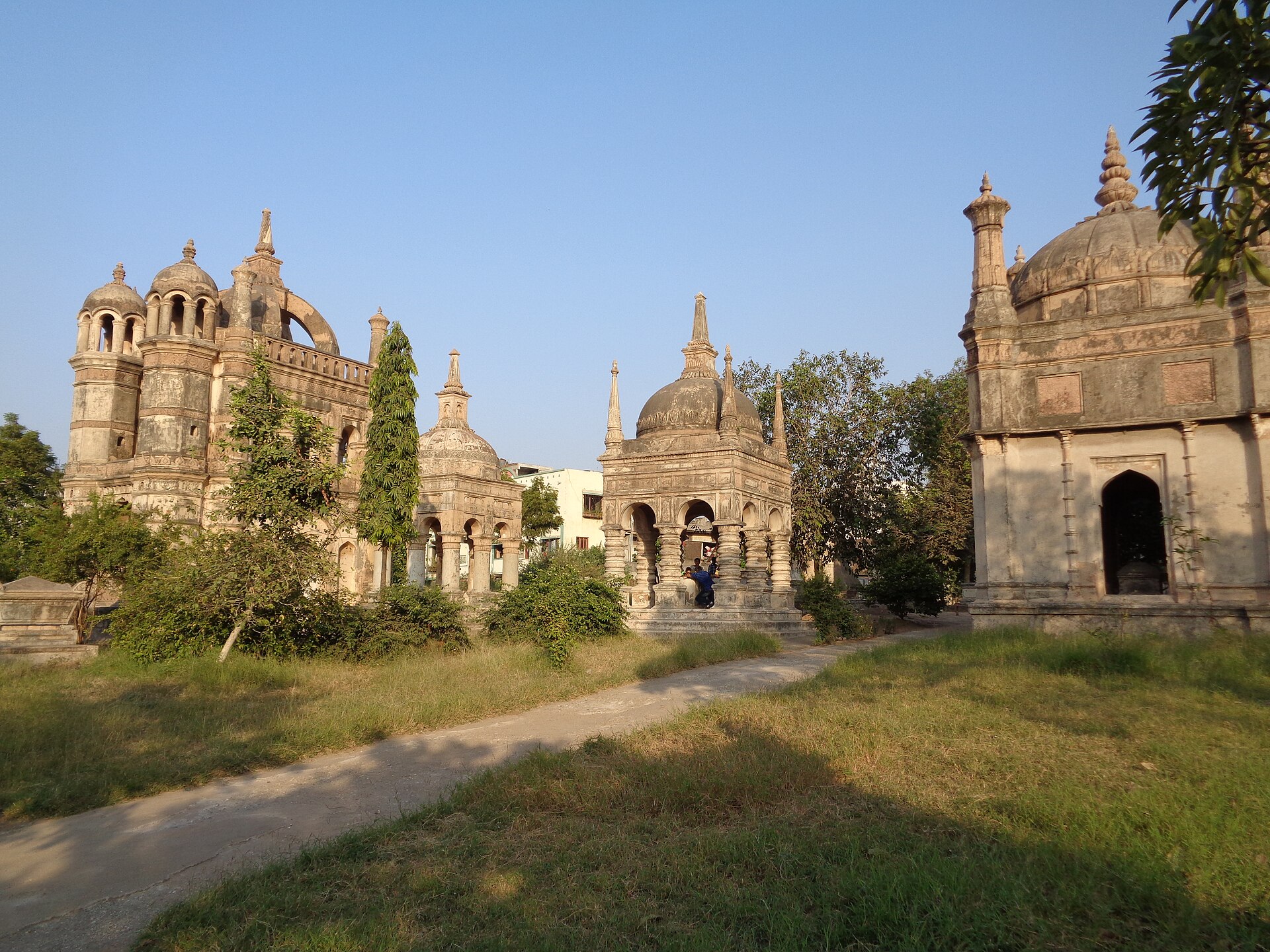
- The diamond quarter and Diamond Bourse — Varachha Road and the bourse district
Factories along Varachha Road cut and polish stones by the thousand, and the large bourse is the trade's new headquarters. Workshops are working businesses, not attractions, so tours depend on introductions. Even without one, the streets show how a global luxury product depends on local skill and long hours.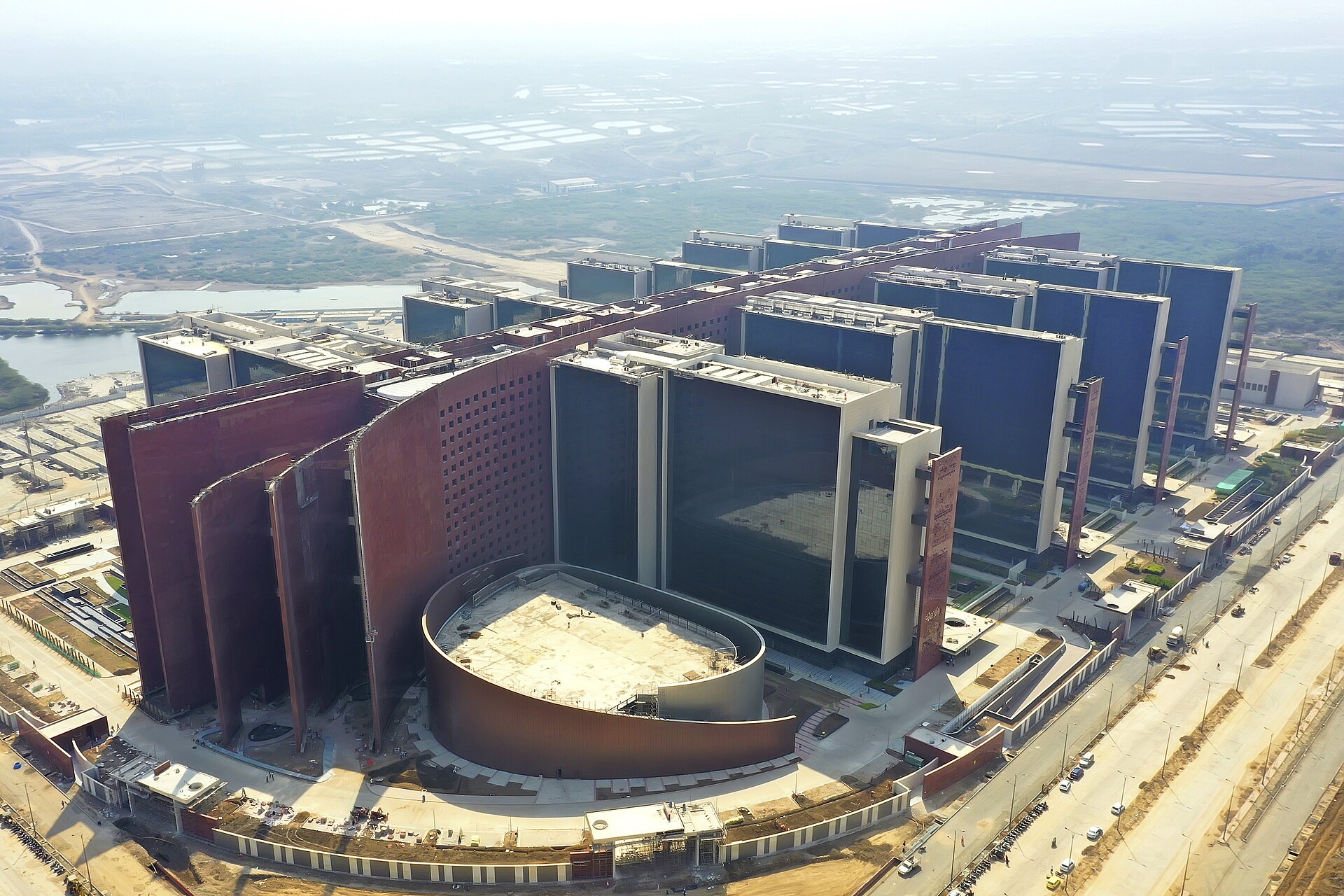
- Mughal Sarai — Old city
Built as a sarai, a travellers' inn, this old Mughal building now houses offices of the Surat Municipal Corporation. It is one of the city's surviving historic monuments and gives a sense of how pilgrims and merchants were once lodged. Look at the architecture from the outside, and ask politely before entering. - Chintanamani Jain Temple — Muglisara, near the mausoleum of Mirjan Sami
This Jain temple dates from the reign of Aurangzeb and sits in the old Muglisara quarter. It reflects the long presence of Jain merchants in Surat's trade. Visitors can see carved stonework and quiet worship. Remove shoes at the entrance, and check with the temple about photography before taking out a camera. - Dutch Garden and Makaipul — Old riverside Surat
The old Dutch gardens and Makaipul, the original port from which ships once sailed, belong to the same trading story as the cemeteries. The area is modest, but it is a pleasant place to understand why the city grew where it did. Combine it with a short walk beside the river. - City Science Centre — City Light Road, near Parle Point
A reasonable stop for families, with a planetarium, science models, an art gallery and a museum. It is air-conditioned, which counts for a lot in the hot months. Opening days and show times change, so check with the Surat Municipal Corporation before travelling across town.
Culture
Surat's culture is the culture of a merchant city. Gujarati is the main language, Hindi is widely understood, and business is conducted with a mix of sharp bargaining and generous hospitality. Jain, Hindu and Muslim communities have shared the same markets for centuries, and the city's trading families, many of them in diamonds and cloth, give it a practical, money-minded character that locals tend to joke about themselves.
Food is the clearest expression of local identity. People in Surat treat eating as a social event, and a well-known Gujarati saying sets Surat's dining against Kashi's spiritual rewards. Festivals revolve around meals: families gather at the river in winter, and on the full-moon night of Chandi Padvo they head to the coast at Dumas to eat together under the moon. Navratri, with its night-long garba dancing, is another time when the city is at its most colourful.
Surat is not a performance city. Culture happens in lanes, shops, temple courtyards and kitchens rather than in theatres, so the best way to take it in is to walk slowly, accept tea when it is offered and ask questions about work and family. Conversations about diamonds and fabric are welcomed.
When visiting a temple, remove your shoes at the door, dress modestly, and ask before photographing worshippers or the inner shrine.
What to wear
In Surat, traditional dress follows Gujarati custom. Women wear saris, often draped with the end pulled forward over the shoulder, or the chaniya choli, a embroidered blouse with a long flared skirt and scarf, which comes out in force at Navratri for garba dancing. Men wear kediyu, a short flared tunic, with dhoti or churidar for festivals and weddings. Bandhani, the tie-dyed cloth of Gujarat, and zari, the metallic thread long associated with Surat's weaving, are the textiles to look for.
The city is also a hub for modern cloth. Its markets supply apparel and accessories to the rest of India, so everyday fashion here is practical and well-informed. On a normal day, many women wear salwar kameez or kurtis in light cotton, while men go for shirts and trousers. Jeans and T-shirts are common among younger people, particularly in the newer districts, and wedding season brings out heavy silks and sequins.
Visitors should dress for heat and humidity: light cotton or linen, breathable fabrics, a hat and sunglasses. Covering shoulders and knees is wise and shows respect in the city's streets as well as at temples. Carry a scarf for religious sites. Comfortable closed shoes or sandals with grip are better than flip-flops for uneven pavements, and shoes that slip off easily will save time at temple doors. In the monsoon, bring a light rain jacket or umbrella and shoes that can get wet.
What to eat
- Locho — Street stalls and snack shops across the old city
A soft, steamed gram-flour savoury served in a soupy, spiced mix topped with onion, sev and chutney. It is a classic Surat breakfast or snack, usually eaten hot and with a spoon from a small stall. - Surti ghari — Sweet shops, especially around Chandi Padvo
A rich, buttery sweet pastry filled with dry fruits and sugar. It is the centrepiece of Chandi Padvo, when residents buy it in large quantities. Buy it fresh from a sweet shop and eat it soon after. - Ponk — Riverside stalls and farms in winter
Young roasted millet, a seasonal winter treat. Families gather on the Tapi banks to eat it with sev, chutney and sweet-sour seasonings. Look for it from late autumn through the cold months. - Surti undhiyu — Home kitchens, caterers and festival-season shops
A slow-cooked winter dish of seasonal vegetables with spices and herbs. Surat's version leans spicier than the sweeter Gujarati stereotype. It is best tasted at a family meal or from a respected local caterer. - Rasawala khaman — Farsan shops and street stalls
Soft, spongy khaman served in a tangy, spiced gravy rather than eaten dry. It is a local variation on a familiar Gujarati snack, and a good introduction to the city's love of savoury, spicy flavours. - Mysore dosa at Khaudra Gali — Khaudra Gali, the foodie lane
Khaudra Gali is a lane lined with stalls serving many styles of snack, and Mysore dosa is a specialty there. Go in the evening, share several plates and expect queues on weekends.
Plan it
Best time. November to February, when days are warm rather than punishing and the evenings are comfortable for riverside eating. April and May are very hot, and the monsoon from June to September brings heavy rain and humidity.
How long. 2
Getting there. Surat has its own airport with domestic connections, and the railway station lies on the main western line between Mumbai and Ahmedabad. By road, NH 48 passes the city, and the Central Bus Station stands opposite the railway station with regular state buses and private operators nearby. For the last leg, use auto-rickshaws or app cabs.
Budget. mid
Tips
- Eat early and often, because most of Surat's best food is cheap and quick.
- Visit the cemeteries and open-air sights in the morning to avoid the heat.
- Carry cash for small stalls and markets, and cards for larger shops.
- Drink bottled or filtered water, and avoid ice from unknown sources.
- Check with the Surat Municipal Corporation (suratmunicipal.org) before visiting official sites.
Etiquette
- Remove shoes before entering temples and ask before photographing worshippers.
- Ask permission before photographing people at work in the diamond and textile quarters.
- Dress modestly when visiting religious sites.
Nearby
Sources
- Wikidata Q4629 (CC0)
- Wikipedia: Surat (rev 1380581920) (CC BY-SA 4.0)
- Wikivoyage: Surat (rev 5419171) (CC BY-SA 4.0)
- Surat at night — Hemant meena (CC BY 3.0)
- Bharthana Althan area — Rahul Bhadane (CC BY-SA 4.0)
- Surat Diamond Bourse Image — VaishP (CC BY-SA 4.0)
- GauravPath1 — Rahulogy at en.wikipedia (CC BY 3.0)
- Old English Tombs — YashIsIn (CC BY-SA 4.0)
- BAPS Temple Surat — Rahul R Bhadane (CC BY-SA 4.0)
- Pandit DinDayal Upadhyay Indoor Stadium, Surat — Rahul Bhadane (CC BY-SA 4.0)
- Vesu, Surat — Rahul Bhadane (CC BY-SA 4.0)


