Sümela Monastery
Sümela Monastery, Turkey
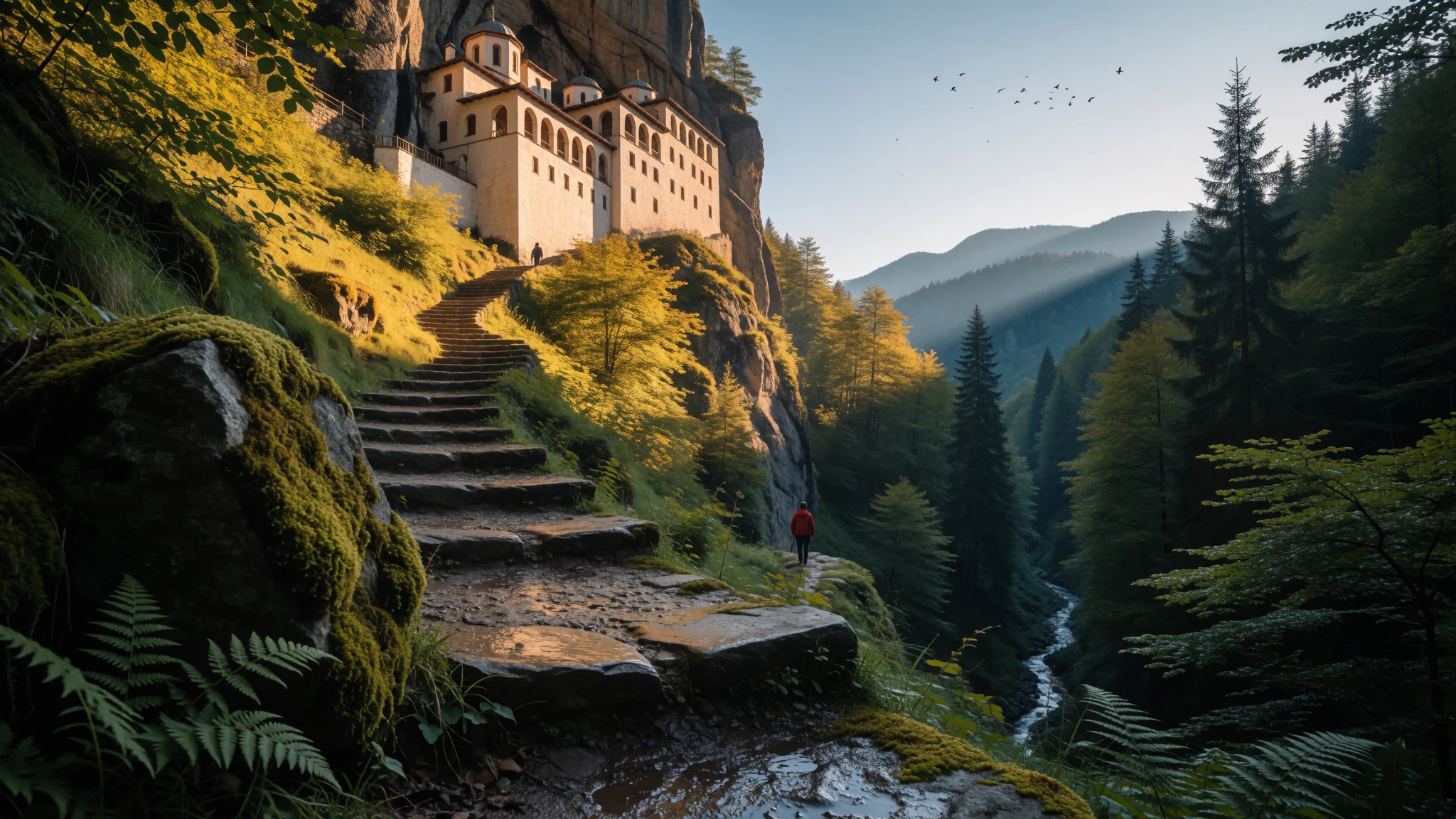
Sümela Monastery is a Greek Orthodox monastery wedged into a forested Pontic cliff above a mist-prone valley, worth the climb on a clear morning.
The place
Sümela Monastery (Turkish: Sümela Manastırı; Greek: Μονή Παναγίας Σουμελά) clings to a rock face in the Pontic Mountains, in the Maçka district of Trabzon province, on Turkey's Black Sea side. It sits about 1,200 metres above sea level, facing the narrow Altındere valley, and the whole complex is built into and against the cliff. From the road below it reads as a pale wall stuck onto grey rock. It is a museum now, no longer a working monastery: Greek Orthodox monks lived here until the population exchange of 1923. The site lies inside Altındere National Park, and the forest around it is dense, damp and green for much of the year. Cloud often settles in the valley and can hide the buildings entirely, then lift within minutes. The approach involves a climb, first by road and then on foot up a stepped path. Rockfalls forced a closure in 2015 and the site reopened in 2019, so access has been shaped by safety work, and parts of the complex may be fenced off or under restoration on any given day. Sümela is also listed as a Tentative UNESCO World Heritage Site, meaning it has been proposed rather than inscribed. The Turkish culture ministry dates its founding to around 386, though nobody can say exactly when the first monks arrived.
Its story
The founding of Sümela Monastery is uncertain. The Turkish Ministry of Culture and Tourism points to about 386, in the reign of the emperor Theodosius I, while a tradition recorded by the historian William Miller credits two Athenian monks, Barnabas and Sophronios. The monastery became known for an icon of the Virgin, the Panagia Gorgoepekoos, which tradition says was painted by the Apostle Luke. The buildings fell into ruin more than once and were rebuilt by successive rulers. In the sixth century the general Belisarius is said to have repaired and extended them on the orders of Justinian. Sümela took roughly its present form in the thirteenth century, when the Empire of Trebizond, ruling from the coast down the valley, made it a favoured foundation. Its most generous patron was Alexios III, who reigned from 1349 to 1390. Legend says that after a vision of the Virgin during a storm, he vowed to rebuild the place. A charter of 1365 secured the monastery's independence, its lands and near-total freedom from tax, and it names forty serfs working those estates. Monastic life carried on through the Ottoman centuries until 1923, when the exchange of populations between Greece and Turkey ended the Greek Orthodox community here. The complex passed into Turkish state hands and is now run as a museum.
What to see
- The view from across the valley — Altındere valley, Maçka
From the viewpoints on the opposite slope of the Altındere valley, Sümela Monastery shows its true setting: a long pale building held against a vertical rock face, with forest dropping away beneath it. It is a good place for photographs, and the angle makes the scale of the site clear.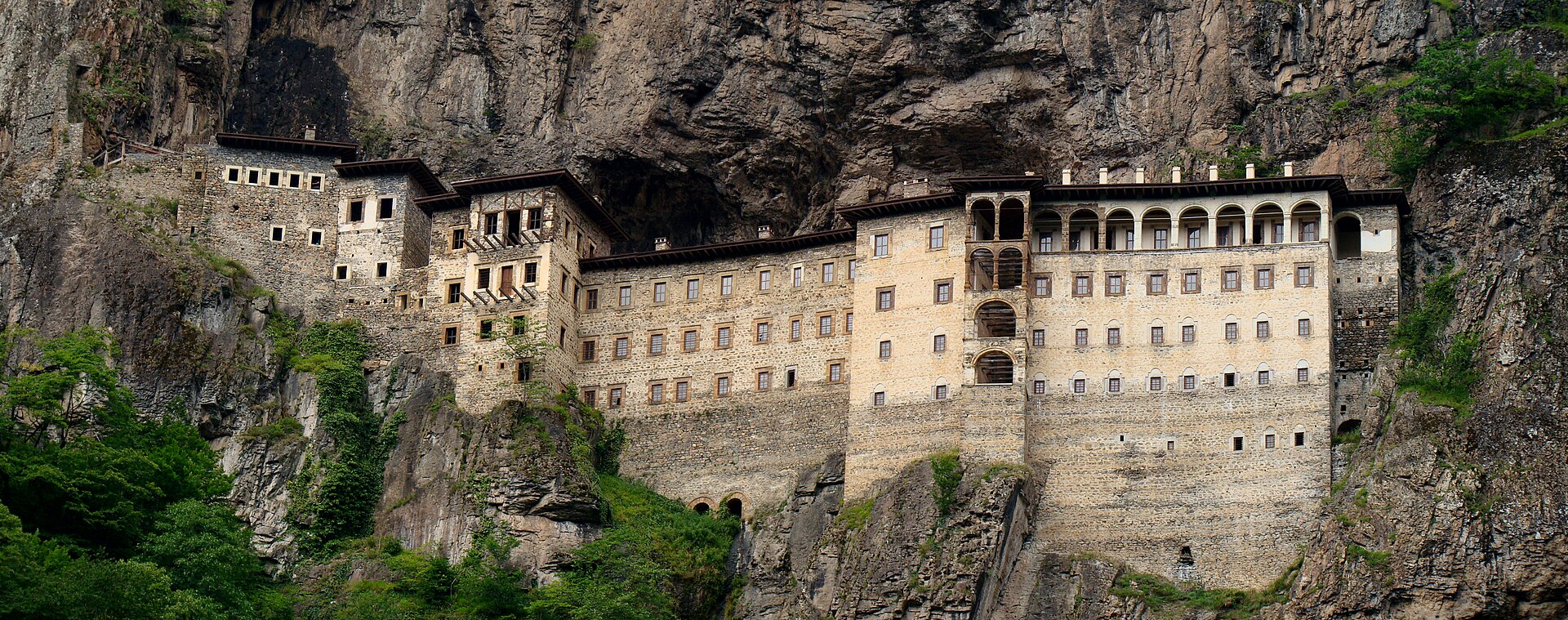
- The path and stairway — Approach path, Altındere National Park
The climb to Sümela Monastery starts near the valley floor and rises through damp forest on a stepped footpath before reaching the entrance. It is steady rather than technical, but the steps are uneven and slick after rain, and the effort is part of what makes the arrival feel earned.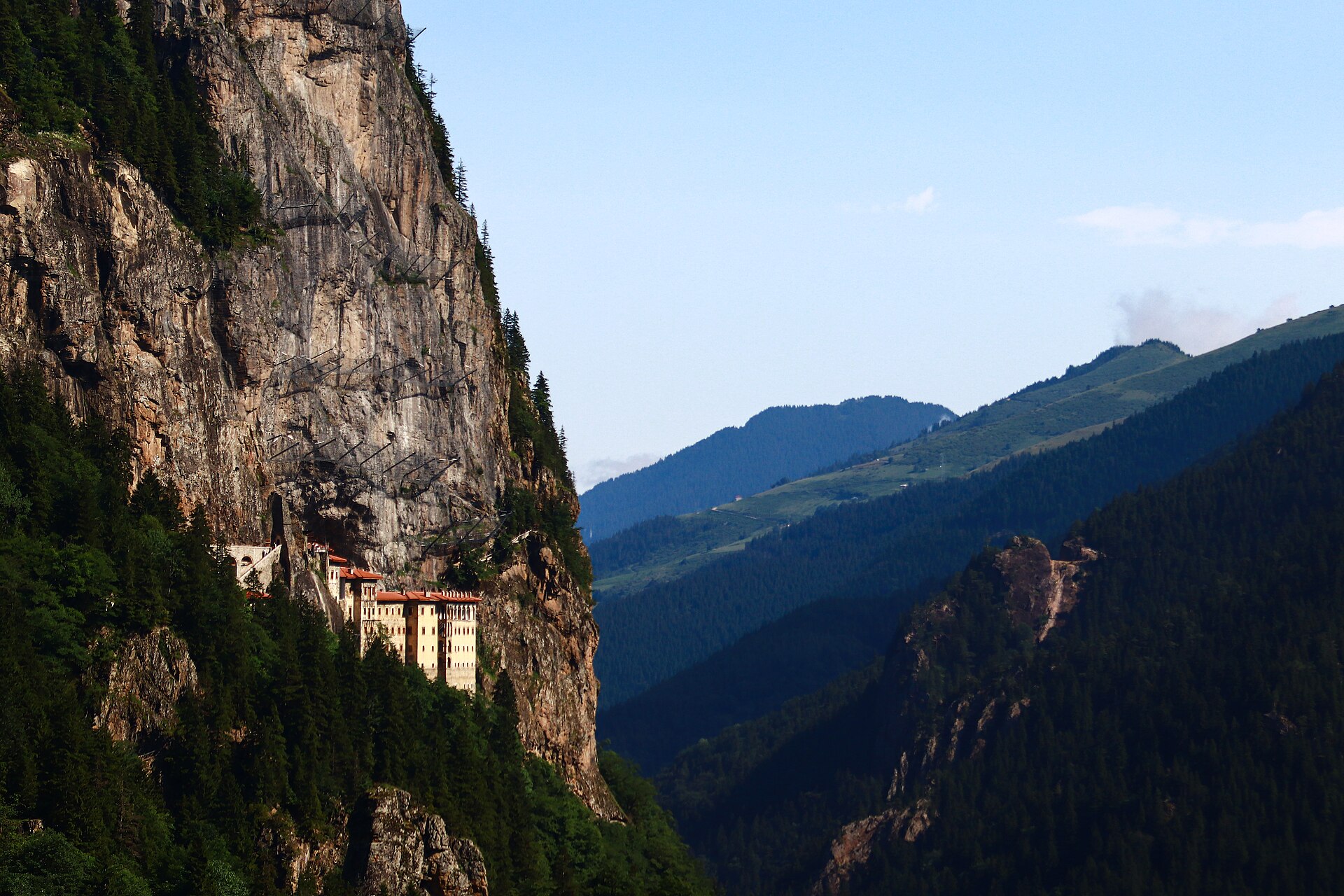
- The rock church and frescoes — Sümela Monastery, Maçka
At the heart of Sümela Monastery is a church built into a natural hollow in the cliff. Its inner walls and outer façade carry painted scenes from Orthodox tradition. Weather, age and past damage have taken a toll, and restoration has been under way in places, so check what is open before expecting access to every area.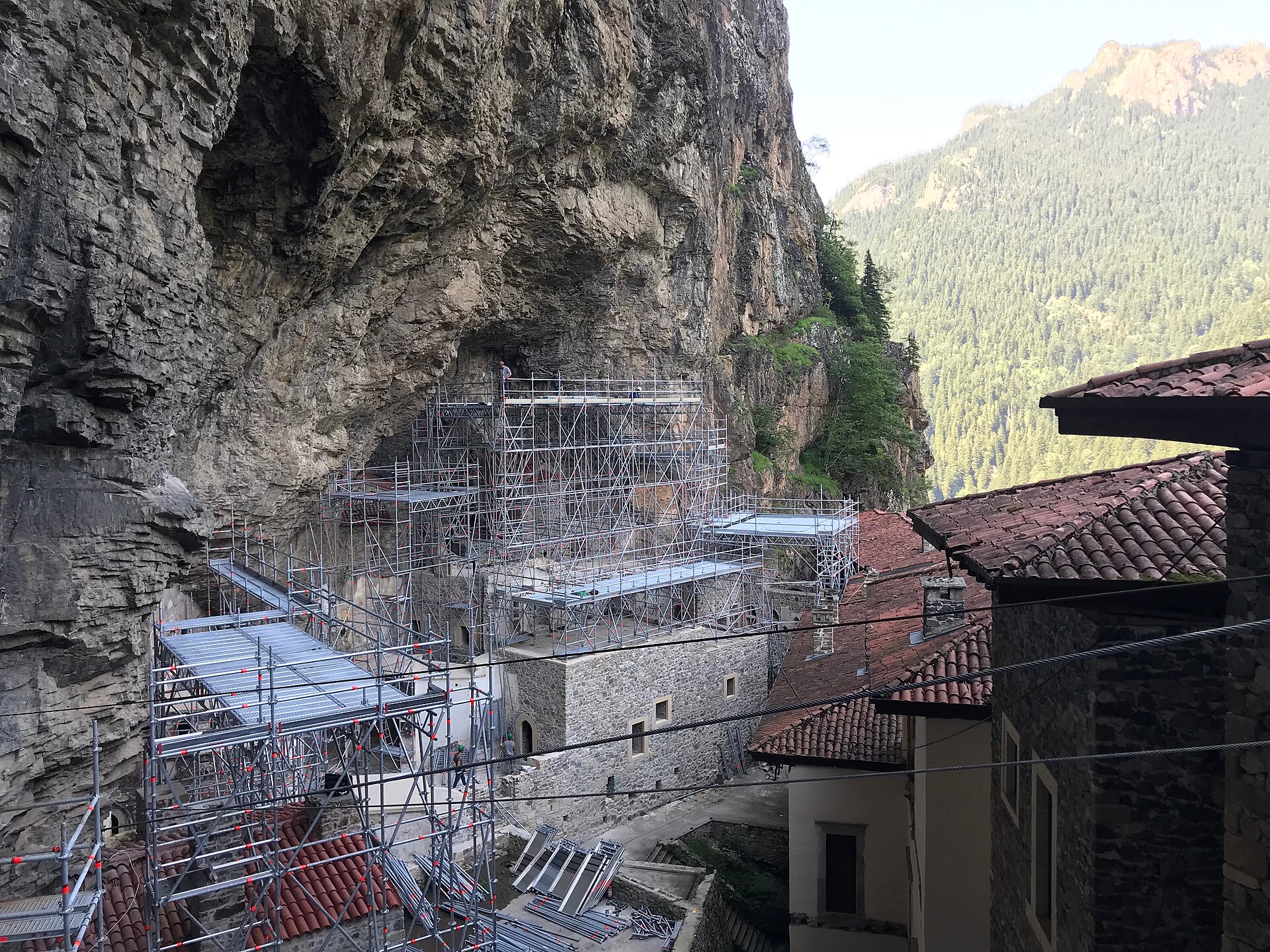
- Courtyard and monastic buildings — Sümela Monastery, Maçka
Beside the church, the monastery stretches along its ledge as a run of rooms, chapels and terraces that once housed the monks and received pilgrims. Walking the length of the complex shows how every building had to fit a narrow shelf, and the drop from the outer edge to the valley is dizzying.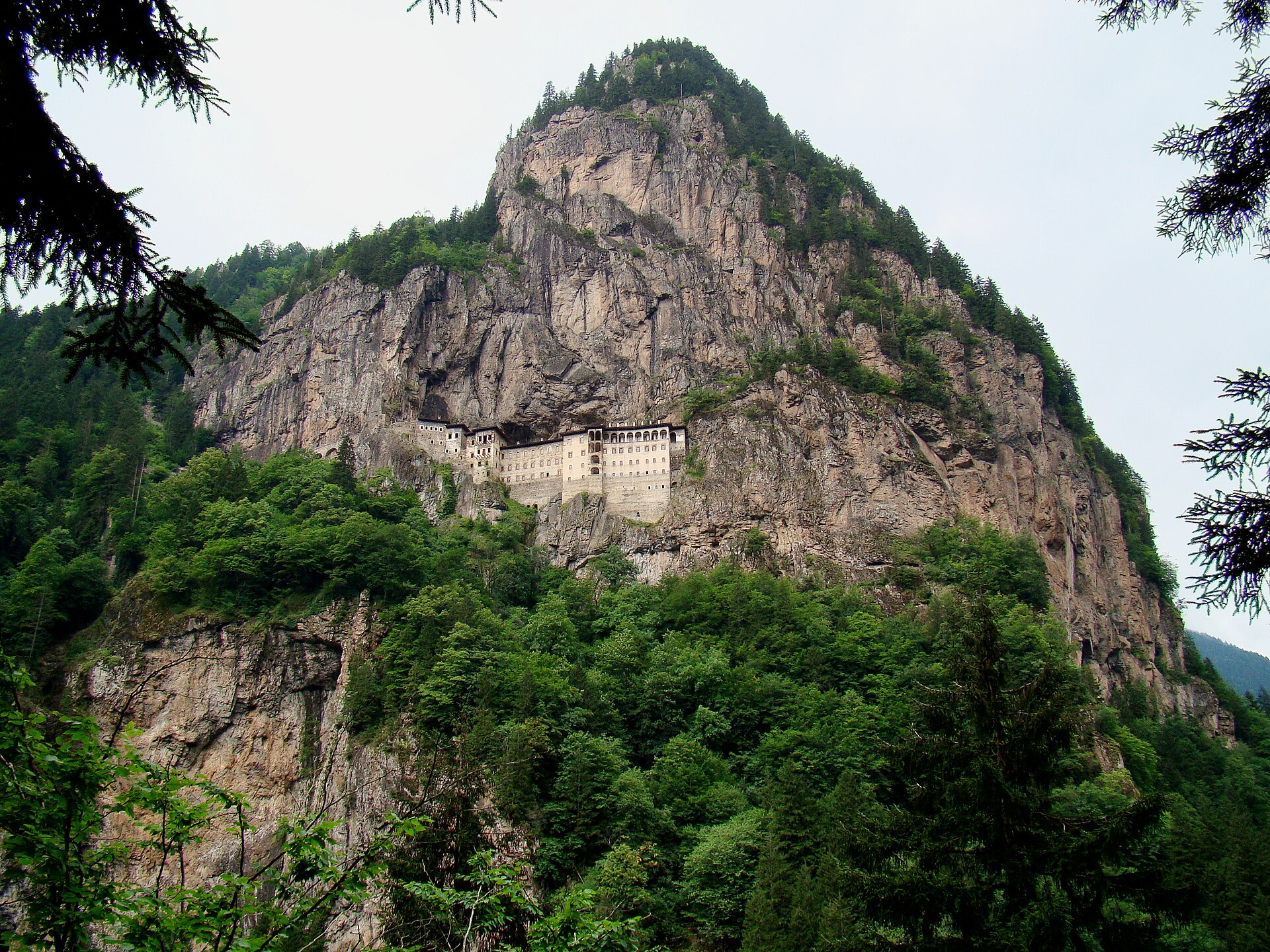
- Altındere National Park — Altındere valley, Maçka
Sümela Monastery lies inside Altındere National Park, and the forested valley rewards extra time. Short walks beside the stream and under tall trees give a calmer side to the visit, away from the crowd at the monastery itself. Mist and rain are common, so the park looks different from hour to hour.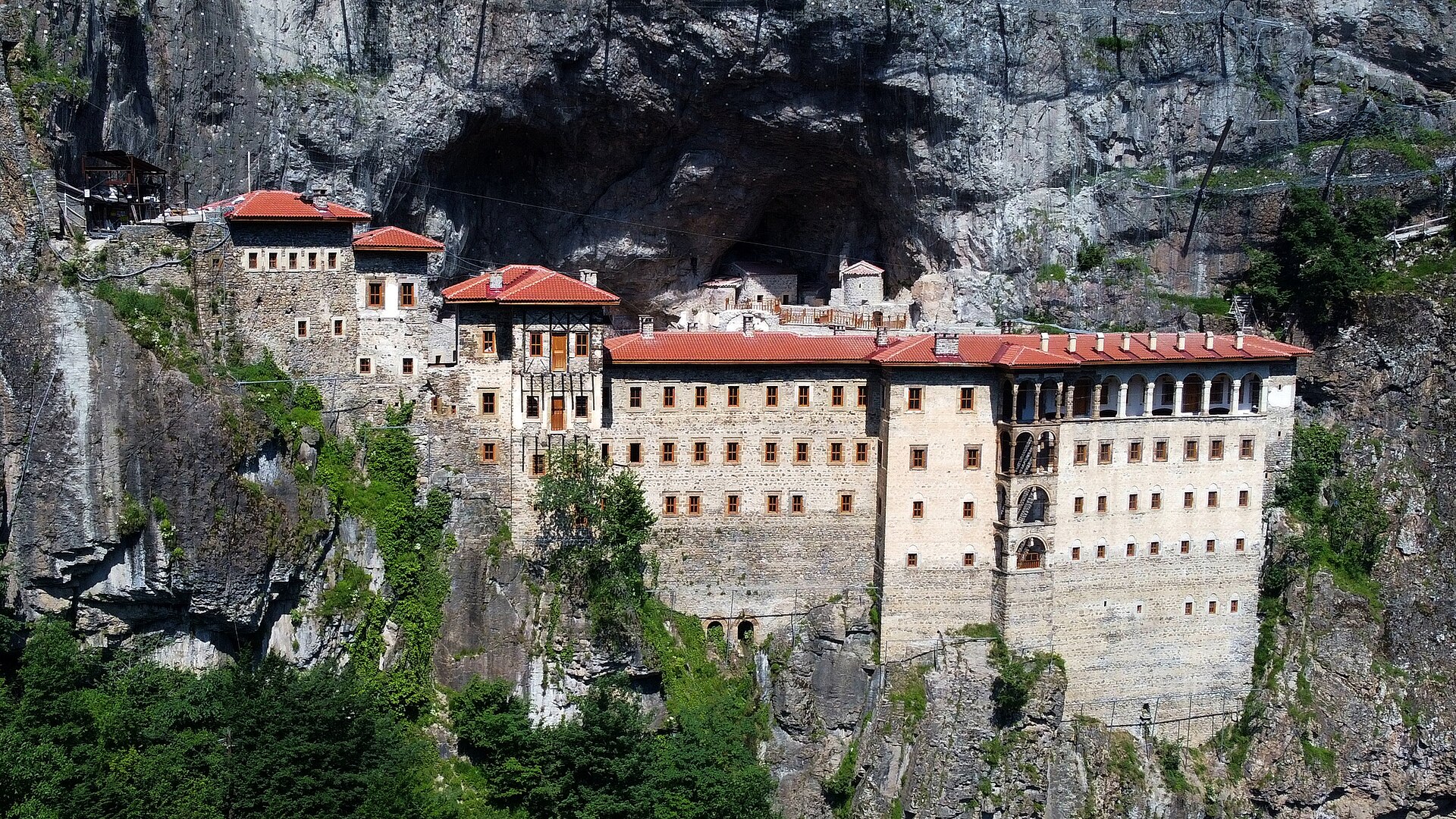
- Hagia Sophia of Trabzon — Trabzon city
Back in Trabzon city, the Byzantine church of Hagia Sophia (Ayasofya) dates from the Empire of Trebizond, the same state that enriched Sümela, and stands close to the sea. It gives the political background to the monastery, and its painted interior is worth a visit if time allows.
Culture
Sümela Monastery sits where Greek Orthodox and Turkish histories overlap. For centuries the Pontic Greeks of the Trabzon hills worshipped, farmed and traded here, and the monks left only when the 1923 population exchange ended their community. Today the site is run as a museum, yet it still carries religious weight: Orthodox pilgrims come for the August feast of the Virgin's Dormition, and a liturgy has been held there in recent years. Visitors tend to arrive for the scenery and stay for the stories.
The surrounding Black Sea region has its own strong character. Tea is drunk from small tulip-shaped glasses and refilled without asking, the kemençe, a small bowed fiddle, drives the music, and the horon, a fast line dance with shaking shoulders, is performed at weddings and festivals. People from this coast are known across Turkey for quick humour. Hospitality is generous: a guest invited home brings a small gift such as flowers or sweets, but not alcohol unless the hosts are close friends, and takes off shoes at the door. Praise for the food is always welcome.
Keep your voice low inside the rock church, cover your shoulders and knees, and never touch the painted walls or photograph praying pilgrims without asking.
What to wear
Around Sümela Monastery, what counts as traditional dress belongs to the wider Black Sea region of Turkey, and it is mostly seen at weddings, festivals and horon dance performances. Men's outfits are typically dark: a fitted waistcoat or short jacket, baggy trousers and a sash. Women's costume usually means layered skirts or a long dress, an apron and a patterned headscarf. Cotton cloth from the Rize area, called Rize bezi, is the best-known regional weave, and Trabzon is known for silver filigree jewellery.
Day to day, people in Trabzon and Maçka dress much as in the rest of Turkey: jeans, jackets, sweaters and practical shoes, with many women wearing headscarves, especially in villages and on religious occasions. Rain is frequent, so lightweight raincoats and umbrellas are a common sight on the coast.
A visitor to the monastery should dress in layers, with a waterproof jacket in every season, because the valley is cooler and wetter than the city. Shoes need real grip: the path and steps are steep and slippery in the damp. Shoulders and knees should be covered out of respect for a religious site, and a hat and sun protection help on clear days, when the climb is exposed in places.
What to eat
- Hamsi tava — Fish eateries around Trabzon harbour
Hamsi tava is fresh Black Sea anchovy, dusted in cornmeal and fried crisp in a pan, eaten whole with lemon and bread. It is a seasonal dish, best in the cooler months, and turns up in fish eateries around Trabzon harbour and on the quayside. - Kuymak (mıhlama) — Highland-style eateries around Maçka
Kuymak, also called mıhlama, is a pan of melted cheese, butter and cornmeal that stretches in long strands when lifted with bread. It is rich, hearty mountain food that suits a damp day, and is served in highland-style eateries along the Maçka and Altındere road. - Akçaabat köfte — Grill shops in Akçaabat, west of Trabzon
Akçaabat köfte are grilled meatballs from the Akçaabat district just west of Trabzon, made from minced meat, pressed flat and served in bread or on a plate with grilled peppers. Look for the grill shops along the coast road in Akçaabat itself. - Vakfıkebir ekmeği — Bakeries across Trabzon
Vakfıkebir ekmeği is a large round sourdough loaf from the town of Vakfıkebir, east of Trabzon, with a dark chewy crust and a long shelf life. Bakeries across Trabzon sell it, and it goes well with local cheese and honey. - Laz böreği — Pastry shops in central Trabzon
Laz böreği is a sweet pastry of thin buttery sheets layered with milk custard and finished with syrup or powdered sugar. Pastry shops and tea-house counters around Trabzon's city centre keep it, and it is usually eaten with a glass of tea.
Plan it
Best time. May–June and September–October, when the paths are mostly passable and the valley is green. The Black Sea side is wet for much of the year, so cloud and rain are likely in any month; midsummer is busiest, and winter brings cold, slippery steps and a higher chance of closures.
How long. 2–3
Getting there. Fly to Trabzon Airport, then go by road south through Maçka into the Altındere valley by taxi, organised tour or shared minibus to the car park below the monastery. The last leg is a climb on foot up a stepped path; check current arrangements locally.
Budget. mid
Tips
- Check the current opening and access status with the Turkish Ministry of Culture and Tourism before travelling, since the site has closed before for rockfall safety
- Start early: mornings are usually quieter and clearer before cloud and tour groups build up
- Carry a waterproof, grippy shoes and drinking water for the climb, and expect uneven wet steps
- Carry some cash as well as a card for small cafés and stalls near the car park
- Allow time in Trabzon city for Byzantine sights and the local food
Etiquette
- Dress modestly and keep your voice low inside the church
- Do not touch the painted walls or lean on old masonry
- Ask before photographing worshippers or local people
Nearby
Sources
- Wikidata Q1419157 (CC0)
- Wikipedia: Sumela Monastery (rev 1374848107) (CC BY-SA 4.0)
- Wikivoyage: Turkey (rev 5393139) (CC BY-SA 4.0)
- Photo: Sümela Manastırı (Rotadefterim) (CC BY-SA 4.0)
- Photo: Sumela From Across Valley (Bjørn Christian Tørrissen) (CC BY 3.0)
- Photo: Sumela Showing Location (Bjørn Christian Tørrissen) (CC BY 3.0)
- Photo: Soumela (Public domain)
- Photo: Sümela kanyon (Rotadefterim) (CC BY-SA 4.0)
- Photo: Sumela Monastery 04 (BSRF) (CC BY-SA 4.0)
- Photo: Sümela manastır (Rotadefterim) (CC BY-SA 4.0)
- Photo: Sümela manastır 02 (umit sahin) (CC BY-SA 4.0)


