Sumatra
Sumatra, Indonesia
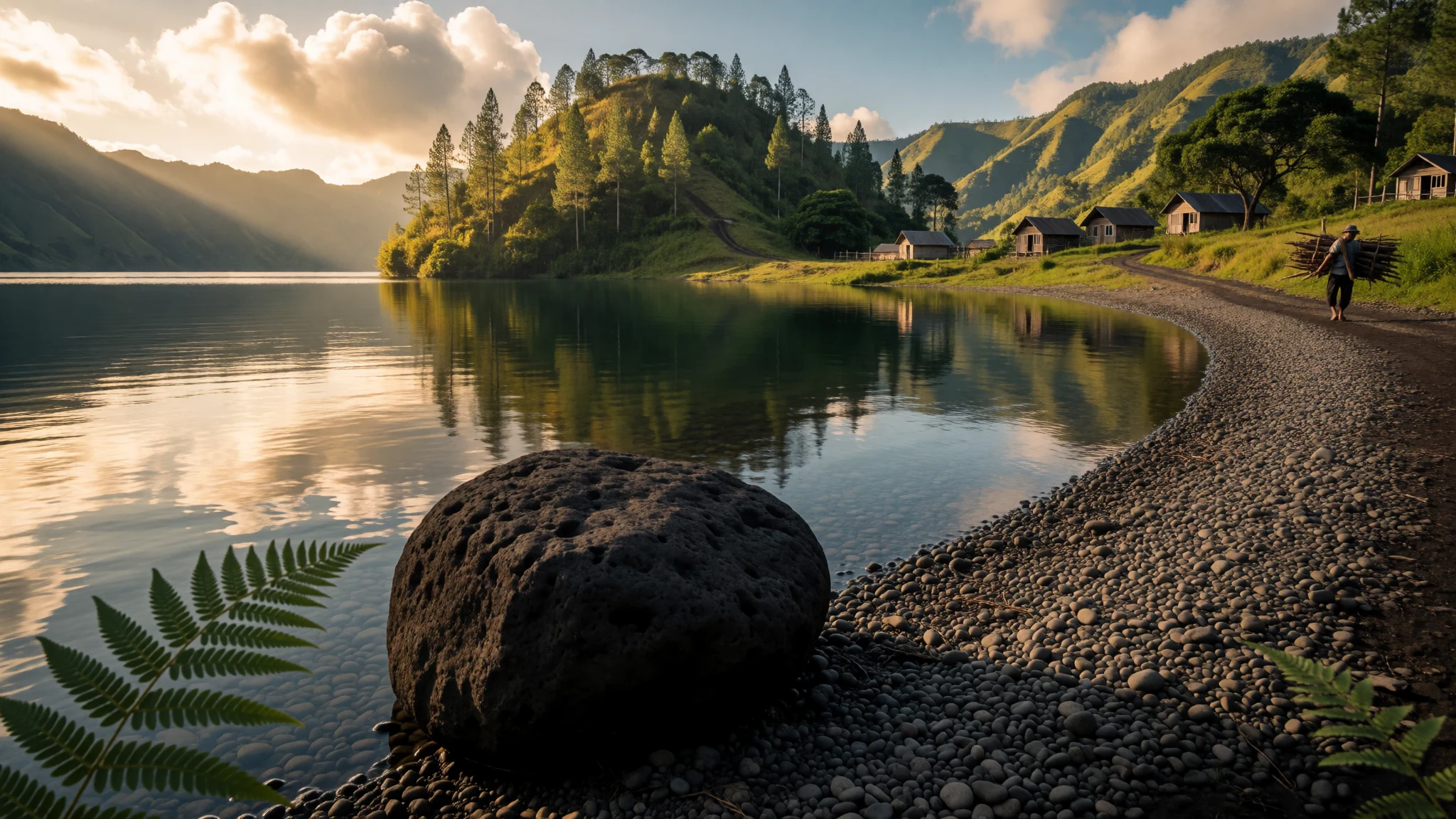
Sumatra offers rainforest orangutans, volcano-ringed lakes and Minangkabau cooking on an equatorial island big enough to need a whole trip of its own.
The place
Sumatra is a long, diagonal island in western Indonesia, with the equator slicing through its middle. About 60 million people live on it, spread across ten provinces, and Medan is the most populous city. The climate is tropical rainforest: hot, humid and wet through much of the year, with the heaviest rain varying by coast and altitude. The geography is easy to read on a map. A spine of mountains, the Bukit Barisan, runs almost the whole length of the island, and several of its peaks are active volcanoes. On the northeast side the land flattens into plains, swamps, mangroves and tangled rivers that drain towards the Strait of Malacca, the narrow water separating Sumatra from the Malay Peninsula. The Indian Ocean faces the western coast, which is fringed by island chains including Simeulue, Nias, Mentawai and Enggano. At the southern end the Sunda Strait, home to the Krakatoa group, divides Sumatra from Java, while Bangka and Belitung lie off the southeast coast. The ground here is restless. The Great Sumatran fault and the Sunda megathrust make earthquakes and eruptions part of the island's story, and visitors should treat that as a fact of life rather than a rumour. The reward is a landscape of crater lakes, rainforest, highland farms and surf-washed islands, with many species found nowhere else. Distances are large and roads are slow, so most trips sensibly choose one region and stay with it.
Its story
Sumatra's recorded past is bound up with the sea lanes of the Strait of Malacca. By 692 the Melayu kingdom had been absorbed by Srivijaya, a maritime power based in the south of the island that grew wealthy from trade. Its grip loosened after a defeat by the Chola Empire of southern India in 1025, and it dwindled to a small kingdom before its dominance in the south ended for good. Islam entered the archipelago through Sumatra first, helped by the island's position beside a route that merchants had long used. Arab and Tamil traders brought the faith gradually, and trade and the founding of new kingdoms went hand in hand. The ruler of the Samudra kingdom converted, and from there Islam spread to Java and then east to Sulawesi and Maluku. Foreign visitors began to leave written accounts too: Marco Polo called at the island in 1292, and Odoric of Pordenone, another Italian traveller, followed in 1321. In the far north, Aceh later made its name as a pepper port, shipping peppercorns of high quality to buyers across the sea. Beneath all of this lies geology. The volcanic chain and the great faults have produced some of the largest eruptions and earthquakes on record, and they also created the fertile highland basins and crater lakes where many communities settled and still farm today.
What to see
- Bukit Lawang and Gunung Leuser National Park — North Sumatra
Bukit Lawang, on the edge of Gunung Leuser National Park, is the easiest place to look for the Sumatran orangutan, a species smaller and rarer than its Borneo cousin. Treks go through steamy forest on steep, slippery paths. Sightings are never guaranteed, so go with a licensed local guide.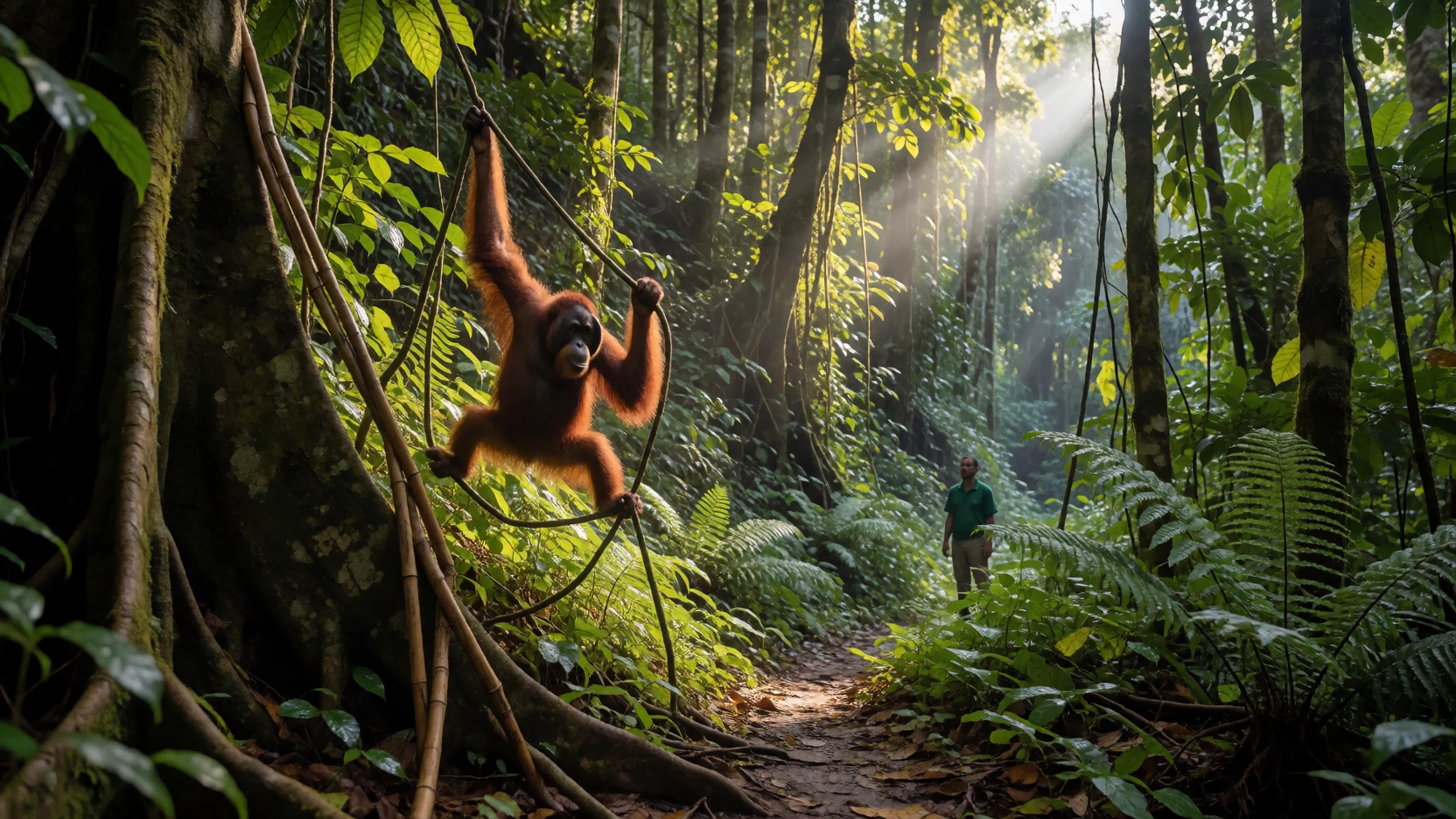
- Tropical Rainforest Heritage of Sumatra — Along the Bukit Barisan range
In 2006 about 25,000 km² of Sumatran forest was inscribed by UNESCO as the Tropical Rainforest Heritage of Sumatra. It joins three national parks: Gunung Leuser, Kerinci Seblat and Bukit Barisan Selatan. Tigers and rhinoceroses survive here only in tiny, critically endangered numbers, so the real draw is the forest itself.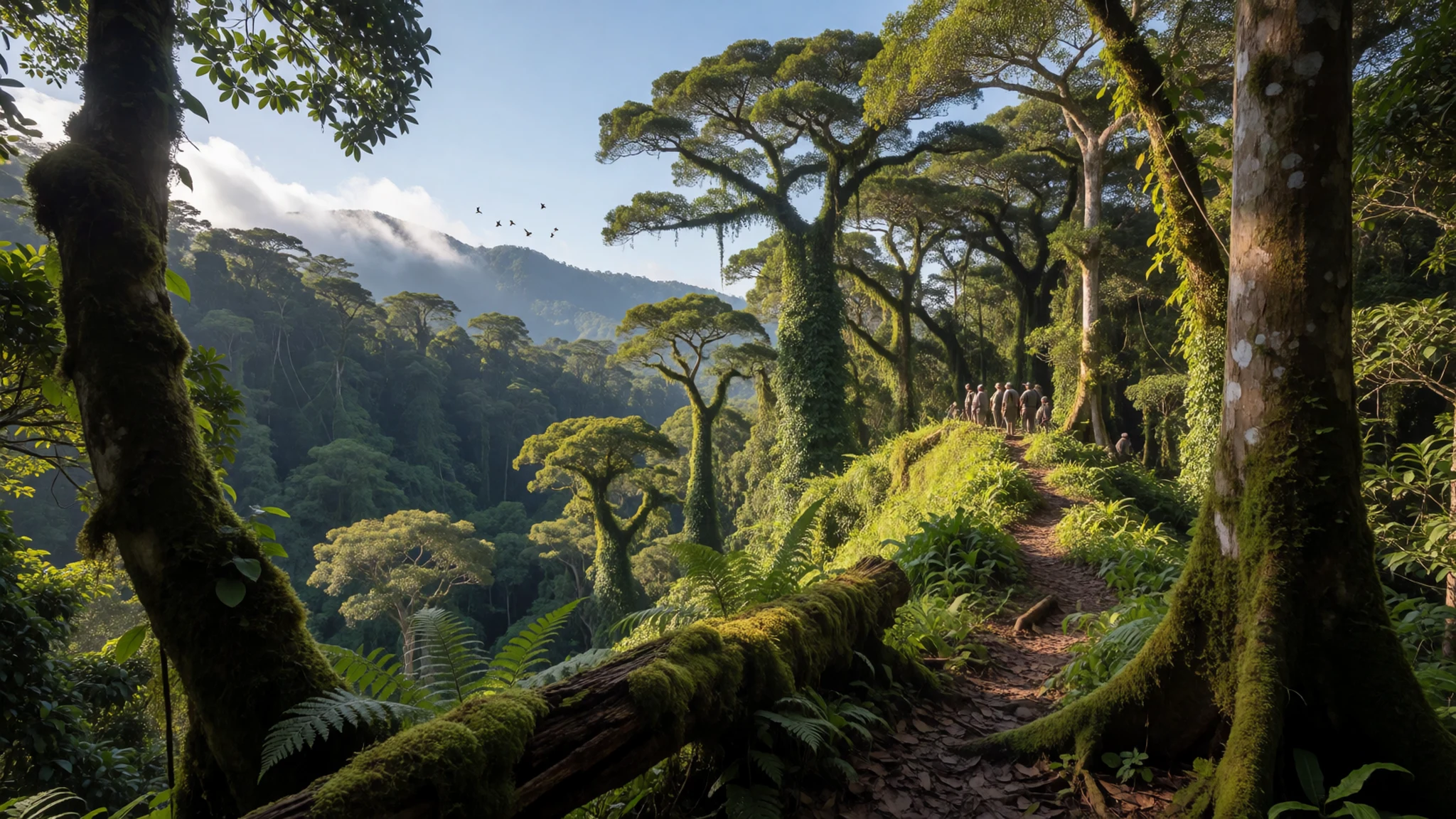
- Lake Toba — North Sumatra highlands
Lake Toba fills a vast volcanic caldera in the North Sumatra highlands and is recognised as a UNESCO Global Geopark. Cool air, pine-covered shores and ferry rides across to Samosir island make it a good place to slow down. Batak villages around the lake keep carved, boat-roofed wooden houses.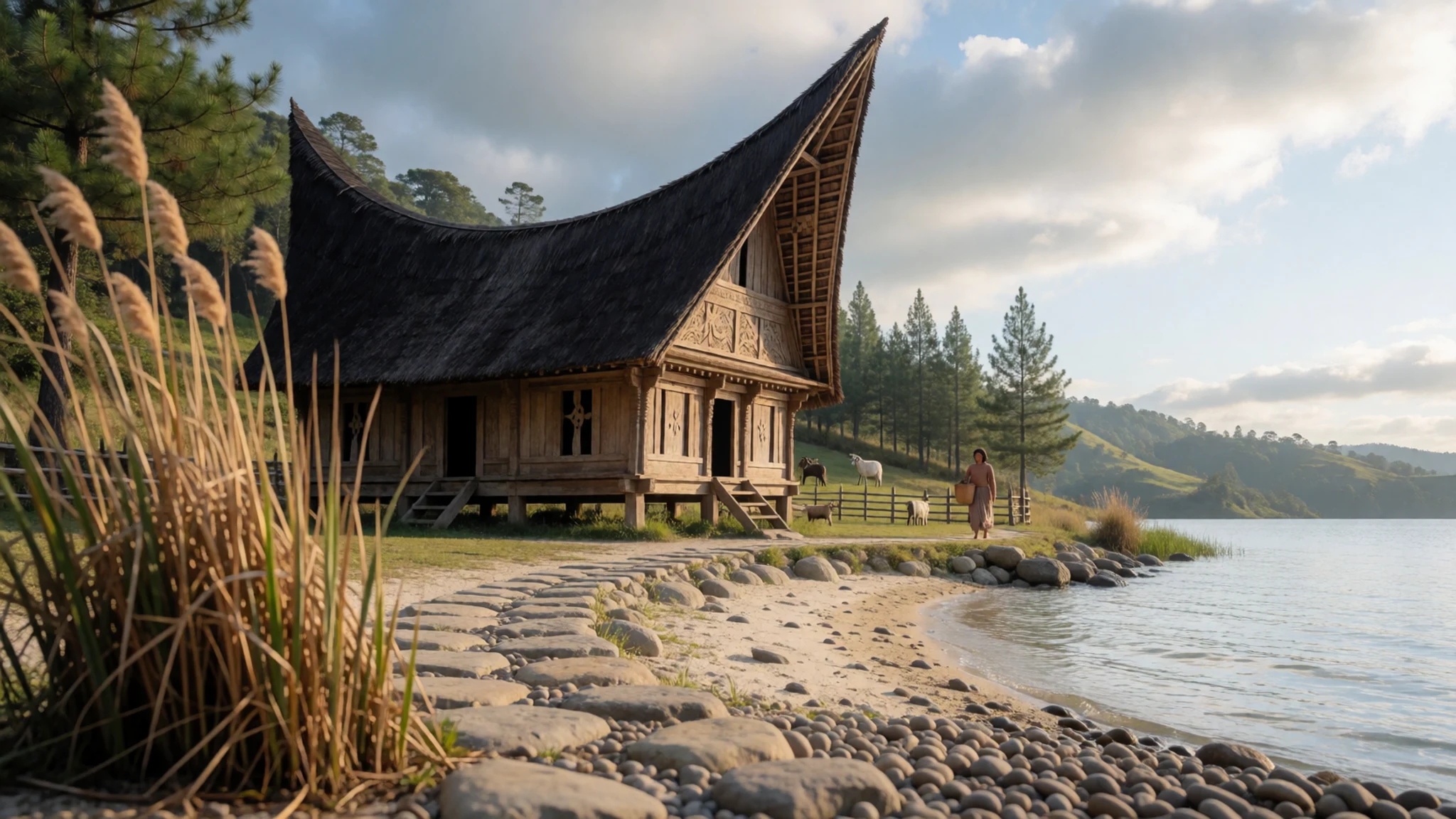
- Mount Sinabung and the Karo highlands — Karo highlands, North Sumatra
Mount Sinabung is an active volcano rising above the farms of the Karo highlands, and its ash plumes are visible from far away. Access can be restricted, sometimes for long periods, so check current advice from local authorities before planning any climb or even a village visit nearby.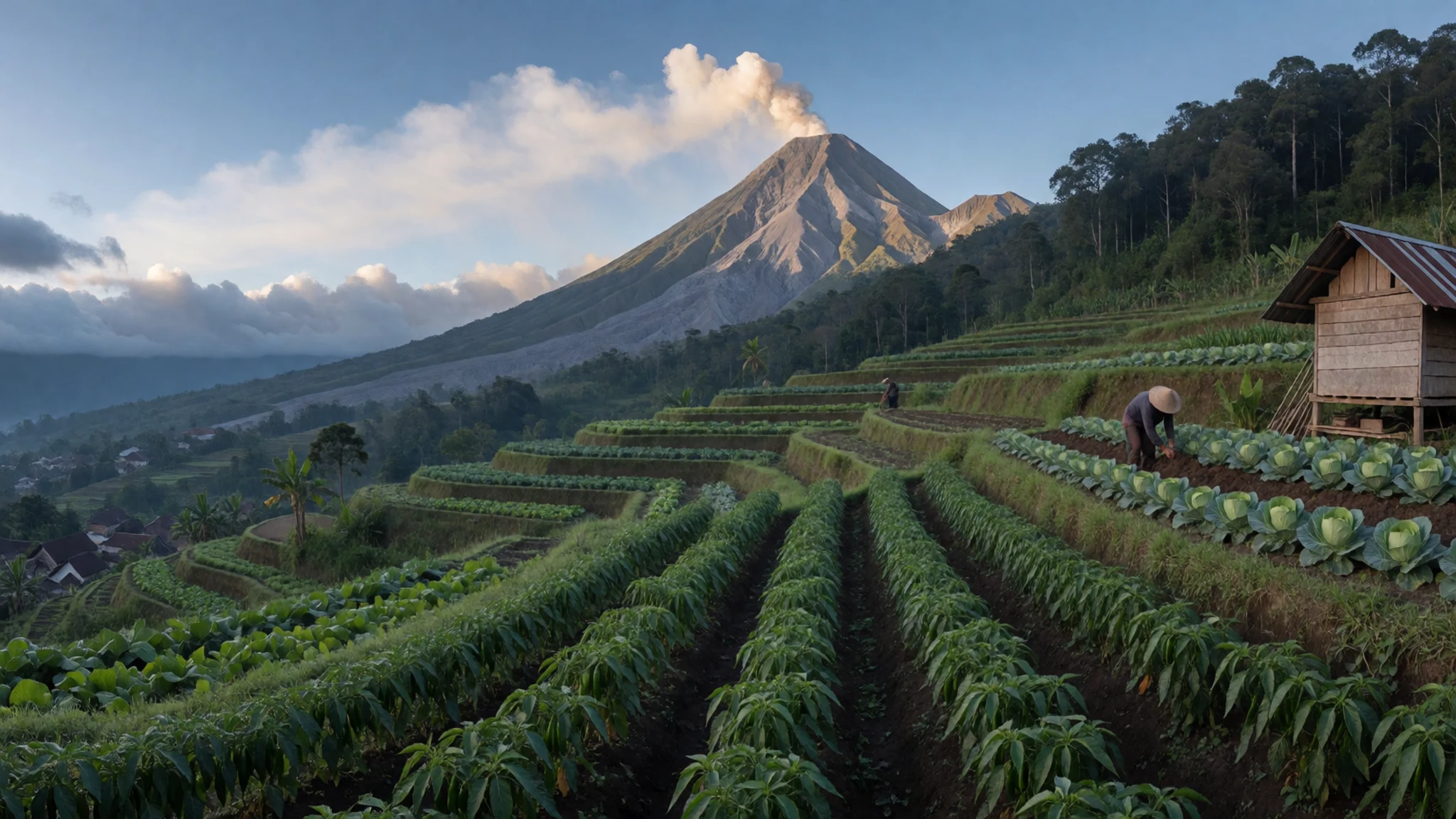
- Medan — North Sumatra
Medan is the island's most populous city and its main gateway, with the most flights. It is a working city of traffic, towers and busy markets rather than a postcard, but it is a practical base for Bukit Lawang and Lake Toba, and a good place to eat well before heading to the hills.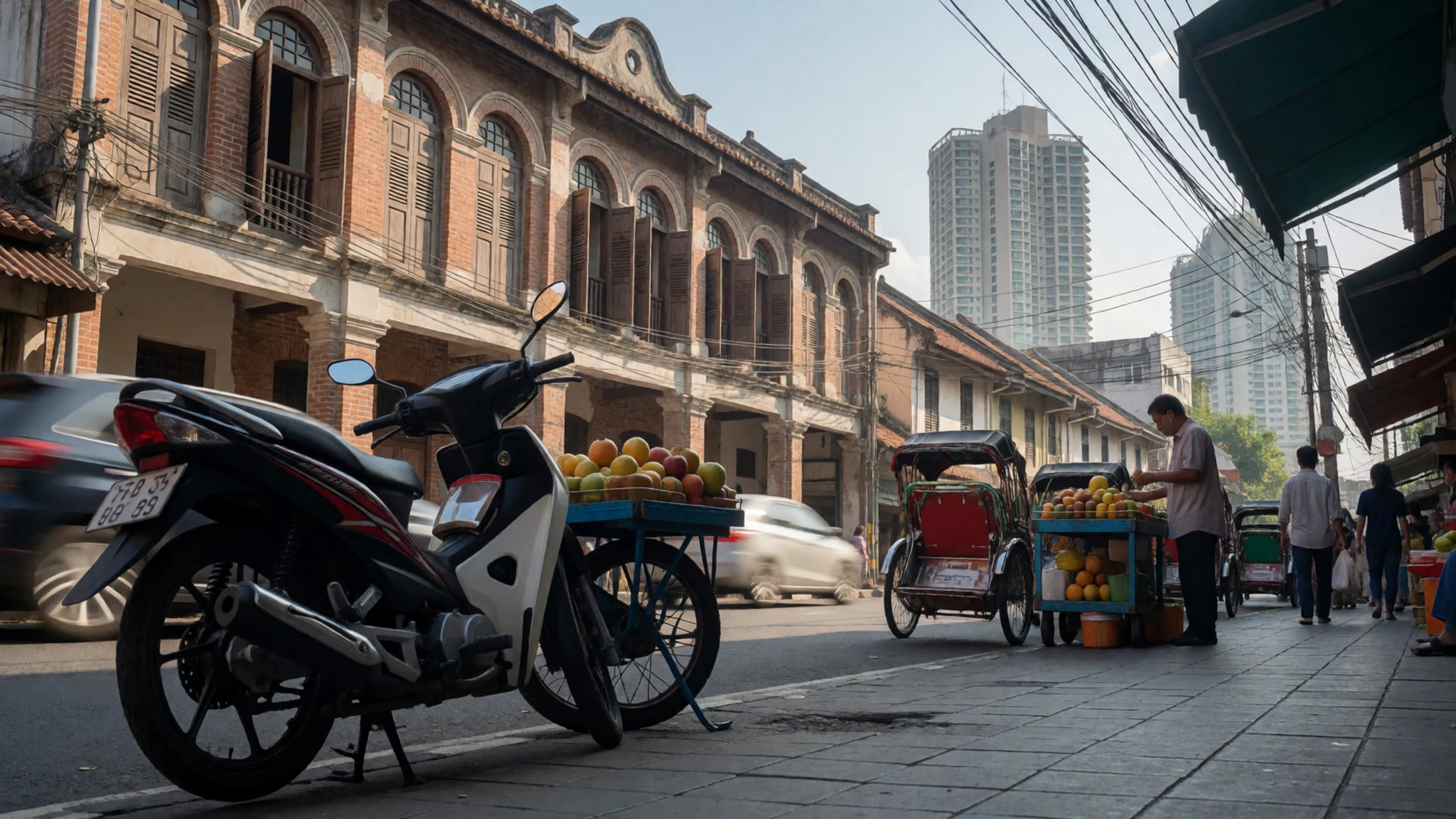
Culture
Sumatra is not one culture but many, strung along a long island. Islam shaped the north and west early on, and Aceh in particular holds to a stricter public code than most of Indonesia, which shows in dress, alcohol rules and the rhythm of prayer times. The Minangkabau of West Sumatra are known for a matrilineal tradition in which family property and clan identity pass through women, and for sweeping-roofed houses that echo buffalo horns. Around Lake Toba the Batak peoples, many of them Christian, keep older traditions alive in carved wooden houses, woven ulos cloths given at weddings and funerals, and songs and dances performed at family gatherings. Along the Strait of Malacca coast, Malay court heritage and centuries of trade with India and China have left their mark on mosques, music and cooking. Hospitality is real and often generous: expect to be invited to sit, to be offered tea or coffee, and to be asked friendly questions about your family and where you come from. Calls to prayer carry across towns before dawn, and Friday midday is quieter in Muslim areas. Rural life still follows farming and market days, and village ceremonies matter more than any timetable. Ask before photographing people, especially women and elders, and in mosques and village ceremonies cover your shoulders and knees, remove your shoes at the door, and follow your host's lead on where to stand or sit.
What to wear
Sumatra's traditional textiles are some of the most distinctive in Indonesia. Songket, silk or cotton woven with gold or silver thread, is worn at weddings and ceremonies in Palembang and among the Minangkabau, often with a matching headcloth for women. The Batak peoples weave ulos, hand-woven cotton cloths draped over the shoulders or waist to mark births, marriages and funerals, and given as a blessing. In Aceh and along the Malay coasts, women wear the baju kurung, a long tunic over a sarong, for festivals and formal occasions, with men in songkok caps and sarongs for Friday prayers. Day to day, people mostly wear what suits a hot, humid climate: T-shirts, jeans or loose trousers, and light shirts, with many women choosing a headscarf and long sleeves. Batik is common for office wear and celebrations. Visitors do best in light, quick-drying clothes that cover shoulders and knees, which also suits mosques, villages and Aceh, where modesty norms are firmer. Carry a thin scarf for religious sites. For jungle treks, wear long trousers, closed shoes with good grip and, ideally, leech socks, and bring a light rain jacket. In the highlands around Toba, evenings are cool enough for a fleece.
What to eat
- Nasi padang — Any Padang-style eatery, found in nearly every Sumatran town
Nasi padang is steamed white rice served with a spread of curries, fried fish, greens and sambal. It began in Padang and is now found across Indonesia. Diners pay for what they eat from the plates brought to the table.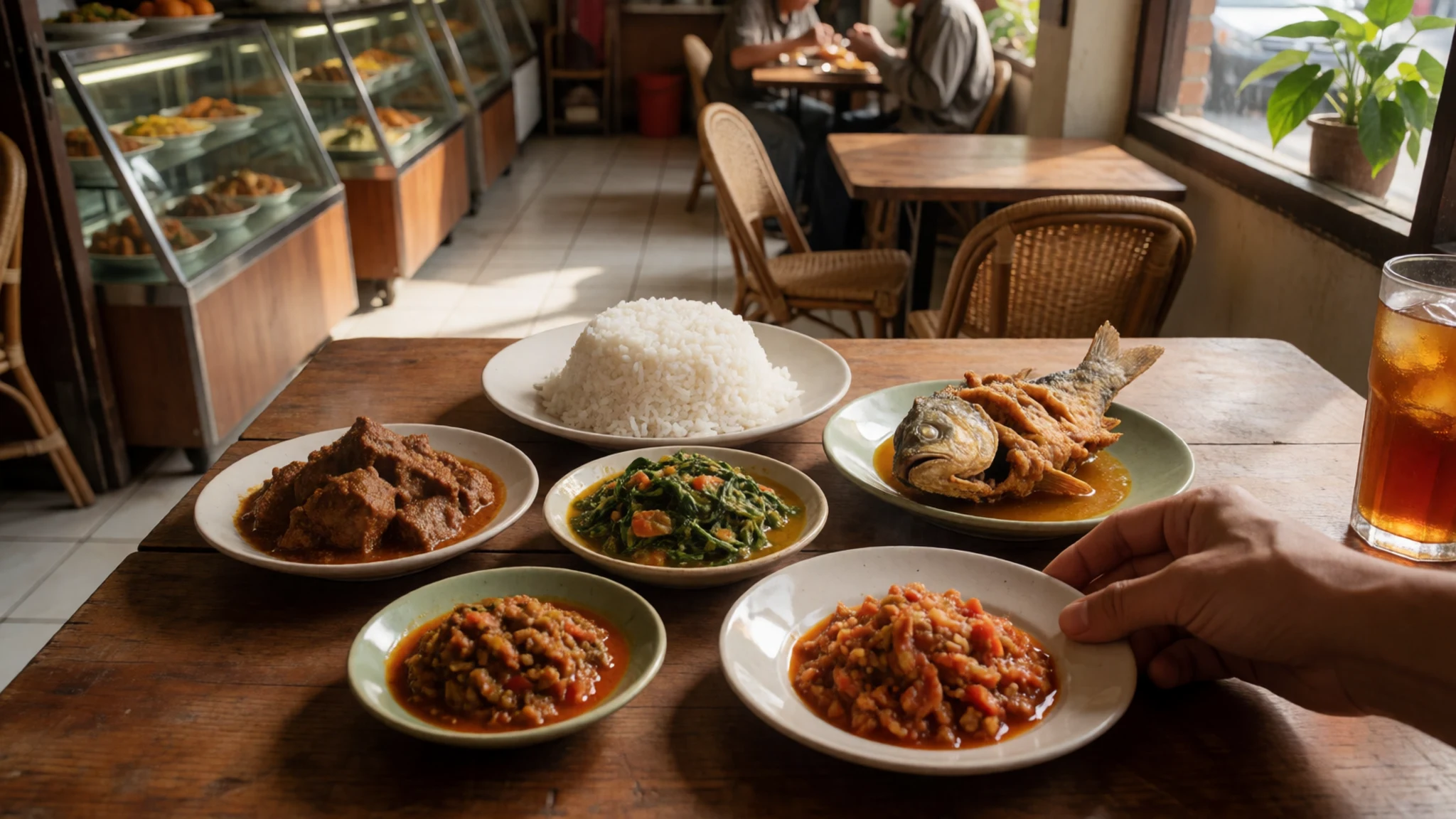
- Rendang — Padang-style eateries and Minangkabau homes in West Sumatra
Rendang is beef cooked slowly in coconut milk and spices until nearly all the liquid has gone, leaving dark, concentrated meat. It is usually eaten with plain rice, and the dry texture is deliberate rather than a sign of overcooking.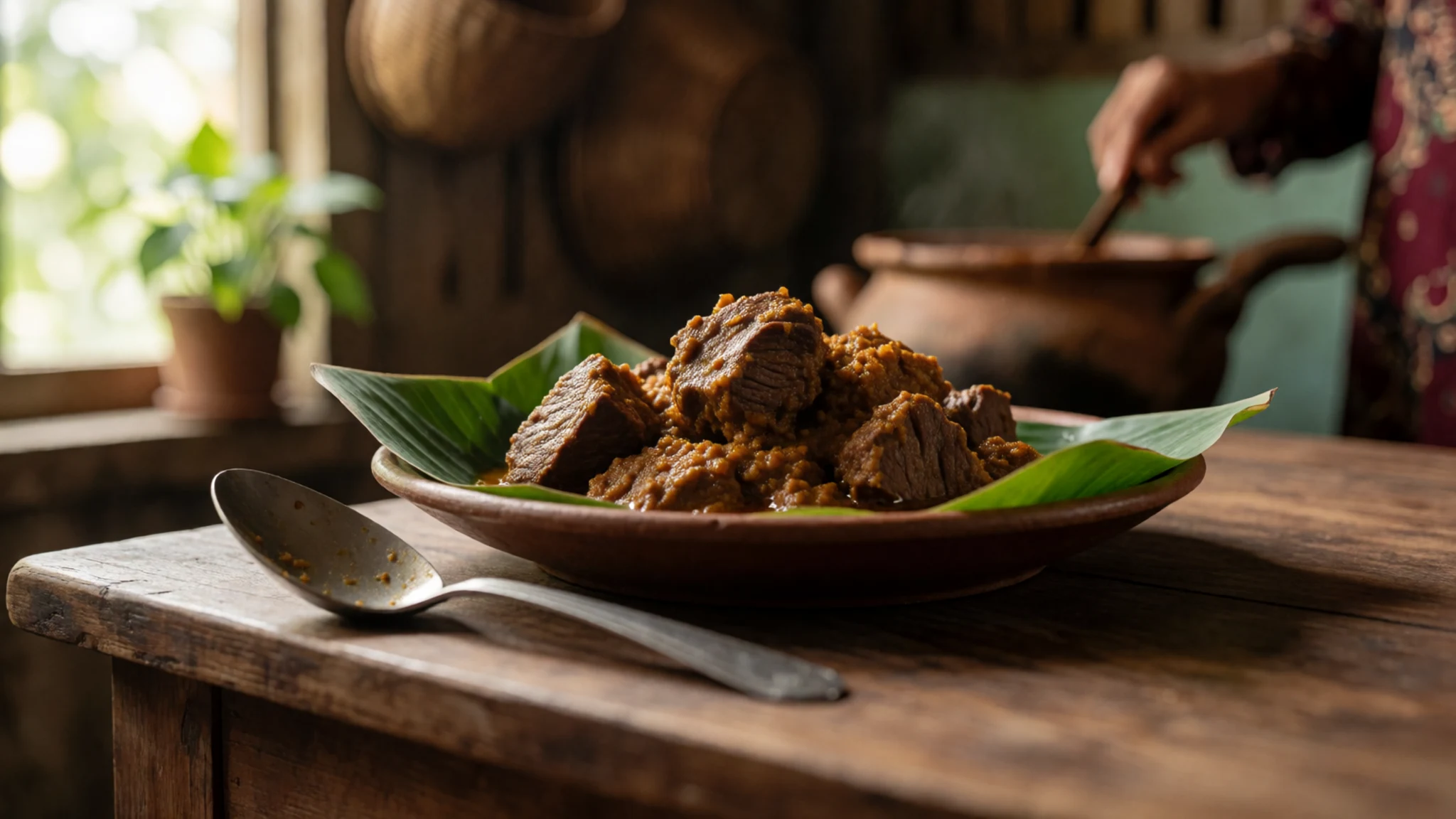
- Pempek — Street stalls and small eateries in Palembang
Pempek is a Palembang speciality of fish and sago cakes, served with a dark, sweet-sour sauce called cuko. Shapes vary, from fat tubes to smaller fried pieces, and the sharp sauce is the main event. - Mie Aceh — Roadside eateries and night stalls in Banda Aceh
Mie Aceh is a plate of thick yellow noodles cooked in a rich, spiced sauce, with beef, goat or seafood added to taste. It is hot, deeply savoury and filling, and usually served fried or in soup. - Tuak — Village stalls and warungs around Lake Toba
Tuak is a fermented palm drink that men drink in Batak villages. It is an acquired taste, cloudy and sour. Beer is easy to find in most of Sumatra but not in Aceh, so ask locally before looking for either.
Plan it
Best time. June to September is usually the drier stretch for trekking and travel, but a rainforest climate means showers can arrive in any month. Heavy rain is more likely towards the end of the year, and highland roads can get slippery then.
How long. 7–10
Getting there. Fly into Medan, which has the most flights, including services from Singapore, Malaysia and Thailand. Padang, Palembang, Pekanbaru and Banda Aceh also have international flights. Silangit airport, near Lake Toba, takes domestic flights from Jakarta. From Java, a ferry runs between Merak and Bakauheni, and long-distance buses continue north.
Budget. low
Tips
- Pick one region, such as Toba and Bukit Lawang, rather than trying to cross the whole island
- Check volcano alerts for Sinabung before travelling to the Karo highlands
- Take a warm layer on long-distance buses, where the air conditioning can be very cold
- Avoid night travel on the Trans-Sumatra road, where robbers known as Bajing Loncat have been reported
- Carry cash for villages and small eateries, as card acceptance is patchy outside cities
Etiquette
- Dress modestly in Aceh and around mosques, and take off shoes before entering
- Ask before photographing people, especially women and elders
- Use your right hand for giving, receiving and eating
Nearby
Sources
- Wikidata Q3492 (CC0)
- Wikipedia: Sumatra (rev 1383850054) (CC BY-SA 4.0)
- Wikivoyage: Sumatra (rev 5379405) (CC BY-SA 4.0)
- Map of Sumatra in Atlas sekolah Hindia Nederland, W. van Gelder (CC0 1.0)
- Sumatra Topography, Sadalmelik (CC BY-SA 1.0)
- Rumah Bolon Pamatang Purba, Christian Advs Sltg (CC BY-SA 4.0)
- Sinabung.jpg, unknown author (Public domain)
- Sundaland at the Last Glacial Maximum, ש.מירון (CC BY-SA 4.0)
- Caldera Toba, Yudhapohan (CC BY-SA 4.0)
- Medan skyline 2022, Brm12 (CC BY-SA 4.0)
- Sumatran Tiger, Bernard Spragg. NZ (CC0 1.0)


