Sukhothai
Sukhothai, Thailand
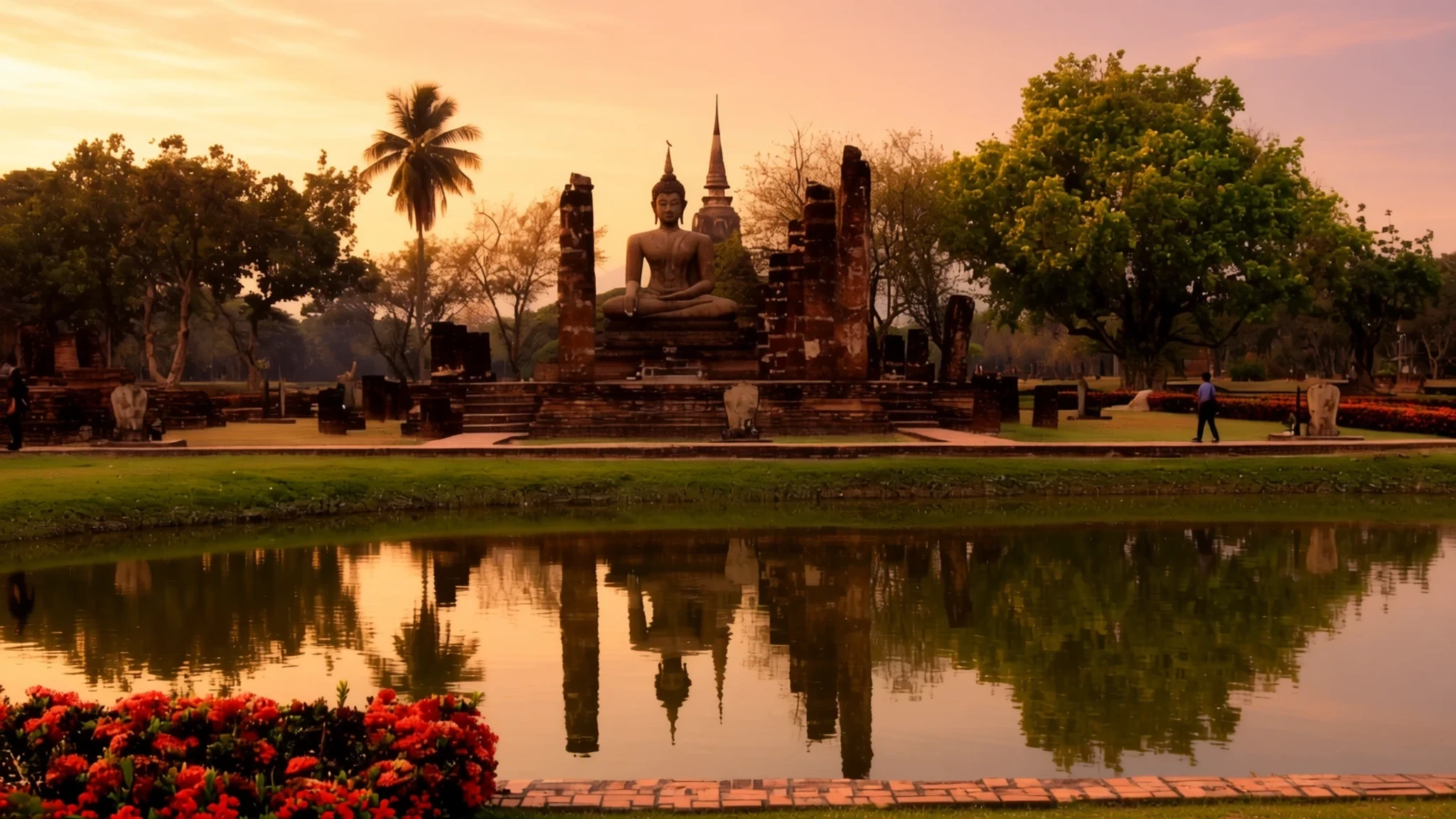
Go for slow days among 13th-century temple ruins, where the capital of the first Thai kingdom still stands in brick, stone and lotus-fringed lakes.
The place
Sukhothai is a province in lower northern Thailand, and the name covers two things: the modern provincial town and the ruined capital that gave the province its fame. The province sits in the basin of the Yom river, a waterway that has supported farming and travel across this part of the country for a very long time. The name comes from Sanskrit and is usually rendered as the dawn of happiness, a phrase that suits the early light over the old temple sites. Neighbouring provinces include Phitsanulok, Kamphaeng Phet and Tak, and the countryside is a patchwork of rice fields, low hills and scrubby woodland.
Most people come for the historical park, a spread-out compound of brick and laterite temples, stupas and stone Buddha figures set among lawns, trees and water. It is best seen on foot or by bicycle rather than in one rushed loop, because the distances add up in the heat. The new town beside the ruins is quieter than Bangkok, with simple guesthouses and few late-night distractions. Si Satchanalai, further north, has a second group of ruins that feel more remote and are often quieter, so combining the two makes a satisfying trip. The province is not large, and it suits anyone who wants deep history without big-city noise.
Its story
The story of this land begins well before any kingdom. Iron was the early draw, and people in the hills near the Lampang border smelted ore there, leaving behind old mines and a large number of furnace sites, some far older than the state that later rose in the valley. Over the centuries the region came under shifting influence, first from a Mon-speaking network centred further south, then from the Khmer empire at Angkor, whose temple styles still show in many of the monuments.
The kingdom of Sukhothai took shape from 1238, and its capital grew into a planned city of temples, reservoirs and walls. Its best-known ruler, King Ram Khamhaeng, is credited with developing the Thai script called Lai Sue Thai and with adopting Theravada Buddhism as the faith of the court. Historians read the inscriptions that support these claims with care, since later writers often shaped the story. The kingdom's power faded as rivals grew, and its lands were gradually drawn into the larger kingdom of Ayutthaya. The old city was then left largely to the forest until restoration brought its monuments back into view for visitors today.
What to see
- Wat Mahathat, Sukhothai Historical Park — Old city, historical park
The central temple of the old capital is the image most visitors carry home. Its rows of stupas and the surviving Buddha figures show the style of the Sukhothai period, and the grounds are open enough to walk in comfortably. Arrive early, when the light is low and the stone feels cooler, and allow time to wander the outer walls rather than only the centre.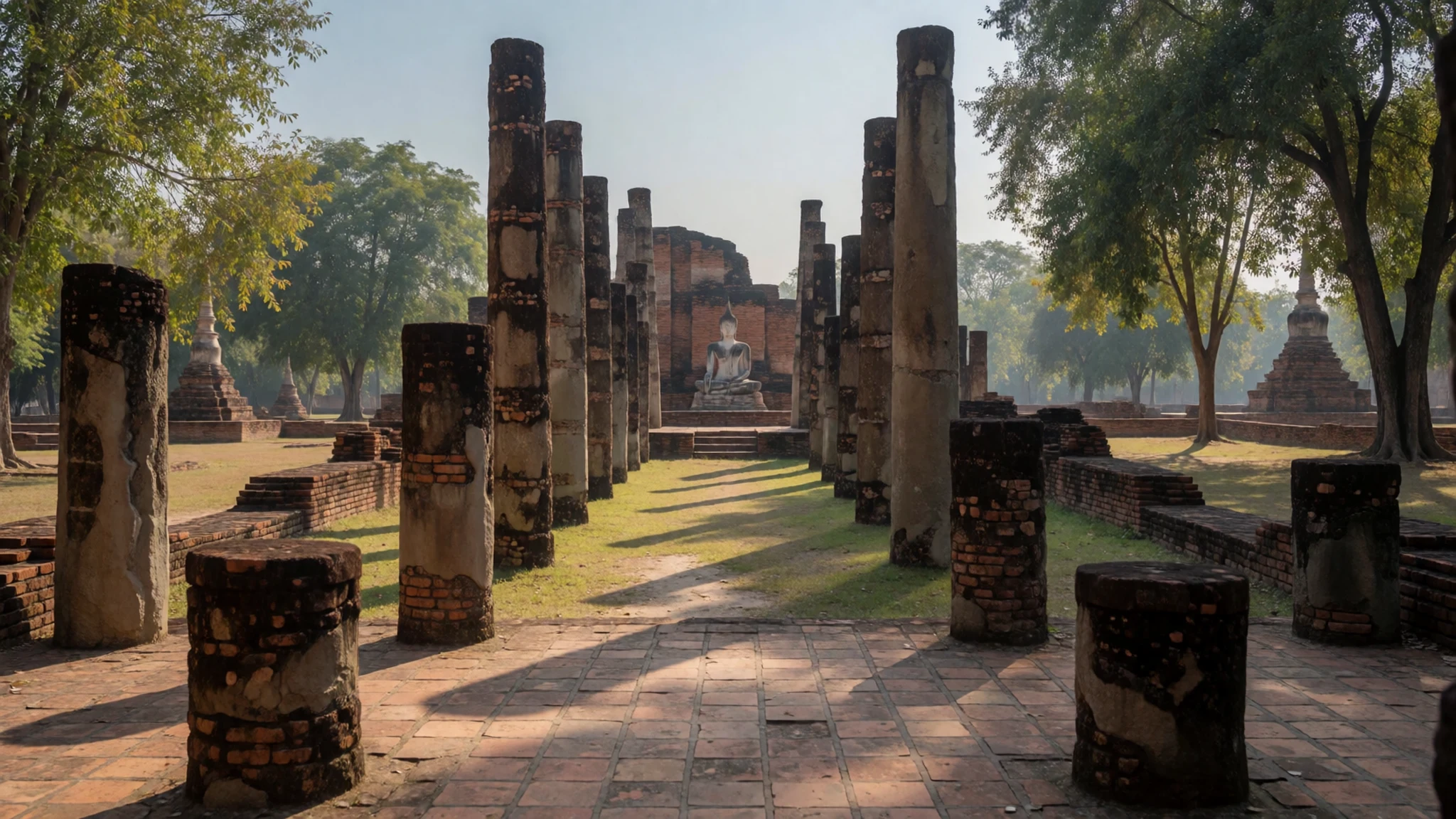
- The lake and reservoirs of the historical park — Historical park
Water was central to the old city, and the lake inside the park makes a calm place to sit with the ruins reflected in the surface. It is a good spot for a midday pause in the shade, and the paths around the edge give easy views back towards the temples. Bring water, since there are few places to buy it right at the shore.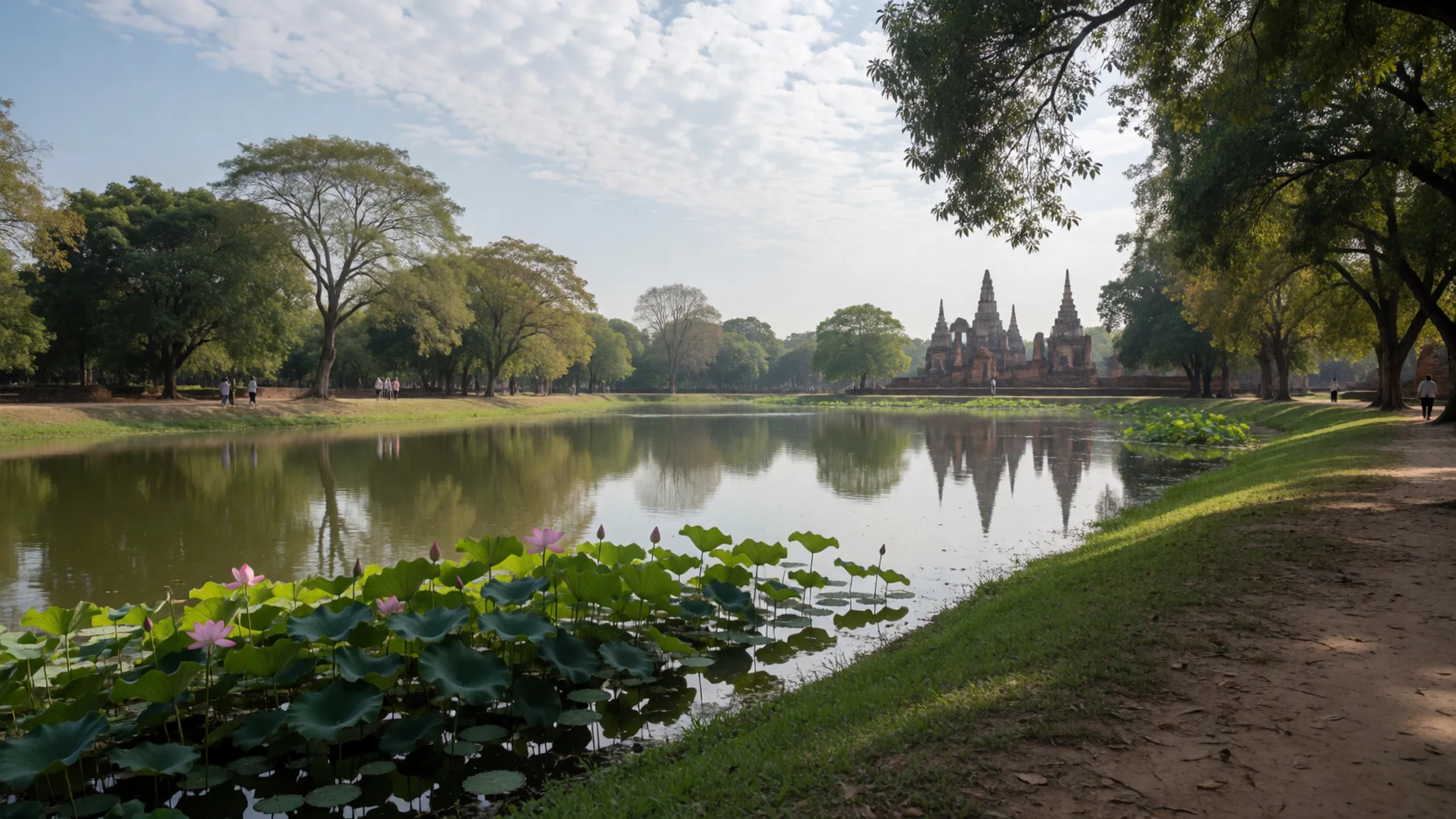
- Wat Chang Lom, Si Satchanalai — Si Satchanalai historical park
This temple sits in the northern ruins at Si Satchanalai, where the surrounding stupas are set in more open, quieter grounds than the main park. The brickwork and the ring of elephant-shaped supports around the base are worth a close look. Because the site is less busy, it is a pleasant place to slow down and read the details at your own pace.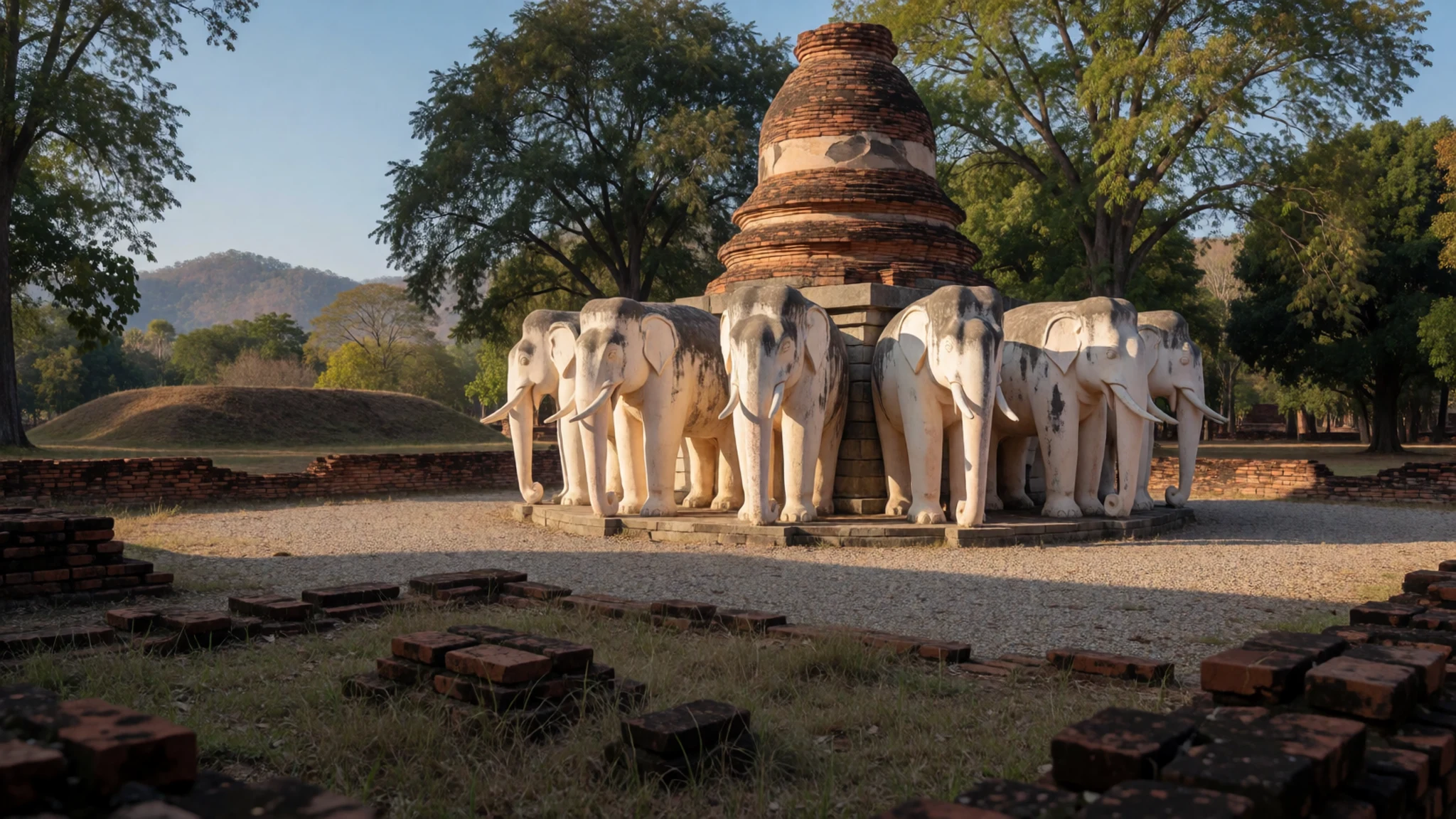
- Wat Phra Si Rattana Mahathat, Chaliang — Chaliang, near Si Satchanalai
The prang, or tower, of this temple at Chaliang near Si Satchanalai rises above the surrounding ruins and is one of the most photographed structures in the north of the province. Walk around the base to see how the carved details change with the angle of the sun. Go mid-morning or late afternoon for softer light and fewer people.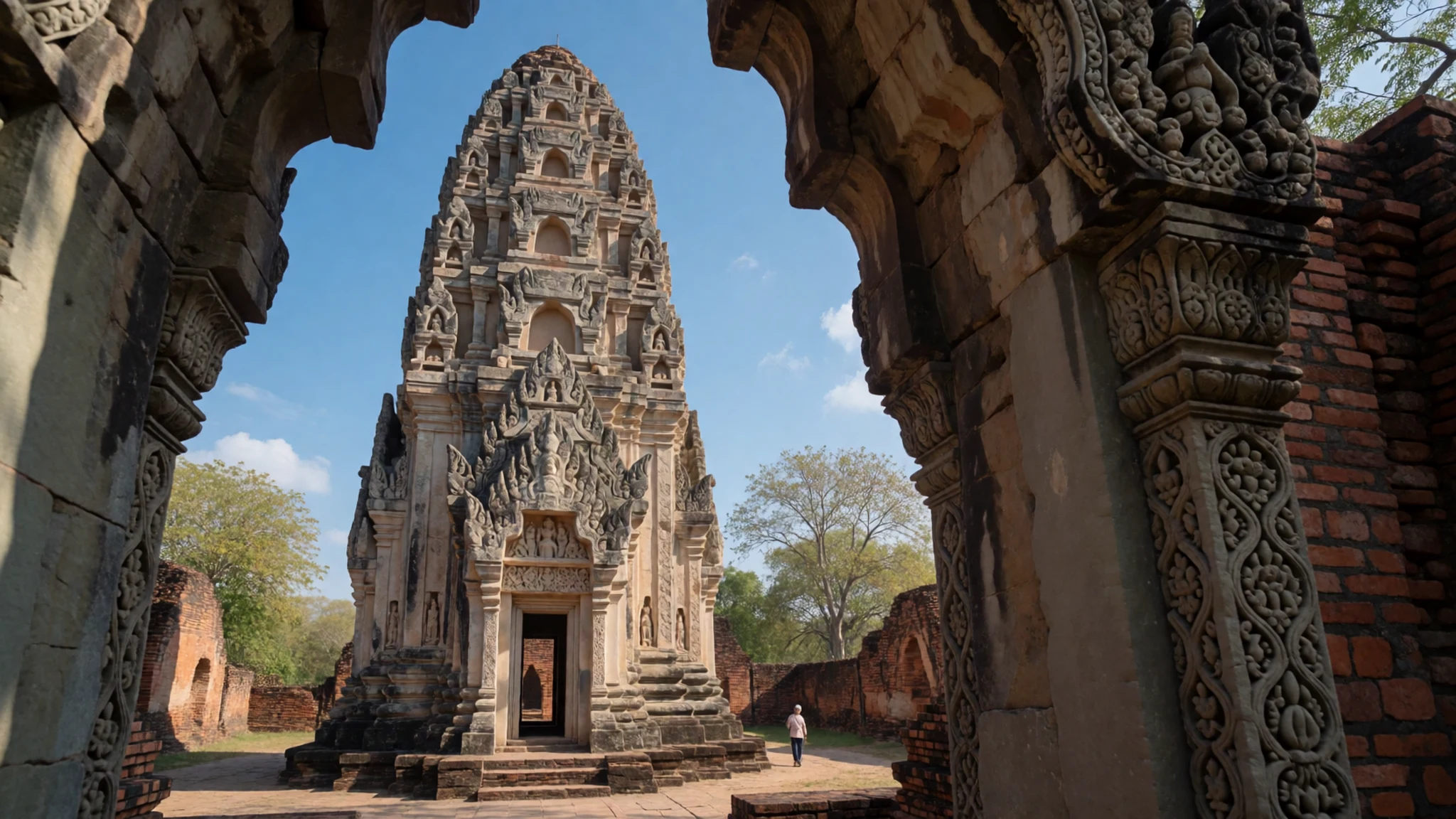
- Ramkhamhaeng National Park — Ramkhamhaeng National Park, in the Khao Luang range to the south
A forested national park named after the king, it offers a change of pace from the ruins. Shaded trails and hill views make it a useful half-day for visitors who want to walk without the stone underfoot. Check the official site for current access rules and facilities before you go, as these change.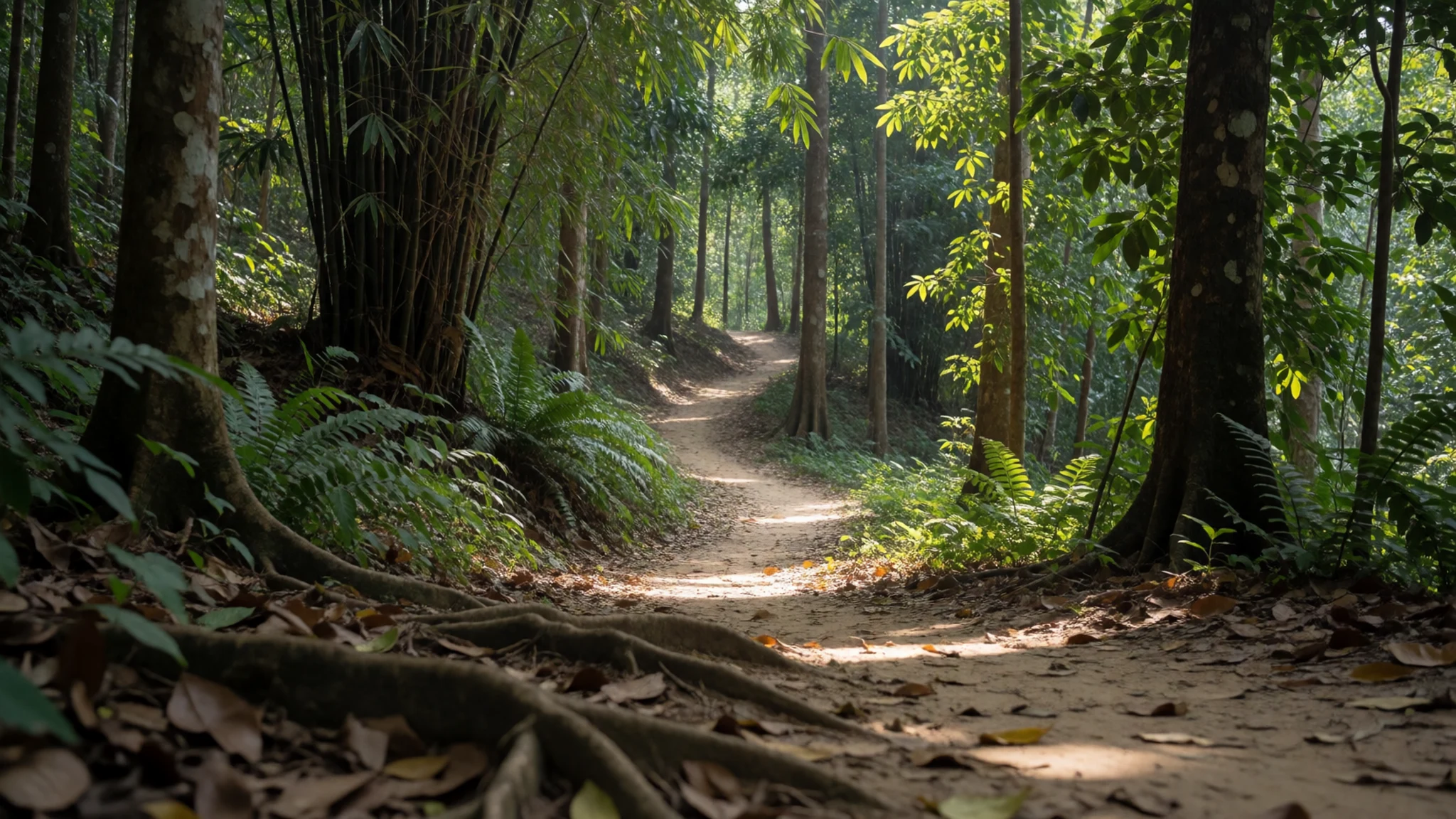
Culture
Sukhothai is a provincial town where Buddhism shapes daily life. Temple grounds in the historical park and beyond are working places of worship as well as heritage sites, so dress modestly for them, with shoulders and knees covered as the sensible default. Monks may be walking the grounds or praying in the halls, and locals often leave offerings at small shrines and at the central stupas. The provincial seal shows King Ram Khamhaeng on his throne, a reminder of how closely the kingdom and the faith were linked. People here are relaxed about visitors but appreciate politeness, and a smile and a few words of Thai go a long way. Keep voices low near shrines, and treat the brick and stone as fragile even where paths lead right up to it. Remove your shoes before stepping into any shrine hall, and never climb on or sit against the Buddha figures.
What to wear
The traditional everyday wrap is the phasin, a tube skirt or sarong woven in cotton or silk, often with a patterned hem and woven in bands of colour. In the countryside, checked cotton cloth and the silk weaving of the central plains are textiles people still value and sometimes wear for ceremonies. Weddings, merit-making days and official events are when many Thai people put on formal dress or the phasin, and those occasions are the nearest thing to a traditional look you will see in everyday life.
Day to day, people in Sukhothai wear Western casual clothing, with jeans, T-shirts and sensible sandals most common. For a visit, choose light cotton or linen that breathes in the heat. Wear trousers or a knee-length skirt, and cover your shoulders for temples and shrines, since a light scarf in your bag solves most problems. The ground in the historical park is uneven and often dusty, so pick closed shoes or sturdy sandals with a grip, and bring a hat and sunglasses for the midday sun. Avoid very revealing clothes, which can feel out of place at religious sites.
What to eat
- Kuaytiew Sukhothai — A noodle shop near the old town market
The local rice noodle soup is the dish to try first. It is light, served in a clear broth with pork or chicken, and shaped by the herbs and condiments you add at the table. Portions are modest and the price is low, so ordering a second bowl is normal.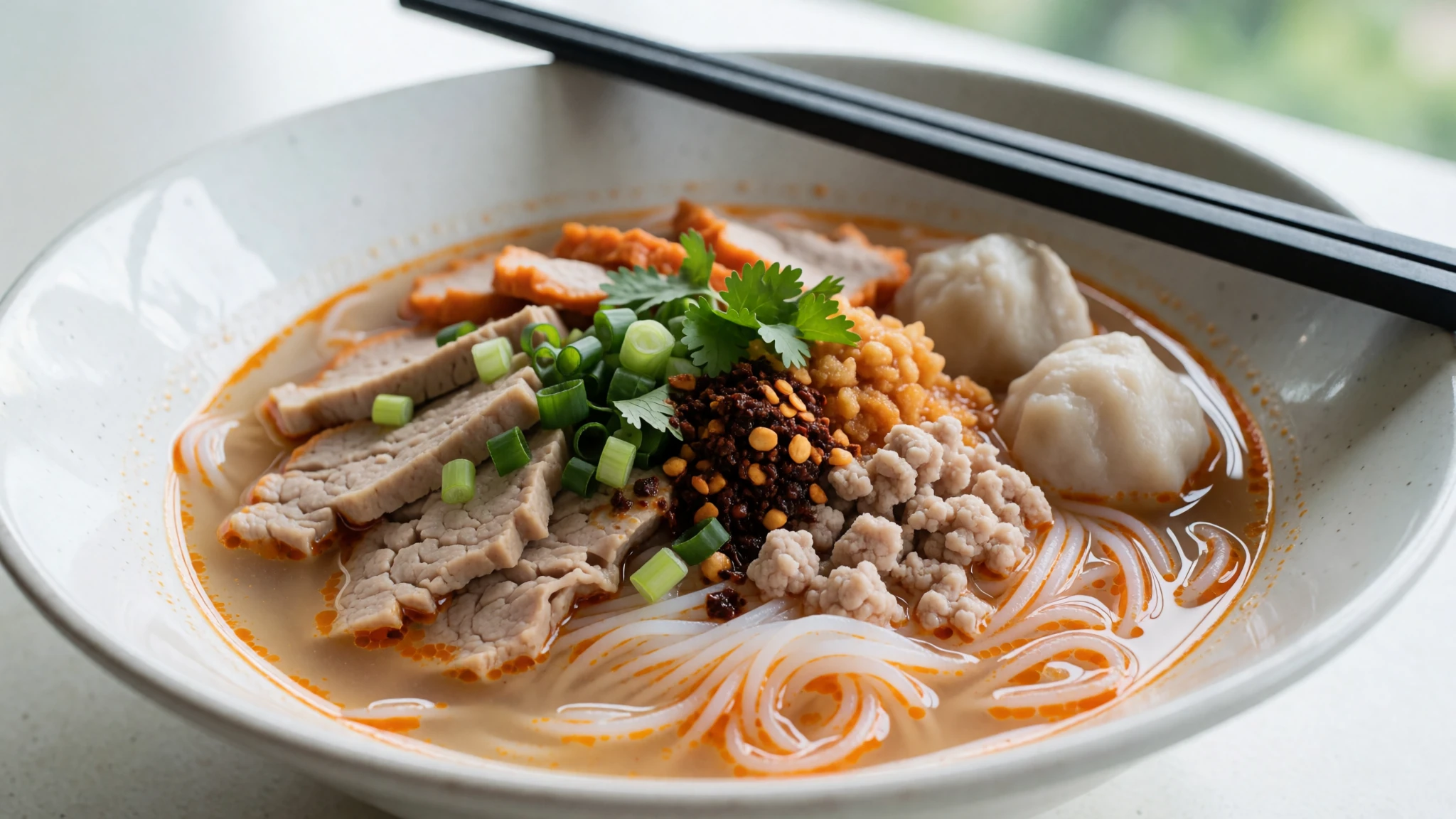
- Yam, the Thai salad — Any casual eatery with a yam on its menu, especially in the new town
Yam are sharp, herb-heavy salads, usually built on glass noodles, shredded vegetables or grilled seafood, dressed with lime, chilli and fish sauce. They make a good lunch after a morning of walking, and the choice varies from simple to elaborate.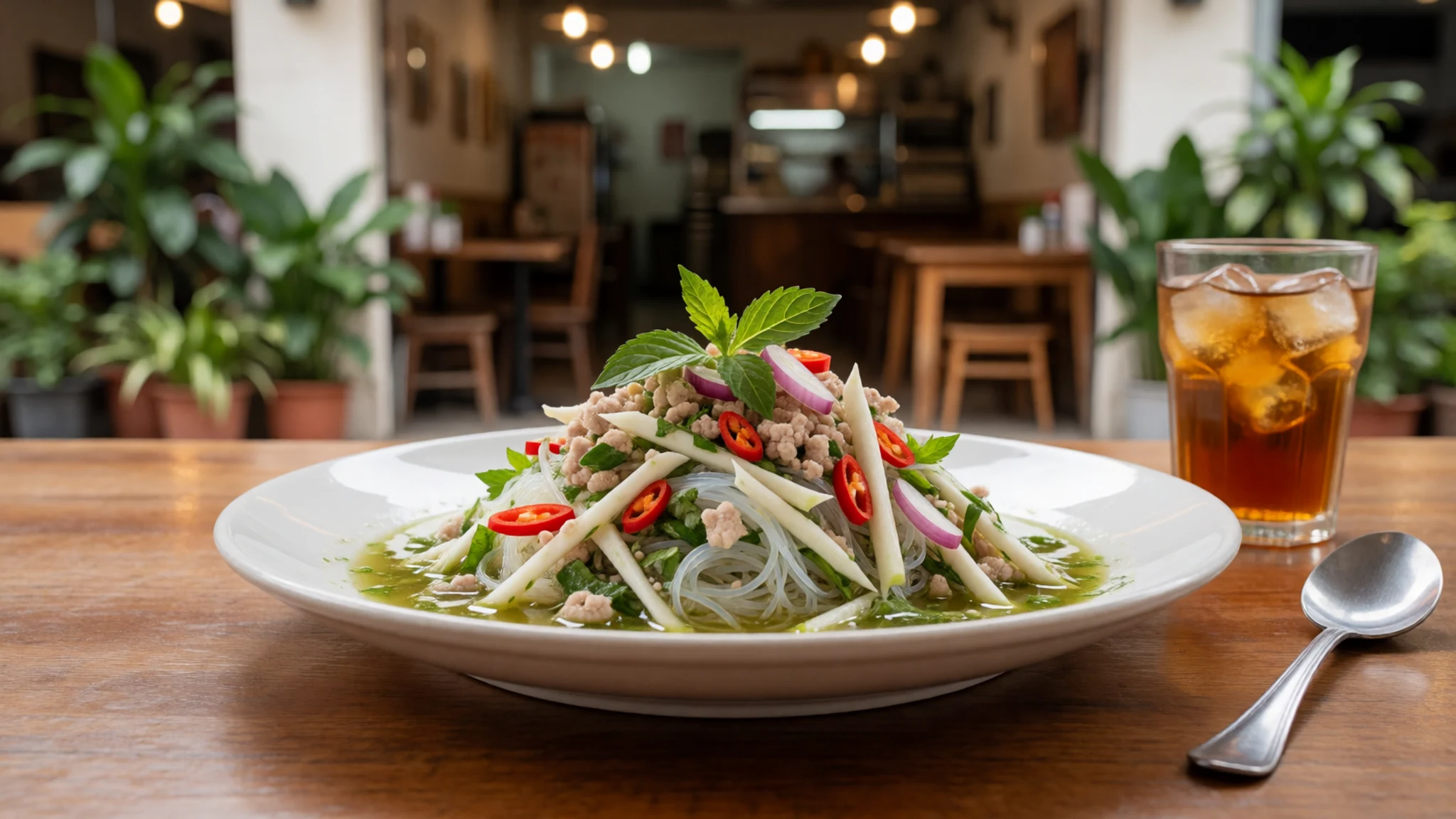
- Suki, the steamboat hotpot — Hotpot restaurants in the new town
A shared pot of simmering broth sits at the centre of the table while you cook thin slices of meat, seafood and greens. It is a social meal that takes time, so it suits an evening rather than a quick lunch. Chains and family hotpot places are common in the new town. - Bingsoo, Thai-style shaved ice — A dessert cafe in the new town
Finely shaved ice piled with sweet toppings is a popular afternoon treat, and many shops add local Thai flavours alongside the Korean-style originals. It is a good way to cool down after the midday heat in the ruins. - Grilled chicken and sticky rice — The morning market and roadside stalls by the main roads
Charcoal-grilled chicken served with sticky rice and a sweet-sour dipping sauce is a staple of Thai markets and roadside stalls. It is inexpensive, filling and easy to eat on the move, which suits a day spent between sites.
Plan it
Best time. November to January is the cooler, drier season and the most comfortable for walking the ruins, while February is already warming up. March to May turns hot, and June to October brings rain, sometimes heavy, which can make paths muddy but thins the crowds.
How long. 2–3
Getting there. Fly into Sukhothai Airport, which has flights from Bangkok, or into Phitsanulok and take a bus or taxi for the last leg to Sukhothai. Buses and trains also run from Bangkok and take a full day or more, so check times before you go.
Budget. low
Tips
- Check the official site for park opening times and entry fees before you go, as these change.
- Hire a bicycle inside the park to cover the distances without exhausting yourself in the heat.
- Start early or visit in the late afternoon, since midday sun on the stone is punishing.
- Carry cash for small eateries and smaller sites, because cards are less common outside the new town.
- Complete the Thai Digital Arrival Card via the web up to 72 hours before landing, or expect a queue upon arrival.
Etiquette
- Dress with covered shoulders and knees at temples and shrines.
- Remove your shoes before entering any shrine hall.
- Do not climb on or touch the Buddha figures.
Nearby
Sources
- Wikidata Q380764 (CC0)
- Wikipedia, Sukhothai province (rev 1378472792) (CC BY-SA 4.0)
- Wikivoyage, Thailand (rev 5399396) (CC BY-SA 4.0)
- Photo: Lake in historical park of Sukhothai, Garonzi Stefania (CC BY-SA 4.0)
- Photo: Wat Mahathat - Old City - Sukhothai, Adam Jones (CC BY-SA 2.0)
- Photo: Wat Phra Si Rattana Mahathat, Chaliang, Chainwit. (CC BY 4.0)
- Photo: Wat Chang Lom, Si Satchanalai, Supanut Arunoprayote (CC BY 4.0)
- Photo: Ramkhamhaeng National Park (1), Chaiyathat (CC BY-SA 4.0)


