Studenica monastery
Studenica monastery, Serbia
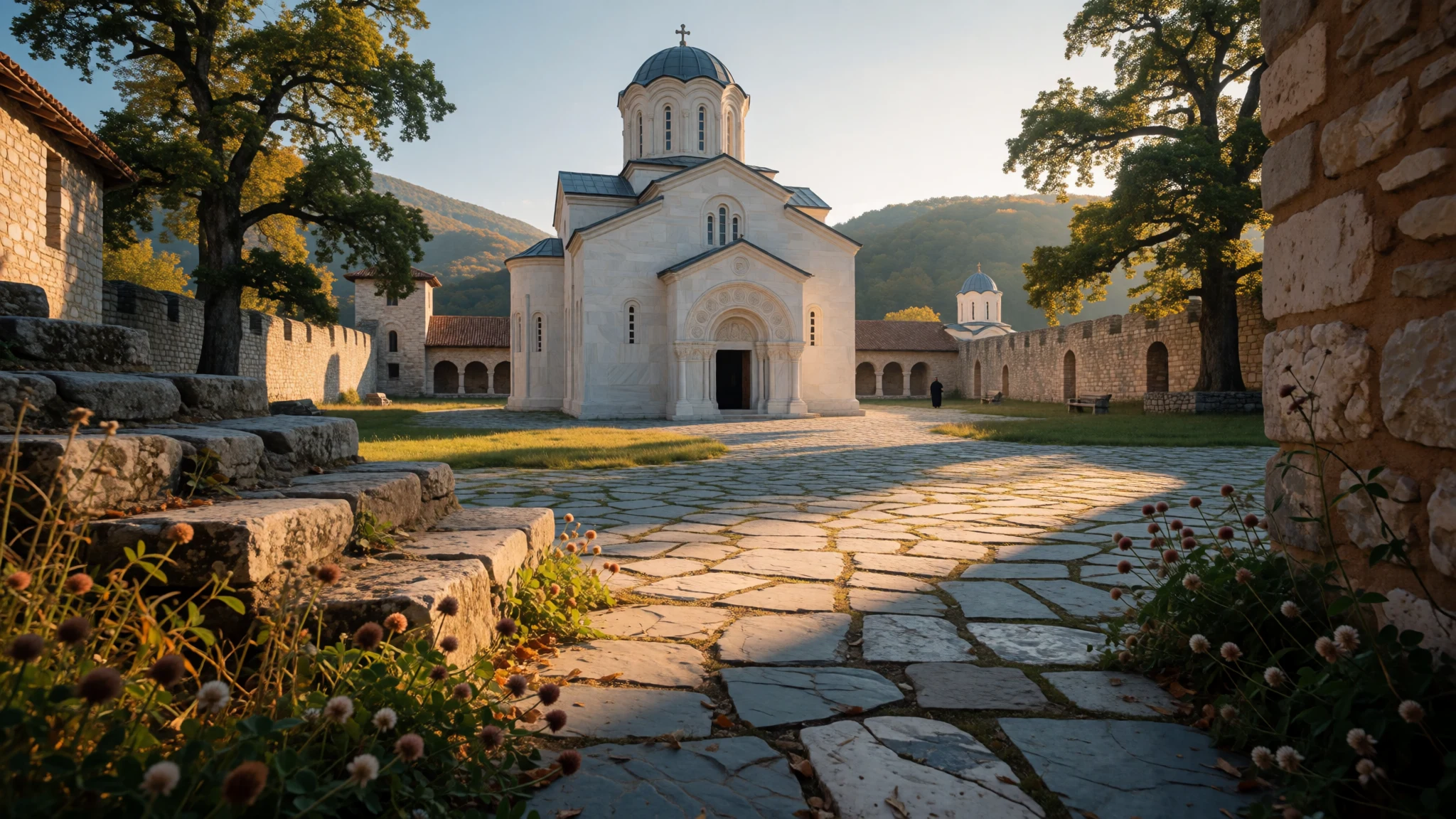
Studenica monastery is a deeply atmospheric Serbian Orthodox complex where medieval stonework and icon painting still dominate the mood.
The place
Studenica monastery (Manastir Studenica) is a Serbian Orthodox monastery in central Serbia, set up in a quiet valley near Kraljevo. The site is dedicated to the Presentation of the Holy Virgin and is closely tied to the medieval Serbian state: it’s regarded as a mother-church for Serbian monasteries.
The overall feeling at Studenica is one of deliberate calm. White stone, darker shadows in doorways, and layered church volumes make the complex readable even before getting into the smaller spaces. Architecture is the headline here: the main churches use white marble and are known for housing older Byzantine-style painting collections.
It’s also a place where history feels physical. Rather than a single monument, the monastery reads like a long conversation across generations—new parts added, repairs made after conflict, and continued care over time. Walk the paths slowly to catch how different buildings sit in relation to each other and to the slope.
Practical note: the climb from parking areas to viewpoints is rarely dramatic, but it can be tiring in heat, and the stone paths can be slippery when damp. In spring and autumn, the light is friendly for photos and the temperature is usually comfortable for wandering between churches and courtyards. During peak day trips, the inner areas can get busy enough that silence becomes harder, but going earlier helps a lot.
If the idea is to see medieval Serbia at ground level—stone, paint, and devotion in one small valley—Studenica delivers.
Its story
Studenica monastery began as a statement of power and faith in the late 12th century, when Stefan Nemanja founded the monastery not long after stepping down from rule. His early years inside the monastic life are tied to the first major phase of works, completed by 1196 in the period after his abdication.
The next chapter belonged to his son, Stefan, who oversaw Studenica after Nemanja eventually went on to Hilandar. Nemanja later died in 1199, and the family story deepens again when Rastko (Saint Sava) brought Nemanja’s relics to Studenica after reconciling with his brothers. With that, Studenica moved beyond being just a religious site and became a centre of medieval life—political, cultural and spiritual.
Later monarchs shaped the monastery’s look. King Radoslav added a narthex in 1235, and King Milutin is remembered for building a smaller church dedicated to saints Joachim and Anna. Over time, the monastery’s role kept shifting with the region’s fortunes.
After the end of the last medieval Serbian states in 1459, Studenica faced assaults during the Ottoman period. Damage followed, and the frescoes in the Church of the Virgin were repainted during a significant restoration in 1569.
Today, that long timeline matters when looking at the buildings: even when the stone looks unified, the monastery’s layers remind visitors that this is not a frozen snapshot. It’s a living historic complex shaped by rulers, saints, conflict, and repair.
What to see
- Church of the Virgin (Bogorodičina crkva) — central church area
Studenica’s main church complex is dedicated to the Virgin, with interior painting that’s strongly associated with Byzantine-era traditions. The white stone and the way light falls on openings make the church feel both solid and reverent—especially when crowds thin out.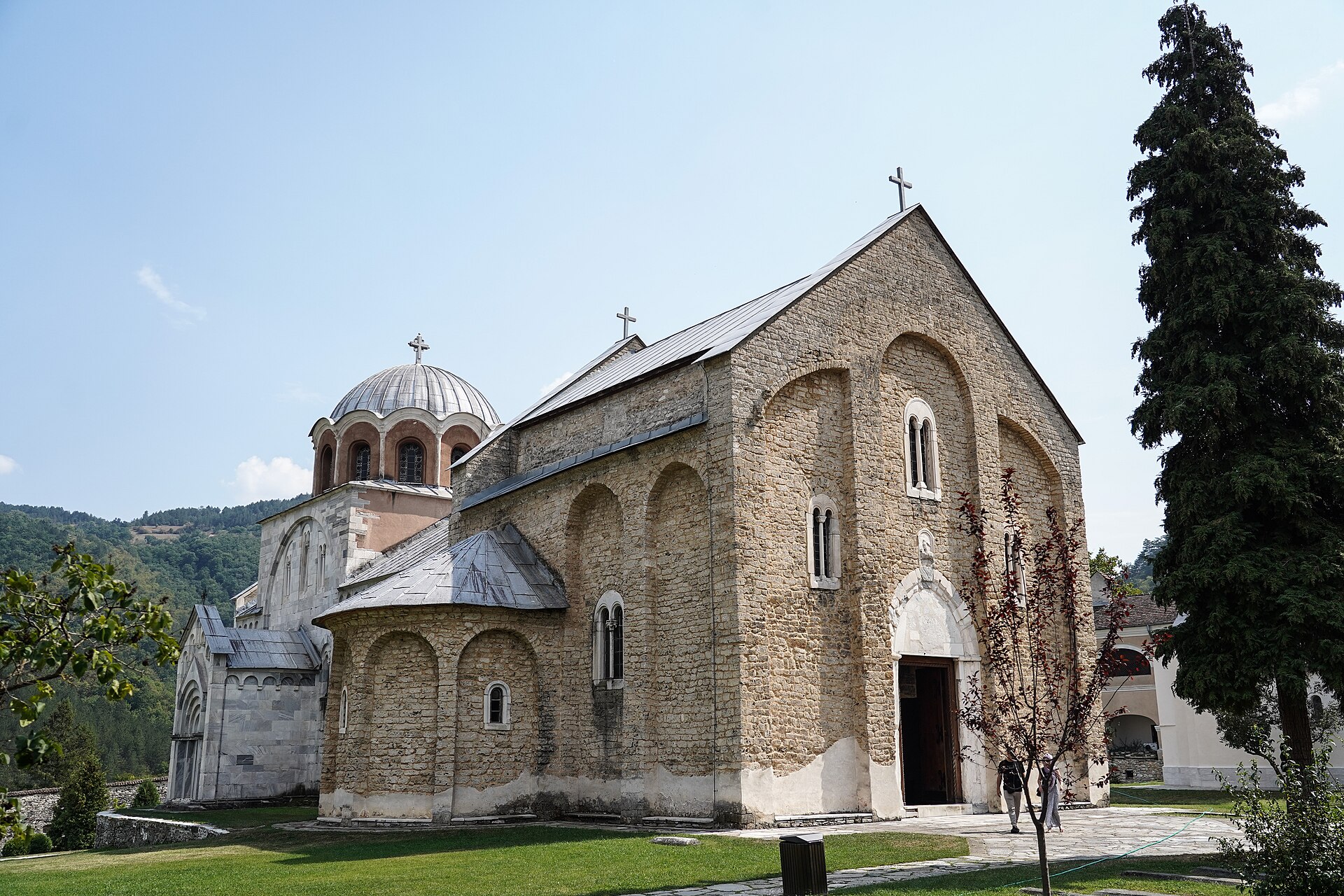
- Church of the King (Kraljeva crkva) — upper monastery grounds
A second key church within the Studenica complex, often approached for its setting among the monastery buildings. The church’s massing and stonework help reveal how the site was planned as a group, not a lone landmark—good for slow walking and viewpoint checks.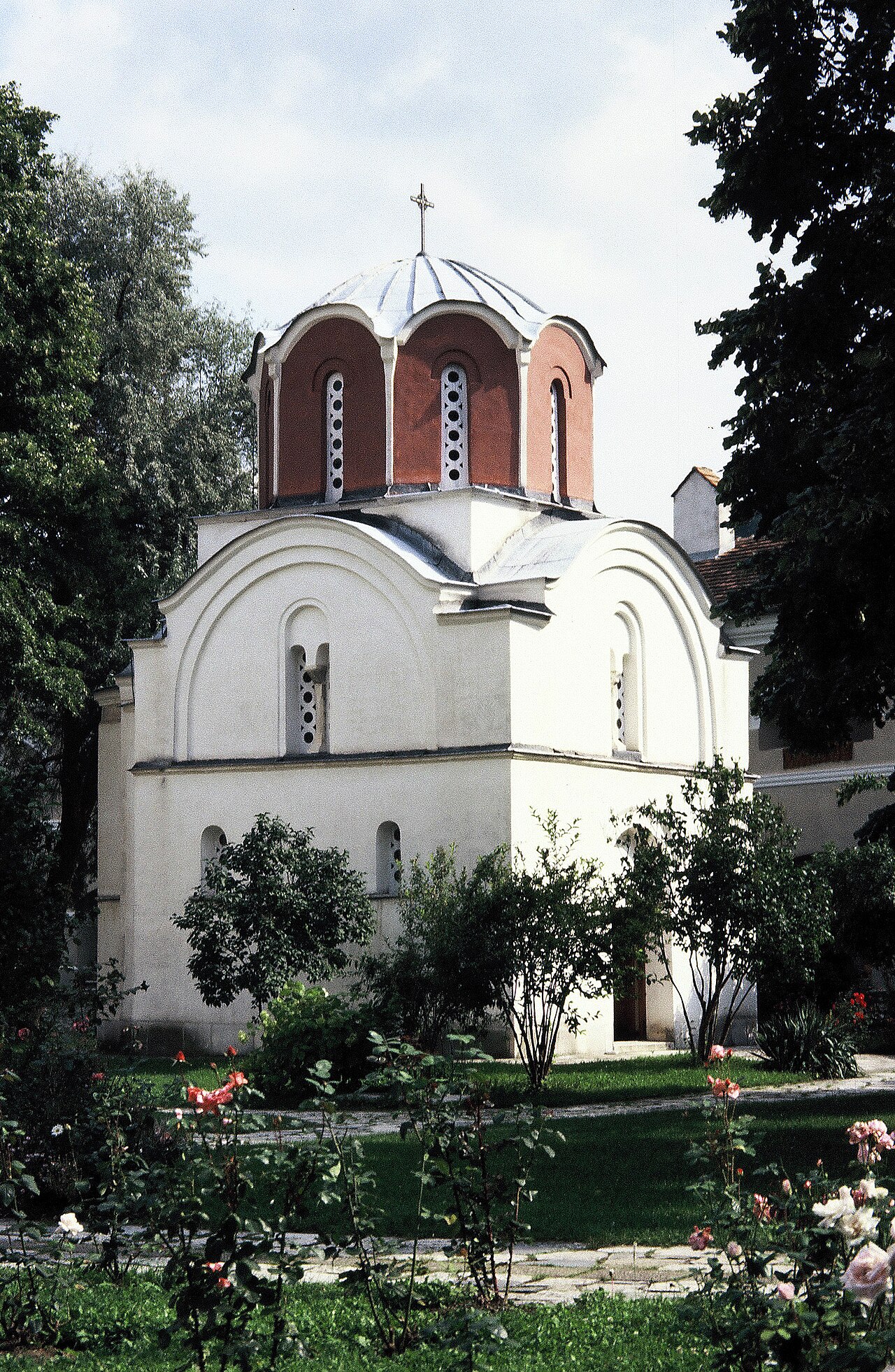
- Monastery walls and courtyards — approach and perimeter
Stone boundaries and the inner courtyards create a kind of micro-climate. Even without studying every façade detail, the layout guides movement: entrances, passages and small open pockets make it easier to pace the visit and find calmer angles away from the busiest circulation paths.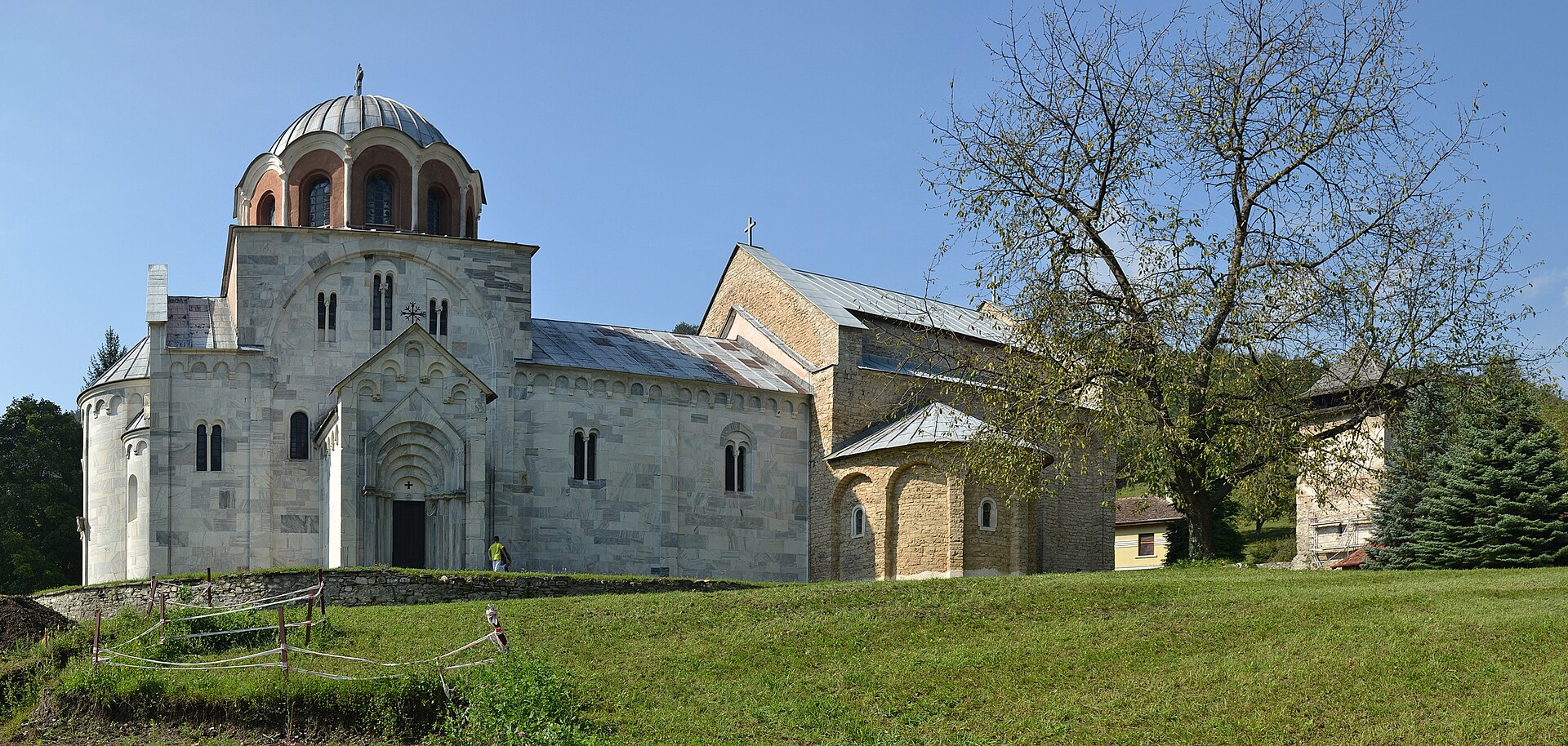
- Isposnica of Saint Sava (small chapel) — side chapel zone
Just beyond the main churches, the chapel setting is designed for stillness rather than sightseeing. It’s a good stop to reset after busier areas. Look for how the smaller building sits quietly within the greenery and stonework rather than competing for attention.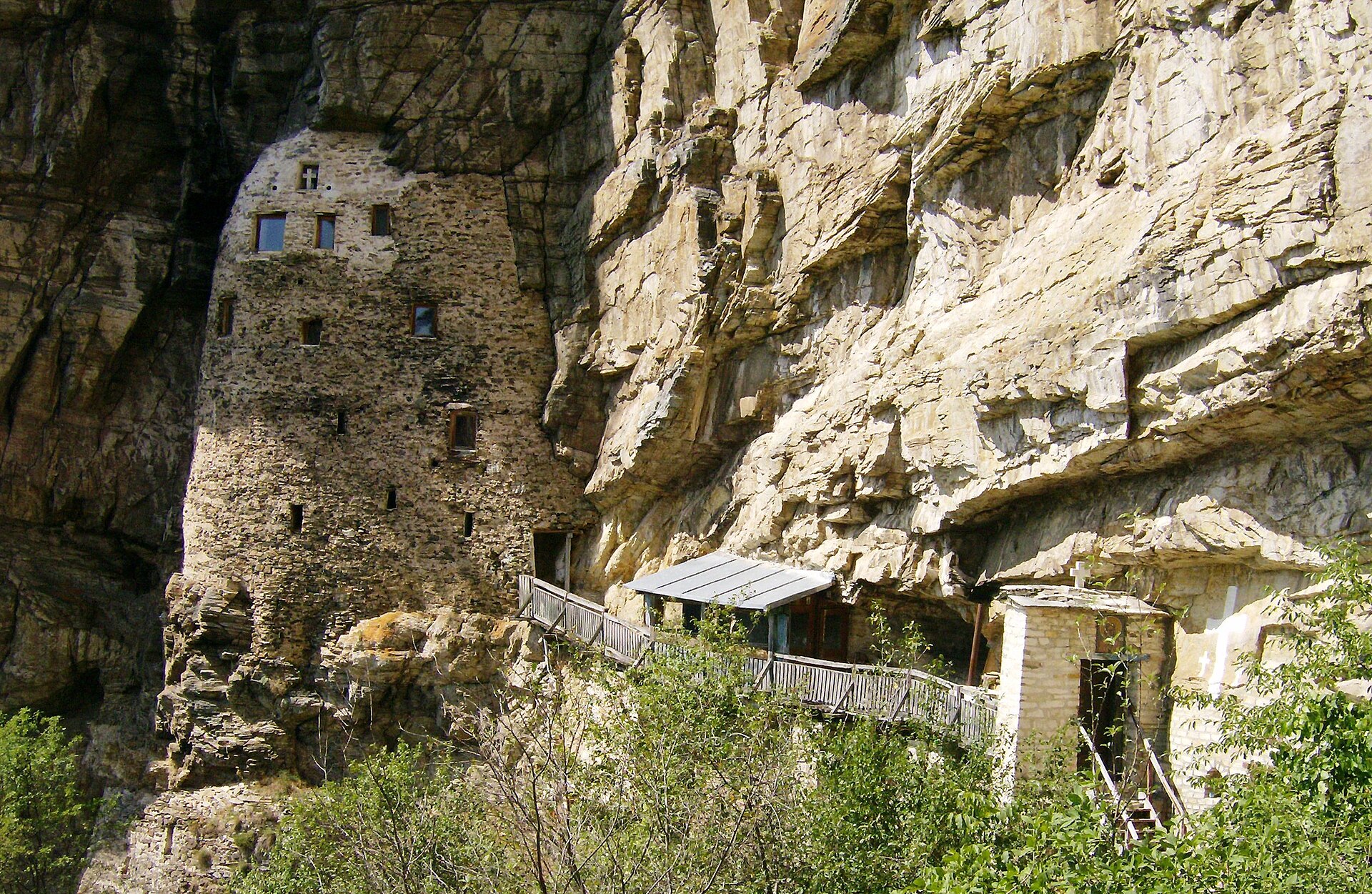
- Details walk: portals and stone patterns — between main churches
Studenica is worth lingering over because its ornament sits in the stonework: portals, edges and carved transitions. From a doorway angle, the texture reads clearly, while from further back the proportions of the façades snap into place.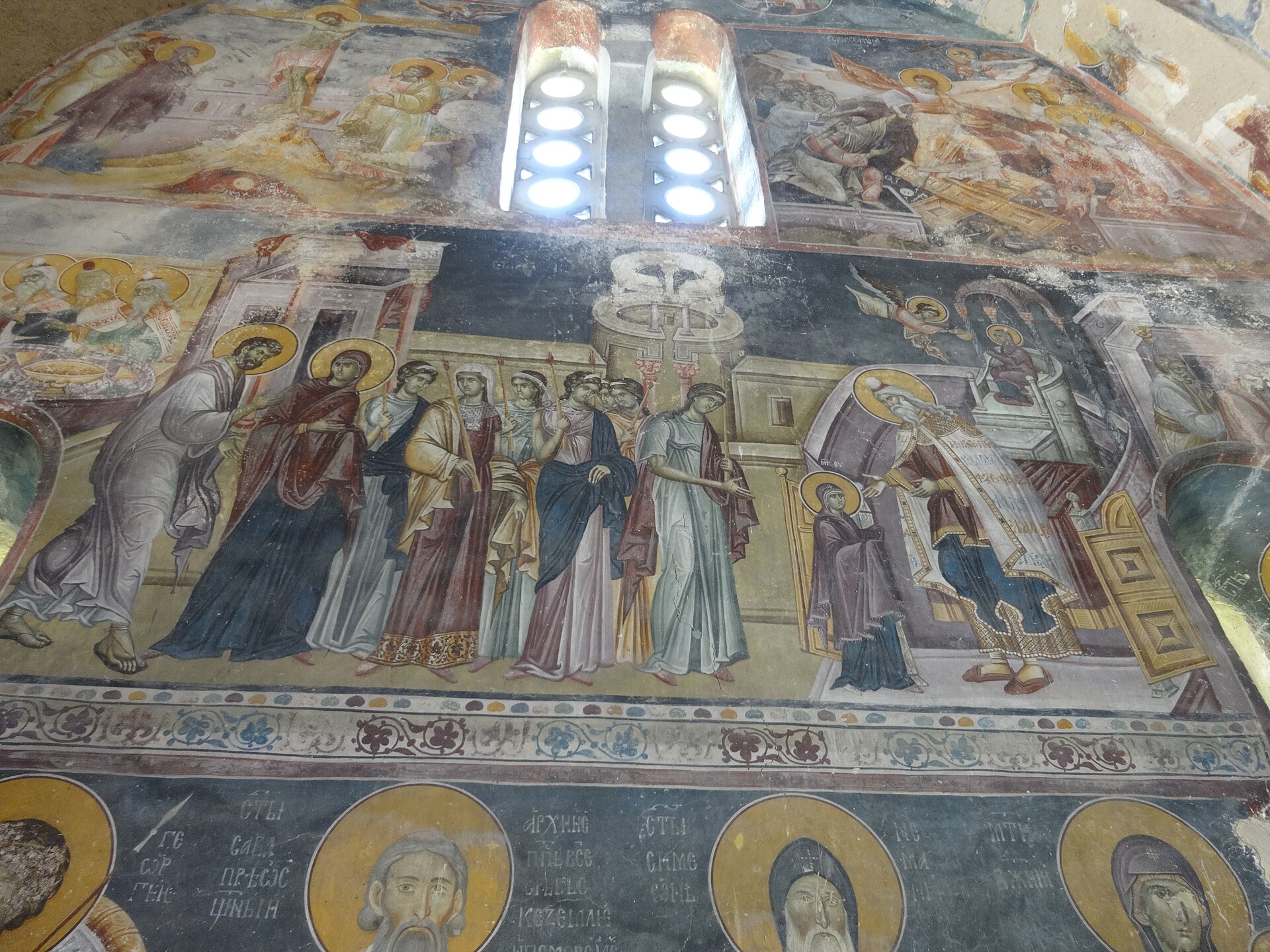
Culture
Studenica monastery is Serbian Orthodox, and the culture you’ll notice is mostly about respectful quiet and practical hospitality. Serbian visitors often come in family groups, and the mood can be chatty outdoors while inside spaces are more subdued. Dressing matters because a monastery visit blends worship with history: shoulders and legs should be covered, and hats should come off in church interiors.
Photography is usually a “watch the room” situation—avoid photographing people in prayer or close-ups where it feels intrusive. If someone asks for no photos, it’s best to step back immediately and keep the phone away. Listening to how worshippers behave is a useful guide.
Language-wise, it’s common to find friendly help. Many younger people may speak some English, while older visitors often have other European languages; asking directions with patience usually works.
One more etiquette angle that matters at monasteries is footwear and movement: stone steps and thresholds are part of the architecture, so take your time, follow any signals you see on-site, and don’t block entrances.
Visitor etiquette: keep voices low inside, cover shoulders and legs, and follow any “no photos” signs or requests from the staff or worshippers.
What to wear
At Studenica monastery, clothing needs to suit a religious site and the local seasons. Traditional dress in Serbia is often built around layered fabrics and distinctive embroidery, but visitors today usually focus on simple, modest outfits rather than aiming for folk costume. In Orthodox settings, the key is coverage: loose tops and trousers or long skirts are the comfortable norm, and lightweight layers help because the valley can feel cooler in shade.
What people wear now around the complex is typically everyday clothing—jeans, long sleeves, trainers—just adjusted for modesty. On church-visiting days, a thin scarf or shawl can be useful for covering shoulders quickly.
For a visitor, the biggest practical concerns are stone surfaces and variable weather. Choose closed shoes with good grip; bare sandals can become uncomfortable on uneven pathways. If visiting in colder months, bring a warm layer that still allows easy movement inside churches. In warmer months, breathable fabrics matter, but keep the length modest.
In short: modest, covered, and comfortable for walking, with a ready-to-use layer for church interiors.
What to eat
- Roštilj platter (mixed grilled meats) — local restaurants in the Kraljevo area
A classic Serbian meal built around grilled meats, often served as a platter with several pieces. Look for it in local restaurants and roštilj-focused eateries, especially in towns where day-trippers stop for lunch. - Grilled chicken with cheese filling (often wrapped) — traditional restaurants and grill eateries
A common “meat-loving” variation on Serbian grilling is chicken prepared with cheese inside, sometimes wrapped and grilled until browned. It’s widely offered at everyday restaurants rather than just formal venues. - Local cheeses and bread — small eateries and everyday restaurants
Serbian meals frequently lean on cheeses and bread alongside grilled dishes. These make a handy pre-walking snack if you stop at a simple eatery before heading back to the monastery roads. - Savoury Balkan-style sharing starters — most Serbian restaurants in regional towns
Expect plates designed for sharing—small hot or cold items that complement grilled meat. They’re useful for tasting more without committing to only one main course, and you’ll usually find them on standard restaurant menus. - Simple refuel: hot drinks and pastries — cafés in nearby towns such as Kraljevo
Between sightseeing, a warm drink and a pastry can be a low-effort comfort. It’s the sort of stop that works well when timing around church visits matters and seating is limited.
Plan it
Best time. March–April for milder conditions and comfortable walking; late October–November for cooler weather and longer shadows. March/April and autumn are usually the easiest for a monastery-paced day, while winter can be colder and summer can feel intense.
How long. 2–3
Getting there. Fly into Belgrade then travel onward by road or rail; from major cities, the last leg is typically by local bus or taxi to Kraljevo and then onward to Studenica.
Budget. mid
Tips
- Start earlier in the day to reduce the feel of tour groups inside the churches.
- Wear grippy closed shoes: stone paths and thresholds can be slippery when damp.
- Bring a light layer for church interiors, where shade can cool things down.
- If visiting in hotter months, plan a slower pace and take breaks between church areas.
Etiquette
- Cover shoulders and legs in church areas.
- Keep voices low inside and avoid blocking entrances.
- Ask before photographing people or close-up worship moments.
Nearby
Sources
- Wikidata Q143042 (CC0)
- Wikipedia (Studenica Monastery) (CC BY-SA 4.0)
- Wikivoyage (Serbia) (CC BY-SA 4.0)
- Photo: photos/01-studenica-monastery-manastir-studenica-by-pudelek.jpg (CC BY 3.0)
- Photo: photos/02-manastir-studenica-bogorodi-ina-crkva-sa-ulaznim-portalom.jpg (CC BY-SA 4.0)
- Photo: photos/03-map-of-the-studenica-monastery-complex.jpg (CC BY-SA 4.0)
- Photo: photos/04-hpim6942crop1.jpg (CC BY 3.0)
- Photo: photos/05-manastir-studenica-srbija-018.jpg (CC BY 3.0)
- Photo: photos/06-.jpg (CC BY 3.0)
- Photo: photos/07-manastir-studenica-1-bn.jpg (CC BY 3.0)
- Photo: photos/08-manastir-studenica-srbija-041.jpg (CC BY 3.0)


