Stonehenge
Stonehenge, United Kingdom
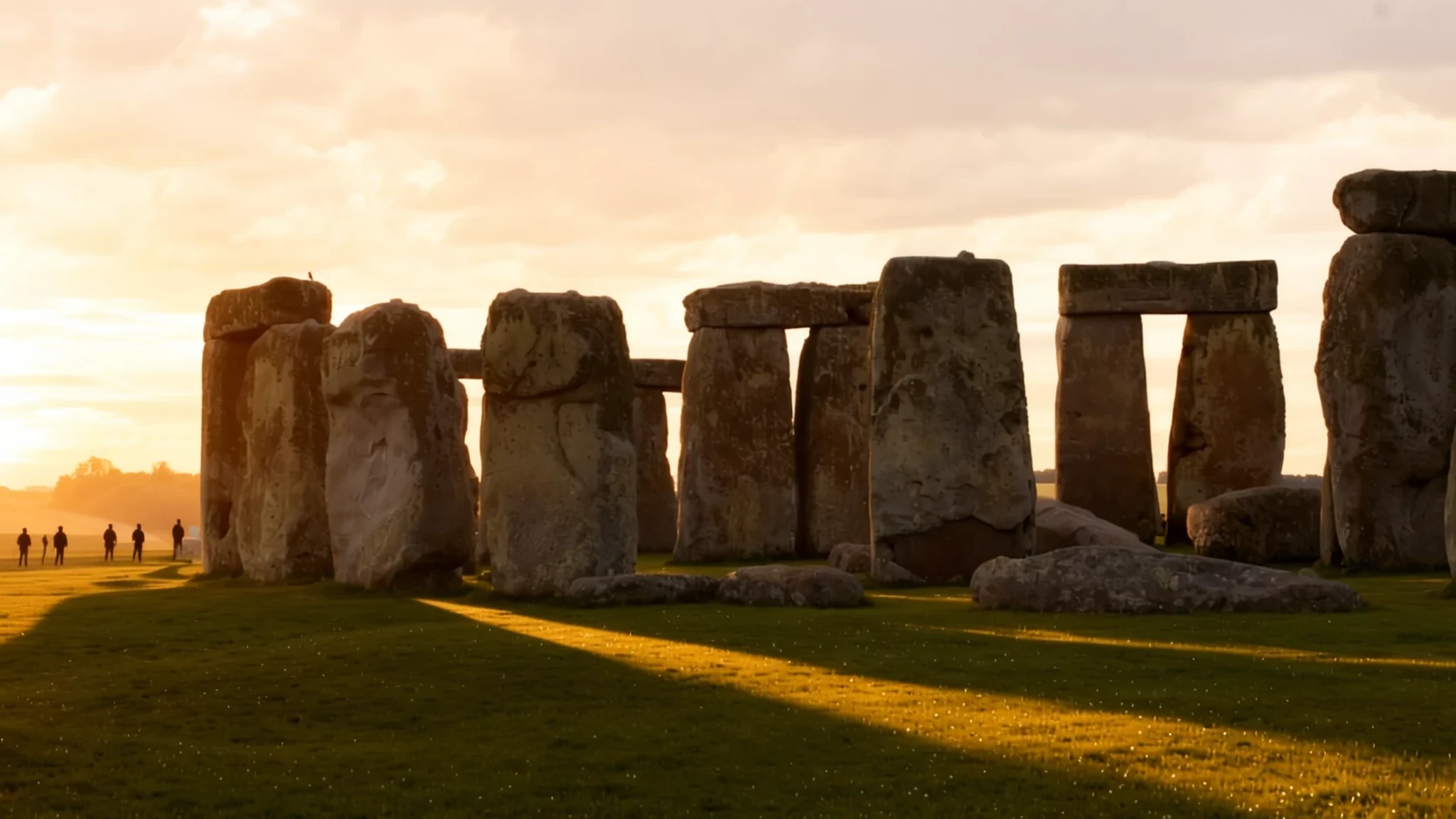
Stand before the most famous prehistoric megalithic structure in Britain, a magnificent circular monument standing proudly on Salisbury Plain since ancient times.
The place
Stonehenge rises from the chalk expanses of Salisbury Plain in Wiltshire, England, situated a short distance west of Amesbury. This iconic prehistoric megalithic complex features a dramatic outer ring of vertical sarsen stones. Each standing pillar reaches impressive proportions, capped by horizontal lintel stones secured through precise mortise and tenon joints, a construction technique unique among monuments of that era. Further inside the primary ring stands an arrangement of smaller bluestones alongside free-standing trilithons—pairs of robust vertical sarsens supporting a single heavy top stone. The entire ancient site is carefully positioned within a ring of earthworks, positioned directly in the middle of one of England's densest concentrations of Neolithic and Bronze Age monuments, which includes numerous historical burial mounds spread across the rolling Wiltshire landscape. Visitors approaching the site today encounter a vast, open expanse of sky and grassland where the wind sweeps across the ancient turf. While the monument itself is roped off to protect the fragile stones from wear, well-maintained paths allow visitors to walk a loop around the perimeter, gaining an intimate appreciation of the engineering feats achieved by Neolithic builders. The surrounding rolling countryside remains largely pastoral, dotted with grazing sheep and cattle under shifting cloud formations. Managing the delicate balance between heavy visitor traffic and archaeological preservation requires careful stewardship, led by English Heritage and the National Trust, ensuring that travellers can experience the timeless atmosphere of the Wiltshire plains without compromising the integrity of the prehistoric earthworks and surrounding tumuli.
Its story
The creation of Stonehenge unfolded across multiple distinct construction phases, beginning long before the famous sarsen stones were ever hauled to the Salisbury Plain. The earliest stage of the monument comprised a circular bank and ditch earthwork, constructed during an era when local communities were first transforming the British landscape. Following these initial earthworks, generations of builders laboured to transport heavy stones across miles of rugged terrain. The iconic sarsen circle and the central trilithons were subsequently erected during a vibrant period of prehistoric development, utilising sophisticated stone-cutting techniques that relied on wooden pegs, stone hammers and meticulous tongue-and-groove joints to lock the horizontal lintels securely onto the upright pillars. Meanwhile, the smaller bluestones travelled an incredible distance from the Preseli Hills in Wales, whether transported by human ingenuity over land and water or carried by ancient glacial movements. Throughout these successive building campaigns, the monument maintained a profound celestial connection, aligning deliberately with the sunrise of the summer solstice and the sunset of the winter solstice. Beyond its astronomical functions, archaeological discoveries suggest that the site served as a sacred burial ground from its earliest origins, functioning as a final resting place for esteemed members of ancient tribal societies. Over subsequent centuries, the monument fell slowly into partial ruin as fallen lintels and leaning pillars reshaped its silhouette against the horizon. Transformed from an active ceremonial centre into a revered cultural icon, Stonehenge has captured the imagination of poets, antiquarians, scientists and modern travellers for generations, securing its status as a cornerstone of human heritage.
What to see
- The Avenue — Salisbury Plain
A ceremonial approach way linking the ancient stone circle directly to the River Avon. The parallel banks and ditch remain visible on the landscape, tracing a historic path that ancient ritual participants once followed up towards the ridge.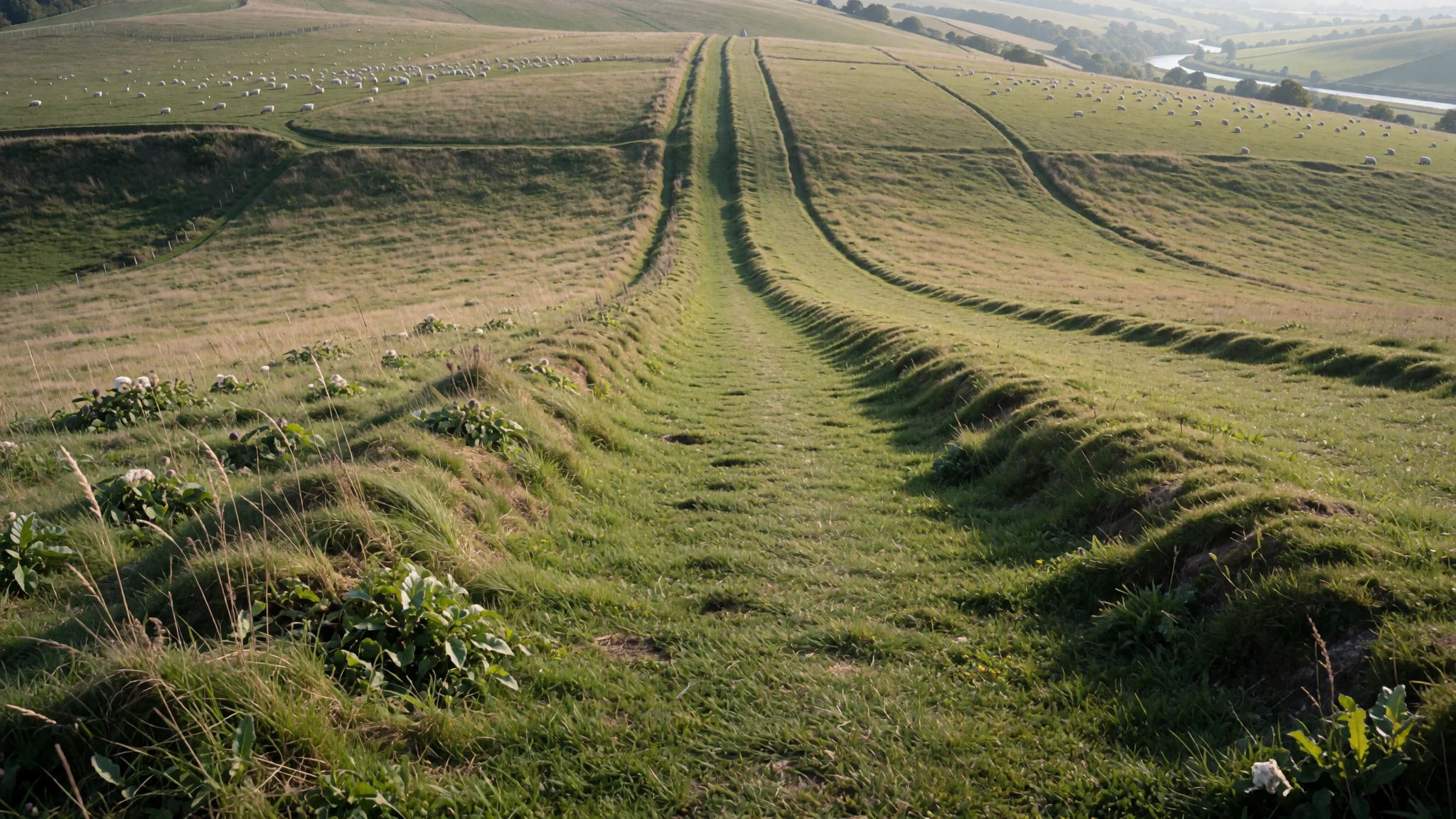
- Stonehenge Cursus — North of Stonehenge
A massive and mysterious linear earthwork stretching across the chalk downs just north of the main stone circle. Consisting of a long parallel ditch and bank running east to west, its exact ritual or territorial purpose continues to puzzle modern archaeologists.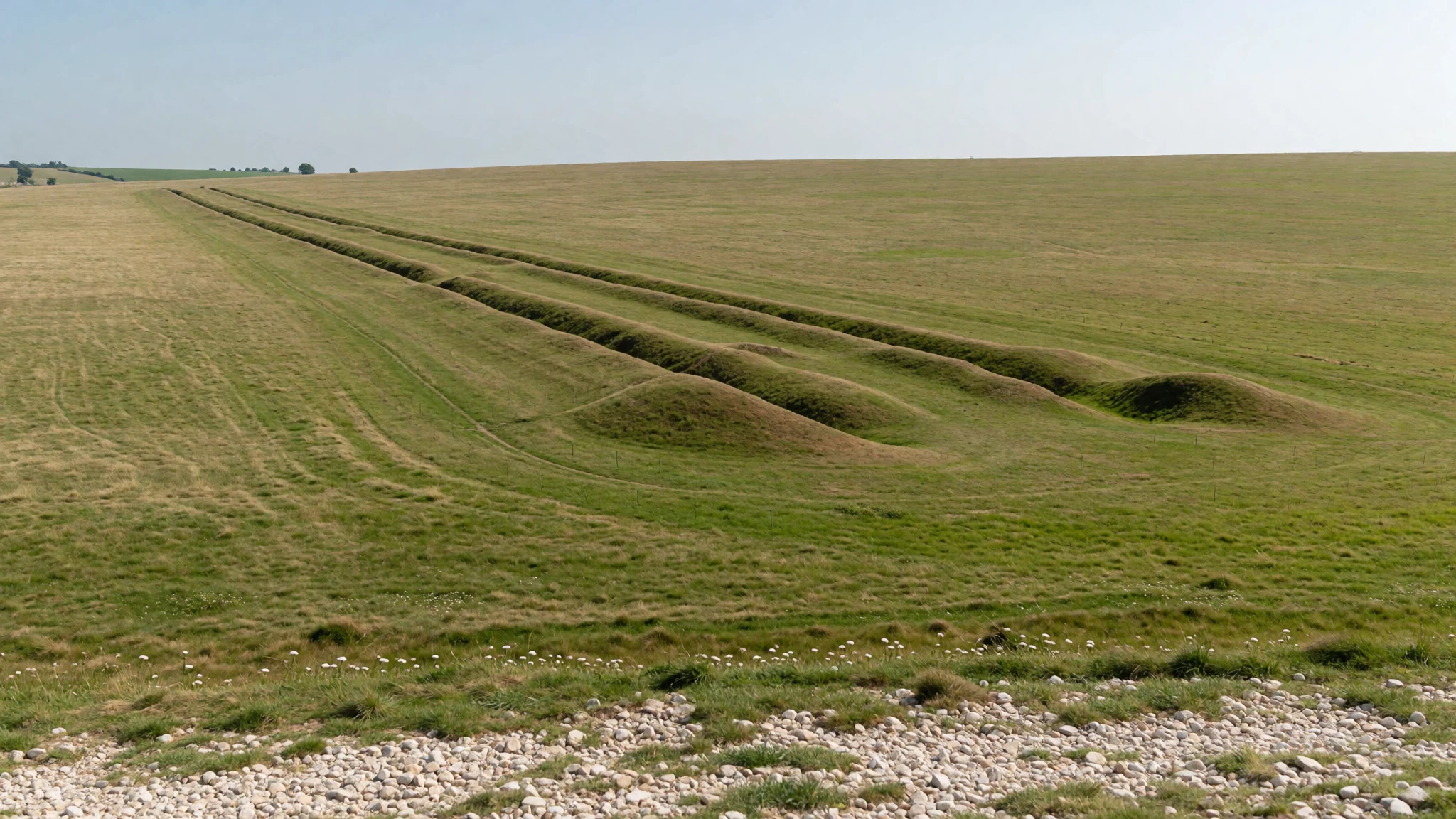
- King Barrows Ridge — The Avenue
A prominent elevated ridge following the path of the ancient Avenue, offering visitors sweeping panoramic views across the entire Stonehenge bowl and the surrounding clusters of prehistoric burial mounds scattered throughout the Wiltshire countryside.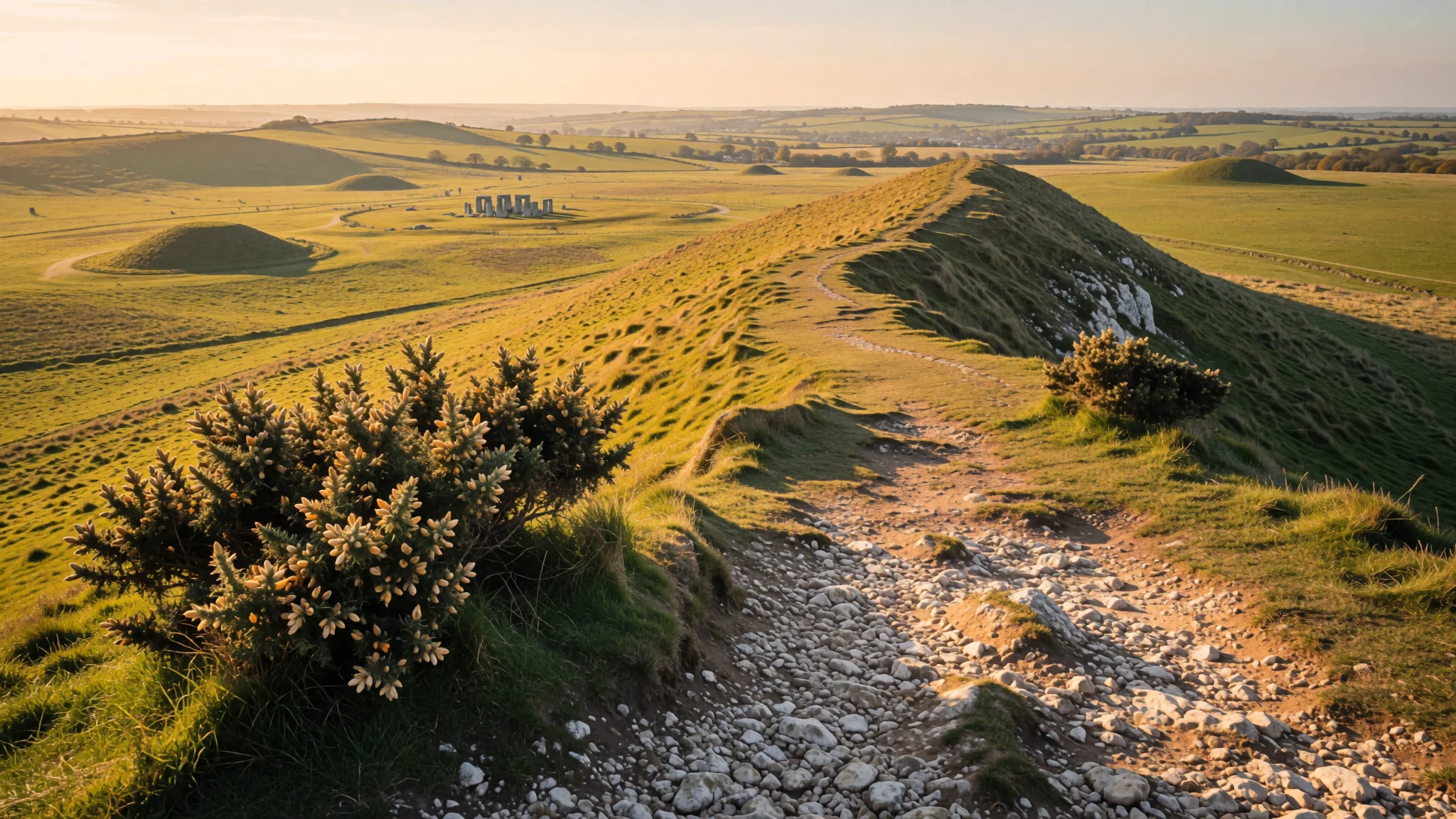
- Normanton Down Barrows — South of Stonehenge
An extensive cemetery comprising more than fifty Bronze Age barrows located a short distance south of the main monument. This significant archaeological zone includes famous burial sites such as Bush Barrow, which yielded remarkable gold artefacts now preserved in the Wiltshire Museum.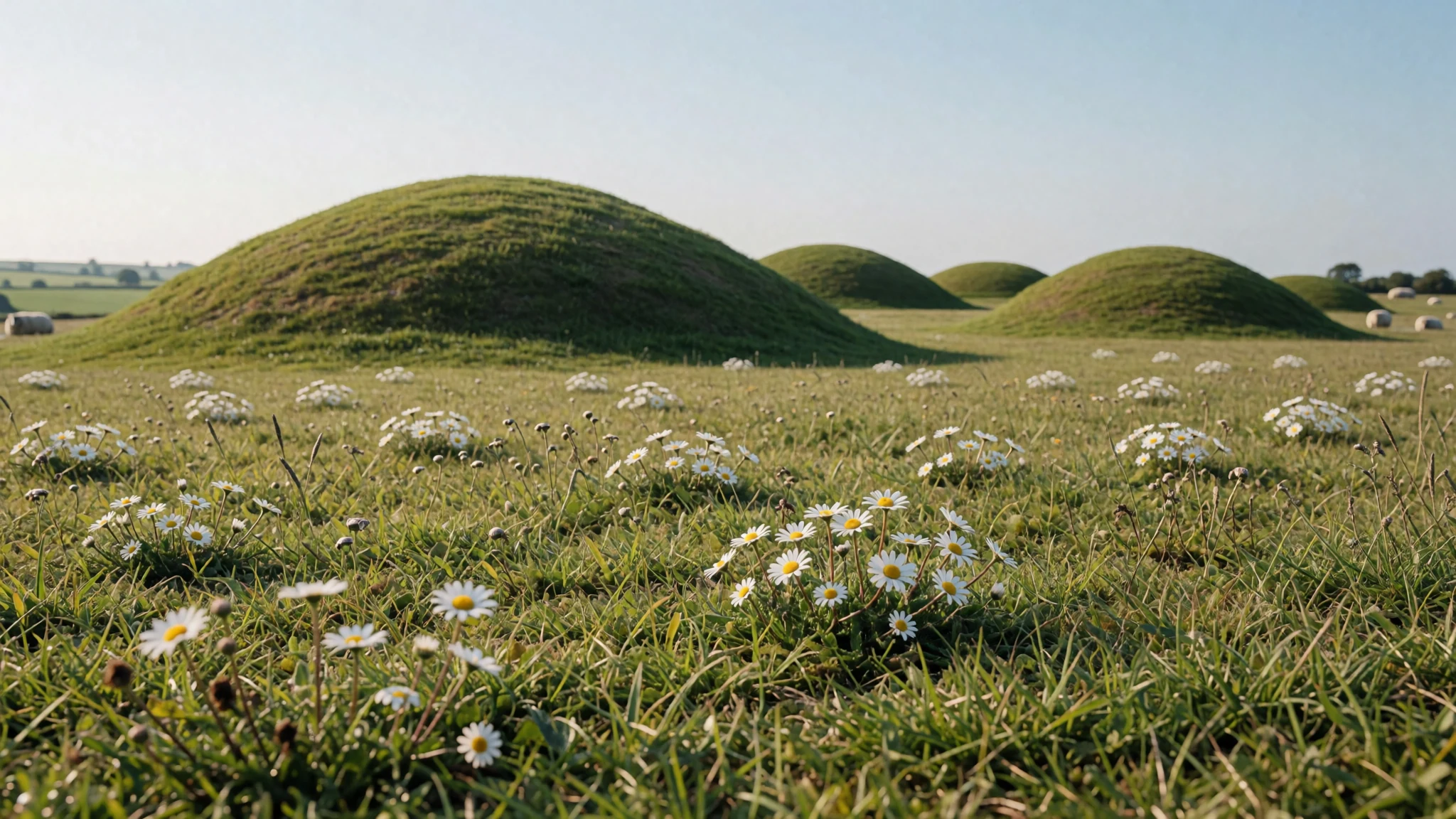
- Durrington Walls — Durrington
A vast Neolithic settlement site situated just north of the stone circle near Woodhenge. Excavations here have revealed evidence of a large ancient village and circular timber structures believed to have housed the builders and participants of Stonehenge ceremonies.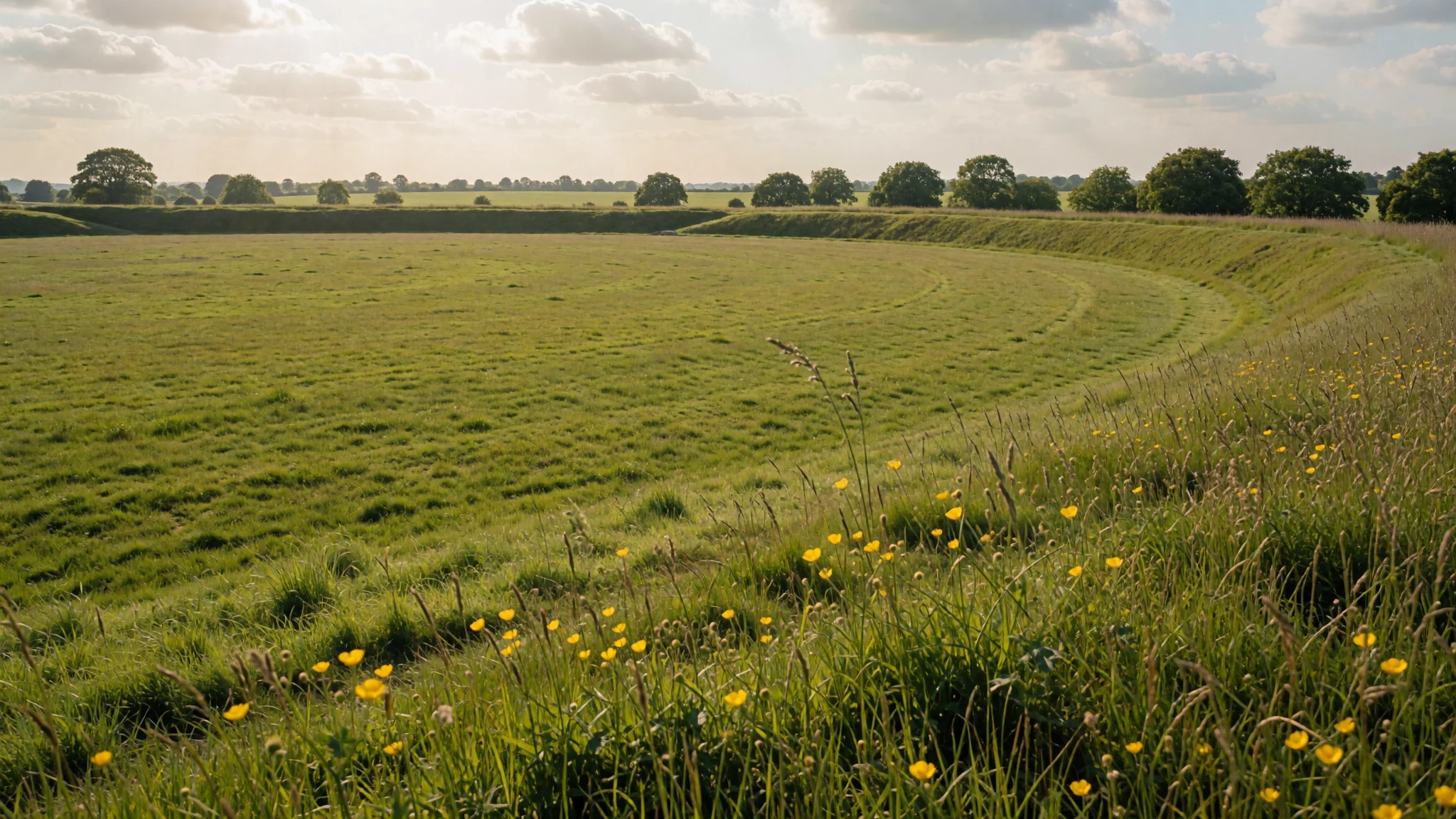
Culture
The cultural legacy of Stonehenge stretches from ancient Neolithic ritual gatherings to contemporary celebrations surrounding the solstices. For modern visitors, the site represents a deeply reverent encounter with deep time, where millions of travellers come each year to ponder the ingenuity of our ancestors. The surrounding Wiltshire landscape is rich with folklore, ancient tales of giants, and modern neo-pagan traditions that bring thousands of revellers to the stones during the summer solstice to greet the rising sun. Local communities in nearby Amesbury and Salisbury maintain a welcoming atmosphere for travellers, preserving traditional English hospitality in local pubs, village shops and historic inns. While the monument is carefully protected by heritage authorities, public access is granted during specific astronomical events under controlled conditions to respect both the heritage site and the spiritual communities who hold the stones sacred. When visiting the sacred stone circle, please remain on the designated walking paths and refrain from touching or climbing the ancient megaliths.
What to wear
Traditional attire in rural Wiltshire historically reflected practical agricultural life, featuring sturdy woollen garments, tweed jackets, and weather-resistant fabrics designed to withstand the damp, windy conditions of the chalk plains. Today, visitors and locals alike dress in standard modern casual wear, favouring comfortable layers, jeans, fleece jackets, and practical outerwear suited for unpredictable British weather. Because Stonehenge is fully exposed to the elements on an open plain, conditions can change rapidly from bright sunshine to sudden rain and biting winds, regardless of the season. Travellers should pack a waterproof jacket, a warm fleece or sweater, and sturdy, comfortable walking shoes or boots capable of handling uneven chalk footpaths and muddy turf. Wearing sensible footwear is essential for exploring the surrounding landscape of barrows, earthworks, and walking trails stretching out from the visitor centre towards the stones.
What to eat
- Traditional Fish and Chips — Amesbury and Durrington
Crispy battered fresh fish served alongside thick-cut hot chips, traditionally sprinkled with salt and vinegar and wrapped in paper. Available at local village eateries such as Kingfish Fish & Chips Restaurant in Durrington or Amesbury Chippy in the centre of town.
- Local Cask Ales — Local village pubs
Traditional British ales brewed locally in Wiltshire and nearby Salisbury by regional producers such as Stonehenge Ales and Hop Back Brewery. These well-crafted beverages feature rich malt flavours and are served on tap in traditional village pubs throughout the local area.
- Wiltshire Pork Pie — Local country pubs and farm shops
A classic English pork pie featuring coarsely chopped seasoned pork encased in hot water crust pastry and set in savoury jelly. Enjoy this hearty snack at traditional bakeries, country pubs, or farm shops scattered across the Salisbury Plain region. - Classic Cream Tea — Village tearooms in Amesbury
Freshly baked warm scones served with rich clotted cream and sweet strawberry jam, accompanied by a traditional pot of English breakfast tea. A quintessential afternoon treat best enjoyed in cosy village tearooms around Amesbury and Salisbury.
Plan it
Best time. May and September offer the most comfortable weather for walking the open plain, while July and August are the hottest months and bring larger crowds; October and November are the wettest, so pack for rain in autumn.
How long. 1–2
Getting there. Take a direct train from London Waterloo to Salisbury or Andover, then catch the local Salisbury Reds tour bus directly to the Stonehenge visitor centre.
Budget. mid
Tips
- Book your timed admission tickets online in advance to guarantee entry
- Arrive early in the morning before the tour buses from London arrive to enjoy a quieter atmosphere
- Wear sturdy, comfortable walking shoes as the surrounding landscape paths can be uneven and muddy
- Arrange to leave heavy luggage with your hotel before you travel, as large bags cannot be easily carried around the open monument trails
- Bring a waterproof jacket and windbreaker, as the open Salisbury Plain is frequently exposed to sudden rain and strong winds
Etiquette
- Stay strictly on the designated walking paths and do not attempt to touch or climb the ancient stones
- Take all your litter with you to help preserve the pristine condition of the UNESCO World Heritage landscape
Nearby
Sources
- Wikidata Q39671 (CC0)
- Wikipedia (rev 1377824638) (CC-BY-SA 4.0)
- Wikivoyage (rev 5236391) (CC-BY-SA 4.0)
- Photo 01-stonehenge-total.jpg (CC BY-SA 2.0)
