Stirling Castle
Stirling Castle, United Kingdom
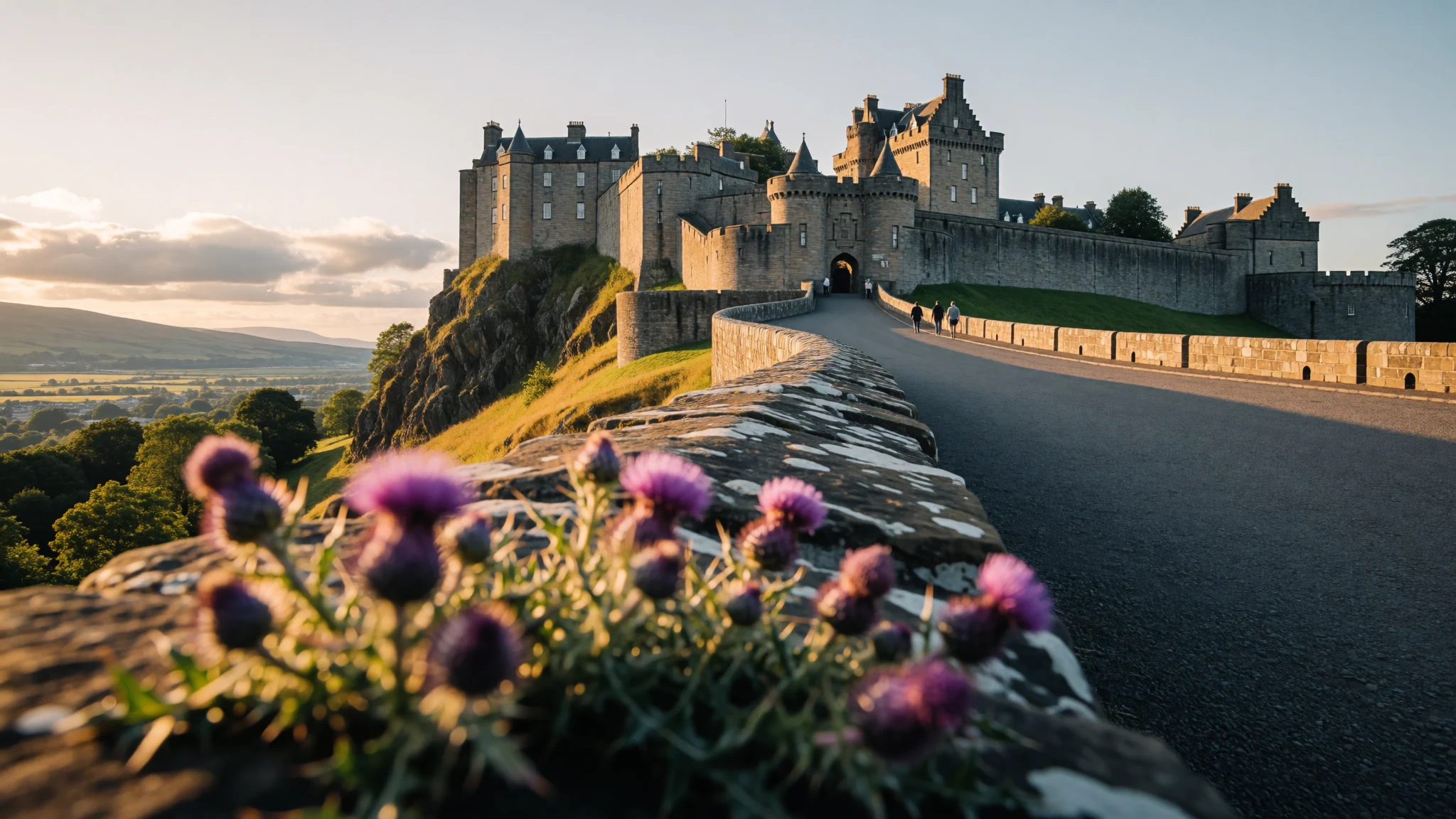
Stirling Castle is a Scottish royal palace on a cliff-edged crag, where a day of rooms, ramparts and far views feels like one sweep of history.
The place
Stirling Castle sits on a steep crag above the town of Stirling in central Scotland, grey stone on grey rock, with cliffs dropping away on three sides. The crag is a hard intrusion of rock that belongs to a wider geological formation called the Stirling Sill, and its shape explains the castle's job. For centuries the hill guarded the lowest place where the River Forth could be crossed, a role that lasted until the 1890s. Whoever held the rock controlled movement between the Highlands and the south.
Most of what stands today was built in the fifteenth and sixteenth centuries. A few fourteenth-century fragments survive, and the outer defences facing the town were added in the early eighteenth century. The result is less a single design than a layered one. Gatehouse, Great Hall, chapel and royal apartments each belong to a different moment, and the castle works as both fortress and palace, since Scottish monarchs used it as a home as well as a stronghold.
Today it is a scheduled monument run by Historic Environment Scotland. The approach is the first lesson in why it was hard to attack: from the Old Town it is a steady uphill climb on cobbles. The reward on a clear day is a wide view across the flat Forth valley, with the Wallace Monument on its own hill and the Ochil Hills behind. Summer brings coach parties and queues around midday, and wind on the ramparts is common in any month.
Its story
Stirling Castle begins as geology. The crag is quartz-dolerite, a hard rock about 350 million years old, which glaciers later scraped into the classic shape geologists call crag and tail: a steep face on one side and a long sloping ridge on the other, the ridge now carrying the Old Town. A hill fort stood on nearby Gowan Hill, so the area was probably used early, though archaeologists have found no sign of occupation on the castle rock itself before the late medieval period.
Legend fills the gap. Some scholars have linked the rock to Urbs Iudeu, a besieged stronghold in early records, and the sixteenth-century writer Hector Boece claimed Romans and the semi-legendary Kenneth MacAlpin both fortified it. These tales are hard to prove and are best enjoyed as local colour.
The documented story is one of repeated contest. There were at least eight sieges, several during the Wars of Scottish Independence, because whoever held the castle held the crossing and the road north. The last attempt came in 1746, when Bonnie Prince Charlie tried and failed to take it.
Between the sieges it was a court. Kings and queens were born, crowned or buried from here, and Mary, Queen of Scots was crowned in the Chapel Royal there in 1543, as an infant. The castle therefore carries two reputations, one of siege and one of ceremony, and the guides tend to lean on whichever the visitors seem keener on.
What to see
- The Royal Palace — Upper Square, Stirling Castle
The royal apartments are the castle's main set piece, built for Scottish monarchs of the sixteenth century in a Renaissance style. Carved ceiling roundels, rebuilt furnishings and woven tapestry reproductions show how a court lived. Rooms get crowded in summer, so go straight there after opening if the day looks busy.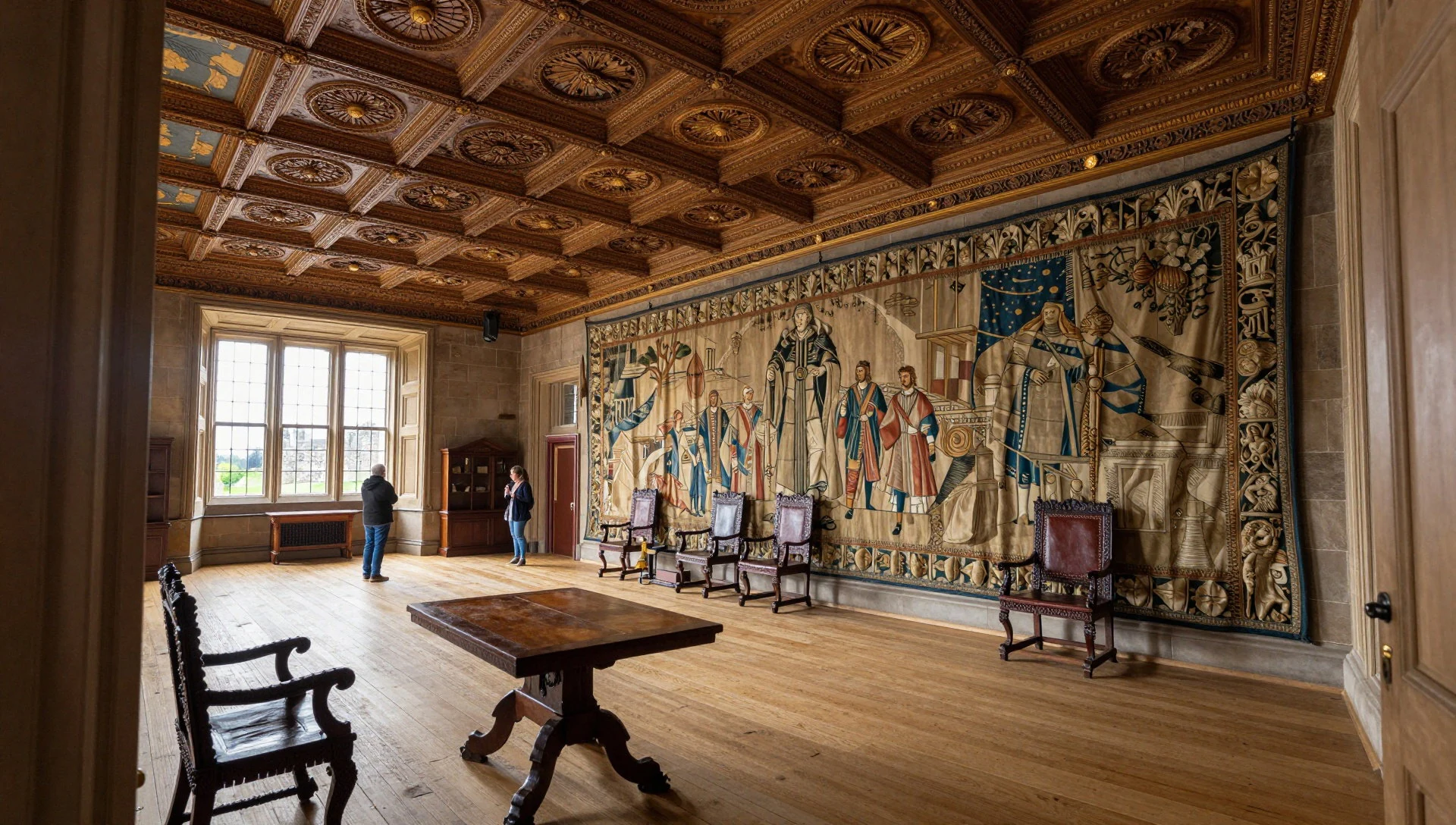
- The Great Hall — Upper Square, Stirling Castle
The Great Hall is a large ceremonial space with a hammerbeam roof and a distinctive warm-coloured exterior. It was built as a stage for royal feasting and diplomacy. Stand at one end and picture the room full of courtiers; the scale is easier to grasp from inside than from the courtyard.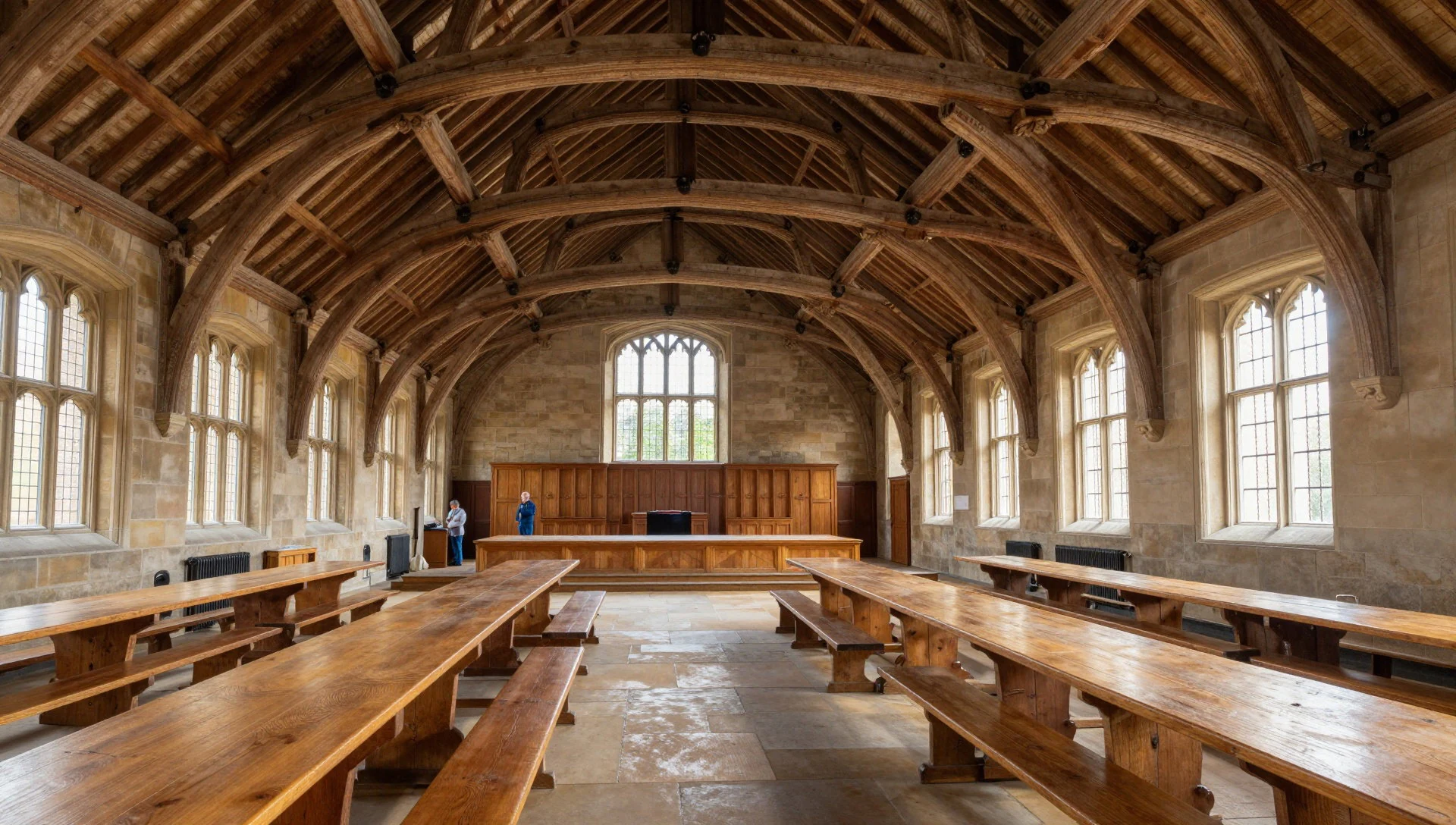
- The ramparts and views — Outer defences, Stirling Castle
Walking the outer defences gives the best sense of why the rock mattered. The ground falls steeply away, and the Forth valley spreads out flat below with the Wallace Monument rising from its own hill. Allow time for this even in showery weather, but bring a windproof layer.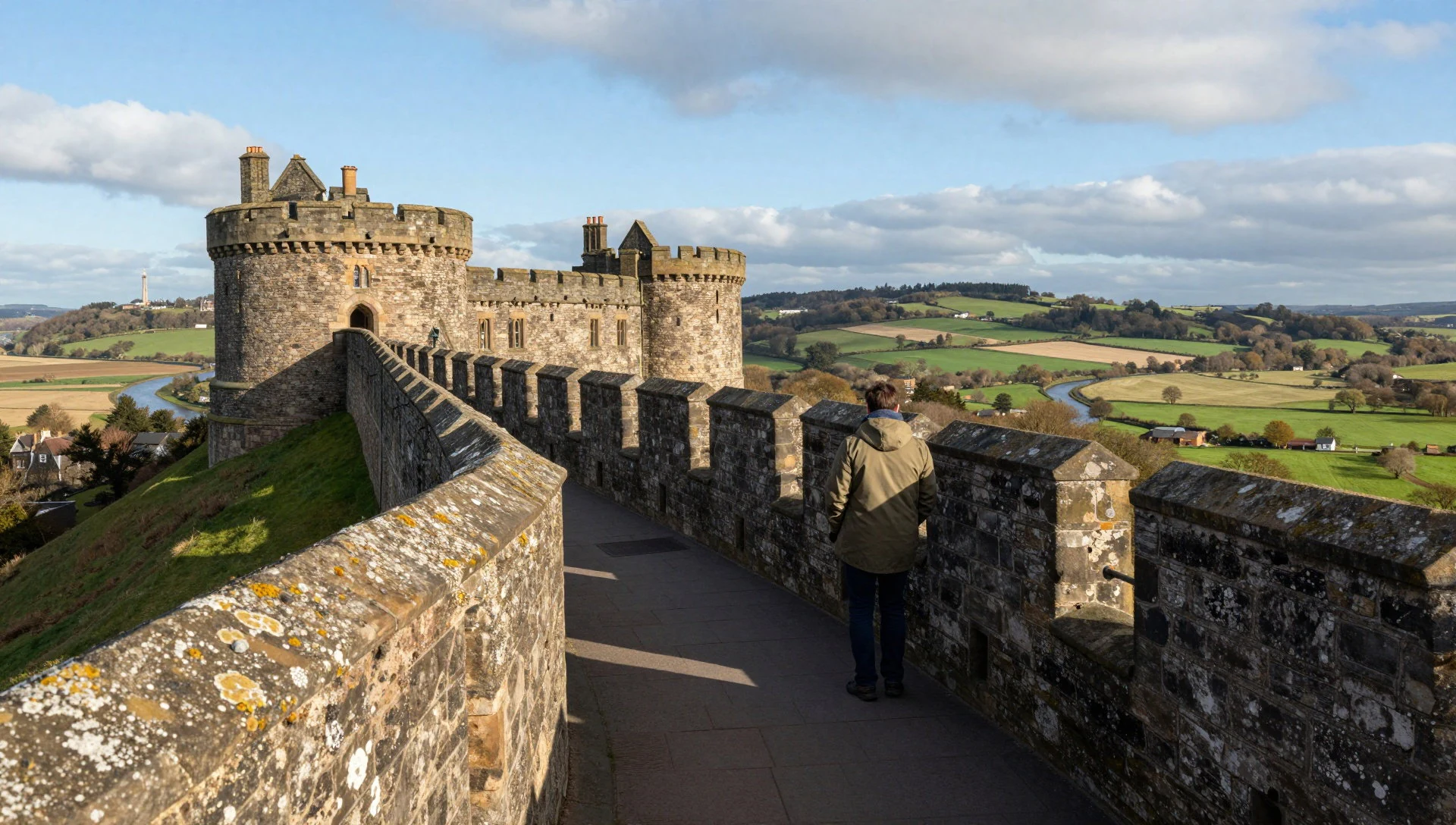
- Statue of Robert the Bruce — Castle Esplanade
A bronze statue of Robert the Bruce stands on the esplanade outside the castle gates, facing the approach from the town. It is a useful first stop for the Wars of Scottish Independence. Most visitors pause here for photographs before the ticket queue, so a quick visit at either end of the day is easier.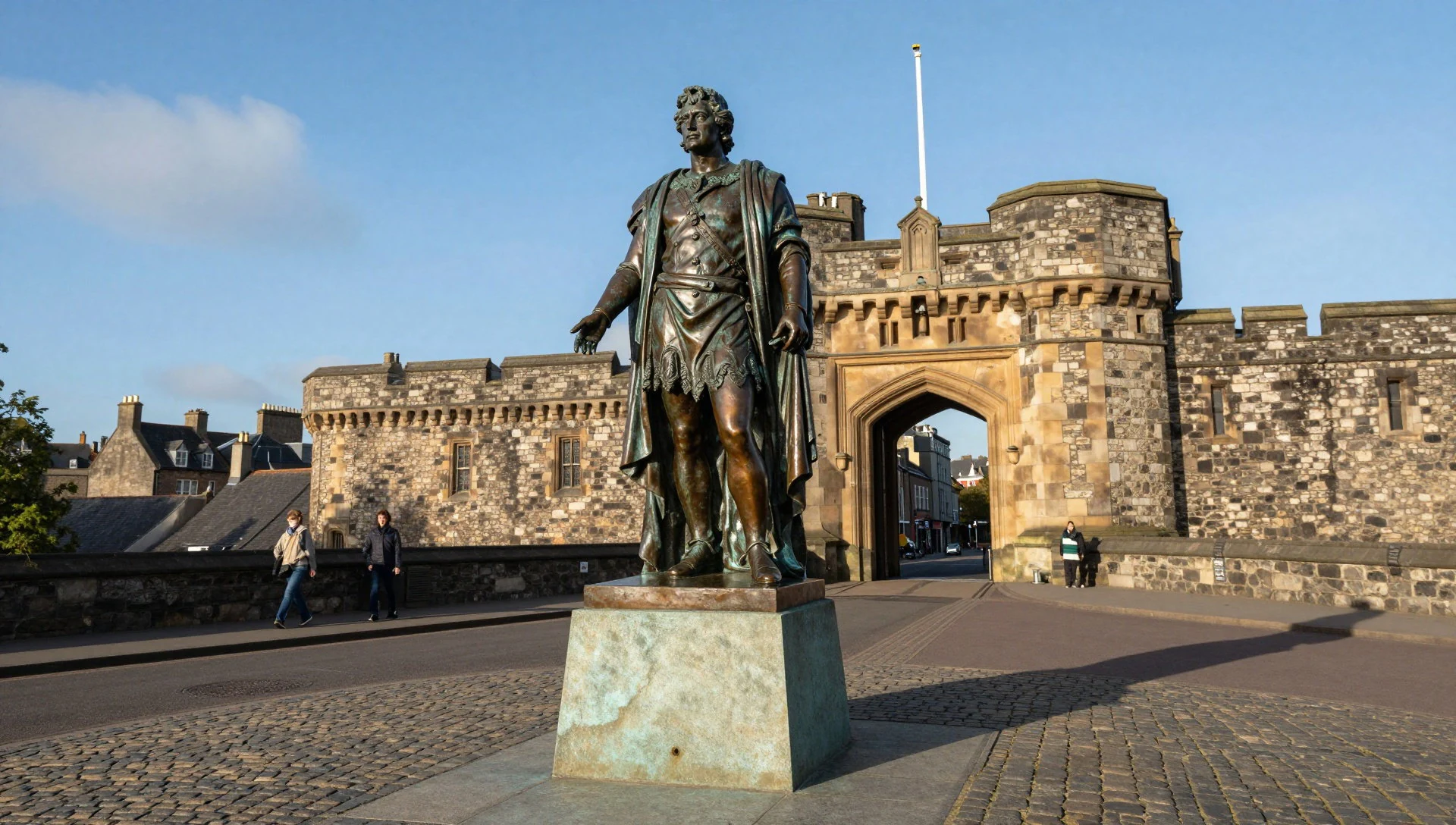
- Church of the Holy Rude — St John Street, Old Town
Below the castle on the ridge, the Church of the Holy Rude is a medieval parish church still in regular use. Its position, between the fortress above and the Old Town below, makes it a quieter stop on the walk down. Opening times vary, so check locally before making a special trip.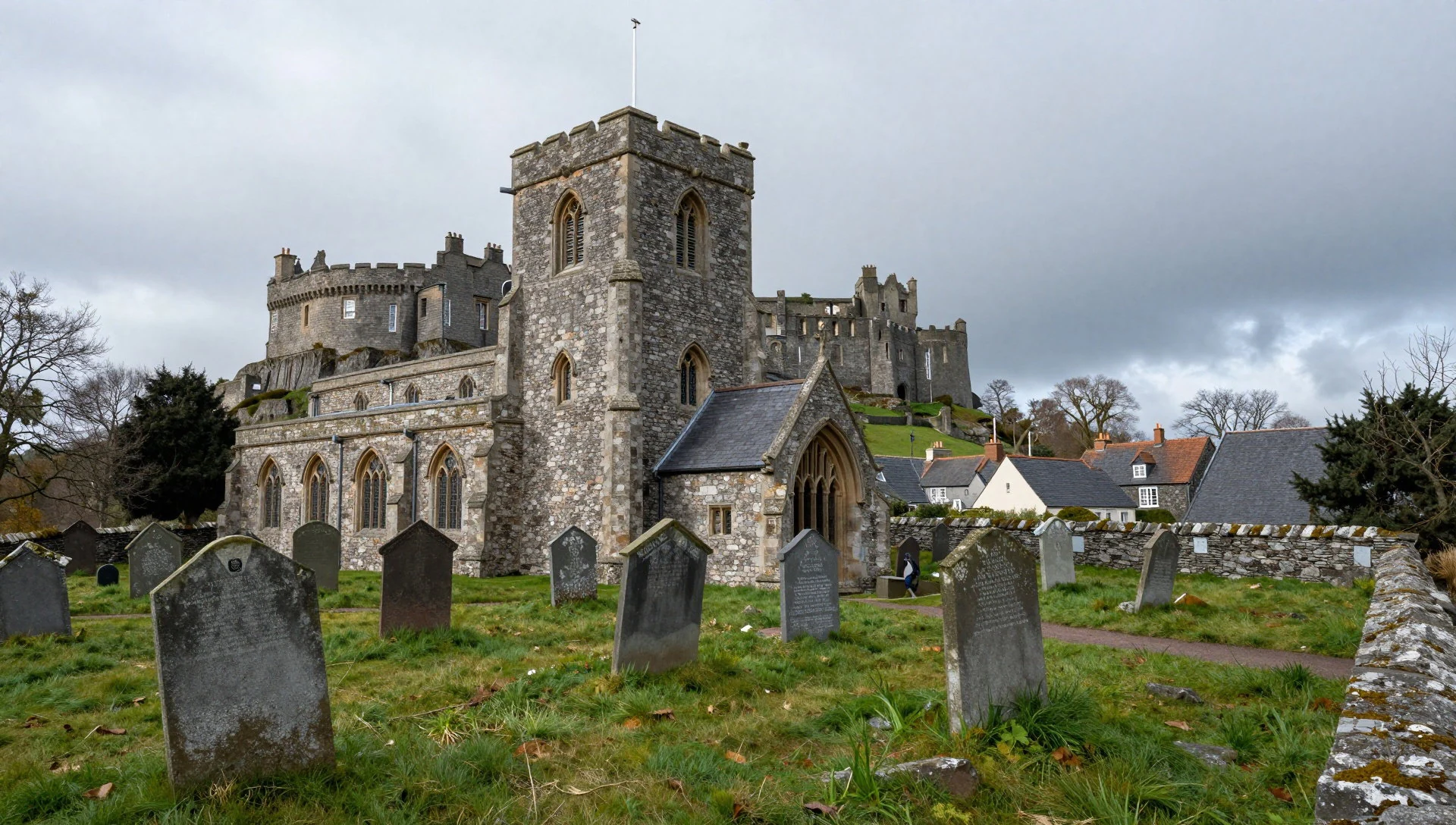
Culture
Stirling Castle belongs to a country with a strong sense of its own identity, and visitors will get more from the place if they keep that in mind. Many people in Scotland feel Scottish first and British second, and the history told inside the castle, from the independence wars to the Stewart court, is the history of a separate kingdom. The relationship with England is still debated in everyday conversation. A referendum on independence was held in 2014 and the result was a vote to stay in the United Kingdom, but the argument has not gone away, and it is usually safest to listen before offering an opinion.
Language is part of the picture too. Scots, spoken alongside English, is regarded by many speakers as a language in its own right rather than a dialect, and Gaelic, the castle's other name being Caisteal Shruighlea, survives in place names across the country. Guides and staff at Stirling are used to explaining all this to visitors from India, the UK and elsewhere, and are generally happy to answer questions.
The castle itself is run as a heritage attraction, with costumed interpreters in some rooms and plenty of children on school trips in term time. Behaviour expectations are therefore relaxed but firm on conservation: no touching tapestries, furniture or carved stone.
Call people from Scotland Scots or Scottish rather than British, and keep the word Scotch for whisky.
What to wear
Around Stirling Castle, the traditional dress people associate with Scotland is tartan, a woven wool cloth in checked patterns known as setts, many tied to clans or districts. The kilt, a pleated tartan garment worn around the waist, is the best known piece, often with a sporran pouch, wool socks and a jacket for formal occasions. Highland dress is worn today mainly for weddings, ceilidhs, Highland games, graduations and national days, and at the castle some costumed staff dress in the styles of earlier centuries.
Everyday clothing in Stirling is ordinary and practical. Locals wear jeans, fleeces, waterproof jackets and walking shoes, and smarter clothes for a night out. The Old Town has a few shops selling tartan, woollens and gifts, but a kilt is not expected from anyone.
Visitors should dress for weather and terrain rather than for etiquette. Scottish weather changes within the hour, so layers and a light waterproof are sensible in every season, with a warmer hat and gloves outside summer. The ramparts are exposed and windy. The route up from the Old Town and many courtyards are cobbled and uneven, so choose comfortable shoes with grip over sandals. The castle has no dress code for entry, though the small chapel is a place for quiet and normal modesty. Visitors from warmer climates are often surprised by how cold a stone interior feels, even in June.
What to eat
- Cullen skink — Pubs and cafés in Stirling's Old Town
A thick soup of smoked haddock, potatoes and cream, often with a little shellfish. It is warming on a windy day and easy to find as a starter or light lunch. Ask for it in the pubs and cafés of Stirling's Old Town.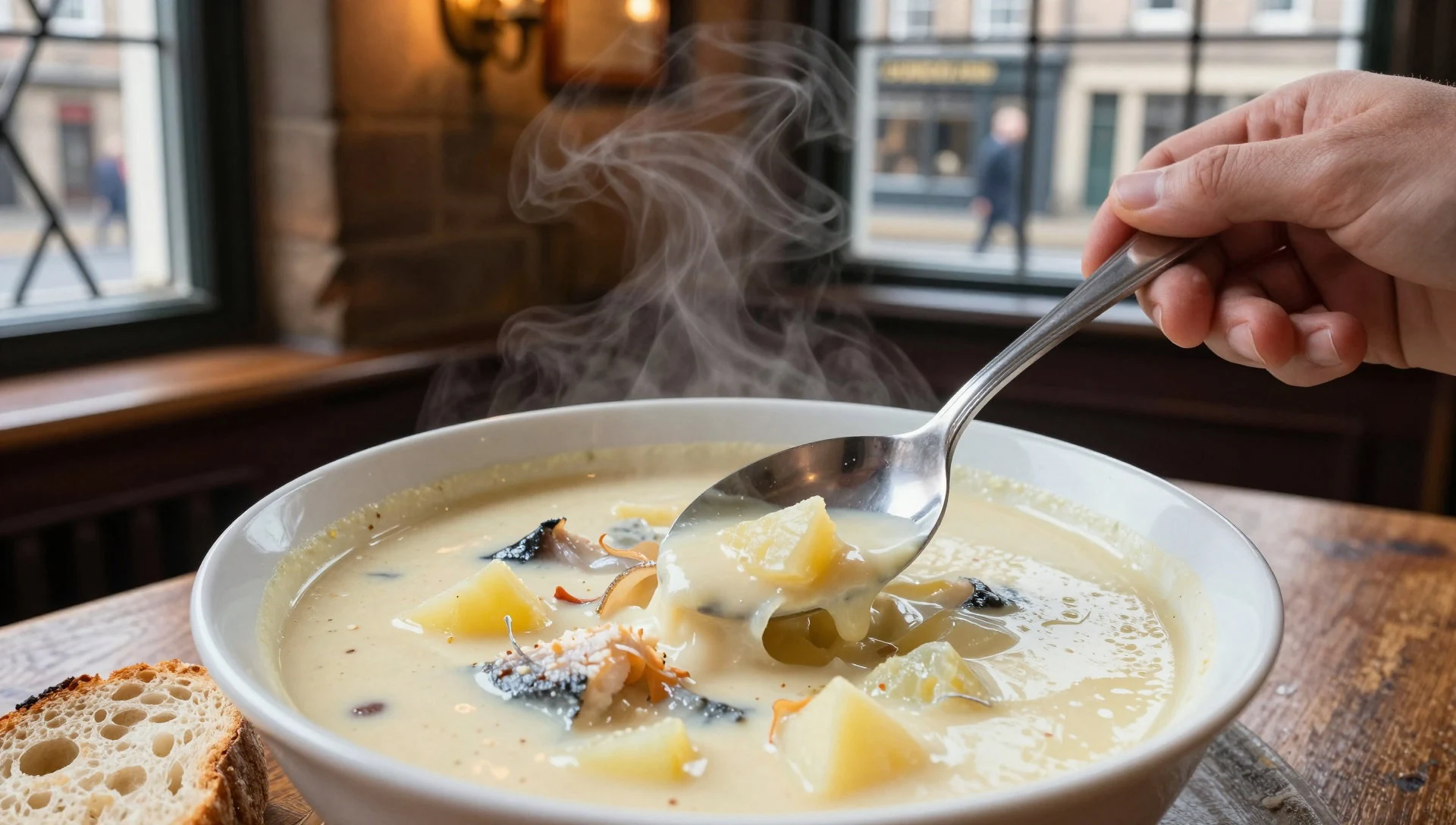
- Haggis, neeps and tatties — Traditional Scottish pubs and restaurants in the town centre
Haggis is a savoury mix of minced offal, oatmeal and spice, served with mashed swede and potato. It is eaten year-round, not only on Burns Night. Vegetarian versions are common, so ask if unsure what is in it.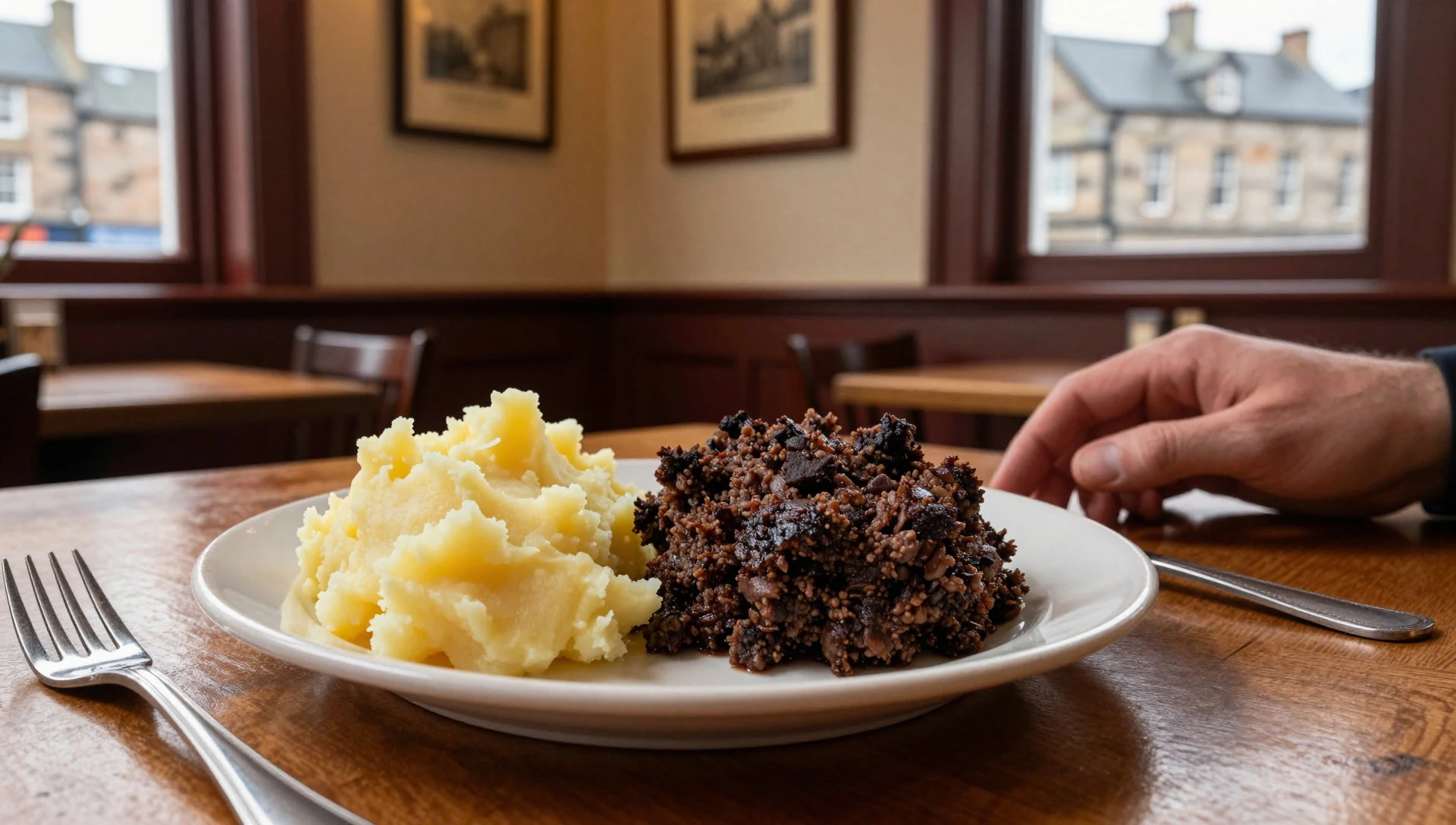
- Scotch broth — Castle café and Old Town cafés
A lamb or beef broth thickened with barley and filled with root vegetables. It is plain, filling food that suits a cold day on the castle rock and is often offered as a soup of the day. - Cranachan — Restaurants serving modern Scottish menus
A dessert of whipped cream, toasted oats, raspberries and honey, sometimes with a splash of whisky. Raspberries are at their best in summer, which makes this a good seasonal choice from midsummer onwards. - Shortbread and tablet — Gift and sweet shops on the approach to the castle
Shortbread is a dense butter biscuit, and tablet is a hard, crumbly sweet made from sugar and condensed milk. Both are sold as small gifts in shops near the castle and are simple to carry home.
Plan it
Best time. April, May and September are a good balance of longer daylight, milder weather and slightly thinner crowds. July and August are busiest, and winter is cold, wet and short on daylight, though the castle is quieter. Rain is possible in any month.
How long. 1
Getting there. Fly to Edinburgh or Glasgow, the usual international gateways, then take a train to Stirling station. From the station it is a steady uphill walk through the Old Town to the castle gates; local taxis are an option if the climb is a problem.
Budget. mid
Tips
- Check the official site (https://www.stirlingcastle.scot/) for current tickets, opening hours and any booking requirements
- Arrive at opening or after the midday coach groups to avoid the busiest rooms
- Historic Environment Scotland offers memberships and a multi-day Explorer Pass, which can be worth it if visiting several sites
- Bring a waterproof and windproof layer, as the ramparts are exposed even in summer
- Wear shoes with grip, because the approach and courtyards are cobbled and steep
Etiquette
- Do not touch tapestries, furniture or carved stonework in the palace rooms
- Keep voices low in the chapel and follow any photography signs in individual rooms
- Refer to local people as Scots or Scottish rather than British
Nearby
Sources
- Wikidata Q756268 (CC0)
- Wikipedia: Stirling Castle (rev 1384993367) (CC BY-SA 4.0)
- Wikivoyage: Scotland (rev 5375879) (CC BY-SA 4.0)
- Stirlingcastle.jpg, unknown author (CC BY-SA 2.0)
- Aerial view of Stirling Castle, John McPake (CC BY 2.5)
- Statue of Robert the Bruce, Christian Bickel (CC BY-SA 2.0 de)
- Edward repulsed from Stirling Castle, James Grant (Public domain)
- Stirling Castle, David Monniaux (CC BY 3.0)
- Portrait of James V of Scotland, Corneille de Lyon (Public domain)
- The Prospect of their Ma'ties Castle of Sterling, John Slezer (Public domain)
- StirlingCastle1900.jpg, unknown author (Public domain)


