Saint Petersburg
Saint Petersburg, Russia
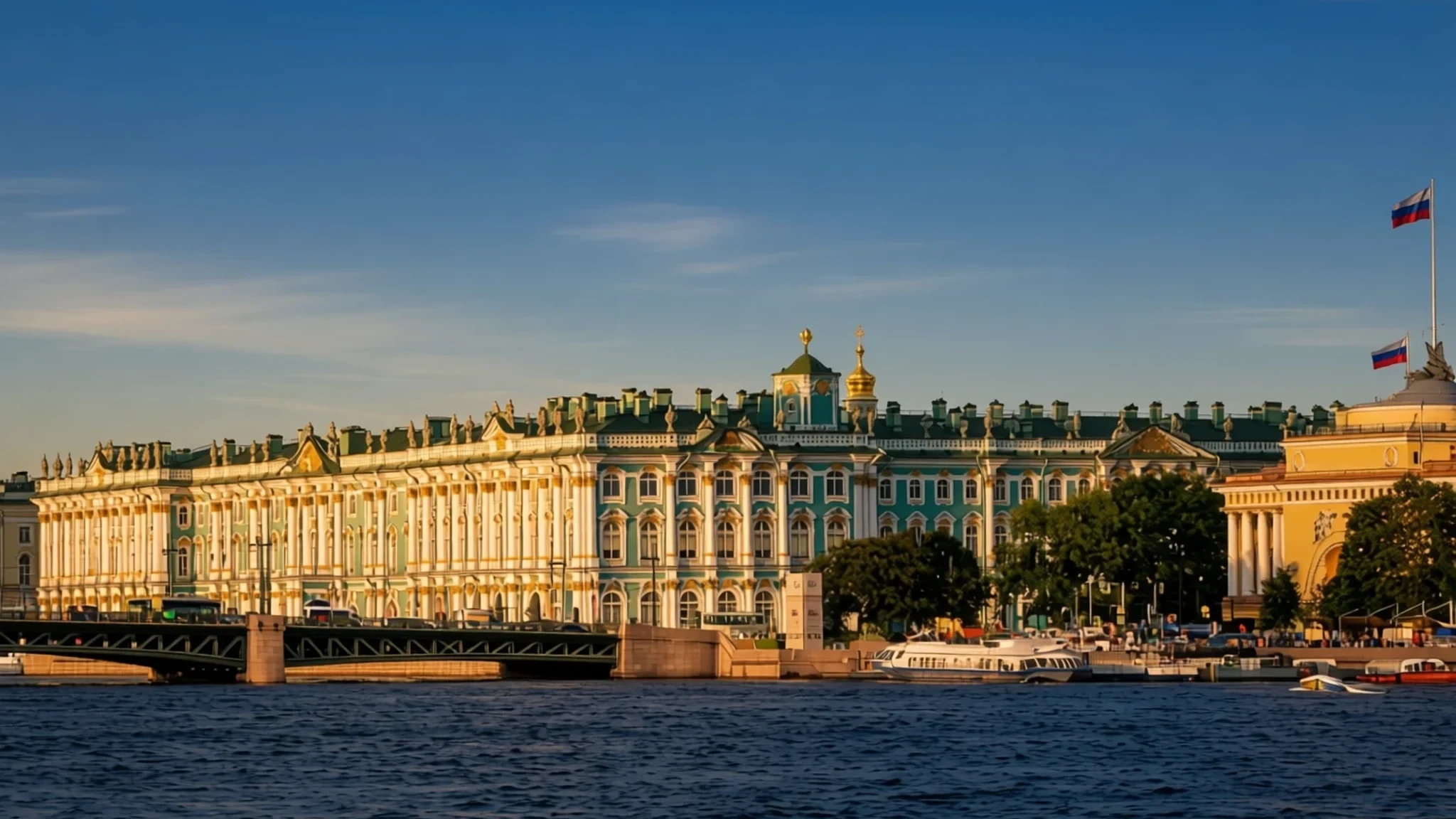
Go for the palaces, canals and long white-night summer evenings, and be ready for crowds at the big museums.
The place
Saint Petersburg sits where the Neva River flows into the Gulf of Finland, close to the eastern end of the Baltic Sea. With about 5.7 million people it is Russia's second city after Moscow, and it is governed as a federal city in its own right. It stands only about 3 metres above sea level, so the rivers and canals run close to street level, and the city feels low and open in a way few European capitals do.
The historic centre is compact enough to walk over a few days, although the avenues are wider and longer than they look on a map. Canals cut across the grid, so you cross bridges constantly, and many of the bridges lift to let ships pass. The grandest buildings are palaces and churches painted in pale yellow, green and blue, with white columns and gilded domes. Many now hold museums, and the Winter Palace, home to the Hermitage, is the obvious starting point for most visitors.
Summer brings long light and busy embankments, especially in June when the nights barely darken. Winter is short on daylight and bitterly cold, but the museums are quieter and the interiors feel warm. Late April and October offer mild weather and more space at the big sights.
Its story
Saint Petersburg began as a deliberate project. Tsar Peter the Great founded it in 1703 on the site of a Swedish fortress he had captured during the Great Northern War, and he named it after the apostle Saint Peter. The Neva delta had been thinly settled before that, by Finnic peoples and by Swedish-era colonists, and Peter wanted a Baltic port that could trade with the rest of Europe. The existing main port at Arkhangelsk, on the White Sea, closed to shipping through the winter, which made it a poor choice for that ambition.
The city grew quickly around the fortress, the shipyards and a grid of canals, built with labour levied across the empire and with craftsmen brought from abroad. Over the following decades it became the seat of the court and the centre of imperial government, and the Winter Palace served as the Romanovs' winter residence. Architects from Italy, France and Germany, among others, shaped its classical plan and its palaces.
The capital was not always here. Power moved back to Moscow for a period in the early decades of the century, and after the revolution the government moved there for good. Under Soviet rule the city was renamed Petrograd and then Leningrad, and it became a major centre of industry and the arts. It endured a long siege in the Second World War, and after the Soviet Union dissolved it took back the name Saint Petersburg.
What to see
- Winter Palace and the Hermitage — Palace Square, city centre
The former winter residence of the Romanov tsars sits on Palace Square, beside the Admiralty and the Bronze Horseman. It now houses the Hermitage Museum, whose collection fills many rooms, so plan a focused visit rather than trying to see everything. Go early on a summer morning and book a timed entry online.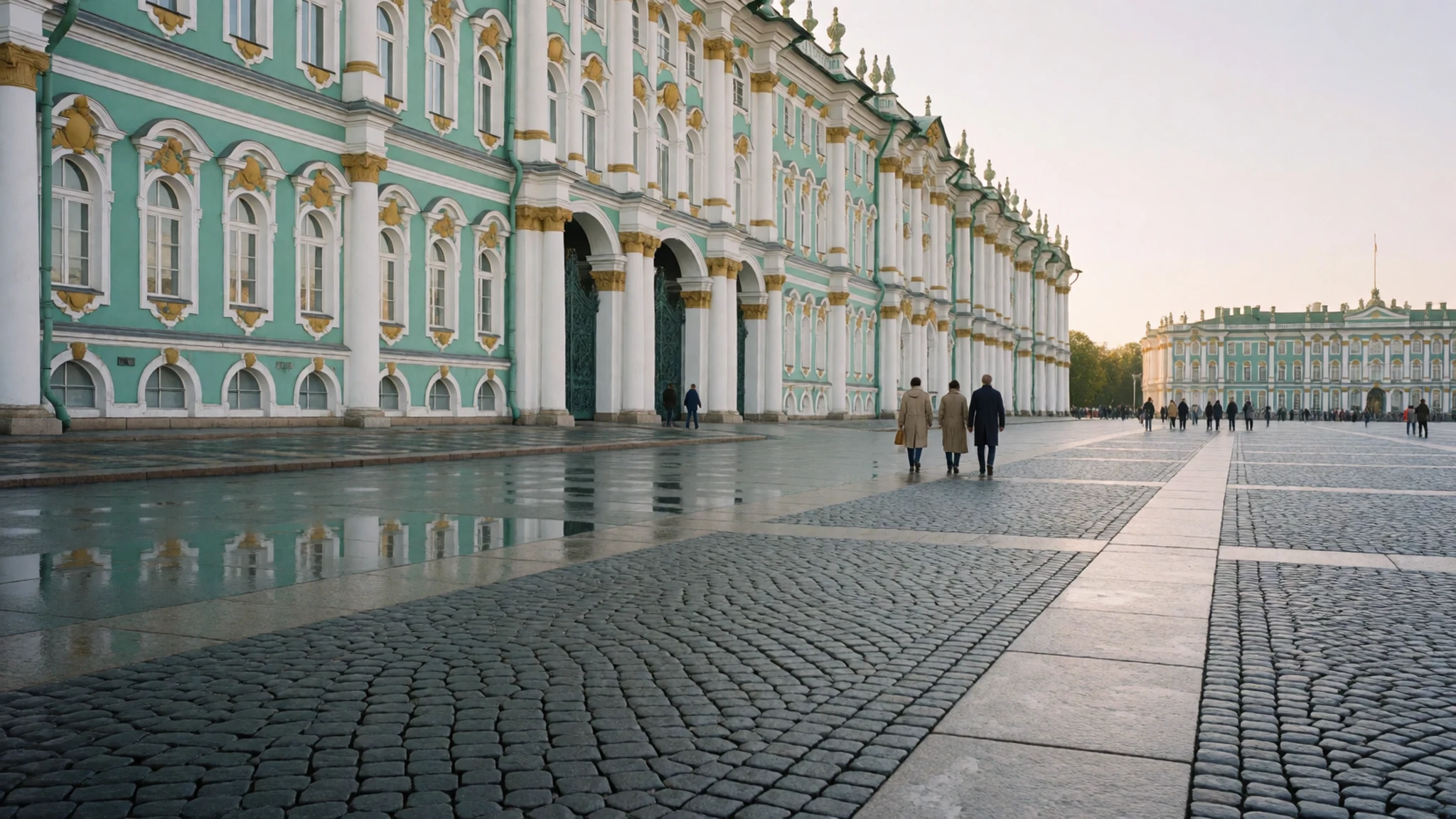
- Peter and Paul Fortress — Zayachy Island, across the Neva
The fortress on Zayachy Island is where Peter the Great began the city, and its cathedral holds the tombs of most of the Romanov rulers. Walk the ramparts for river views, then visit the cathedral's spire-topped interior. The grounds are open and walkable, and the crowds are lighter before the tour groups arrive.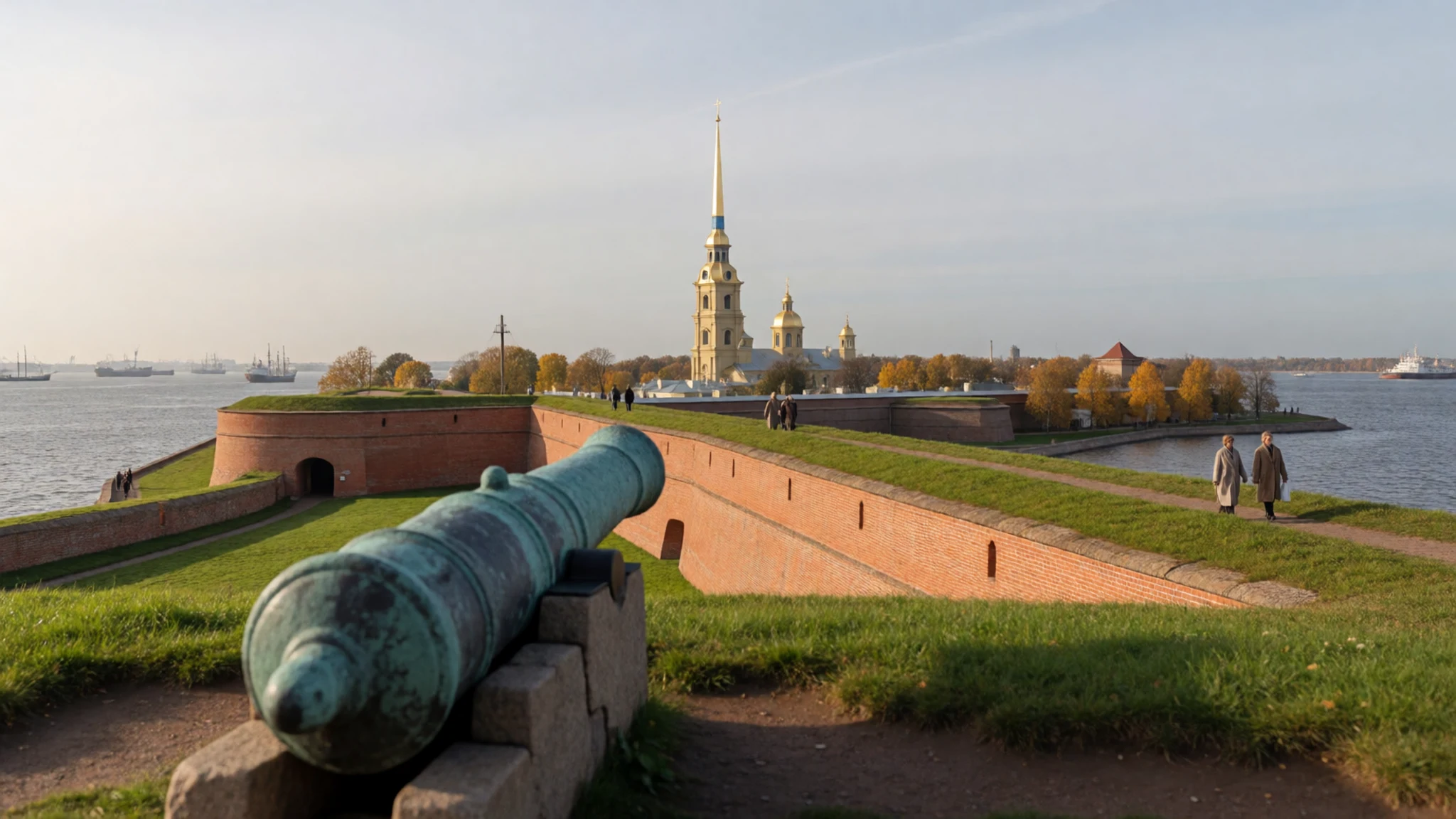
- Saint Isaac's Cathedral — Saint Isaac's Square, near the Admiralty
This large domed cathedral dominates Saint Isaac's Square and is one of the city's most photographed buildings. Its colonnaded exterior and gilded dome are impressive, and climbing to the colonnade gives a wide view over the rooftops. Dress neatly, and expect a queue at the entrance in summer.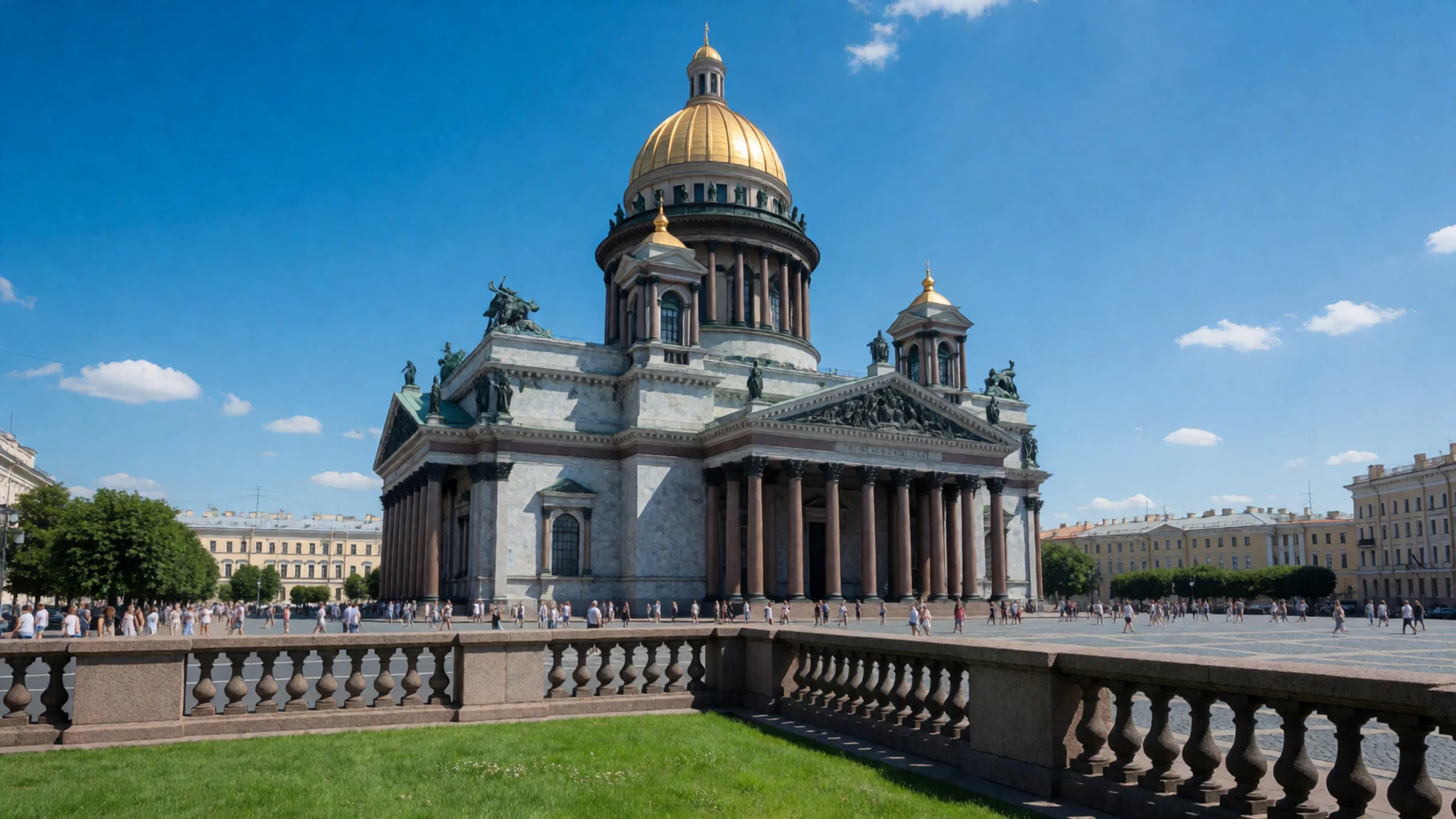
- Church of the Saviour on Spilled Blood — Griboyedov Canal embankment
Built on the spot where Tsar Alexander II was fatally wounded, this church is covered in mosaics on its interior walls. Its onion domes are coloured in a bright mosaic of patterns that stands out against the Griboyedov Canal. Allow time to look up at the mosaics, and expect a steady stream of visitors.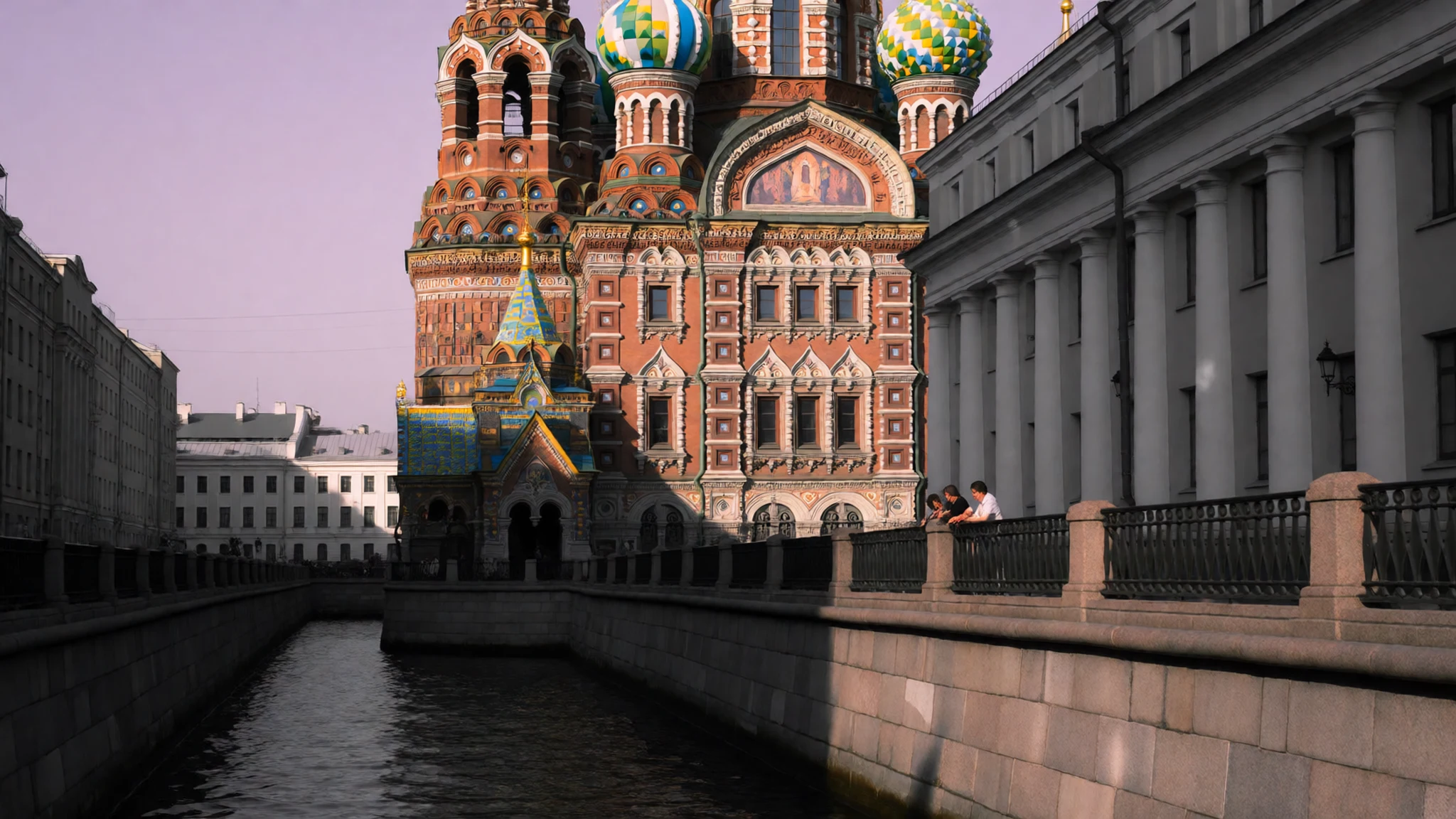
- Palace Bridge and the Neva embankments — Neva embankments, Palace Bridge
The Palace Bridge is a drawbridge that lifts in the summer nights to let ships pass up the Neva, which is a sight in itself. Walk along the embankments on either side for views across the water to the Winter Palace and the Peter and Paul Fortress. Stay until dusk in June for the long evening light.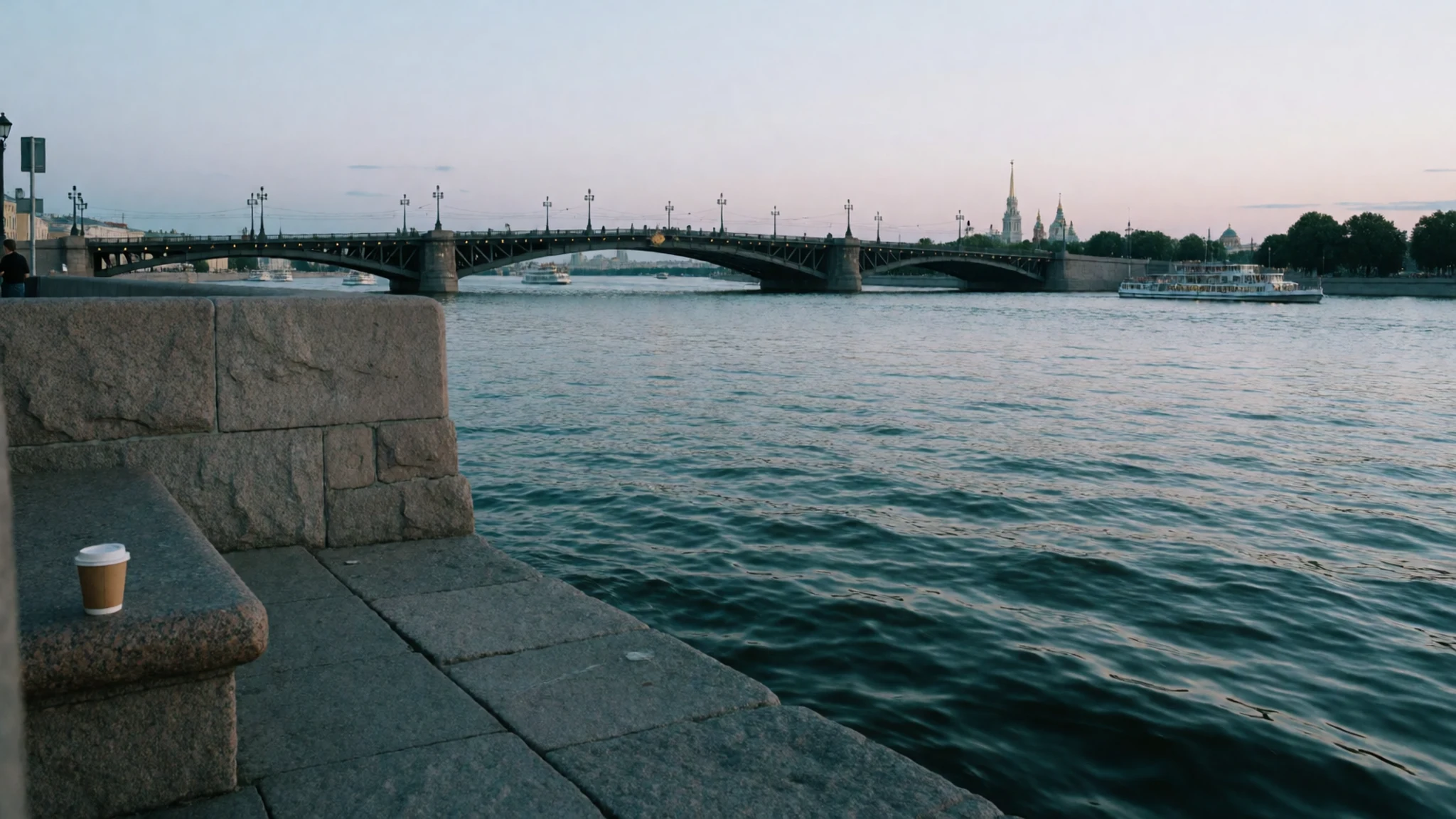
Culture
Saint Petersburg has many museums, and a large number of them are in former palaces and private houses that once belonged to writers, composers and painters. The apartments of Pushkin, Dostoyevsky and Akhmatova are open to visitors, and the city's literary and musical life is taken seriously. Russian is the everyday language, so a few polite phrases go a long way, and many people in the centre speak some English. Hospitality is often more reserved on first meeting than it becomes later, so a friendly greeting and a smile are appreciated in shops and museums. Public transport and the metro are busy, so keep bags close and move aside for people getting off. Orthodox churches still hold services, and people pray in them, so keep your voice low and do not wander into the area in front of the iconostasis during a service. Dress modestly and cover your shoulders and head when entering a working church, and ask before photographing anyone inside one.
What to wear
Traditional Russian dress has its roots in peasant clothing. Women's festive wear included the sarafan, a sleeveless dress worn over a linen blouse, and the kokoshnik, a decorated headdress often covered in embroidery or beads. Linen, wool and silk were common, with brightly coloured embroidery in red, blue and white, and fur trim in the colder months. At the imperial court, dress followed European fashion, and the grand balls of the Romanov era featured silk, brocade and jewelled ornaments. Those styles are now seen at museums and in period displays rather than on the street.
Day to day, Saint Petersburg dresses well. People wear dark coats, leather boots, jeans and knitwear through the cold months, and a sleek, understated look is common. Black, grey and navy are everywhere. Trainers and smart shoes are both normal in the centre.
For a visit, dress in warm layers and a waterproof outer jacket, since the weather changes quickly off the Gulf of Finland. Bring comfortable shoes with good grip for cobbled streets, bridges and long museum days. Cover your shoulders and knees when entering an Orthodox church, and carry a light scarf to use as a head covering.
What to eat
- Shawarma — street kiosks near metro stations and cafés across the centre
Shawarma is something of a Saint Petersburg speciality, rarely seen in other Russian cities. Grilled meat, salad and sauce are rolled in flatbread, and the vendors are mostly Azeri. Look for it at street kiosks near metro stations.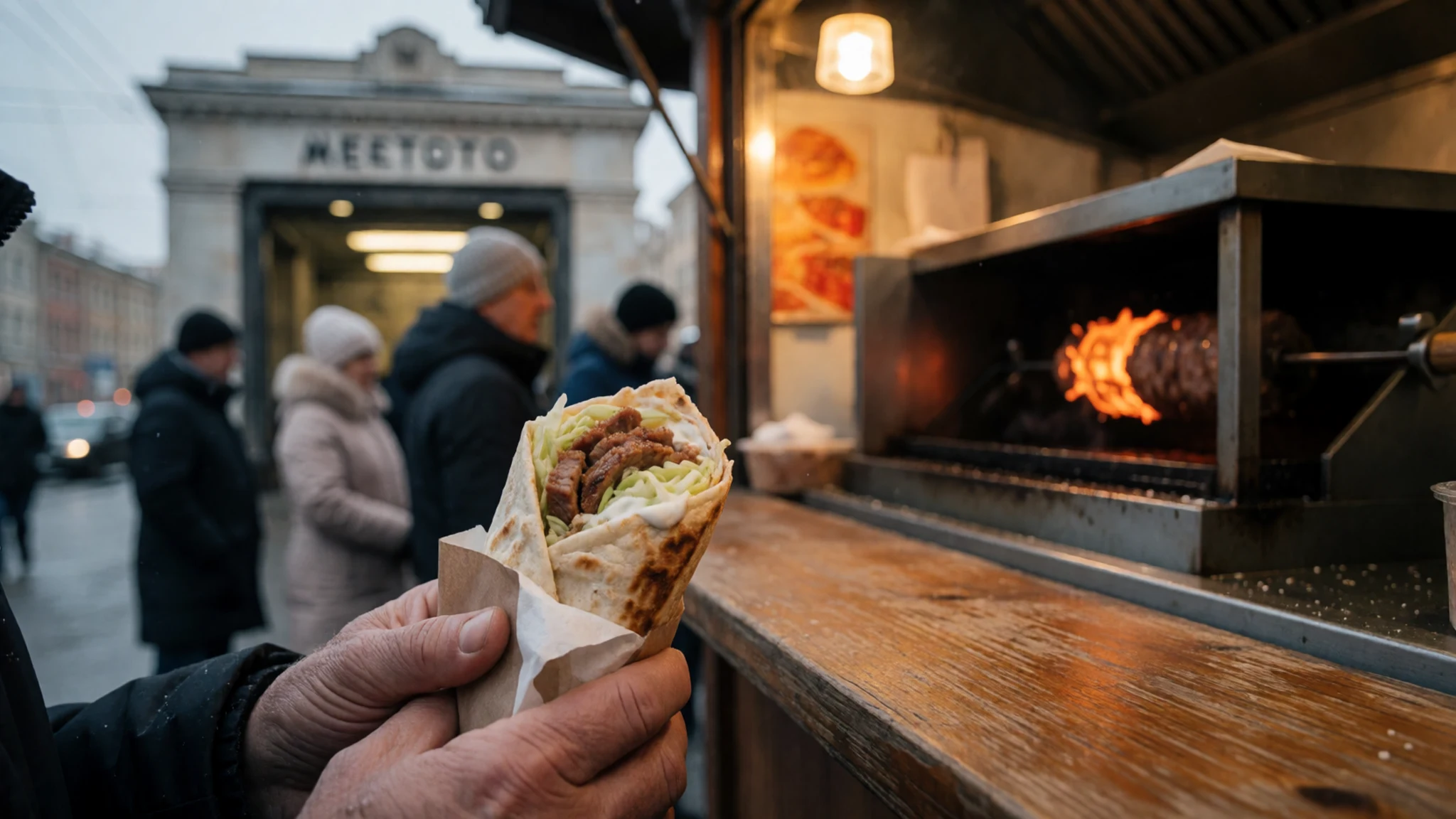
- Pyshki — morning bakeries and stalls in the city centre
Pyshki are small Russian doughnuts, and the city is strongly associated with them. They are best eaten warm with a coffee, as locals often do at a counter in the morning. Pick them up at bakeries and stalls around the centre.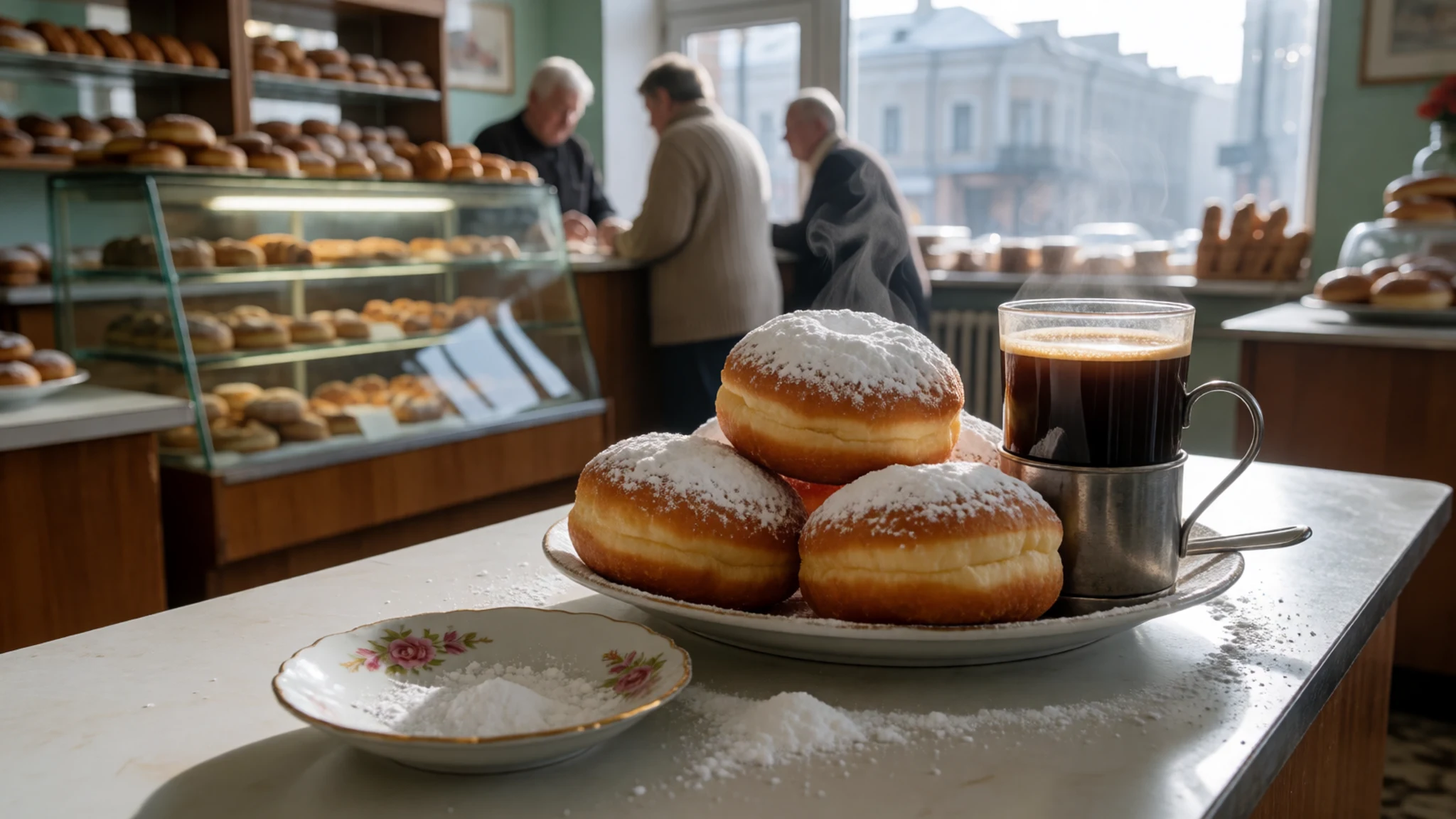
- Teremok — main avenues and metro station areas
Teremok is a Russian chain serving blini, the thin pancakes rolled around sweet or savoury fillings. It is a reliable, inexpensive place for a sit-down meal when you want something local without a long wait. Branches sit on the main avenues and near metro stations.
- Vol'chek bakery cakes — Vol'chek bakeries across the city, near metro stations
The Vol'chek bakery chain (Булочные Ф. Вольчека) has shops across the city selling slices of cake and small tubs of ice cream. It makes an easy snack between museums. Stop in on your way to a metro station. - Russian cooking at Peter and Paul Fortress — restaurant on the Peter and Paul Fortress grounds
The restaurant on the fortress grounds serves Russian cooking in a setting that suits a slower meal after walking the ramparts. It works well for lunch, when you can sit by the water and rest. Go at a quiet time if you want a window table.
Plan it
Best time. June to August brings long daylight and warm days, with June's white nights the brightest feature of the year. Late April is mild and quieter, while July and August, the hottest and wettest months, bring the most rain. Winter is dark and cold but the museums are calm and the interiors warm.
How long. 3–4
Getting there. Fly into Pulkovo Airport, then take the express bus 39E to Moskovskaya metro station, which connects to the metro for the centre. A Yandex taxi from the arrivals desk is the simplest option for the centre. Long-distance trains arrive at the main stations in the city centre.
Budget. mid
Tips
- Book Hermitage and palace tickets online for a fixed time slot, as queues build up in summer
- Visit the Peter and Paul Fortress early, before the tour groups arrive
- Take a taxi only from the official airport desk or app, and ignore touts in the arrivals hall
- Carry some roubles for kiosks and small museums, though cards are widely accepted
- Pack layers and rain gear, since the weather turns quickly off the Gulf
Etiquette
- Cover your head and shoulders when entering an Orthodox church, and ask before photographing people inside
- Keep your voice down on the metro and in museums, and let people off before you board
- Greet shopkeepers politely in Russian where you can, and expect a more reserved manner than in some countries
Nearby
Sources
- Wikidata Q656 (CC0)
- Wikipedia: Saint Petersburg (rev 1382781576) (CC BY-SA 4.0)
- Wikivoyage: Saint Petersburg (rev 5397380) (CC BY-SA 4.0)
- Peter & Paul fortress in Saint Petersburg, Florstein (CC BY-SA 4.0)
- Winter Palace in Saint Petersburg, Florstein (CC BY-SA 4.0)
- Drawn Palace Bridge in Saint Petersburg, Florstein (CC BY-SA 4.0)
- Aerial view of Peter and Paul Cathedral, Godot13 (CC BY-SA 4.0)
- Saint Isaac's Cathedral in SPB, Florstein (CC BY-SA 4.0)
- General Staff Building on Palace Square, Wolfgang Moroder (CC BY-SA 2.5)
- Saint Petersburg, Russia Moika River, Ninara (CC BY 2.5)
- Lakhta Center complex in 2021, Anton Galakhov (CC BY-SA 4.0)


