Srirangam Temple
Srirangam Temple, India
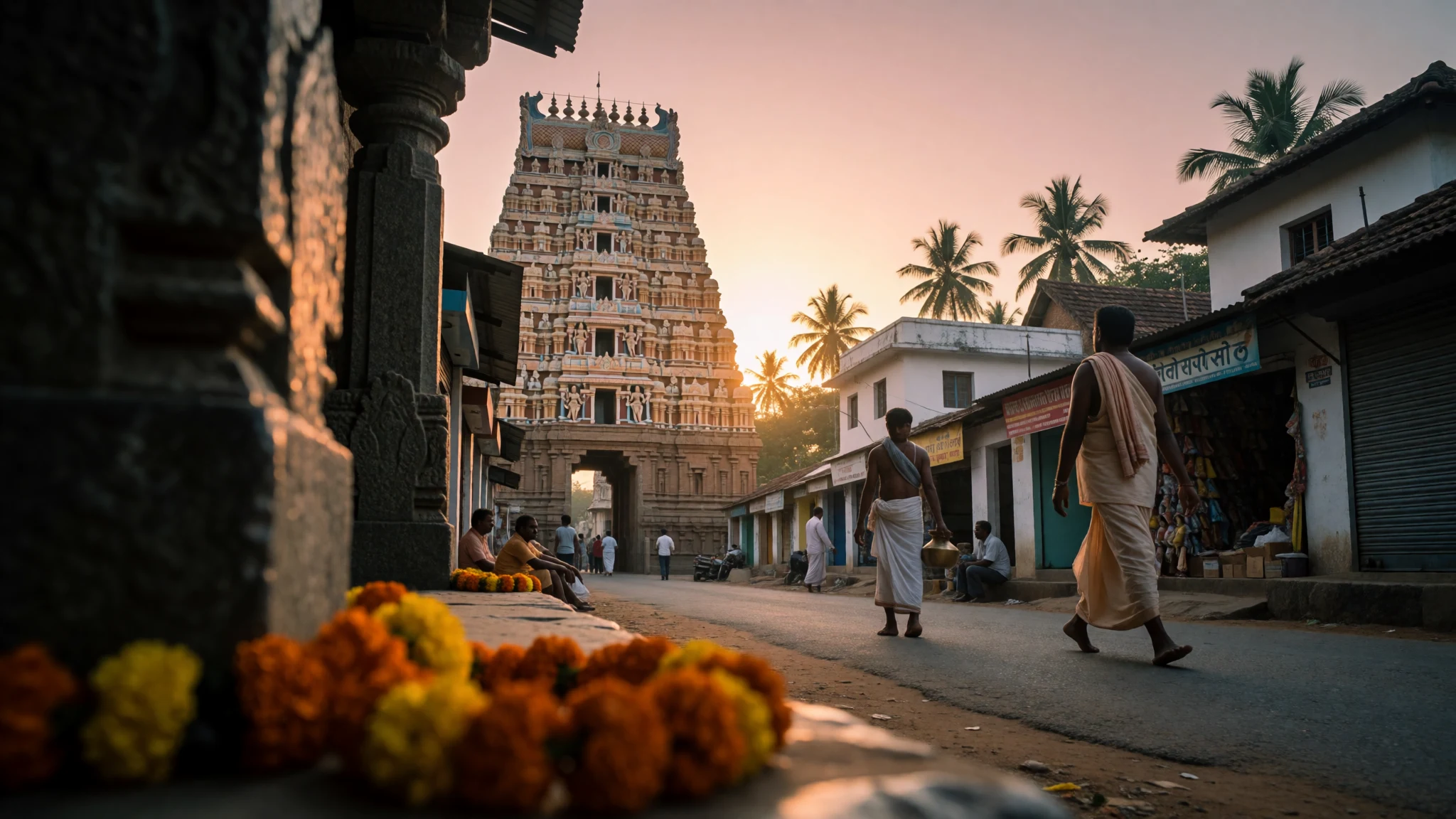
Srirangam Temple is a working Vishnu shrine on a Kaveri river island, where towers, hymns and daily worship fill a whole town.
The place
Srirangam Temple, formally the Ranganathaswamy Temple, stands on a river island at Srirangam, part of Tiruchirappalli in Tamil Nadu, India. The island lies between the Kaveri and its neighbouring channel, and the temple fills so much of it that ordinary streets, shops and houses press right up against the outer walls. The deity is Ranganathar, a form of Vishnu shown reclining, with his consort Ranganayaki, a form of Lakshmi. Built in the Tamil architectural style, the complex is a place of daily worship rather than a monument behind ropes: priests perform rites from early morning, families arrive with offerings, and processions still wind through the surrounding lanes. Devotees count it among the 108 Divya Desams, the Vishnu shrines praised by the Alvars, the Tamil poet-saints, in their collected hymns, the Naalayira Divya Prabhandham. Worship follows the Thenkalai tradition of Sri Vaishnavism. Entering means passing through a series of enclosures, each with its own gateway tower, moving inward towards the sanctum at the centre. The newest tower, the outer rajagopuram, rises about 73 metres and was completed in 1987 with backing from several donors, among them a Vaishnava monastic order. Scale is the first surprise, because the walking distances are long and mostly on bare stone. Crowds swell during the Margazhi festival in December–January, which draws about a million visitors, while ordinary weeks are busy but manageable.
Its story
Srirangam Temple has roots that reach back beyond any firm date. Sanskrit texts, including the Ramayana, the Mahabharata and several Puranas, refer to the reclining deity of this island. Tamil literature of the Sangam era, roughly 300 BCE to 300 CE, does so too: the epic Silappadikaram pictures Vishnu lying on a many-headed serpent couch on an islet ringed by the Kaveri, with Lakshmi resting on his chest. Tradition credits the first temple to the Chola ruler Dharmavarma. A flood of the Kaveri later wrecked the vimana, the tower over the sanctum, and the early Chola king Killivalavan is said to have rebuilt it, giving the core layout that pilgrims still walk. Several mandapas, the pillared halls near the sanctum, are dated by the sources to between about 100 CE and 300 CE and are credited to the Cholas of Uraiyur. These early dates are best read as tradition rather than precise record. After those beginnings the temple was never frozen. Over the centuries patrons renovated shrines, extended the enclosures and raised new towers, which is why the complex layers many periods instead of belonging to one. The most recent big addition is the outer gateway tower, completed in 1987. The hymns of the Alvars, still sung here, gave the shrine its standing in Sri Vaishnavism, and that devotional weight, more than any single building campaign, explains its unbroken life as a place of worship.
What to see
- The outer rajagopuram — Southern entrance of the temple, Srirangam
The outer rajagopuram is the gateway tower most visitors see first, rising about 73 metres and completed in 1987. Its tiers are crowded with painted figures of gods, animals and dancers. Look up from the road, then again from inside the walls, where the scale feels different.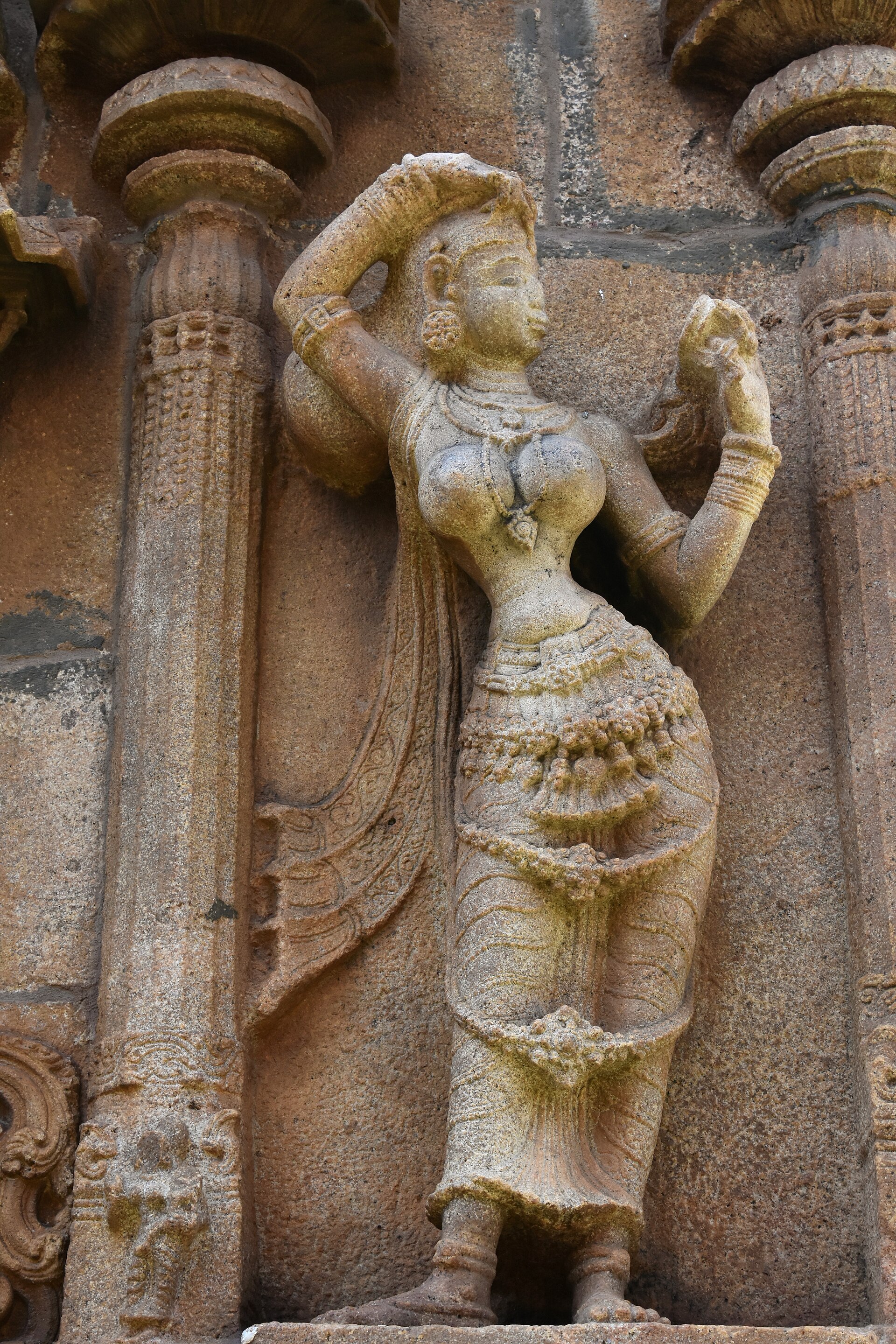
- The concentric enclosures — Within the temple walls, Srirangam
Srirangam Temple is built as a series of rectangular enclosures, one inside another, each entered through its own gateway tower. Seen from the air, they look like a town within a town. On foot, expect long straight walks on bare stone, with shops, homes and shrines along the outer rings.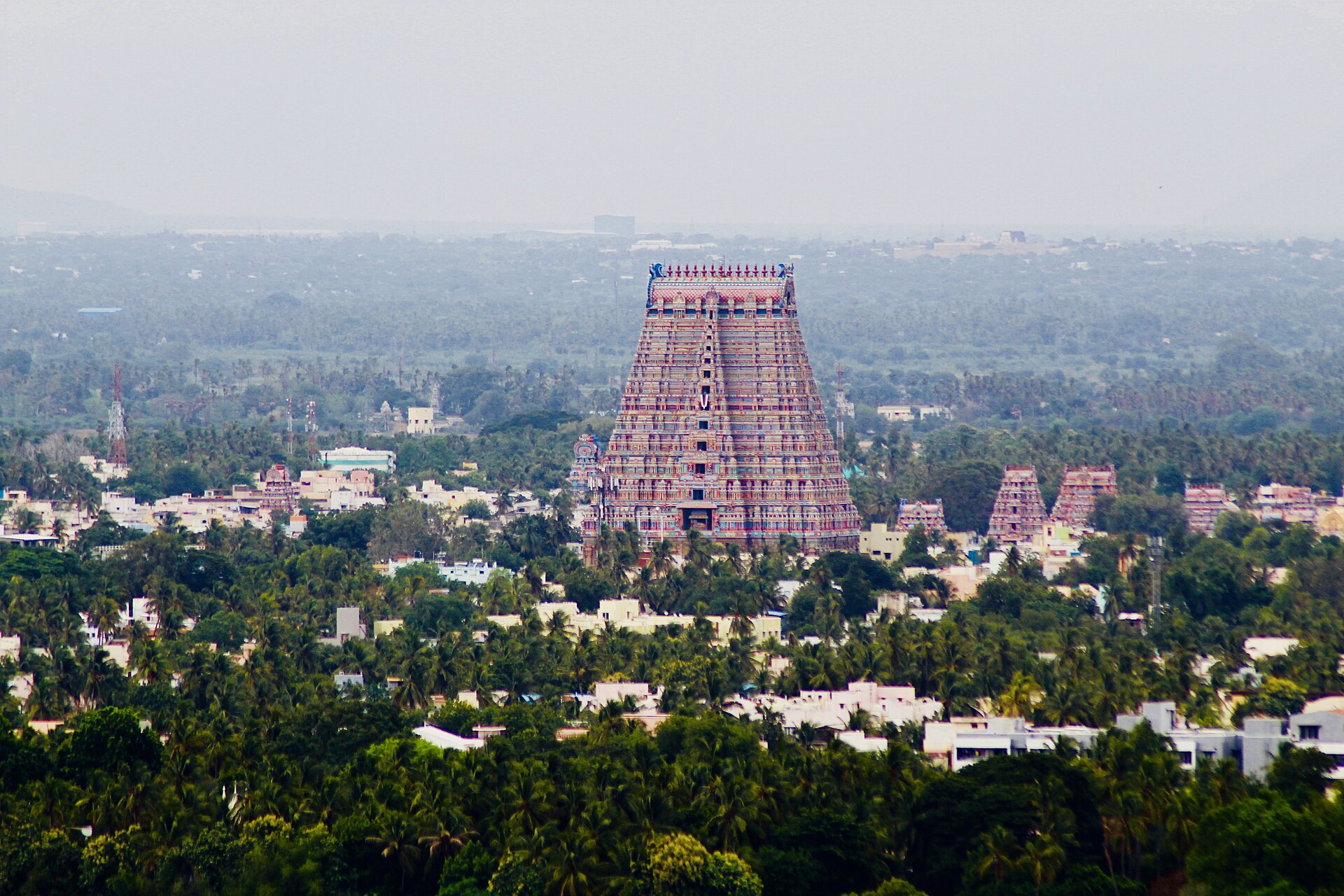
- The sanctum of Ranganathar — Innermost enclosure
At the centre lies the sanctum, where Vishnu is worshipped as Ranganathar in a reclining pose. Queues move slowly towards a brief darshan, the moment of seeing the deity. Non-Hindu visitors should ask attendants which areas are open to them, since access to inner parts is controlled. - Festival image and processions — Streets around the temple
Alongside the main deity, a portable festival image, the utsava murti, is carried out for rituals and processions, including on new moon days. If a procession is under way, the surrounding lanes fill with music, lamps and onlookers. Asking a priest or shopkeeper is the easiest way to learn what is on.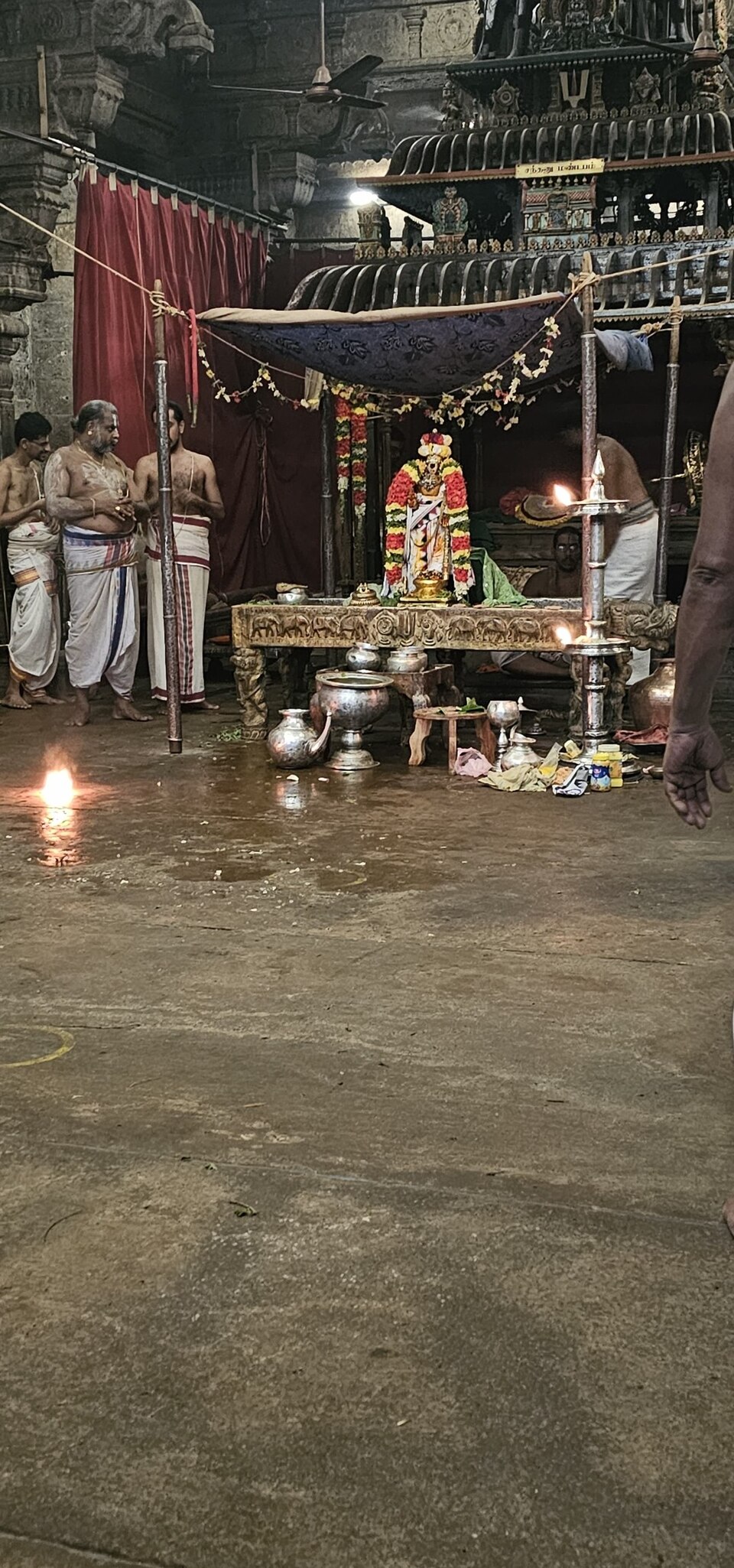
- Jaamiya Masjid — Tiruchirappalli town
Jaamiya Masjid is a mosque in Tiruchirappalli, built by a Nawab of Arcot more than two centuries ago. It adds a different strand to the city's story, which is not only about temples. Visit outside prayer times, cover arms and legs, and remove footwear at the entrance. - Basilica of the Holy Redeemer — Tiruchirappalli town
The Basilica of the Holy Redeemer is one of Tamil Nadu's minor basilicas and traces back to the Jesuit missionaries of the Madurai Mission. It makes a quiet change of pace from the temple crowds and suits a shaded half hour. Dress modestly and keep voices low during services.
Culture
Srirangam Temple is a place where the religious calendar is lived rather than watched from a distance. Festivals, called utsavam, come round through the year, and many involve the festival image of the deity being carried in procession through the surrounding streets, so the town itself becomes part of the ritual. The biggest is the Margazhi festival in December–January, divided into two ten-day halves: Pagal Pathu, the daytime days, and Ra Pathu, the nights. The first night of the second half is Vaikunta Ekadashi, the eleventh day of the lunar fortnight and the one Vaishnavas hold holiest. On that day the temple is meant to stand for Vishnu's heavenly abode on earth, and it fills with devotees from before dawn. Within the season comes Araiyar Sevai, in which hereditary reciters perform the Alvars' 4000 Tamil verses through song, gesture and dance. Devotion here is Sri Vaishnava and Tamil at once, so Tamil hymns sit beside Sanskrit rites. Ordinary days have their own rhythm of morning rites, bells, camphor flames and queues. Many visitors come simply to watch, and people are generally relaxed about that if it is done quietly. Some inner areas are reserved for Hindu worshippers, and attendants will say so. Remove your footwear before the first gateway, dress modestly, and ask an attendant before using a camera, since photography is restricted in inner areas.
What to wear
Around Srirangam Temple, traditional dress follows Tamil custom. Men wear the veshti, an unstitched cotton wrap, often with an angavastram, a shoulder cloth, and many Vaishnava devotees mark the forehead with a U-shaped tilak. Women wear sarees, from everyday cotton to silk for festivals and weddings; Tamil Nadu is known for its silk weaving, and borders in gold thread (zari) are popular for temple days. White and cream cotton is common for ritual occasions, with brighter silks on festival mornings. In daily life, the town dresses practically for heat: shirts and trousers, kurtas, salwar suits and sarees, with jeans among younger people. Visitors should dress for both the climate and the faith. Choose loose cotton that covers shoulders and knees, and for women a dupatta or scarf is useful. Footwear comes off at the entrance, so wear slip-on sandals or shoes you can leave easily, and carry socks only if you are comfortable; the stone floors of the open courtyards get very hot by midday, so go early or keep to shaded edges. Leave leather items and shorts at your lodging. A cap or umbrella helps outside the walls, though headwear is removed inside.
What to eat
- Morning tiffin — Small vegetarian eateries around the Chattiram bus stand and temple streets
Tiffin is the south Indian breakfast of idli, dosa, vada and pongal, served with sambar and chutneys. The Tiruchirappalli area has plenty of vegetarian eateries doing it fresh in the morning, cheap and quick before the temple queues build. - Banana-leaf meals — Vegetarian restaurants near the temple and in Tiruchirappalli town
A lunchtime meal on a banana leaf brings rice with sambar, rasam, curd, vegetable side dishes and a sweet, refilled until you wave it off. Most vegetarian restaurants serve a set version at midday, often best eaten before the afternoon heat sets in. - Temple prasadam — Offering counters inside and around the temple
Prasadam is food first offered to the deity and then shared with worshippers. At Vaishnava temples it is often tamarind rice or sweet pongal. Ask at the temple's official counters, and eat it with the right hand as a blessing, not as a snack. - Filter coffee — Coffee stalls and tiffin eateries across town
South Indian filter coffee is brewed strong, mixed with hot milk and sugar, and served in a steel tumbler and saucer. It suits the early-morning start for the temple, and nearly every tiffin eatery and roadside stall makes it. - Chettinad dishes — Non-vegetarian restaurants in Tiruchirappalli
Chettinad cooking from southern Tamil Nadu is known for pepper-heavy, freshly ground masalas in chicken, mutton and fish curries. Tiruchirappalli has restaurants serving it in the evening; ask for the heat level you want, since it can be hot. - Badam milk — Stalls near the Central Bus Stand
Badam milk is sweet, warm or chilled milk flavoured with almonds and sometimes saffron. It is a pleasant way to finish a hot day, and the stalls near the Central Bus Stand are a convenient stop when changing buses.
Plan it
Best time. November–February, when days are cooler and drier for walking the long stone courtyards; December–January also brings the Margazhi festival, with huge crowds. April–June is very hot, so go at dawn if travelling then.
How long. 1–2
Getting there. Tiruchirappalli Airport is the nearest airport, and Tiruchirappalli Junction is the main railway station, with good links to Chennai and the rest of Tamil Nadu. Srirangam is a short auto-rickshaw, taxi or local bus ride from the city across the Kaveri. State and private buses also run from Chennai.
Budget. low
Tips
- Arrive early in the morning, before the heat and the queues build
- During the Margazhi festival in December–January, book lodging well ahead and expect heavy crowds
- Carry some cash for shops, offerings and small payments, and wear footwear that slips off easily
- Carry water and use shaded edges of the courtyards when the stone is hot
- Check the temple's official notices for darshan timings, any entry arrangements and photography rules before you go
Etiquette
- Remove footwear before entering and dress modestly, with shoulders and knees covered
- Ask before photographing people or inner areas, and keep voices low
- Follow attendants' guidance on which areas are open to non-Hindu visitors
Nearby
Sources
- Wikidata Q2671548 (CC0)
- Wikipedia: Ranganathaswamy Temple, Srirangam (rev 1382635059) (CC BY-SA 4.0)
- Wikivoyage: Tiruchirappalli (rev 5420210) (CC BY-SA 4.0)
- Photo: Sri Ranganathaswamy Temple (Srirangam), Ssriram mt (CC BY-SA 4.0)
- Photo: Ranganathaswamy temple Tiruchirappalli, Rupesh Maurya (CC BY-SA 4.0)
- Photo: Vishnu, unknown author (Public domain)
- Photo: Aerial view of Sri Rangam temple near Tiruchirapalli, IM3847 (CC BY-SA 4.0)
- Photo: Plan of Srirangam temple (Burgess, 1910), Ismoon (CC BY-SA 1.0)
- Photo: Sri Ranganathaswamy Temple (59), Richard Mortel (CC BY 2.5)
- Photo: Sri Ranganathaswamy Temple (62), Richard Mortel (CC BY 2.5)
- Photo: The Utsav Murti of Srirangam Temple, FallenSnow111 (CC BY-SA 4.0)


