Spitzkoppe
Spitzkoppe, Namibia
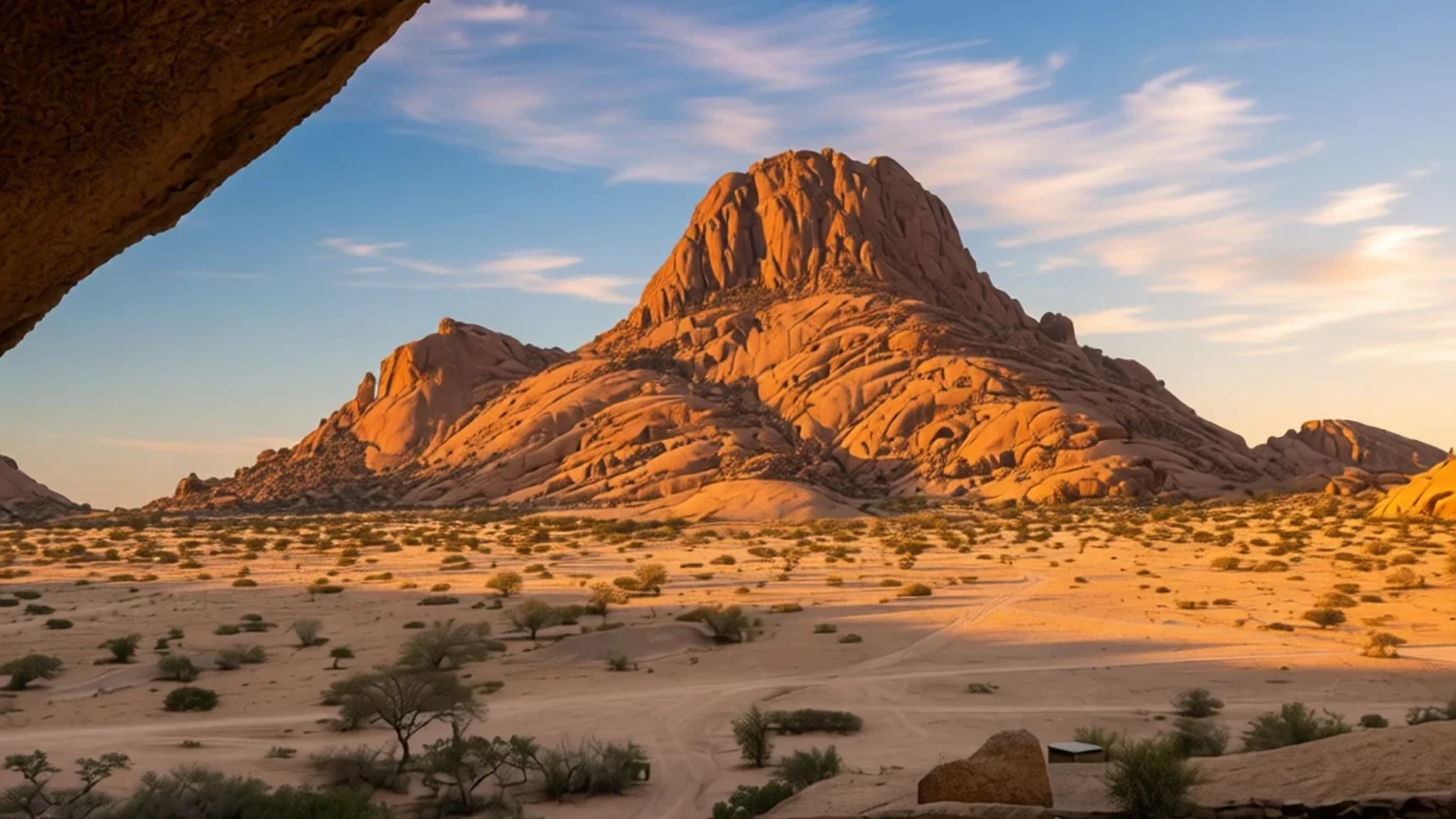
Spitzkoppe is a cluster of bald granite peaks rising from the Namib desert, best seen on a camping trip with time to climb and wander.
The place
Spitzkoppe is a group of bald granite peaks in the Namib desert of Namibia, lying between the small town of Usakos and the coastal town of Swakopmund. The name comes from German and means pointed dome, and the mountain is still sometimes called Spitzkop or the Matterhorn of Namibia, a nickname that refers to its shape. The highest point reaches about 1,728 metres above sea level, though it rises roughly 670 metres above the desert floor beneath it.
Most people first see it from the road, a jagged knot of rock on the horizon that grows steadily as you drive in. The peaks are rounded and weathered into domes, arches and piled boulders, and their colours shift through the day, from pale grey at midday to orange and deep red as the sun drops. Smaller outcrops stand nearby, including Little Spitzkoppe, and the hills stretching away from the main group form a range called the Pontok Mountains.
Compared with the country's busier parks, Spitzkoppe is quiet. Visitor numbers stay relatively low, the campsites sit among the rocks rather than in rows, and the landscape is the real draw. The granite glows best in the low light of early morning and late afternoon, when shadows deepen across the plain. Expect heat during the day and a sharp drop after dark, and bring your own water, since the area has few facilities. Plan for a remote stay rather than a quick stop, because services are thin on the ground.
Its story
The climbing history of Spitzkoppe is almost as striking as its shape. Any ascent of the main peak involves exposed rock climbing at a high grade. In the earliest days even the standard route was a serious undertaking, because the peak stands isolated, the desert heat is intense and there is no water on the way up.
Legend has it that a soldier of the German colonial force reached the summit around 1904 and lit a fire there. No fuel grows on the upper rock, and no proof survives, so the story stays unconfirmed. The first documented summit came from Cape Town climbers, and later parties worked out routes along the northern flank. One team gave up after failing to reach the final faces, and some early climbers cut steps into a smooth band of granite with a hammer and chisel.
A party including Hans and Else Wong and Jannie de Villiers Graaff reached the top in November 1946. For roughly twenty-five years, most climbers needed two or three days to finish the ascent. That changed in 1971, when a party climbed it in about four hours. Today the standard route is far less demanding, but the rock still carries that history. The granite itself is around 120 million years old, and erosion has left the harder core standing clear of the plain, the type of landform geologists call an inselberg. Spitzkoppe has also appeared on screen: photographs of the peaks served as backdrops for the Dawn of Man sequences in 2001: A Space Odyssey.
What to see
- Groot Spitzkoppe
The main peak gives the group its name and draws most climbers. It rises as a bald granite dome with a steep, exposed final section. The standard route is not severely difficult by modern technical standards, but it still calls for proper rock skills and plenty of water. The normal route is currently barred by the fence, so check local guidance before you set out.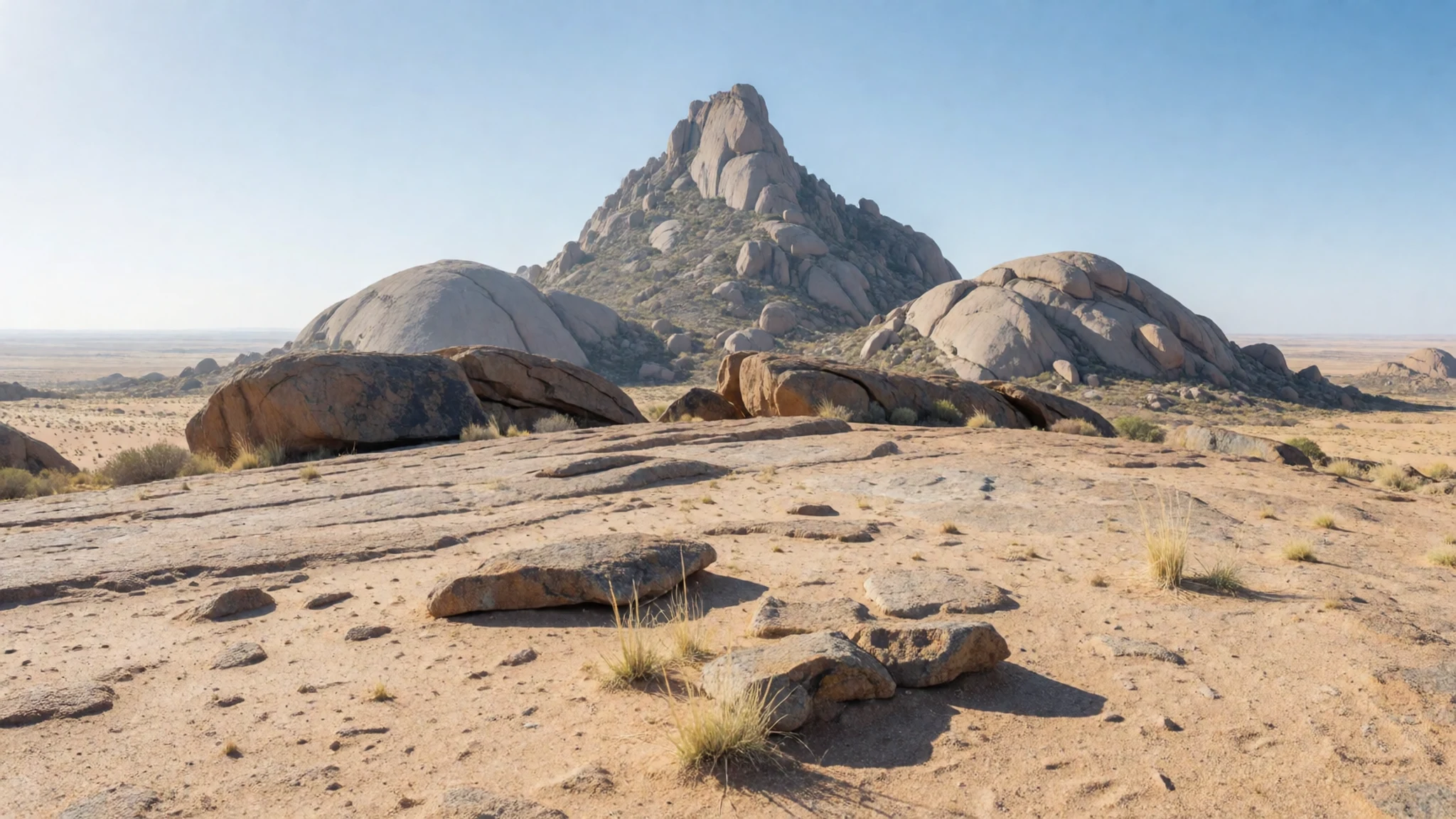
- The Rock Arch viewpoint
A natural arch of weathered granite stands among the rocks, and this viewpoint is the classic spot to frame the main peak through it. Photographs from here show the mountain rising far beyond the flat plain, which explains how far it can be seen. Go in the cooler hours, when the light is softer and the rock is less hot to touch.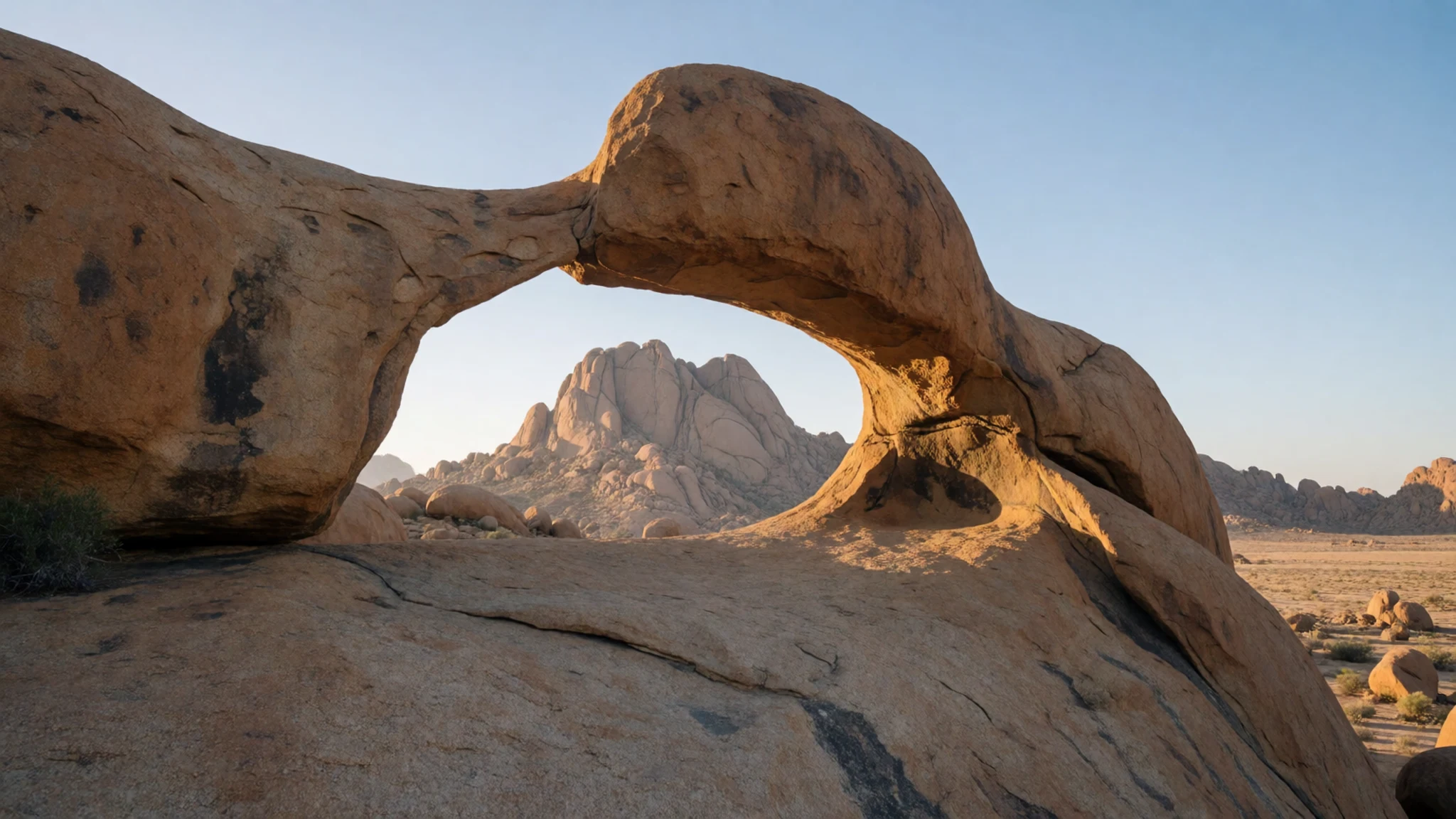
- The Rock Arch panorama
A wider view takes in the arch with the main mountain behind it, laid out across the plain. It is a good place to see how the boulders stack and balance, and why the area draws photographers at sunrise and sunset. Bring a wide lens if you have one, and keep a spare bottle of water in your bag.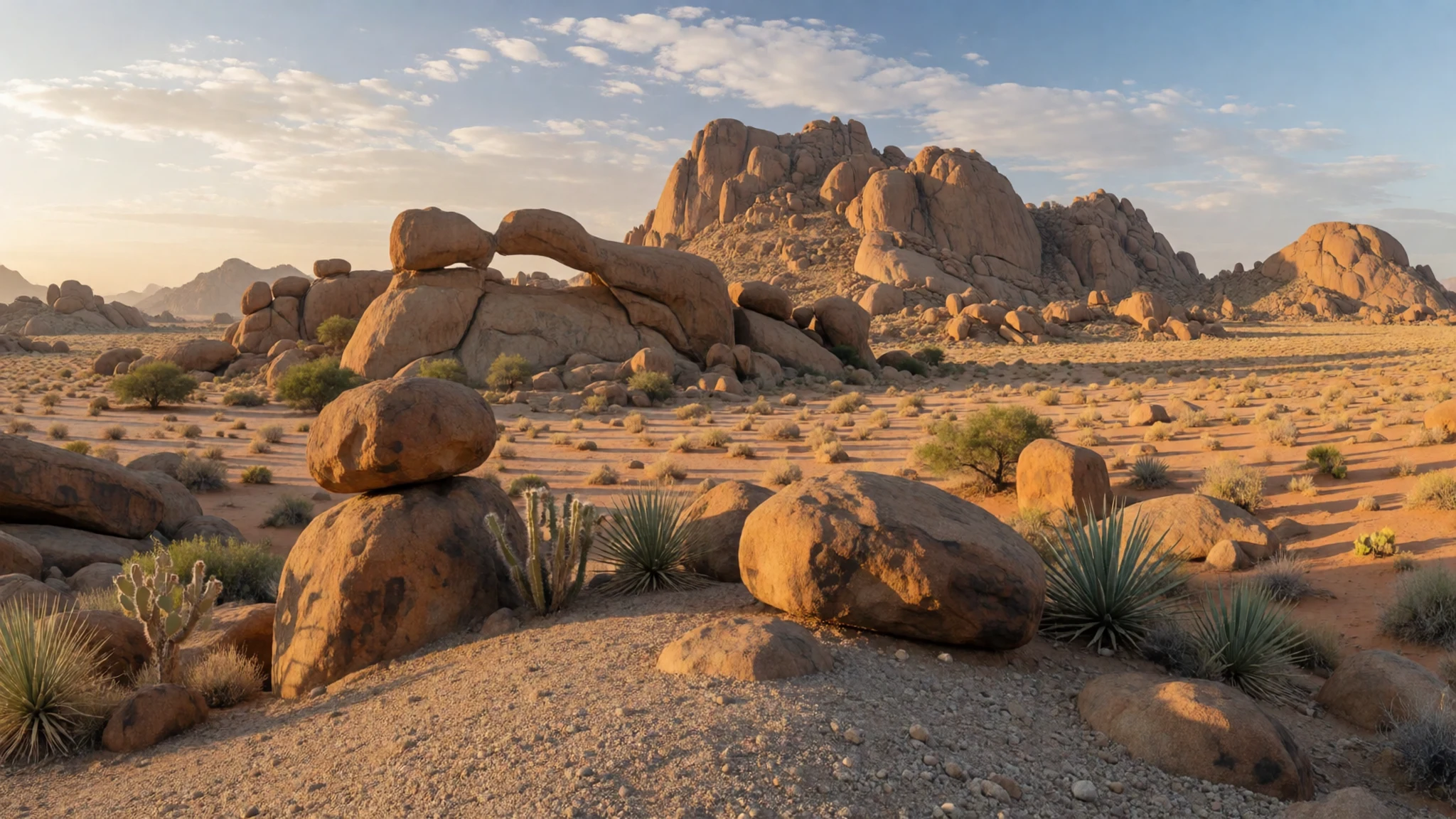
- San rock art
Painted rock art left by San people is found across the rocks here, and it is the reason many visitors treat the area as a cultural site as well as a landscape. Some of the paintings have been damaged by vandalism, but the collection is still worth a slow walk. Ask the local cooperative where to find the best-preserved panels.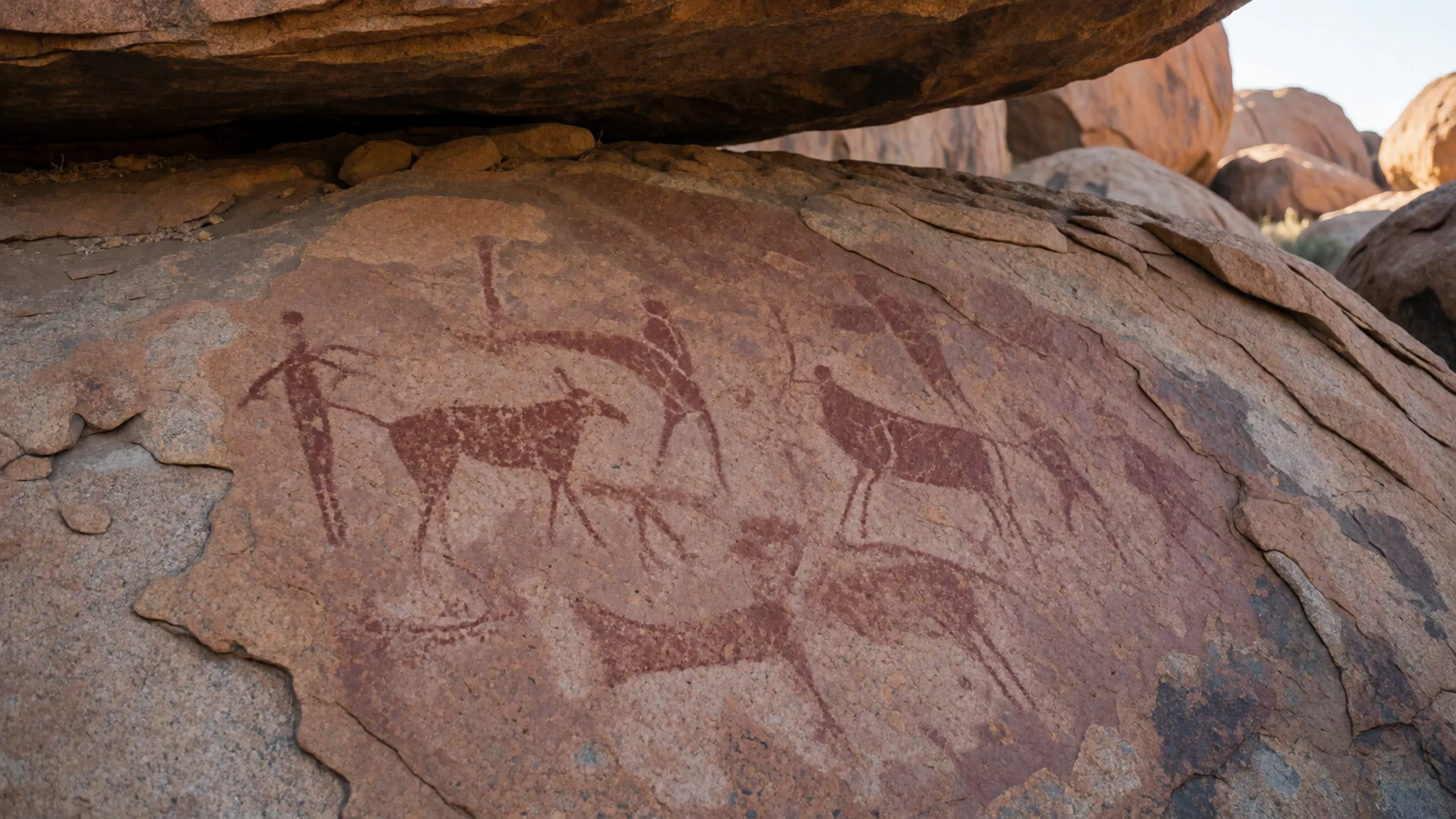
- Campsites among the rocks
Camping is the most common way to stay, with sites tucked into different rock formations and trails leading out from them. Many can still be reached by an ordinary car, but a high game fence built for a film shoot cut off the area between the Great Spitzkoppe and the Pontoks, and about half the old camping places are gone, so check which sites remain. There is no water on the sites, and only some have basic toilets. Arrange your stay through the women's cooperative that runs the area, and carry all the water you will need.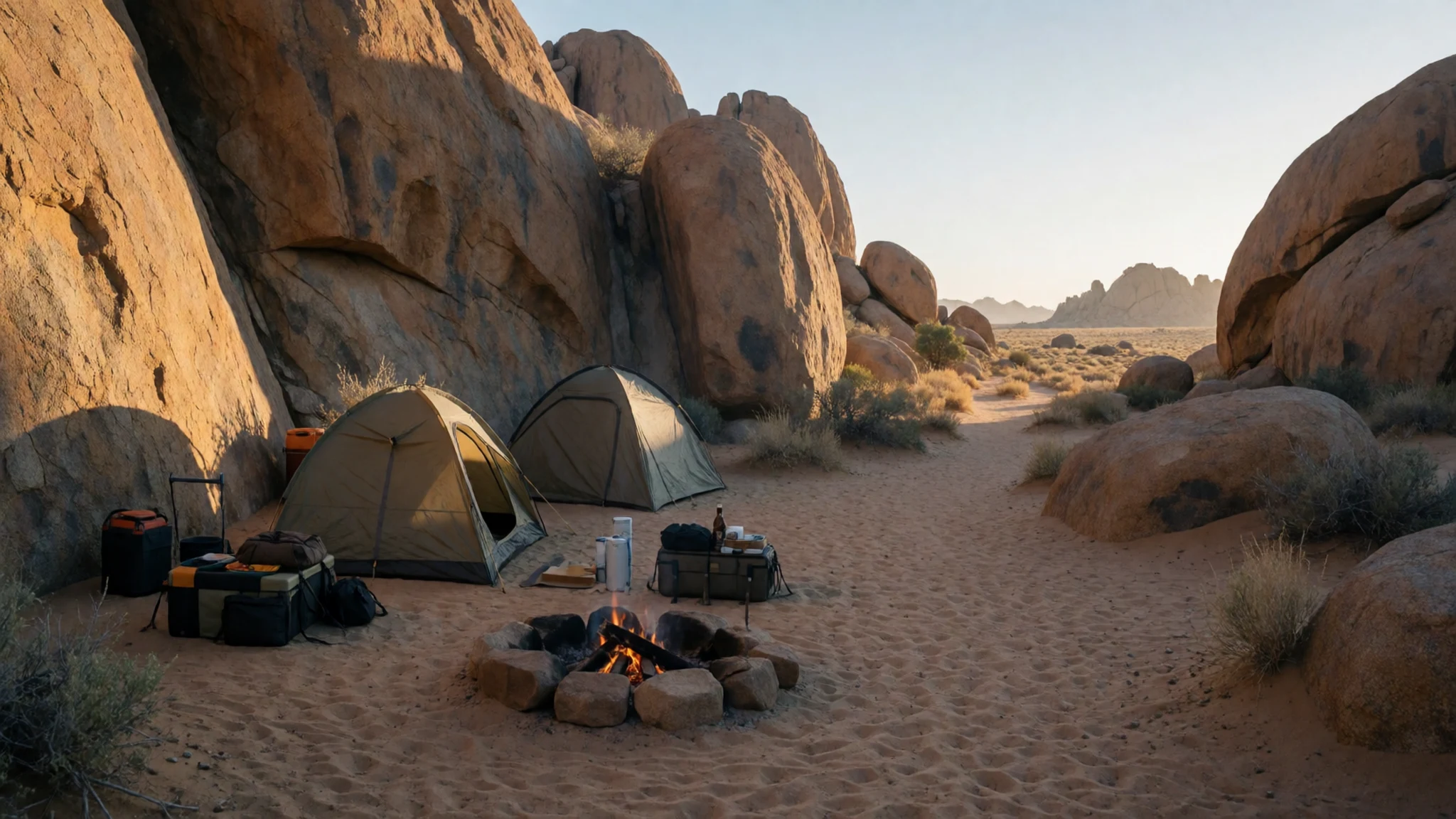
- Dassies on the boulders
Rock hyraxes, known locally as dassies, scramble over the boulders in the late afternoon. They are easy to watch from a short distance, but do not feed them. Climbing around the formations is a good way to spend the end of the day, as long as you keep to clear routes and watch your footing on loose granite.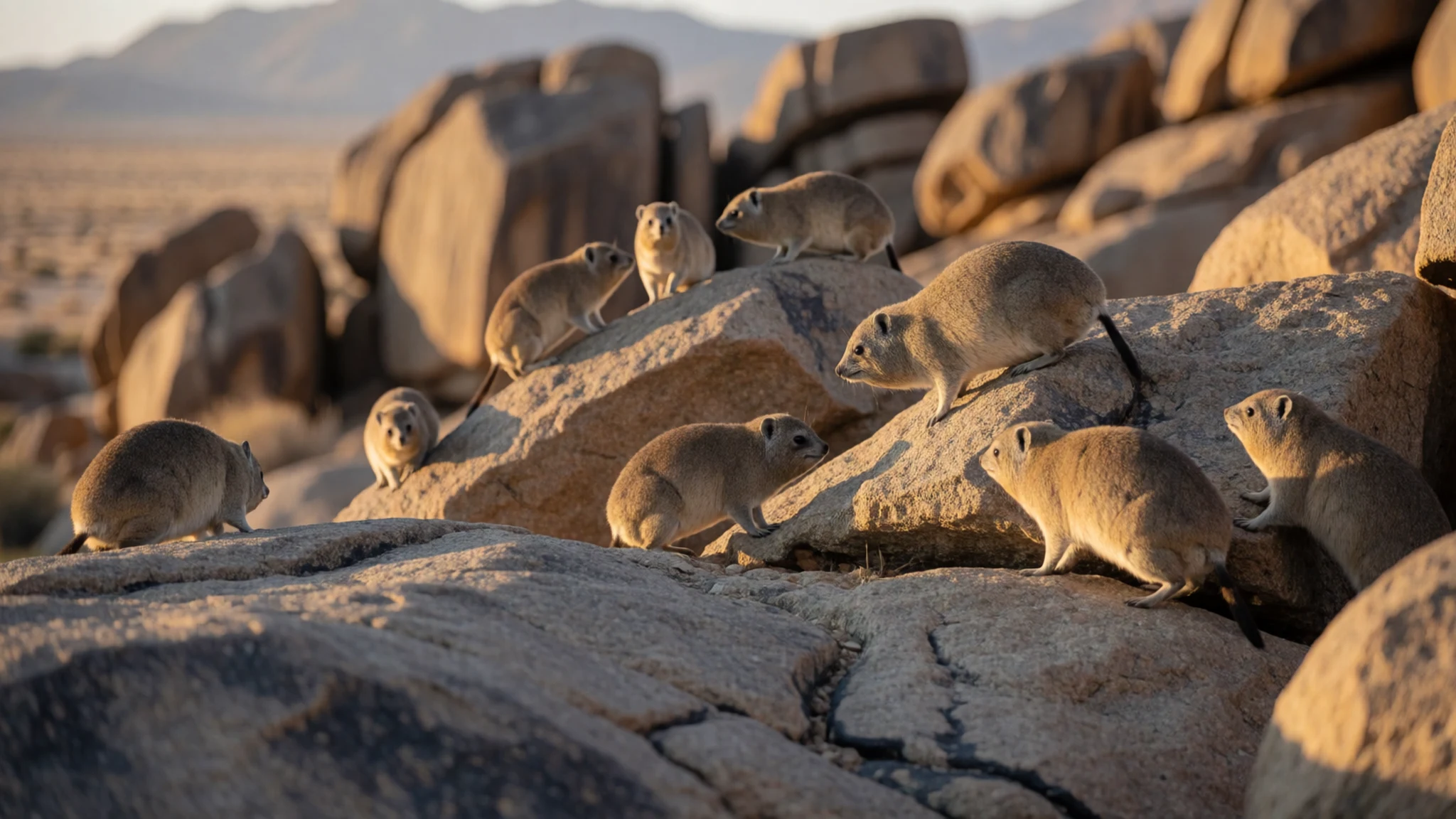
Culture
Spitzkoppe is run by a women's cooperative, and that shapes how visitors should behave at the campsites. Pay the entry fee at the gate and follow the staff's directions on where to pull in. The area is a place of rest and wilderness rather than a theme-park site, so keep noise low after dark, when sound carries across the plain and other campers are asleep. Greetings matter in Namibia: a friendly hello before asking for anything is the norm, and it is polite to ask before photographing people you meet in villages or on the road.
The San rock paintings are part of the area's heritage, and they are fragile. Stay on marked paths, do not climb onto painted surfaces, and never add marks, chalk or graffiti to rock art, even as a keepsake. Take your rubbish with you, and do not leave food where wildlife can reach it. When you find a panel, walk around the paintings rather than over them.
Keep your belongings secure at all times, and treat any roadside offer of help with caution. Visitors who respect the cooperative's rules and the rock art leave the place easier to enjoy for everyone who comes after. Never touch or mark the rock paintings, and always ask before photographing a person.
What to wear
Spitzkoppe sits in a region shared by Damara and Herero communities, and the traditional dress you may see is most often Herero. Herero women wear long, full dresses cut in a style inherited from nineteenth-century missionary fashion, usually in bold printed cotton. They pair these with headdresses that rise into two horn-like shapes. The dress is worn for church, weddings and ceremonies, and it has become a proud marker of identity. Men traditionally wear a plain shirt and trousers, sometimes with a hat. Textiles are mostly cotton, chosen for colour and for their ability to stand up to the sun.
Day to day, most people in the area wear ordinary Western clothing: jeans, shirts, work boots and warm jackets for the cold desert nights. Traditional dress is worn at events and by older women, while younger people dress much as they would anywhere else in the country.
For a visit, dress for the sun and the rock. Light long sleeves and a wide-brimmed hat protect against heat and glare, and long trousers help against scratches and insects. Sturdy closed shoes with good grip are the sensible choice on granite, which can be slippery and hot to touch. Pack a warm layer for evenings, when temperatures can fall sharply. Modest clothing is appreciated when you visit villages or meet local families.
What to eat
- Braai — a campsite fire, or a braai at a guesthouse in a nearby town
The braai is Namibia's grilled meat feast, most often beef, lamb or game such as oryx, cooked over wood or coals and eaten with pap or salad. The natural place to find one here is your own campsite fire, where you can build the coals while the sun goes down.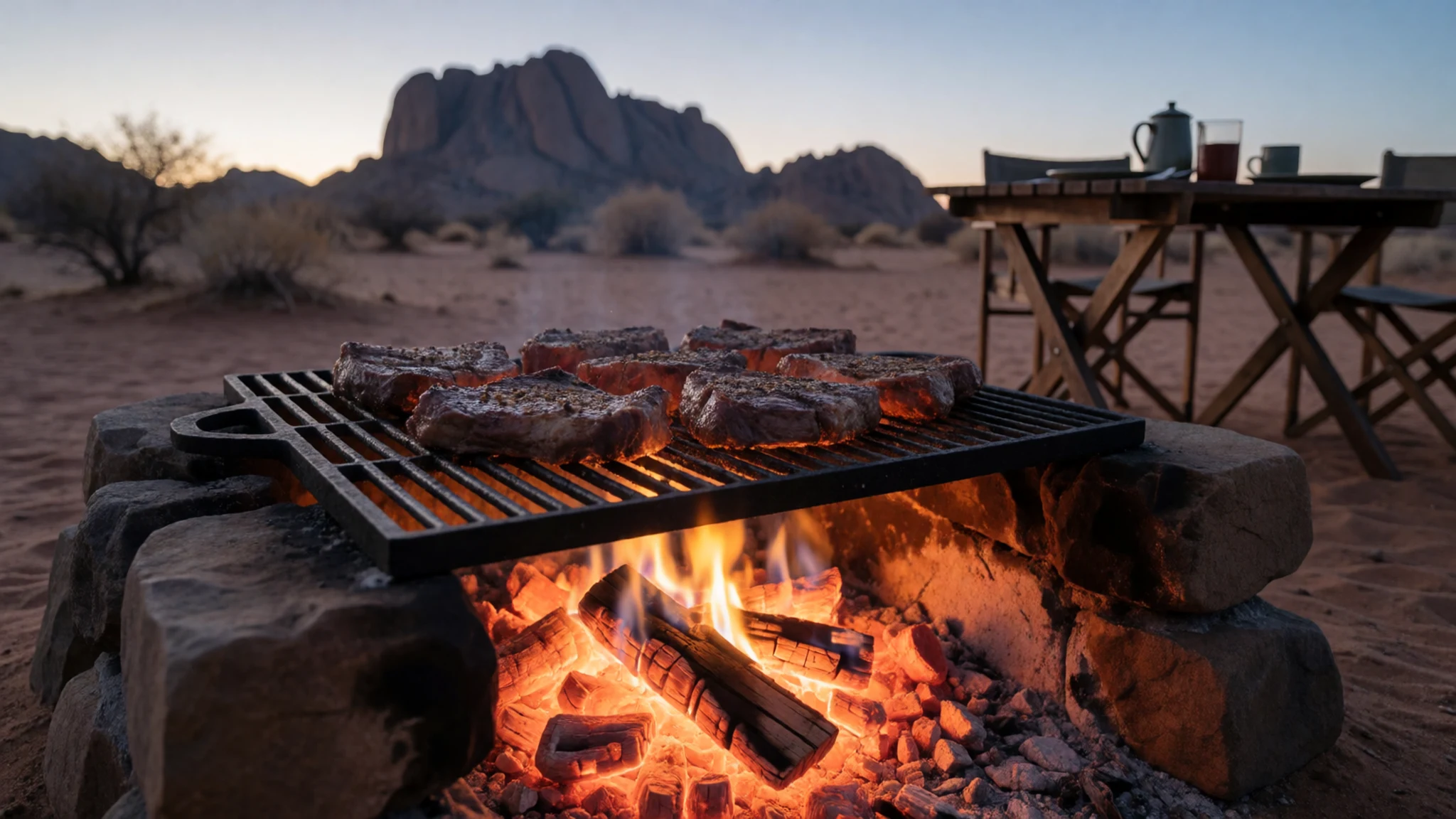
- Potjiekos — a campsite fire, or a family cooking pot at a rural guesthouse
A potjiekos is a slow-cooked stew made in a three-legged cast-iron pot over coals, with layers of meat and vegetables added in turn and left alone. Campers often cook it on the evening fire, and it suits a day spent climbing.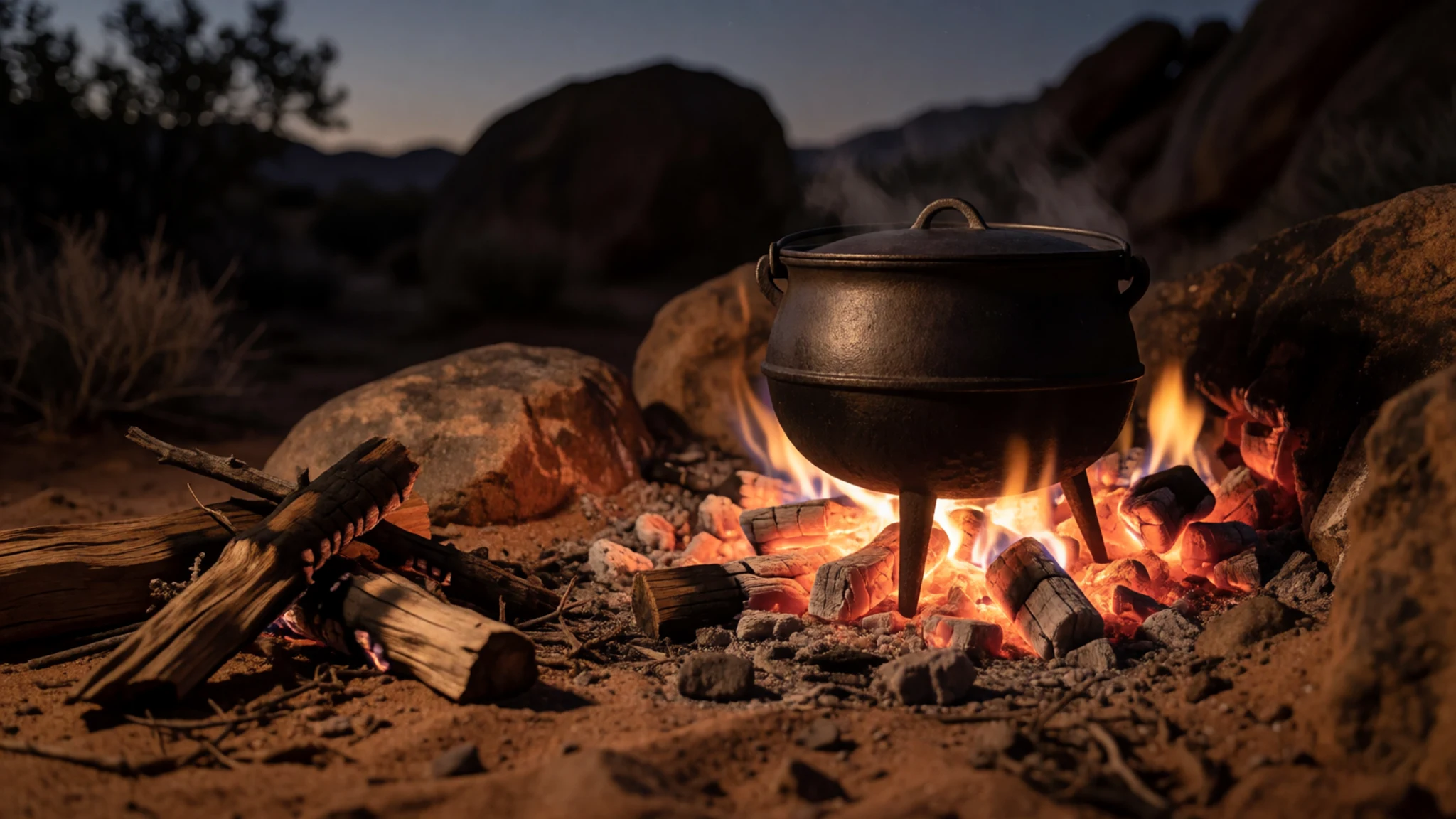
- Biltong — farm stalls and small shops on the roads in and out of the area
Biltong is air-dried, spiced beef or game, sliced thin and sold in bags. It is a practical snack for a long drive, and you will find it at farm stalls and small shops along the road. - Kapana — street stalls near town markets, most likely in larger towns on the road
Kapana is strips of beef grilled over an open fire and sold hot from street stalls, often with a spicy seasoning and a chilli sauce. It makes an easy lunch on the way in, and you will usually find it near town markets.
Plan it
Best time. Roughly June to August, when the days are mildest and the skies are dry. Nights are cold at any time of year, and the hottest stretch runs from around October to March, with the heaviest rain in January and February, which makes daytime climbing hard work.
How long. 2–3
Getting there. Fly to Hosea Kutako International Airport near Windhoek, then drive north-west towards Usakos. From the B2, take the D1918 and then the D3716 to reach the Spitzkoppe area.
Budget. low
Tips
- Carry all the water you need, because most campsites have none.
- Climb and walk in the cooler hours, and rest through the midday heat.
- Carry cash for the entry fee, and check current prices with the cooperative before you arrive.
- Be cautious at the roadside: spikes on the road and staged flat tyres have been used to target tourists, so drive to a safe, busy place before stopping.
- Hire a guide if you plan to attempt the main peak, since the final rock is exposed and demanding.
Etiquette
- Do not climb onto or touch the rock art.
- Pack out all your rubbish and do not feed the dassies.
- Keep camp noise low after dark.
Nearby
Sources
- Wikidata Q2124779 (CC0)
- Wikipedia, Spitzkoppe (rev 1352876551) (CC BY-SA 4.0)
- Wikivoyage, Spitzkoppe (rev 5081670) (CC BY-SA 4.0)
- Spitzkoppe year 2006, Hp.Baumeler (CC BY-SA 4.0)
- Spitzkoppe Rock Arch Viewpoint, Daniel Kraft (CC BY 3.0)
- Spitzkoppe Rock Arch Panorama with even sky, Daniel Kraft (CC BY 3.0)
- Spitzkoppe aerial view 2009, Hp.Baumeler (CC BY-SA 4.0)
- Spitzkoppe, Namibia 2018-08-04, Diego Delso (CC BY-SA 4.0)
- Namibia Spitzkoppe 2008-06-28 08-17-43, Hansueli Krapf (CC BY 3.0)
- Namibia Spitzkoppe 2008-06-28 08-18-02, Hansueli Krapf (CC BY 3.0)
- Namibia Spitzkoppe 2008-06-28 08-37-23, Hansueli Krapf (CC BY 3.0)


