Spiti Valley
Spiti Valley, India
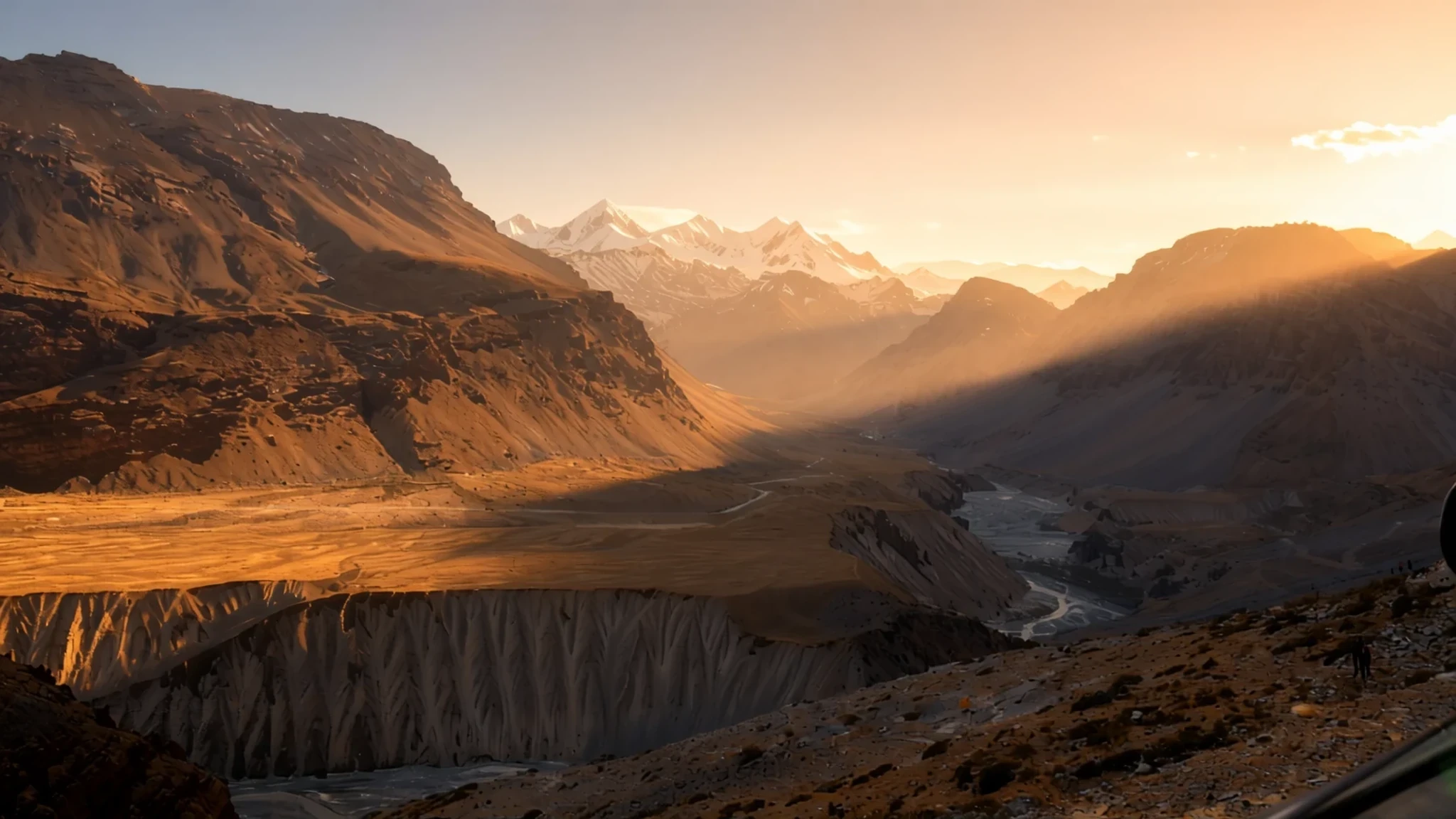
Spiti Valley offers a remote Himalayan cold desert landscape, ancient Tibetan Buddhist monasteries, and traditional Bhoti culture away from the crowds.
The place
Spiti Valley sits as a high-altitude Himalayan region located in the north-eastern portion of Himachal Pradesh in northern India. Translated from local terminology as 'The middle land', the valley occupies a territorial corridor sandwiched between Tibet and India. The terrain is defined primarily by the wide, stony bed of the Spiti River alongside several tributary valleys such as the Pin and the Lingti. Bordered by Tibet to the east, Ladakh to the north, Lahaul to the west and southwest, Kullu to the south, and Kinnaur to the southeast, the region presents a stark cold desert environment. Precipitation is scarce, leaving sweeping slopes of weathered brown earth and grey shale beneath brilliant blue skies. Settlement is sparse, making the valley one of the least densely populated parts of the country. Historically reliant on subsistence farming, local communities have gradually incorporated cash crops into their agricultural routines. Beyond its rugged topography, Spiti serves as a remarkable destination for observing high-altitude wildlife, including the elusive snow leopard, and engaging with traditional Himalayan adventure travel.
Its story
Human presence in Spiti Valley extends far back into prehistory, anchored by an exceptional heritage of early rock art left by the Khasa people. Scholars classify these ancient carvings across successive chronological phases, beginning with the Late Bronze Age and progressing through the early Iron Age, the standard Iron Age, the protohistoric period, and into early historical epochs. Political control shifted through various regional dynasties over the centuries. Evidence suggests that the valley formed part of the western Tibetan kingdom of Zhang Zhung until the middle of the seventh century. By the tenth century, the territory became integrated into the kingdom of Ngari Khorsum, established through the lineage of Kyide Nyimagon. Successive eras brought sustained interactions with neighboring Tibetan realms, shaping the spiritual and administrative structures that persist today. The arrival of Tibetan Buddhism profoundly shaped the valley's architecture and social fabric, resulting in the establishment of remarkable monastic seats that have endured for centuries amidst shifting imperial boundaries and mountain isolation.
What to see
- Key Monastery — Near Kaza
Key Monastery is a prominent religious complex belonging to the Gelugpa school of Tibetan Buddhism. Perched dramatically on a conical hill above the valley floor, the whitewashed structure features stacked prayer rooms, narrow corridors, and ancient murals that overlook the winding river channels.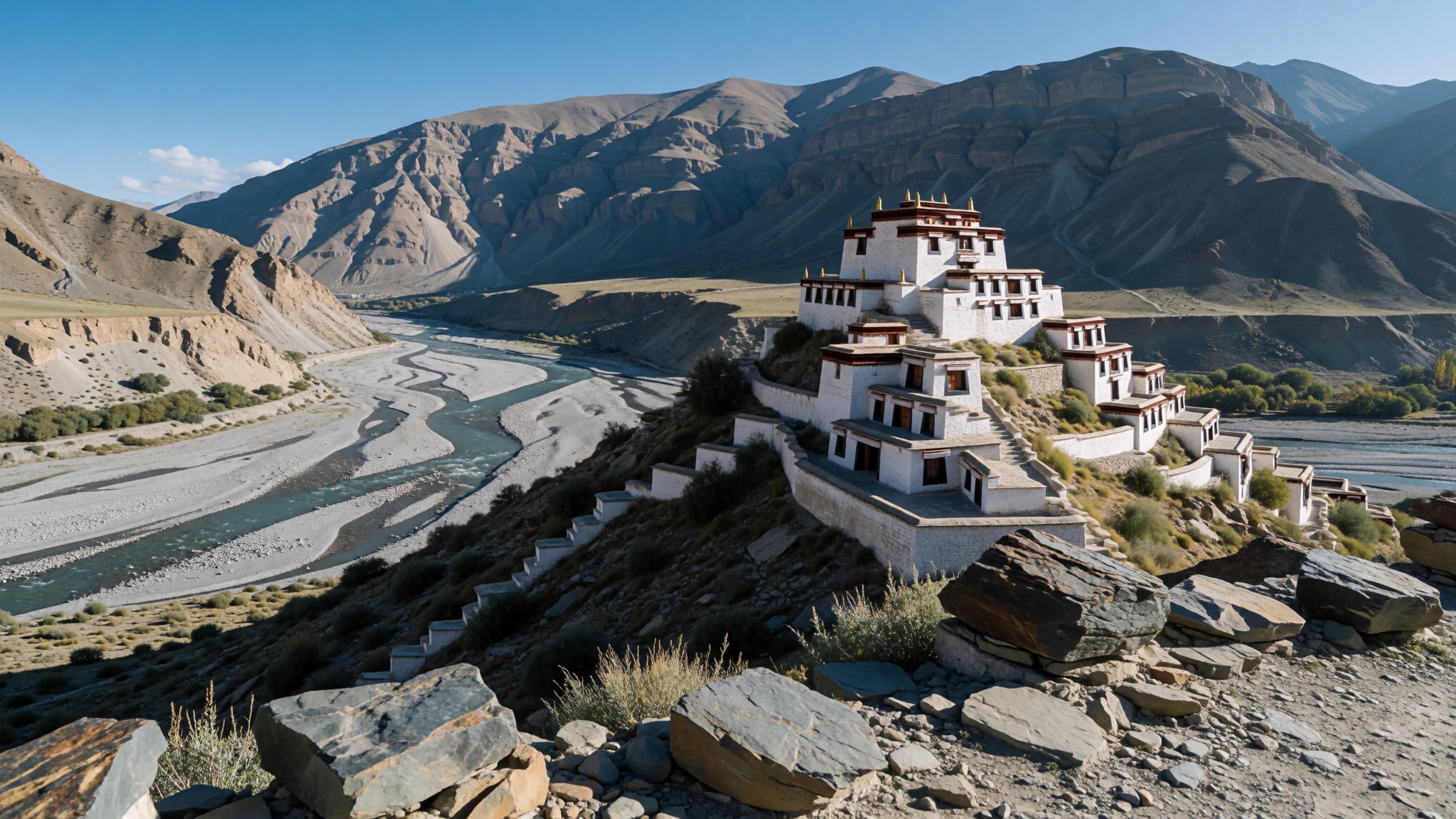
- Tabo Monastery — Tabo village
Tabo Monastery is an ancient spiritual sanctuary nestled on the desert floor, renowned for its remarkably preserved mud-brick architecture and invaluable clay sculptures. Monks and travellers explore the dark, atmospheric prayer halls containing sacred frescoes that date back centuries within this desert settlement.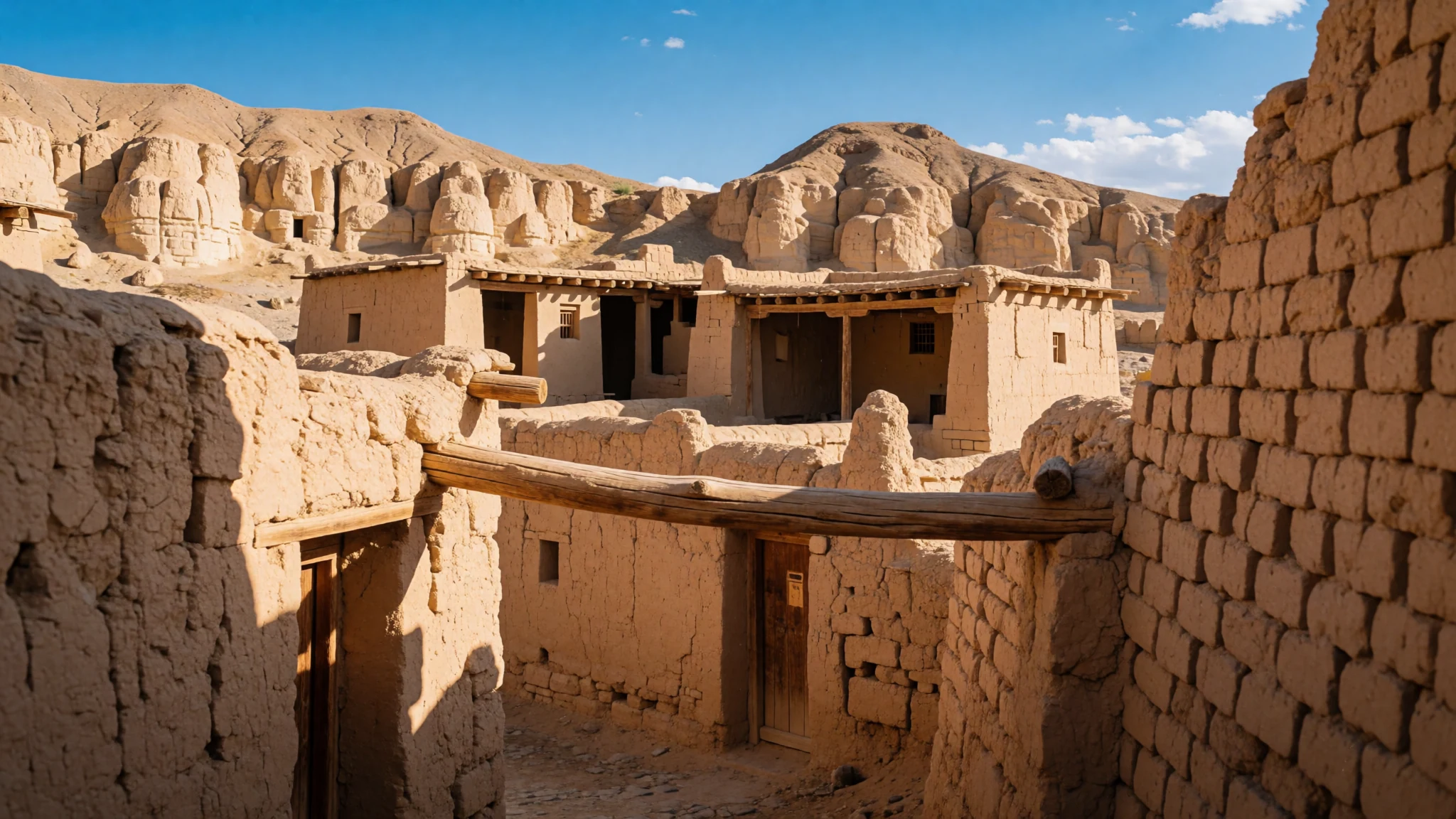
- Dhankar Gompa — Dhankar village
Dhankar Monastery clings precariously to a crumbling cliff edge high above the convergence of two major rivers. This historic fort-monastery offers sweeping views across the valley, featuring traditional prayer wheels, ancient script collections, and terraced agricultural plots resting far below the sheer rock faces.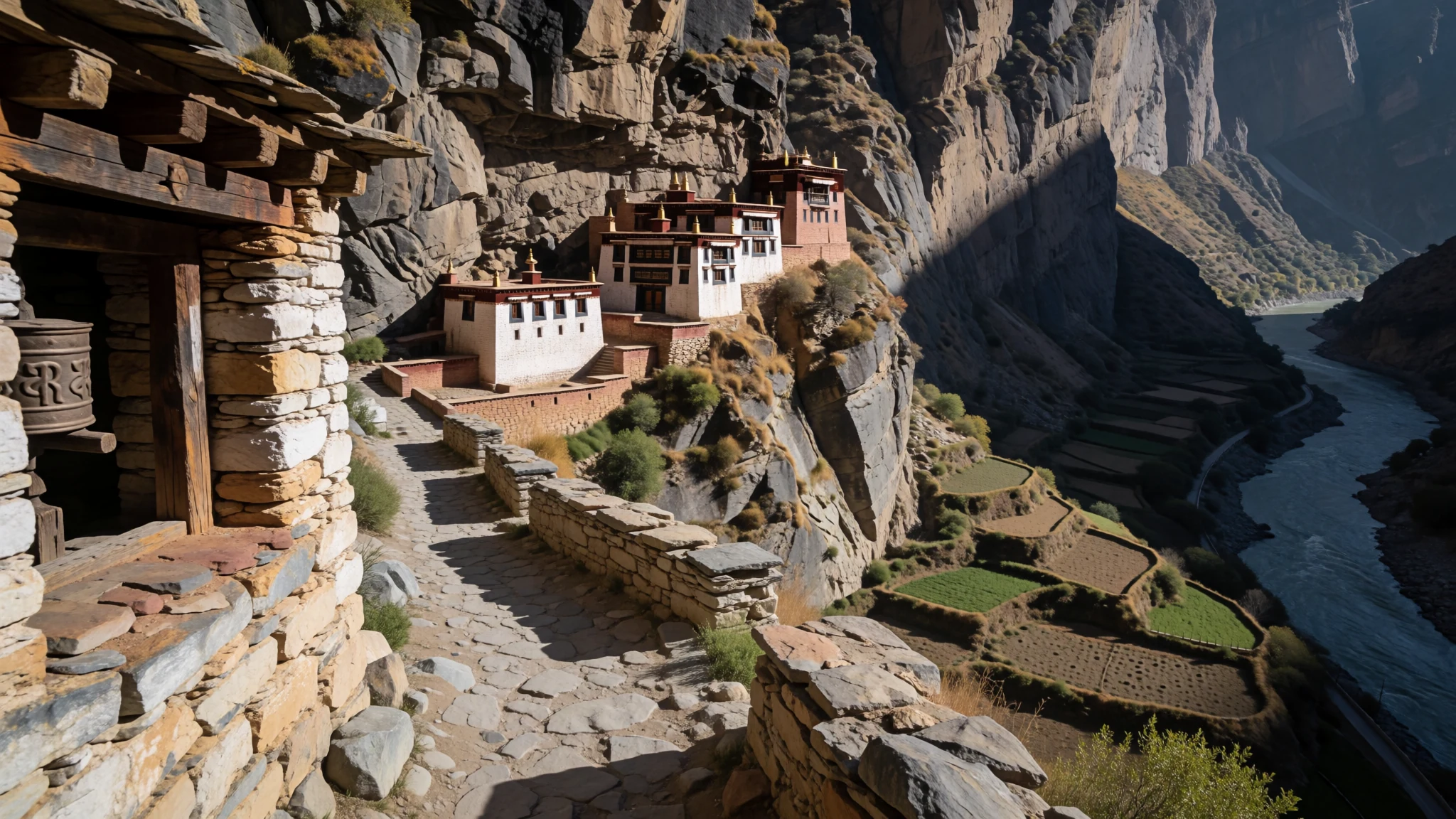
- Pin Valley — Pin Valley
Pin Valley branches off the main river route into a distinct ecological zone characterized by stark rock walls and traditional slate-roofed hamlets. This side valley serves as a prime habitat for high-altitude wildlife and houses unique Nyingma school religious sites and nunneries.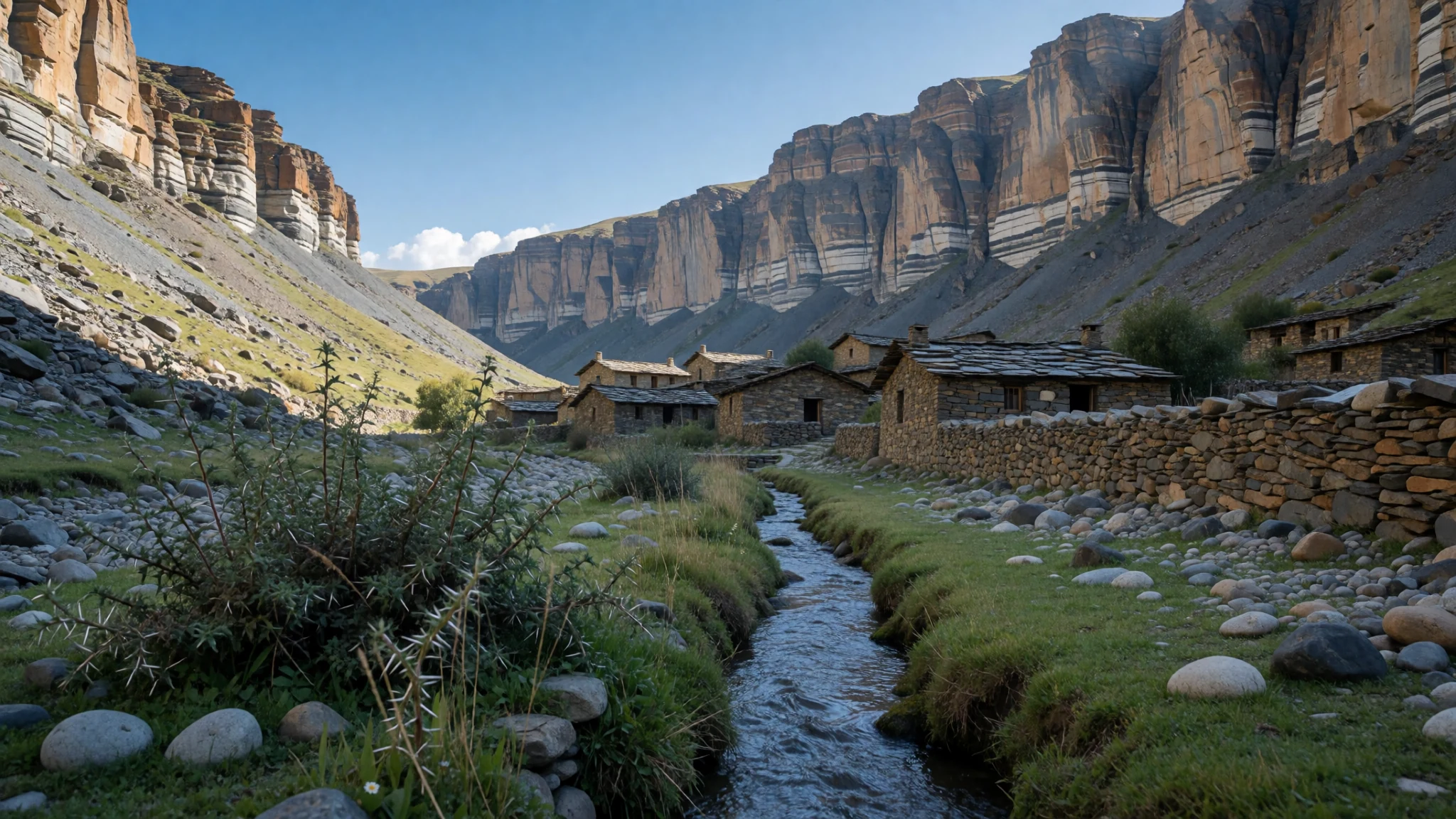
- Spiti River Bed — Kaza area
The Spiti River bed stretches across a broad, gravel-strewn expanse carved between towering mountain ramparts. Walking along the braided glacial streams provides an intimate perspective of the vast geological scale, wind-carved cliffs, and quiet rural crossings defining the region.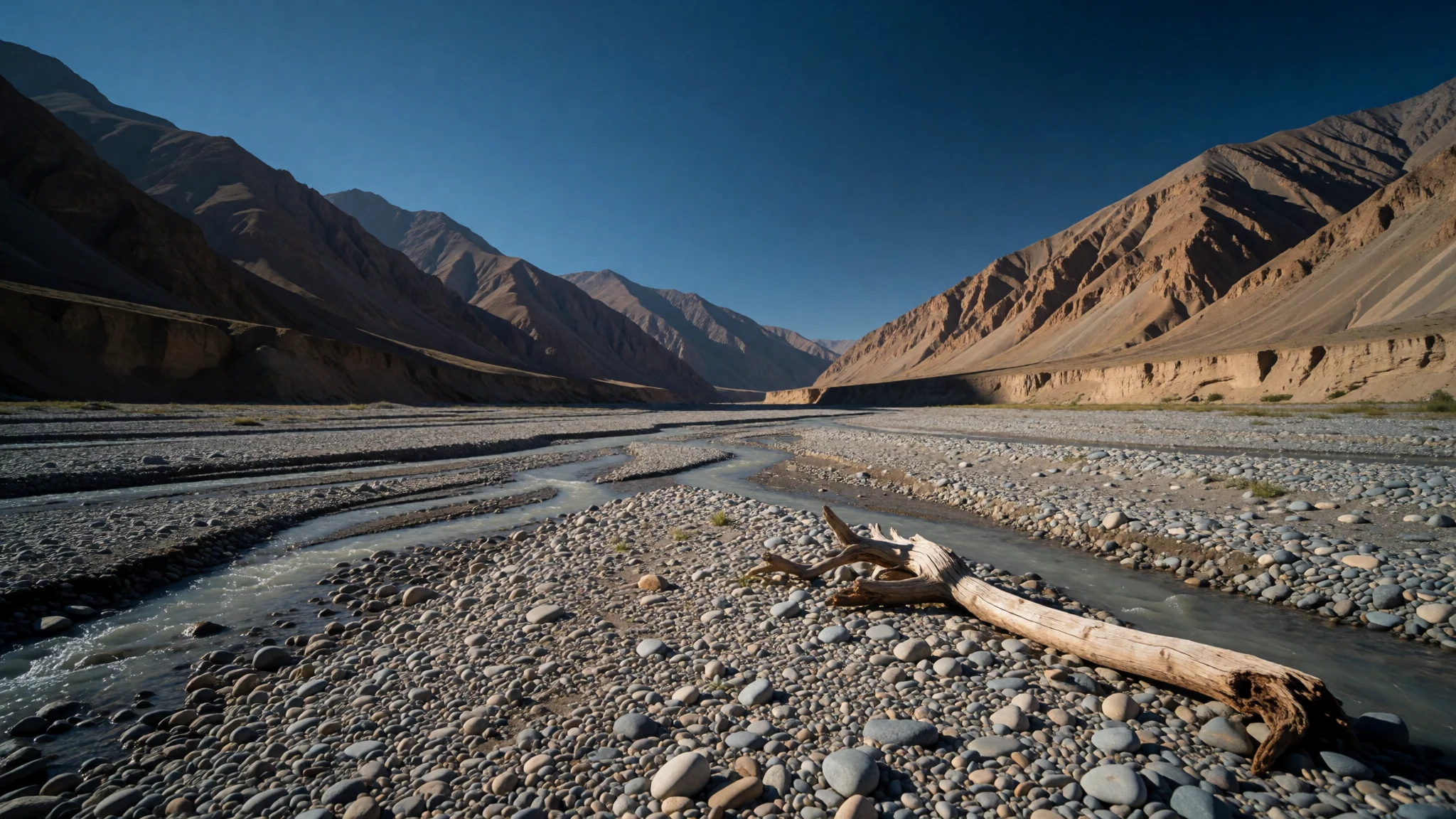
Culture
In Spiti Valley, the population is roughly 12,000 to 17,000 residents depending on how the area is counted, predominantly speakers of Spiti Bhoti, a distinct dialect of Tibetan. Cultural and economic bonds with Tibet ran deep for generations until geopolitical shifts in the mid-twentieth century altered cross-border exchanges. The local population adheres to Tibetan Buddhism, maintaining active traditions across the Gelug, Nyingma, and Sakya schools. Monasteries function as the spiritual and social anchors of village life, hosting annual masked dances and communal festivals. Traditional craftwork includes hand-woven woolen garments and carpets suited to the rigorous mountain climate. Visitors should always walk around stupas and mani walls in a clockwise direction as a sign of respect.
What to wear
In Spiti Valley, traditional dress reflects the harsh high-altitude climate, featuring heavy woollen robes, woven tunics, and felt boots designed to insulate against freezing winds and snow. Older generations and villagers during festivals still wear these traditional textiles, often paired with turquoise-studded silver ornaments and distinctive woollen caps. Today, most locals wear practical everyday garments such as fleece jackets, thermal layers, and sturdy trousers to cope with active farm work and cold temperatures. For visitors exploring Spiti Valley, layering is essential because daytime sun can be intense while shade and evenings bring biting cold. Pack windproof outerwear, UV-blocking sunglasses, thick socks, and sturdy walking boots. When visiting monasteries, dress modestly by covering shoulders and knees, and remove footwear before entering indoor prayer sanctuaries.
What to eat
- Thukpa — Local roadside eateries in Kaza
Thukpa is a hearty noodle soup featuring hand-pulled wheat noodles simmered in a clear, warming broth with seasonal vegetables and occasional pieces of meat, served fresh in local roadside eateries throughout the valley.
- Momos — Village market stalls and tea houses
Momos are steamed or fried dumplings stuffed with minced vegetables or spiced meat, folded by hand and accompanied by a fiery red chilli dipping sauce, found across every market stall.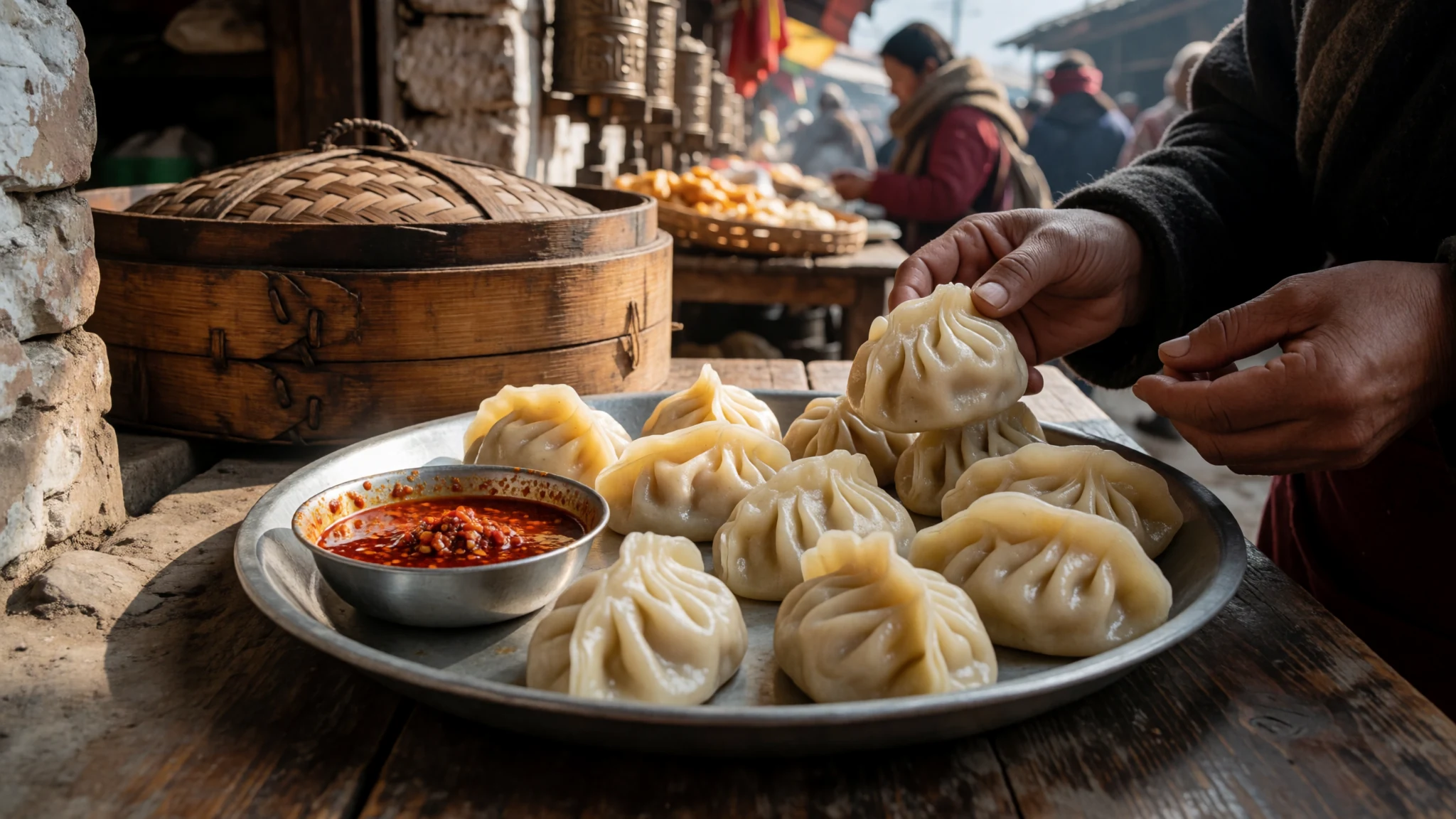
- Butter Tea — Homestays and monastery guest rooms
Butter Tea is a traditional salted beverage prepared by churning tea leaves with yak butter and salt, served piping hot in small bowls to provide vital warmth and calories in high-altitude settlements.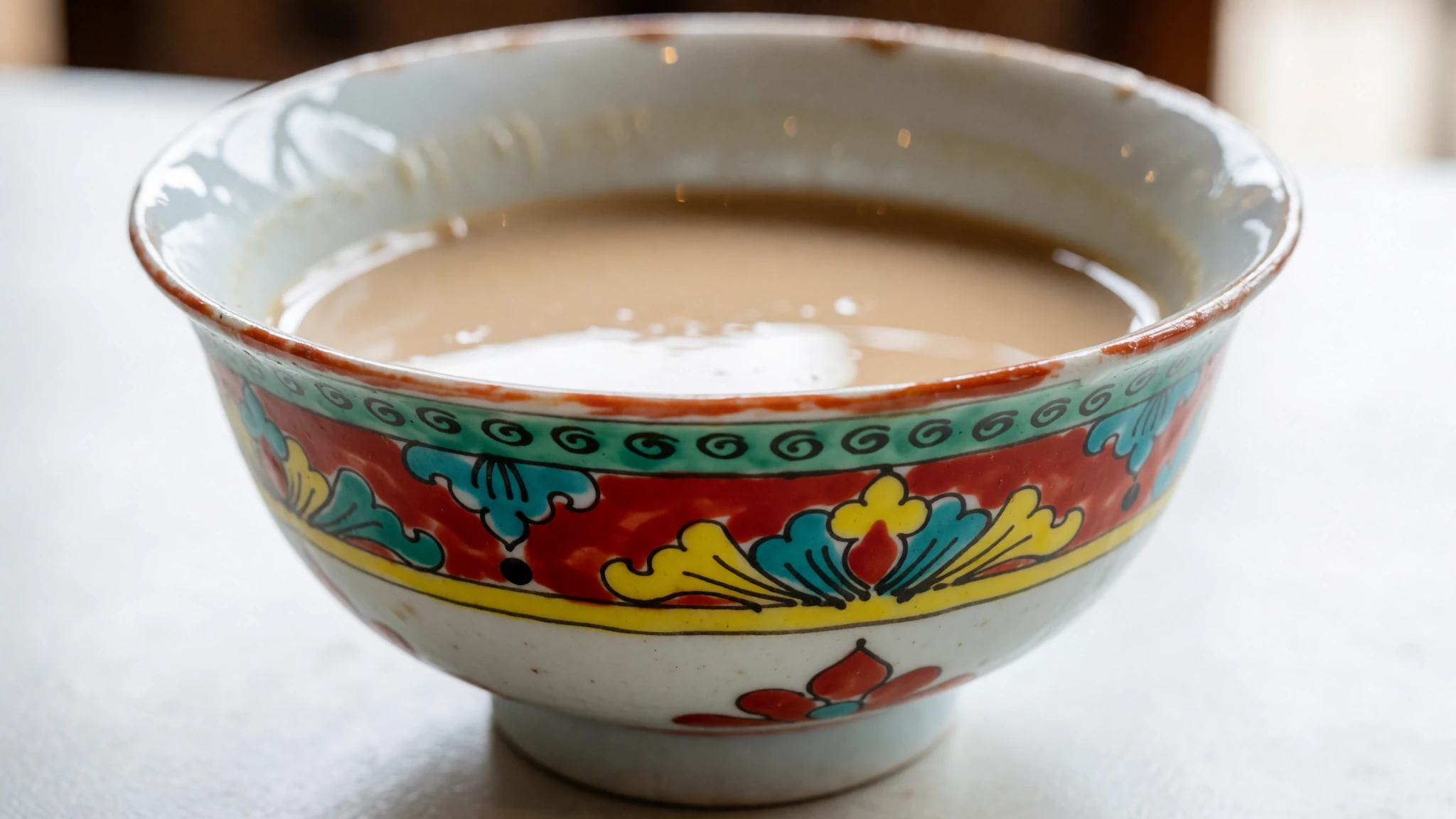
- Madra — Village celebrations and local dining rooms
Madra is a traditional festive dish originating from the broader region, consisting of chickpeas or kidney beans simmered slowly in a rich, spiced yogurt gravy flavoured with ghee and aromatic spices. - Tsampa — Traditional rural kitchens and homes
Tsampa is a roasted barley flour staple that forms an essential source of energy, often mixed directly into butter tea to form a thick, nourishing paste consumed during long winter months.
Plan it
Best time. Late May to early October is the most workable window, with June and September the most comfortable months, while July and August bring the heaviest rain and warmest days, and winter brings extreme cold and heavy snow that blocks overland routes.
How long. 4–6
Getting there. Fly to Shimla, Kullu, or Kangra, then complete the journey by road via Manali or Kinnaur, keeping in mind that mountain roads frequently experience weather-related delays.
Budget. mid
Tips
- Allow several days in lower settlements to acclimatise properly before heading to higher elevations
- Carry sufficient cash as digital payment options are unreliable or non-existent in remote villages
- Pack comprehensive layers including windproof jackets and thermal wear regardless of the season
- Respect local water scarcity by conserving supplies during your stay in guesthouses and homestays
Etiquette
- Circumambulate religious structures, stupas, and prayer walls in a clockwise direction
- Always ask permission before photographing local residents, monks, or interior prayer spaces
- Remove your shoes before stepping inside any monastery prayer hall or temple room
Nearby
Sources
- Wikidata Q2682249 (CC0)
- Wikipedia (CC BY-SA 4.0)
- Wikivoyage (CC BY-SA 4.0)