Sofia
Sofia, Bulgaria
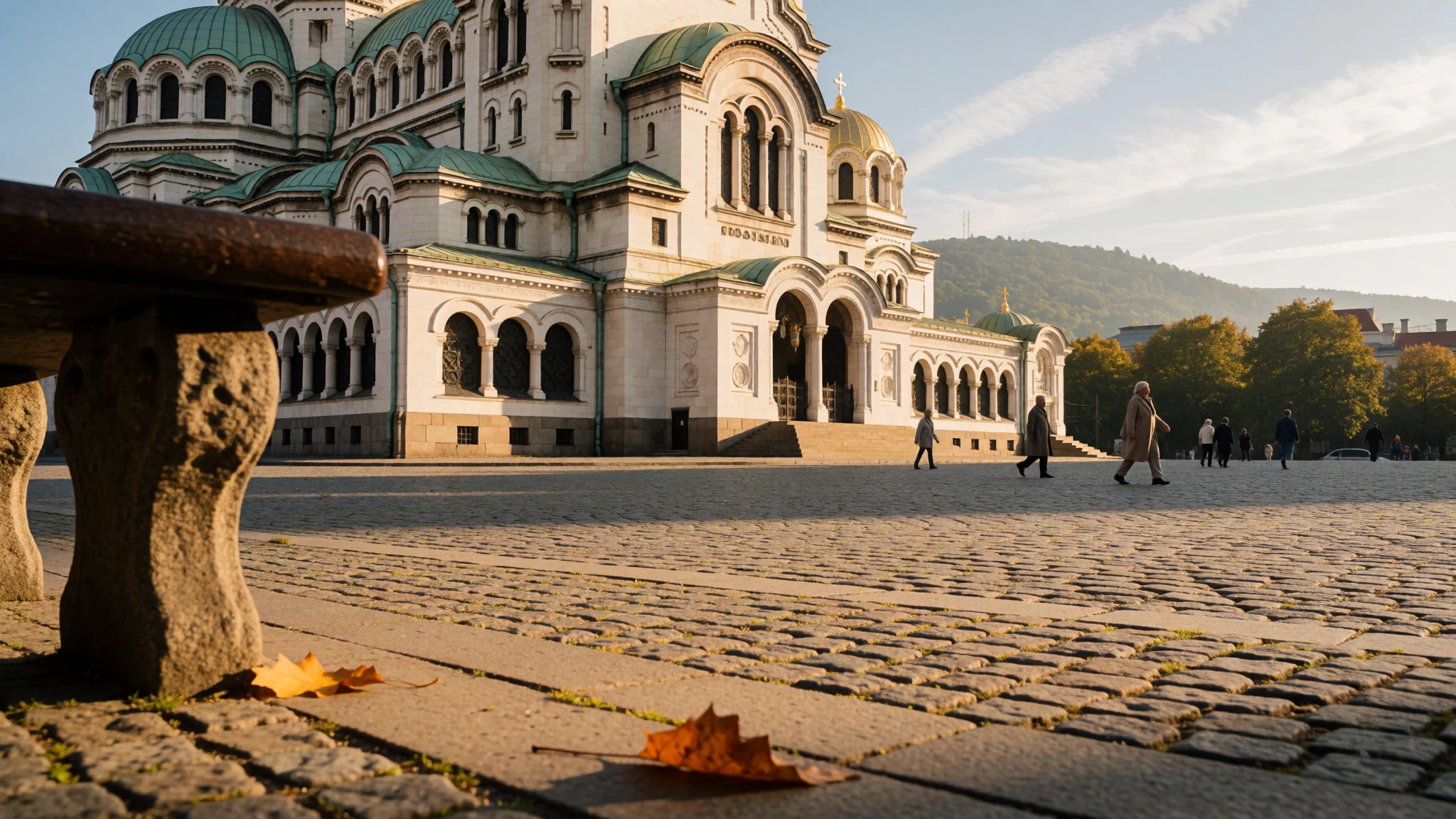
Sofia sets mineral springs and a Roman-to-modern centre under the ridge of Vitosha, close enough to shape the day.
The place
Sofia (София) is the capital of Bulgaria, a city of about 1.2 million people in the Sofia Valley, at roughly 560 metres above sea level, with the long ridge of Vitosha closing the southern skyline. The built-up area sits on the western side of the Iskar, in the west of the country, on ground long settled and still giving up hot mineral water in the centre. That water is the city's quiet constant. The former Central Mineral Baths, now a museum of Sofia's own past, stands over springs that drew people here before any later name did.
The climate is humid continental, and the streets are at their easiest in the milder stretches of the year. The centre is compact enough to walk. Successive cities occupy almost the same footprint: Roman Serdica under the paving, Ottoman centuries, then the capital laid out after Bulgarian rule returned in 1878. Tram lines and parks run between cathedral domes, the former royal palace and the theatre square.
Beyond that core, Sofia is a working metropolis and the seat of both the municipality and the oblast. People commute, shop and linger in cafés while Vitosha stays in view, close enough to shape the weather and the weekends. The official site, sofia.bg, covers whatever changes — transport, closures, civic notices. What holds steady is a low, spring-fed centre set against a high ridge, so the capital feels less like a flat inland city and more like a balcony over the valley.
Its story
Sofia has carried several names, and each one belongs to a different state that held this valley. The Serdi, a Celtic tribe, gave the Roman town its name, Serdica. A stone text cut in Athens in the 1st century BC already names it as their city, and the Republic took it in 29 BC after a campaign associated with Crassus. Roman writers set that fighting at the end of the same century. The old street plan still lies under the modern centre, in the block between TZUM, the Sheraton building and the presidency.
Before the Serdi, Thracian groups lived here, among them the Tilataei, and in the 500s BC the land lay within the Odrysian kingdom. Philip II of Macedon destroyed the town in 339 BC. Earlier still, farmers had settled beside the hot springs: a Neolithic village at Slatina, and another near today's National Art Gallery.
When imperial control weakened, raids by Huns, Visigoths, Avars and Slavs struck Serdica in turn. In 809 Khan Krum brought the city into the First Bulgarian Empire, and it took the Slavic name Sredets. Byzantium recovered it in 1018; the Second Bulgarian Empire took it back in 1194, and Sredets then served as an administrative and literary centre. Ottoman forces captured it in 1382. From 1530 until 1836 it was the regional capital of Rumelia Eyalet. Government from Bulgaria was restored in 1878, and in 1879 Sofia was named capital of the re-founded state. That decision drew people and new building at a pace the old spa town had not known. Under every name, the mineral springs beneath the centre kept running.
What to see
- St Alexander Nevsky Cathedral — city centre
Sofia's Alexander Nevsky Cathedral stands in the centre, a pale stone church under gilt domes, facing a wide square. It is the building the skyline keeps returning to, with Vitosha often visible beyond the rooftops. Inside, it works as a living Orthodox church — candles, mosaics, services — as well as a place visitors enter. The square beside it is where the centre gathers.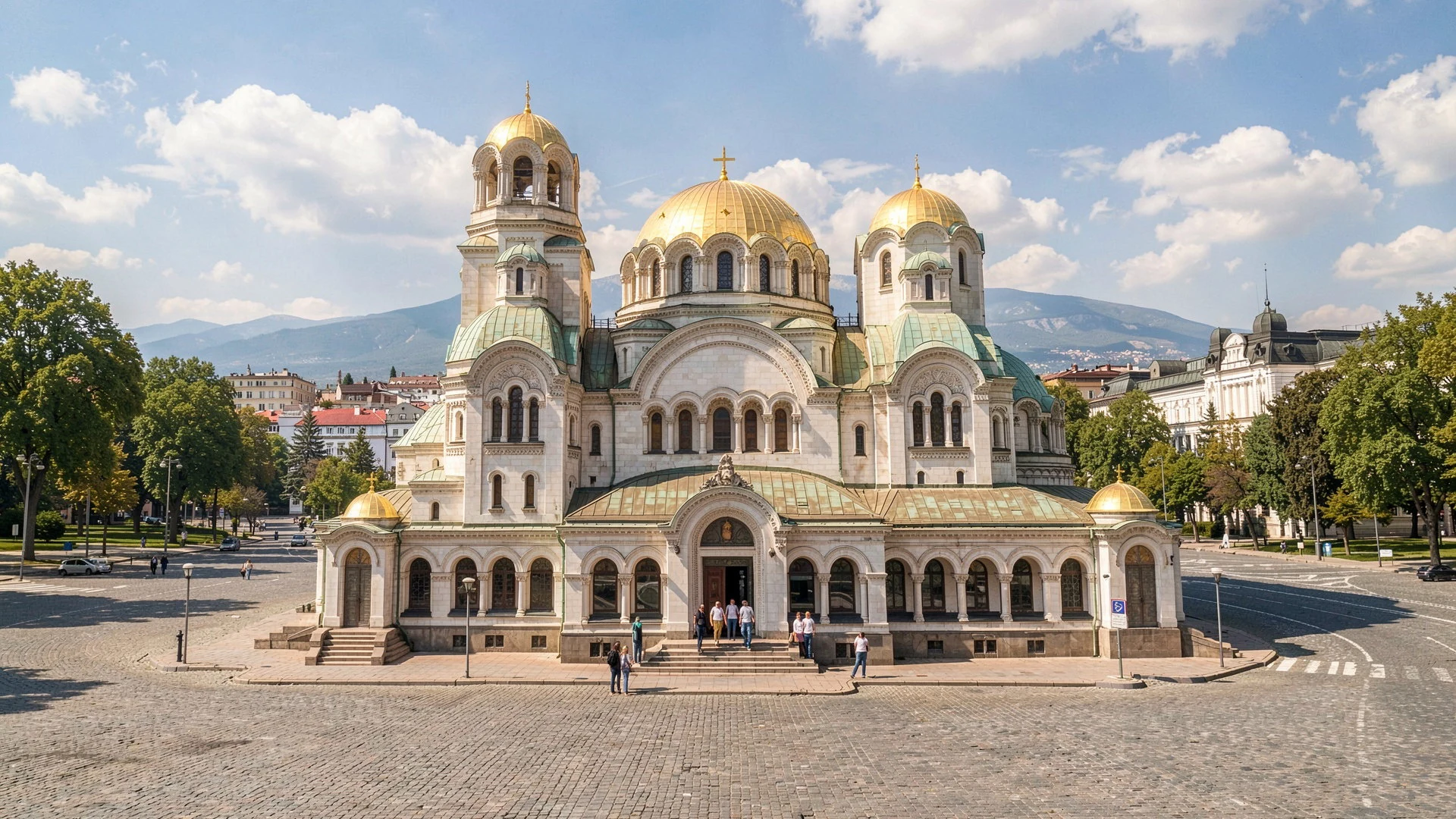
- Sofia History Museum — city centre
Sofia's history museum fills the former Central Mineral Baths, built in 1913, a painted civic building set over the springs in the centre. The displays tell the city's story, and they include pieces from the household of the last Bulgarian kings. The bathhouse itself is the clue to why people stayed in this valley. The water under the floor is older than the cases.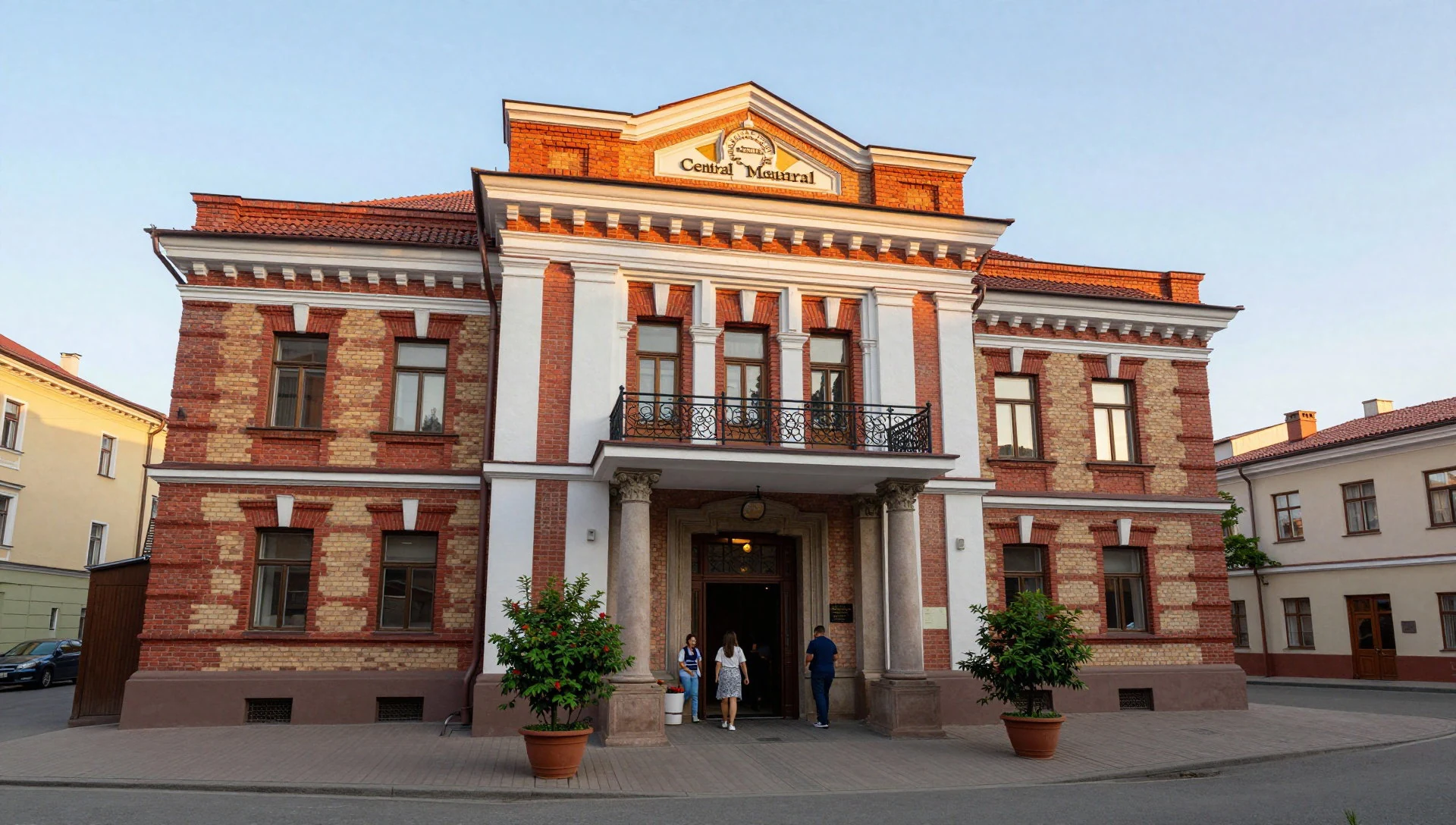
- Ivan Vazov National Theatre — city centre
Sofia's Ivan Vazov National Theatre stands in the very centre and is the stage the city associates with classical plays. It fronts a square, and it gives the city's theatre-going habit a clear address in the middle of town. The bill changes with the season. Current listings belong on the theatre's own channels, not on guesswork from the façade.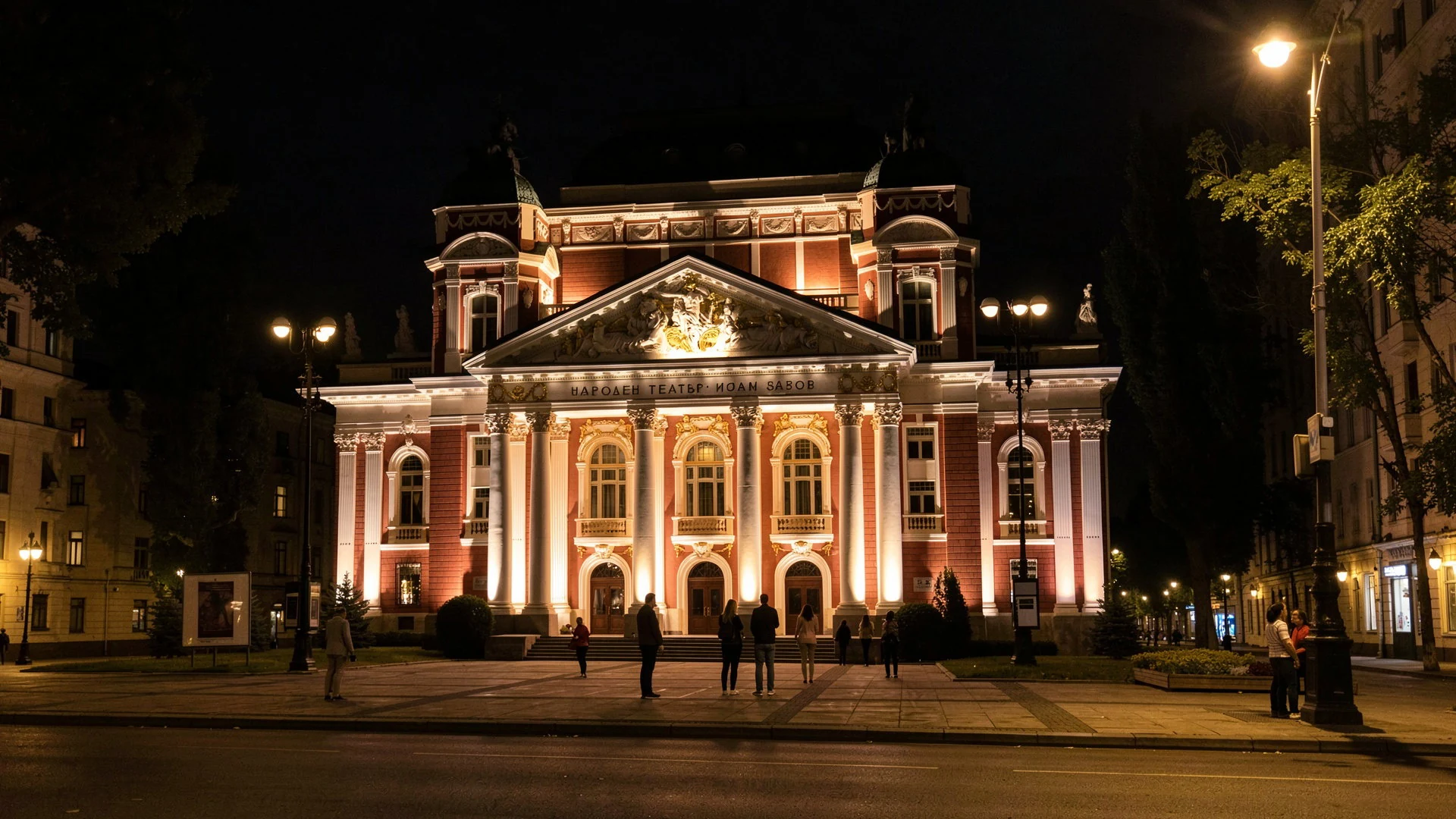
- Ethnographic Museum — city centre
Sofia's ethnographic museum belongs to the Institute of Ethnology and Folklore Studies and shows Bulgarian dress as it was made and worn, with a fixed costume display and a second show that turns over. Embroidery, wool and linen differ by region, so the cases travel the country without leaving the capital. Cloth comes first; the historical labels follow.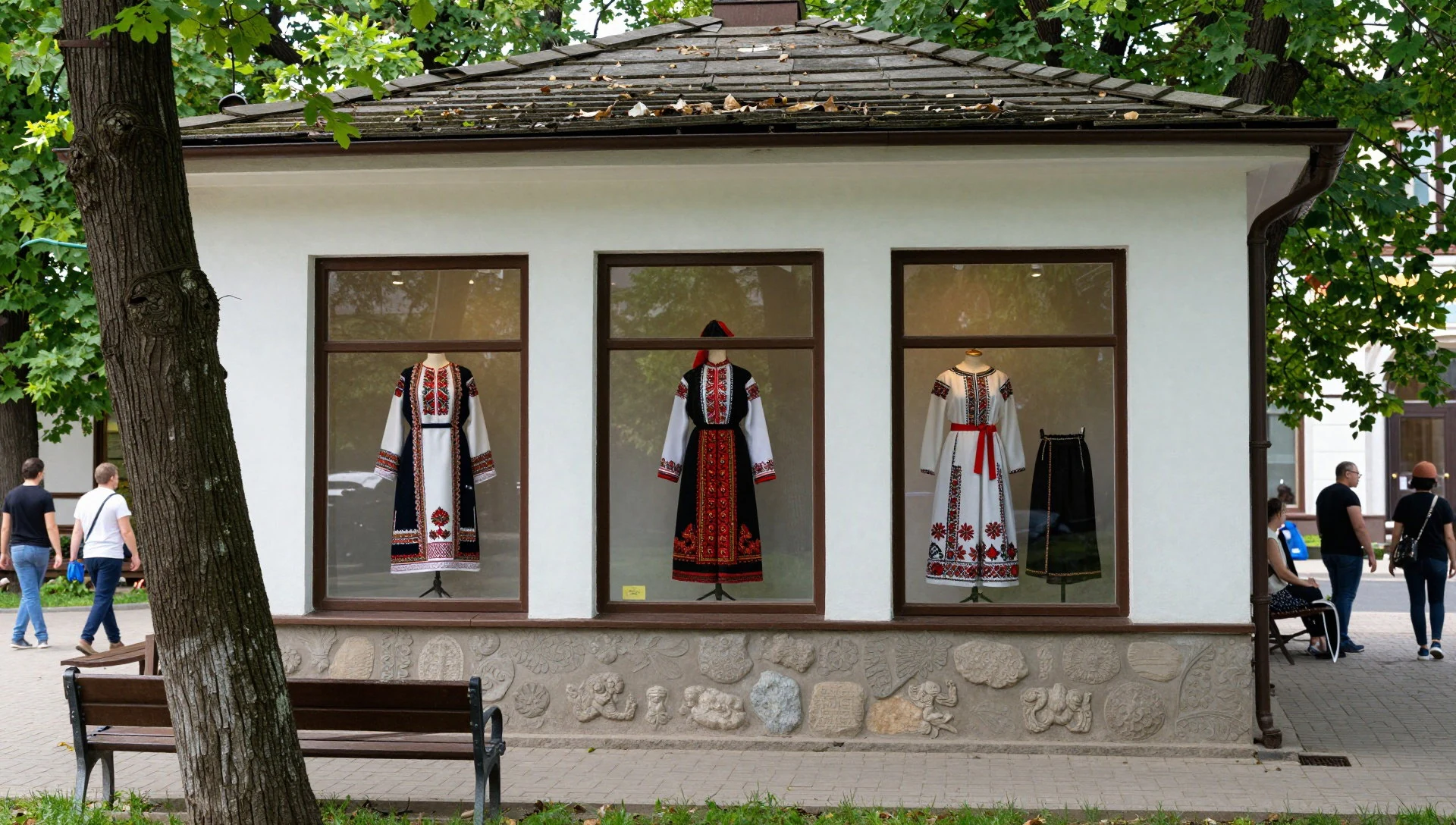
- National Museum of Military History — east of the centre
Sofia's National Museum of Military History lies east of the centre and runs four kinds of exhibition side by side: open-air grounds, rooms ordered by period, reserve collections and short-term shows. Its store runs past 28,000 objects and reaches from antiquity into the present. The subject is the country's armed past, wider than the chronicle of the capital alone.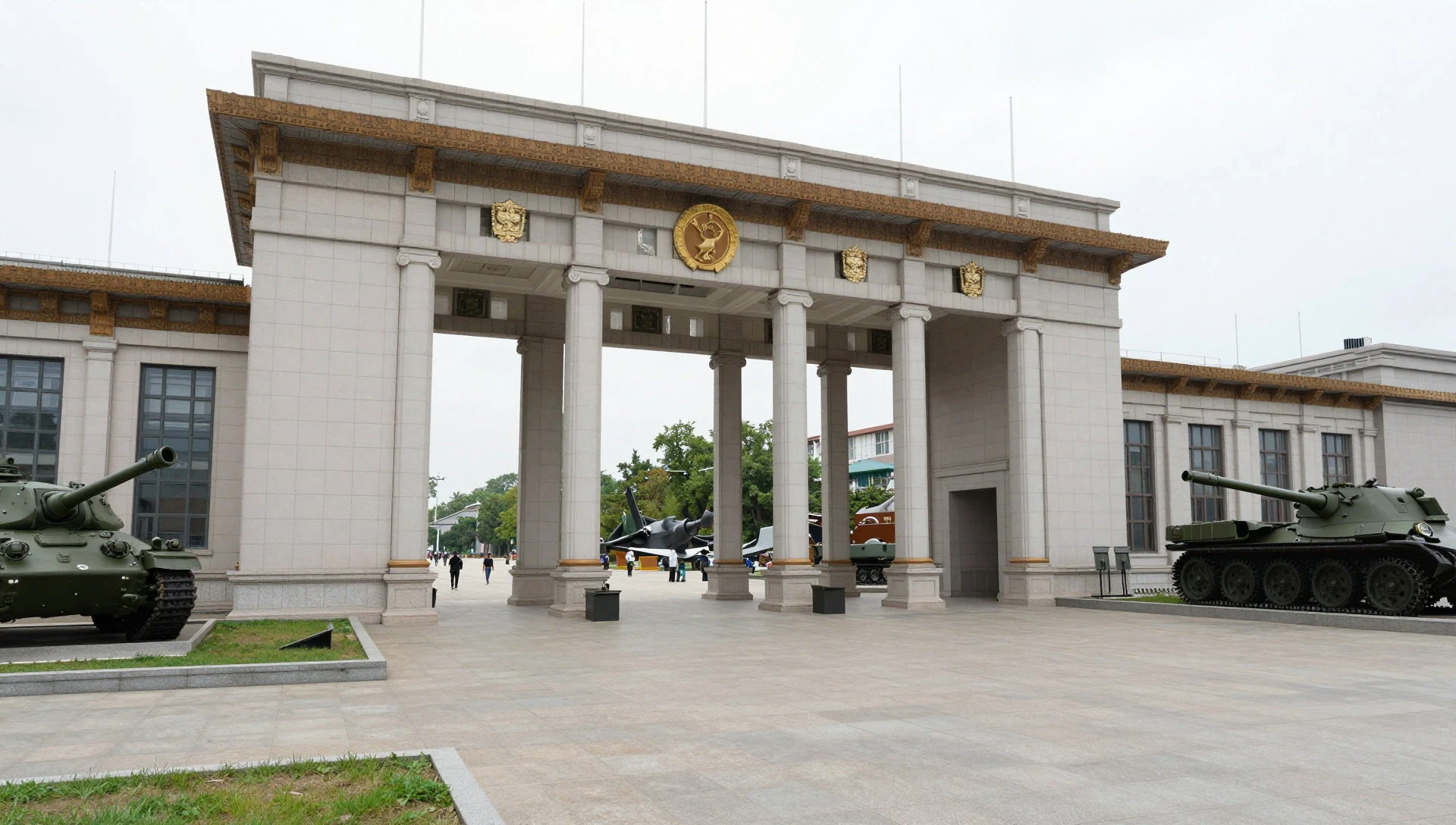
- Vitosha — south of the city
Sofia's southern skyline is Vitosha, a mountain close enough that the ridge closes the view down long streets and, from above, the city fills the valley. Walkers use paths and a road into the forest above the roofs. The mountain is part of an ordinary Sofia day, not a separate expedition, though the weather on the slope is not the weather in the centre.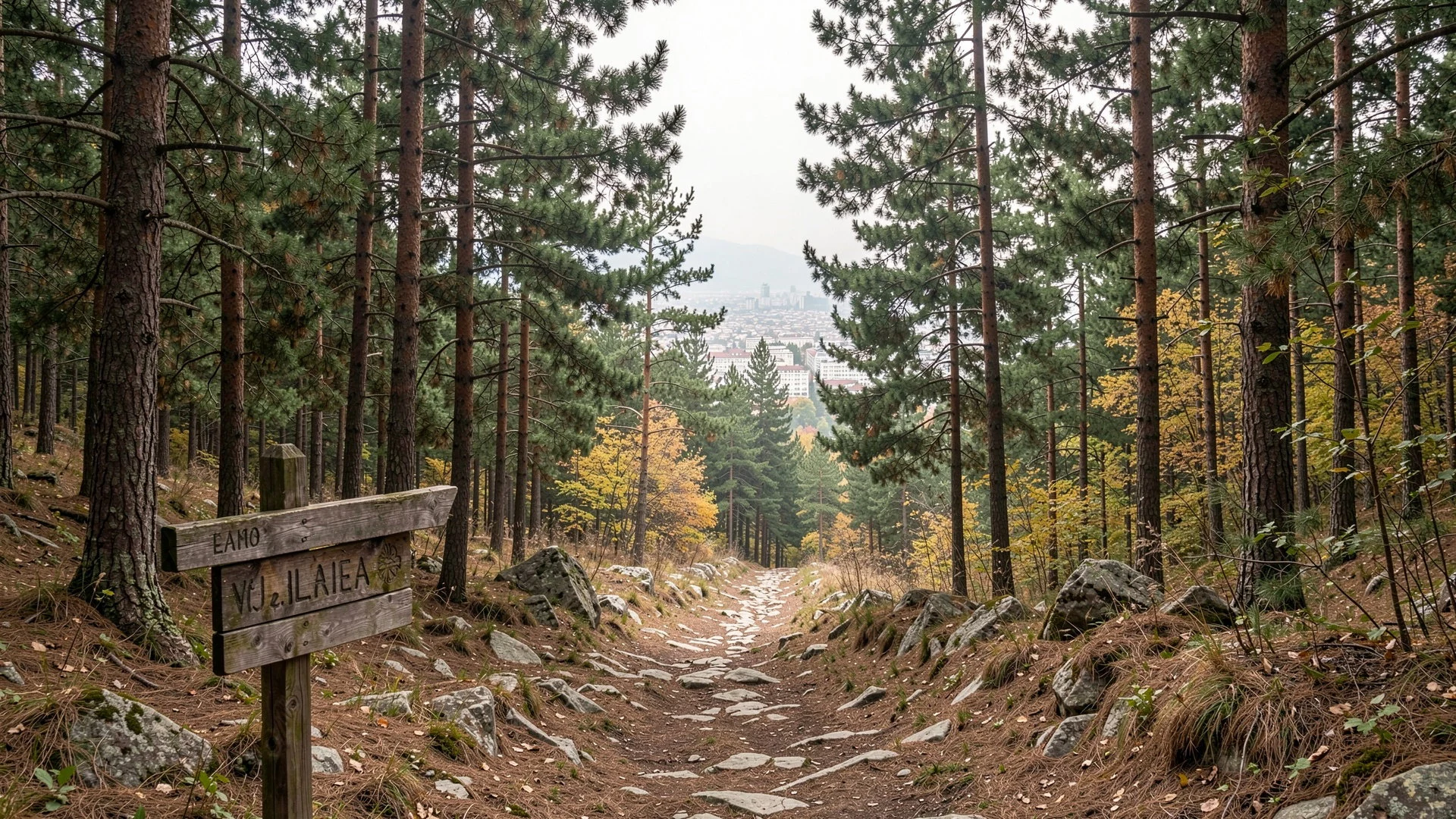
Culture
Sofia is home to the country's national theatre, opera and ballet companies, and residents give theatre a wider following than opera or dance. Houses in the capital fill more readily than the opera on an ordinary night, while cinema remains what more people do, and more often. The Ivan Vazov National Theatre, in the centre, is the stage tied to the classical repertory. Opera and ballet share one institution, the National Opera and Ballet of Bulgaria, set up in 1891, with regular seasons from 1909. Nicolai Ghiaurov and Ghena Dimitrova both began in that house. None of this is arranged for visitors. Evenings run in Bulgarian for an audience that already knows the plays and the scores, and smaller rooms around the centre add newer work. Daytime belongs as much to church squares and museum steps as to the box office. When the weather is kind the pavements become an extra foyer. In Sofia's Orthodox churches, cover shoulders and knees, stay quiet if a service is under way, and ask before you photograph worshippers.
What to wear
Sofia still knows its folk costume, the nosia, even though almost nobody wears the full set except on a stage, at a festival or in a museum case. Women's dress varies by region: a chemise under a wool sukman or an embroidered saya, a woven apron, a heavy belt, and headscarves in older styles. Men's cuts use a shirt, an embroidered waistcoat, poturi trousers full in the thigh and tight at the ankle, and a coloured sash. The cloth is wool and linen, the decoration geometric embroidery in red, black and gold thread, often worked at home. In the capital today the street wears ordinary European city clothes: coats and boots in the cold months, lighter layers when the humid continental summer warms the valley, trainers and office dress, black more often than folk colour. Visitors do well to copy that practical range. Comfortable walking shoes matter on the paving and, if the day includes Vitosha, on mountain paths. In Orthodox churches shoulders and knees should be covered, and shoes stay on unless a sign says otherwise. A light scarf is useful at a church door. A warm layer is worth carrying even in the milder months; at about 560 metres the evening can drop once the sun leaves the valley.
What to eat
- Mekitsa — breakfast counters and cafés in the centre
Sofia's usual breakfast fry is mekitsa, a piece of dough cooked in hot oil until it puffs, then eaten at once with cheese, jam or icing sugar. Breakfast counters and cafés in the centre make them to order. The usual accompaniment is coffee.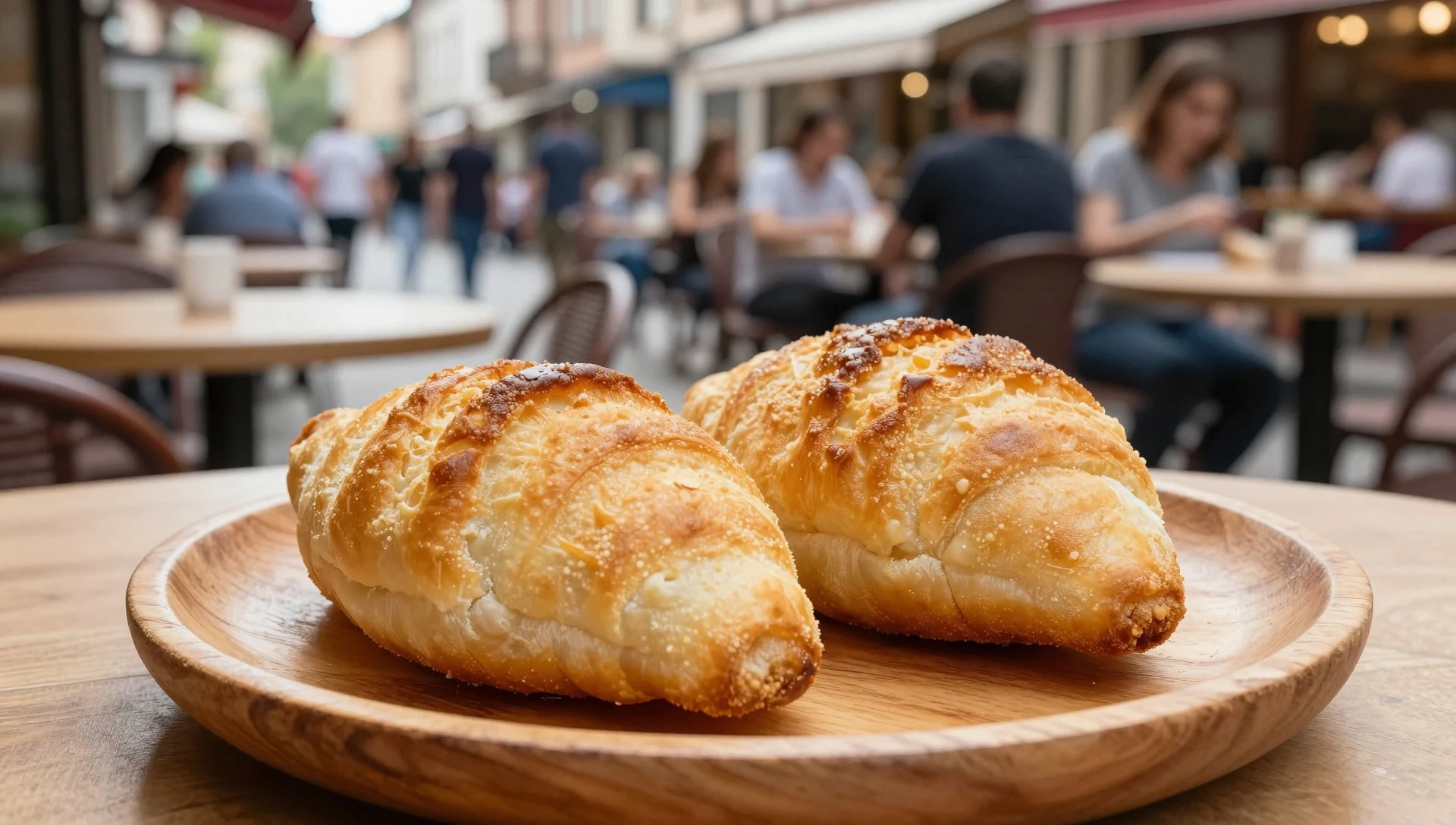
- Banitsa — bakery counters across the centre
Sofia eats banitsa by the piece from bakery counters across the centre: layered pastry and white cheese, baked until the top sheet is crisp. Families also set a whole tray out at gatherings. Cheese is the usual filling, and some shops add spinach.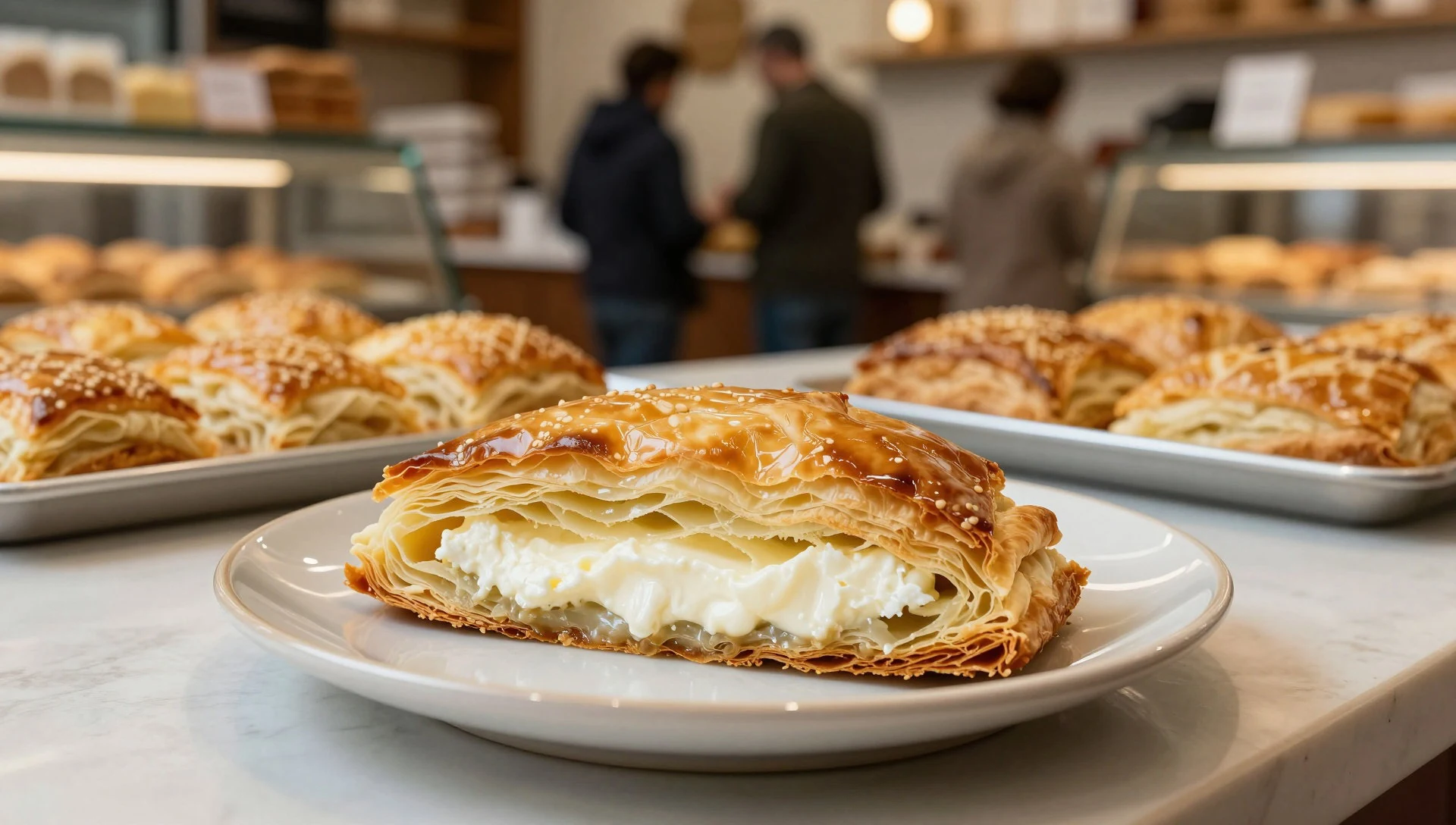
- Shopska salad — casual eateries and taverns in the centre
Shopska salad is Sofia's usual cold plate beside grilled meat: tomato, cucumber, pepper and onion under a thick grate of sirene, a white brined cheese. Casual eateries and taverns across the centre serve it. The cheese does the work of a dressing. - Kebapche — grill counters and taverns in the centre
Sofia's grill counters know kebapche as a short mince sausage, usually pork and beef with cumin, eaten several at a time with bread and a pepper relish or salad. Taverns in the centre serve the same thing at a table. The skin should come hot and charred. - Tarator — home-style eateries in the centre
Sofia's warm-weather starter is often tarator, a cold yoghurt soup of cucumber, dill, garlic and sometimes walnut, thin enough to drink. Home-style eateries in the centre bring it out, sometimes over ice, once the valley heats up. It is both a bowl of food and a cooler.
Plan it
Best time. May and June, then September and October, are the months to walk Sofia: the climate is humid continental, and those stretches sit between the colder and warmer ends of the year. The city stands at about 560 metres, so a layer still earns its place on a mild evening. Check sofia.bg for anything pinned to a date.
How long. 2–3
Getting there. Sofia Airport is the arrival point, with direct flights from many European cities on low-cost and full-service airlines, using two terminals with a shuttle between them. Confirm the terminal with the carrier, then continue by bus, taxi or metro into the centre. For municipal transport changes, check the official site at sofia.bg rather than a printed timetable.
Budget. low
Tips
- Start the central sights early; the blocks around the cathedral and the theatre are calmer before the working day fills them.
- Keep a little cash. Cards are widely accepted, but small churches, markets and some cafés still expect notes.
- Treat Vitosha as its own weather system and take a warmer layer than the valley seems to need.
- Read the theatre and opera boards, and book only when a particular performance matters.
- The Roman street grid is underfoot between TZUM, the Sheraton building and the presidency — leave time to look down, not only at domes.
Etiquette
- Cover shoulders and knees in Orthodox churches, and wait out a service rather than walking through it.
- In Bulgaria a nod often means no and a shake of the head can mean yes; let the conversation show which is intended.
- Ask before photographing people, above all worshippers and anyone in folk costume at a performance.
Nearby
Sources
- Wikidata Q472 (CC0)
- Wikipedia: Sofia (rev 1383911098) (CC BY-SA 4.0)
- Wikivoyage: Sofia (rev 5418393) (CC BY-SA 4.0)
- Panoramic view over central Sofia and the Vitosha Mountain — Deensel (CC BY 2.5)
- Cathedral Saint Alexander Nevsky — Deensel (CC BY 2.5)
- Ivan Vazov National Theatre, Sofia — Pudelek (CC BY 3.0)
- Independence square, Sofia — Radosław Botev (CC BY 3.0 pl)
- The former Royal Palace in Sofia — MrPanyGoff (CC BY 3.0)
- Museum of Foreign Artists — Michael Paraskevas (CC BY 3.0)
- Sofia seen from Vitosha — Ivano Giambattista (CC0 1.0)
- Skyline of Sofia with Vitosha — podoboq (CC BY 2.5)


