Siena
Siena, Italy
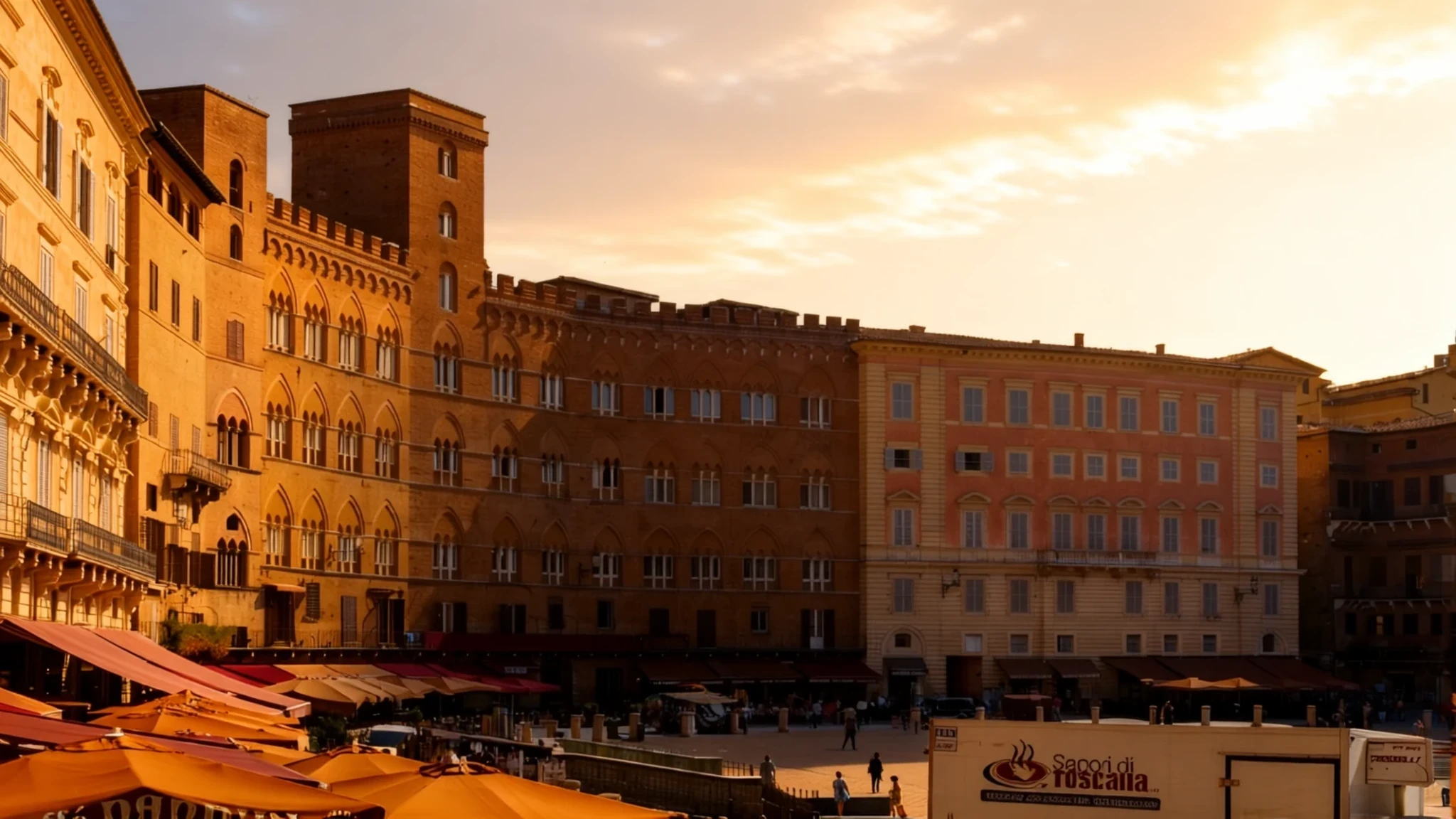
Go for a medieval hill city built around a shell-shaped square, where the horse race and the ward rivalries still shape daily life.
The place
Siena sits on a cluster of ridges in the hills of central Tuscany, a short drive south of Florence. The city has about 52,800 people and stands at around 322 metres above sea level, which keeps it a little cooler than the valleys below. Most of what visitors come for is packed into the old town, and much of that lies within a short walk of the Piazza del Campo, a wide, shell-shaped square that slopes gently down towards the Palazzo Pubblico. Lanes run off it in every direction, climbing and dropping steeply, so good shoes matter more than a map.
Siena has long been a city of merchants and bankers, and that confidence still shows in its stone. Monte dei Paschi, founded here, is widely described as the oldest bank still operating in the world. The university is also among the oldest in continuous operation. Painters born or working in the city shaped Italian art, and their panels and altarpieces fill the churches and galleries, so the centre feels like a museum you can walk around.
The old centre is a UNESCO World Heritage Site, and the cathedral's black and white marble front is the image most people carry home. Crowds peak in the afternoon when day-trip coaches arrive, and the square quietens after the evening passeggiata. Early mornings are the best time to see the stone in cool light. Spring and autumn are comfortable for walking the hills, while summer brings heat and, on race days, packed streets.
Its story
Siena's recorded history begins before the Romans arrived. Etruscan people lived on these ridges in the centuries before Rome rose to power, and a tribe called the Saina is associated with the site. Under Roman rule it became a small colony named Saena Iulia, founded in the time of Augustus. The earliest known document from the community dates to 70 AD and tells of a Roman senator who was ridiculed with a fake funeral during a visit to the town, a story that suggests a settlement with both a sense of humour and some standing on the road network.
Local legend offers a more colourful origin. Siena, the story goes, was founded by Senius and Aschius, sons of Remus, who fled Rome after their father was killed. They carried off the statue of the she-wolf that nursed the twins, and rode a white horse and a black one. That pairing gave the city its coat of arms, the Balzana, a white band across a dark one. Historians are sceptical, and several explanations for the name exist, from an Etruscan family to the Latin word for old. The legend remains part of how the city tells its own story.
In the Middle Ages Siena grew rich on trade and banking, and its financiers worked with merchants across Europe. Monte dei Paschi, dating from 1472, grew out of that world. The university, founded in 1240, reflects the same long view. Painters including Duccio, Ambrogio Lorenzetti, Simone Martini and Sassetta worked here and helped shape European painting. Many of the buildings from the thirteenth and fourteenth centuries still stand, which is why the historic centre is now protected as a World Heritage Site.
What to see
- Palazzo Pubblico — Piazza del Campo
Siena's city hall for centuries, the Palazzo Pubblico is probably the building that most clearly represents the city. Its brick façade and tall tower face the Piazza del Campo, and the Gothic palaces opposite make the square feel like a stage set. Check the official site for opening times and tickets before you go.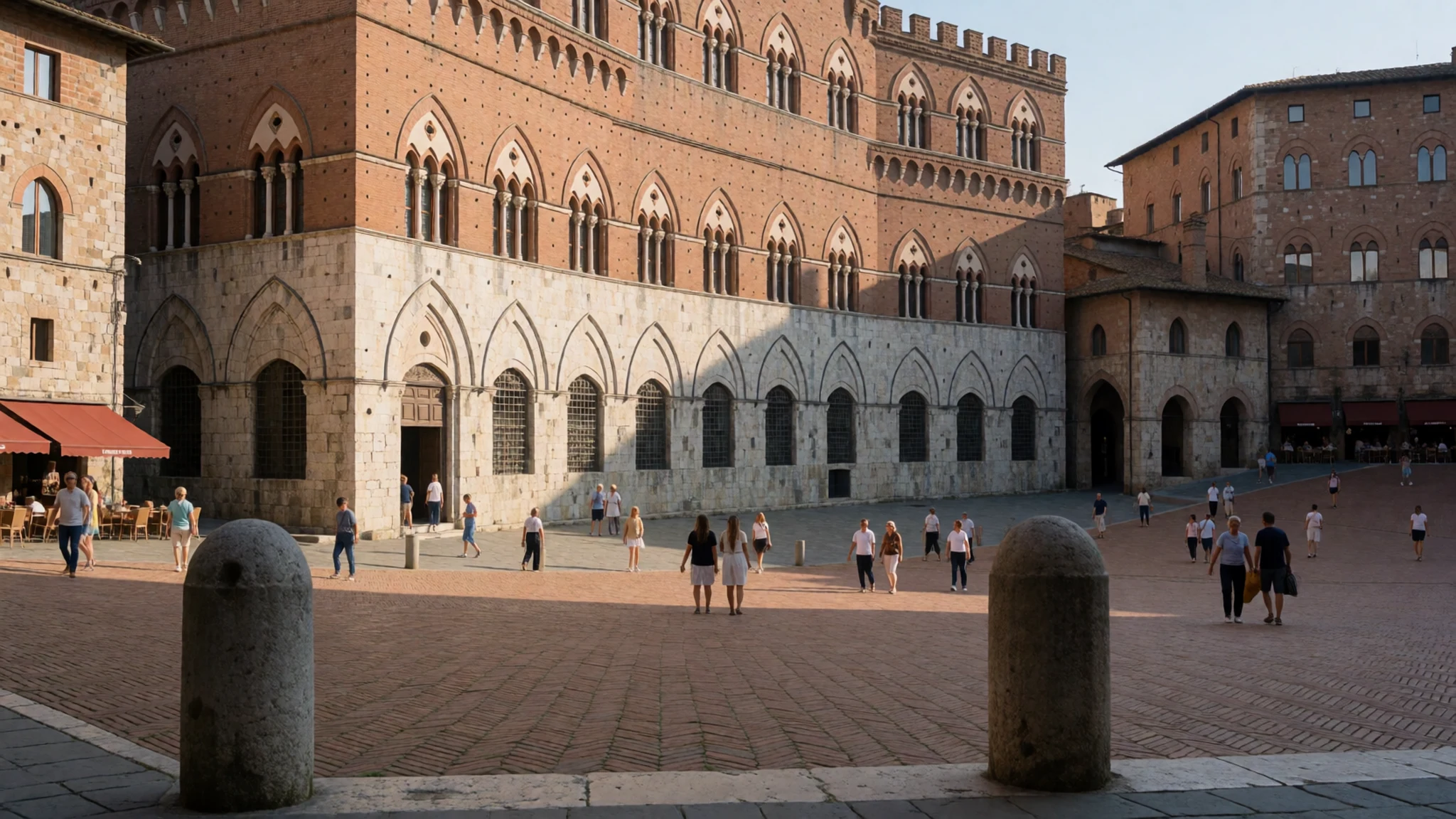
- Fonte Gaia — Piazza del Campo
The Fonte Gaia, carved by the Sienese sculptor Jacopo della Quercia, is a focal point of the Piazza del Campo. Its relief panels are best studied slowly, from the stone steps on the side nearest the palace. The square is busiest at midday and in the late afternoon, so an early look gives a clearer view of the carving.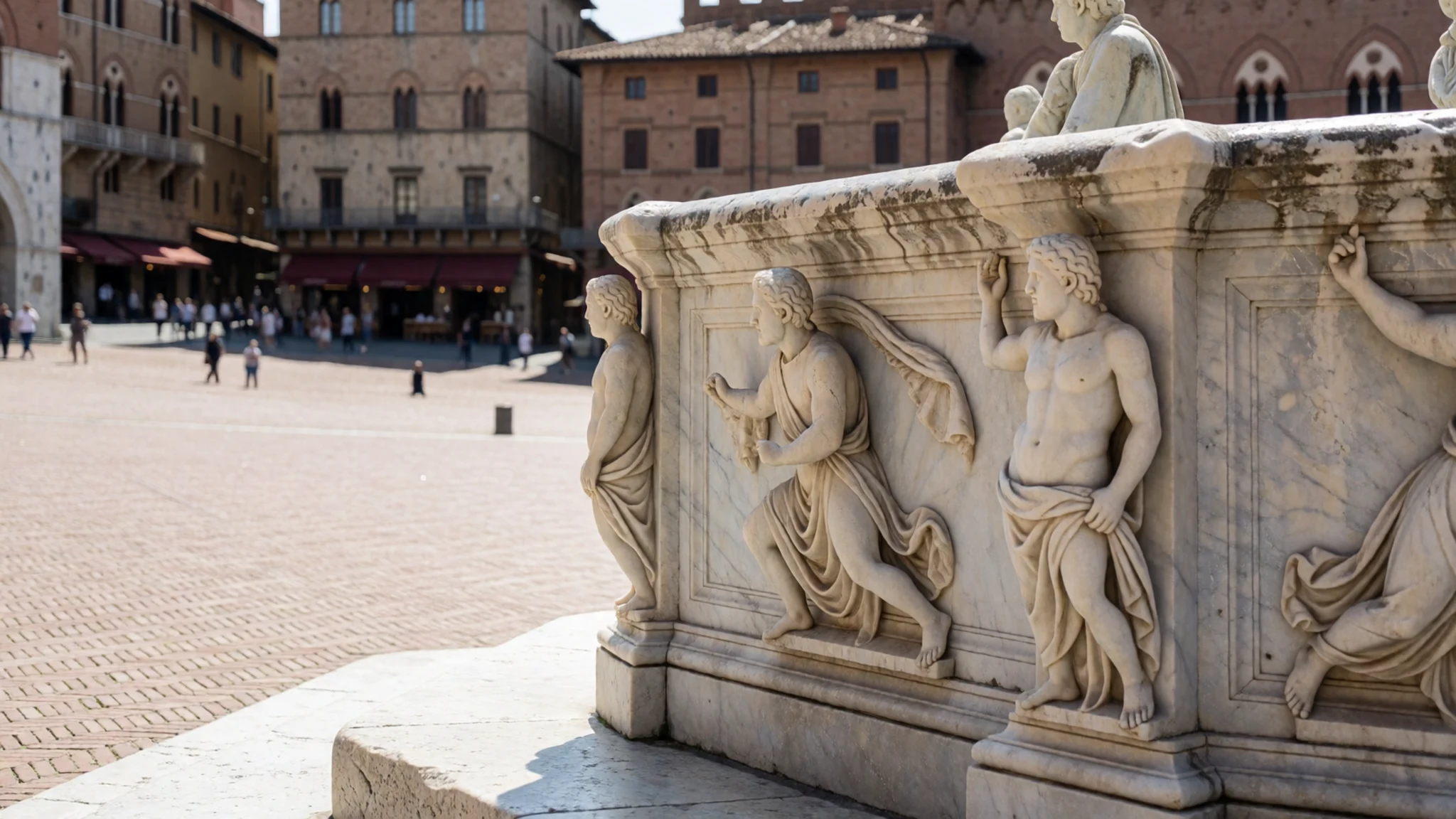
- Duomo di Siena — Cathedral quarter, north of the Campo
Siena's cathedral is a striking black and white marble building, and the interior holds far more than the exterior suggests. The Libreria Piccolomini inside is decorated with frescoes by Pinturicchio. The baptistery has its own separate entrance and charge, so check the cathedral's official website for current times and ticket options before queuing.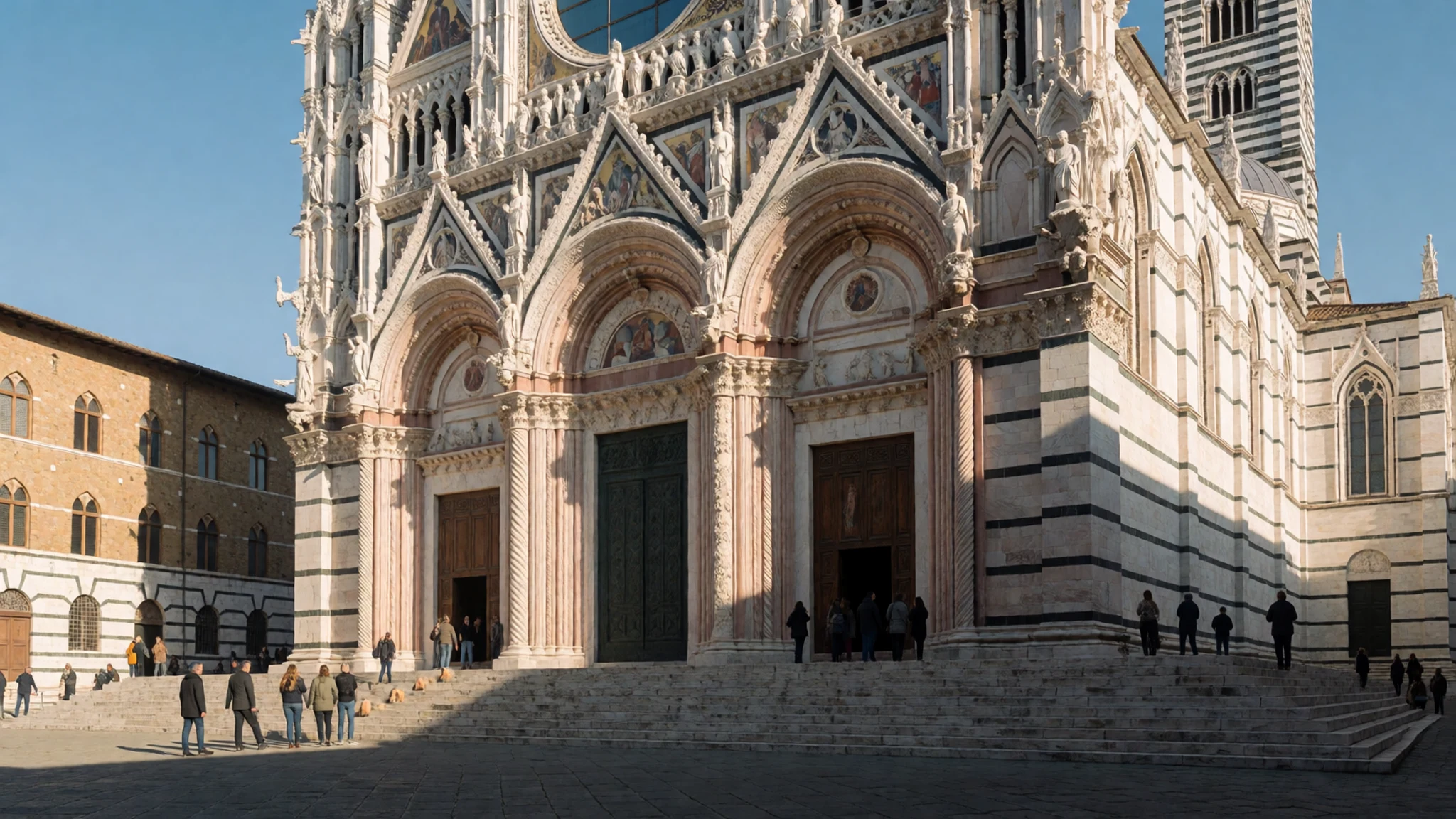
- Museo dell'Opera del Duomo — Beside the cathedral
This museum displays many of the great works of the Sienese school, including Duccio's Maestà, the large altarpiece that once stood in the cathedral. It gives a clear picture of how the city's painters developed their style. The collection is best visited in the morning, when the galleries are calmer and the light is easier for studying gold-ground panels.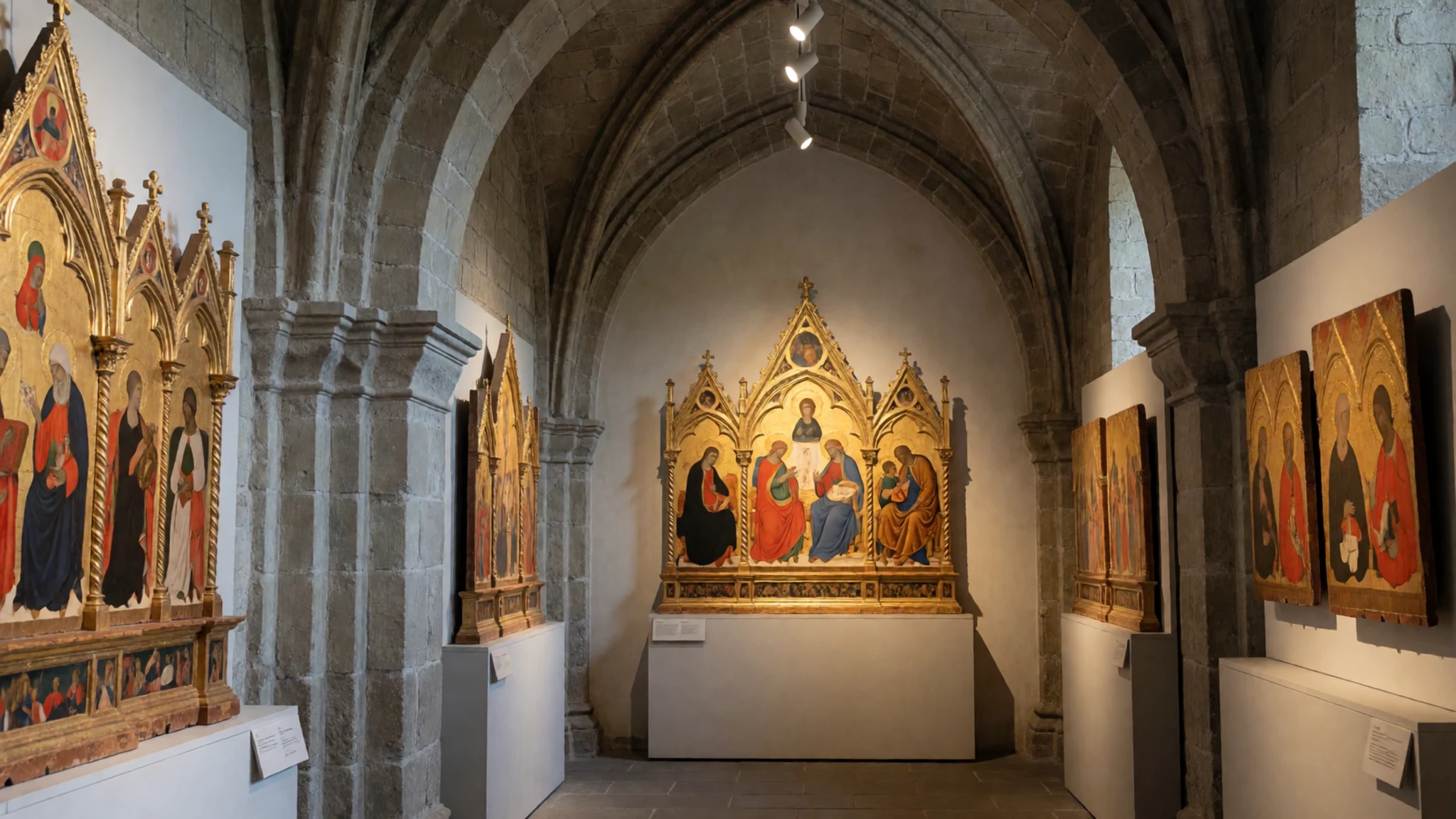
- Palazzo Piccolomini — Piazza del Campo
One of the most visited buildings on the Piazza del Campo, the Palazzo Piccolomini is a Renaissance palace designed by the architect Bernardo Rossellino, a disciple of Leon Battista Alberti. Its calm, ordered façade contrasts with the medieval palaces around it. It is a good stop for understanding how fashionable Florentine ideas reached Siena.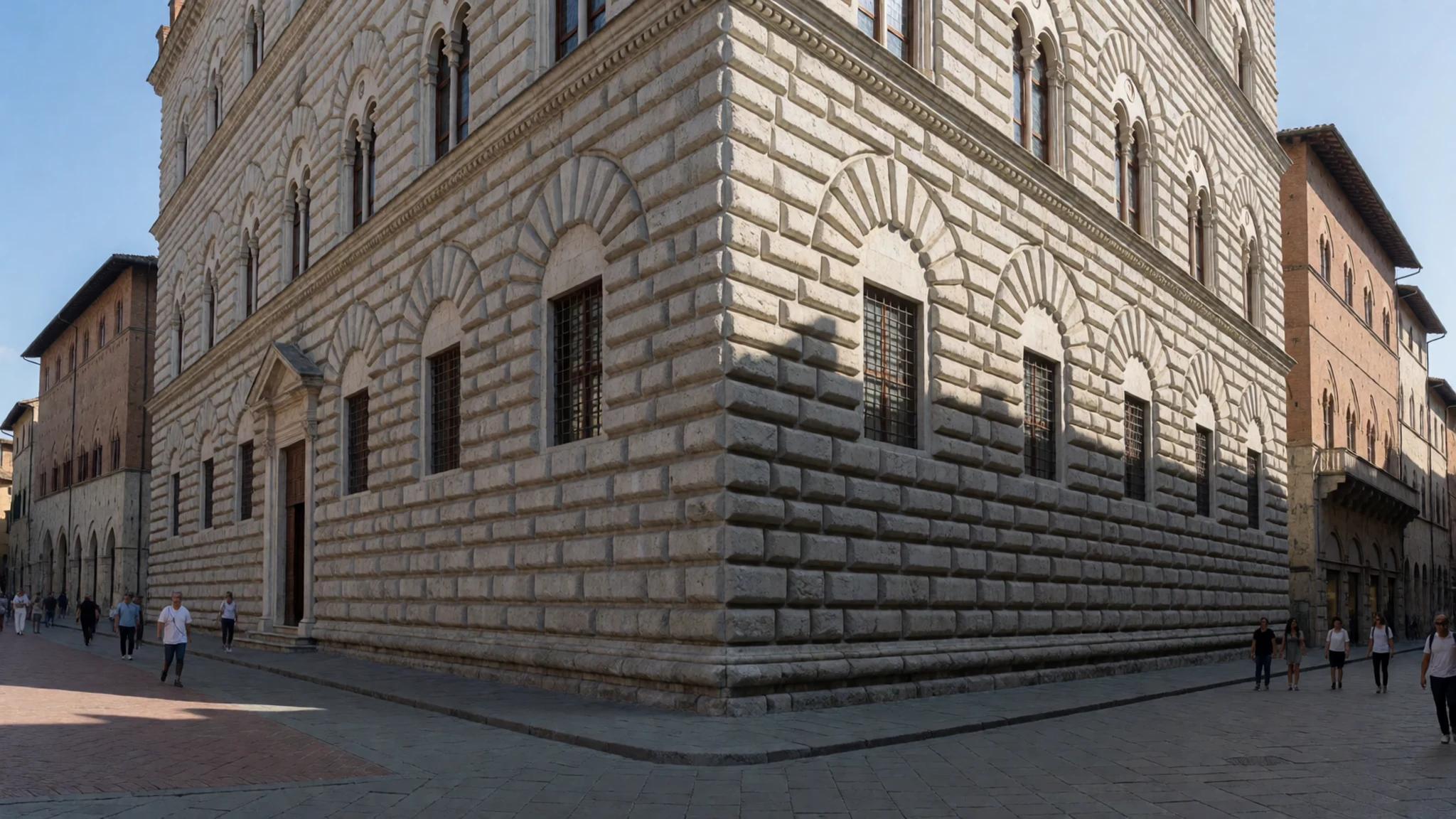
Culture
Siena keeps a ward-centric culture that dates back to the medieval period. The city is divided into contrade, neighbourhoods each identified by an animal or emblem, with their own boundaries and strong local loyalties. The fierce rivalries between neighbourhoods boil over during the Palio, the traditional horse race that circles the Piazza del Campo twice a year, in July and August. Ten wards are drawn by lot to compete for the trophy, a painted banner bearing an image of the Virgin Mary. The wards are historically linked to the city's defence, and their members still take the race very seriously. Visitors will notice flags, scarves and banners in the ward colours, and the streets fill with supporters on race days. Respect these loyalties by keeping to the public streets, avoiding the track during trial runs, and asking before photographing ward members in costume.
What to wear
Siena's most distinctive traditional dress belongs to the Palio. On race days the contrade parade in costumes built around each ward's colours and emblem, with the drummers, flag-wavers and standard-bearers forming the heart of the procession. Specific fabric names and materials for these costumes are not documented in the sources used here, so the detail is best confirmed with a local ward museum or the official Palio information. Daily wear in the city is simple and practical. Locals dress in cotton and linen in warm months, with smart casual clothing in the evenings and dark tones through the cooler seasons. Most people wear low, comfortable shoes, because the cobbled lanes and steep slopes are hard on heels. Visitors should pack breathable layers for hot days, a light scarf or jacket for churches, and sturdy flat shoes with good grip for the streets. Shoulders and knees should be covered inside the cathedral, and shorts or vests are best kept for the beach.
What to eat
- Panforte — A pastry shop on the central streets, such as Bar Pasticceria Nannini
A dense, spiced cake of nuts, dried fruit and candied peel, panforte is the classic Sienese sweet and keeps for weeks. It is traditionally a winter treat, sold in thin wedges dusted with icing sugar. The best selection is in the pastry shops around the central streets, where wedges can be bought to take home.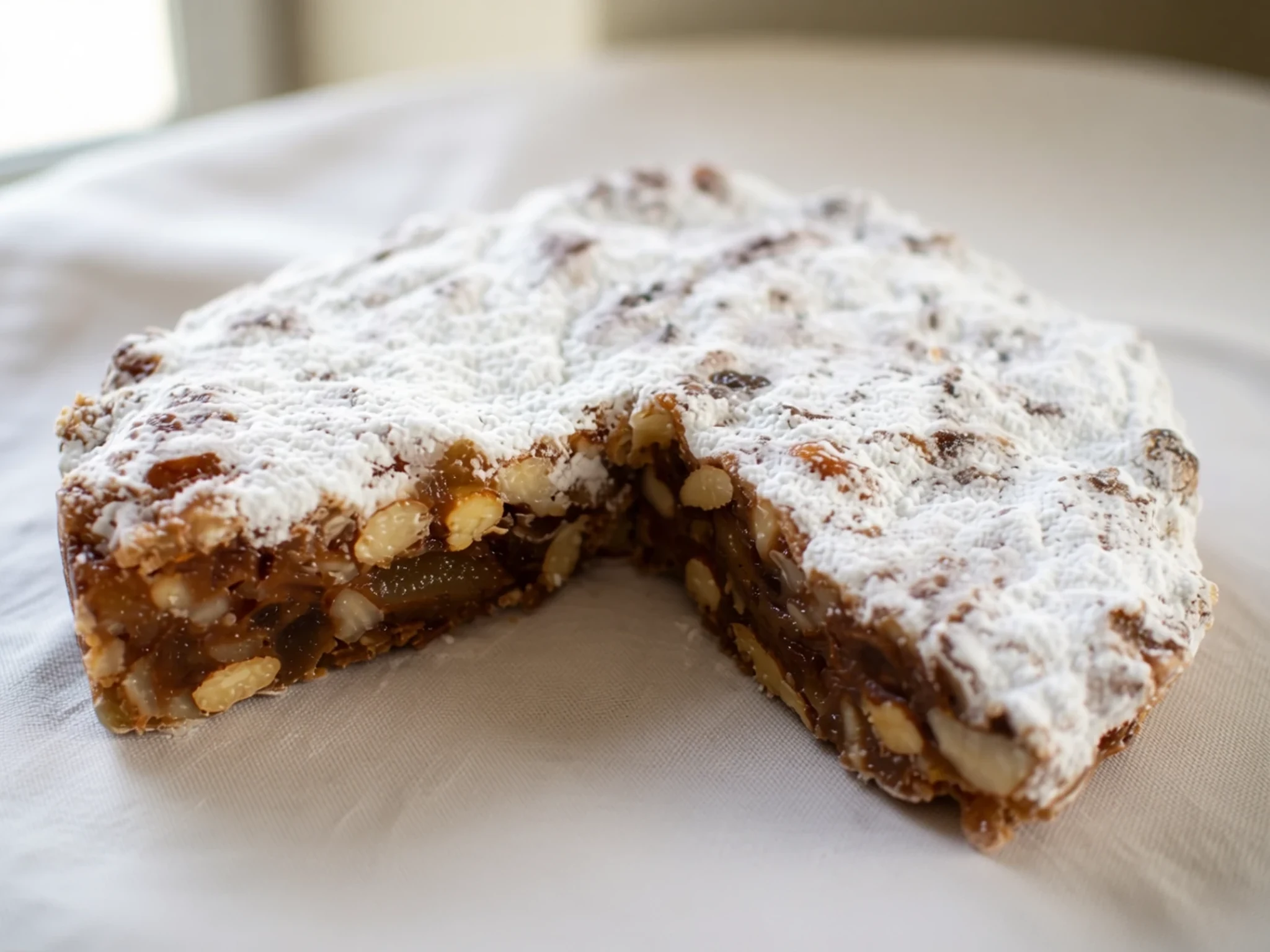
- Ricciarelli — Any pastry shop or café in the historic centre
These soft almond biscuits have a chewy centre and a cracked, sugar-dusted top. They are often eaten with coffee or a glass of dessert wine in the afternoon. Bakeries and cafés near the Campo sell them by the bag, and they travel well as a gift.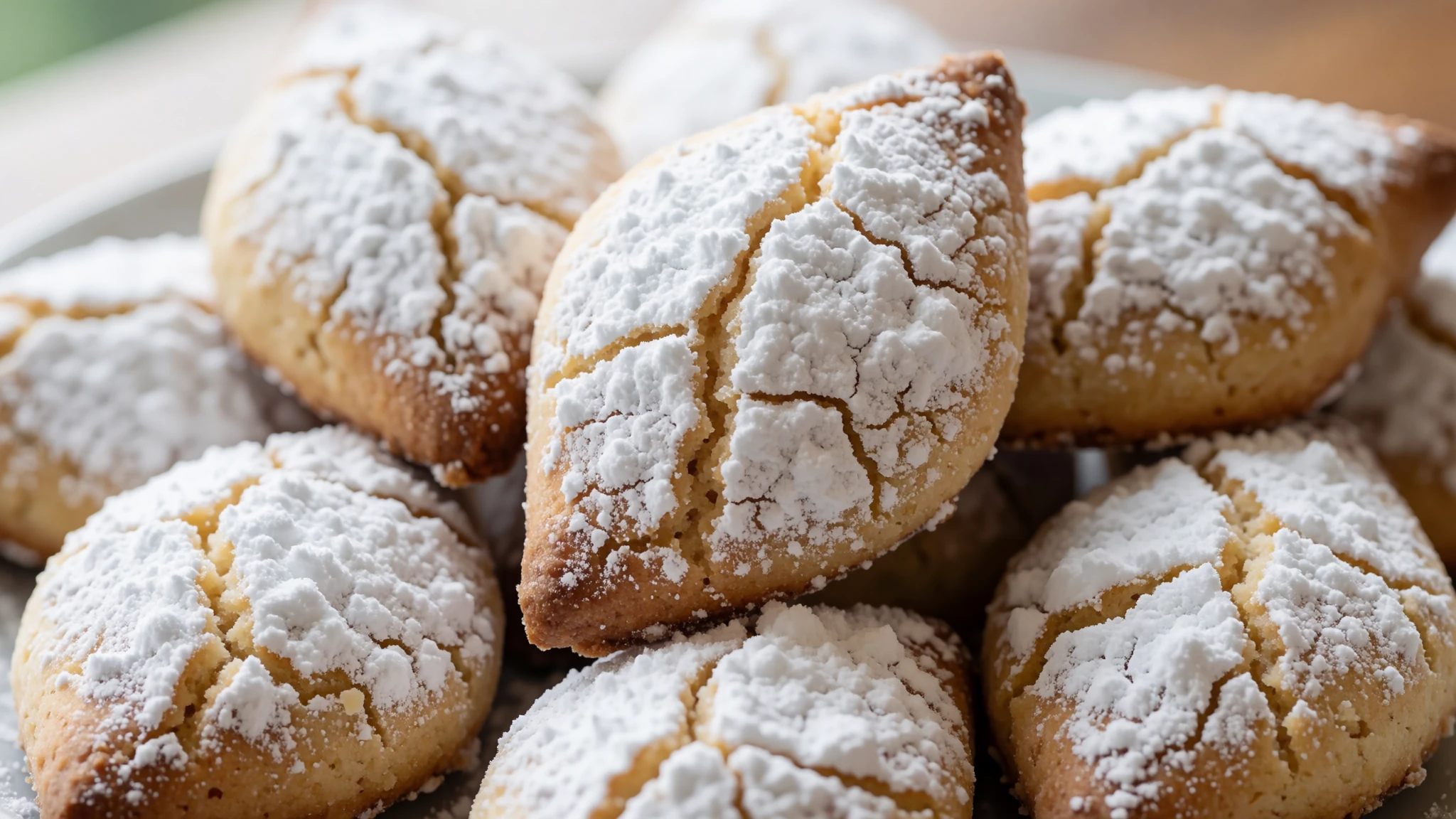
- Pici — A trattoria in the Torre contrada or any osteria off the main square
Pici are thick, hand-rolled strands of pasta, dressed with a simple sauce of garlic and tomato or a rich ragù. They are a Sienese staple that reflects the region's rural cooking. Local trattorias serve them as a main course, and they are generally good value. - Ribollita — An osteria outside the main piazzas, such as the area near the Due Porte
A thick soup of bread, beans, cavolo nero and vegetables, ribollita is a winter dish that is literally reheated for flavour. It is hearty and filling, a good choice in the cooler months. Osterias away from the main squares tend to serve the most traditional versions. - Cantucci — Bakeries and cafés around the central streets
Crunchy almond biscuits are twice-baked and traditionally served with a glass of sweet wine for dipping. They are sold in bakeries throughout the city and are often packed in paper bags. They make a simple, inexpensive snack on a long walk through the lanes.
Plan it
Best time. March to April brings mild weather and spring colour in the surrounding hills, while October to November offers autumn light and fewer crowds. July and August are hot, and the city is busiest around the Palio.
How long. 2–3
Getting there. Florence Airport is the nearest main hub, and trains run from Florence to Siena throughout the day. Siena's station sits about 2 km from the historic centre, so the last leg is a short bus ride into the old town.
Budget. mid
Tips
- Book accommodation early for the Palio weekends, when rooms fill quickly
- Visit the cathedral and museum in the morning to avoid the afternoon coach crowds
- Carry water on hot days, as the steep lanes are tiring in the sun
- Cards are widely accepted, but keep some cash for small cafés and bakeries
- Check official websites for current opening times before visiting churches
Etiquette
- Cover shoulders and knees when entering churches and the cathedral
- Keep to public routes and stay off the track during Palio trial runs
- Ask before photographing ward members in costume
Nearby
Sources
- Wikidata Q2751 (CC0)
- Wikipedia (rev 1378595299) (CC BY-SA 4.0)
- Wikivoyage (rev 5387030) (CC BY-SA 4.0)
- Photo 01 Piazza del Campo, Massimo Catarinella (CC BY 3.0)
- Photo 02 View from the new Cathedral, Zairon (CC BY 4.0)
- Photo 03 Siena aerial panorama, BobTanGo (CC BY 4.0)
- Photo 04 Siena from above, BobTanGo (CC BY 4.0)
- Photo 05 Duccio, Madonna and Child with Saints (Public domain)
- Photo 06 Institution of the Eucharist, Sassetta (Public domain)
- Photo 07 Duomo di Siena, Nikolai Karaneschev (CC BY 3.0)
- Photo 08 Siena Palazzo Pubblico, unknown author (CC BY 3.0)


