Sicyon
Sicyon, Greece
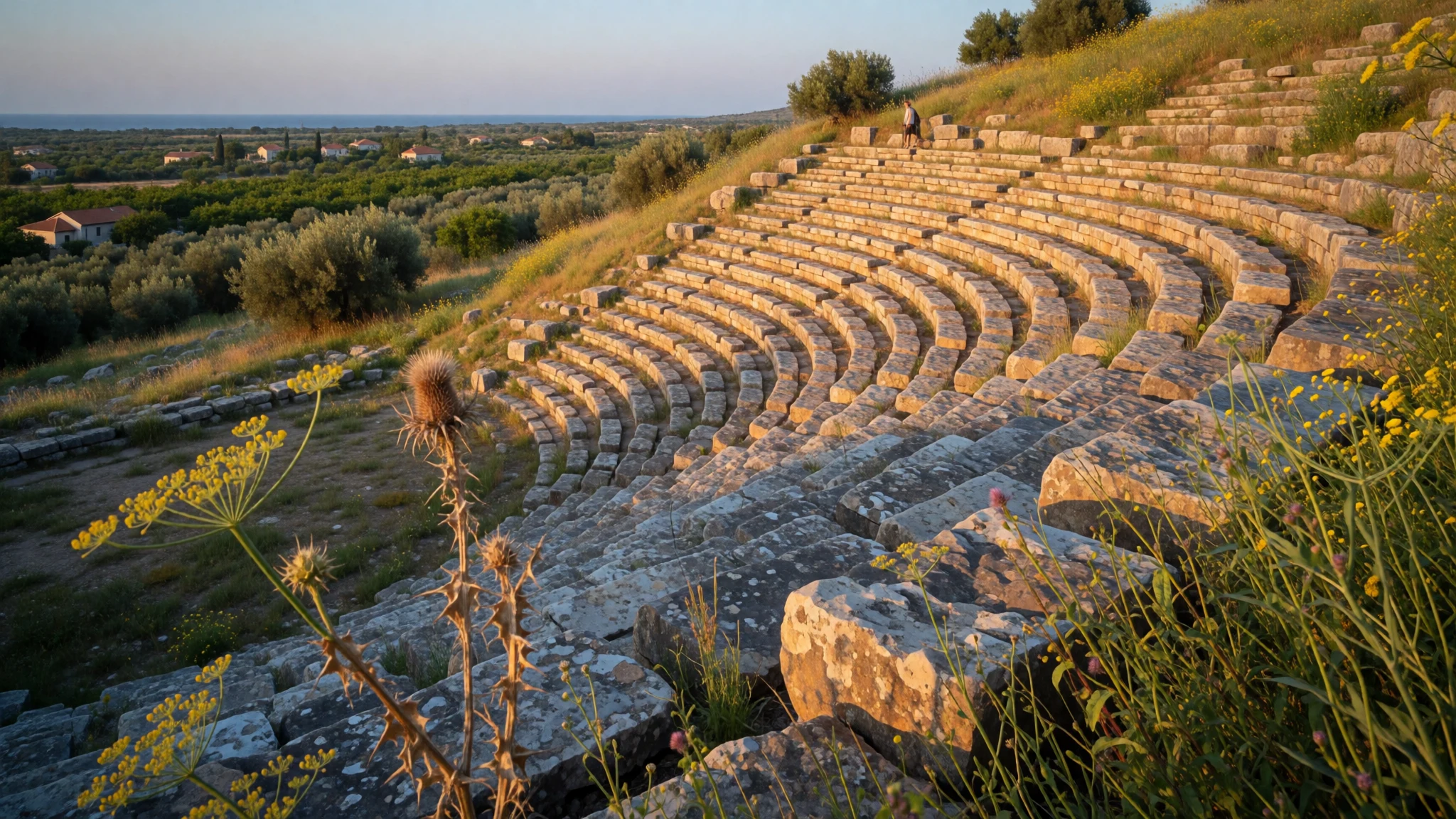
Sicyon is a quiet Peloponnesian ruin where a famous school of Greek painters and sculptors once worked, with almost nobody else around.
The place
Sicyon (Sikyon, Σικυών) was a Greek city-state on the northern edge of the Peloponnese, between Corinth and the region of Achaea. Its ruins now lie in the Corinthia regional unit, just west of the village of Sikyona, which used to be called Vasiliko. The site sits about 171 m above sea level, on a shelf of land that climbs from a coastal plain towards the hills behind. From the higher ground the view runs across olive groves and orchards to the Gulf of Corinth, which explains why anyone wanted a city here. Today it is a quiet, half-wild archaeological area rather than a polished attraction. A large theatre, the foundations of a Doric temple, a gymnasium complex and a small museum are spread across open ground with very little shade. Visitors are few, mostly people with an interest in Greek history, and the main sounds are birdsong and wind in the grass. That calm is the appeal, but it also means facilities are thin: signage is patchy and a café at the gate is not something to count on. Sicyon works best as one stop on a longer loop through Corinthia, paired with ancient Corinth and the villages and vineyards of the surrounding hills. Digging is still going on under the Sikyon project, so some areas may be fenced off or look different from one year to the next. Wikidata classes the place as both a polis and an archaeological site, which sums up what is left: the outline of a city more than the city itself.
Its story
Sicyon's own tradition placed it among the kingdoms of the Trojan War age, and the record gives its founding as c. 2000 BCE. Kings gave way to tyrants in the Archaic and Classical periods, and the city grew wealthy and influential enough to rank among the strong powers of Greece. Cleisthenes is the best-known of those rulers, a man remembered for ambition, politics and a taste for reshaping the city's festivals to suit himself. What kept Sicyon famous for centuries, though, was craft rather than conquest. Its workshops produced celebrated painters and sculptors, and Lysippos, the bronze-caster who later worked for Alexander the Great, is the name most often tied to the city. Its silver coins, stamped with a chimera on one side and a flying dove on the other, show the same confident eye for design. In Hellenistic times the city was rebuilt on a higher plateau, which is the ground walked today. It became a democracy in the 3rd century BC, and from there Aratus of Sicyon rose to lead the Achaean League, a federation of Greek cities trying to hold its own against bigger powers. Afterwards the city's weight faded, as happened to many Greek towns, and fields slowly covered the streets and public buildings. Modern excavation is now recovering what lies underneath, one season at a time.
What to see
- The ancient theatre — Archaeological area, above Sikyona village
The theatre is the clearest single image of Sicyon: curved rows of stone seating cut into the slope, facing open country. Stand on the upper rows to understand how the city used the hillside. The surface is uneven and exposed, so wear sturdy shoes and bring a hat.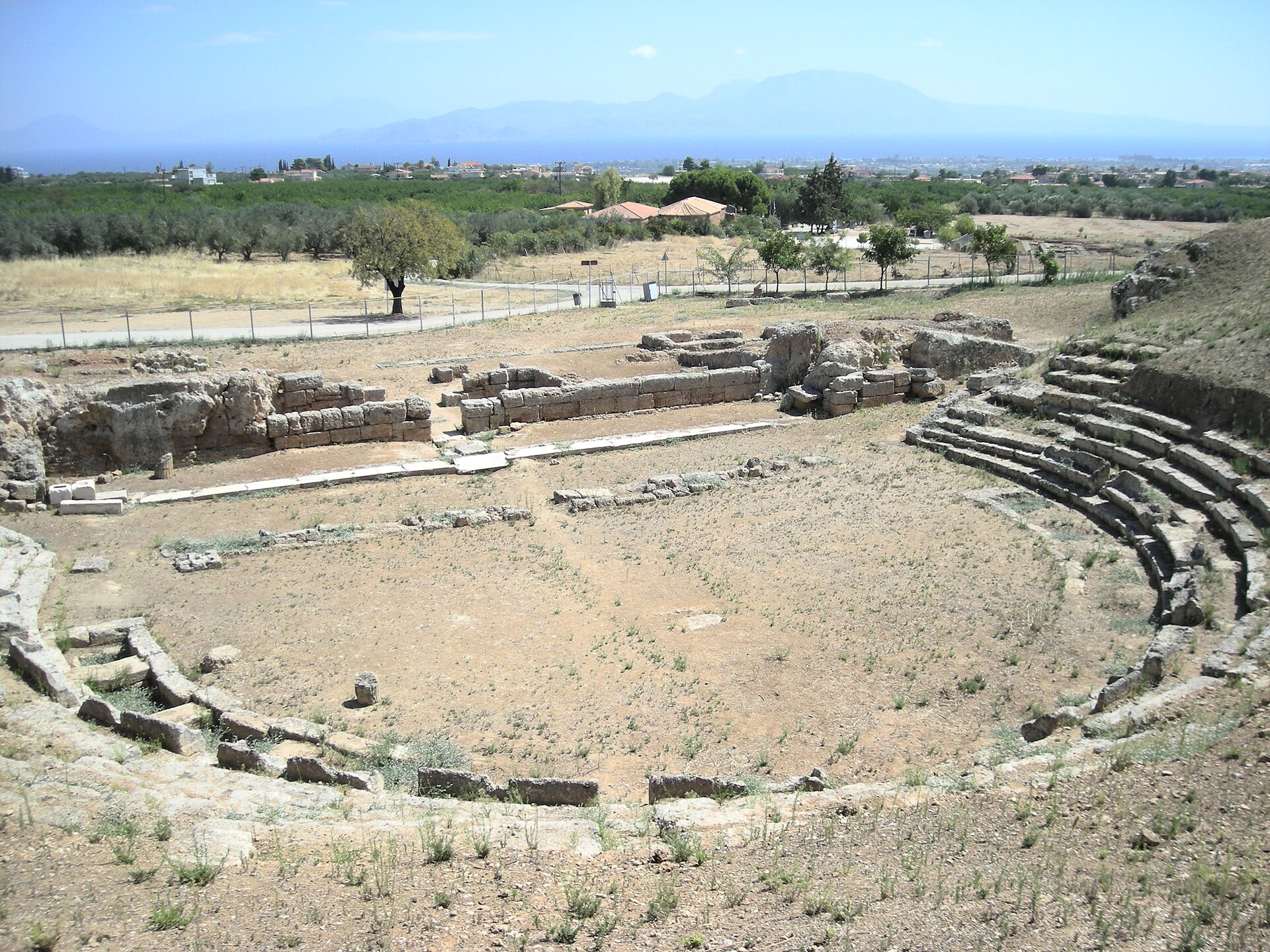
- Doric temple foundations — Archaeological area
Only the footprint of the Doric temple survives, but its outline of cut blocks gives a good sense of scale and of how carefully the builders laid it out. It is a calm place to sit and imagine the columns, with fields and hills on every side.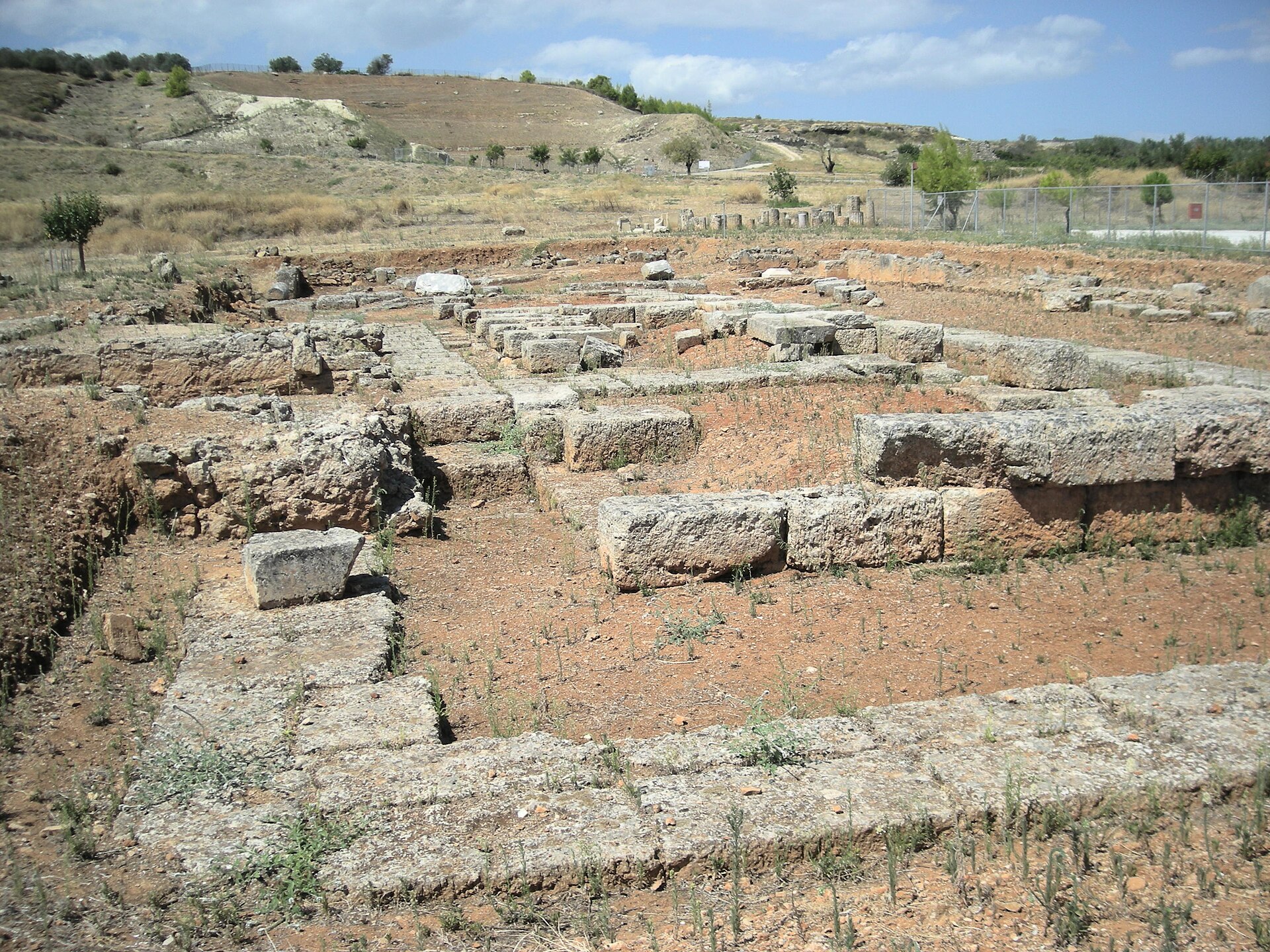
- The gymnasium and its surroundings — Lower terrace of the site
The gymnasium was the city's place for exercise, teaching and talk, and the remains of its courtyard and long side structures cover a good deal of ground. It rewards slow wandering more than quick photographs. Look for the lines of walls and the grass-covered mounds that mark unexcavated buildings.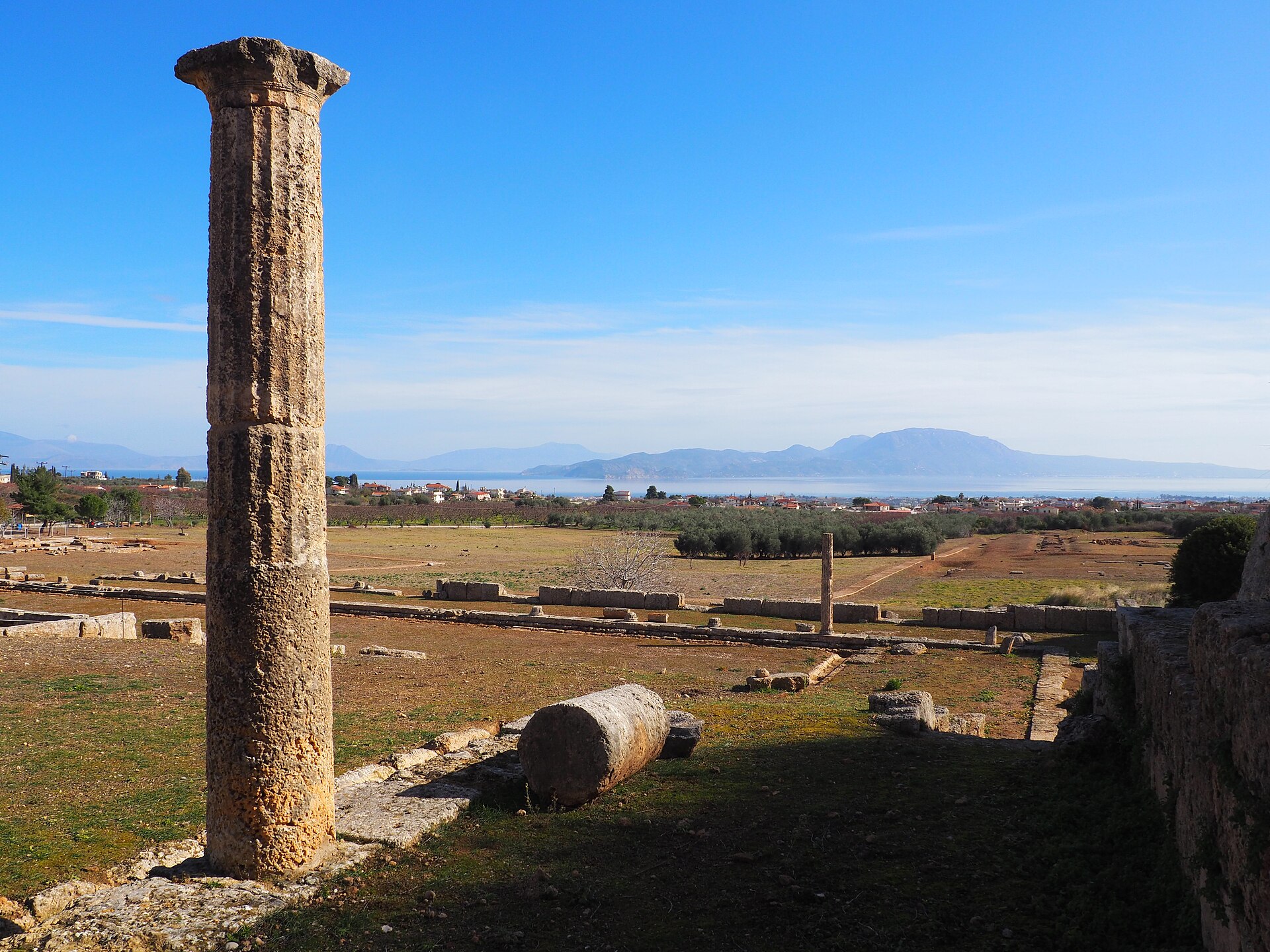
- Archaeological Museum of Sikyon — Beside the archaeological area
The small museum is set in a restored Roman bath building, and its rooms hold sculpture, pottery, inscriptions and architectural pieces from the excavations. It gives names and faces to the city's reputation for art. Opening days vary, so check the Greek Ministry of Culture listing before setting out.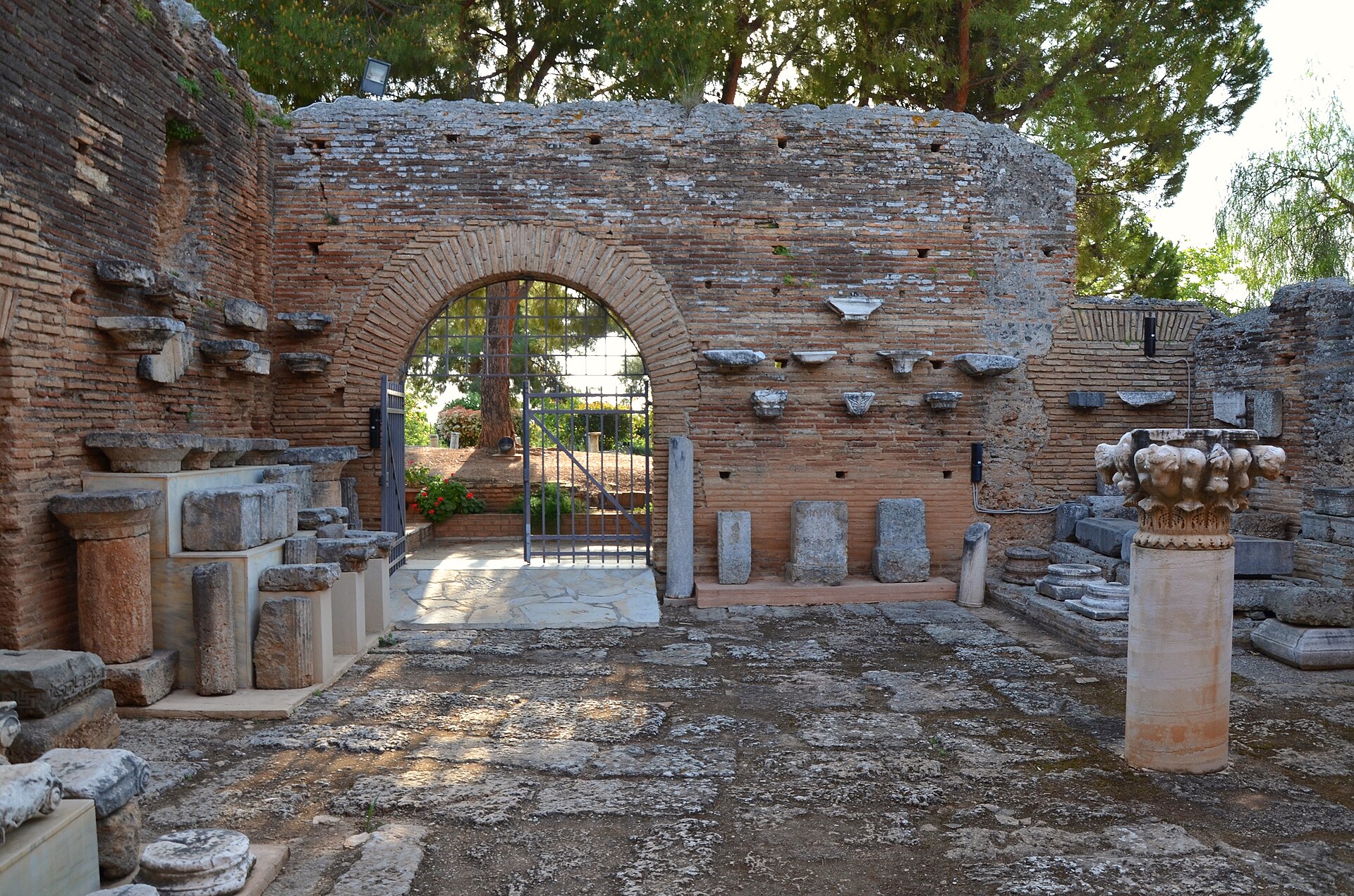
- The viewpoint over the plain — Upper plateau
The upper edge of the plateau looks over orchards and olive groves towards the Gulf of Corinth. It shows why the city chose this spot: a defensible shelf with farmland below and the sea within reach. Late afternoon light is gentle, and there is usually a breeze.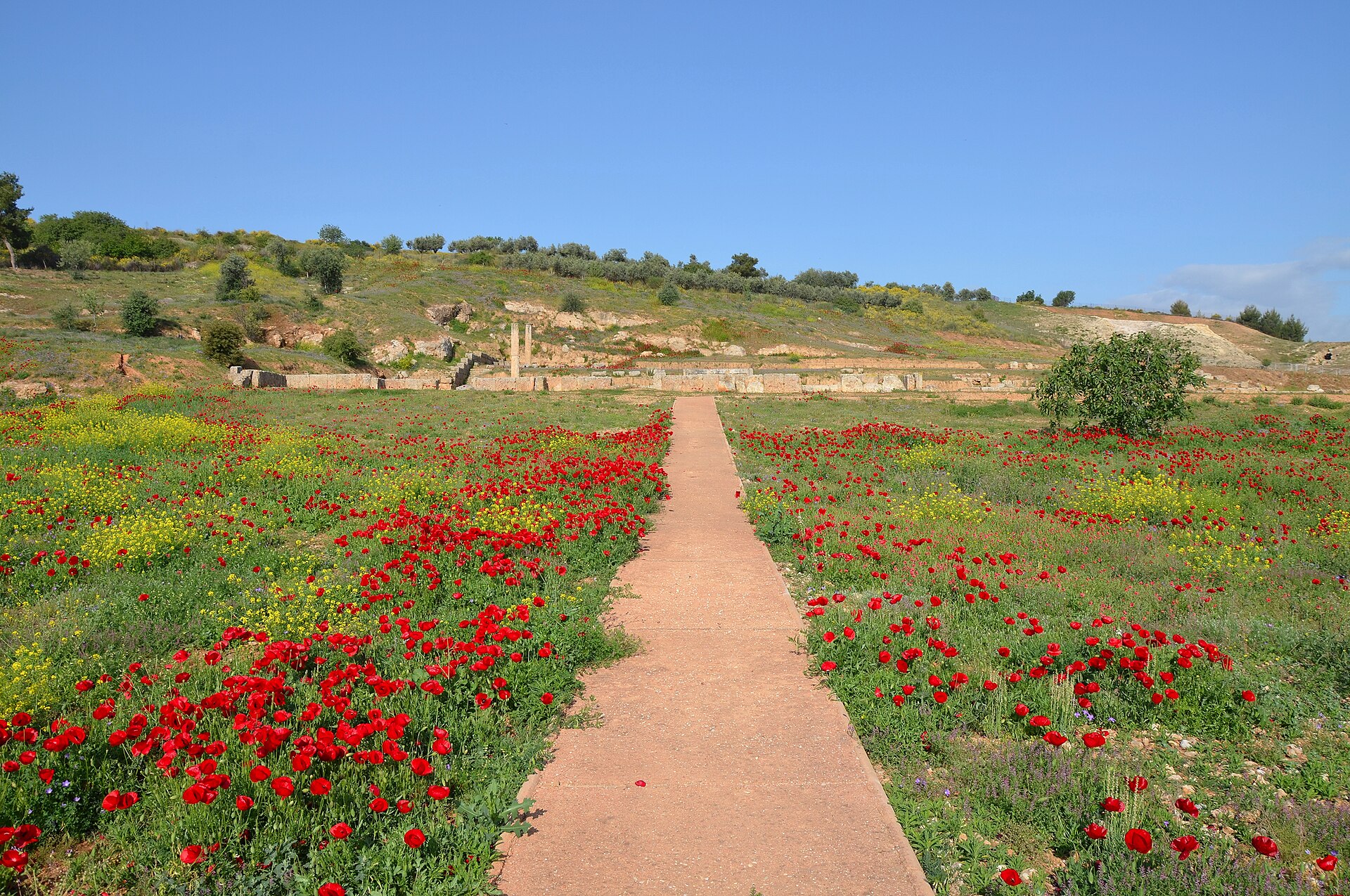
Culture
Sicyon sits in a part of Greece where daily life still follows village rhythms. Mornings start early, the middle of the day is quiet, and evenings are for long meals and conversation in the square. The local pride in the ancient past is real but understated: people in Sikyona know the ruins are on their doorstep and are happy to point visitors in the right direction. Orthodox Christianity shapes the calendar, so village saints' days, Easter and the Dormition in mid-August bring processions, church bells, music and shared food. Hospitality matters, and a coffee or a small plate set down unasked is a normal gesture, not a sales tactic. A few words of Greek, such as kalimera for good morning and efharisto for thank you, go a long way. Artistic memory is a thread worth following here, since the city was known for painters and sculptors, and the museum is a good place to connect that reputation to real objects. Archaeology in Greece is protected by law, and sites like this one depend on a light touch from everyone who walks them. Do not climb on the walls or foundations, and never pick up or pocket stones, tiles or pottery fragments, however loose they look.
What to wear
Around Sicyon, traditional dress belongs to festivals rather than everyday life. In the ancient city, people wore the chiton and the himation, simple draped garments of wool and linen, with sandals for the feet. In the villages of the Peloponnese, regional costume of the last few centuries combined wool, linen and cotton, with embroidered aprons and waistcoats for women and, for men, the pleated fustanella kilt with a short jacket. These outfits now appear on national holidays, at saints' day celebrations, in school parades and with folk-dance groups, where families pass them down with care. Day to day, people wear what suits farm work and warm weather: cotton shirts, light trousers, jeans, simple dresses, caps and sturdy shoes, with something smarter for church, weddings and Sunday lunch. Visitors should dress for the site first. There is little shade, the ground is uneven and dusty, and summer sun is fierce, so wear a brimmed hat, sunglasses, light long sleeves or sun cream, and closed shoes with a good grip. Sandals are fine in the museum, but not on the rubble. In spring and autumn, bring a light layer for breezy evenings. If a visit includes a village church or monastery nearby, cover shoulders and knees, and carry a scarf or light shirt in the bag for that purpose.
What to eat
- Horiatiki salad — Village tavernas in Sikyona and nearby Corinthia
Tomatoes, cucumber, onion, olives and a slab of feta, dressed with local olive oil and dried oregano. In season the vegetables are sweet and the olive oil is the real point. Order it at any village taverna as a starter for the table. - Hortopita and spanakopita — Neighbourhood bakeries in the larger towns, such as Kiato and Corinth
Savoury pies of wild greens or spinach, often with feta and herbs, wrapped in thin, crisp pastry. They are a staple snack and make a cheap, filling lunch for a day of walking among ruins. - Grilled meat and souvlaki — Grill houses and tavernas in the villages and towns
Lamb, pork or chicken grilled over charcoal and served with bread, lemon and chips or salad. Simple and reliable across the Peloponnese, it suits an evening meal after a long day in the sun. - Corinthian currants (stafida) — Shops and weekly markets in Corinth and the surrounding towns
Small dried black grapes from the Corinth region, sold loose or in bags and used in pies, breads and sweets. They keep well and travel easily, making them a handy snack and a sensible gift to carry home. - Local olive oil and olives — Farm shops and village producers in Corinthia
The hills around Sicyon are covered in olive groves, and oil here is poured freely on bread, salads and beans. Buy a small tin or bottle from a producer if one is open, and try the bitter, peppery new oil in late autumn.
Plan it
Best time. April–May and October–November. Spring is green and mild, and autumn is warm without being punishing. July and August are very hot, with almost no shade on the site, so go early or choose another season. Winter is cooler and can be wet, though the ruins are quiet.
How long. 1
Getting there. Fly into Athens International Airport, then take the suburban rail or a long-distance bus to Corinth or Kiato. For the last leg, a taxi or hire car is the practical choice, because local buses are infrequent. Driving from Athens along the motorway is the simplest option.
Budget. low
Tips
- Go in the morning, when the light is soft and the heat is lower
- Carry water, a hat and snacks; there may be no shop or café nearby
- Check the Greek Ministry of Culture listing for the museum and site opening days before setting out
- Pair Sicyon with ancient Corinth and a lunch in a village taverna to make a full day
- Wear closed, grippy shoes for uneven ground
Etiquette
- Stay on the paths and off the walls and foundations
- Do not take any stones or pottery from the site
- Dress modestly at village churches and monasteries
Nearby
Sources
- Wikidata Q368628 (CC0)
- Wikipedia: Sicyon (rev 1373001985) (CC BY-SA 4.0)
- Wikivoyage: Corinthia (rev 3707835) (CC BY-SA 4.0)
- Ancient theatre of Sikyon — Future Perfect at Sunrise (Public domain)
- Sikyon, Greece — Carole Raddato (CC BY-SA 2.0)
- Karte des Isthmus von Korinth — Fremantleboy (CC BY 2.5)
- Foundations of the doric temple in ancient Sikyon — Future Perfect at Sunrise (Public domain)
- Sikyon coin — Johny SYSEL (CC BY 3.0)
- Archaeological Museum of Sikyon, Greece — Carole Raddato (CC BY-SA 2.0)
- Sikyon, Greece — Carole Raddato (CC BY-SA 2.0)
- Ancient Sikyon — SchneesturmKatze (CC BY-SA 4.0)


