Sibiloi National Park
Sibiloi National Park, Kenya
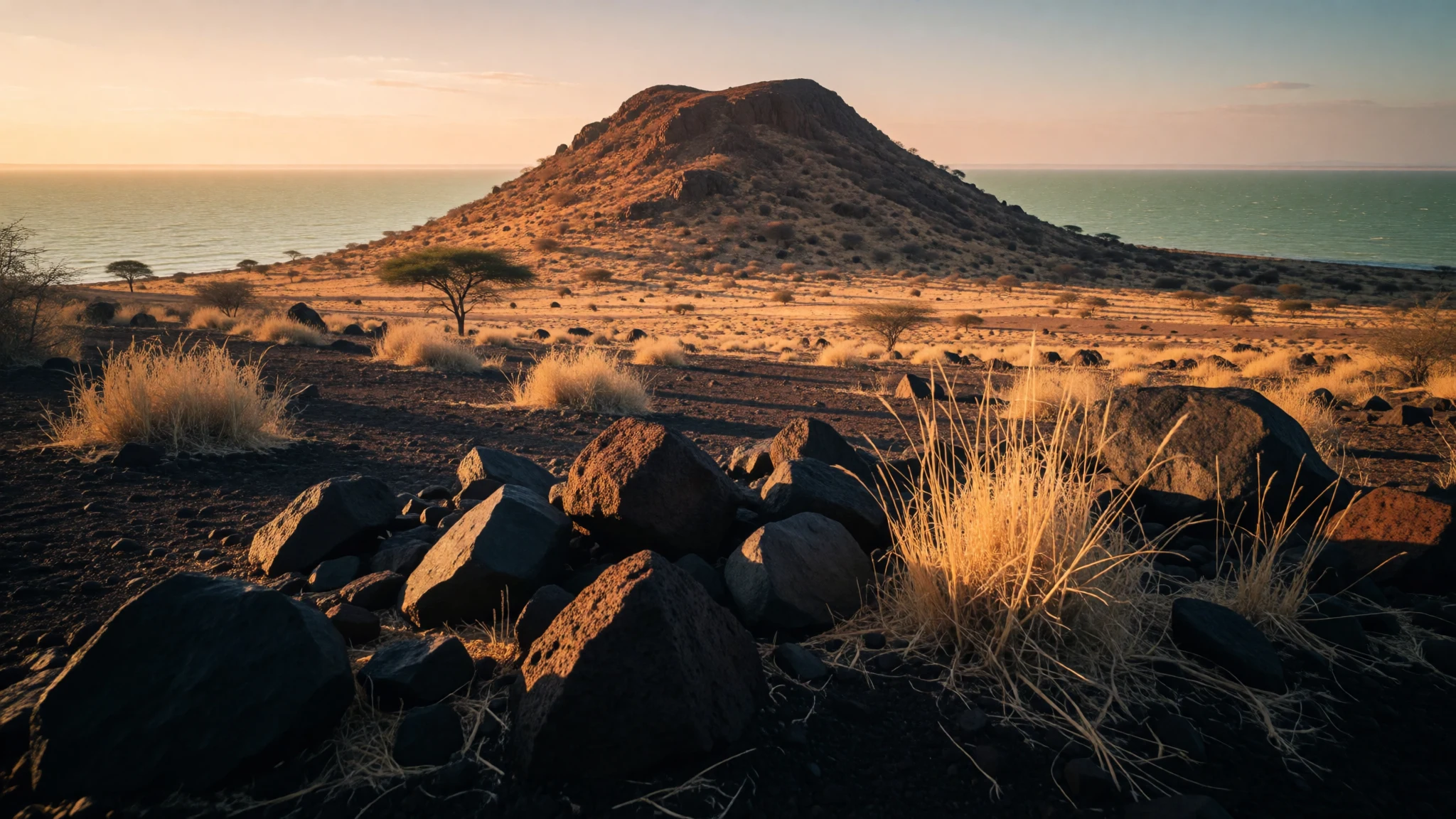
Sibiloi National Park is a remote desert shore on Lake Turkana where exposed fossil beds and a stone forest reward self-sufficient travellers.
The place
Sibiloi National Park sits on the northeastern shore of Lake Turkana, in the far north of Kenya. It was created in 1973 to protect both wildlife and the palaeontological sites that make the area scientifically important, and it forms part of the Lake Turkana National Parks World Heritage listing. The landscape is stark: semi-desert scrub, open plains and ridges of volcanic rock, with the long pale-green line of the lake always at the edge of the view. Mount Sibiloi rises from the plains and carries the remains of a petrified forest, tree trunks turned to stone. Lake Turkana is a vast desert lake with a reputation for hot, strong winds, and the water can turn rough quickly, so the shoreline feels more like a sea coast than a lake. Rain is scarce, shade is rarer, and the nearest towns are a long, slow drive away. That remoteness is the character of the park: few visitors, little infrastructure beyond a Kenya Wildlife Service base with camping and short-stay options, and a sense of space that is hard to find in Kenya's better-known savannah reserves. Wildlife is present but sparse and wary compared with the southern parks, so people come mainly for fossils, geology and the lake itself. Think of it as an expedition rather than a day out, with fuel, food and water carried in, and a vehicle built for rough tracks.
Its story
The story of Sibiloi National Park is the story of what has been found in its rocks. Over a very long span of time, the Turkana basin collected sediment from rivers and the lake, and those layers quietly buried bones, teeth and stone tools. Later erosion cut into the deposits and brought them back to the surface, so fossils now lie exposed on bare ground. Koobi Fora, on the lake shore, became the focus for researchers who came to survey and dig, and the remains recovered there have shaped how scientists describe the evolution of early humans and the animals around them. Kenya set the park aside in 1973 to keep that evidence safe from disturbance, and the area was later listed as a World Heritage Site as part of Lake Turkana National Parks. The protection is not only about famous skulls. Fossil antelope, crocodiles and other animals help reconstruct the environments early humans lived in, showing a land that was once wetter and greener than today's scrub. The petrified forest on Mount Sibiloi adds a different chapter, a reminder of vegetation that vanished long before people arrived. Today research and conservation share the ground with a handful of visitors. Pastoral and fishing communities, who have lived around the lake far longer than the park has existed, remain part of the picture, and questions of grazing and access still shape how the place is run.
What to see
- Koobi Fora Museum — Koobi Fora, lake shore
The museum at Koobi Fora is the natural first stop, because it explains the fossil record of the basin before the landscape does. Displays and the research setting give context to the fossils found nearby, though the famous early human remains are now held in Nairobi. Opening arrangements vary, so check with Kenya Wildlife Service before relying on a visit.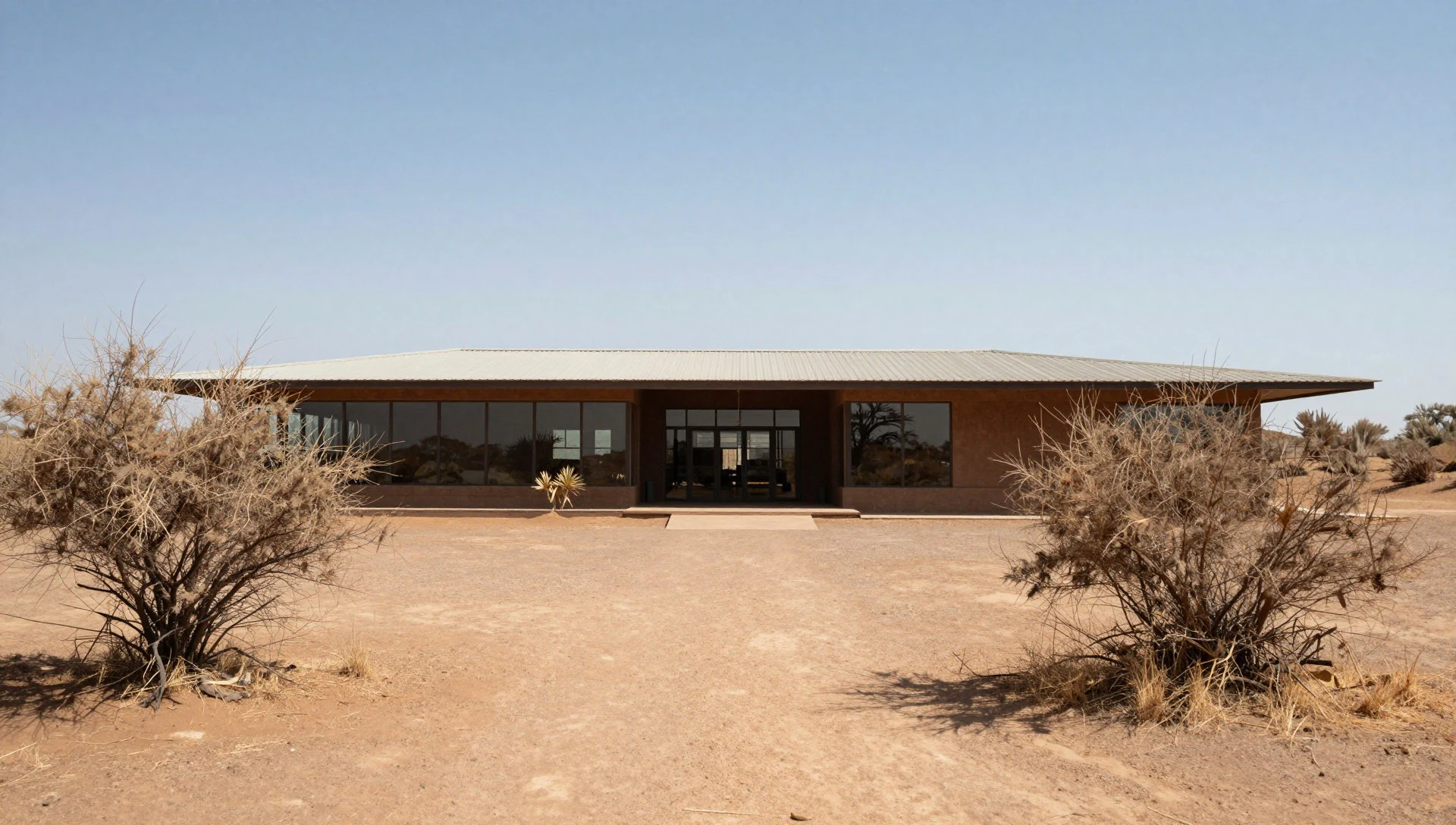
- Petrified forest on Mount Sibiloi — Mount Sibiloi, inland from the shore
Mount Sibiloi is the park's namesake and the site of its stone forest, where fallen trunks have turned to rock and lie across the slopes. A guide from the park base helps with finding the best groups of trunks. Go early, as the volcanic ground holds heat and offers no shade.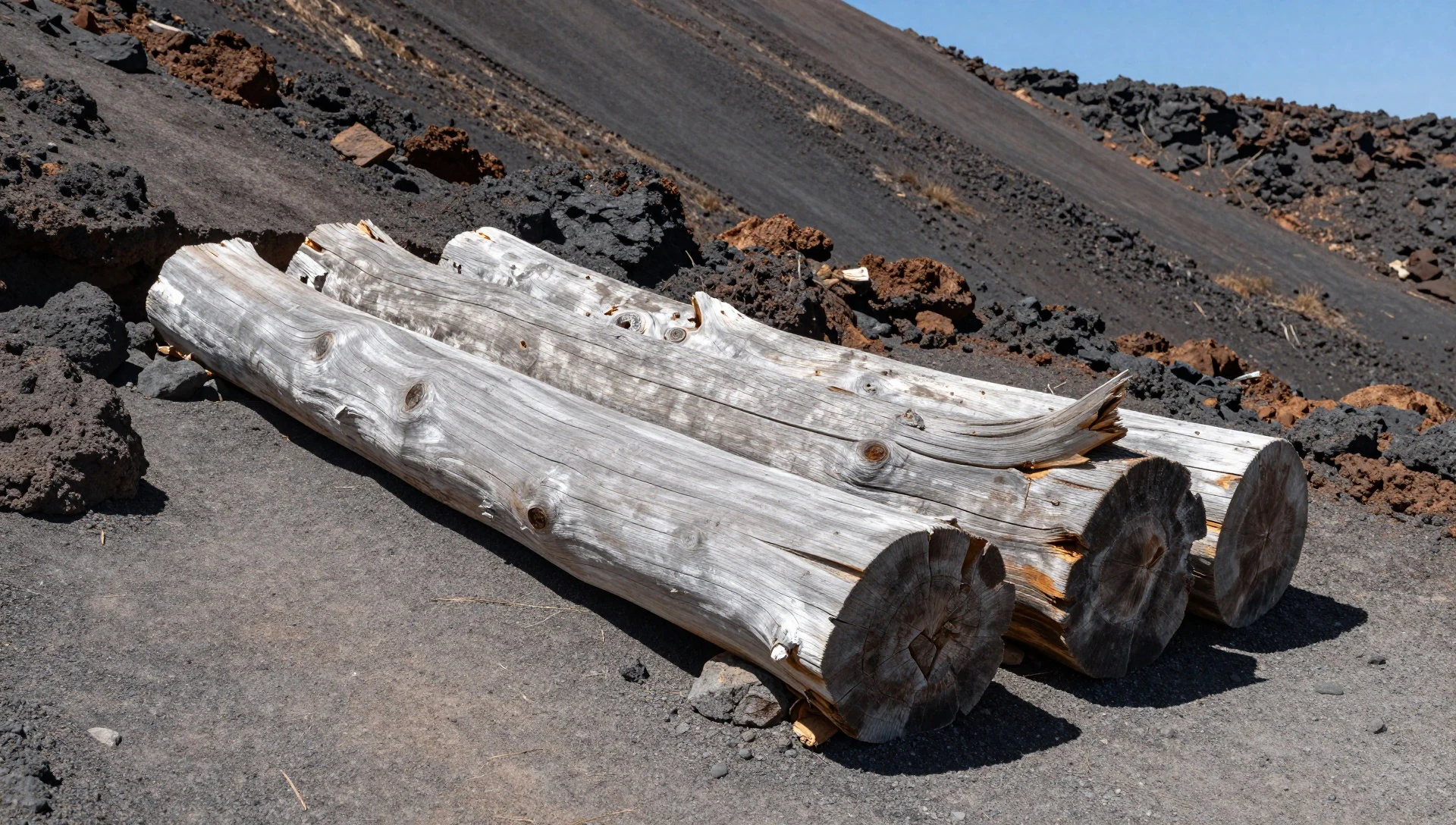
- The Lake Turkana shoreline — Northeastern shore of Lake Turkana
The lake edge is the park's most photogenic stretch, with green-tinted water against dark volcanic rock and pale sand. Wind is frequent and the surf can be surprisingly lively. Crocodiles live in Lake Turkana, so keep out of the water and take advice before walking close to the shallows.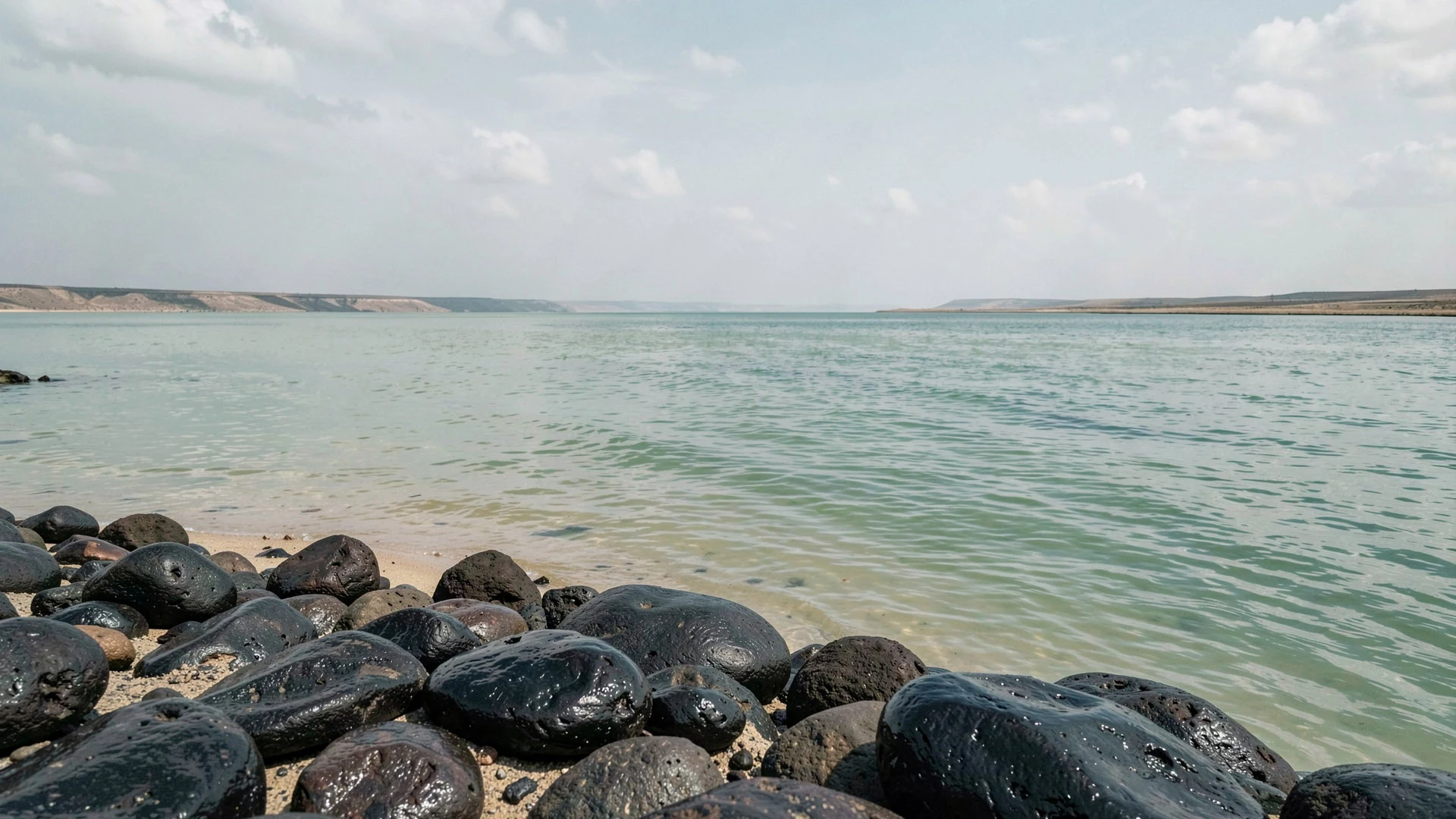
- Open plains and volcanic ridges — Plains between the shore and Mount Sibiloi
Away from the water, the park opens into semi-desert plains broken by ridges of volcanic rock. Game viewing is quiet rather than dramatic, with the chance of seeing grazers and birds on the move. The pleasure here is scale, silence and a horizon with no buildings.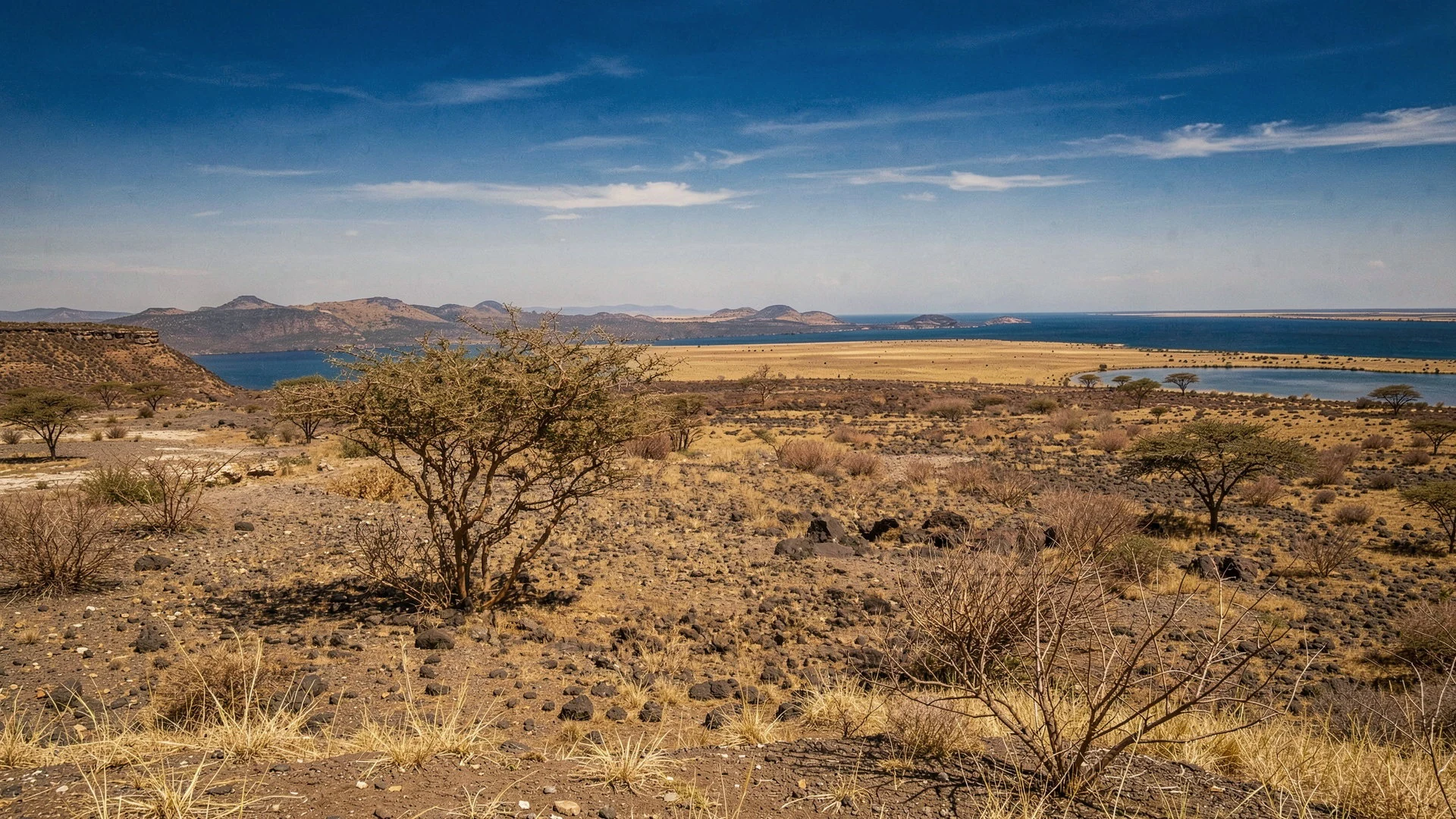
- Kenya Wildlife Service camping area — Park headquarters area
The park base offers camping and short-stay options, and an evening here is part of the experience: a huge sky, steady wind off the lake and very little artificial light. Facilities are simple. Confirm what is available and bring tents, water and food unless told otherwise.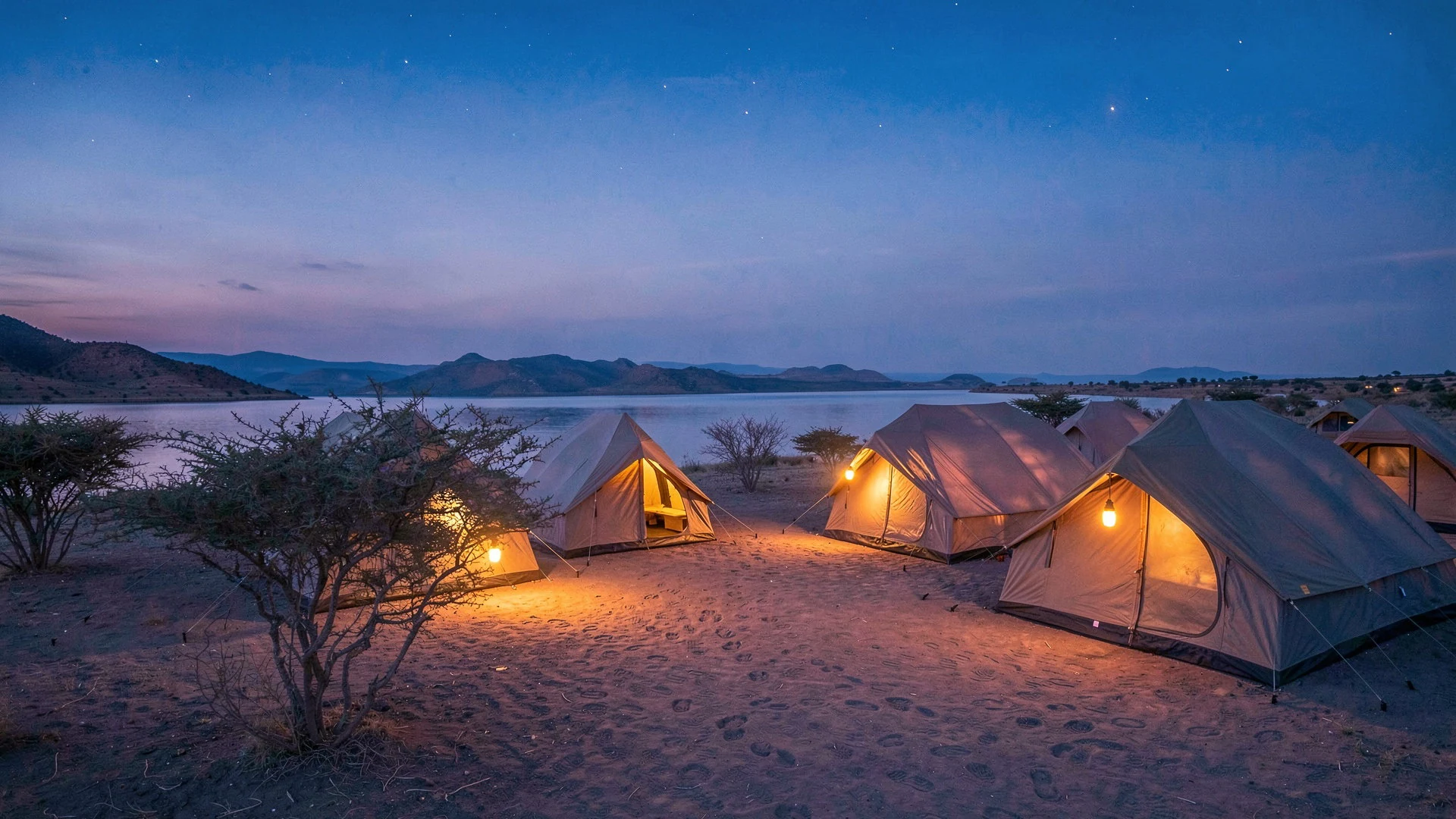
Culture
The country around Sibiloi National Park is home to pastoral and fishing communities, among them Turkana, Gabbra, Daasanach and El Molo peoples, whose lives follow water, livestock and the moods of the lake. Herds of goats, camels and cattle are the basis of wealth and food, and movement between grazing areas shapes the year. Lake fishing is a second pillar, especially on the western and southern shores. Much of the land that is now parkland was used for grazing before it was protected, so the relationship between communities and the park is not always simple, and local knowledge of water, weather and tracks is valuable to visitors. Hospitality is real but it works through respect: greetings matter, and elders are addressed first. The area is also a place of scientific heritage, and the fossil sites are treated as protected evidence rather than souvenirs. Collecting any bone, stone tool or fragment of petrified wood is an offence and also destroys context that researchers rely on. English and Swahili are widely understood among guides and rangers, while local languages dominate in villages. Visitors should plan for slow conversations, unhurried arrangements and changing plans when weather or security advice shifts. Ask before photographing any person, their animals or their homestead, accept a refusal with a smile, and never pick up fossils or petrified wood, however loose they lie.
What to wear
Around Sibiloi National Park, traditional dress among pastoral peoples such as the Turkana is built around heat and mobility. Women wear wrapped cloth and animal skins, often with layers of bead necklaces whose colours and stacking signal age and status. Men may wear a cloth wrap and carry a small wooden stool that doubles as a headrest. Beadwork, metal bracelets and other adornments are worn daily and for dances and ceremonies, and styles differ between communities. These are living traditions, not costumes. Day to day, most people now wear a mix of printed cotton wraps, kikoi cloth, shirts, shorts and trousers, with sandals or simple rubber shoes. Second-hand clothing from the wider market is common, especially in towns. Visitors should dress for sun, wind and dust. Choose loose, long-sleeved cotton shirts, long trousers or knee-length shorts, a wide-brimmed hat and sunglasses, and a scarf to pull over the face when the lake wind lifts sand. Nights can feel cool compared with the days, so pack a light fleece. Closed, sturdy shoes are best on sharp volcanic ground and for walking among fossil beds. Modest dress is appreciated in villages, so cover shoulders and thighs, and avoid wearing military-style camouflage.
What to eat
- Grilled lake fish — Fishing landings and small eateries on the lake shore
Tilapia or Nile perch from Lake Turkana, grilled whole over charcoal and eaten with salt and lime. It is the freshest food in the region. Look for it at fishing landings and small eateries on the lake shore, as the park itself has no restaurants.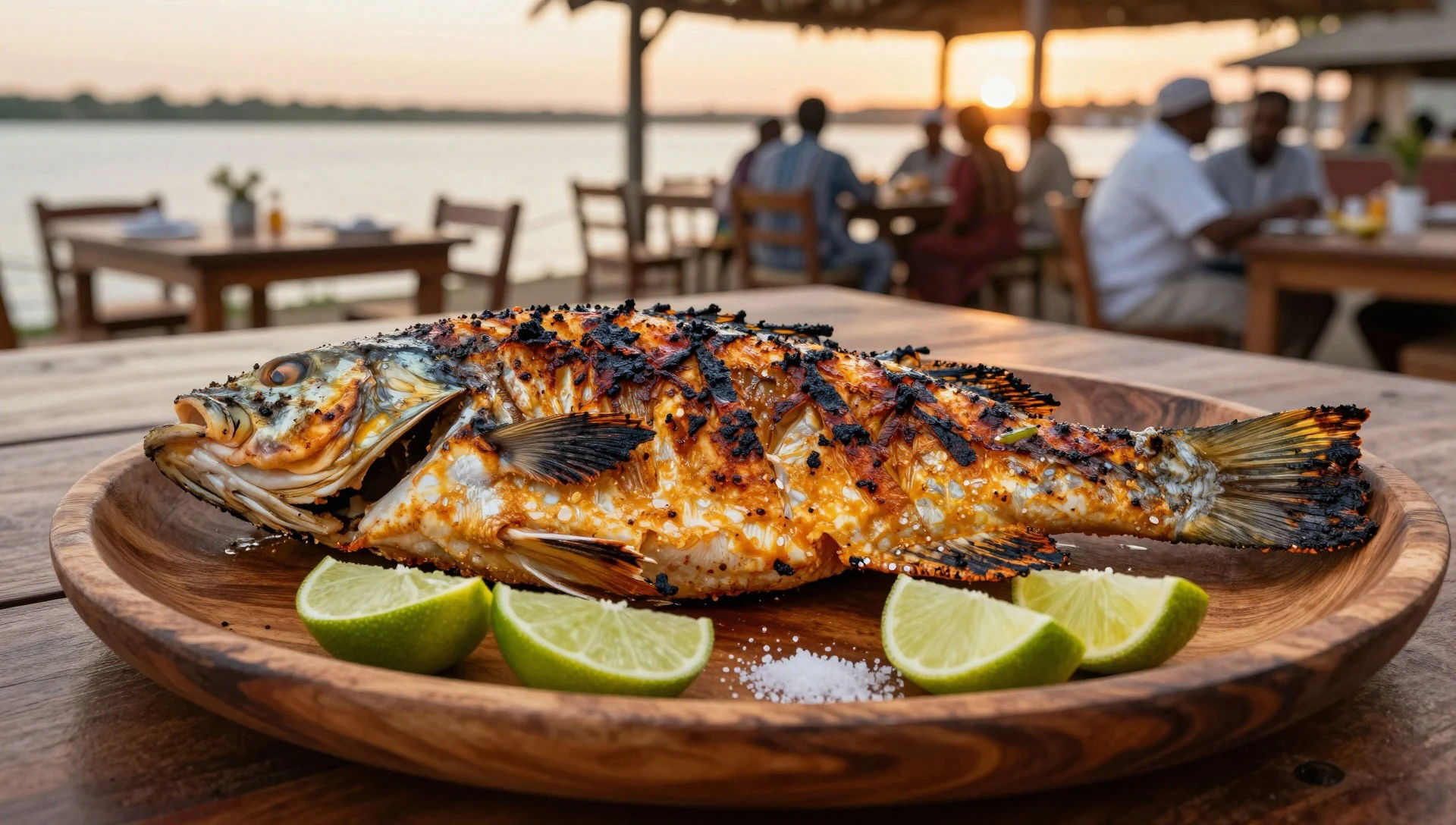
- Ugali — Roadside eateries in gateway towns
A stiff maize porridge cut into portions and eaten by hand with a stew, greens or fish. It is cheap, filling and found across Kenya. Expect it at almost any roadside eatery in the towns that serve as gateways to the lake.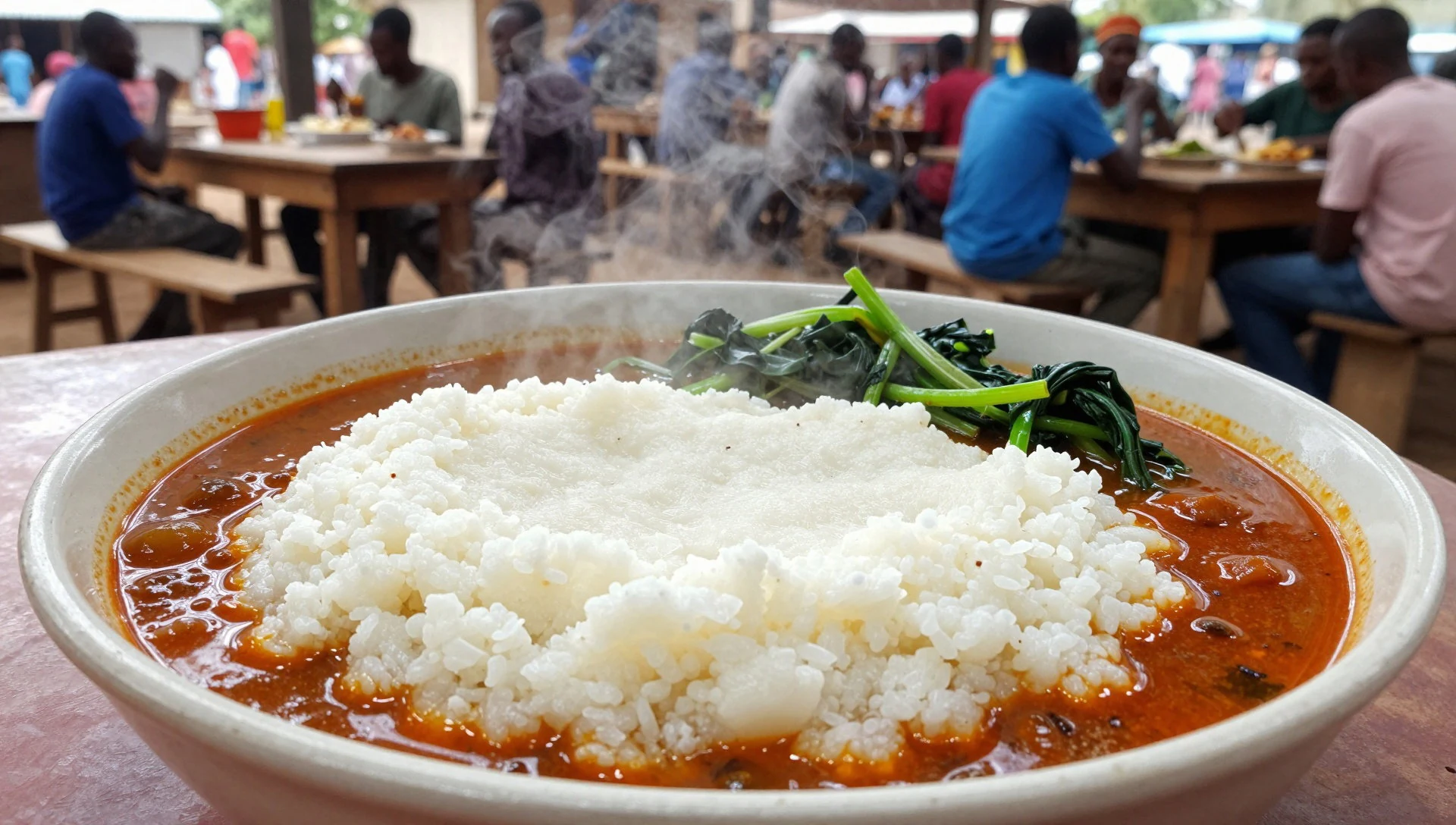
- Nyama choma — Open-air grill eateries in town centres
Goat meat roasted slowly over coals and chopped at the table, usually served with salt and a side of kachumbari, a fresh tomato and onion salad. In a pastoral region the goat is as local as it gets. Order by weight and share. - Camel milk tea — Roadside stalls and homestead visits
Tea made with camel milk, or plain camel milk drunk fresh or soured, is part of daily life for herding communities. The flavour is rich and slightly salty. It is best tried when offered by a host or sold at a roadside stall. - Mandazi — Tea shops and morning market stalls
Lightly sweet fried dough, often spiced with cardamom or coconut, eaten at breakfast or with tea. It travels well, which makes it handy for a long drive. Buy it warm from a small tea shop or market stall in the morning.
Plan it
Best time. The drier months from June to September are generally the easier window, when tracks are more passable. Heat is intense in every month and the lake wind can be strong, so early starts matter. Heavy rain can make tracks impassable, so ask Kenya Wildlife Service about current conditions before setting out.
How long. 3–4
Getting there. Sibiloi National Park is in northern Kenya and reached by long road journeys from towns such as Marsabit or Lodwar, or via Loiyangalani on the lake shore. A high-clearance four-wheel-drive vehicle is essential for the last leg on rough tracks. Check routes, security advice and permits with Kenya Wildlife Service before leaving.
Budget. mid
Tips
- Carry all fuel, drinking water and food for the whole trip, as supplies near the park are very limited
- Confirm park entry, camping and museum arrangements with Kenya Wildlife Service well ahead of travel
- Hire a local guide or ranger escort for fossil sites and the petrified forest
- Start walks early, as midday heat on dark volcanic ground is severe
- Carry cash, because card payment and mobile signal are unreliable in this area
Etiquette
- Never remove fossils, stone tools or petrified wood
- Ask before photographing people, animals or homesteads
- Keep well away from the water's edge, as crocodiles live in the lake
Nearby
Sources
- Wikidata Q1380559 (CC0)
- Wikipedia: Sibiloi National Park (rev 1381870258) (CC BY-SA 4.0)
- Wikivoyage: Sibiloi National Park (rev 5092534) (CC BY-SA 4.0)
- View at Lake Turkana — AdamPG, via Wikimedia Commons (CC BY 3.0)
- Lake Turkana and its vicinity — Rudyologist, via Wikimedia Commons (CC BY-SA 4.0)
- Koobi Fora, 28 January 2021 — NASA Earth Observatory images by Joshua Stevens, using Landsat data from the U.S. Geological Survey (Public domain)


