Shuri Castle
Shuri Castle, Japan
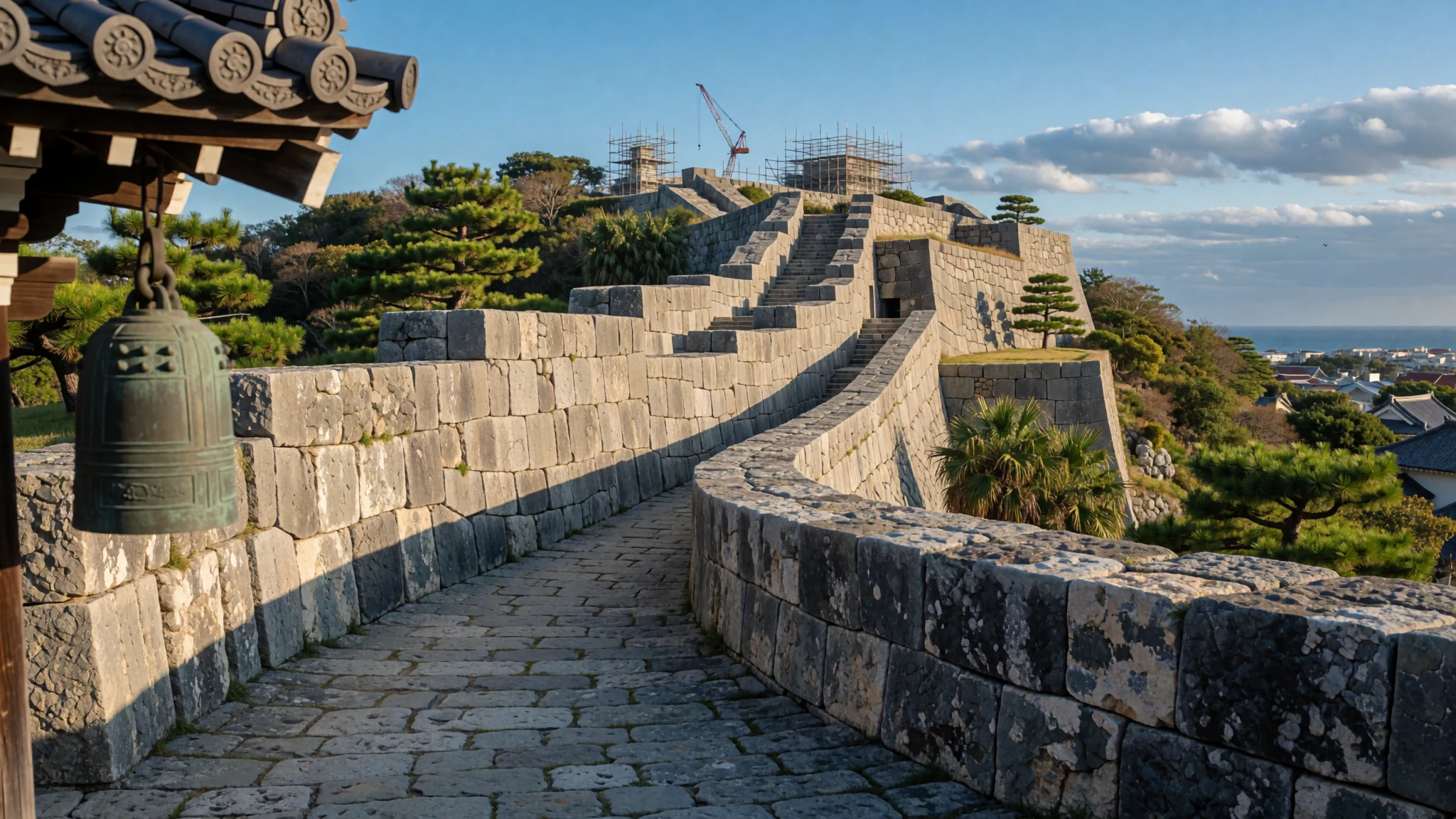
Go for the ridge-top walls, the reconstruction story and a slower look at Okinawa's royal past, while accepting that parts of the palace are still a building site.
The place
Shuri Castle stands on a ridge in the Shuri district of Naha, the capital of Okinawa Prefecture in southern Japan. It is a gusuku, the stone-walled castle type found across the Ryukyu Islands, and for centuries it served as the palace of the Ryukyu Kingdom. The approach climbs through stone gates and walls that still feel like a fortress rather than a museum piece.
The castle visitors see today is largely a reconstruction. Most of its buildings were destroyed in the Battle of Okinawa, and the citadel and walls were rebuilt over the following decades from old records, photographs and memory. A fire in 2019 then destroyed the main courtyard buildings, so the site now mixes restored stonework with a large work zone where the palace halls are being rebuilt. Completion is expected in 2026, and the official site gives the current position.
Beyond the main halls, the Shoen and Sasu-no-ma gardens and the Sonohyan-Utaki sacred grove give the site more depth. Nearby, the royal tombs and the museums in Naha fill out the story of the kingdom. Summers are hot and humid, the grounds are largely open to the sun, and weekends bring steady crowds. Allow a few hours, and expect steep steps and uneven paving.
Its story
Shuri Castle was already functioning as a fortified residence before the Ryukyu Kingdom took shape, during the period when Okinawa was divided among rival principalities. Its exact date of construction is unclear, but it is likely to have been raised in the same era as many other gusuku on the islands. When King Shō Hashi brought the three principalities together and founded the kingdom in 1429, he chose Shuri as his seat, and the district remained the capital for nearly four and a half centuries.
As the royal court and administrative centre, the castle sat at the heart of a trading network that reached across East Asia. Its palace burned more than once over the years and was rebuilt each time, so later generations inherited a site shaped by repeated rebuilding. The kingdom's independence was constrained in 1609, when samurai from the Satsuma domain seized the castle. The Japanese forces withdrew soon afterwards and returned the king to his throne, but the kingdom became a vassal state under Satsuma's control for roughly two and a half centuries.
In the 1850s, the American naval officer Matthew Perry forced his way into the castle twice, but on both occasions the king refused him an audience. Japan annexed the kingdom in 1879, and the last king was moved to Tokyo. The palace was then used as a barracks by the Imperial Japanese Army. Its wartime fate came in 1945, when the Battle of Okinawa reduced most of the buildings to rubble, and the long rebuilding that followed has shaped the site ever since.
What to see
- Shuri Castle — Shuri, Naha
The castle itself is the reason most people come, though only part of it is open while the palace halls are rebuilt. The stone walls, gates and courtyards come from the rebuilding that started after the war, and the ridge gives wide views over Naha. Check the official site for which buildings and gates are open, as works are still under way and hours can change.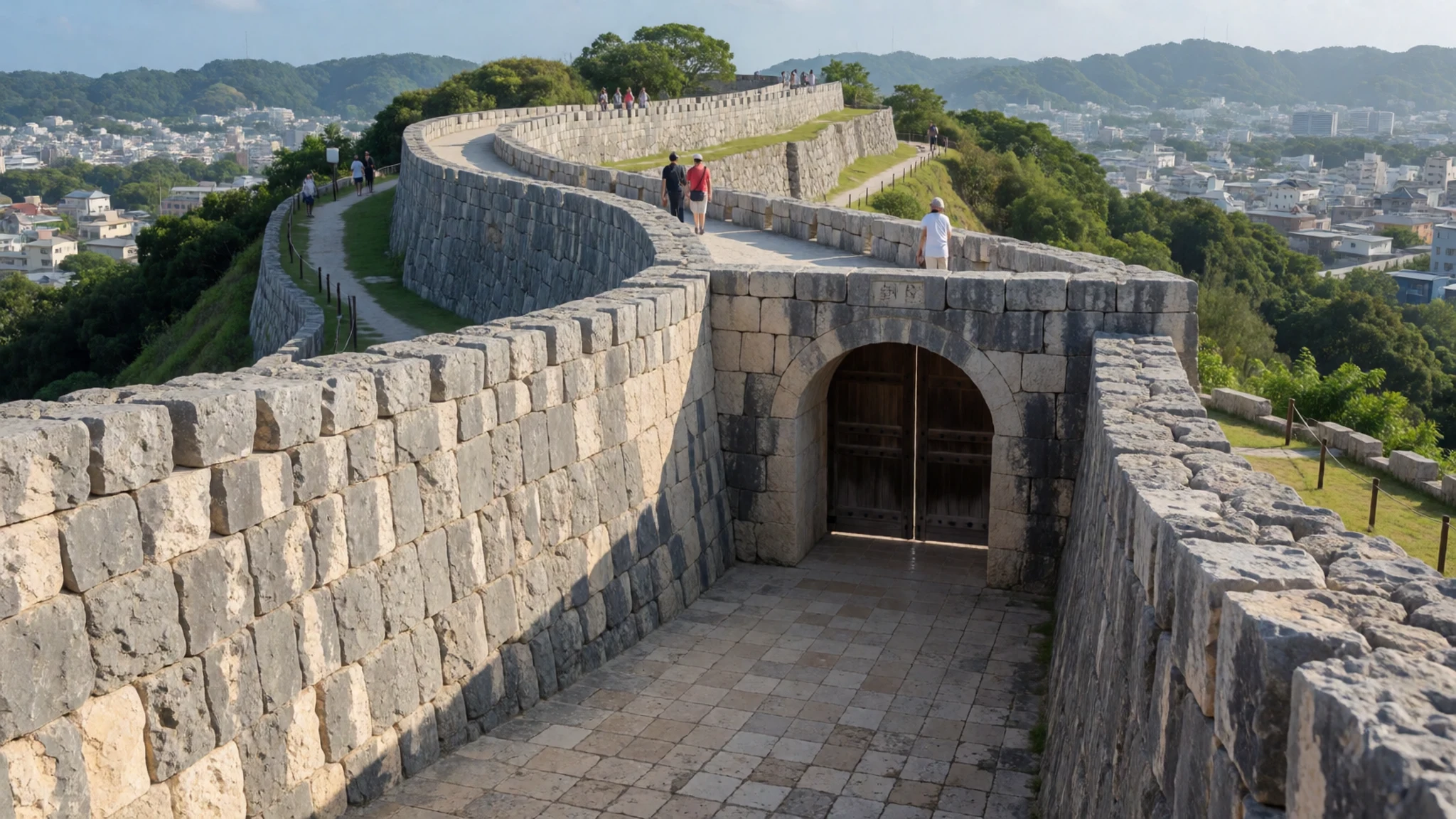
- Sonohyan-Utaki — Shuri Castle Park
Sonohyan-Utaki is a sacred grove of trees and plants inside the castle park, and it is one of Okinawa's World Heritage listings in its own right. It is a place of worship rather than a viewpoint, so keep voices low and stay on the paths. The grove is quiet and shaded, a welcome break from the sun on the castle walls.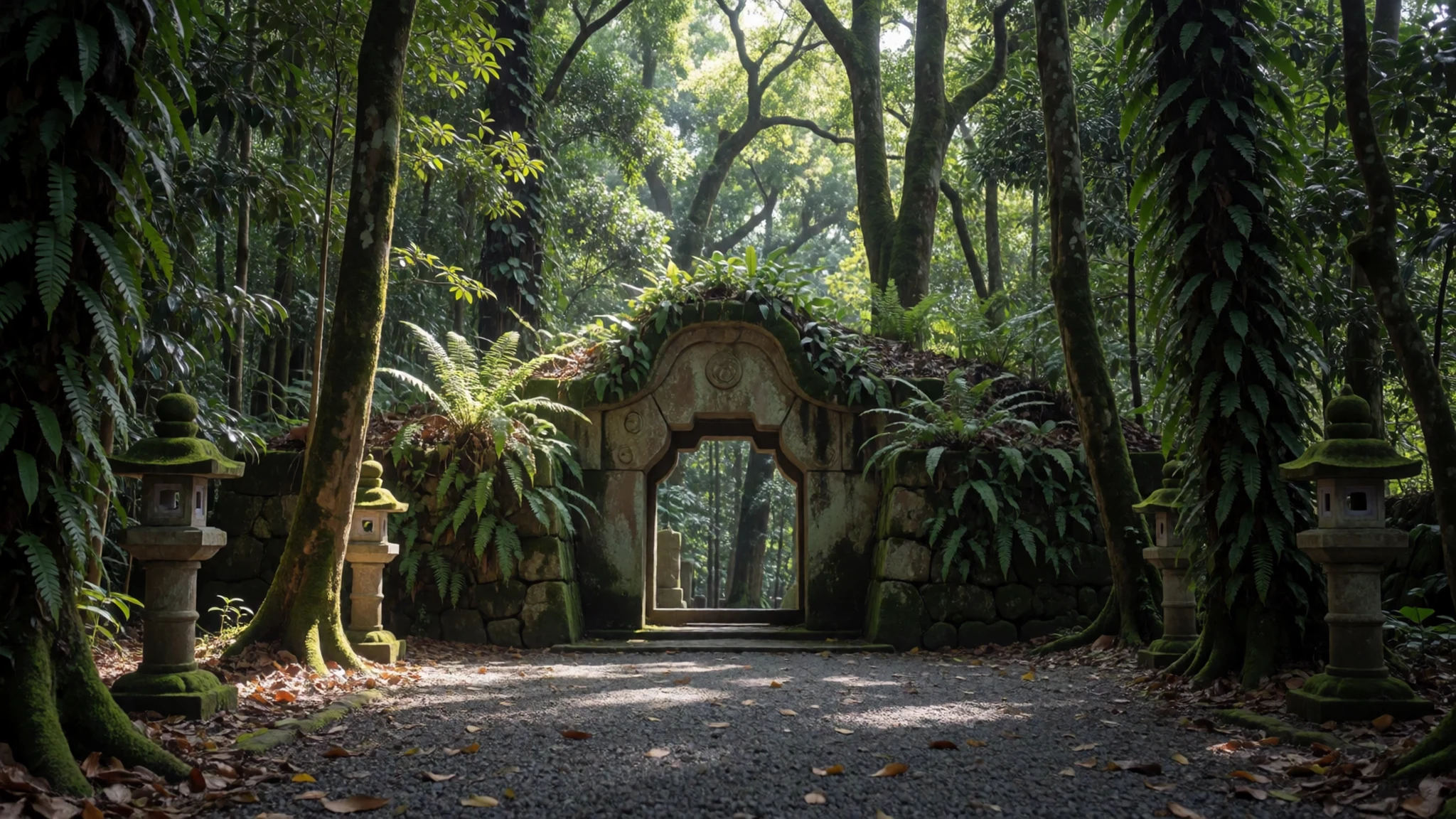
- Tamaudun Mausoleum — Shuri, Naha
Tamaudun is a Ryukyuan royal mausoleum built into the hillside, where kings of the Second Sho dynasty were interred. Its stone structure is divided into three sections. It is a short walk from the castle and is far quieter than the palace grounds, so it suits a slower stop between other visits.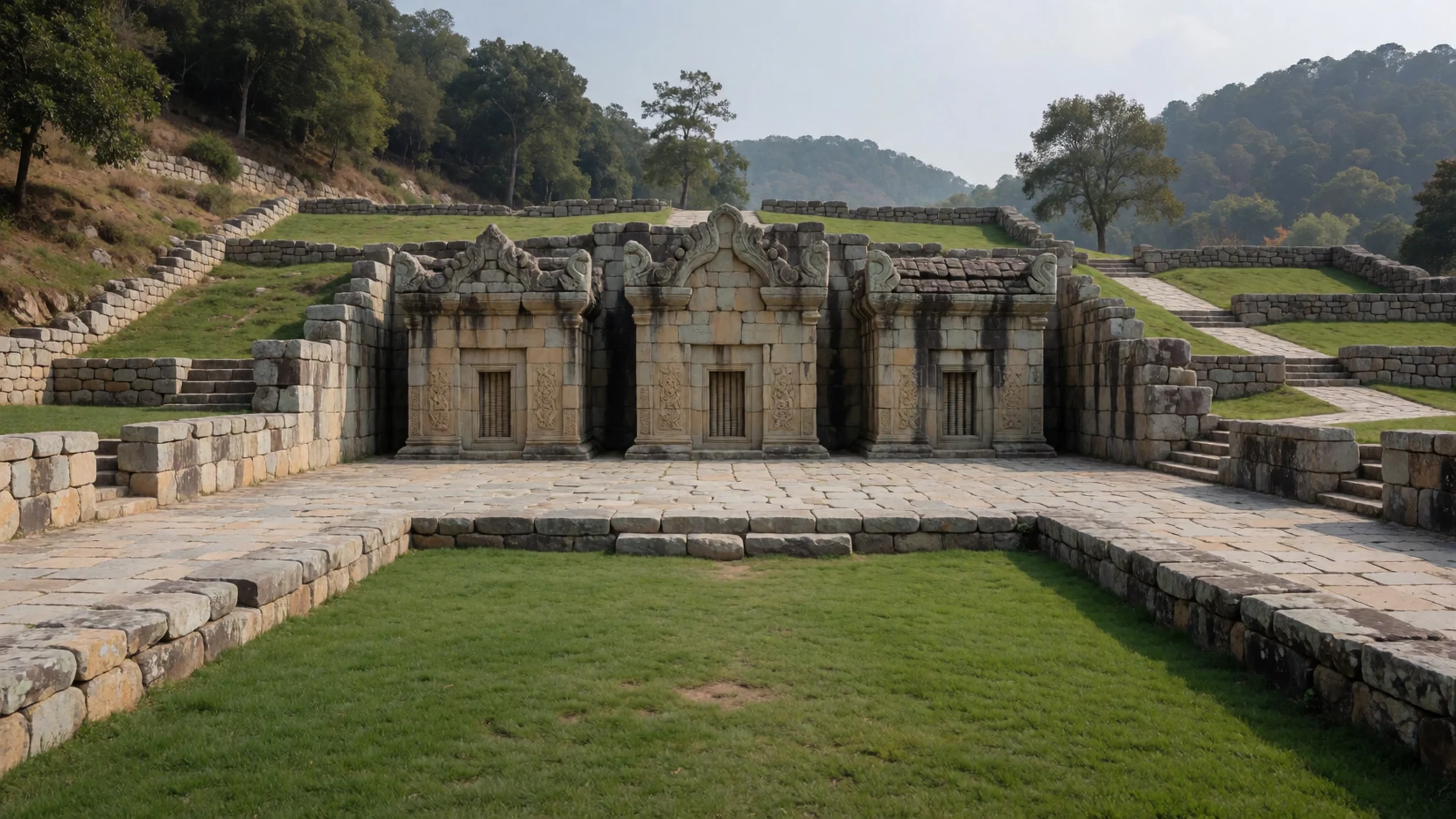
- Naha City Museum of History — Central Naha
The Naha City Museum of History holds artefacts from the city's years as the capital of the kingdom. Its collection includes belongings of former rulers and papers on the kingdom's dealings abroad. It gives useful context before walking the castle.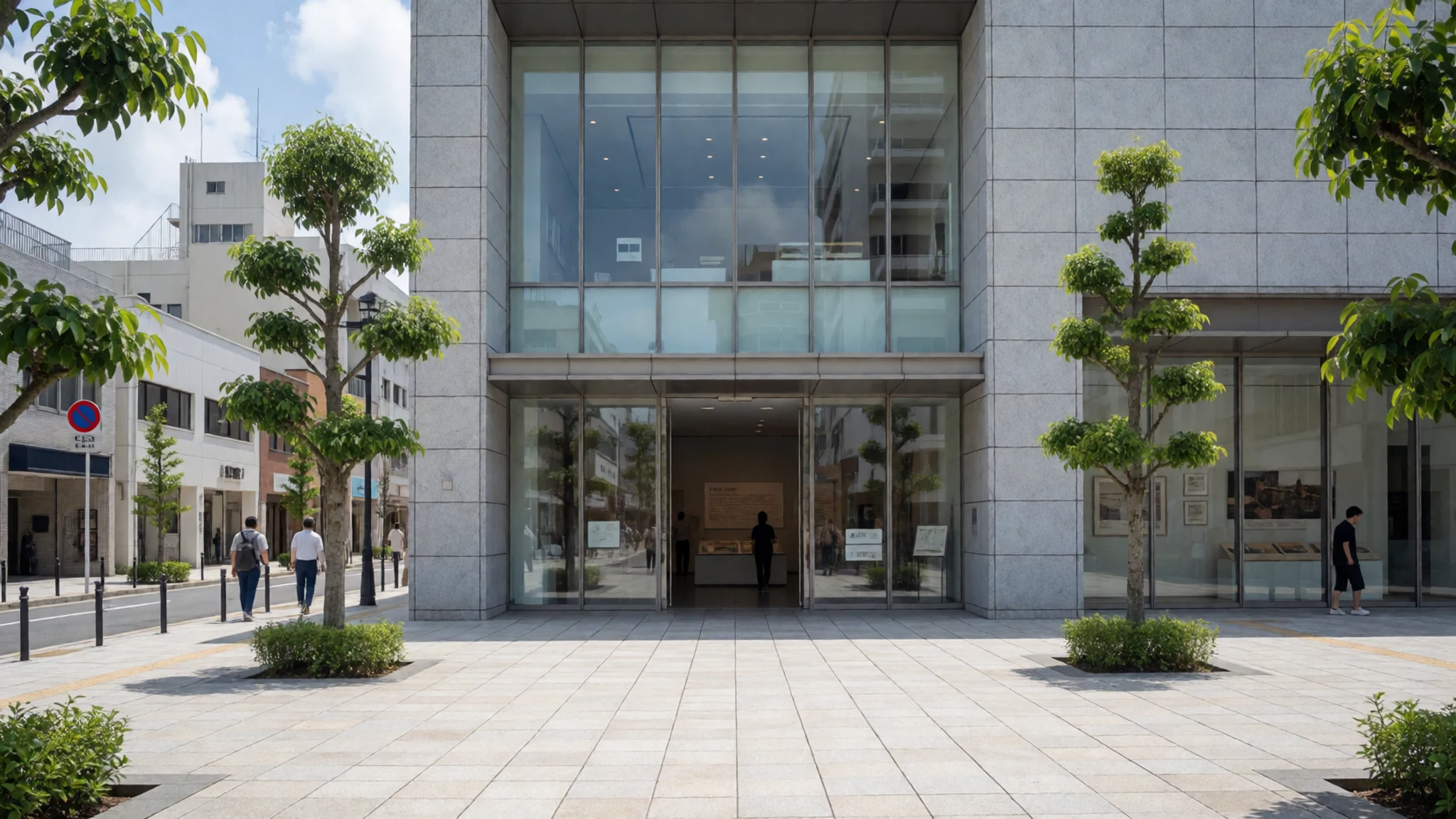
- Tsuboya Pottery Museum — Tsuboya, Naha
Tsuboya is Naha's pottery district, and its craftspeople have worked there for hundreds of years. The museum displays historic and exemplary pieces, a useful primer on local styles. Many craftspeople still work in the district, so a walk through its lanes pairs well with a morning at the castle.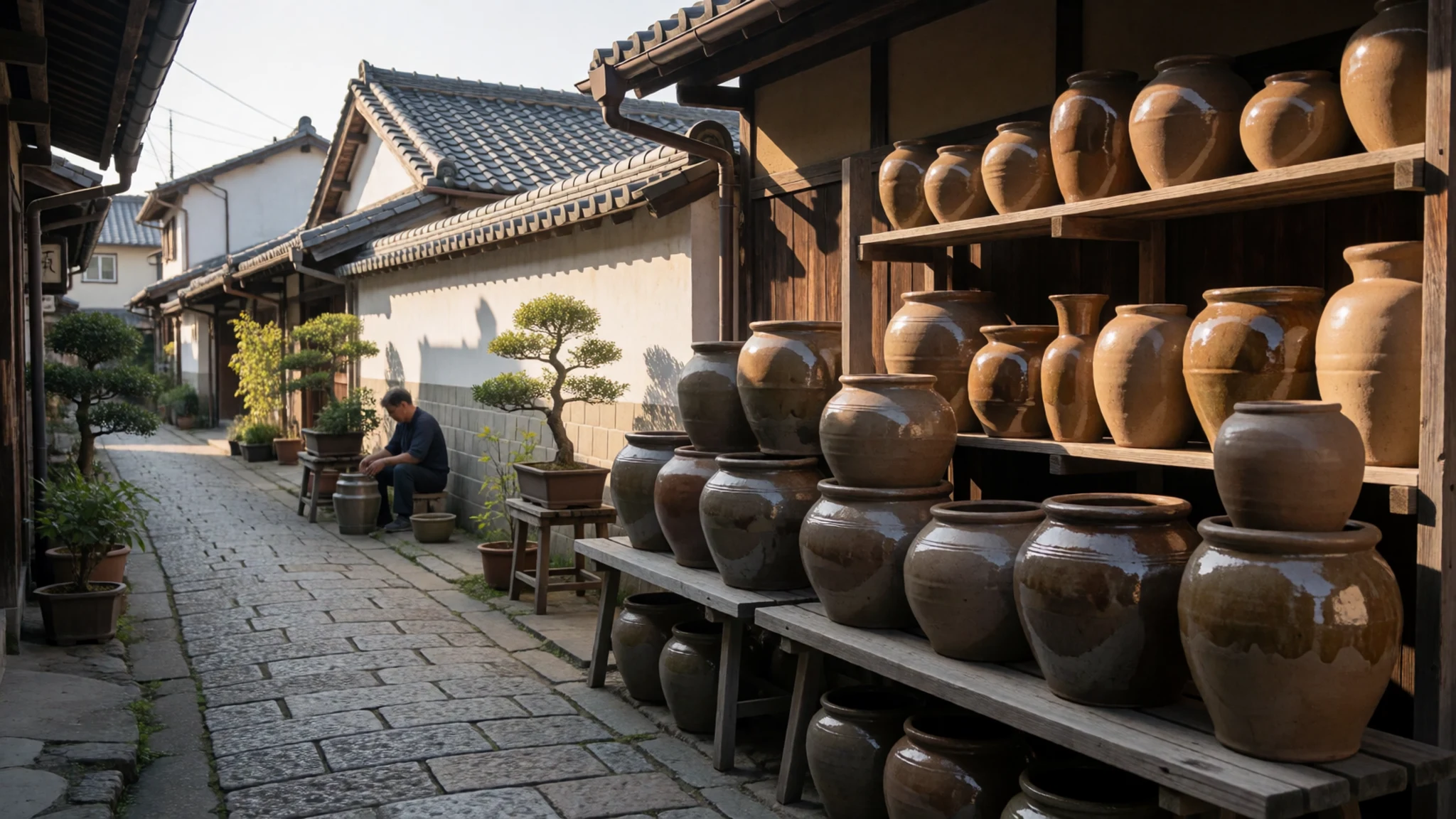
- Shikinaen Garden — Kinjo, Naha
Shikinaen was built by the royal family as a detached residence, where guests could be entertained away from the palace. Its ponds, pavilions and tended trees show how the court spent its leisure time. It is a calm place to finish the day, and it sits within easy reach of the castle area.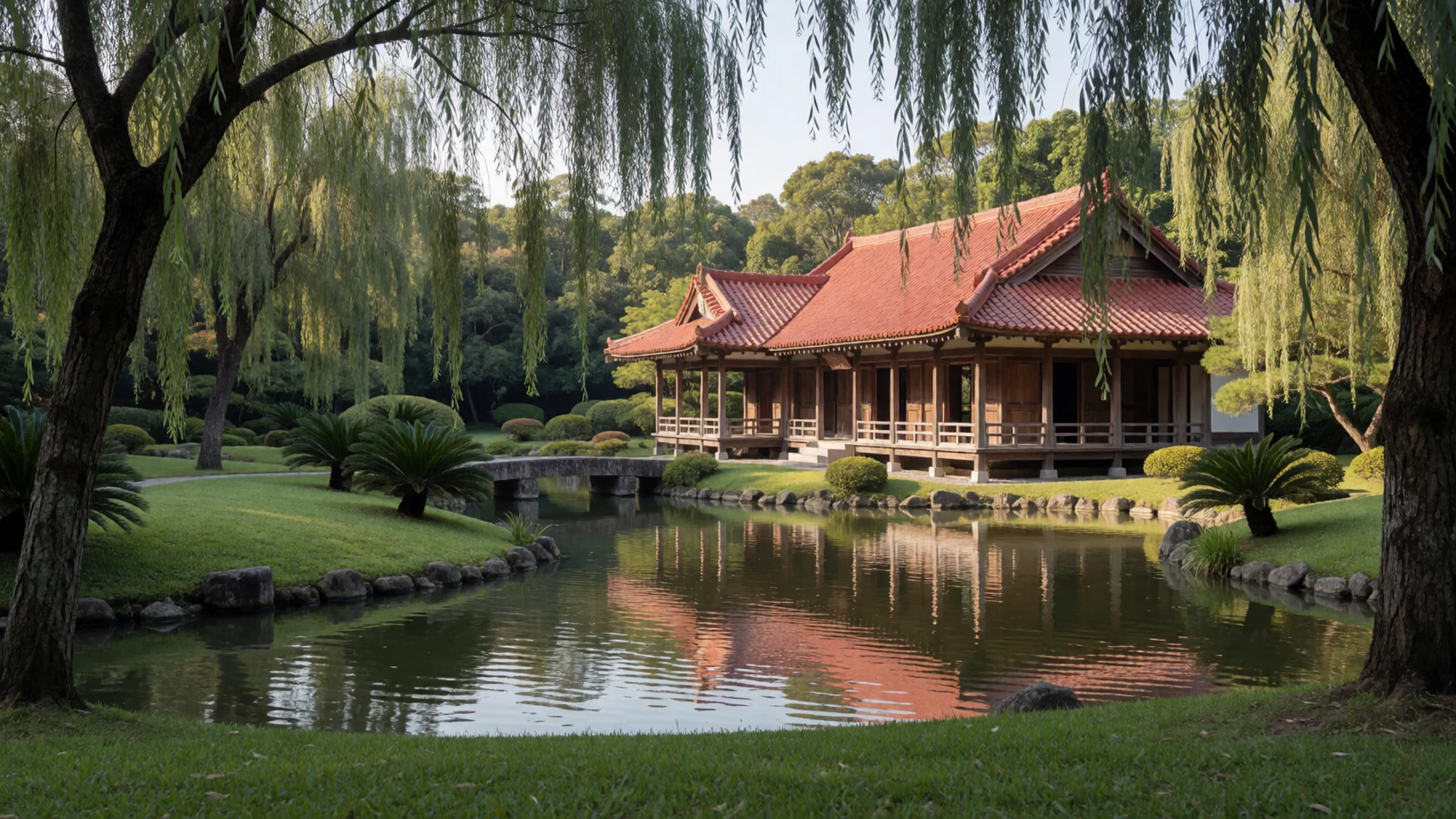
Culture
Shuri Castle is a royal palace site, and much of it is still under reconstruction, so visitors should treat the grounds as a place of memory as well as a sightseeing stop. Follow the marked routes and keep clear of fenced work areas. Where a building is open, shoes come off at the step, and slippers are usually provided for the floors. Photographing the stonework and views is generally fine, but people in traditional dress and staff at any ceremony should be asked before they appear in pictures. Several sites here are still used for worship and remembrance, so loud behaviour and littering stand out. The sacred groves call for particular care, so keep your voice low and stay on the paths.
What to wear
Shuri Castle belongs to a culture whose traditional dress followed the Ryukyuan court style, a robe-based dress worn at the royal court and at ceremonies. The best-known textile of the islands is bingata, a stencil-dyed cloth in bold colours made with resist paste, used for courtly garments and wrappings. Bashōfu, a fine cloth woven from banana fibre, was prized for summer clothes. Today most people in Naha wear ordinary Japanese and Western clothing, and bingata appears mainly in festival costume, performance dress and craft shops.
Visitors should dress for heat and sun, in light, breathable cotton or linen, with a hat and sun cover for the shoulders. The stone paths and steps need flat, grippy shoes rather than heels. Shorts and sleeveless tops are fine on the open grounds, but a covered top is a sensible choice when entering the sacred grove and any ceremonial space.
What to eat
- Goya champuru — basement eateries in central Naha, near the main shopping streets
Goya champuru is the Okinawan stir-fry of bitter melon, tofu, egg and pork, fried together with greens. The bitterness softens once cooked. Basement eateries in the streets around Shuri serve good versions, and it makes a dependable lunch order.
- Agu pork shabu-shabu — shabu-shabu restaurants in central Naha
Agu is the Okinawan breed of pig, and it appears on many menus across the island. Shabu-shabu cooks thin slices of it briefly in a pot of broth at the table, with vegetables. Local produce is the draw here, so expect it to cost more than a simple lunch.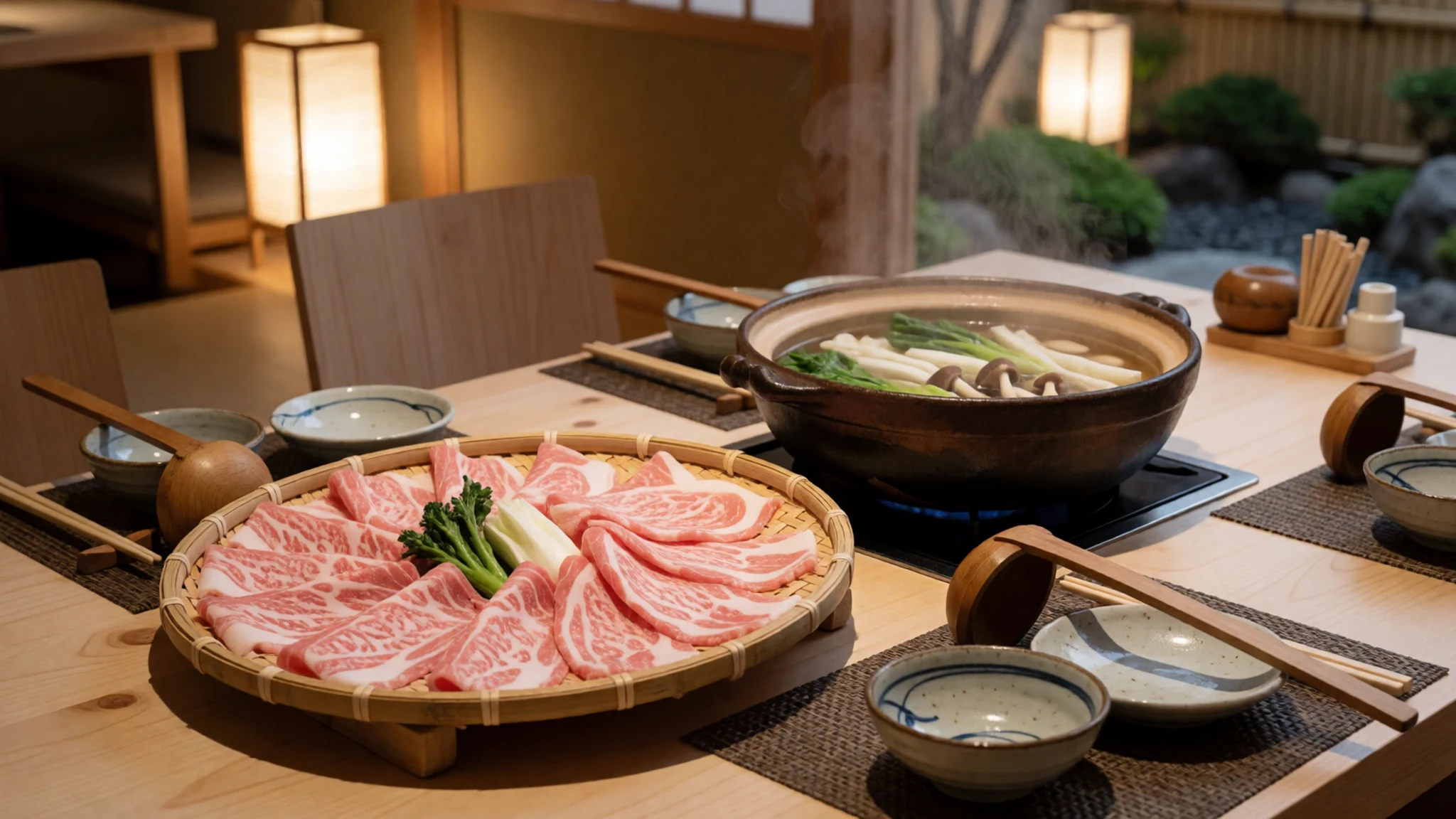
- Craft beer in a neighbourhood bar — a craft beer bar in a central Naha backstreet
Naha has a small scene of relaxed bars, and a craft beer house near the centre makes a good end to a day at the castle. The staff are friendly, and the crowd is a mix of local people and visitors. It is a sociable place rather than a formal one. - Fried chicken and a reggae-themed evening — basement eateries and themed bars in central Naha
Some of the most relaxed eating in central Naha happens in themed basement spaces, where fried chicken and simple local plates are served late. The food is unfussy and the atmosphere is informal. Go in the evening, when the streets around the main shopping area are at their liveliest.
Plan it
Best time. Spring and autumn are the easiest months, with less intense heat than midsummer. Summer is hot and humid, and autumn can bring typhoons that disrupt travel, so check conditions before booking.
How long. 2–3
Getting there. Naha Airport is the main gateway, and the castle is a short ride from the city. Many visitors rent a car, but the rental offices are off-site, so allow extra time for shuttle buses through Naha traffic. Ferries to Okinawa are few and slow, so flying is the practical choice.
Budget. mid
Tips
- Check the official site for which halls are open, since reconstruction is ongoing
- Go early, before the heat and tour groups arrive
- Allow extra time for car-rental shuttles through Naha traffic
- Pair the castle with Tamaudun and Sonohyan-Utaki, which are close by
- Carry water and a hat, as much of the site is open to the sun
Etiquette
- Remove shoes where the signs ask you to, and use the slippers provided
- Keep your voice low and stay on the paths in Sonohyan-Utaki
- Ask before photographing anyone in traditional dress
Nearby
Sources
- Wikidata Q907052 (CC0)
- Wikipedia, Shuri Castle (rev 1381285067) (CC BY-SA 4.0)
- Wikivoyage, Naha (rev 5412128) (CC BY-SA 4.0)
- Naha Shuri Castle 51s3s4200, 663highland (CC BY 3.0)
- Naha Okinawa Japan Shuri-Castle-01, Uwe Aranas (CC BY 3.0)
- Shuri Castle reconstruction photo, Indiana jo (CC BY-SA 4.0)
- Shuri Castle under reconstruction, Jun (CC BY-SA 4.0)
- Shuri Castle DSCF8640, Matsuoka Akiyoshi (CC BY-SA 4.0)
- Burg Shuri Plan, Fraxinus2 (CC BY-SA 4.0)
- Ryukyu Kingdom envoy, User Kallgan (Public domain)
- Naha Shuri Castle 20s5s3200, 663highland (CC BY 3.0)


