Shikotsu-Tōya National Park
Shikotsu-Tōya National Park, Japan
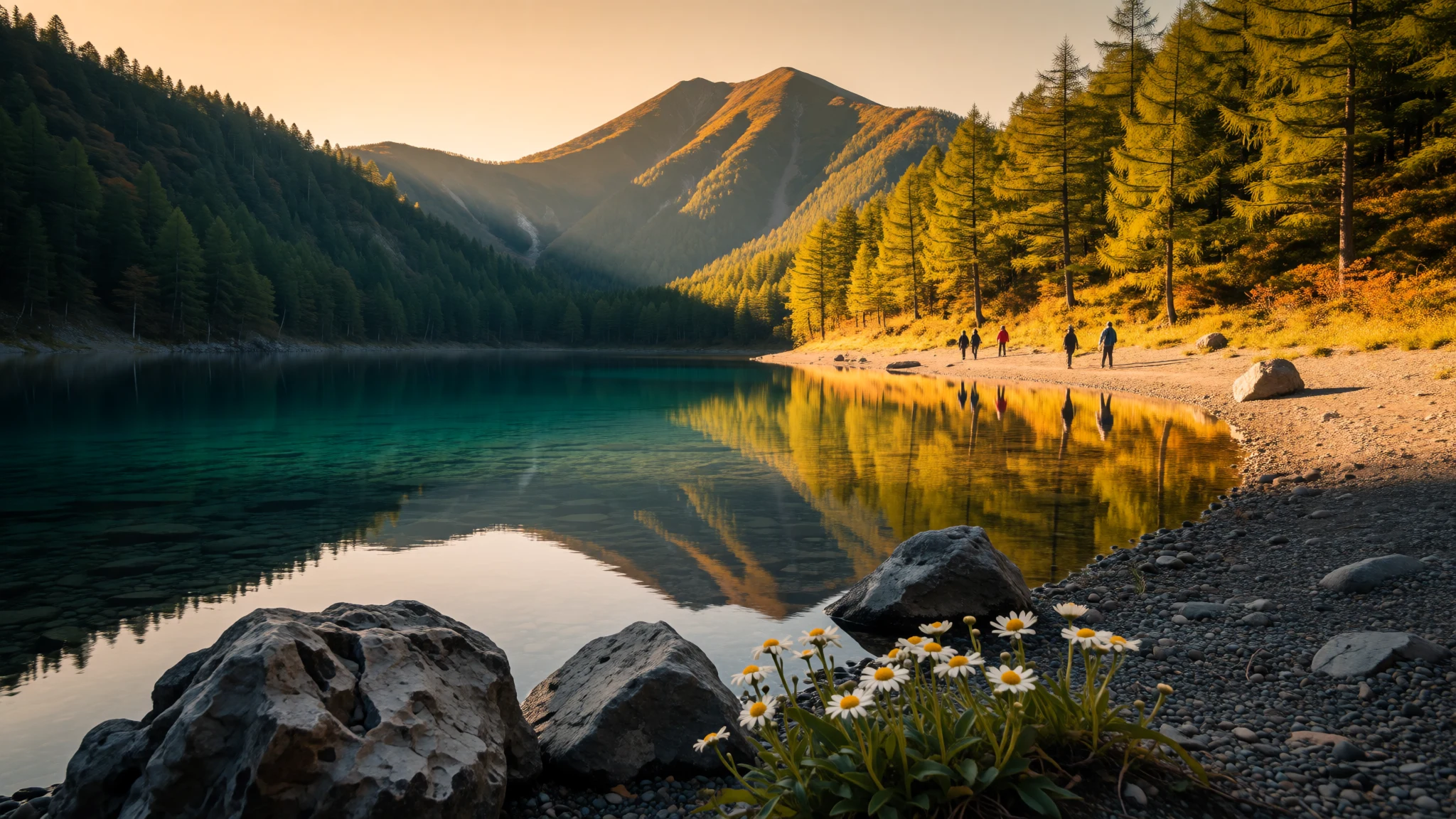
Shikotsu-Tōya National Park packs two caldera lakes, steaming volcanoes and hot-spring towns into a short trip from Sapporo.
The place
Shikotsu-Tōya National Park (支笏洞爺国立公園) sits in the south-west of Hokkaido, close enough to Sapporo for a day trip to be realistic. It was founded in 1949 and takes its name from two caldera lakes, Shikotsu and Tōya, each filling a huge round hollow left by volcanic collapse. The park is less one wilderness than a cluster of separate landscapes, and Japan's Ministry of Environment groups it into rough zones.
Around Lake Shikotsu, active volcanoes ring the water. Mount Tarumae reaches 1,041 m and Mount Eniwa 1,320 m, and the lake is known for the clarity of its water. Shikotsu Kohan, a small and unashamedly touristy village on the western shore, has a visitor centre and bus links.
Around Lake Tōya the ground itself is the attraction. Mount Usu and the young cone of Shōwa-shinzan have grown out of the plain through repeated eruptions, and a geopark explains the story. Toyako Onsen, the spa town on the lakeshore, sits in their shadow.
The remaining zones include the cone of Mount Yōtei, the spa valley of Jōzankei to the north, and the Noboribetsu area to the south, with its mountain passes, gorges and Lake Kuttara. Hot water connects almost everything here. Nearly every lake and valley has a bath somewhere close by, so the park rewards slow, soak-and-stroll trips more than summit-bagging.
Its story
Shikotsu-Tōya National Park owes its character to a long volcanic history, and its human story is largely one of living alongside it. The two big lakes occupy calderas, basins left when enormous eruptions emptied the chambers beneath and the ground above sank. Smaller cones have since grown around the rims, and some still vent steam.
The older human layer is Ainu. Hokkaido was Ainu homeland, and many names on the map began as Ainu words that later settlers fitted with Chinese characters. Fuppushi-dake is a neat case: the sound is Ainu, while the kanji happen to read as 'wind never dies', a spelling that is clever and easy to remember.
The twentieth century added drama. In late 1943 a farmer's field near Mount Usu began to swell, and within two years a new mountain, Shōwa-shinzan, stood 402 m high. Usu itself has erupted repeatedly over the last century, most recently in 2000, when ash and debris fell across Toyako Onsen. The town recovered and carried on.
Protection came with national park status in 1949. Today the damage is part of the display. Warped roads, wrecked buildings and steaming vents have been kept as lessons in what a volcano can do, and the geopark ties the whole story together for visitors.
What to see
- Lake Shikotsu — Shikotsu Kohan, western shore
Lake Shikotsu fills a caldera ringed by volcanoes, and its water is famed for clarity. A walk along the shore from Shikotsu Kohan is best in the morning, when the surface is calm and the slopes of Mount Monbetsu are reflected. Swan-shaped pedal boats are rented in season, and fishing is popular.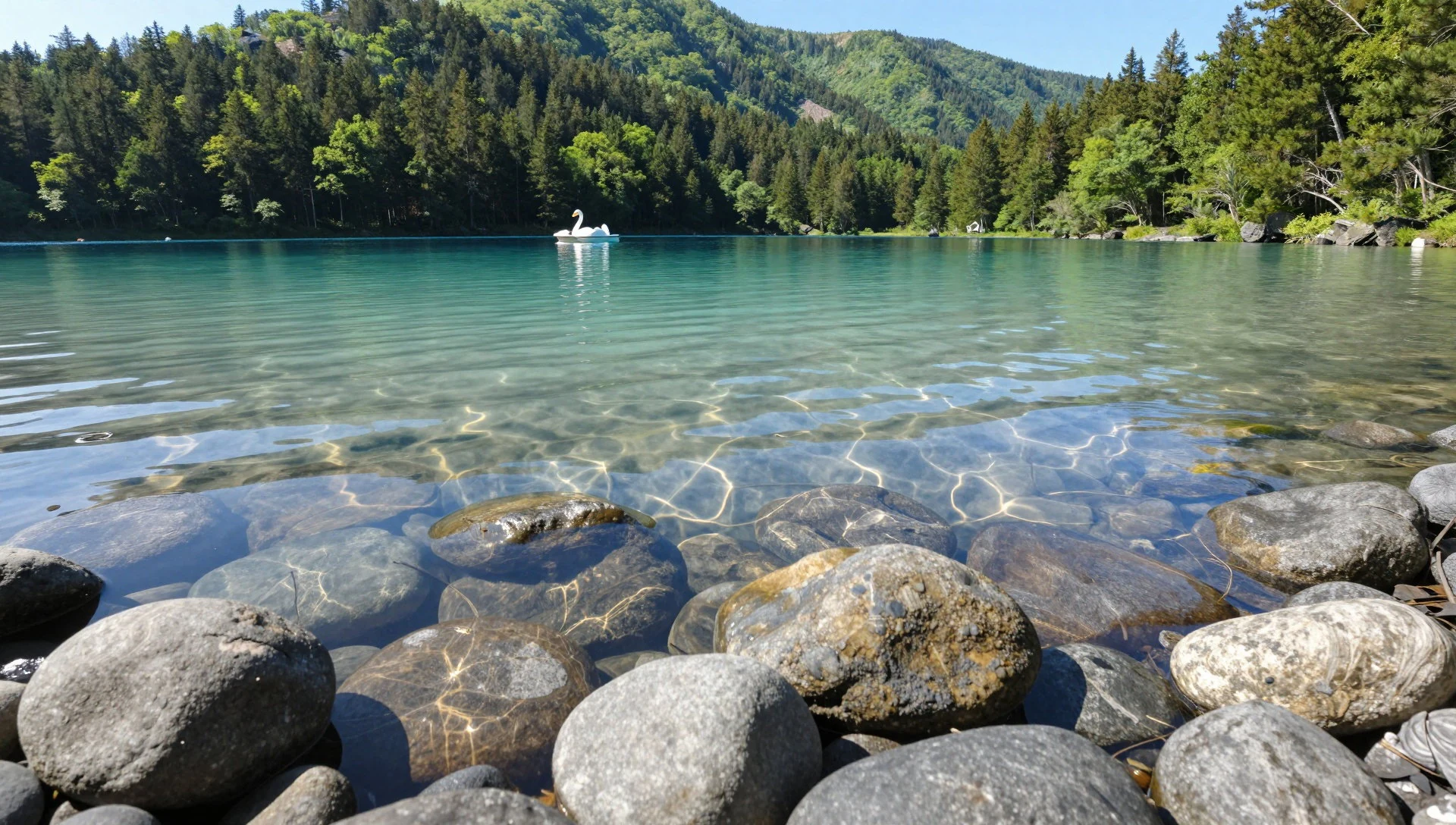
- Moss Canyon — South shore of Lake Shikotsu
Moss Canyon, on the south side of Lake Shikotsu, is really two narrow gorges, each several hundred metres long, with walls thickly carpeted in green moss. Entry has been free, and the colour is richest after rain. Access has changed over the years with rockfall and weather, so check the official site before planning around it.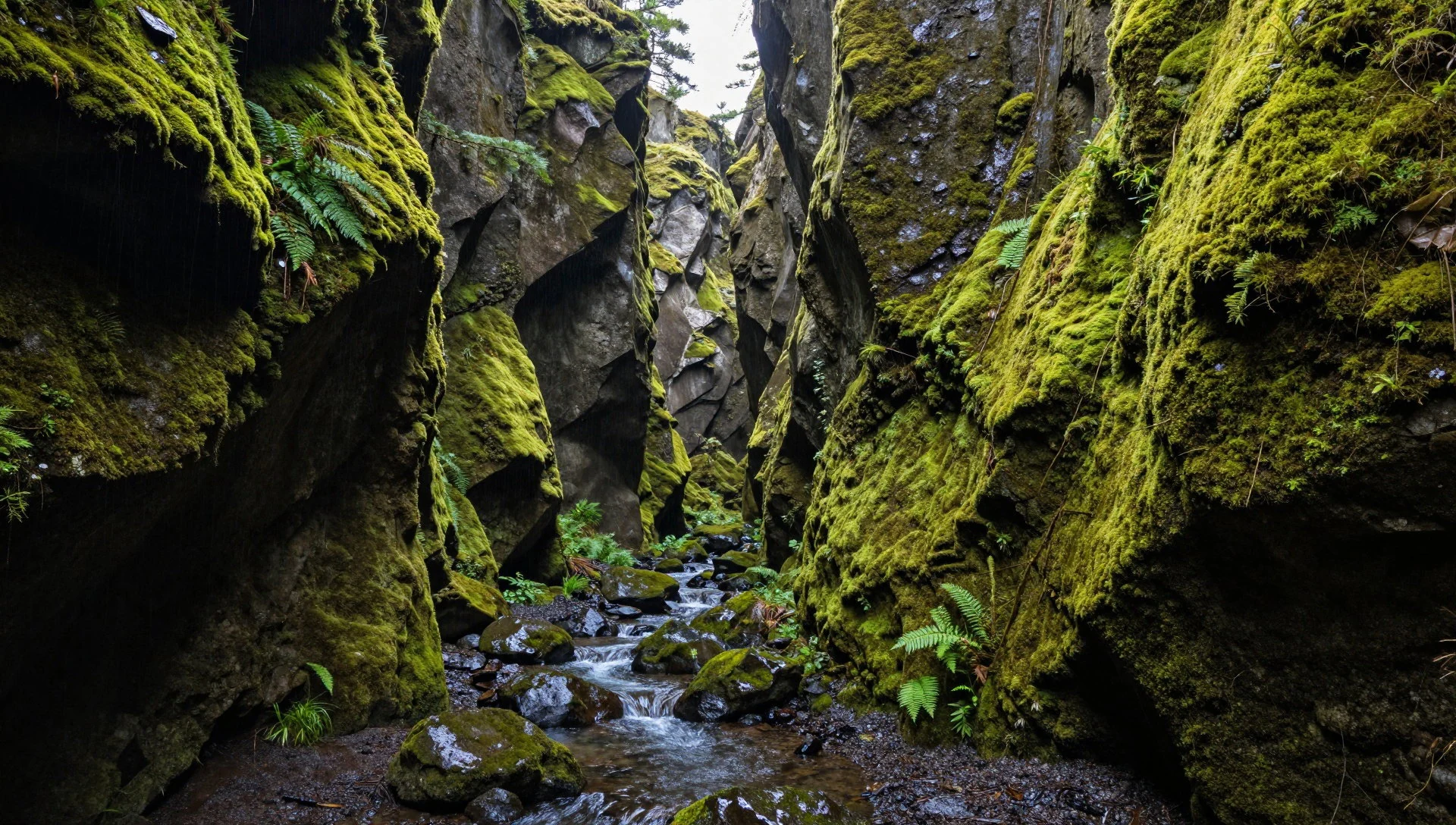
- Mount Tarumae — South of Lake Shikotsu
Mount Tarumae is an active volcano on the southern side of Lake Shikotsu, 1,041 m high. Its upper slopes are bare and steam-stained above the forest, and clear days give wide views over the lake below. Trails open and close with volcanic activity and weather, so check conditions locally before setting off.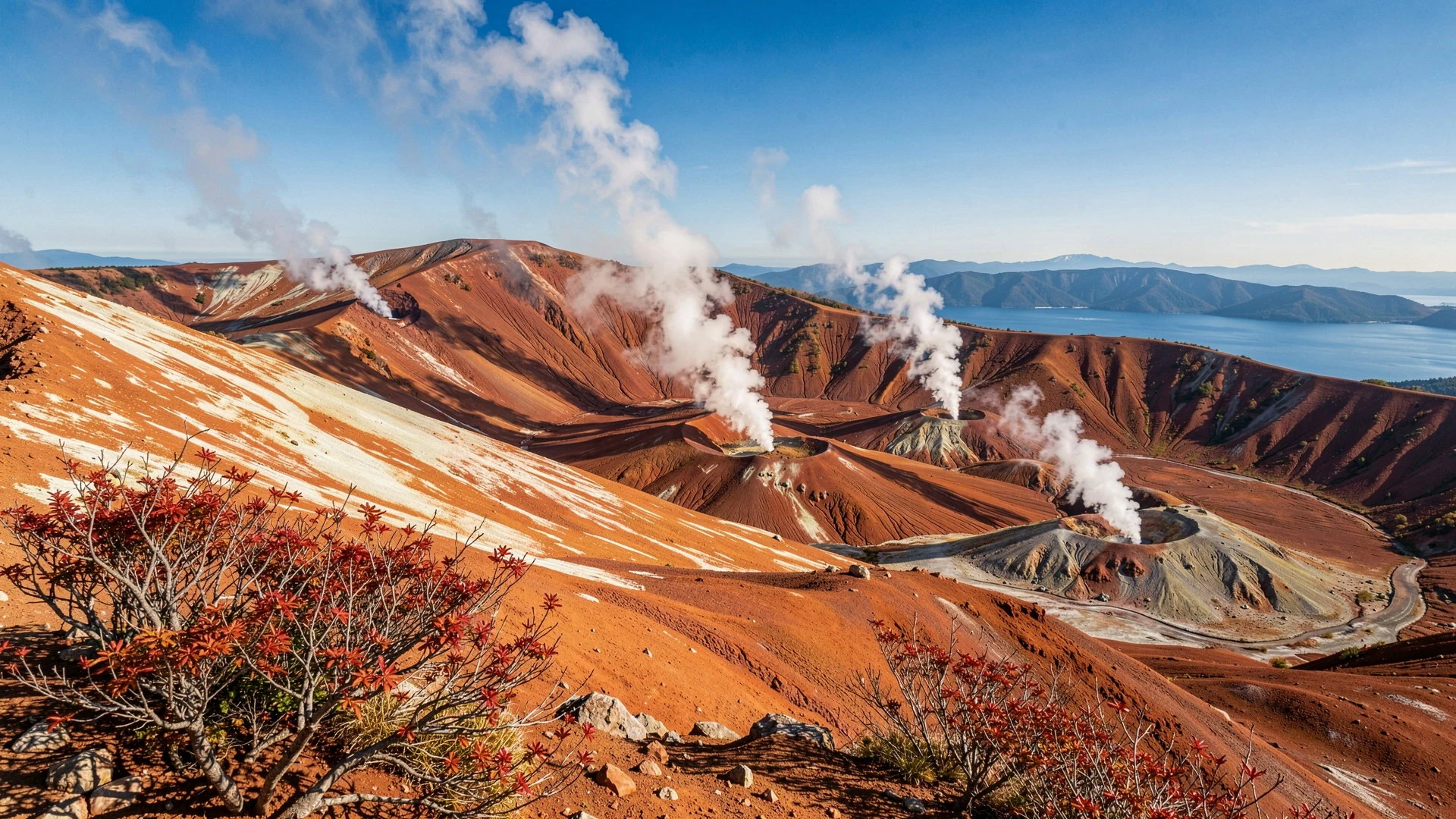
- Lake Tōya and Mount Usu — Toyako Onsen
Lake Tōya is a round caldera lake, and Toyako Onsen, the spa town on its shore, sits right beside Mount Usu, 737 m high. Ruined buildings, broken roads and steaming ground from past eruptions are preserved as a lesson in what a volcano does. Boats can be rented on the lake in season.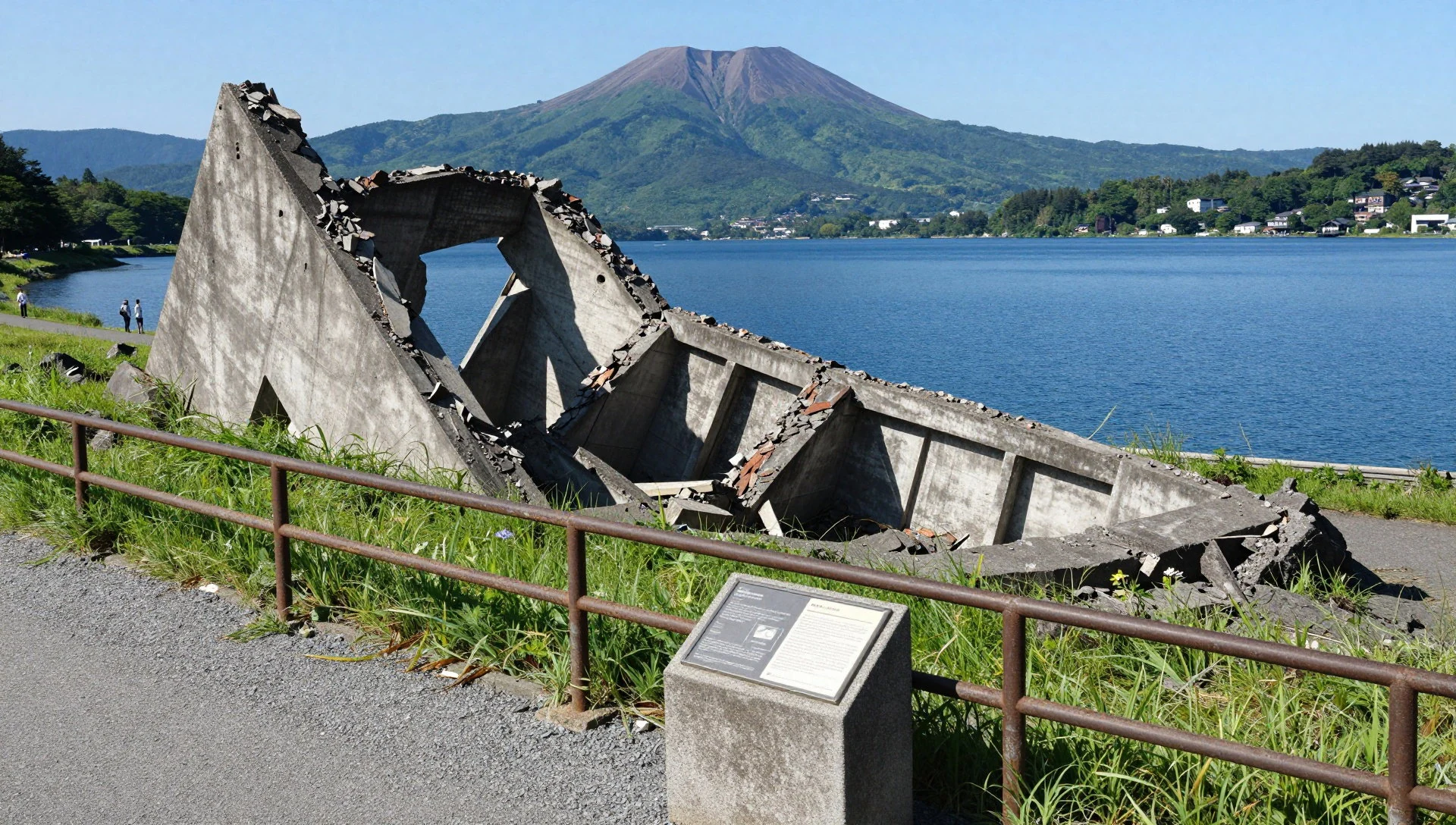
- Shōwa-shinzan — Near Toyako Onsen
Shōwa-shinzan, 'Showa new mountain', pushed up through a farmer's field in late 1943 and had reached 402 m two years later. Steam still escapes in places, and walking around its base shows how recently the ground rearranged itself. It lies close to Toyako Onsen, so it pairs easily with a visit to Usu.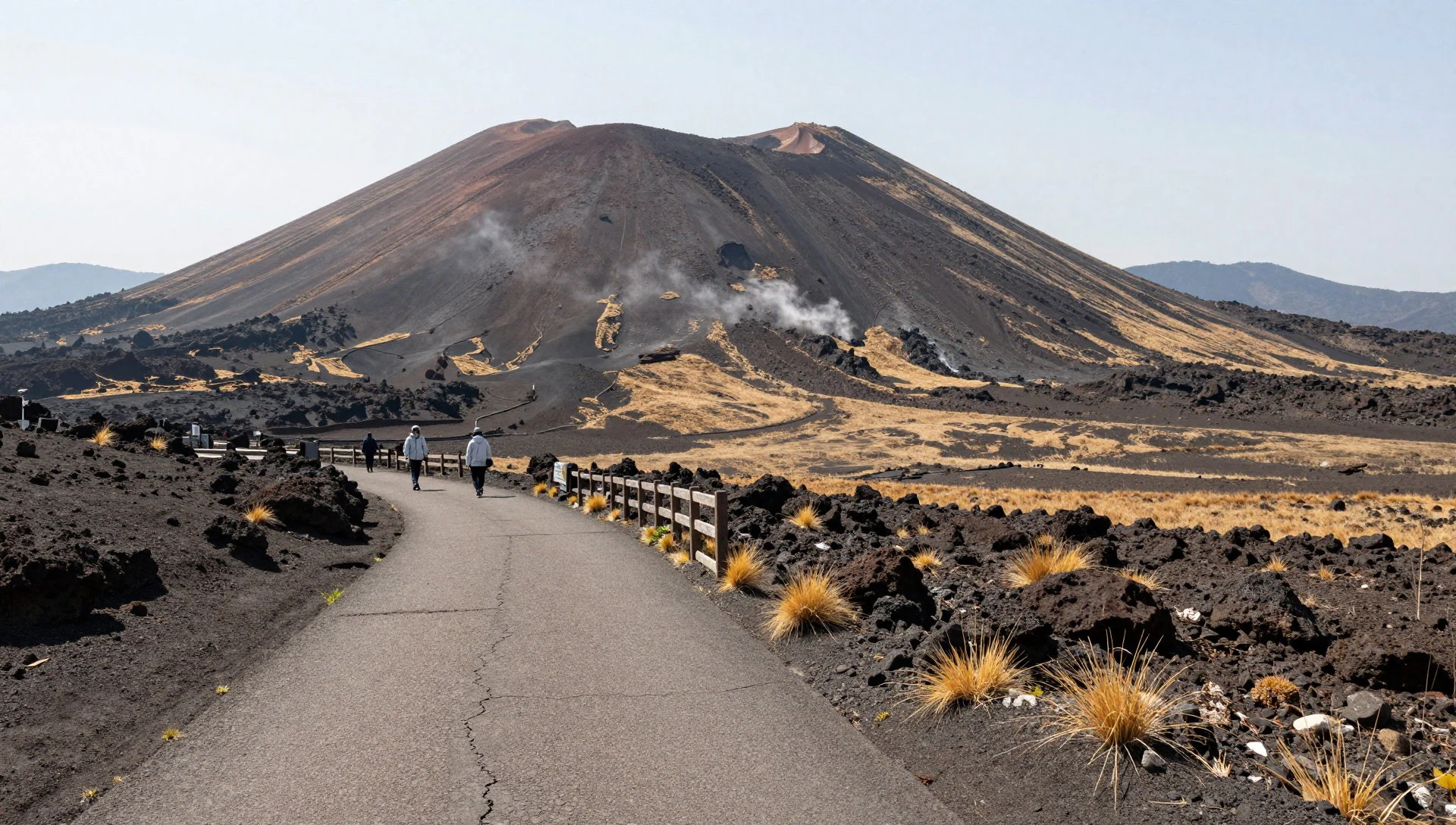
- Noboribetsu and Jigokudani — Noboribetsu, south of the park's lakes
Noboribetsu is a famous hot-spring resort, and Jigokudani, 'Hell Valley', is its centrepiece: a steaming, sulphur-stained valley crossed by boardwalks, with hot water feeding the baths in town. The smell of sulphur is strong. The Kusurisanbetsu river runs through the resort area and makes a pleasant short walk.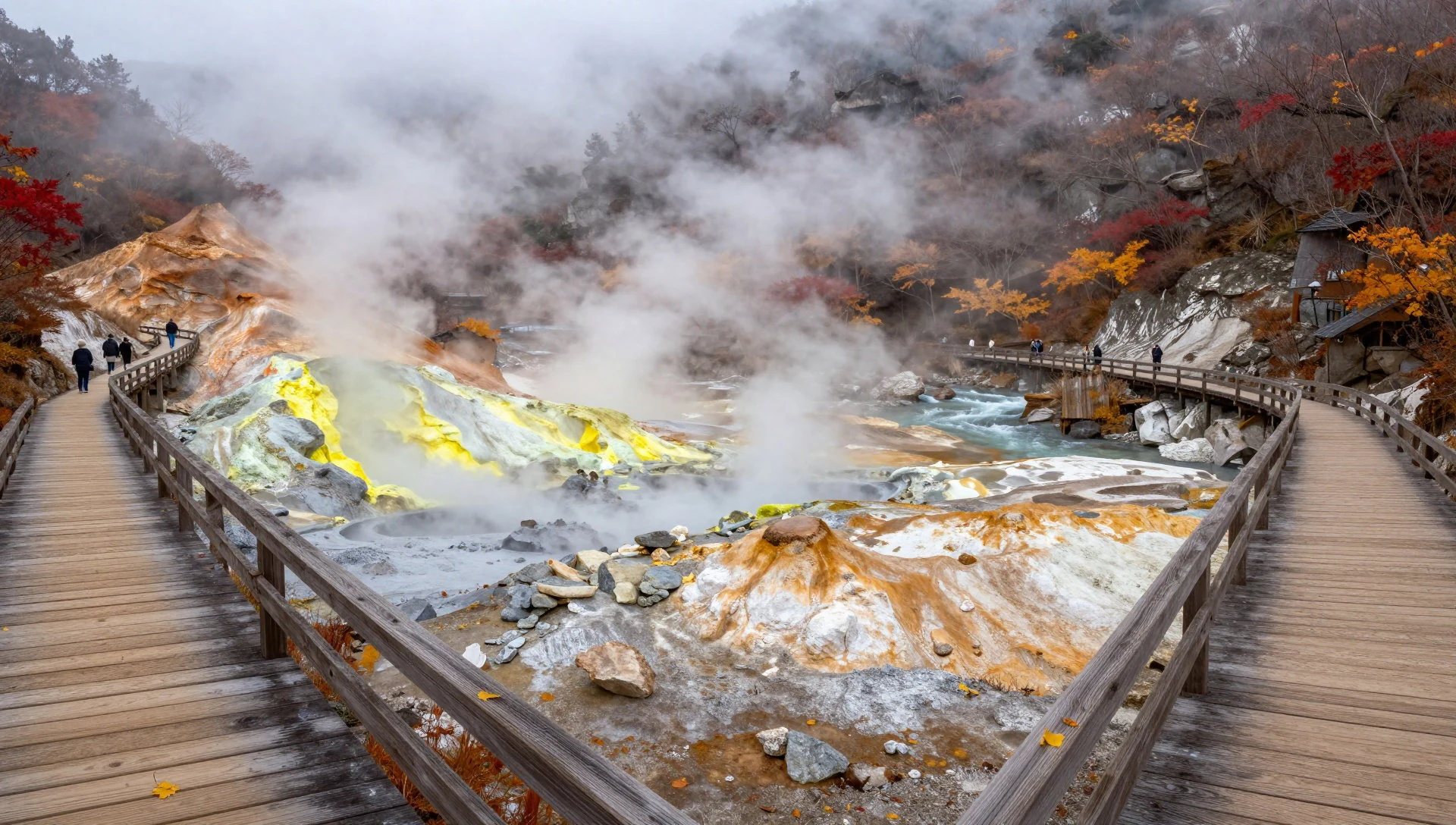
Culture
Shikotsu-Tōya National Park is, culturally, a bathing park. Hot springs (onsen) are the main reason many Japanese visitors come, and the resort towns, from Noboribetsu to Toyako Onsen, are built around them. A typical stay means a soak before dinner, a cotton yukata for the evening and a slow meal, with the volcano outside treated as both scenery and neighbour.
Beneath that runs Ainu heritage. The Ainu are the indigenous people of Hokkaido, and their language survives in many place names across the park, Fuppushi among them. Cultural centres elsewhere in southern Hokkaido tell the story in more depth than the park itself does.
Living with volcanoes shapes local habits too. Around Mount Usu, residents have lived through repeated eruptions, and the geopark presents damaged roads and buildings as memorials rather than things to hide. Local people follow volcanic alerts closely, and visitors should do the same. Bears are part of the picture on forest trails, and noise, not bravado, is the local answer.
The seasons set the rhythm. Summer brings campers, anglers and boat hire on the lakes, autumn brings leaf-watchers, and winter brings snow and outdoor baths.
Wash thoroughly at the shower stools before entering any onsen bath, keep your small towel out of the water, and never take photographs in changing or bathing areas.
What to wear
Shikotsu-Tōya National Park lies on Ainu homeland, and Ainu dress is the most distinctive traditional clothing of the region. Robes called attush were woven from the inner bark of elm trees, then decorated with bold appliqué and embroidery in curling, interlocking patterns. Today they appear mainly at ceremonies, festivals and performances rather than in daily life. Japanese dress also shows up in the spa towns, where light cotton yukata, a casual unlined kimono, are lent to guests and worn on evening strolls.
Day to day, locals dress for the weather: fleeces, windproof jackets, rubber boots and warm hats in winter. The spa towns are relaxed, and people wander out after dinner in yukata and wooden or rubber sandals.
Visitors should dress in layers. Mornings beside the lakes are cool even in summer, and a waterproof shell earns its place in the bag. Sturdy shoes with good grip are needed on volcanic trails, where loose ash and gravel slip underfoot; in winter add snow boots and warm gloves. A sun hat helps at midday. There is no special dress code for the onsen, except that swimwear is not worn in the baths, so bring a small towel and a bag for wet things. On forest paths, carry a bear bell or simply talk as you walk.
What to eat
- Himemasu (grilled lake fish) — Simple restaurants and stalls around Shikotsu Kohan, on the lake's western shore
Himemasu is a small landlocked salmon-family fish associated with Lake Shikotsu, usually salted and grilled over charcoal or fried as tempura. The flesh is delicate and mild, and it makes a good lakeside lunch. It turns up at simple restaurants and stalls around Shikotsu Kohan.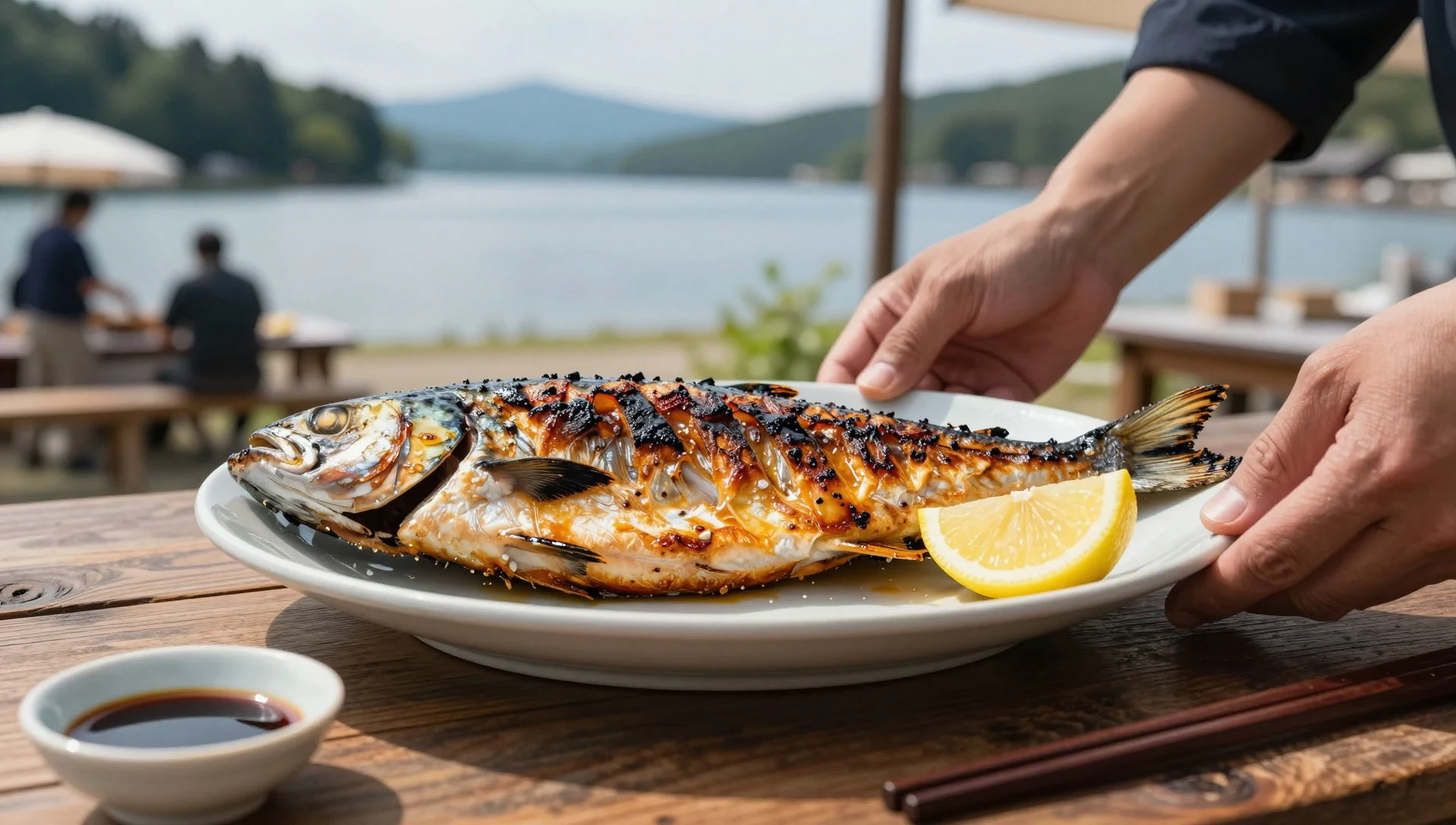
- Jingisukan (grilled lamb) — Grill restaurants and izakaya in Toyako Onsen, Noboribetsu and Sapporo
Jingisukan is Hokkaido's table-grilled lamb or mutton, cooked on a domed iron plate with onions and cabbage and dipped in a sweet soy sauce. It is social, smoky and filling. Expect to share a table.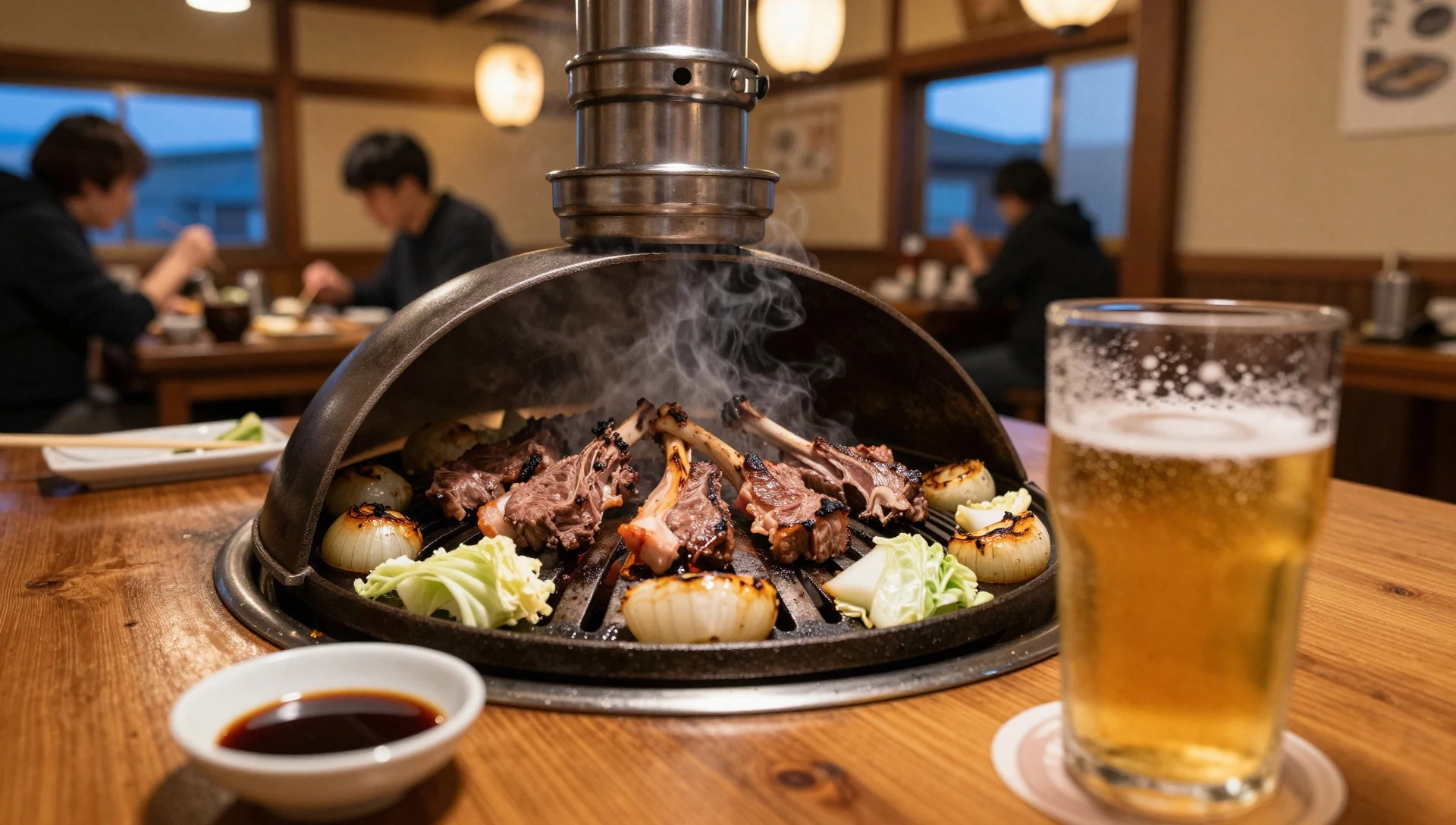
- Seafood rice bowl (kaisendon) — Seafood restaurants in Noboribetsu and Toyako Onsen, and markets in the coastal towns nearby
Kaisendon is a bowl of vinegared rice topped with raw seafood such as salmon, scallop, sea urchin and salmon roe, depending on the season. It makes a quick, filling lunch before or after a day outdoors, and portions vary a lot. - Miso ramen — Ramen counters in Chitose, Sapporo and the spa towns
Miso ramen is a Hokkaido favourite: a rich, savoury broth, springy yellow noodles and toppings such as corn, bean sprouts and pork. It is warming after a cold lake walk or an evening in the snow. - Onsen tamago (hot-spring egg) — Breakfast tables at ryokan and guesthouses, and snack stalls in Noboribetsu and Toyako Onsen
Onsen tamago are eggs cooked slowly in hot-spring water until the white is barely set and the yolk is creamy. They are a small snack in spa towns and often appear at breakfast with rice and miso soup, a gentle start before a day of walking.
Plan it
Best time. June to early July for fresh greenery and cool walking, September to October for autumn colour on the volcano slopes, and winter for snow and outdoor baths. August is the busiest time at the lakes. Hokkaido is cooler than most of Japan, so pack layers in every season.
How long. 2–3
Getting there. Fly to New Chitose Airport (CTS) near Sapporo, then take a direct bus to Lake Shikotsu (about 55 minutes). For Lake Tōya, take the train on the Hakodate–Sapporo line to Toya Station, then a bus of about 20 minutes to Toyako Onsen, or a direct bus from Sapporo (about 2½ hours). Check current timetables and fares on the official site, https://www.env.go.jp/park/shikotsu/.
Budget. mid
Tips
- Hire a car if you want both lakes and the volcano viewpoints; buses are thinner outside peak season.
- Check volcanic activity and trail status for Tarumae and Usu before you set out, as paths close when conditions change.
- This is bear country: make noise on forest paths, keep food packed away and never feed wildlife.
- Carry some cash for small eateries and stalls, and book dinner in advance if you stay in a small spa town.
- Allow time for a bath every day; it is the local way to recover from a day of walking.
Etiquette
- Wash and rinse thoroughly before entering any onsen bath, and keep towels out of the water.
- Ask at the onsen about tattoo rules before you go in, as policies vary.
- Stay on marked paths near steam vents and do not remove rocks or plants.
Nearby
Sources
- Wikidata Q1206817 (CC0)
- Wikipedia: Shikotsu-Tōya National Park (rev 1383722953) (CC BY-SA 4.0)
- Wikivoyage: Shikotsu-Toya National Park (rev 4917586) (CC BY-SA 4.0)
- Photo: Lake Toya (NipponiaNippon) (CC BY-SA 1.0)
- Photo: Mount Tarumae (Kunchan) (CC BY 3.0)
- Photo: Mount Yotei from Hirafu (Oga) (CC BY 3.0)
- Photo: Noboribetsu Jigokudani (User:欅) (CC BY 3.0)
- Photo: Lake Shikotsu and Mt Monbetsu (663highland) (CC BY 3.0)
- Photo: Kusurisanbetsu River (Highten31) (CC BY 3.0)
- Photo: Mount Muine (Highten31) (CC BY 3.0)
- Photo: Mt Fuppushi from Marukoma spa (Soica2001) (Public domain)


