Sheshnag Lake
Sheshnag Lake, India
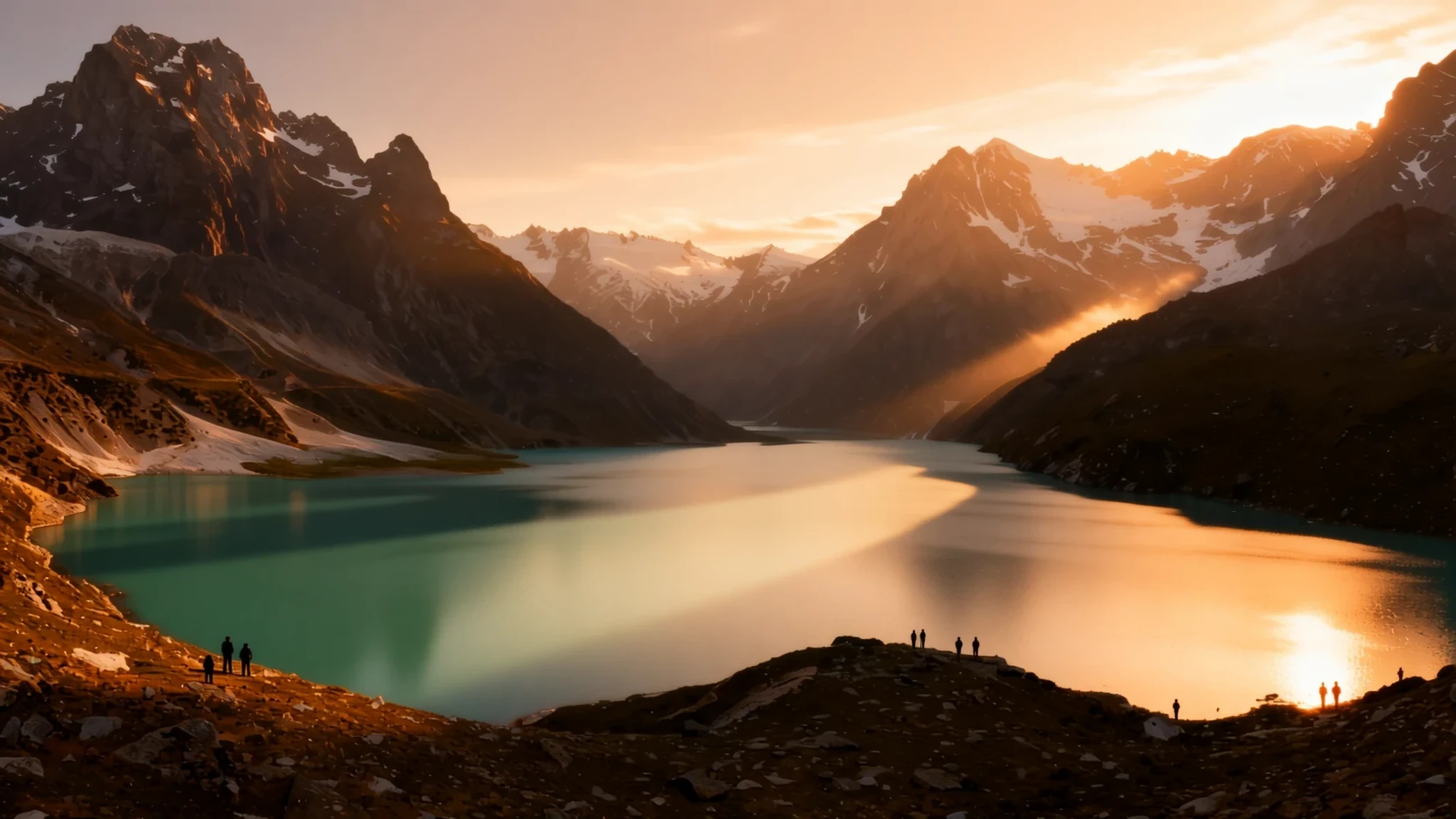
A cold alpine lake on the Amarnath route in Kashmir, reached on foot and worth the climb for its still water and mountain setting.
The place
Sheshnag Lake lies at about 3,575 metres in the Anantnag district of the Kashmir Valley, in Jammu and Kashmir. It sits beside the track that climbs towards the Amarnath cave, reached by road to Chandanwari and then a trek of about 7 km upslope, so most people who reach it are walking the same route as the pilgrims. The lake is about 1.1 km long and 0.7 km across at its widest, a modest sheet of water rather than a vast one. What makes it memorable is the setting: steep slopes and bare rock rise on every side, and in the warmer months snow still lingers on the higher ground above the shore. The water is clear and poor in nutrients, the sort of alpine lake that stays cold and quiet. Streams come down from the surrounding heights and feed it, and in summer you can follow one of them up the slope to see where the meltwater starts. The shore is open enough to sit for an hour, but the altitude means walking slowly and stopping often. Expect cold air even on summer afternoons, and cloud that can drop quickly over the ridges.
Its story
The lake takes its name from Sheshnag, the serpent figure of Kashmiri and wider Hindu tradition, and local lore links the high water to his presence. In one telling, the serpent was tied to this valley and its lakes, so the mountain pools were regarded as his home. Such stories are still told by pilgrims walking the route, and they shape how the lake is treated today. The lake's position on the track to Amarnath has tied it to the annual pilgrimage. Pilgrims move up through the valley in the summer season, and the lake is one of the places where they pause and rest before the final climb to the cave. Over the years the route has been managed by local authorities, with arrangements for camps, medical help and security along the way. Those arrangements shape the rhythm of the trek: groups move in set waves, camps fill up, and the path can be crowded for days at a time. For the lake itself, that traffic is the recent chapter of a long story: a place sacred to some, a landscape admired by many, and a fragile environment where footfall matters. Visitors who come outside the pilgrimage season find something quieter, but the track's history still gives the shoreline its meaning.
What to see
- The lake shore — Anantnag district, on the Amarnath track
The shore is the reason for the walk. Stand at the edge where the water is still and watch the rock and snow reflected on its surface. Walk slowly around the open ground, staying on the marked path, since the margins are soft and the altitude makes quick movement tiring. Morning light is usually clearest, and afternoon cloud often rolls in over the ridges.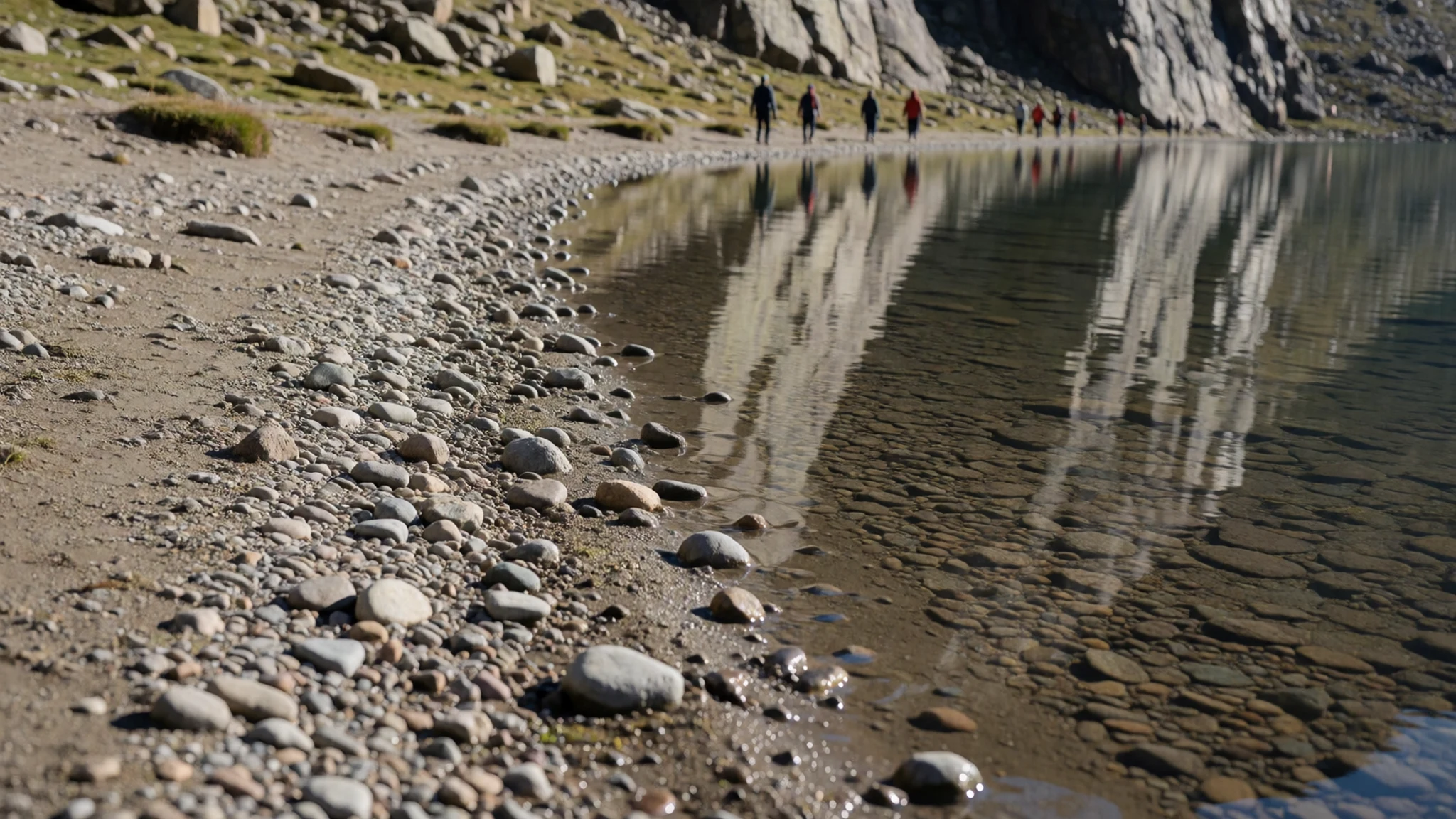
- The frozen waterfall — Slopes above the lake, on the approach from Pahalgam
A frozen waterfall appears in the background of some photographs of the lake, and it is a view many visitors come to see. It is best seen from the path that leads up the slope beyond the shore. Keep to rock and sections clear of snow, because ice can be slippery and unstable underfoot early in the season.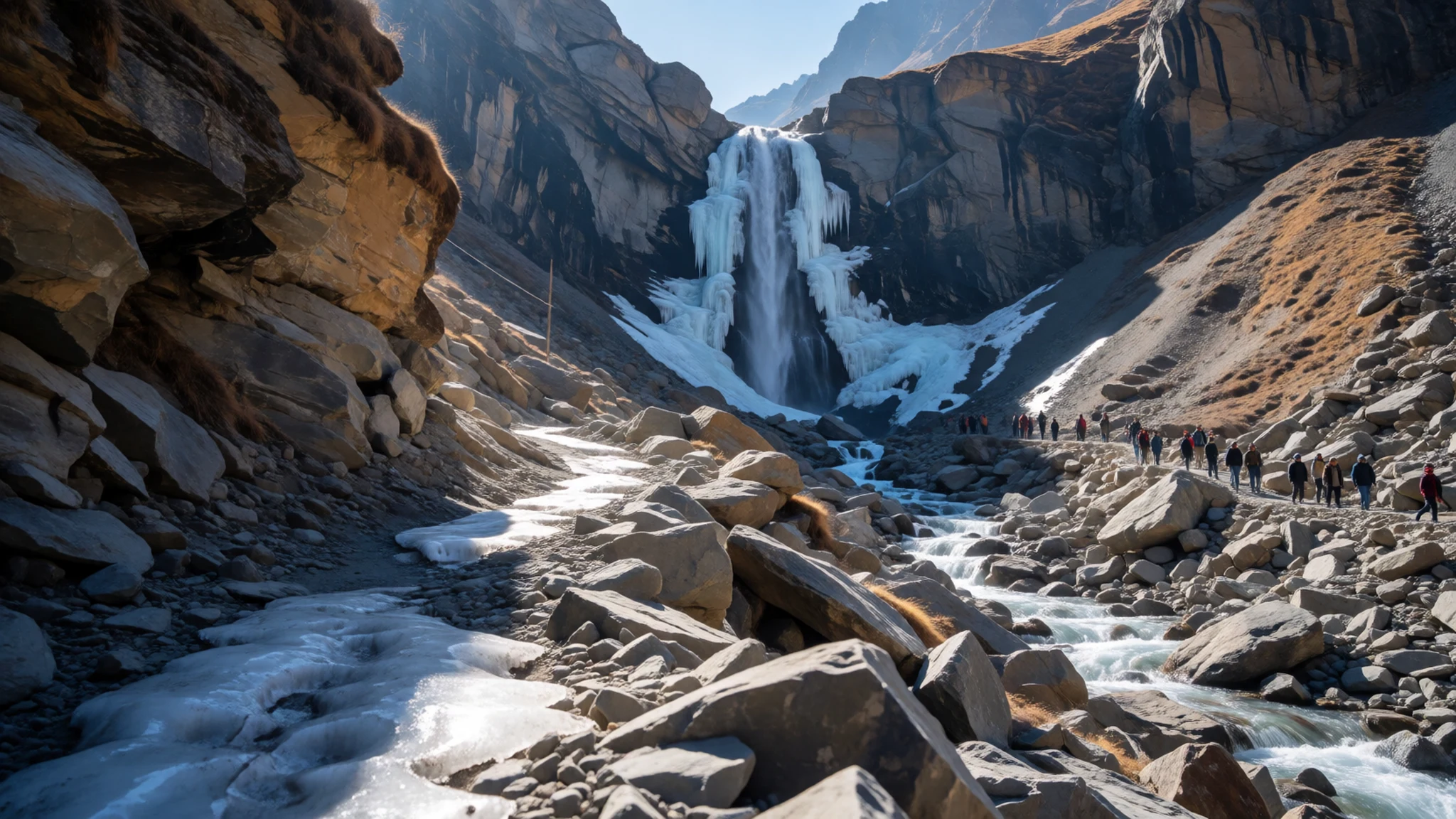
- The streams above the lake — Side valleys and slopes above the lake
Streams come down from the slopes above the lake and feed it. Following one upward shows where the meltwater collects and how quickly the land steepens. The water is very cold even in summer, so keep your hands warm and avoid wading. Stay clear of loose stones near the channel, which can shift without warning.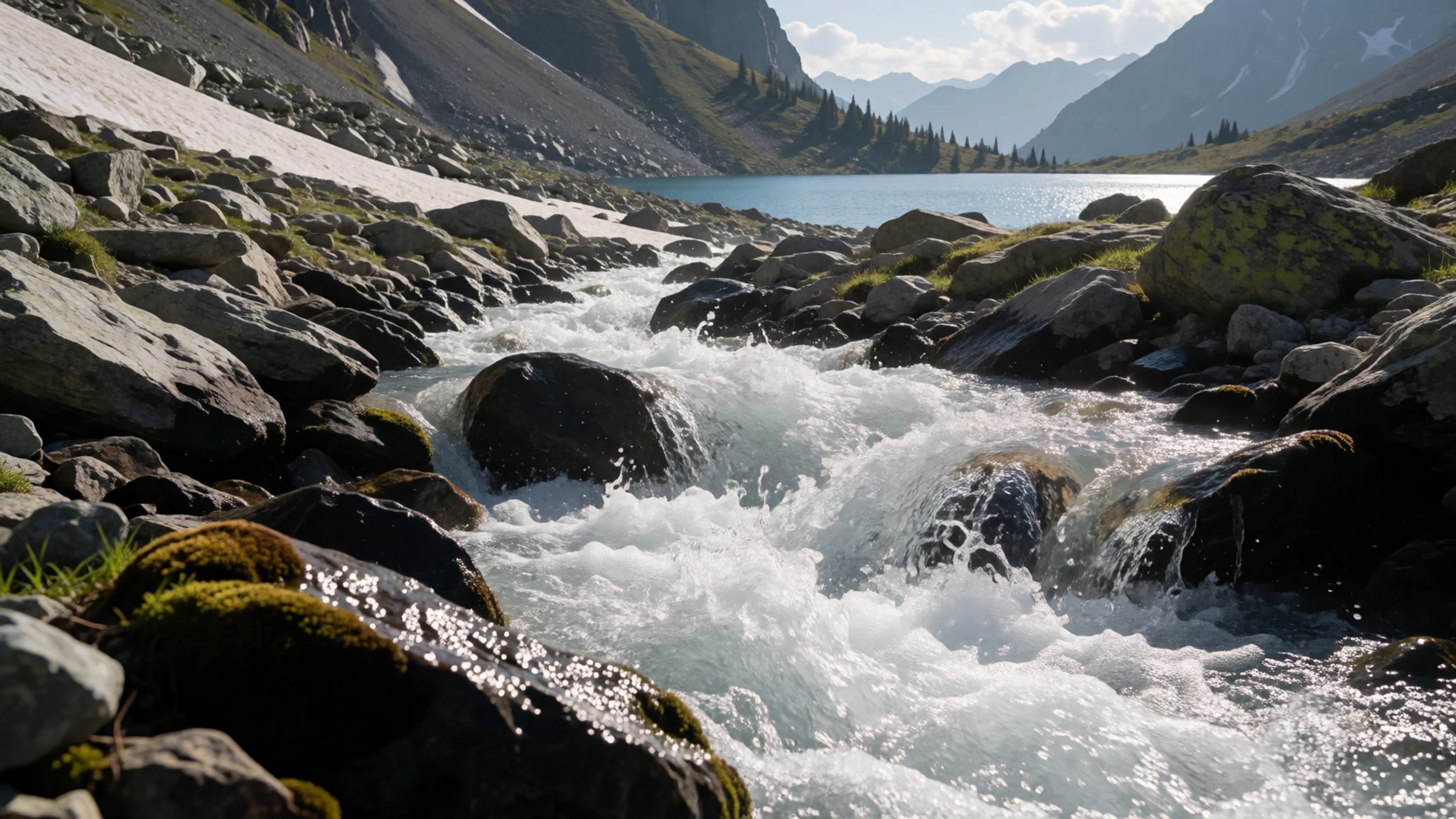
- The approach from Pahalgam — Pahalgam, Anantnag district
Pahalgam, about 23 km away, is the usual base for visits, with guesthouses, guides and pony handlers. The drive and the walk up the valley give a sense of the landscape and the steady pilgrim traffic. Check with local operators about the current state of the track before you set out, because weather and pilgrimage arrangements can change access from one week to the next.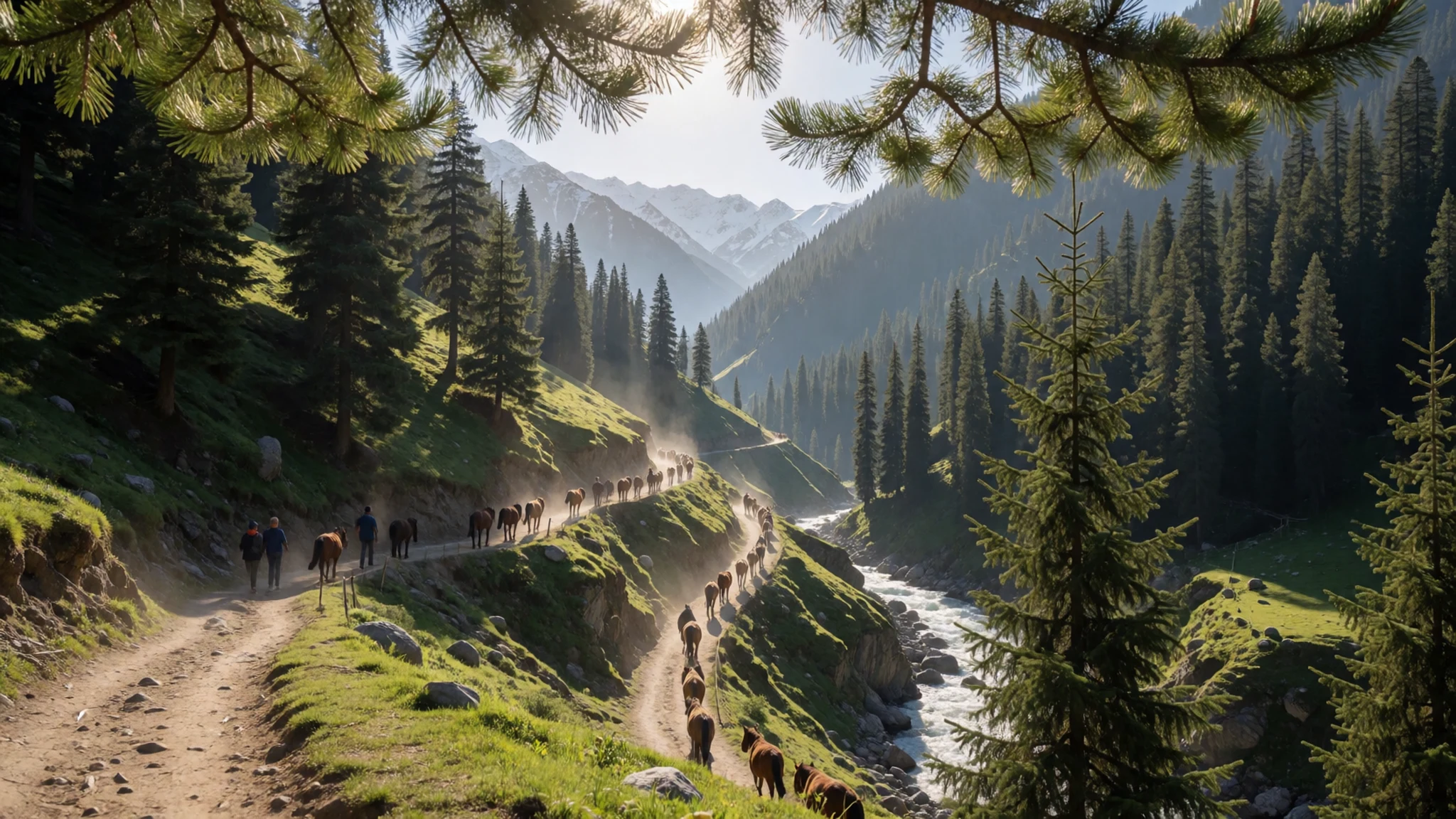
- The Amarnath track above the lake — The Amarnath track, above the lake
The track continues upward towards the Amarnath cave, a route that the pilgrimage shapes each summer. Walking even part of it shows how demanding the climb is and how camps line the way. Turn back when your breathing becomes laboured or you feel dizzy, because altitude sickness is serious and not worth pushing through for a photograph.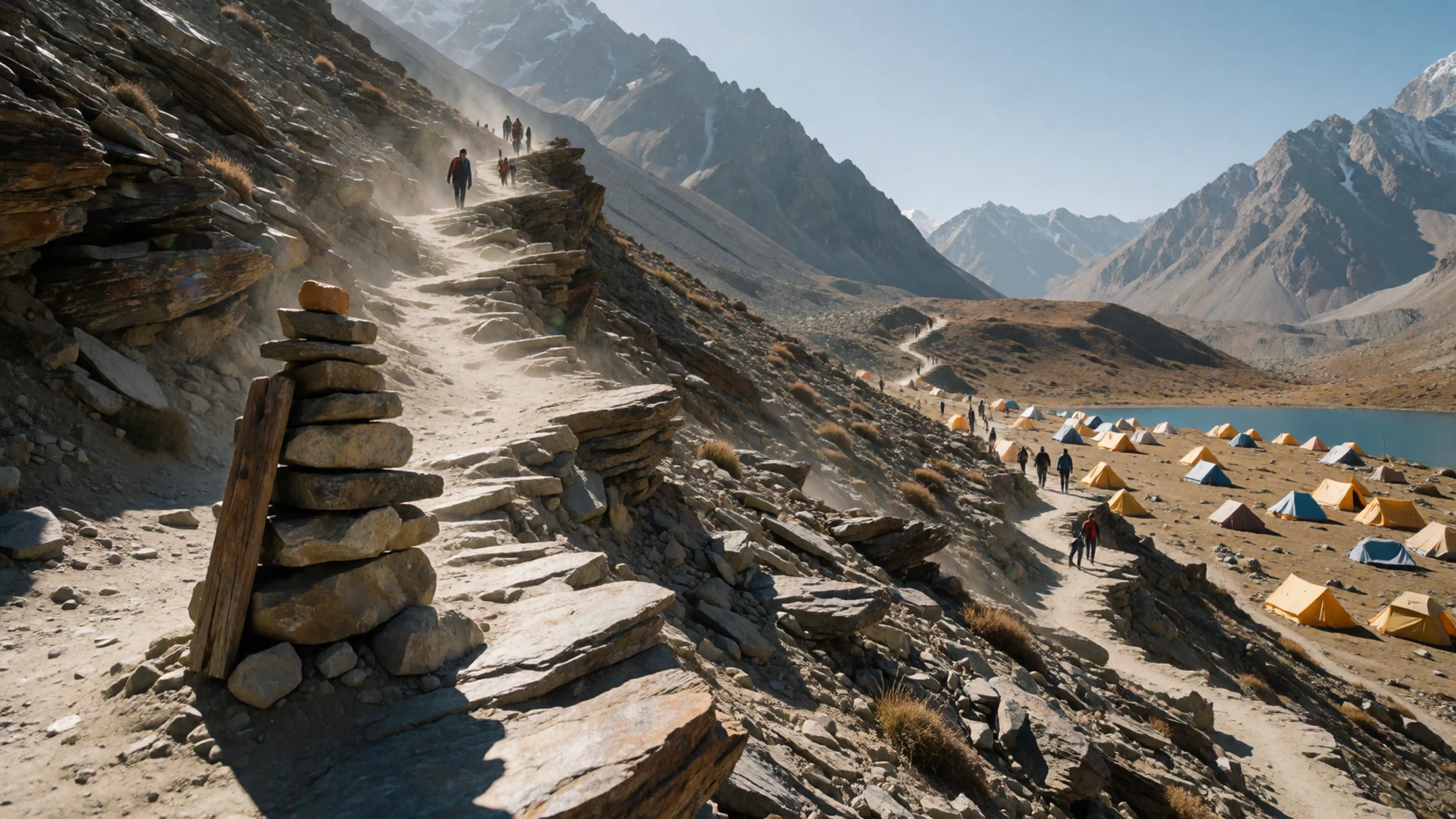
Culture
Sheshnag Lake is a place of worship for many pilgrims, and the trek to it is shared with people for whom the lake is part of a religious journey. Kashmir has a long tradition of hospitality, and Muslim and Hindu communities both live in the valley, so visitors are received warmly but notice how they behave. Along the track you will meet pilgrims, pony handlers, shepherds and camp staff. Pony handlers and porters depend on the route for their living, so a fair arrangement and a polite word go a long way. Photograph people at prayer or in camps only with permission. Conversations with local families are easier when you accept tea or a greeting with a smile. Modest dress is expected in villages and at camps, and public displays of affection are better avoided. Loud music and talk at the water's edge spoil the quiet that most people came for. Carry every wrapper and bottle back down, and keep soap and waste well away from the water.
What to wear
Traditional dress in the Kashmir Valley is shaped by the cold. The pheran is a long, loose woollen tunic worn over other clothes, and people often carry a kangri, a small clay fire-pot, tucked beneath it. Shawls matter as much as tunics: Kashmiri weaving produces embroidered woollens and pashmina, and the finest pieces are a famous export. Women's dress often includes embroidered garments and headwear, and men wear the pheran through the colder months. Older work uses hand embroidery such as sozni, stitched slowly over many hours. Today most people in Pahalgam and the surrounding villages wear ordinary jackets, jeans, trainers and fleece, keeping the pheran for cold days, weddings and festivals. Pilgrims often wear simple cotton or track clothing. For a visitor, the sensible choice is layers: a thermal base, a fleece, a windproof and waterproof shell, and a warm hat and gloves even in summer. Sturdy boots with good grip suit the rocky, wet track better than trainers. Pack a sun hat and sunglasses, because the high-altitude sun is strong even when the air is cold. Cover shoulders and knees in villages and at camps, and bring a plain shawl to wrap for visits to shrines.
What to eat
- Kahwa — Roadside tea stalls and the Pahalgam bazaar
Kahwa is a pale green tea brewed with saffron, cardamom, cinnamon and often almonds, served in small cups. Find it at roadside tea stalls and in the bazaar at Pahalgam, where it is poured from copper kettles. It is best on a cold morning before the climb, and sugar is usually added at the table.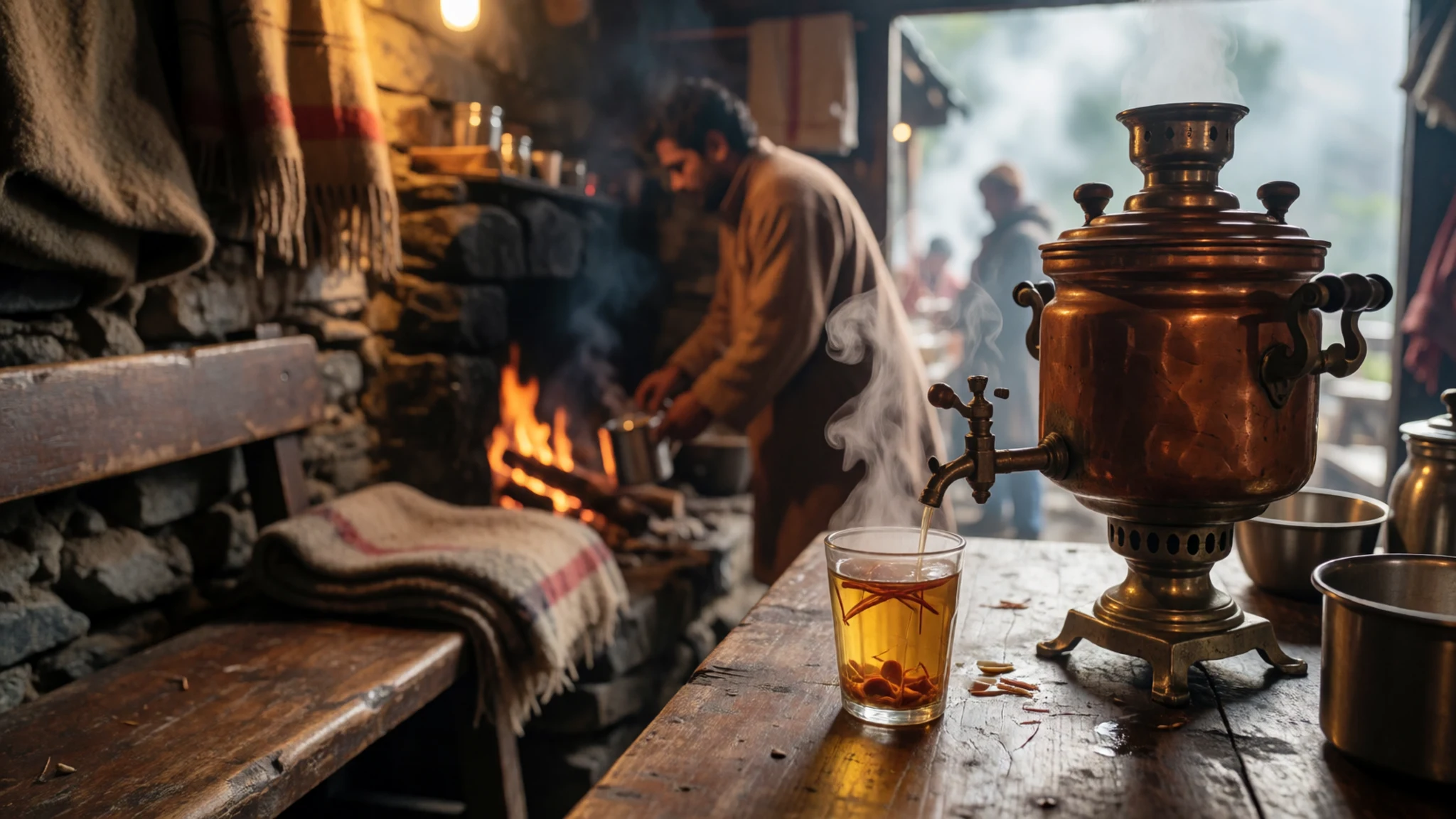
- Wazwan — A wazwan house in Srinagar, or a family celebration
Wazwan is a multi-course feast of meat dishes, traditionally served on large platters to guests. Its dishes include rogan josh and the rista meatballs. Find it at a wazwan house in Srinagar, where you book ahead, or at a family wedding if you are invited.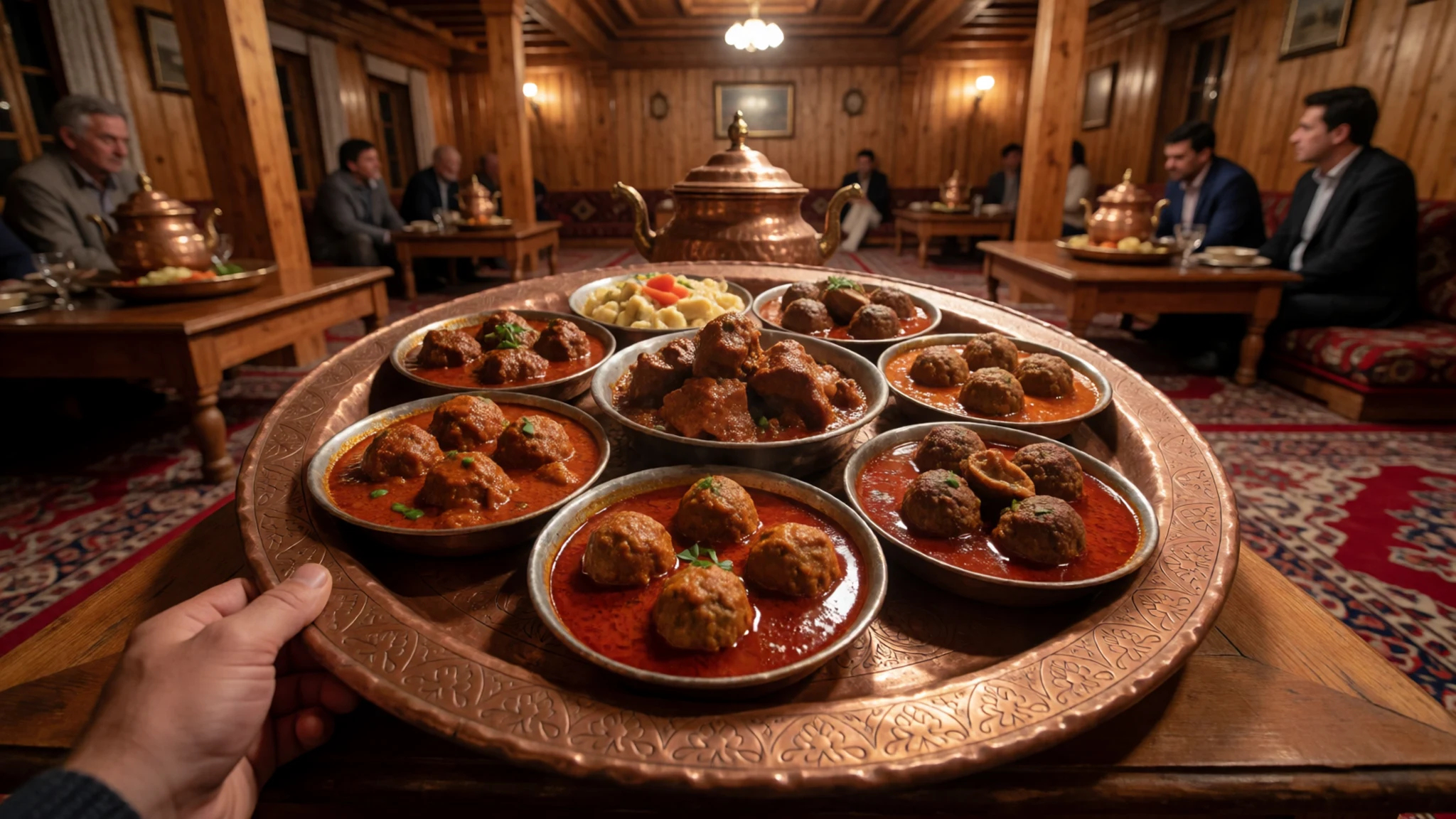
- River trout — Riverside eateries in Pahalgam
Trout from the cold streams of the Lidder and nearby rivers is grilled or fried, often with a simple spice rub. Eat it at a riverside restaurant or a small eatery in Pahalgam, where fish is caught and cooked the same day. Ask what is fresh. - Nun chai — Bakeries and tea stalls in Pahalgam and Srinagar
Nun chai is a salty pink tea made with milk, a pinch of salt and baking soda, often finished with pistachio or almond. It is served hot at bakeries and tea stalls. Look for a bakery in Pahalgam or Srinagar early in the morning. - Girda — Neighbourhood bakeries in Pahalgam's main bazaar
Girda is a large, round bread, often topped with sesame, baked in tandoor-style ovens in neighbourhood bakeries. It is eaten with tea, especially nun chai, at breakfast. Find it in the morning at bakeries in Pahalgam's main bazaar.
Plan it
Best time. Late June to August, when the track is open and the snow has largely retreated from the lower slopes. September is quieter and often clear. Winter brings deep snow, and the track is not practical for most visitors. Expect cold nights and afternoon cloud even in summer.
How long. 2–3
Getting there. Fly into Srinagar, then travel about 120 km east by road to Chandanwari, and continue the 7 km trek towards the lake on foot or by pony.
Budget. mid
Tips
- Check track and access arrangements with local authorities before you travel
- Book guesthouses in Pahalgam early in the summer season
- Spend a day in Pahalgam to acclimatise before the walk
- Carry cash for ponies, tea stalls and small purchases
- Pack warm layers, waterproofs and your own water, even for a short walk
- Start early, when the sky is usually clearer
Etiquette
- Keep to the marked path and leave the shoreline undisturbed
- Stand back and keep your voice down near pilgrims and at camps
- Ask before photographing people, especially at prayer
Nearby
Sources
- Wikidata Q7375406 (CC0)
- Wikipedia, Sheshnag Lake (rev 1366627885) (CC BY-SA 4.0)
- The beautiful Sheshnaag Lake at Jammu Kashmir India, Photos Worldwide (CC0 1.0)
- Sheshnag Lake in Jammu and Kashmir, Nitin Badhwar (CC BY-SA 2.0)
- Sheshnag Lake, Amarnath Yatra Series, Nitin Badhwar (CC BY-SA 2.0)
- Not Just tiny, Akshaydhawan13 (CC BY-SA 4.0)
- Sheshnag Lake J&K, Akshaydhawan13 (CC BY-SA 4.0)
- Sheshnag Lake Pahalgam, Sauood07 (CC BY-SA 4.0)
- Sheshnag, Bhargavinf (CC BY 3.0)
- Sheshnag0625, Sahilkhajuriaji (CC BY-SA 4.0)
- Wikivoyage (CC BY-SA 4.0)


