Shenyang Imperial Palace
Shenyang Imperial Palace, People's Republic of China
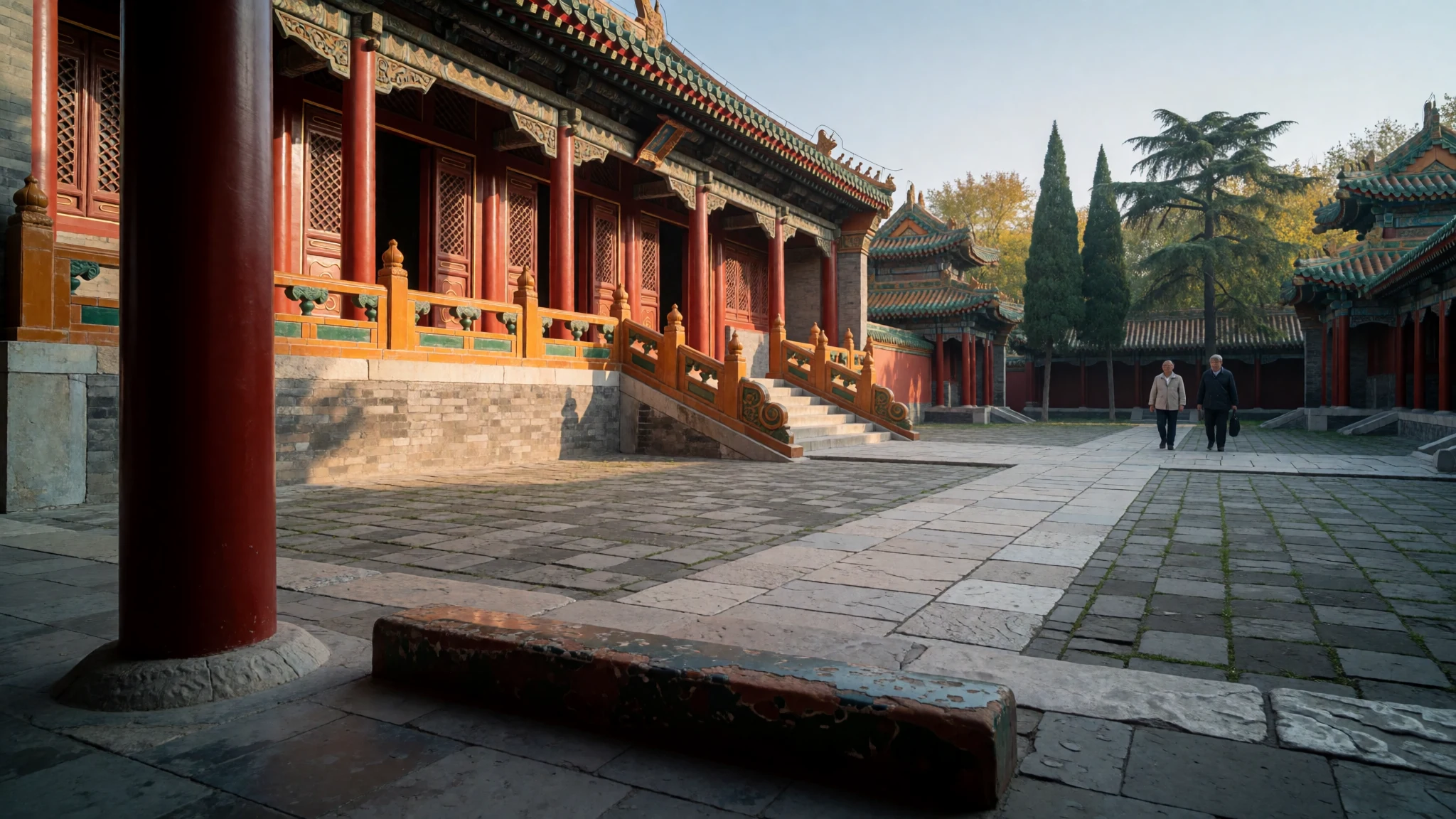
Shenyang Imperial Palace is where the Manchu rulers governed before Beijing, a compact court of halls, pavilions and courtyards in a working northern city.
The place
Shenyang Imperial Palace, known in English as Mukden Palace (沈阳故宫), stands in the middle of Shenyang, the industrial city that anchors Liaoning province in north-east China. It is now a museum, hemmed in by shops, offices and traffic, so the step from a busy street into its courtyards feels abrupt. Building began in 1625 under Nurhaci, the founder of the Later Jin state, and the compound served as a court before the rulers moved south to Beijing. The result is a palace on a human scale: low halls under glazed tiles, narrow gates, raised terraces and paved yards that can be crossed in minutes. It is nothing like the vast ceremonial axis of the Forbidden City, which it was modelled on. Dazheng Hall, the main ceremonial hall, is the clearest place to see how Manchu and Chinese ideas were blended, with some Tibetan influence in the detail. Nurhaci's tomb, Fuling, and that of his son Hong Taiji, Zhaoling, lie outside the old centre. UNESCO treats the palace and the two tombs as a group, with the palace recorded as an extension of the Beijing imperial palace listing. Shenyang itself carries later layers too, from Russian and Japanese rivalry over the region to the warlord years and a long career as a heavyweight of northern industry. Most visitors give the palace a morning, then wander the older streets around it. Summers are warm and winters are severe, which shapes how long anyone lingers outdoors.
Its story
The story of Shenyang Imperial Palace starts in 1625, when Nurhaci, founder of the Later Jin dynasty, chose Shenyang as his base and began raising a residence fit for a ruler. His successor Hong Taiji carried the work on, adding halls by 1631 and shaping the compound into a fuller court, with the Forbidden City in Beijing as the template. Manchu and Tibetan touches crept in beside the Chinese plan, a sign of the many cultures the new state drew on. In 1644 the Qing took Beijing from the Ming and the capital moved there, so Shenyang's palace became a secondary seat. It was not forgotten. Later emperors stayed for a stretch most years, and in 1780 Qianlong enlarged the site with further buildings. The twentieth century was rougher. A museum opened in the palace in 1928, was renamed in 1932 and shut in 1936, while the Japanese-backed state of Manchukuo put up a monument at the south-west corner that stood until 1945. The palace became a museum again in 1955, and UNESCO recognised it in 2004 by treating it as an add-on to the Beijing palace's inscription. Visitors today walk through a compound shaped by two lives: the founding years of the Qing, and the long afterlife as a regional palace that emperors visited but no longer ruled from.
What to see
- Mukden Palace courtyards — Central Shenyang
The compound is best taken as a slow loop through its courtyards and halls rather than a dash to one highlight. Roofs, gates and terraces sit close together, and a bird's-eye photograph shows the logic of the plan better than any signboard. Check the official site before going for what is open.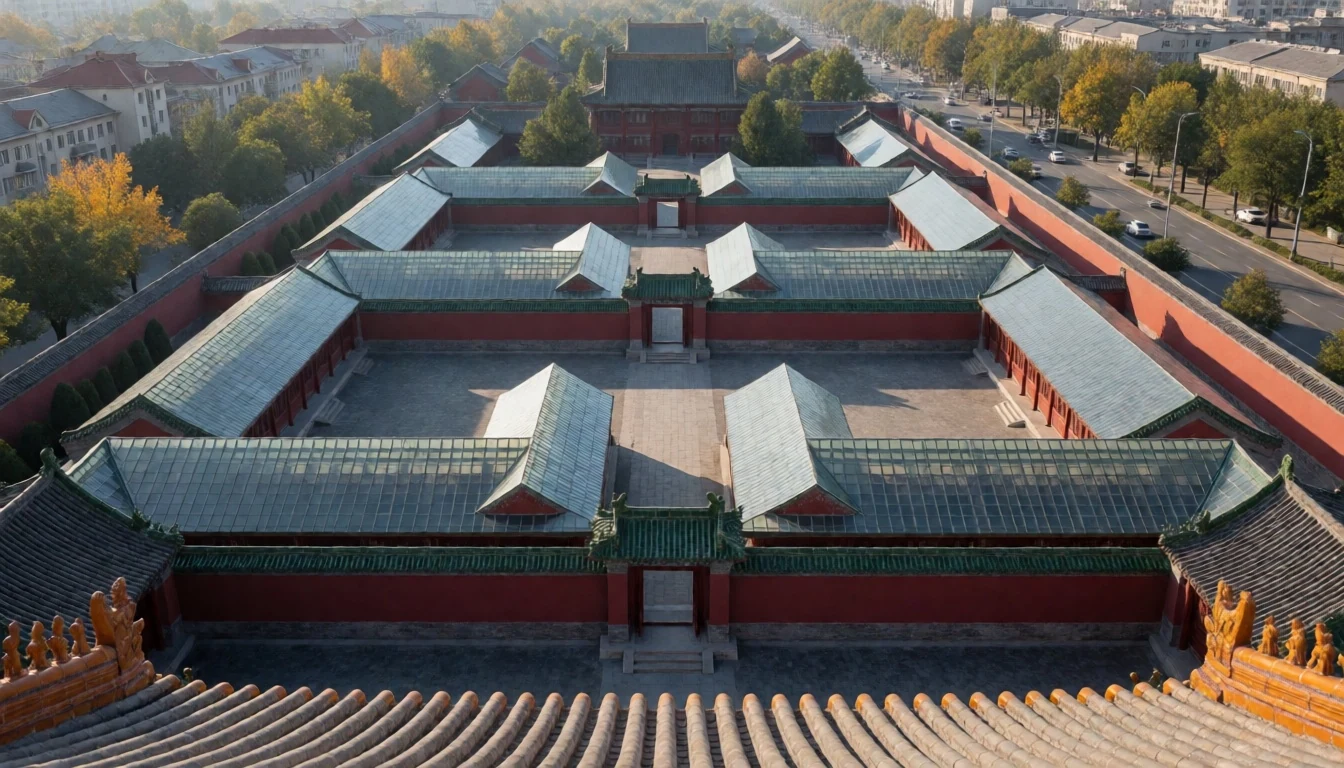
- Dazheng Hall — Inside the palace, eastern section
Dazheng Hall is the ceremonial heart of the older eastern section of the palace. Its glazed roof, painted beams and carved detail show Manchu and Chinese ideas meeting, and the open yard in front gives room to step back and take it in. Early mornings are calmer.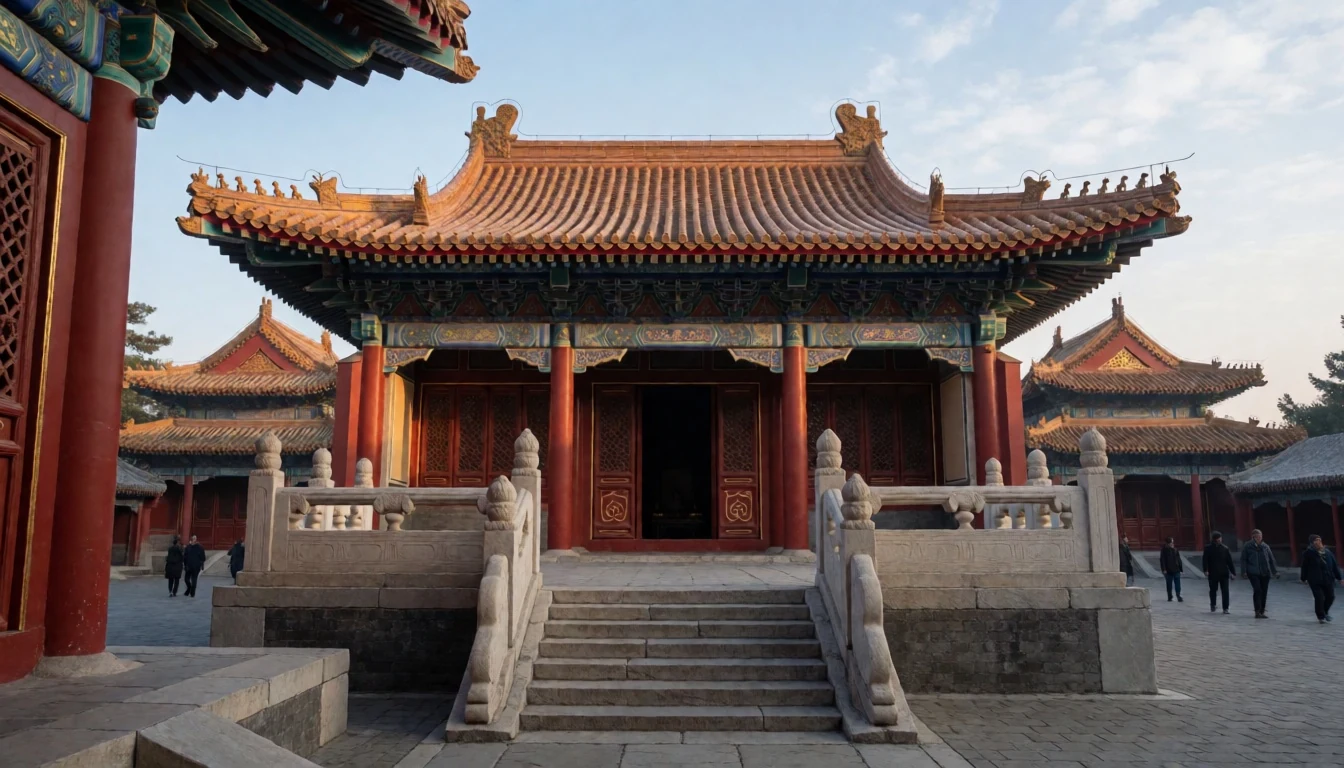
- Fuling Tomb — Eastern suburbs of Shenyang
Fuling is the burial place of Nurhaci, set in the suburbs well outside the centre. It follows Manchu habits blended with Chinese tomb conventions, and feels roomier and greener after the palace. Treat it as a separate half-day, reached by taxi or ride-hailing, and check current opening arrangements locally.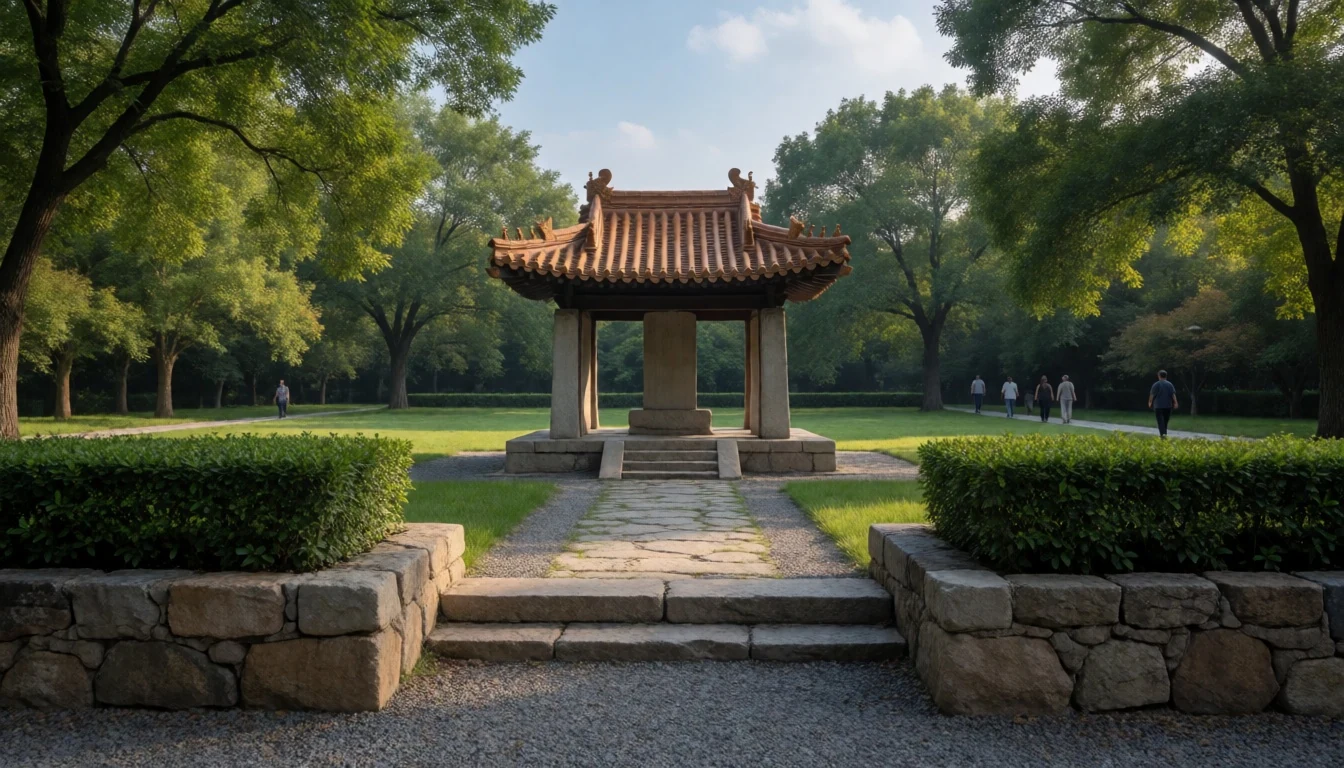
- Former residence of Zhang Xueliang — Near the palace, central Shenyang
A short walk from the palace, this house belonged to Zhang Zuolin, the regional strongman, and his heir Zhang Xueliang, who ran the north-east during the 1920s. It shows a different Shenyang, one of early republican politics, and pairs well with the palace for anyone curious about the twentieth century.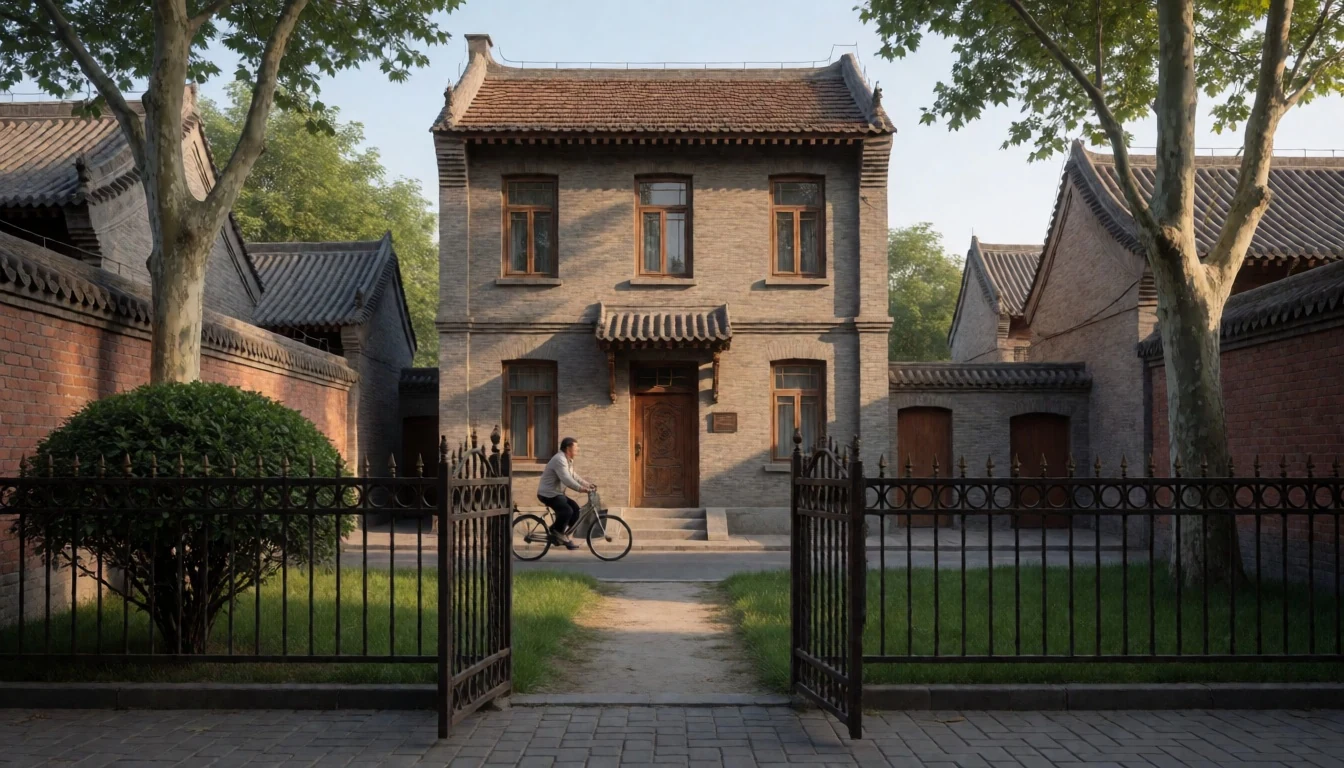
- Huaiyuanmen and Fujinmen gates — Old city, near the palace
Shenyang's old city walls were pulled down in the 1950s, but short stretches and gates have been rebuilt to hint at the former outline. Huaiyuanmen and Fujinmen are two of these, close to the palace. They are reconstructions, so treat them as a quick photo stop on a stroll.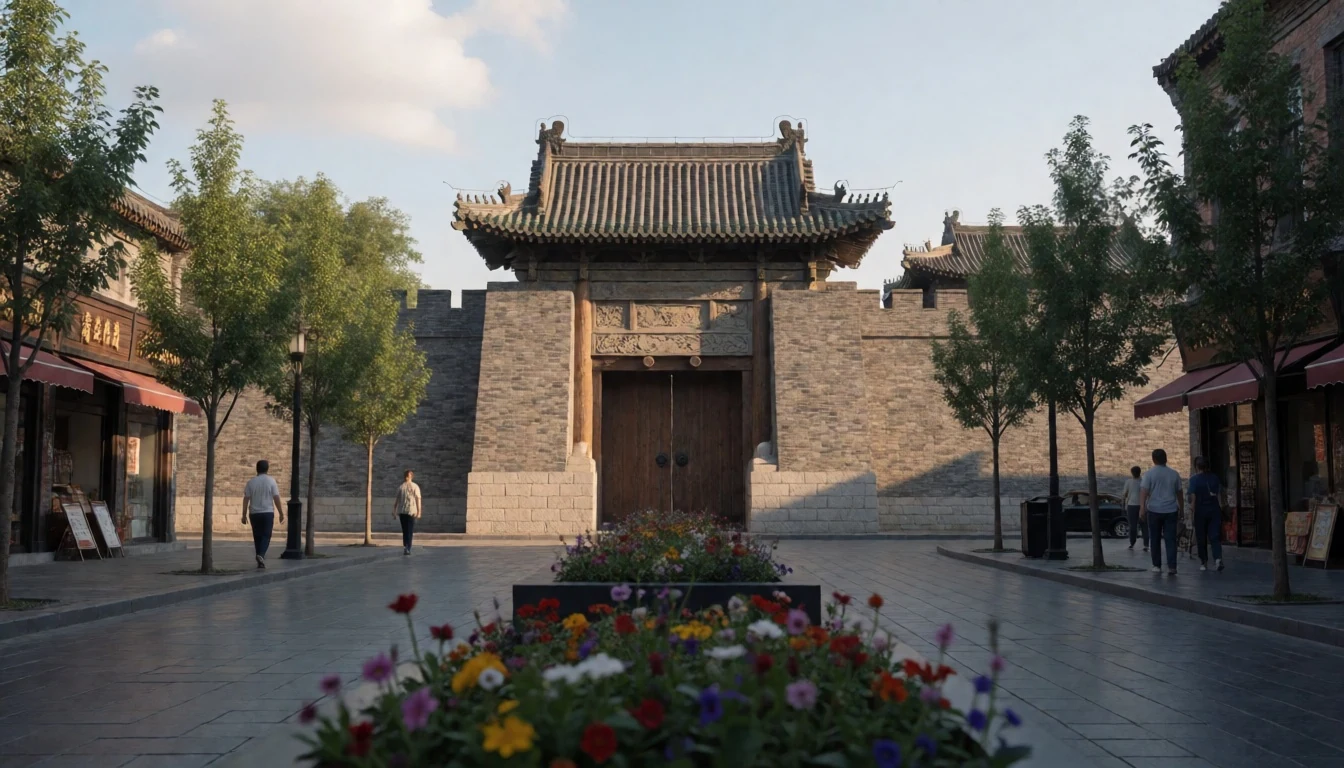
- Military Tribunal museum — North of the city centre
This site, now a museum, is where a group of 36 Japanese defendants faced public trial in 1956. It is a sober visit, quieter than the palace and focused on the aftermath of the occupation of the north-east. Allow time and go in a thoughtful frame of mind.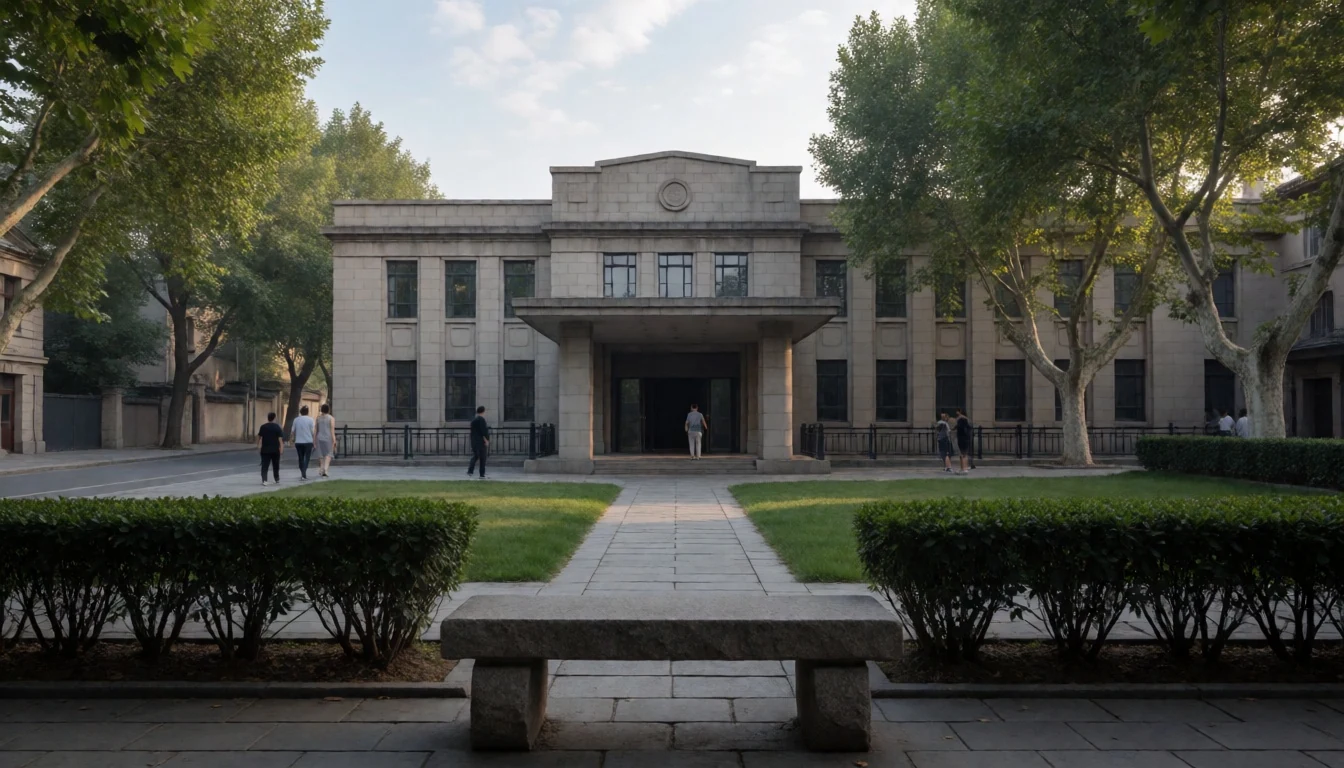
Culture
Shenyang Imperial Palace is the best place in the city to meet its Manchu heritage. The Manchus founded the Qing state and later ruled China from Beijing, but Shenyang, once called Shengjing, was where that state took shape, and the city still treats the past with pride. The old name survives in the Shengjing Ancient Cultural Street, a pedestrian lane of reproduction shopfronts near the palace. Other currents run through the city too: a large Korean community around the Western Pagoda district, the grain-spirit tradition of baiju at the old Laolongkou distillery, and an industrial identity visible in factories and museums alike. The north-east, Dongbei, has a reputation for direct, joking, generous people who press food and drink on guests, and visitors who linger usually find it fair. The palace itself is a working museum, busy with school groups and tour parties, though the mood is mostly quiet and respectful. Historical sites elsewhere in the city, such as the tribunal museum, deal seriously with the Japanese occupation and its aftermath, and are not places for jokes or posed photographs. Visitors should keep to the marked paths, avoid touching painted woodwork or leaning on carved balustrades, and keep voices low inside the halls and at the war-crimes museum.
What to wear
Traditional Manchu dress at Shenyang Imperial Palace is best seen in displays, since the court wardrobe belongs to the Qing era. Court robes were cut from silk satin and brocade, often embroidered with dragons and other lucky motifs, with fur trim against the northern cold. Men wore long side-fastened robes with narrow sleeves ending in a flared cuff shaped like a horse's hoof, practical for riding. Women of banner families wore a long one-piece robe, ancestor of the qipao, with elaborate headdresses for formal occasions. These clothes were worn at audiences and festivals, and are not everyday wear now. Today people in Shenyang dress for the weather: puffer coats, thermals and fur-lined boots through the long winter, and light cotton, sportswear or shirts in the humid summer. Younger people follow Chinese big-city fashion, with trainers and casual layers the norm. Visitors should dress for the climate first. In winter, bring a windproof coat, thermal layers, gloves, a hat and boots with good grip, because stone courtyards can be icy and exposed to the wind. In summer, choose breathable clothing, a hat and sunscreen, since the courtyards offer little shade. Comfortable closed shoes suit the uneven paving. There is no strict dress code at the palace, but modest clothes are polite at the tombs and memorial sites.
What to eat
- Jiaozi (boiled dumplings) — Dumpling eateries in the central streets, including the Lao Bian Jiaozi brand
Dumplings are the city's comfort food, stuffed with pork, beef or vegetables and eaten with vinegar and garlic. Lao Bian Jiaozi is the well-known local name, though any busy dumpling eatery will serve a good plate.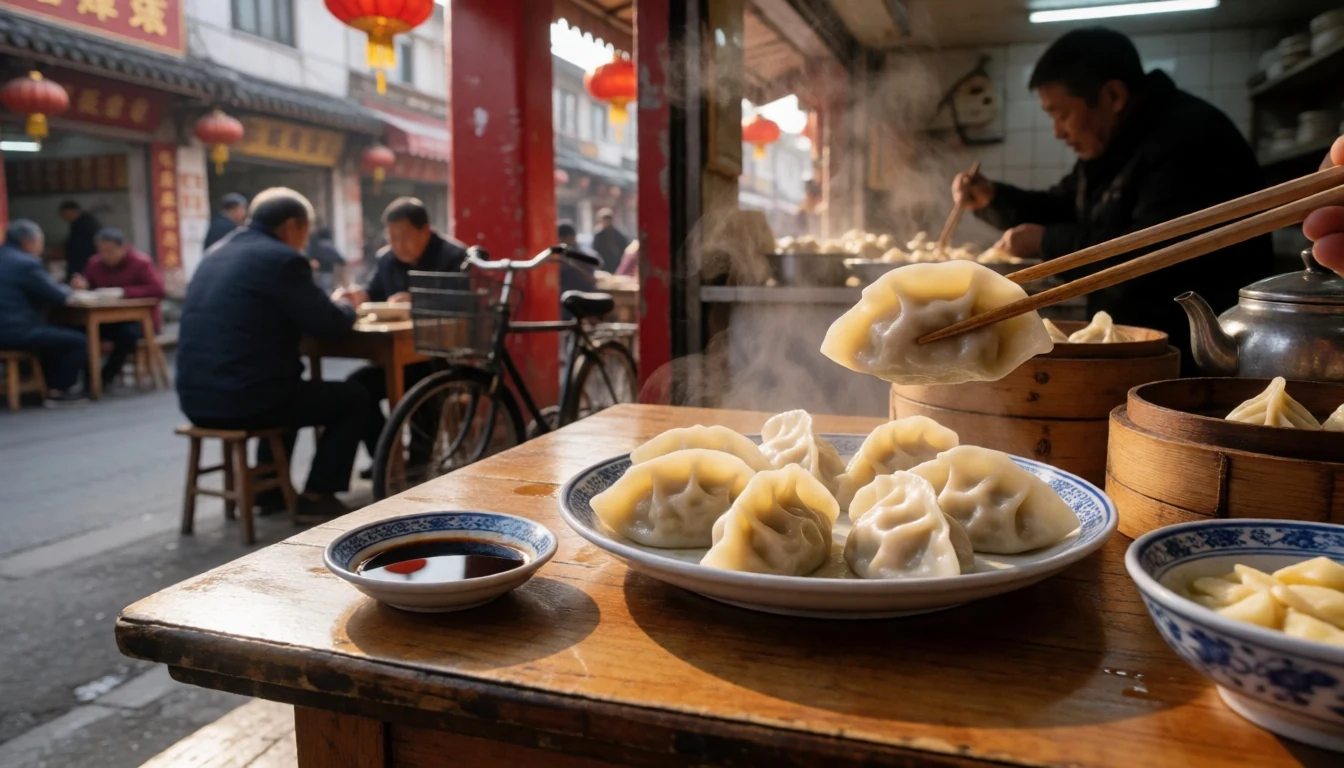
- Korean barbecue and cold noodles — Xita Korea Town, the streets around the Western Pagoda
Shenyang has a sizeable Korean community, and its cooking is easy to find: grilled meat, cold noodles, stews and pickles. It makes a lively change after a morning of palace sightseeing, and portions are generous for sharing.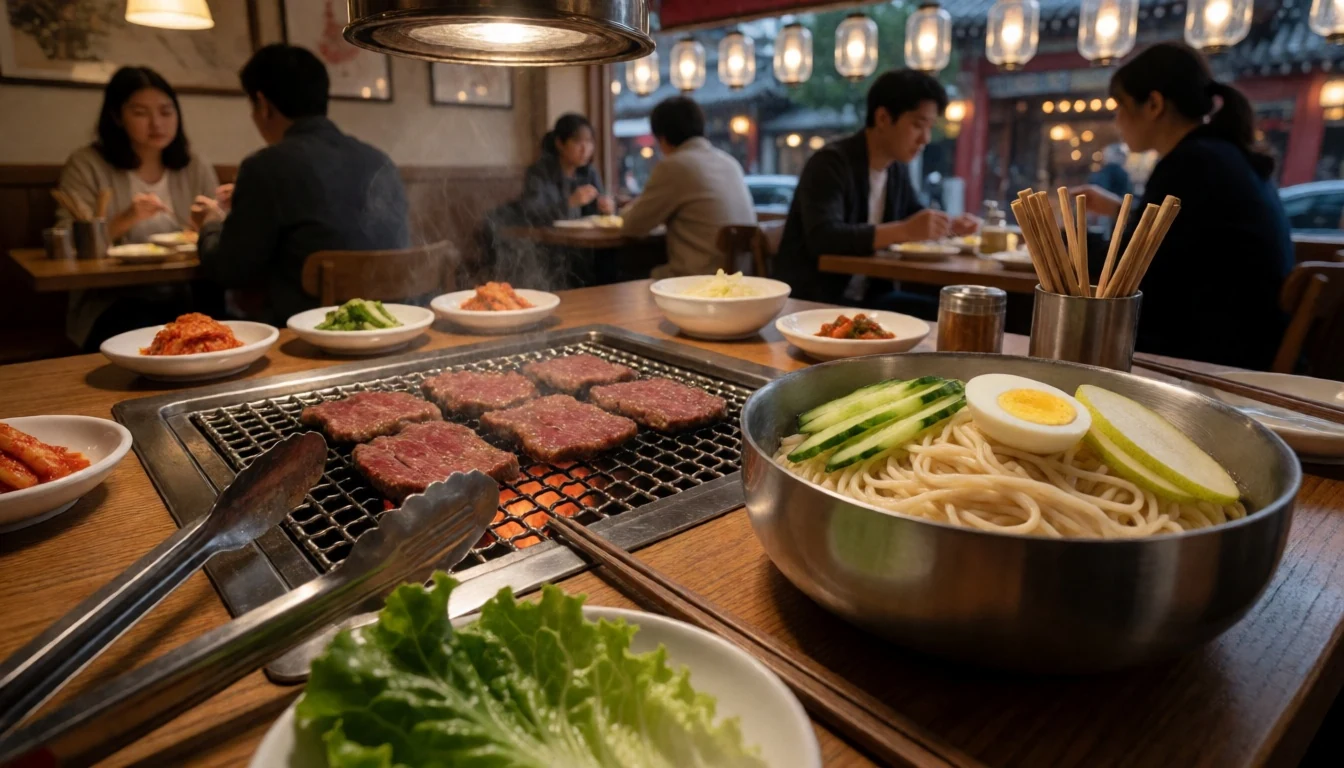
- Guobaorou — Dongbei-style restaurants across the city
A Dongbei classic of thinly cut pork in a crisp batter, finished in a glossy sweet-and-sour sauce. It is rich and best shared, ideally with plain rice and something green on the side. - Suan cai bai rou — Home-style Dongbei eateries, especially in winter
A hearty stew of fermented cabbage with sliced pork belly, often with glass noodles added. It is tangy, warming and made for the north-east's long winters, and it rewards a cold day's walking. - Baiju (grain spirit) — Laolongkou distillery area
Baiju is a strong clear spirit distilled from grain. A small museum beside the Laolongkou distillery tells its local story with old maps and photographs. Taste in small sips, with food, and mind the strength.
Plan it
Best time. May and September–October, when days are mild and walking the open courtyards is comfortable. Winters are long and bitterly cold, which suits only the well wrapped, and summers are warm and humid.
How long. 1–2
Getting there. Fly to Shenyang Taoxian International Airport, then take the airport tram to the subway, which takes a bit over an hour into the centre; a taxi is quicker. By rail, the city has two main stations: the North Railway Station handles most long-distance trains and the Railway Station handles north-eastern and regional services, so check which one your ticket names. From either, take the subway or a taxi to the palace in the old centre.
Budget. low
Tips
- Check the official site (http://www.sypm.org.cn) for opening hours, ticket prices and any booking rules before you go
- Arrive early in the day, as weekends and holidays bring tour groups to the courtyards
- Carry your passport for ticket purchase, and bring some cash alongside a mobile payment option, as foreign cards are not accepted everywhere
- In winter, pack serious layers and boots with grip; the courtyards are open to the wind
- Give Fuling Tomb its own half-day rather than squeezing it in after the palace
Etiquette
- Keep to the marked paths and do not touch painted woodwork or climb on terraces
- Stay quiet and respectful at the tribunal museum and other war-history sites
- Ask before photographing individual people, and queue in turn at ticket gates
Nearby
Sources
- Wikidata Q852429 (CC0)
- Wikipedia: Mukden Palace (rev 1363491002) (CC BY-SA 4.0)
- Wikivoyage: Shenyang (rev 5417958) (CC BY-SA 4.0)
- Techyan, Mukden Palace drone view 5, via Wikimedia Commons (CC BY-SA 4.0)
- Wilson44691, Dazheng Hall, via Wikimedia Commons (CC0 1.0)
- 张元柏, 2007 辽宁 沈阳故宫 (1), via Wikimedia Commons (CC BY 3.0)
- 张元柏, 2007 辽宁 沈阳故宫 (3), via Wikimedia Commons (CC BY 3.0)
- 张元柏, 2007 辽宁 沈阳故宫 (4), via Wikimedia Commons (CC BY 3.0)
- 张元柏, 2007 辽宁 沈阳故宫 (5), via Wikimedia Commons (CC BY 3.0)
- 张元柏, 2007 辽宁 沈阳故宫 (6), via Wikimedia Commons (CC BY 3.0)
- Gary Todd, Manchu Forbidden City Arch, via Wikimedia Commons (CC0 1.0)


