Segovia
Segovia, Spain
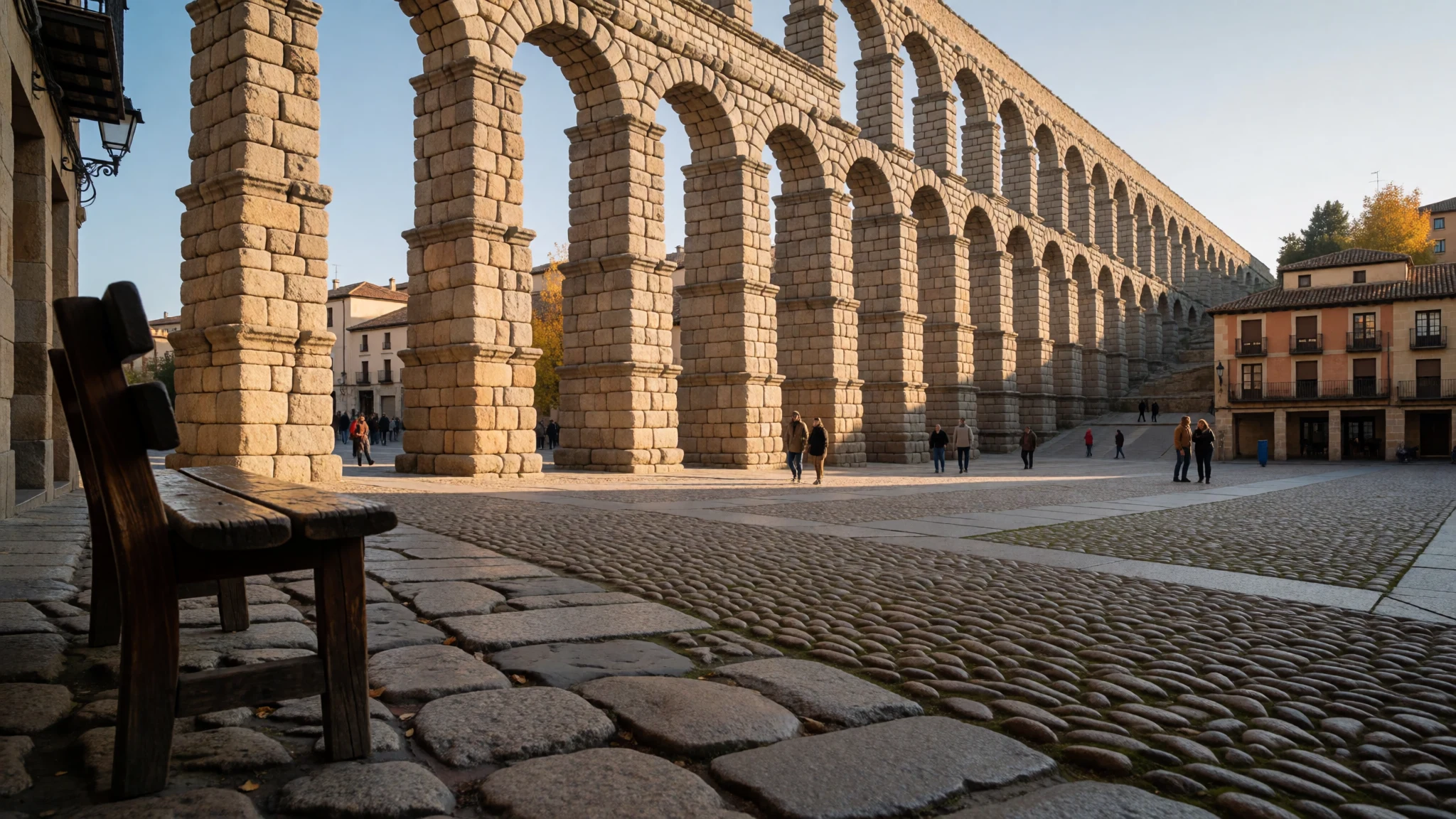
Segovia stacks Roman engineering, fairy-tale stone towers and roasting Castile traditions onto a dramatic plateau above the Eresma river.
The place
Segovia sits upon the inner plateau of the Iberian Peninsula, pinned against the northern skirts of the central mountain spine. The historic heart of the settlement curves gracefully above the bend of the Eresma river, cradled by ochre earth and scrubby slopes. Arriving from the lower plains, the eye is immediately caught by the sheer scale of human ambition carved into stone here. This municipality acts as the capital of its province within the wider autonomous community of Castile and León, functioning as an administrative hub that retains a deeply archaic urban layout.
The city is globally renowned for three monumental anchors: the colossal midtown Roman aqueduct that strides across the lower square without a single drop of mortar, a soaring cathedral hugging the main plaza, and the prow-like Alcázar fortress rearing up from the western cliff edge. Because of this layered stone heritage, the entire historic core earned recognition as a UNESCO World Heritage Site. Life here moves to a measured rhythm dictated by continental extremes. High elevation creates blistering summer heat offset by sharp evening drops, while winters bring biting winds sweeping down from the neighbouring peaks. Walking through the narrow alleyways reveals honey-coloured stone facades, wrought-iron balconies, and heavy wooden doors concealing quiet courtyards. Despite a steady stream of day-trippers arriving from the capital, the town retains its brooding, monastic atmosphere once the tour buses depart in the late afternoon.
Its story
The recorded history of Segovia begins long before the imperial legions marched across the Meseta, starting life as a fortified Celtic stronghold controlling vital upland trade routes. Control eventually shifted to Rome, planting the seeds for the monumental stone architecture that still defines the settlement today. Following the collapse of imperial authority, the town entered a long, murky medieval chapter. Chroniclers suggest the site may have experienced periods of sparse habitation or small pastoral encampments during the early medieval era, while Berber and Mozarab groups shaped the frontier culture of the northern river basins.
The decisive turning point arrived with the Christian reconquest of Toledo, which prompted a coordinated resettlement of the northern tablelands. Monarchs encouraged Christian families from northern Iberia and across the Pyrenees to repopulate the defensive line, creating a wealthy municipal domain whose influence stretched across mountain passes down to the Tagus valley. Segovia quickly transformed into a thriving powerhouse of European commerce, built largely upon the lucrative trade in raw wool and fine textiles. Guilds flourished, merchants built stone palaces, and master builders vied to raise ever more ambitious religious and civic monuments. This golden age of mercantile wealth left behind the dense network of parishes, noble houses, and guild halls that give the old quarter its labyrinthine complexity today, sealing its fate as an enduring monument to medieval Castilian ambition.
What to see
- Alcázar — Western tip of Old Town
Perched dramatically on the rocky prow at the western tip of the old town, this formidable fortress combines medieval towers with Renaissance state rooms. Built originally around the eleventh century, its distinctive silhouette and slate spires inspired later fairy-tale castles. - Aqueduct of Segovia — Plaza del Azoguejo
This immense Roman engineering feat marches straight into Azorín square, constructed from dry-stacked granite blocks held together by gravity alone. It stands as the defining emblem of the municipality, carrying water across the valley with breathtaking precision. - Segovia Cathedral — Plaza Mayor
Dedicated to Our Lady of the Assumption and Saint Frutos, this majestic house of worship was erected during the sixteenth century. It represents one of the final grand Gothic cathedrals built in Europe, long after the style had been abandoned elsewhere. - Centro Didáctico de la Judería — Jewish Quarter
Tucked into the atmospheric lanes of the historic Jewish quarter just south of the cathedral, this cultural centre occupies the former home of Rabbi Abraham Señor. It preserves the heritage and domestic architecture of the medieval Jewish community. - Monastery of Santa María del Parral — Eresma River Valley
Founded in the fifteenth century, this active Hieronymite monastery sits quietly in the green valley below the city walls. It offers a tranquil retreat away from the central squares, showcasing austere monastic cloisters and rich religious art.
Culture
Segovian society is deeply rooted in regional Castilian traditions, agricultural fairs, and neighbourhood festivities such as the lively celebrations honouring San Lorenzo. Beyond historical pageantry, the city embraces contemporary arts, hosting annual cultural events like the European film festival MUCES, which brings international cinema to historic venues across the old town. Locals value unhurried hospitality, gathering late for evening meals and socialising in traditional taverns known as mesones. Traditional crafts, ceramics, and textiles remain a point of civic pride, passed down through artisan families who maintain workshops in the winding backstreets. When entering churches, monasteries, or quiet residential courtyards, keep voices low and dress respectfully with shoulders and knees covered.
What to wear
Traditional dress in Segovia reflects its harsh continental climate and rural heritage, historically featuring heavy woollen capes, embroidered waistcoats, felt hats, and sturdy leather footwear designed to withstand upland winters. While these elaborate folk costumes are now reserved for festivals, feast days, and traditional dance performances, the practical ethos of durable clothing remains. Residents today dress with classic European elegance, favouring tailored coats, leather boots, and smart knitwear for the cooler months. Visitors should pack layers, as the high elevation brings rapid temperature shifts between sunny afternoons and chilly nights. Sturdy, comfortable footwear is essential for navigating the uneven cobblestones, steep stairwells, and stone pathways of the medieval centre.
What to eat
- Cochinillo Asado — Traditional mesones around the historic centre
Slow-roasted suckling pig with crisp crackling and tender meat, traditionally carved tableside with the edge of a ceramic plate. Enjoy this iconic dish in historic establishments like Mesón de Cándido or Casa Duque. - Judiones de La Granja — Local taverns and traditional restaurants
A hearty, comforting stew made from large local white butter beans simmered slowly with chorizo, pork ear, and rich stock. Find this staple warming winter dish in neighbourhood taverns. - Ponche Segoviano — Historic bakeries and sweet shops
A decadent local pastry featuring layers of sponge cake soaked in syrup, filled with rich custard, and topped with marzipan and a distinctive checkered burnt sugar pattern. Pick one up at traditional bakeries near the cathedral. - Castilian Roast Lamb — Traditional dining rooms throughout the old town
Milk-fed lamb seasoned simply with lard, garlic, and coarse salt, then roasted slowly in wood-fired brick ovens until the skin turns golden and crisp. Order this speciality in family-run dining rooms.
Plan it
Best time. May to June and September to October offer pleasant daytime warmth and cooler evenings without the intense heat of midsummer.
How long. 2
Getting there. Fly into Madrid-Barajas Airport, then take the metro to Chamartín station for high-speed trains to Segovia-Guiomar or catch a direct bus from Moncloa.
Budget. mid
Tips
- Book your restaurant tables in advance for weekend lunch service
- Wear flat shoes with good grip for the steep stone alleys
- Arrive at the main monuments early in the morning before the day-trippers arrive from Madrid
- Carry a light jacket even in summer as evening temperatures drop sharply
Etiquette
- Greet shopkeepers and servers with a polite polite Buenos días or Buenas tardes
- Keep voice levels moderate when visiting sacred monuments and quiet monastic cloisters
Nearby
Sources
- Wikidata Q15684 (CC0)
- Wikipedia Segovia (CC-BY-SA 4.0)
- Wikivoyage Segovia (CC-BY-SA 4.0)