Ávila
Ávila, Spain
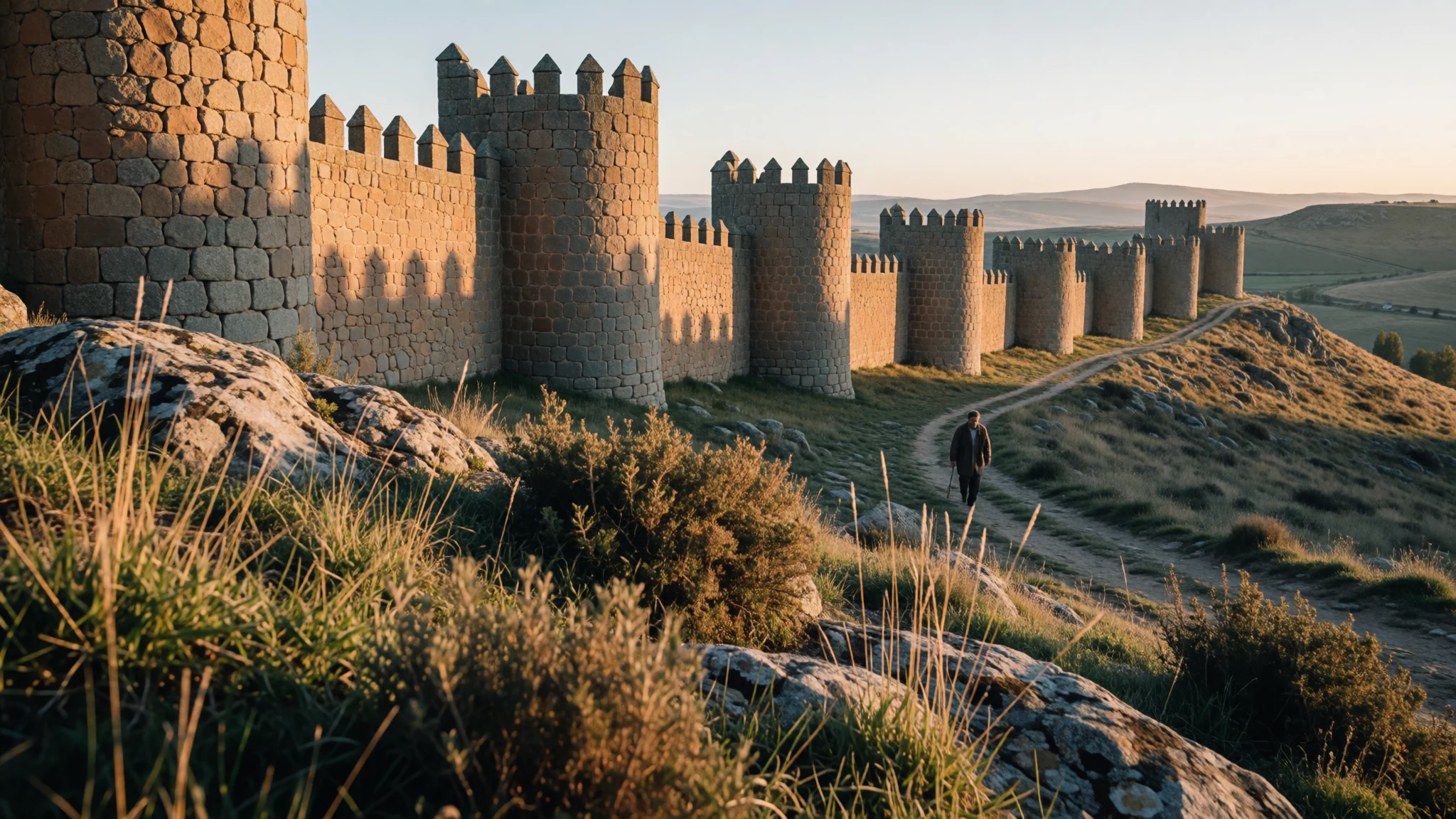
Ávila offers a stunning medieval walled cityscape perched high on the Castilian plateau, steeped in stone architecture and spiritual history.
The place
Ávila stands as the capital of its home province within the autonomous community of Castile and León, anchoring itself right in the centre of the Iberian Peninsula north of the Sistema Central. Perched high on a rocky hill beside the Adaja River, this mountain town stands as Spain's highest provincial capital. Home to a resident population of around fifty-nine thousand people, the city feels compact and deeply connected to the sweeping upland landscape surrounding it.
The urban footprint is famously defined by an extraordinarily complete circuit of medieval stone fortifications that loop around the entire historic quarter. Often referred to as the City of Stones and Saints, Ávila pairs its formidable military architecture with a dense cluster of Romanesque and Gothic churches, quiet squares, and narrow cobbled lanes. Because the surrounding plateau experiences harsh winters and strong sun, the city has a rugged, timeless character quite distinct from coastal Spain.
The old town area and its extra muros churches earned recognition as a UNESCO World Heritage Site, drawing travellers who want to step back into a remarkably preserved medieval environment. While modern residential expansion spills out beyond the ancient ramparts, the historic core remains remarkably intact, inviting exploration entirely on foot through gateways that have stood for centuries.
Its story
Long before medieval stone masons shaped the skyline, the area was inhabited by the Vettones, an ancient people who called their settlement Obila, meaning high mountain. They left behind enduring traces, including mysterious Bronze Age stone sculptures of bulls known as verracos that still dot the surrounding countryside. Following Roman subjugation, the settlement was remodelled with a typical rectangular grid layout featuring intersecting main streets, embedding earlier altars and stones directly into the later defensive structures near the eastern gates.
After the fall of the Western Roman Empire, Ávila transitioned into a Visigothic stronghold before Christian settlement took deeper root during the eleventh century. This medieval expansion was driven by council militias and shifting social hierarchies that left a complex legacy across the region. Over subsequent generations, the city transformed into a powerful spiritual centre, most famously associated with Saint Teresa of Jesus, who reformed the Carmelite order and left her indelible mark on the convents and monasteries that populate the winding streets.
Writers and artists have long been captivated by this stark Castilian atmosphere. Renowned filmmakers and authors have described the municipality as a tragic, intensely historical place that preserves the true essence of sixteenth-century Spain better almost anywhere else, blending military might with profound mysticism.
What to see
- Muralla de Ávila — Old Town perimeter
Forming an uninterrupted two-and-a-half-kilometre stone circuit around the historic centre, these remarkably complete ramparts feature numerous stout towers and gates built across the medieval centuries. You can walk a long section along the top for sweeping views across the rooftops and the surrounding Castilian countryside. - Ávila Cathedral — Eastern flank of the city walls
Part fortress and part house of worship, this imposing cathedral was constructed primarily during the eleventh and twelfth centuries, blending Romanesque and Gothic styles. Its sturdy apse forms an integral part of the city's eastern defensive wall, housing fine altarpieces and stone carvings inside. - Basílica de San Vicente — Just outside the northern gate
Dedicated to local martyrs, this magnificent Romanesque church was erected between the twelfth and fourteenth centuries outside the main walls. It showcases superb sculptural work on its portals and crypt, representing some of the finest medieval stonework in the entire region. - Convento de Santa Teresa — Southern quarter of the old town
Built directly over the birthplace of Saint Teresa, this seventeenth-century convent and sanctuary commemorates the life of the mystic who founded the Barefoot Carmelites. The complex includes a museum displaying relics and historical items connected to her legacy. - Museo de Ávila — Palacio de los Deanes
Housed partly in a historic palace and partly within an ancient church, this regional museum gathers archaeological finds from across the province. Exhibits range from ancient Vetton stone sculptures and Roman mosaics to medieval ceramics that trace the human story of the local uplands.
Culture
The cultural heartbeat of Ávila is shaped by its profound religious heritage and deep-rooted Castilian traditions. Throughout the year, the community observes solemn and artistic festivals, most notably during Holy Week when elaborate processional steps are carried through the narrow lanes against the backdrop of the ancient stone walls. Other major celebrations bring locals out into the squares every spring and autumn to honour patron saints and historic milestones. Writers and travellers have long viewed the local character as austere, reflective, and fiercely proud of its heritage, mirroring the stark beauty of the surrounding plateau. Visitors should dress modestly when entering churches, keeping shoulders and knees covered at all times.
What to wear
Traditional Castilian dress in the province historically reflected the demands of a high, windswept upland climate, featuring heavy wools, layered shawls, and durable leather footwear designed to withstand cold winters and brisk mountain winds. While traditional garments are now reserved strictly for folk festivals and historical celebrations, everyday attire among residents is practical, neat, and understated. Locals generally favour classic jackets, sturdy trousers, and comfortable walking shoes suited for uneven cobblestone streets. For visitors, layering is essential regardless of the season, as the high elevation means bright afternoon sun can quickly give way to chilly evenings once the wind picks up across the plateau. Pack comfortable walking boots or trainers with good grip, a reliable windproof jacket, and modest clothing if you plan to visit the city's numerous historic churches and convents.
What to eat
- Chuletón de Ávila — Traditional eateries across the historic centre
This signature thick-cut Castilian beef steak is grilled simply over hot coals to highlight the rich flavour of local cattle raised in the mountain pastures. You will find it served in traditional taverns and dining rooms throughout the old town. - Yemas de Santa Teresa — Confectionery shops around Plaza del Mercado Chico
A famous regional sweet confection made simply from whipped egg yolks and sugar, coated in a delicate layer of icing. These golden bites are packaged in small round boxes and can be bought in pastry shops near the central plazas. - Castilian Roasts — Traditional restaurants along Calle de San Segundo
Suckling pig and roast lamb feature prominently on local menus, slow-cooked in traditional wood-fired ovens until the skin turns crisp and golden. These hearty meat dishes anchor traditional dinner spreads across the province. - Local Tapas — Cafes and bars around Plaza del Mercado Chico and near the station
Small plates of cured ham, local cheeses, and local stews served alongside regional wines from Castile and León. Many casual bars offer a small bite with every drink ordered.
Plan it
Best time. May to June and September to October offer pleasant daytime temperatures for walking, avoiding the intense summer heat and freezing winter winds of the high plateau.
How long. 2
Getting there. Fly into Madrid Barajas Airport, then take a direct regional train or bus north-west to reach Ávila in about 80 to 90 minutes.
Budget. mid
Tips
- Wear sturdy walking shoes with good grip for the steep cobbled streets and uneven wall pathways
- Check restaurant opening hours carefully, as traditional kitchens rarely serve dinner before 20:30
- Bring a warm jacket even in summer, as evening temperatures drop sharply at this high elevation
- Carry some cash for small entry fees and purchases at artisanal bakeries
Etiquette
- Keep voices lowered when entering sacred spaces and active convents
- Always ask permission before photographing local residents during festivals
Nearby
Sources
- Wikidata Q15688 (CC0)
- Wikipedia (CC-BY-SA 4.0)
- Wikivoyage (CC-BY-SA 4.0)