São Paulo
São Paulo, Brazil
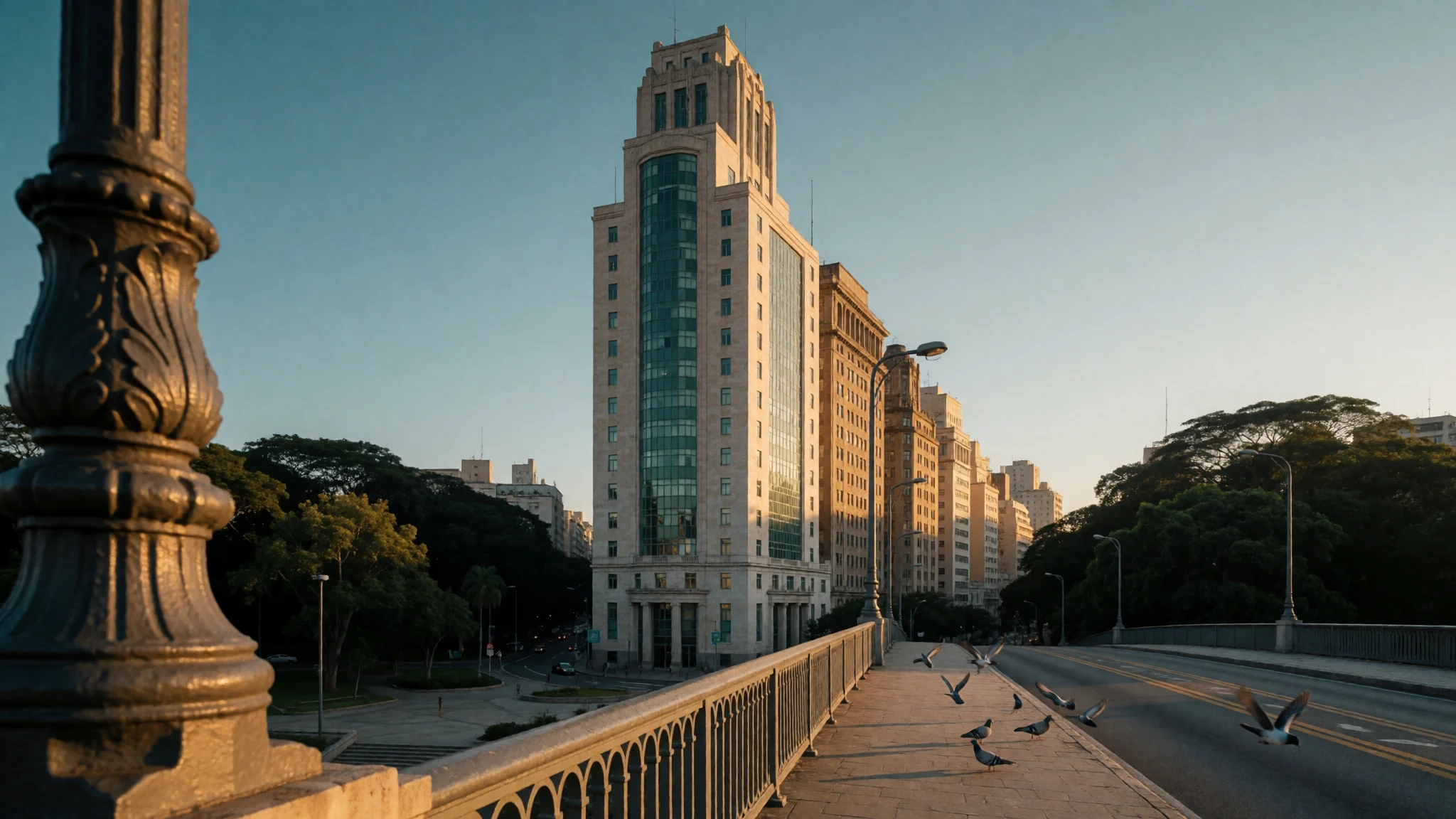
São Paulo is a vast, grey, endlessly layered city where migration, music and food matter far more than any single monument.
The place
São Paulo is the largest city of Brazil, home to about 11.9 million people, and it sits on a plateau 760 m above sea level, well inland from the coast. That height explains a good deal: evenings can turn cool, drizzle arrives without warning, and the sky is often a flat pearl grey rather than postcard blue. Residents are called paulistanos, and they tend to describe their city with a mix of pride and weary affection. It is not a place of one famous monument. It is a vast grid of towers, villas behind walls, tenement streets and leafy parks, stitched together by avenues such as Paulista, where office blocks, bookshops and cultural centres line the ridge. Neighbourhoods carry strong personalities. Liberdade has Japanese-Brazilian shops and lanterns, Bela Vista holds old Italian streets and cantinas, Vila Madalena is known for murals and bars, and the Centro keeps the grand banks, theatres and churches of an earlier boom. Ibirapuera Park gives the city a large open green space. The Pinheiros and Tietê rivers run through it, but they are channelled between busy roads and are not places to linger. Traffic is heavy, and distances are bigger than maps suggest, so visitors do best by basing themselves near a metro line and treating each day as one or two districts rather than a checklist. São Paulo rewards curiosity about food, music, art and everyday life more than box-ticking sightseeing. Weekends are noticeably calmer downtown, when offices empty and the streets belong to markets and walkers.
Its story
São Paulo began as a Jesuit mission in 1554, but the ground beneath it had been lived on for a very long time. Archaeologists have found artefacts at the Morumbi site that point to settlement thousands of years ago. When Europeans arrived, the Piratininga plains around the Tietê River were home to Tupi-speaking peoples, including the Tupiniquim, Guaianás and Guarani, organised under local chiefs. One of them, Tibiriçá, backed the Portuguese, and that alliance helped the small hilltop settlement survive. Indigenous names still run through the map: Tietê, Ipiranga, Anhangabaú and Tamanduateí all come from that older language. For its first centuries the town was a modest outpost, and it became the launch point for the bandeirantes, expeditions that pushed into the interior to seize land, search for wealth and capture people. Brazilians still argue about how to remember them, and monuments to them are contested. The city's real transformation came with the coffee boom of the nineteenth century, when planters' fortunes paid for railways, mansions and eventually factories. Waves of immigrants, notably Italians, arrived to work the farms and then the mills, crowding into tenements called cortiços in districts such as Brás and Bela Vista. Their descendants, joined later by Japanese, Lebanese, Portuguese and internal migrants from the north-east, made the modern city. Its history is layered, and much of the old fabric has been demolished, so the past shows up more in street names, food and music than in preserved streets.
What to see
- Banespa Tower (Edifício Altino Arantes) — Centro
The Altino Arantes building, known as Banespa, has an observation deck high above the Centro, and for many decades it was the tallest building in São Paulo. A small museum sits at the top. It is the easiest way to grasp how far the city runs in every direction; check the official site for visiting arrangements.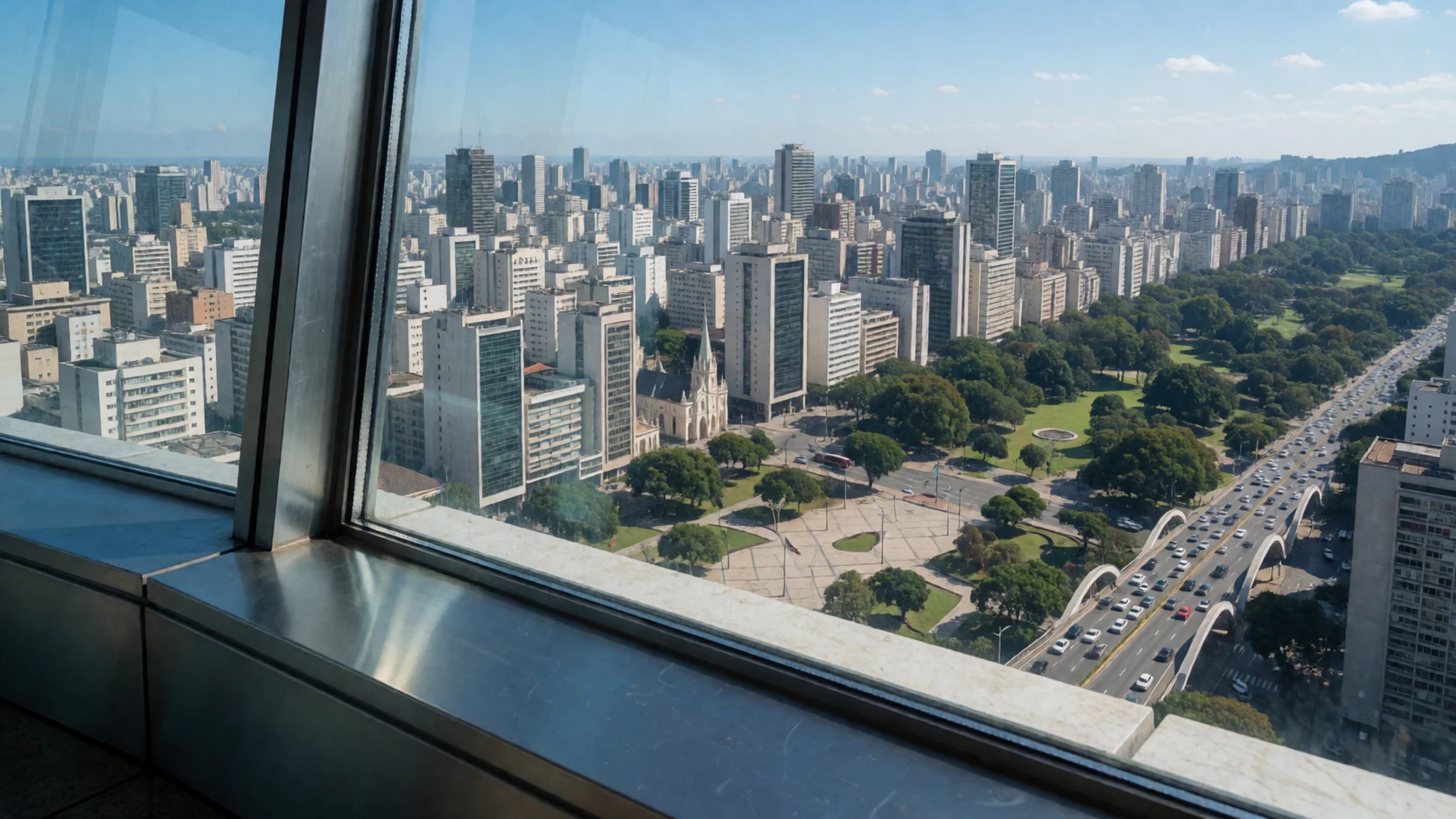
- Sé Cathedral — Centro
The Sé Cathedral stands on the square at the historic heart of São Paulo, and Sundays bring worshippers, street preachers and pigeons in equal measure. Inside, the scale is more striking than the decoration. The surrounding Centro is busy and best explored in daylight, with phones kept out of sight and valuables close.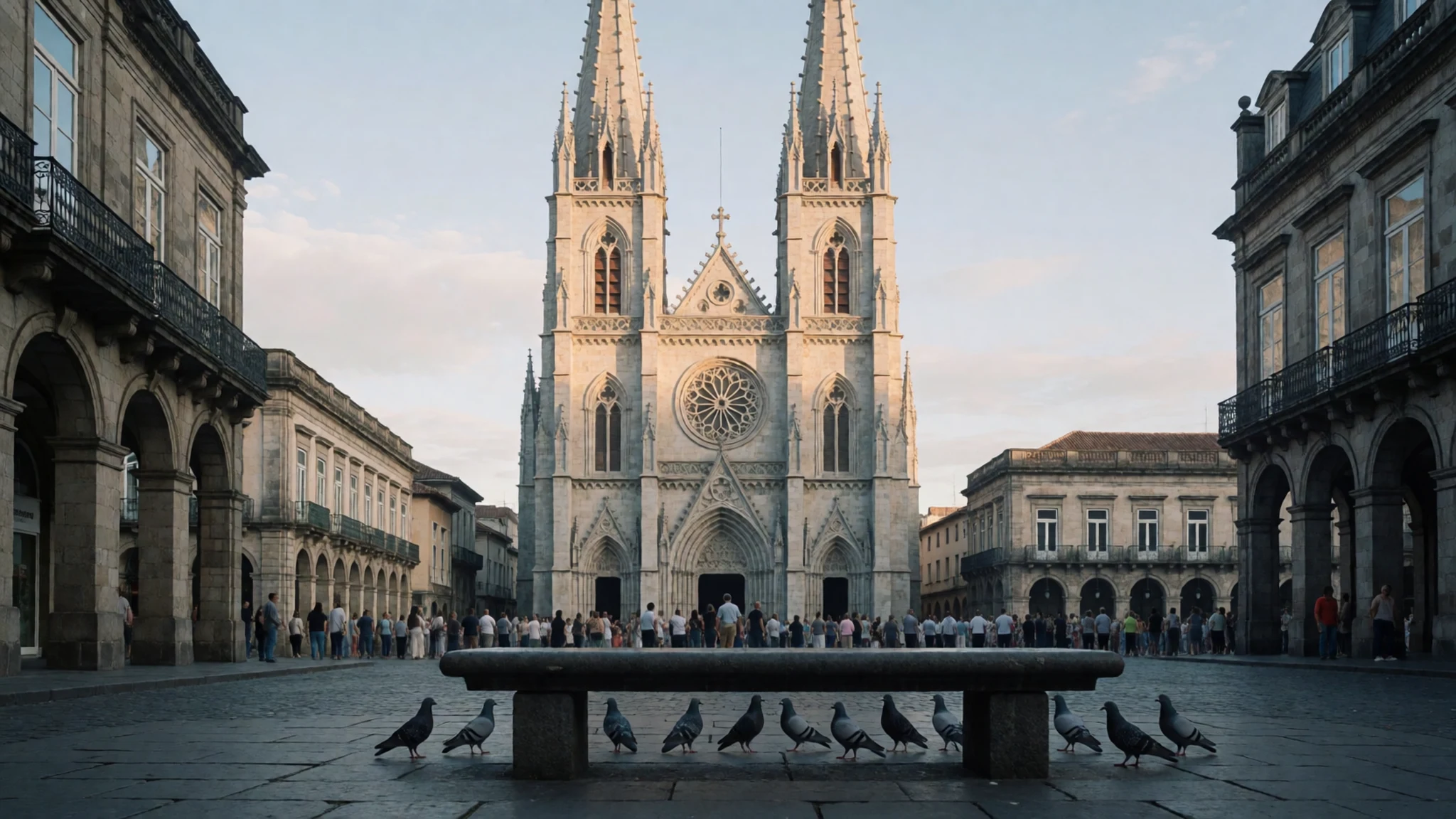
- Parque da Independência — Ipiranga
Parque da Independência in the Ipiranga district is a formal, landscaped park around a monument and museum tied to Brazil's break from Portugal. Families picnic on the lawns at weekends. It is a calm place to see the story of the country's independence told in stone, and a break from the traffic of the Centro.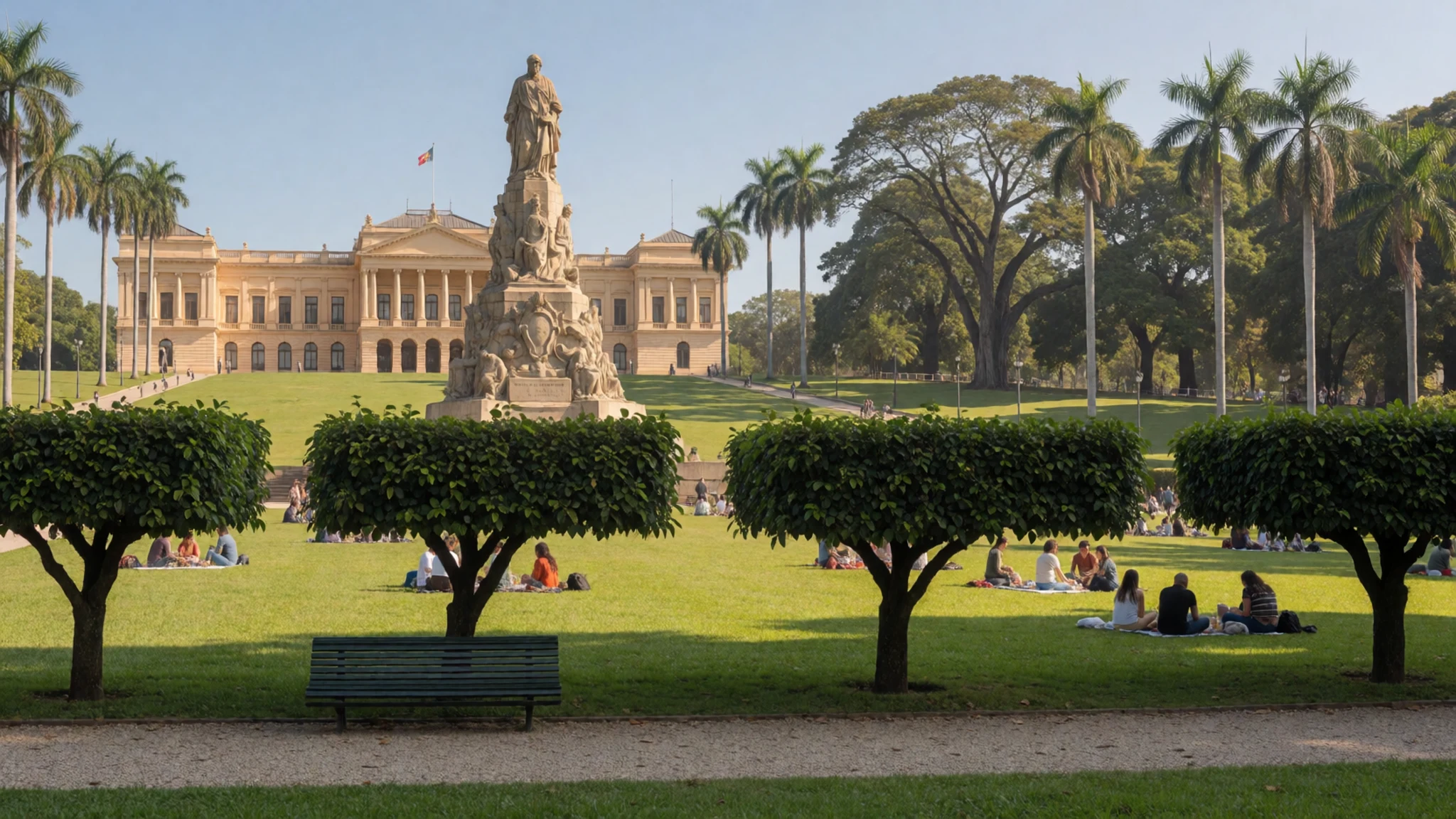
- Estação da Luz — Luz, Centro
Estação da Luz is a railway station in the Centro, a reminder of the coffee years when trains carried the crop towards the port. Its brick-and-iron hall and clock tower look best in evening light. Trains and metro lines still pass through, so it works both as a sight and a practical stop.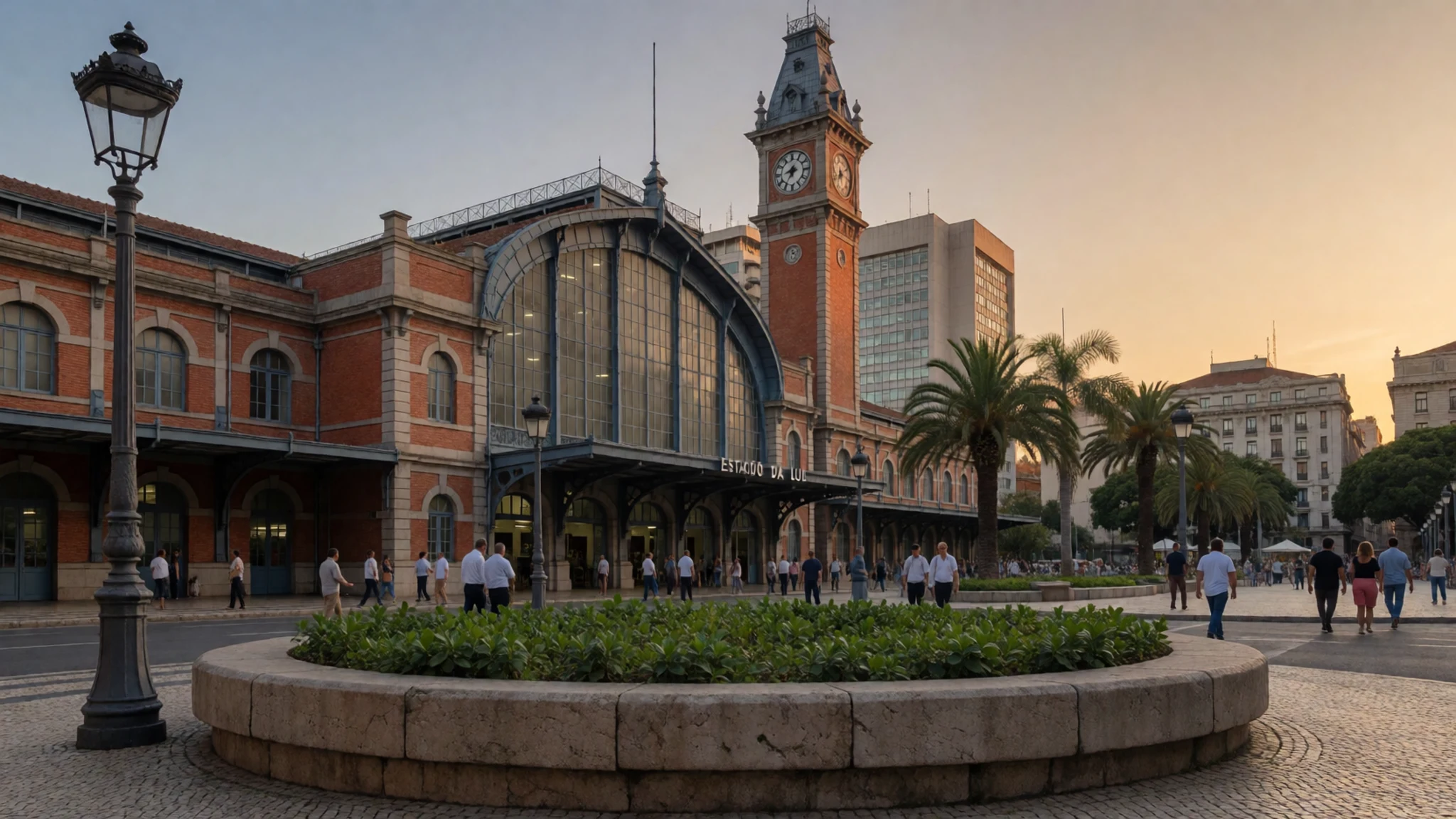
- Octavio Frias de Oliveira bridge — Pinheiros river, south-west
The Octavio Frias de Oliveira bridge, a cable-stayed span over the Pinheiros river in the south-west, has become a modern emblem of São Paulo. Photographers come at dusk when it is lit. The riverside nearby is mostly business towers and roads, so it suits a short stop rather than a long visit.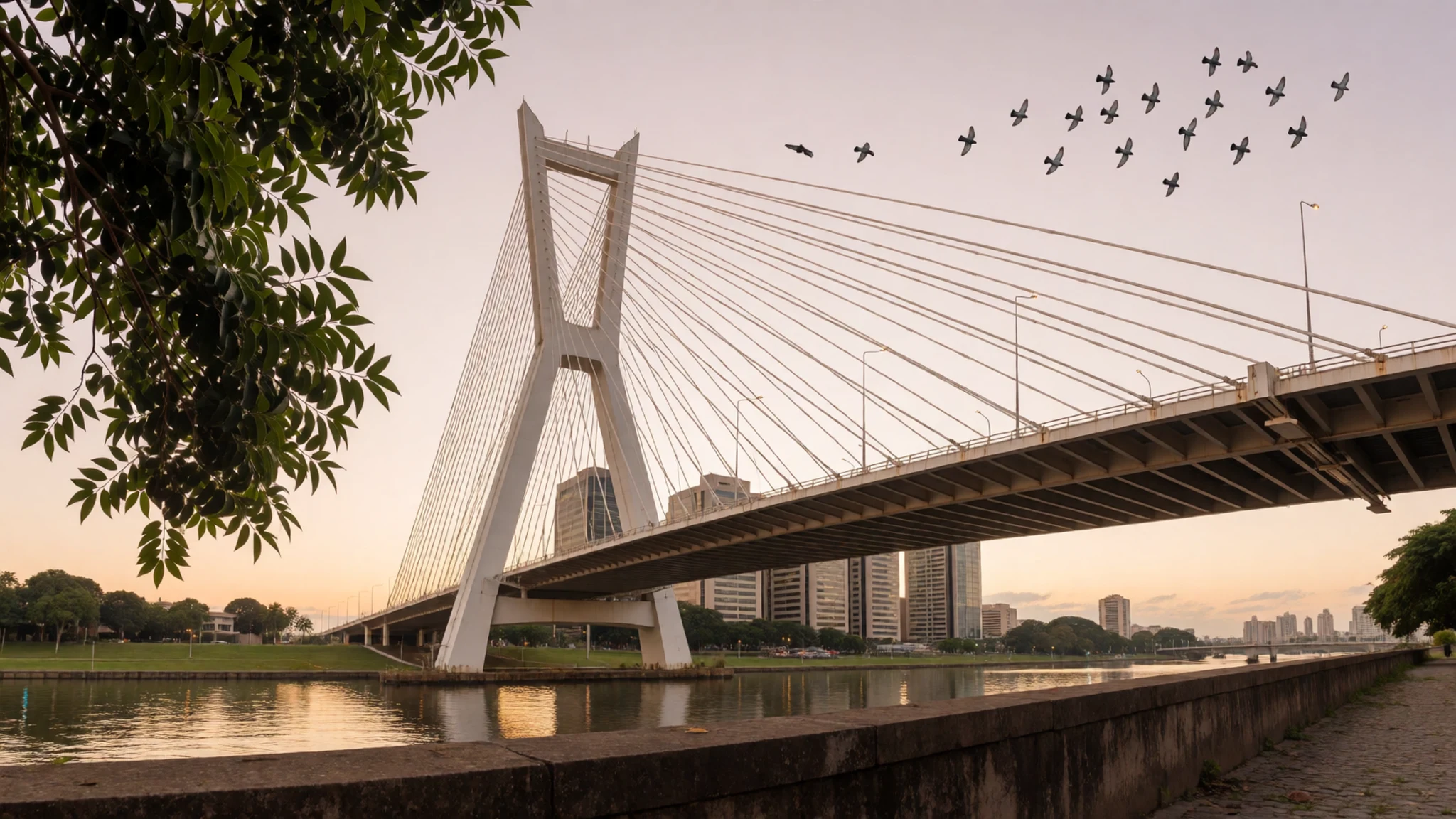
- São Paulo Jockey Club — Cidade Jardim, beside the Pinheiros river
The São Paulo Jockey Club, beside the Pinheiros river, has bars and restaurants with wide views over the water and the towers beyond. Late afternoon is the favoured moment, when workers arrive straight from the office to watch the sun go down. Dress smartly, expect city prices, and check ahead for race days and access.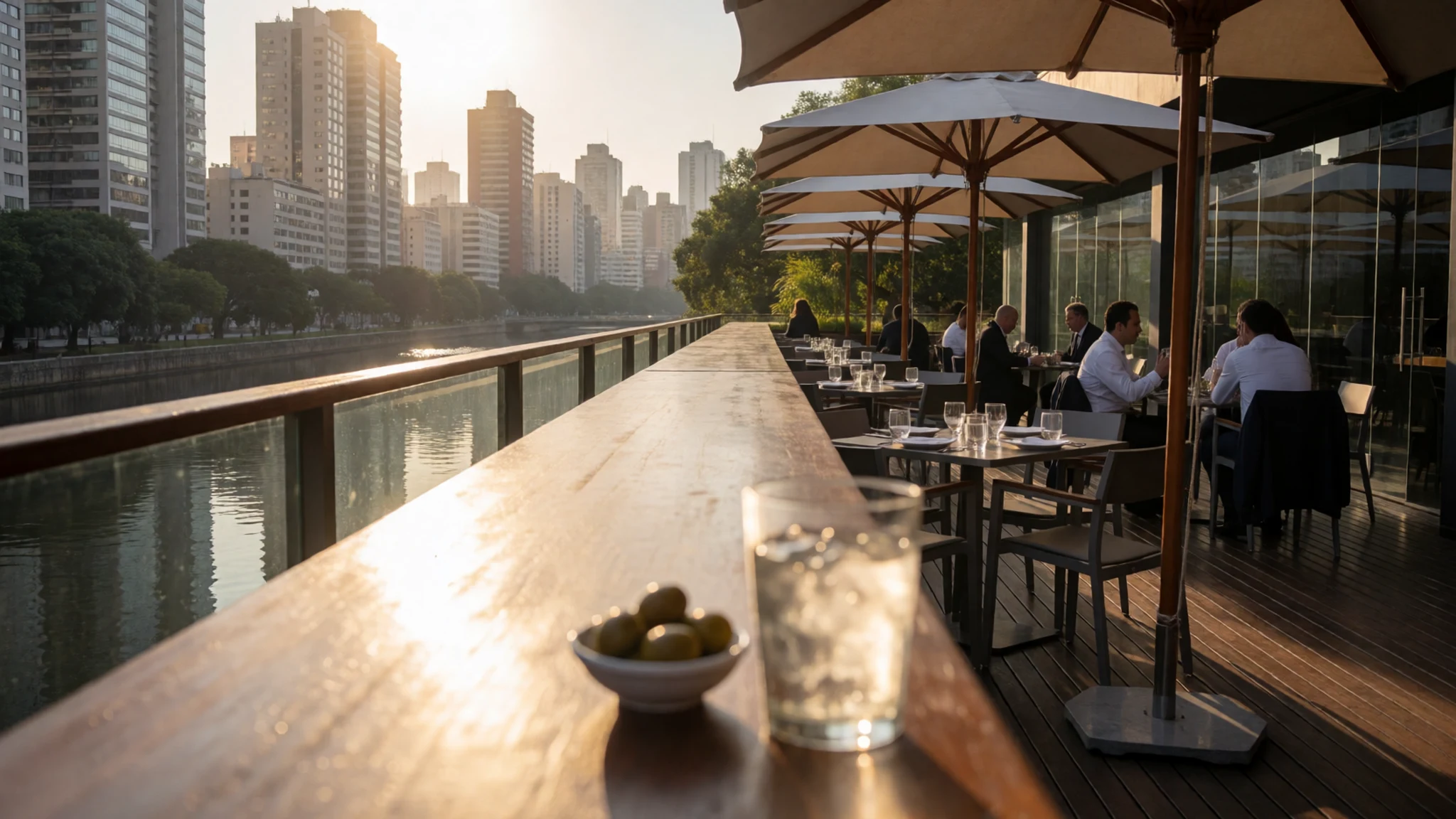
Culture
São Paulo's culture is shaped by migration. Italians, Japanese, Lebanese, Portuguese and migrants from across Brazil have each left a mark, and the result is a city where a samba bar, a Japanese grocery and an Italian bakery can share a street. Music is a good way in. São Paulo and Rio de Janeiro are both regarded as centres of Brazil's urban music, and São Paulo has its own samba tradition. Adoniran Barbosa, who found fame in the early radio era, wrote songs for the Italian-descended working people of Bela Vista, also called Bexiga, and of Brás. His lyrics, in a playful local dialect, follow tenement dwellers, the unemployed and people on the margins, and 'Saudosa Maloca', about three friends remembering a demolished shack, remains a local favourite. Art and theatre are strong too: galleries, independent cinemas and street art are part of daily life, especially in Vila Madalena and the Centro. Paulistanos work long hours and are known for being busy, though friendliness opens up quickly over food or football, and club loyalties can be fierce. Religion is visible everywhere, from Catholic cathedrals to Pentecostal congregations and Afro-Brazilian faiths. At the Sé Cathedral and other churches, keep your voice low, cover bare shoulders if you can, and ask before photographing worshippers.
What to wear
São Paulo has no single regional costume, and the nearest thing to traditional dress appears at festas juninas, the June and July country festivals. People wear caipira outfits, a rural look with checked cotton shirts, patched trousers, straw hats and dresses cut from bright printed cotton called chita. Japanese-Brazilian festivals in Liberdade sometimes feature kimono and yukata too. In daily life, paulistanos lean towards dark, neutral and well-cut clothes: jeans, linen shirts, trainers, and blazers on cool mornings. The city is a significant centre for Brazilian fashion, with design studios, a fashion week and busy shopping streets, and the style is polished rather than beachy. Shorts and flip-flops are for the coast or the park, not for restaurants and offices. For a visitor, the plateau climate means layers: a light jacket or umbrella is useful at any time of year, and summer afternoons can be hot and humid. Wear comfortable closed shoes with good grip for cracked pavements and long walks, and a hat or sunscreen for outdoor days. For churches, cover shoulders and knees. For safety, keep jewellery and expensive watches out of sight, especially in the Centro. Smart-casual clothing works almost everywhere, including better restaurants and bars.
What to eat
- Virado à paulista — Traditional lunch eateries and prato feito counters in the Centro
A plate of rice, a thick bean paste called tutu bound with manioc flour, garlic-sautéed kale and a pork chop, often topped with a fried egg. It is the classic São Paulo home-style lunch, and it keeps hunger away until evening.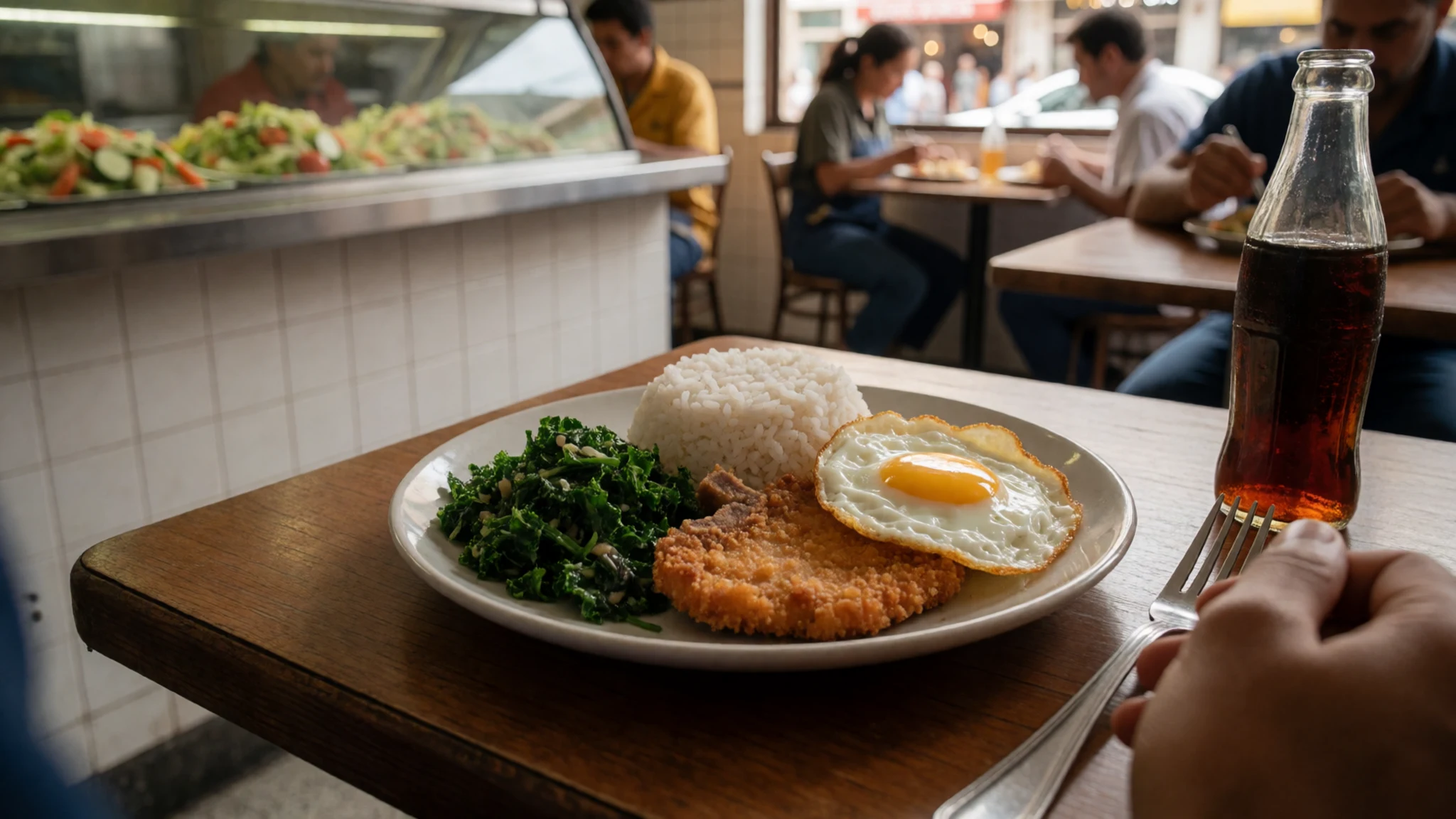
- Mortadella sandwich — The Mercado Municipal in the Centro
A tall roll piled with thinly sliced mortadella, sometimes with melted cheese, is the São Paulo snack that visitors queue for. It reflects the city's Italian immigrant history and is generous enough to share between two people. Eat it standing at a counter, with a cold drink.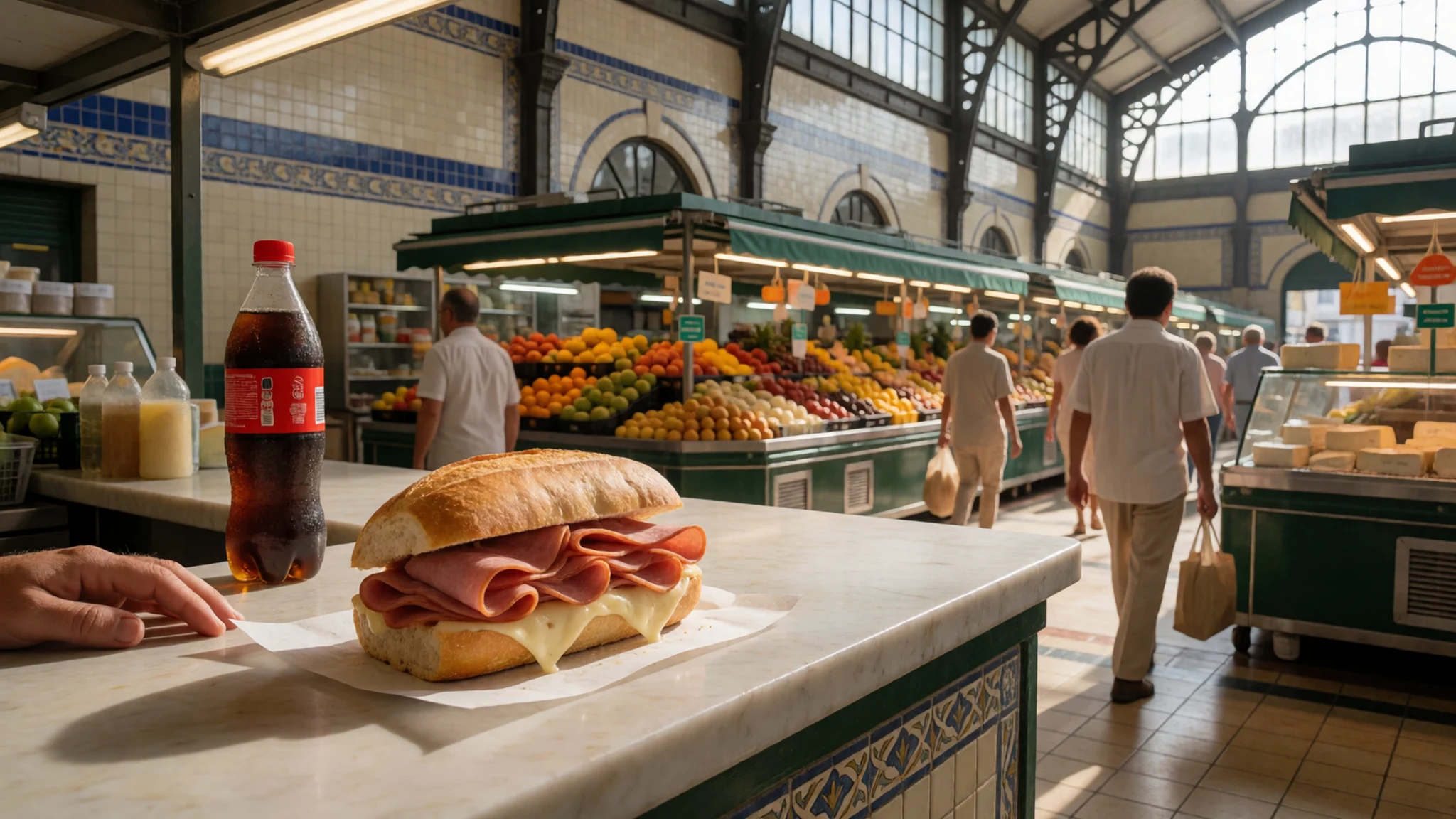
- Pastel — Weekly feiras livres (street markets) and Liberdade
A thin, crisp, deep-fried pastry folded around cheese, minced beef or palm hearts, eaten hot from a paper bag. It is often paired with sugarcane juice. Japanese-Brazilian families helped make it a staple at street fairs, and it is best eaten fresh from the fryer. - Pão de queijo and coffee — Any padaria (neighbourhood bakery)
Small, chewy cheese breads made with manioc starch, served warm beside a short, strong coffee. This is the usual mid-morning break across the city, and a good way to pass the time while rain clears. Order at the counter, then take your cup to a stand-up bar. - Pizza paulistana — Pizzerias in Bela Vista and Brás
Thin-crusted pizza with generous toppings, a legacy of the Italian community in Bela Vista and Brás, is eaten at weekends in family groups. Mozzarella, tomato and oregano is the baseline, while some places add toppings such as catupiry cheese. Expect to share, and expect a wait on Sunday evenings.
Plan it
Best time. April–May and September–October bring milder, drier days than the hot, wet summer; December to March is warm with heavy afternoon downpours, and June to August is cooler and often cloudy, which suits museums, galleries and long lunches.
How long. 3–4
Getting there. Most international and many domestic flights land at São Paulo–Guarulhos (GRU), on the city's edge; Congonhas (CGH) handles most short and medium domestic routes. From Guarulhos, airport buses run to República Square, Paulista/Jardins and major metro stations, and all connect to the Metro. Viracopos (VCP) in Campinas is a cheaper fallback, with an intercity bus onward.
Budget. mid
Tips
- Base yourself near a metro line, as traffic makes road journeys slow and unpredictable
- Do the Centro and its markets on weekday mornings or Saturday, and keep phones and valuables out of sight
- Carry a light rain jacket year-round, as showers can arrive suddenly even on bright days
- Use cards in most places but keep a little cash for markets and street fairs
- Check the city's official site (http://www.prefeitura.sp.gov.br/) and each museum's own site for opening arrangements, as hours change
Etiquette
- Keep your voice low and shoulders covered inside churches such as the Sé Cathedral
- Ask before photographing people, especially worshippers and market vendors
- Queue at counters and bakeries, and greet staff with a friendly 'bom dia' or 'boa tarde'
Nearby
Sources
- Wikidata Q174 (CC0)
- Wikipedia: São Paulo (rev 1384961774) (CC BY-SA 4.0)
- Wikivoyage: São Paulo (rev 5427170) (CC BY-SA 4.0)
- Photo: São Paulo skyline in Brazil, Thomas Hobbs (CC BY-SA 2.0)
- Photo: Marginal Pinheiros e Jockey Club, Agent010 (CC BY-SA 4.0)
- Photo: Catedral da Sé em São Paulo, Wilfredor (CC0 1.0)
- Photo: Mausoléu ao soldado constitucionalista de 1932, Danielbeoni (CC BY-SA 4.0)
- Photo: Parque da Independência, Webysther (CC BY-SA 4.0)
- Photo: Altino Arantes (Banespa) Building, Dornicke (Public domain)
- Photo: Estação da Luz, Caio Silveira/PortoBay Hotels & Resorts (CC BY 2.5)
- Photo: Octavio Frias de Oliveira bridge, Marcosleal (CC BY 3.0)


