São Luís
São Luís, Brazil
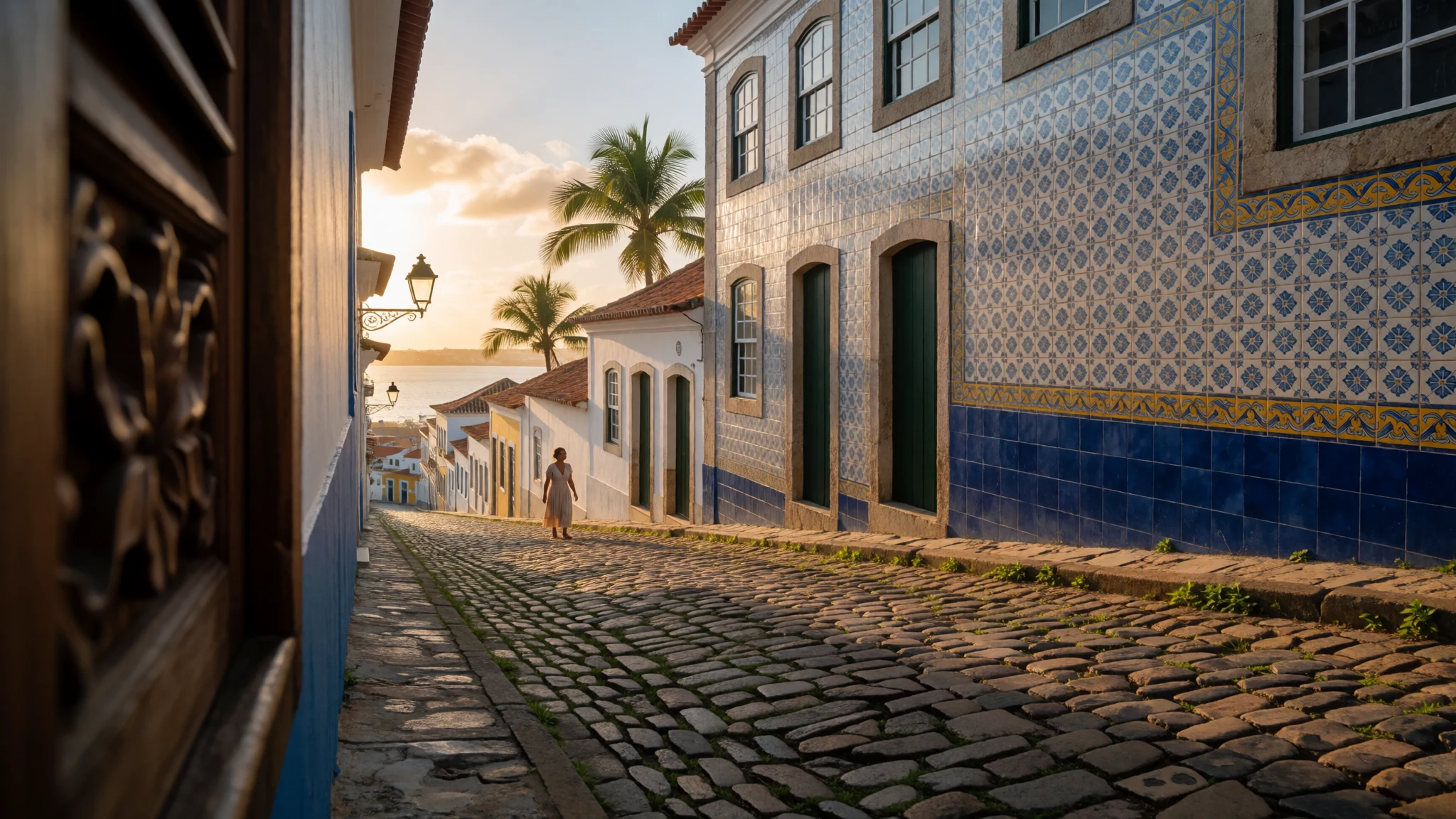
São Luís is a tiled colonial city on an Atlantic island, where French, Portuguese and Afro-Brazilian history show in the streets, drums and food.
The place
São Luís is the capital of Maranhão, a state on Brazil's north-eastern coast, and it sits on an island rather than on the mainland. The city faces the Baía de São Marcos, a broad arm of the Atlantic where several rivers reach the sea. It lies about 2.5 degrees south of the equator and only about 4 metres above sea level, so the weather is hot and humid all year, with a wetter first half and a drier, breezier second half.
Around 1.09 million people live in the municipality, so this is a working city, not a museum. Two big ports ship iron ore from the interior, and metal and mining companies are major employers. Cranes and ore trains are part of the view, and a single day can take in both the port economy and the old quarter.
The historic centre is the reason most travellers come. Its street plan dates from the seventeenth century and has survived largely intact: steep cobbled lanes drop towards the water between Portuguese-style townhouses with tall windows and iron balconies, many faced in glazed tiles. Beyond it the city spreads along the coast. Ponta d'Areia, Calhau and Olho d'Água are the beaches locals use, with kiosks and simple restaurants behind the sand, while dunes and quieter surf lie further east.
São Luís is not polished like some colonial cities. Some façades are restored and others peel and crack, and that contrast is part of its character. Sundays are slow in the old town, with life drifting out to the beaches. Distances are manageable, but the heat is not, so mornings and evenings do most of the work.
Its story
São Luís began as a large Tupinambá village, and its present name is a European layer on top of that. In 1612 a French expedition arrived intending to found a colony called Equinoctial France. Its commanders built a fort, Saint-Louis de Maragnan, named for King Louis XIII and his sainted forebear Louis IX. The fort's construction gives the city its founding date, 8 September, although the French had little time to build a town and historians still argue over who truly founded it.
The French did not hold on. In 1615 Portuguese forces took the settlement at the battle of Guaxenduba and gave it the name it carries today. The street plan from those early decades survives in the historic centre.
The Dutch were next. In November 1641 a Dutch West India Company force of about a thousand troops, led by Admiral Jan Cornelisz Lichthart, occupied the city as part of their wider campaign in Brazil. They plundered it, and Catholic buildings and images suffered most. The struggle for the city dragged on for 27 months.
The outcome is an unusual record for a Brazilian state capital: founded by the French, won by Portugal, briefly held by the Dutch. A Dutch view of the town by Johannes Vingboons survives, and it is worth comparing with the streets today. In 1997 the historic centre was inscribed as a UNESCO World Heritage Site.
What to see
- Historic centre — Old Town
São Luís's historic centre is best read on foot. Steep cobbled streets run towards the bay between Portuguese-style townhouses, many covered in glazed tiles that shed heat and catch the light. Go early, before the heat builds, and wander beyond the main lanes, where restored buildings stand beside crumbling ones. Sundays are very quiet.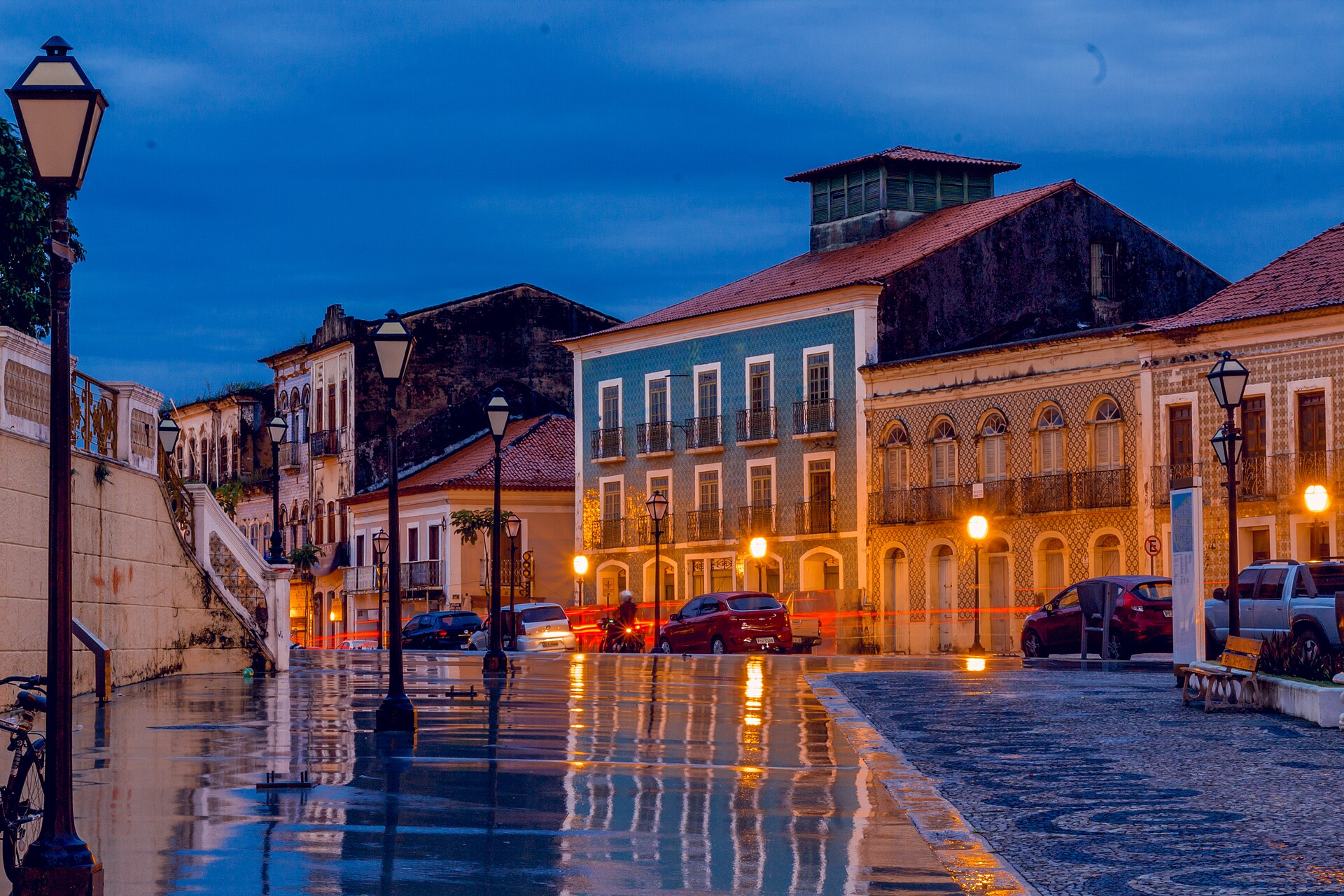
- Forte Santo Antônio da Barra — Coast north-west of the centre
Forte Santo Antônio da Barra is a replica fort on the island's coast, paired with a small historical museum. It explains how the area passed from French to Portuguese and then Brazilian hands. It is a compact stop that helps make sense of the city's layered past before heading into the old streets. - Pescador Monument — Seafront, north of the centre
The Pescador Monument honours the fishermen whose boats still work the bay. It stands on the seafront, a short stop for a photograph and a look across the water. Late afternoon suits it best, when the light softens, the sea breeze picks up and the heat of the day eases. - Ponta d'Areia — North-west coast
Ponta d'Areia is the popular beach closest to the centre, with a pier reaching into the bay. It is easy to reach and crowded at weekends, and the water can be less clean than at beaches further east. It works better for a sunset stroll and a drink than for a long swim. Lagoa da Jansen is nearby. - Calhau — Eastern beaches
Calhau is the beach for an easy day out. The water is calmer than at Ponta d'Areia, and kiosks and restaurants line the sand, serving fried fish and cold drinks. Olho d'Água, a little further east, has similar facilities and is slightly quieter, which makes it a useful alternative on crowded weekends.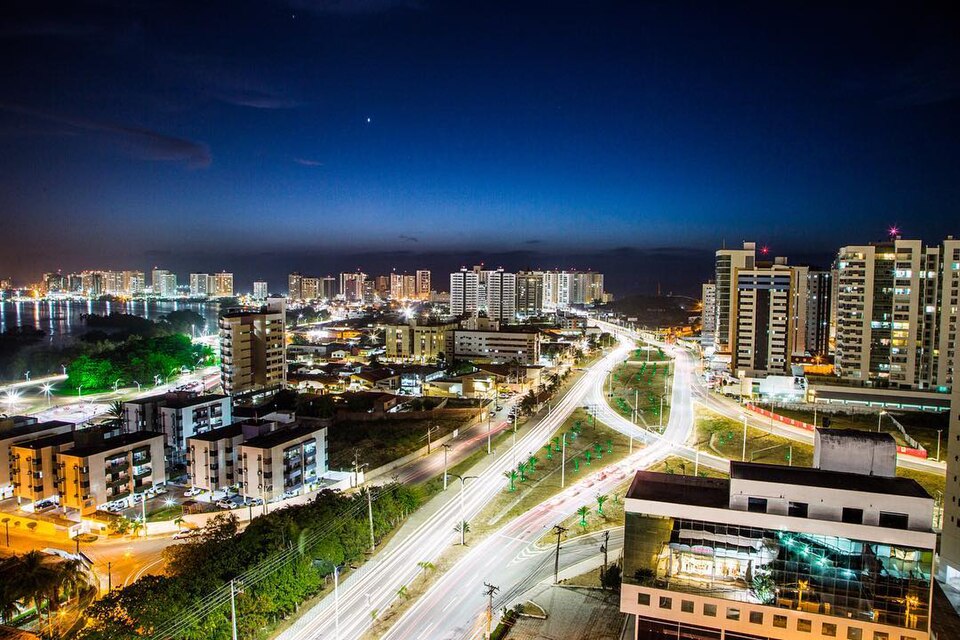
- Praia de Carima — Far eastern coast
Praia de Carima, further east along the coast, is known for its sand dunes. It takes more effort to reach than the city beaches, so arrange transport in advance, carry water and a hat, and expect little shade. The reward is open space and a feel for the Maranhão coast away from the city.
Culture
São Luís is nicknamed the Tiles City, because glazed tiles cover so many façades in the historic centre, and also the Brazilian Athens. Its culture draws as strongly on African traditions as on European ones.
Tambor de Crioula is an Afro-Brazilian dance in which women in bright, full skirts move before a row of drummers, whirling in time to the beat and taking turns to claim the centre of the circle. A museum in the city, the House of Tambor de Crioula, is devoted to keeping the tradition alive.
Tambor de Mina is the local form of Afro-Brazilian religion. Casa das Minas, a temple, or terreiro, founded by African women in the 1840s, belongs to that heritage. These are living places of worship, not stages.
Bumba Meu Boi is a musical folk play, a pantomime built around a bull figure, with costume, song and dance. Reggae also has a devoted following in São Luís, and bars near the port play it late into the evening, while forró draws dancers onto the pavements outside popular venues.
At any terreiro or ceremony, ask permission before photographing or filming anyone, and follow the guidance of the people running it.
What to wear
Traditional dress in São Luís is tied to its festivals and Afro-Brazilian heritage. In Tambor de Crioula, women dance in wide, flowing skirts of bright printed cotton, with fitted blouses, head wraps and plenty of jewellery, so the skirts swirl as they turn. Bumba Meu Boi performers wear showier costumes, with embroidered cloth, beads, sequins, ribbons and feathers, and the bull figure itself is richly decorated. These outfits belong to festivals and performances rather than daily life.
Day to day, people dress for the heat: cotton or linen shirts, shorts, light dresses, football shirts and flip-flops. Swimwear is normal on the beach, but locals cover up again for town and restaurants. Evenings out, especially for forró and reggae nights, call for neat but light clothes.
Visitors should pack breathable fabrics, a hat, sunglasses and high-factor sunscreen. Sturdy sandals or trainers with grip suit the uneven cobbles of the old town, which turn slippery after rain. A light rain jacket helps in the wetter months. Cover shoulders and knees for churches and any religious house, and keep swimwear for the beach.
What to eat
- Arroz de cuxá — Home-style restaurants in the old town
Rice cooked with herbs, a Maranhão staple, usually served beside fish or shrimp. Its flavour is earthy and quite different from plain rice, and it is worth ordering at least once to taste the local kitchen. - Peixada — Seafood restaurants and beach kiosks
A fish stew served hot with rice and sides, and a good order for a long, unhurried lunch. The fish comes from the bay and the coast, so the choice varies with the day's catch. - Torta de camarão — Cafés, bakeries and beach kiosks
Shrimp pie, a savoury baked dish with a soft filling in pastry. It works as a snack or a small meal and often appears on menus alongside other seafood dishes. - Guaraná Jesus — Any café, bar or shop in the city
Maranhão's own version of the guaraná soft drink. It is pink and sweeter than other brands. The name comes from its inventor, not religion, which surprises first-time visitors reading the label. - Beach-kiosk seafood — Calhau and the other city beaches, busiest at weekends
Grilled or fried fish and shrimp served at simple stalls on the sand, with cold drinks in the shade. It is the easiest way to eat well on a beach day, especially at Calhau.
Plan it
Best time. August to November is the drier stretch, with sea breezes that take the edge off the heat. The wet season runs roughly from January to June, with heavy downpours. It is hot and humid all year.
How long. 2–3
Getting there. The city has its own airport, and a city bus runs from outside the terminal to the centre; get off near Rua do Passeio and walk down pedestrian Rua Grande to reach the eastern edge of the old town. Long-distance buses arrive at a station about 8 km south-east of the centre, with city buses and taxis on to the old town waterfront.
Budget. mid
Tips
- Explore the old town early in the morning, before the heat and the strongest sun
- Sundays are quiet in the old town, so plan beach time or a festival visit then
- Carry water and sun protection everywhere, and a light rain jacket in the wet season
- Bring a card and some cash for kiosks, small shops and taxis
- Check the city's official site, https://www.saoluis.ma.gov.br/, for events and opening times
Etiquette
- Ask before photographing people, especially performers and worshippers
- Dress modestly for churches and religious houses
- Keep swimwear for the beach, not the old town streets
Nearby
Sources
- Wikidata Q28441 (CC0)
- Wikipedia: São Luís, Maranhão (rev 1382806985) (CC BY-SA 4.0)
- Wikivoyage: São Luís (rev 5419345) (CC BY-SA 4.0)
- Street in São Luís, Brazil — Marcus Guimarães (CC BY 2.5)
- Photo of São Luís, Maranhão, Brazil — Lechenet.com (CC BY 3.0)
- Monument in Brazil — JLPizzol (CC BY-SA 4.0)
- Centro histórico de São Luís — Alan Rodrigues (CC BY-SA 4.0)
- Imagem noturna da Ponta do Farol — Miguel Oliverr (CC BY-SA 4.0)
- Fountain in São Luís, Brazil — Marcus Guimarães (CC BY-SA 2.0)
- View of São Luís de Maranhão — Johannes Vingboons (Public domain)
- Baía de São Marcos — SLRTDM (CC BY 3.0)


