Sanya
Sanya, People's Republic of China
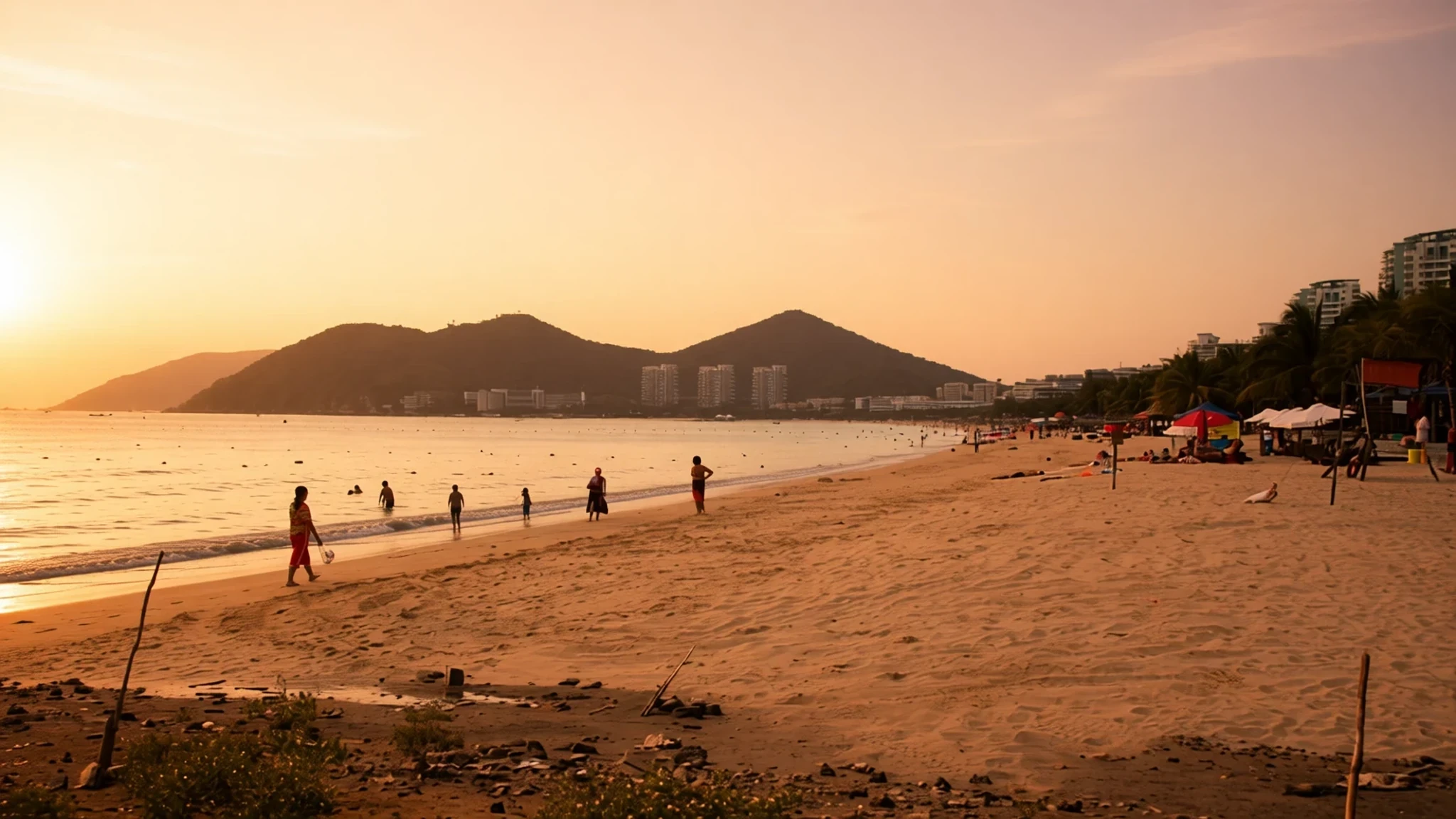
Sanya is a warm, sunny resort city on Hainan's southern tip, best enjoyed in the drier winter months.
The place
Sanya sits at the southern tip of Hainan Island, on the shore of Sanya Bay in South China. Sanya is among Hainan Province's four cities at prefecture level, and roughly one million people call it home. Its identity is firmly that of a resort city, with large hotel complexes along the waterfront and beaches that fill up during Chinese holiday weeks. The tropical climate keeps the sea warm for much of the year, and the city has become a training base for the national beach volleyball team, which says something about how reliably the sand is used.
Offshore, the Sanya coral reef lies within a national protected nature reserve spanning 4000 hectares. Phoenix Island, an artificial island in the bay, carries a seven-star resort and a cluster of five-star hotels, and it is one of the more striking sights seen from the water. Inland, the Guanyin of Nanshan rises as a large Buddhist statue of the bodhisattva Guanyin, counted among the tallest statues in the world.
The city is spread out, so most visitors choose one stretch of coast as a base and travel by taxi or bus to the rest. Dadonghai is the easiest area for shops and restaurants, though much of its signage is in Chinese and Russian rather than English. Summers are hot and humid, with sudden rain showers that pass quickly. Prices range widely between beachfront resorts and local eateries, so check current rates directly with each place.
Its story
Sanya's name reflects how far it once felt from the centre of power. In ancient times it was known as Yazhou, later romanised as Aichow, a name that means something like cliff state or prefecture. Its recorded history reaches back to the Qin dynasty. Because the area was so remote from the political centres, it was sometimes called Tianya Haijiao, roughly 'the end of the sky and ocean', or simply the end of the earth. That distance made it a place of exile for officials who had fallen out of favour with rulers, and for a long time the coast carried the feeling of a last stop.
A different kind of traveller arrived during the Tang dynasty, when a Buddhist monk landed here by accident while crossing the sea on a missionary journey to Japan. The site became a staging post on that route, a small but telling thread in the wider story of Buddhist travel across Asia.
The administrative map changed repeatedly in the twentieth century. The seat of government moved, neighbouring districts were separated and recombined, and the name Yaxian was used for much of the period. The modern city was formally established in 1987 under the name Sanya. Tourism grew quickly after that, and the resort identity is recent, even though the reputation of this coast as a remote edge is very old.
In 2007 the Beijing Olympic Organizing Committee announced that Sanya would host the first leg of the torch relay for the 2008 Summer Olympics in China. The announcement brought the city national attention at a moment when it was already reinventing itself as a holiday destination.
What to see
- Dadonghai Beach — Dadonghai, the central beach district
Dadonghai is the main beach area for visitors and the easiest place to find a bed, shops and a meal. The sand is wide and the bay is sheltered enough for a gentle swim in the warmer months. It is busiest at weekends and during holidays, and the seafront is lined with hotels and restaurants. English signs are scarce, so a translation app or a printed address in Chinese characters helps greatly.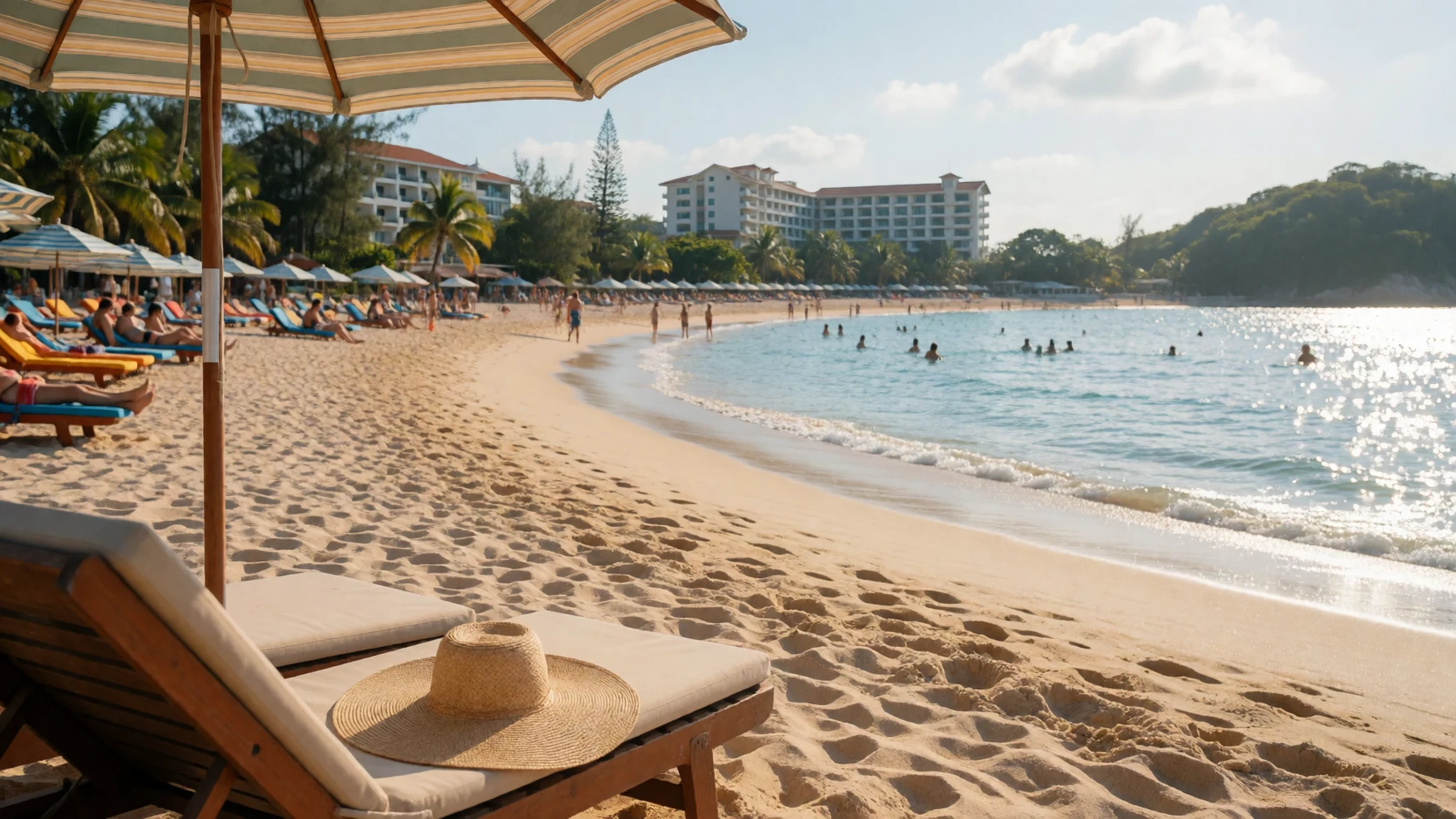
- Tianya Haijiao — Western Sanya, a coastal scenic area
Tianya Haijiao, the 'end of the sky and ocean', is one of the best-known beaches in China and has long been a favourite of couples and day trippers. The name carries the same ancient sense of distance that shaped the city's history. Its rocky shoreline is the photograph most people come for. Crowds are heavy through the middle of the day, so arriving early gives the coastline its best light and some room to move.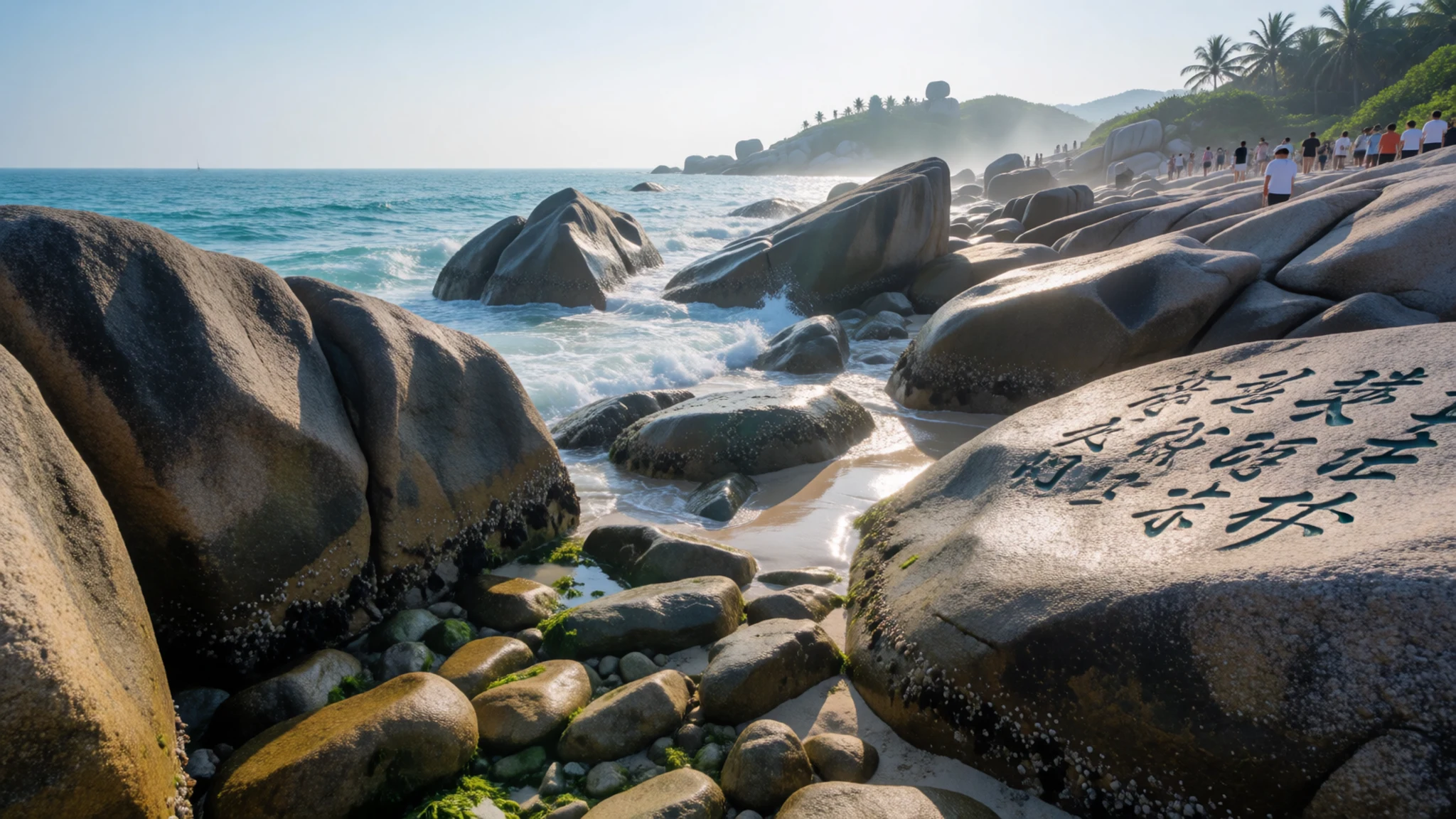
- Luhuitou Park — Luhuitou hill, near the city centre
Luhuitou Park sits on one of the taller hills near the city centre, with a statue of a deer looking back over its shoulder, flanked by figures of a Li boy and a Li girl. The Li are an Indigenous people of Hainan, and the sculpture ties the park to the island's wider cultures. A walk up through the trees gives views over the bay and rooftops, and it is a quieter option than the beaches on a hot afternoon.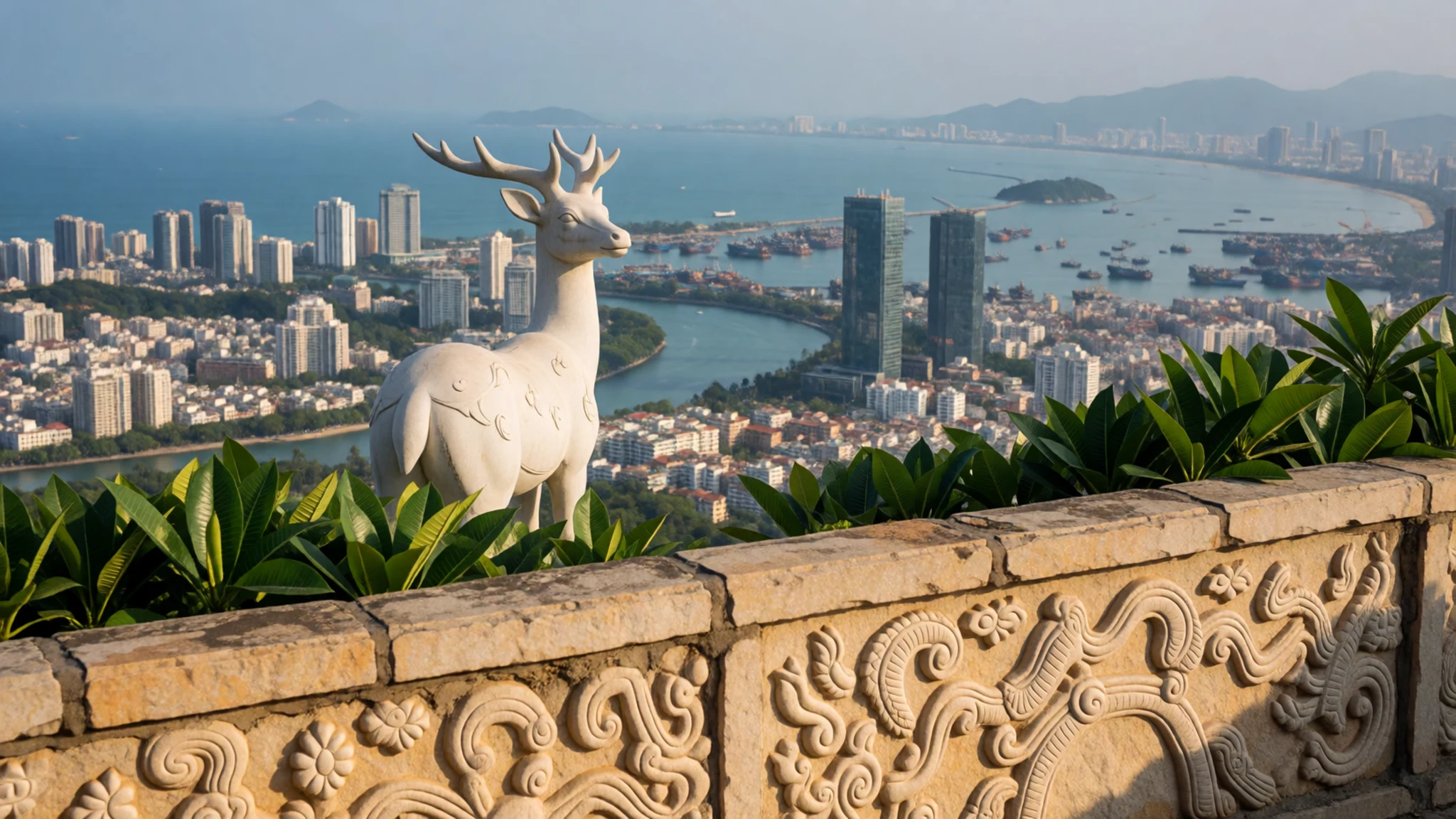
- Phoenix Hill — Central Sanya, with a cable car to the top
Phoenix Hill is the tallest landform in central Sanya, and a cable car carries visitors to the top for a wide view over the city and bay. The summit makes it easy to read the layout of the coast and the bay beyond. Photography is restricted near the military base on the hill, so pictures are best aimed at the town and the sea rather than the perimeter fences.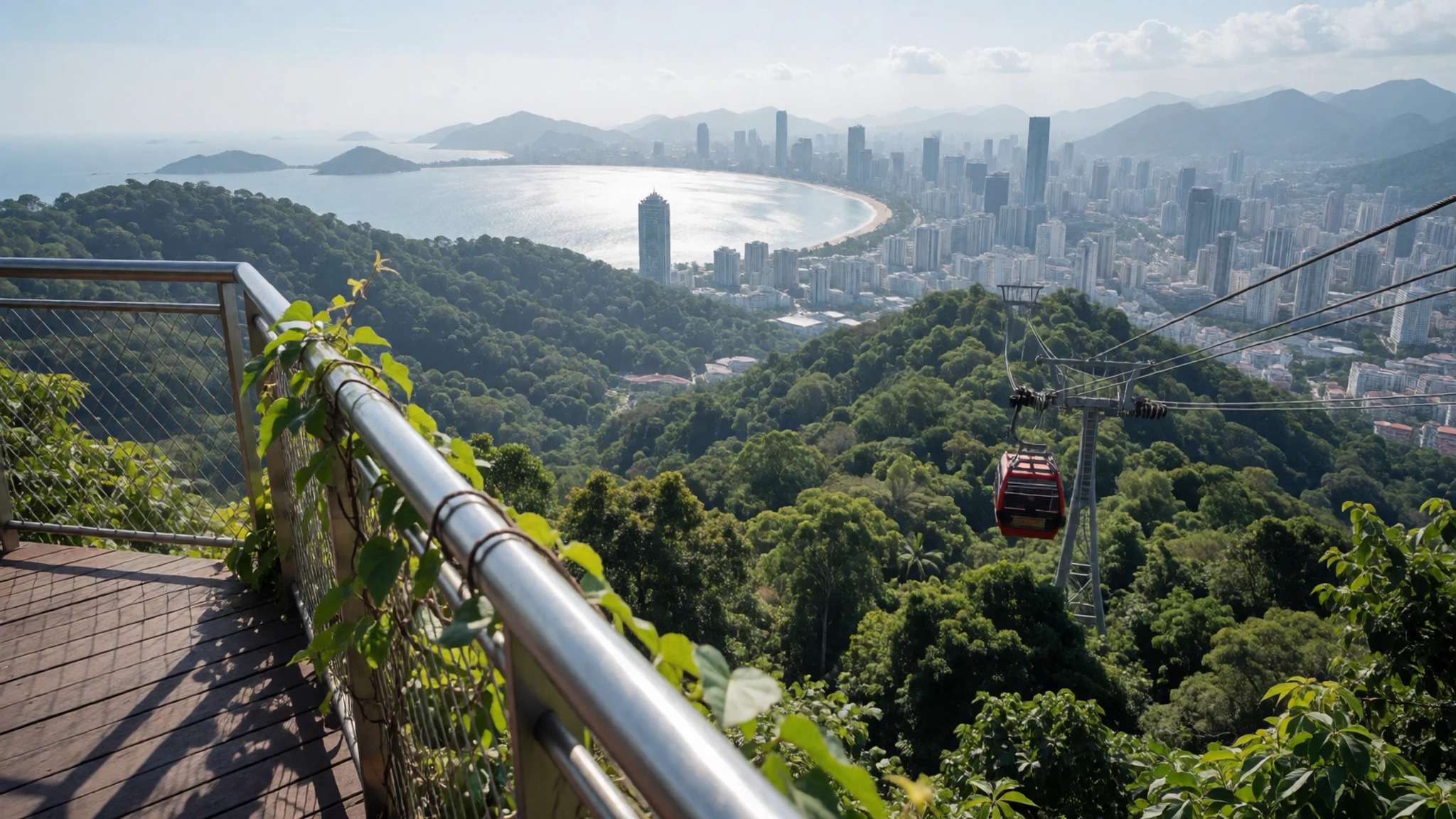
- Guanyin of Nanshan — Nanshan, near the Nanshan Temple
The Guanyin of Nanshan is a large statue of the bodhisattva Guanyin, set near the Nanshan Temple. It is counted among the tallest statues in the world and can be seen from some distance as you approach. The site is an active place of worship, with a landscaped approach and a separate temple complex. Dress modestly, keep voices low, and allow time for the walk between the entrance and the statue.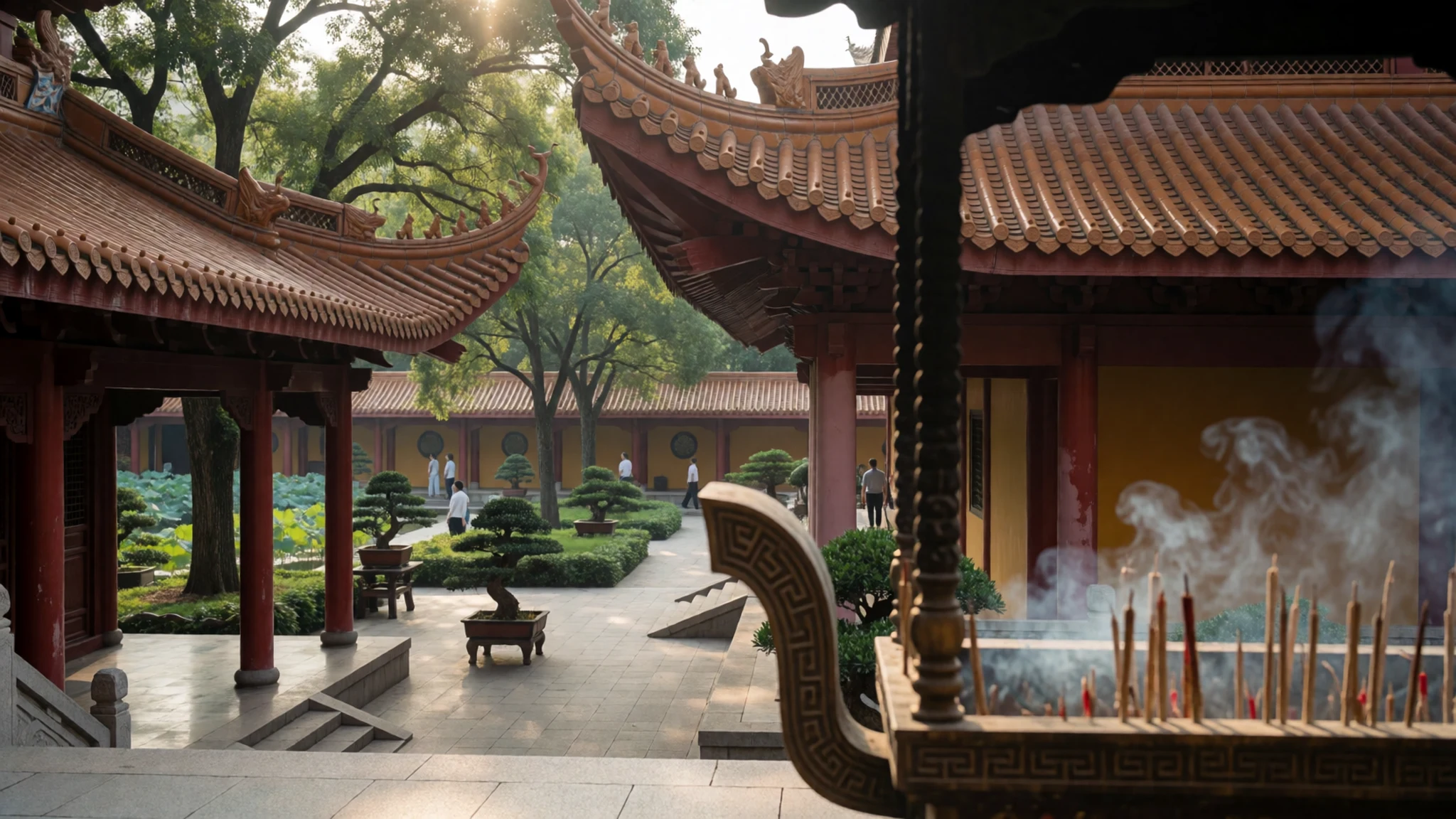
Culture
Sanya's residents include Han Chinese, Hainanese speakers, Li communities, and a small number of Utsul people, who are officially counted under the Hui ethnic category. Mandarin is the common language, and Hainanese is widely spoken in older neighbourhoods. Buddhism is practised across the city, most visibly at the Nanshan Temple grounds and at the Guanyin statue. Local life is also shaped by the Yulin Naval Base, a major military facility on the coast, which explains the restrictions on photography in some hilltop areas. Tipping is not expected in restaurants or taxis. Markets run early in the morning and into the late afternoon, and haggling is normal for souvenirs but not for food. Shops near the beaches often post prices in Chinese only, so a photograph of the price tag or a calculator helps. At the Nanshan Temple grounds, remove hats in shrine halls, keep your voice low, and ask before photographing people who are praying.
What to wear
Sanya's traditional dress is closely linked to the Li people of Hainan, whose women have long woven textiles on backstrap looms, typically in cotton and dyed in deep colours with geometric patterns. Older garments, and the weaving techniques behind them, are now more often seen in museums and craft shops than in everyday life. The Utsul community, though small, has its own clothing traditions shaped by Islam, and these are rarely seen in the tourist areas. Most people in Sanya today dress in ordinary Chinese urban style: jeans, T-shirts, light dresses, sandals and sneakers, with swimwear worn freely on the beaches. Resort staff often wear uniforms, and some restaurant staff dress in themed costumes. For a visit, light and breathable cotton or linen works best in the heat. A wide-brimmed hat and high-factor sunscreen are essential on open beaches. Carry a light cover-up or shawl for temples, and wear closed shoes with grip for the hill paths, and water shoes for rocky coves.
What to eat
- Fresh seafood at the live market — No. 1 Agricultural Products Market, a live seafood market in the city
The No. 1 Agricultural Products Market is a live seafood market rather than a restaurant, and it is popular for good reason. Buy a fish, prawn or crab from the tanks, then take it to a nearby eatery to be cooked to your taste. Bargaining is normal, and it is worth asking the price before you pick.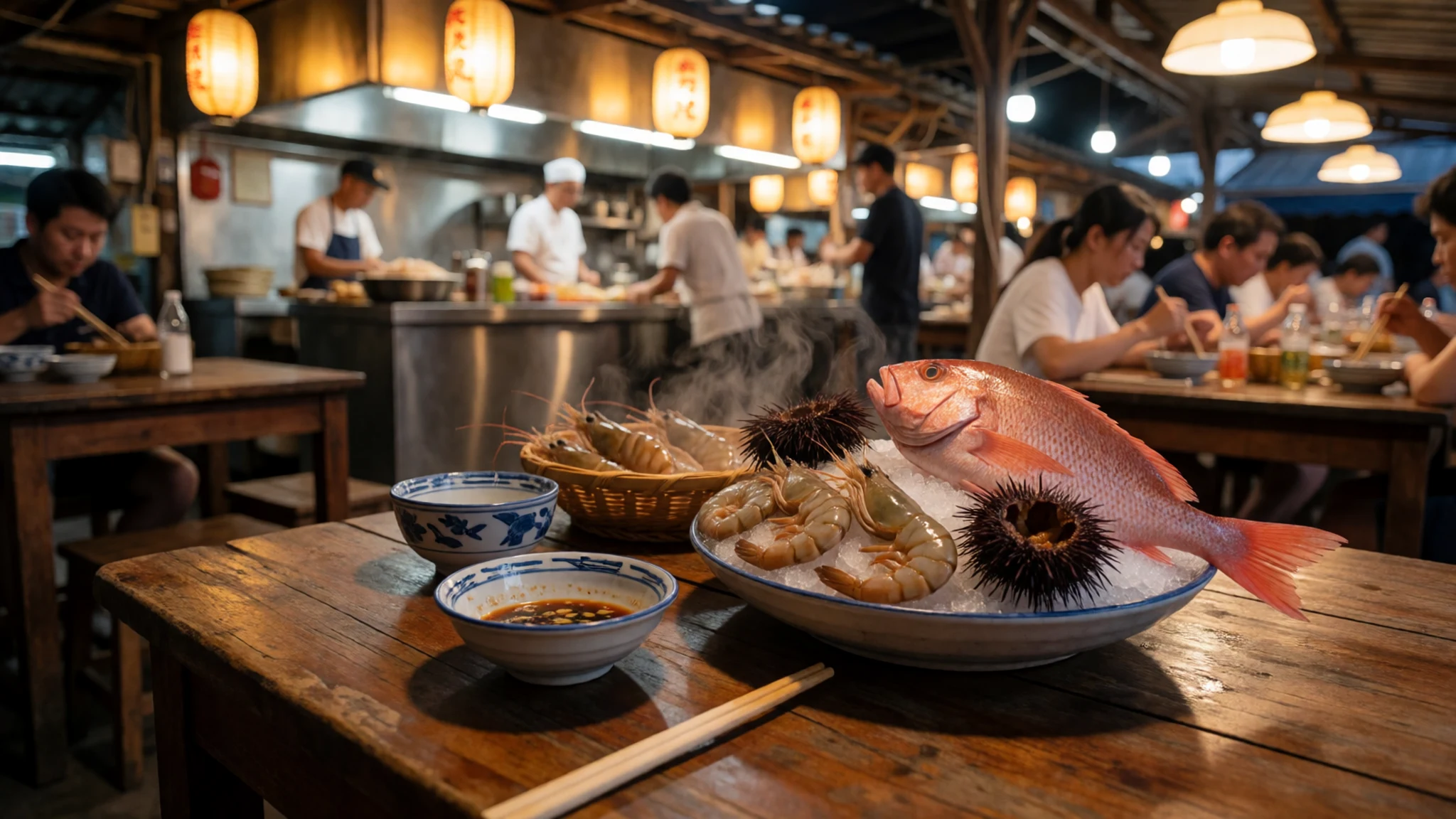
- Wenchang chicken — Hainanese eateries in the older parts of town
Wenchang chicken is Hainan's best-known poultry dish, a whole bird poached until tender and served cold with ginger, scallion and a savoury dipping sauce. It is often served with rice cooked in the broth. Look for Hainanese eateries away from the beach strip for the most traditional versions.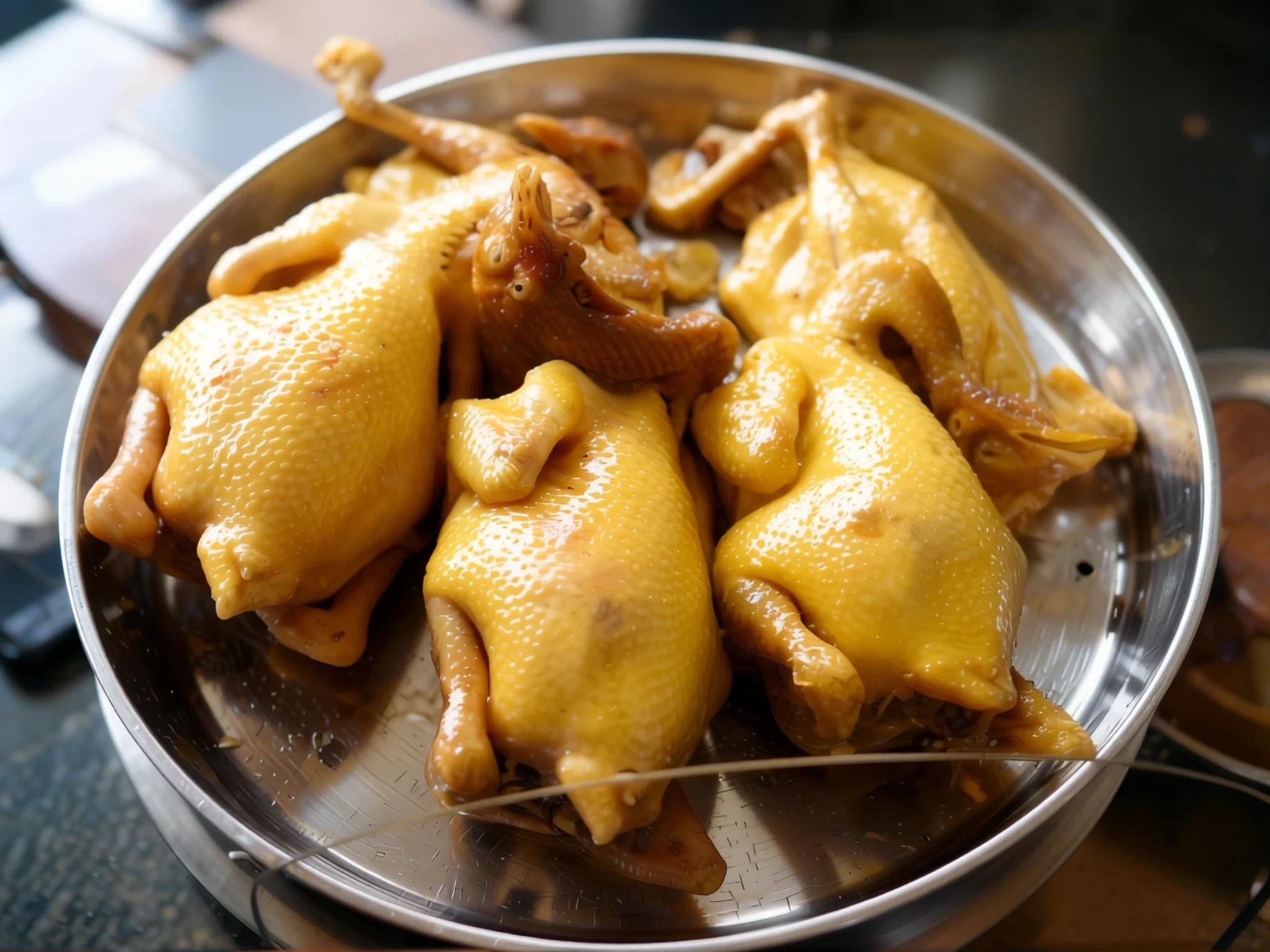
- Grilled seafood — Evening barbecue stalls along the Dadonghai seafront
Evening barbecue stalls line the Dadonghai seafront, grilling prawns, squid, scallops and fish over charcoal. Dishes are simply seasoned with garlic, chilli and cumin. Stalls are informal, with plastic stools and cold drinks, and the atmosphere is best after sunset. - Seafood hotpot — Hotpot restaurants in the city centre
Seafood hotpot is a communal meal in which a simmering broth is shared at the table, with fish, shellfish and vegetables cooked in it. Restaurants in the city centre offer a range of broths, from mild to spicy. Ordering is usually done by picking ingredients from a menu or a tray. - Tropical fruit — Fruit stalls near the Dadonghai beach road
Tropical fruit is cheap and plentiful in Sanya, with mango, papaya, pineapple and lychee often on sale from roadside stalls. Fruit is at its best in the local season, and stalls near the beach road are a good place to buy it cut and ready to eat. Carry tissues for the sticky juice.
Plan it
Best time. December to April is the most comfortable stretch, with drier weather and lower humidity that make beaches and walks easier. June to October is humid and wet, with October the rainiest month, and typhoon season brings the risk of disrupted ferries and flights.
How long. 3–4
Getting there. Sanya Phoenix International Airport lies a short drive from the city, and an airport bus runs into town. Air routes link Sanya to a majority of China's large cities. Guangzhou, Shanghai and Hong Kong are among them. Sanya also has a high-speed rail station. Haikou's larger airport is an alternative, followed by a rail or road transfer of several hours.
Budget. mid
Tips
- Book flights and beachfront rooms early for national holiday weeks
- Visit Tianya Haijiao and Dadonghai early in the morning to avoid the heaviest crowds
- Carry cash for small markets and stalls, as cards are not accepted everywhere
- Drink plenty of water and use sunscreen, as the sun is strong even on cloudy days
- Check weather and sea conditions before booking boat trips or swimming in open water
Etiquette
- Swimming is prohibited at some parks, and climbing on rocks is not permitted at Dongtian Park
- Do not photograph the military base from Phoenix Hill
- Dress modestly and remove hats in temple halls
Nearby
Sources
- Wikidata Q319804 (CC0)
- Wikipedia: Sanya (rev 1382951912) (CC BY-SA 4.0)
- Wikivoyage: Sanya (rev 5381171) (CC BY-SA 4.0)
- Alex Kwok, Hainan Sanya 1 (CC BY-SA 2.0)
- Anna Frodesiak, SuperStar Aquarius at Phoenix Island (CC0 1.0)
- Huangdan2060, Sanya Bay 21 (CC BY 3.0)
- Kitabc12345, The junction of Tielu Zhong Road and Yingbin Road, Sanya (CC0 1.0)
- 钉钉, Tianya Haijiao (CC BY-SA 4.0)
- Имати, Guanyin Statue, Sanya (CC BY 4.0)
- Charlie fong, Haitang Bay in Sanya (CC BY-SA 4.0)
- Army Map Service, Map of Sanya area, Hainan (Public domain)


