Sanxingdui
Sanxingdui, People's Republic of China
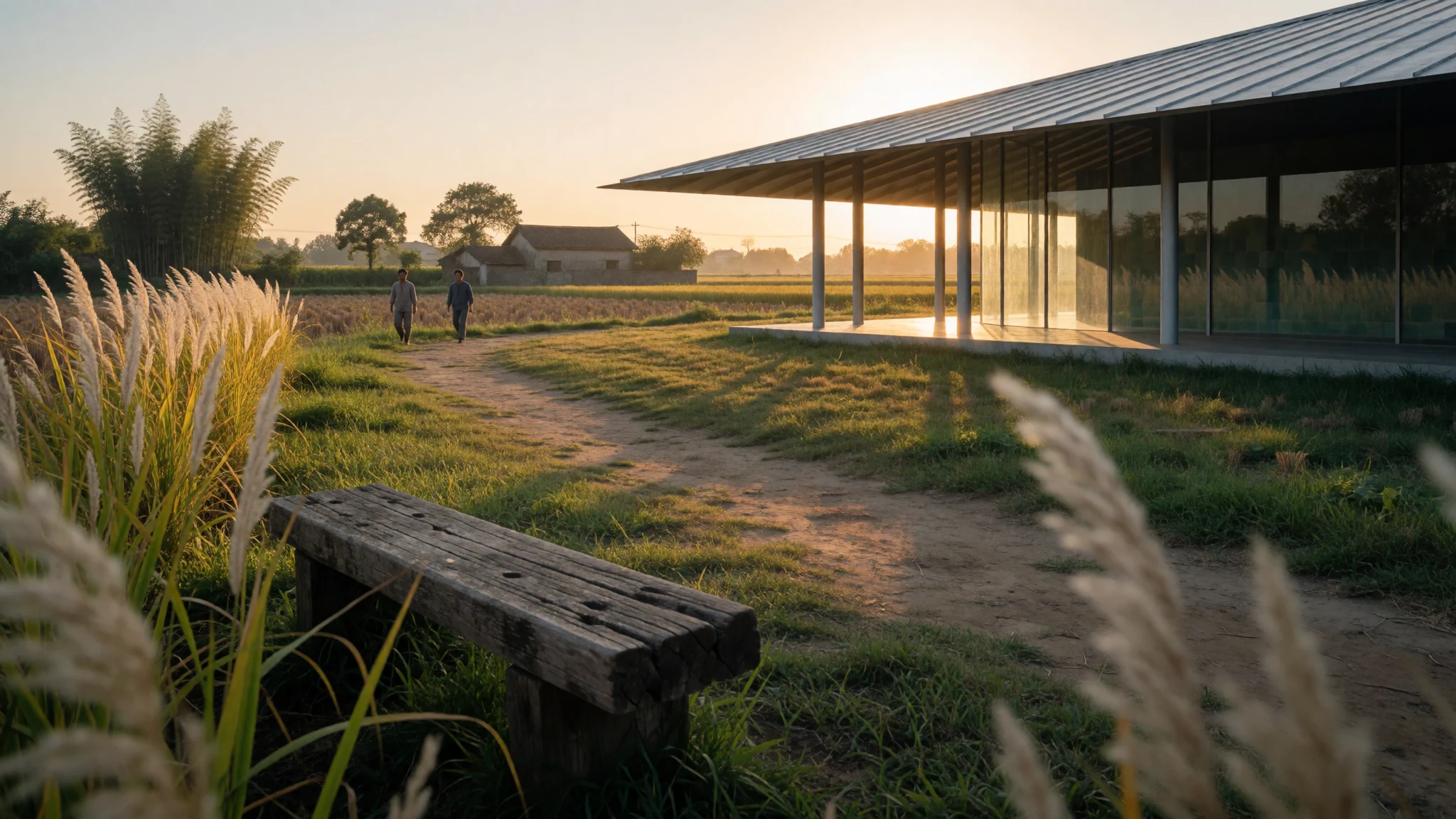
Sanxingdui is where a Bronze Age Sichuan culture left bronze masks with protruding eyes, unlike anything else from ancient China.
The place
Sanxingdui (三星堆) sits on the flat farmland of the Sichuan basin, around the small city of Guanghan, a short way north of Chengdu. The name is usually translated as 'Three Star Mound'. Today the place is two things at once: an excavation area where archaeologists are still working, and a large museum that holds the finds. Most visitors spend the bulk of their time in the museum halls, then walk out to see the pits and the grounds around them. The setting is green and quiet compared with Chengdu, but school groups and tour parties are common, so weekends and Chinese public holidays can feel crowded indoors. Sichuan takes its name from four rivers, and the province has long been known as a land of abundance, with rice, tea, bamboo and one of China's best-loved regional cuisines. Summers here are warm and muggy, winters are grey and damp, and the Chengdu climate table is a fair guide to what to expect. The site is on China's tentative list for World Heritage status, together with the Jinsha site in Chengdu, which makes a sensible second stop. Archaeologists connect the culture to the ancient kingdom of Shu, a society that flourished here before the state of Qin took control of the region. What sets Sanxingdui apart from other Chinese Bronze Age sites is style: the objects look nothing like those of the Yellow River heartland, and that strangeness is the real draw. Allow half a day at the least, and a full day if you like to read every label.
Its story
Sanxingdui first hinted at its secrets in 1927, when a preliminary find drew the attention of archaeologists, but the story only took off in 1986. That year, excavation turned up sacrificial pits packed with bronze, gold, jade and ivory, deliberately buried rather than lost. Radiocarbon dating placed the objects in roughly the twelfth to eleventh centuries BC, which makes the culture a contemporary of the Shang dynasty farther north. Yet the Sanxingdui bronzesmiths followed their own artistic path, casting tall figures and enormous masks that the Shang never made. Researchers think a strong central theocracy ran the society, with priests or rulers organising ritual on a grand scale. Trade links reached far: bronze came from the Yin region, and ivory from South Asia. Earlier, the area had belonged to the Baodun culture, and afterwards the state of Ba and the kingdom of Shu took over the region, until Qin conquered it. Why Sanxingdui faded is still argued over. Evidence of massive flooding and an earthquake has been found, and invasion by another people is another possibility. No one has settled the question, and no written records from the culture itself help. New pits have been opened in recent years, so the picture keeps changing, and the museum displays are updated as conservation work on fresh finds proceeds. That unfinished quality is part of the appeal.
What to see
- Bronze masks with protruding eyes — Sanxingdui Museum, Guanghan
The most startling objects in Sanxingdui are the bronze masks whose pupils project forward on columns, with ears swept out and up to the sides. Local scholars link the form to the legendary first king of Shu, Can Cong. Stand close and notice how large the casting is.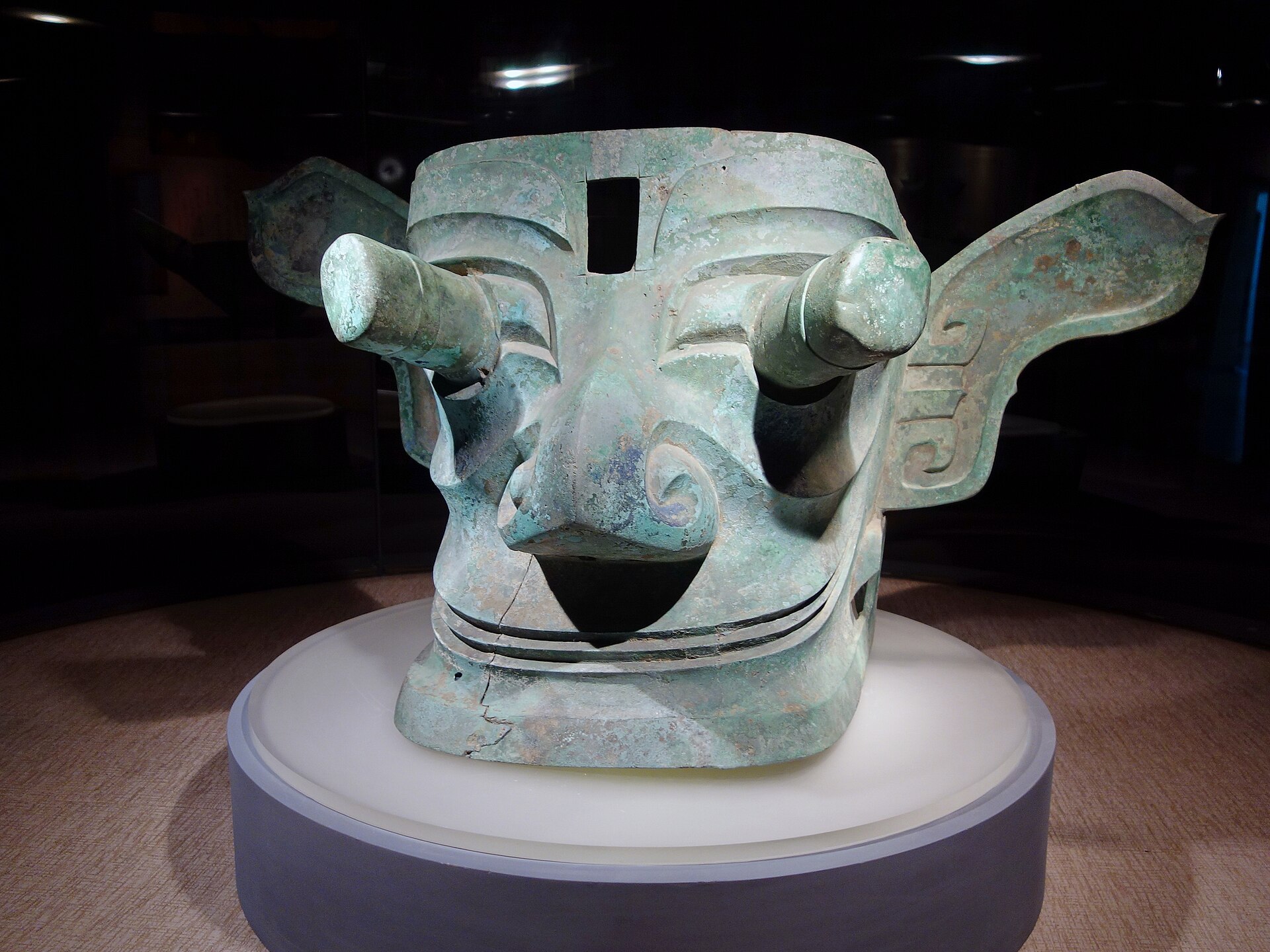
- Gold-foil masks and bronze heads — Sanxingdui Museum, Guanghan
Several bronze heads once wore thin gold foil masks, and a few still do. Their angular faces, almond eyes and big upper ears give them an eerie, almost abstract look. They sit beside plainer heads, so the museum lets you compare how each was finished and why the gold stood out.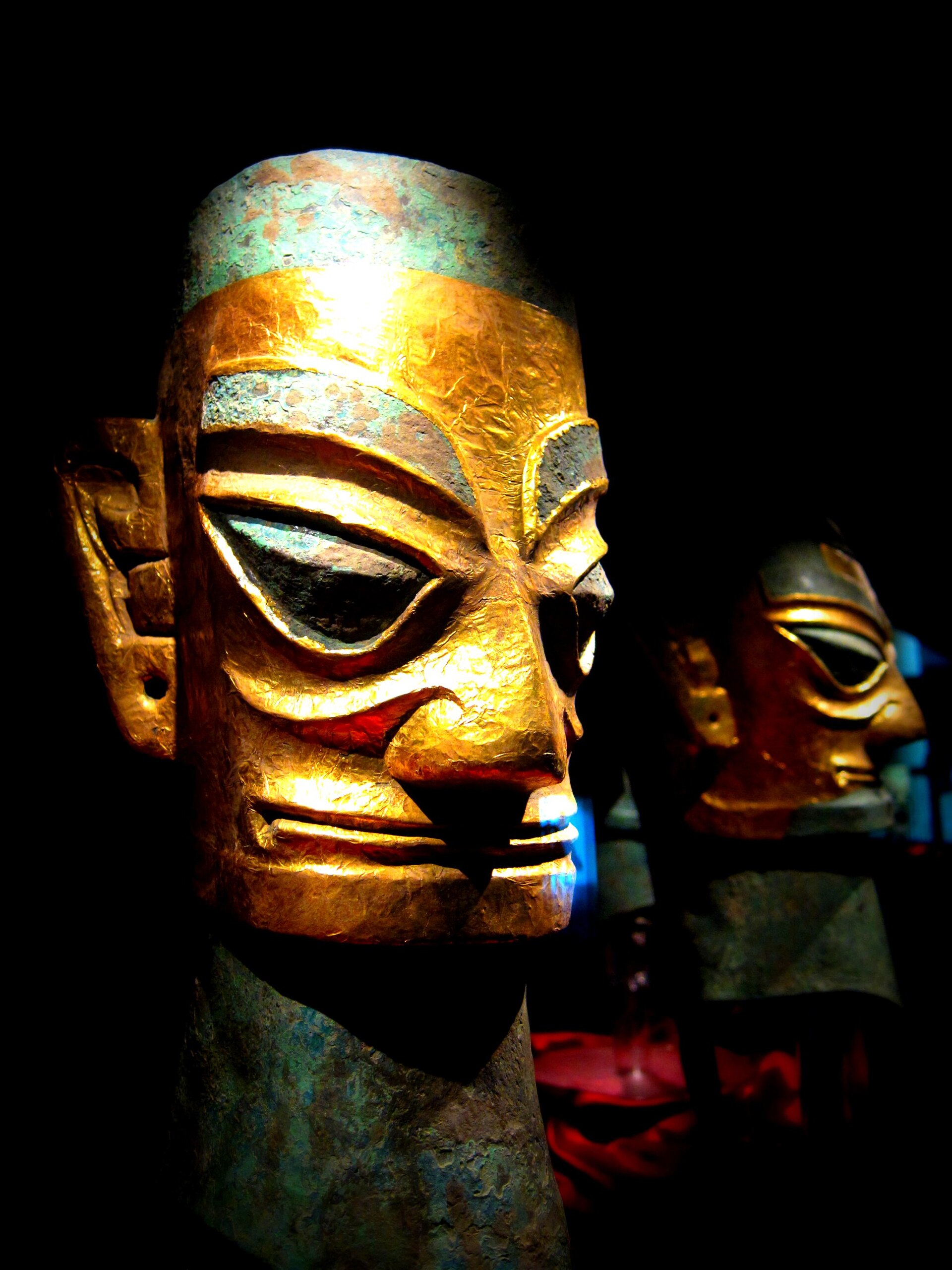
- The bronze standing figure — Sanxingdui Museum, Guanghan
A life-sized bronze figure on a platform dominates one gallery, taller than most visitors. It appears to wear layered, patterned robes and holds its hands in a ring, as if gripping something now lost. Researchers suggest a priest-king or ritual leader, though nobody can say for sure.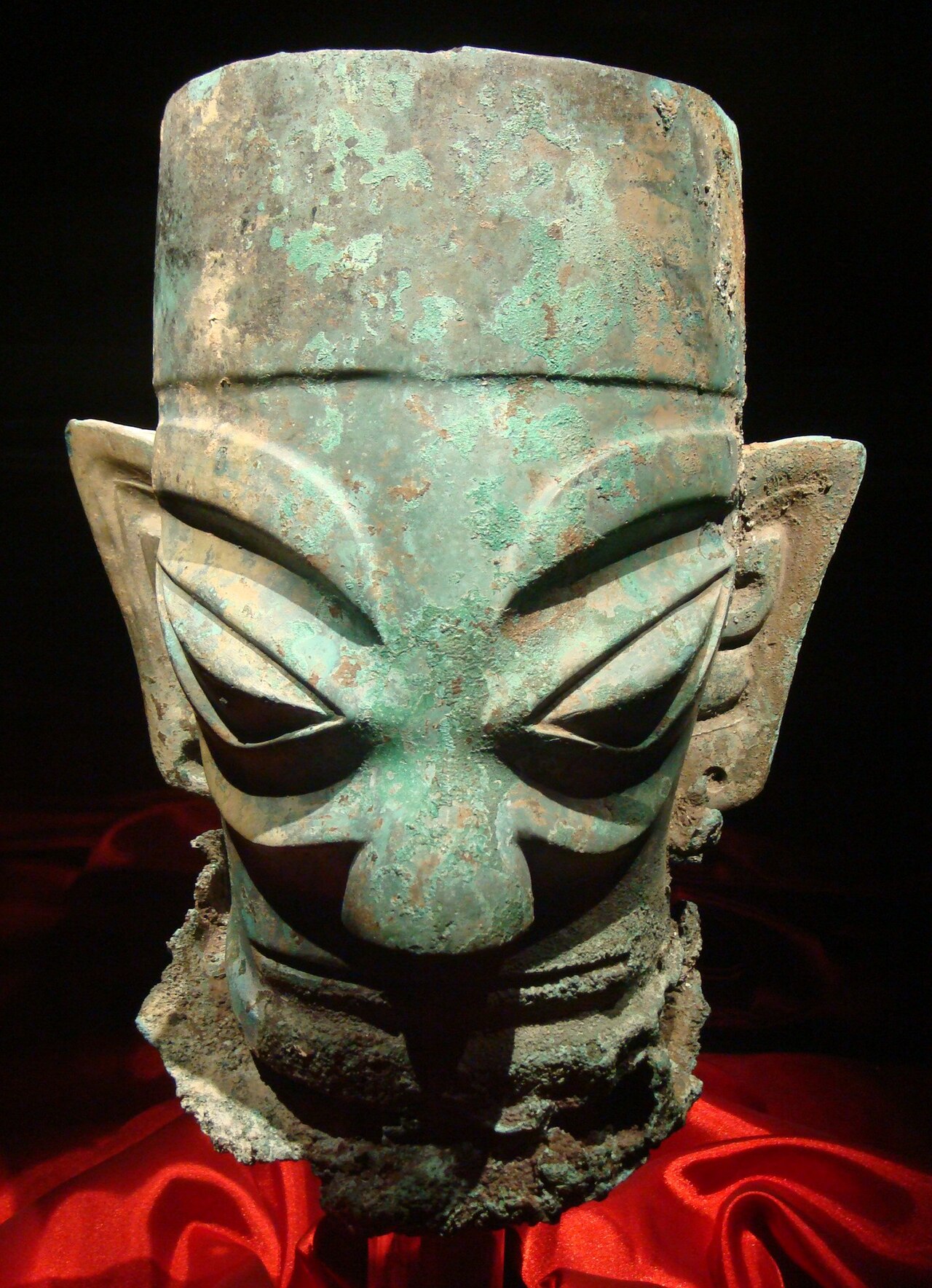
- The bronze tree and altar — Sanxingdui Museum, Guanghan
A tall bronze tree with branches, birds, flowers and ornaments stands in the museum, and some scholars read it as the Fusang tree of Chinese myth. Nearby, a tiered bronze altar mixes animals, figures and sacred symbols, showing how rich ritual life was here.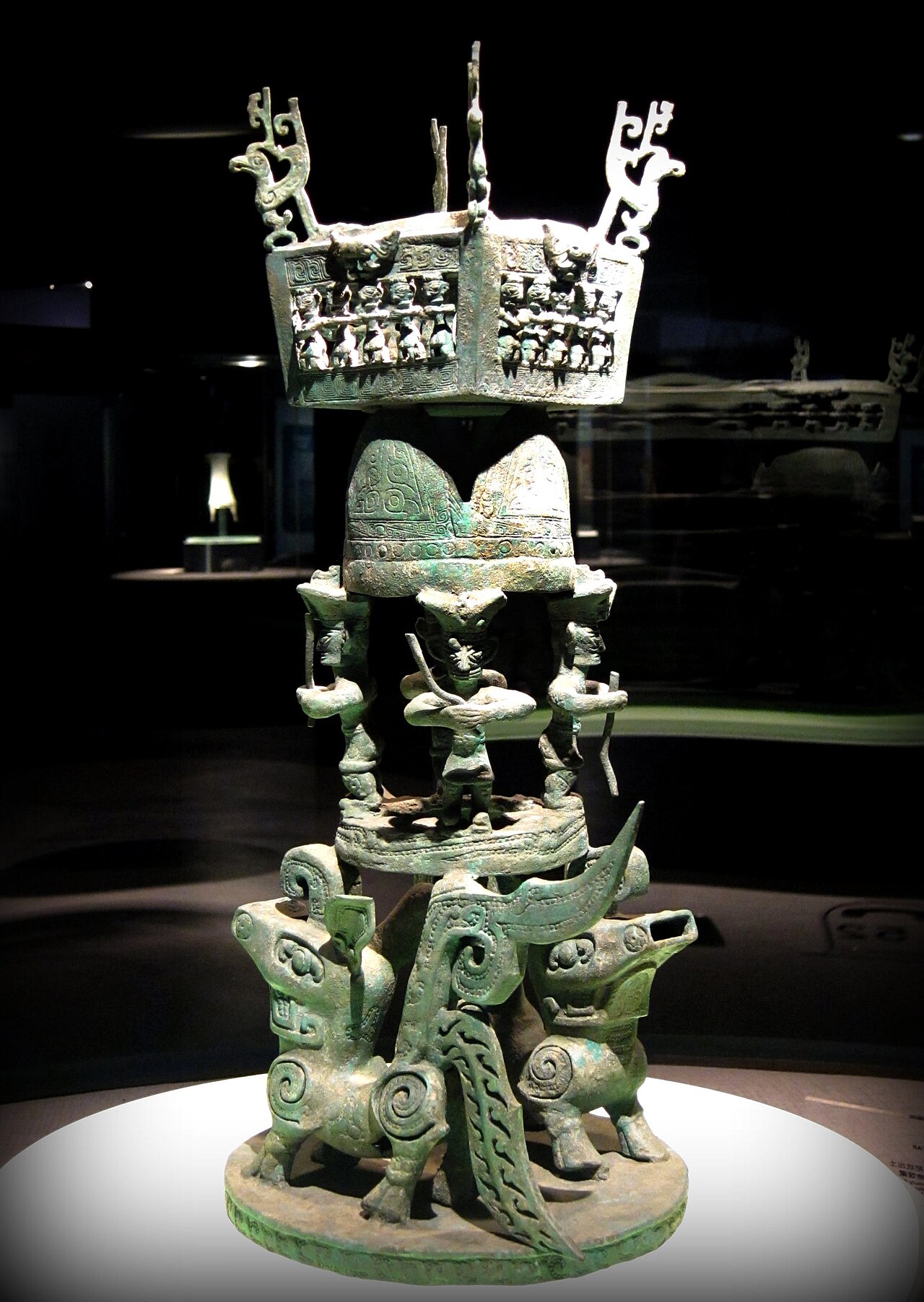
- The sacrificial pits — Excavation area, Sanxingdui site
Outside the galleries, the pit area shows where the treasures were buried, with protective halls over the excavations. It helps you picture the scale of the offerings. Archaeologists still work here, so what can be seen changes, and some areas may be closed for conservation.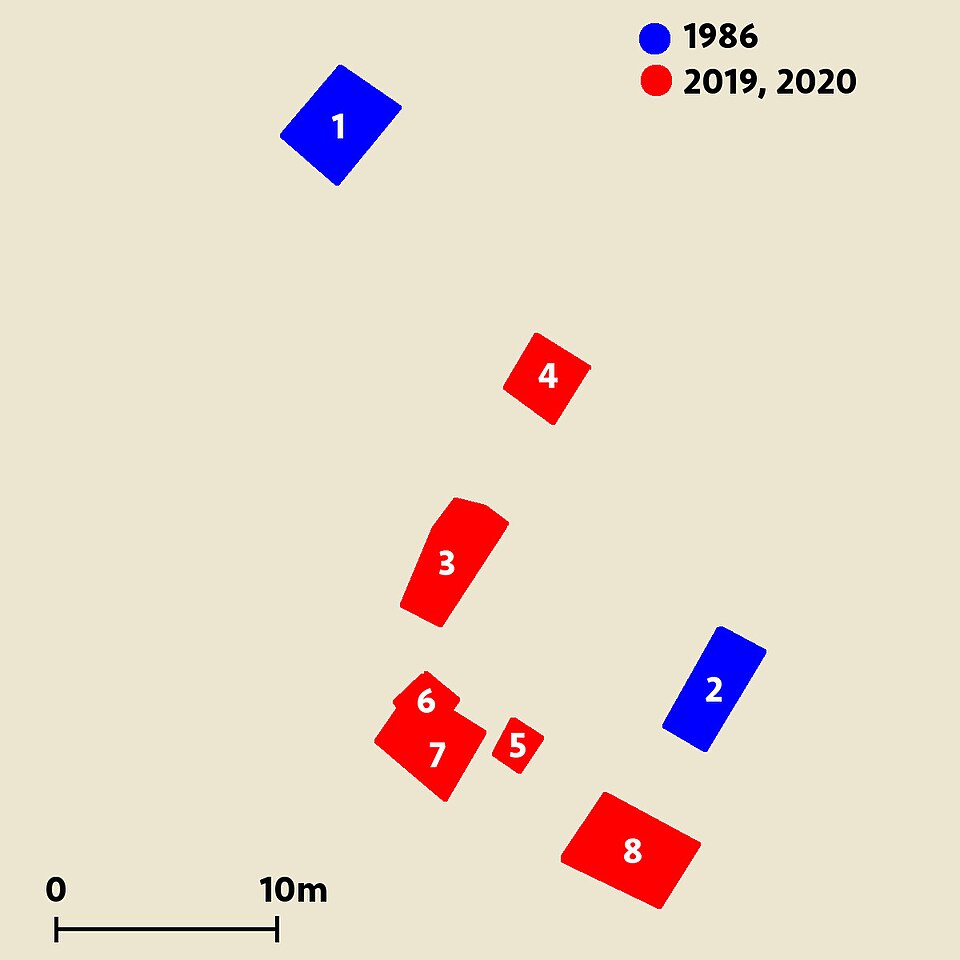
Culture
Sanxingdui is a culture without a known language, so everything about its beliefs comes from objects. The masks, tall figures and altar suggest a society organised around ritual, with a powerful priestly or royal class directing it. The exaggerated eyes and ears may point to ideas about seeing and hearing the divine, though that remains interpretation. The bronze tree has been linked to the Fusang tree of Chinese myth, and the protruding eyes are tied to the legendary first Shu king, Can Cong, in later written tradition. What makes the culture so absorbing is how different it looks from the Shang dynasty to the north, which lived at the same time and cast ritual vessels in a quite different tradition. Chinese visitors treat the site as part of national heritage, and it has become a point of pride for Sichuan, appearing on souvenirs, in cafés and in Chengdu's public art. Today's local life in Guanghan and across the basin is rooted in farming, tea houses and family meals, a world away from the ritual pits. Many visitors find the museum most rewarding when they go slowly, read the panels and let the strangeness of the faces sink in. Keep your voice low in the galleries, do not touch the cases, and ask staff before using flash or tripods, since rules on photography vary between halls.
What to wear
Nobody can say what people wore at Sanxingdui, because textiles rarely survive three thousand years in damp soil. The bronze figures suggest layered robes with patterned fronts and long sleeves, and the gold-foil and jewellery finds show a taste for ornament. Sichuan's famous textile tradition came later: Shu brocade, a woven silk with coloured patterns, is the region's best-known cloth, and you can see it in Chengdu museums and shops. In the western highlands, Tibetan, Qiang and Yi communities keep their own dress, with wool, embroidery and silver jewellery appearing at festivals and weddings. Around Guanghan, everyday clothing today is simple and practical: jeans, trainers, light jackets, and umbrellas or ponchos when it rains. Younger people in Chengdu follow current Chinese and Korean fashion, while older residents often favour plain, comfortable layers. For visiting, the site is not a religious one, so there are no strict modesty rules, but the museum is large and the grounds involve a lot of walking. Wear comfortable, closed shoes with a good grip, since paths get slick after rain. In summer, bring light cotton, sun protection and water, as the air is humid. In winter, pack a warm layer and a waterproof, because the museum halls can be cool and damp. A small bag helps, as bulky rucksacks may need to be left at a storage point.
What to eat
- Hot pot (火锅) — Hot pot restaurants in Guanghan town and across Chengdu
Sichuan's signature meal is a bubbling pot, often split into a fiery side and a milder side. Thin slices of meat and vegetables are dropped in to cook at the table. Share it with a group, and order a cooling drink on the side. - Kung Pao chicken (宫保鸡丁) — Family-run eateries and canteens around Guanghan
Diced chicken is stir-fried with peanuts, dried chillies and Sichuan pepper in a sweet, sour and savoury sauce. It is a gentle introduction to the local style, and easy to find in plain family eateries near the site. - Twice-cooked pork (回锅肉) — Any Sichuan restaurant, from small canteens to formal dining rooms
Pork belly is boiled, sliced thin and stir-fried with chilli bean paste and leeks until the edges crisp. Rich, salty and deeply savoury, it is usually eaten with plain rice, and a staple of home cooking across Sichuan. - Málà dishes — Street stalls, night markets and noodle shops in Chengdu
Málà means numbing and hot, the tingling effect of Sichuan pepper combined with chilli. It runs through stir-fries, noodles and skewers. Ask for less spice if you are unsure, and keep tea or soft drinks handy. - Fresh tea drinks — Tea houses and drink shops in Chengdu city centre
Tea is part of daily life in Sichuan, from old-style tea houses to modern chains such as Chapanda, which mix fresh-brewed tea with fruit. They are a cooling break after the museum, especially in the humid summer months.
Plan it
Best time. March–April and October–November, when the air is mild and the museum is comfortable to walk around; summers are warm and humid, with rain, and winters are grey and damp. Chinese public holidays bring crowds.
How long. 1
Getting there. Fly into Chengdu, which has a large airport with domestic links and some international routes, then continue north to Guanghan by train, bus or taxi; the last stretch to the museum is a short local ride. Check current routes on mapping apps.
Budget. mid
Tips
- Arrive early, as galleries fill with tour groups by late morning
- Check the official museum site for opening days, tickets and booking rules before travelling
- Pair the visit with the Jinsha site in Chengdu to see more of the same culture
- Carry some cash and a mobile payment option, since cards are not accepted everywhere
- Bring water and an umbrella, as weather can turn quickly
Etiquette
- Keep voices low in the galleries and do not touch the display cases
- Ask staff before using flash, tripods or drones, as rules vary
Nearby
Sources
- Wikidata Q929072 (CC0)
- Wikipedia: Sanxingdui (rev 1382531398) (CC BY-SA 4.0)
- Wikivoyage: Sichuan (rev 5341298) (CC BY-SA 4.0)
- Photo: Sichuan Ancient Cultural Relics 02, Cyclohexane233 (CC BY-SA 4.0)
- Photo: Gold Mask, momo (CC BY 2.5)
- Photo: Bronze mask B, Tyg728 (CC BY-SA 4.0)
- Photo: Sanxingdui Gold Mask, 中国新闻网 (CC BY 3.0)
- Photo: Jinsha Gold Mask, Gary Todd (CC0 1.0)
- Photo: Sanxingdui pits overview, Bairuilong (CC BY-SA 4.0)
- Photo: Bronze head from Sanxingdui, Nishanshaman (CC BY 3.0)
- Photo: Bronze Holy Altar, momo (CC BY 2.5)


