Santiago Island
Santiago Island, Cape Verde
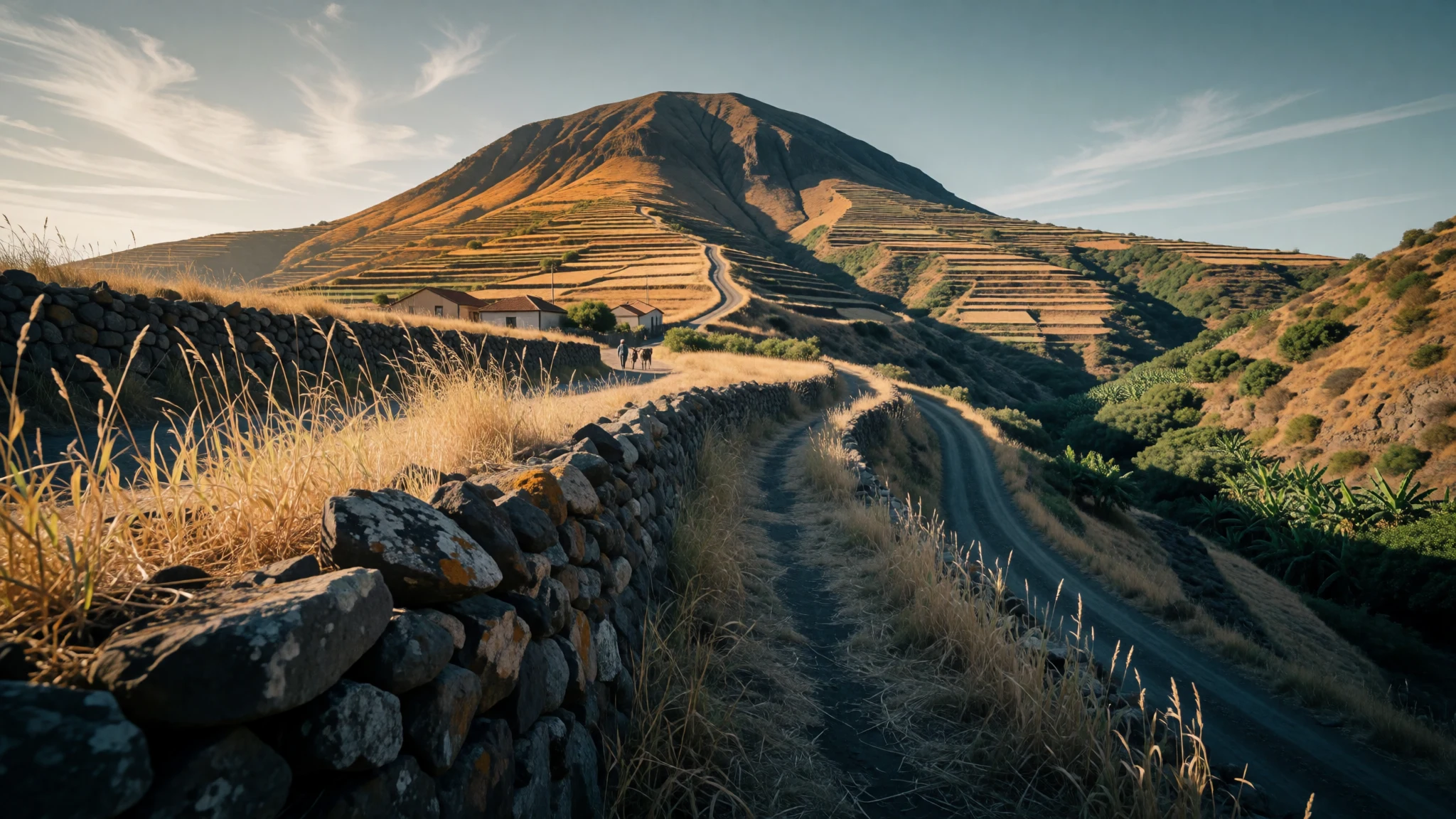
Santiago is Cape Verde's most varied island: colonial ruins, mountain walks, a lively West African capital and Creole music, with no resort polish.
The place
Santiago is the largest island of Cape Verde and home to about 290,000 people, a population that gives it a busier, more varied feel than most of its neighbours. It belongs to the Sotavento group, with Maio to the east and Fogo to the west, and Praia, the national capital, sits on the south coast. The island measures roughly 55 km by 29 km, yet it is folded into steep ridges, so even short journeys turn into long, winding drives. The landscape changes fast. The south and southwest sit in a dry rain shadow of yellow and rust, while the interior and east turn green after rain, with narrow valleys holding bananas, sugarcane, mangoes and coffee. The high point is Pico de Antónia, at 1,392 m, near the village of Picos, and the Serra Malagueta range rises in the north. The west coast is rugged, thinly settled and edged with dark sand. Santiago is not a resort island, and visitors hoping for sunbeds and buffets are better off on Boa Vista or in the Canaries. What it offers instead is walking, markets, Creole music, colonial ruins and a working West African capital. Farming, fishing and tourism keep the economy turning.
Its story
Santiago has a layered past, and it starts with geology. Around 73,000 years ago the eastern flank of neighbouring Fogo slid into the sea and sent a tsunami about 170 m high towards Santiago's shores. People arrived much later. António de Noli reached the island in 1460, and in 1462 he settled at Ribeira Grande, today's Cidade Velha, with relatives and families from the Algarve and Alentejo in Portugal. The town grew rich on the Atlantic slave trade and ranked second in wealth within the Portuguese realm. That fortune drew rivals and raiders: Francis Drake attacked in 1585 and the French corsair Jacques Cassard in 1712. Decline followed, and in 1770 the capital moved to Praia. When the slave trade ended in the nineteenth century, an economic slump set in, and Mindelo on São Vicente took over as the main port. Portugal invested little and gave local authorities scant autonomy, so discontent with colonial rule grew. Many islanders on Santiago, who had been disadvantaged by that system, backed Amílcar Cabral and the African Party for the Independence of Guinea and Cape Verde. Independence came in 1975, and the island's story since has been about building a country on very limited natural resources.
What to see
- Cidade Velha — South-west coast, west of Praia
Cidade Velha, once called Ribeira Grande, is the oldest European-founded settlement on the island and a UNESCO World Heritage Site. Ruined churches and a fort stand around a small harbour, and the setting is quiet. Go early, before the heat and any tour groups arrive.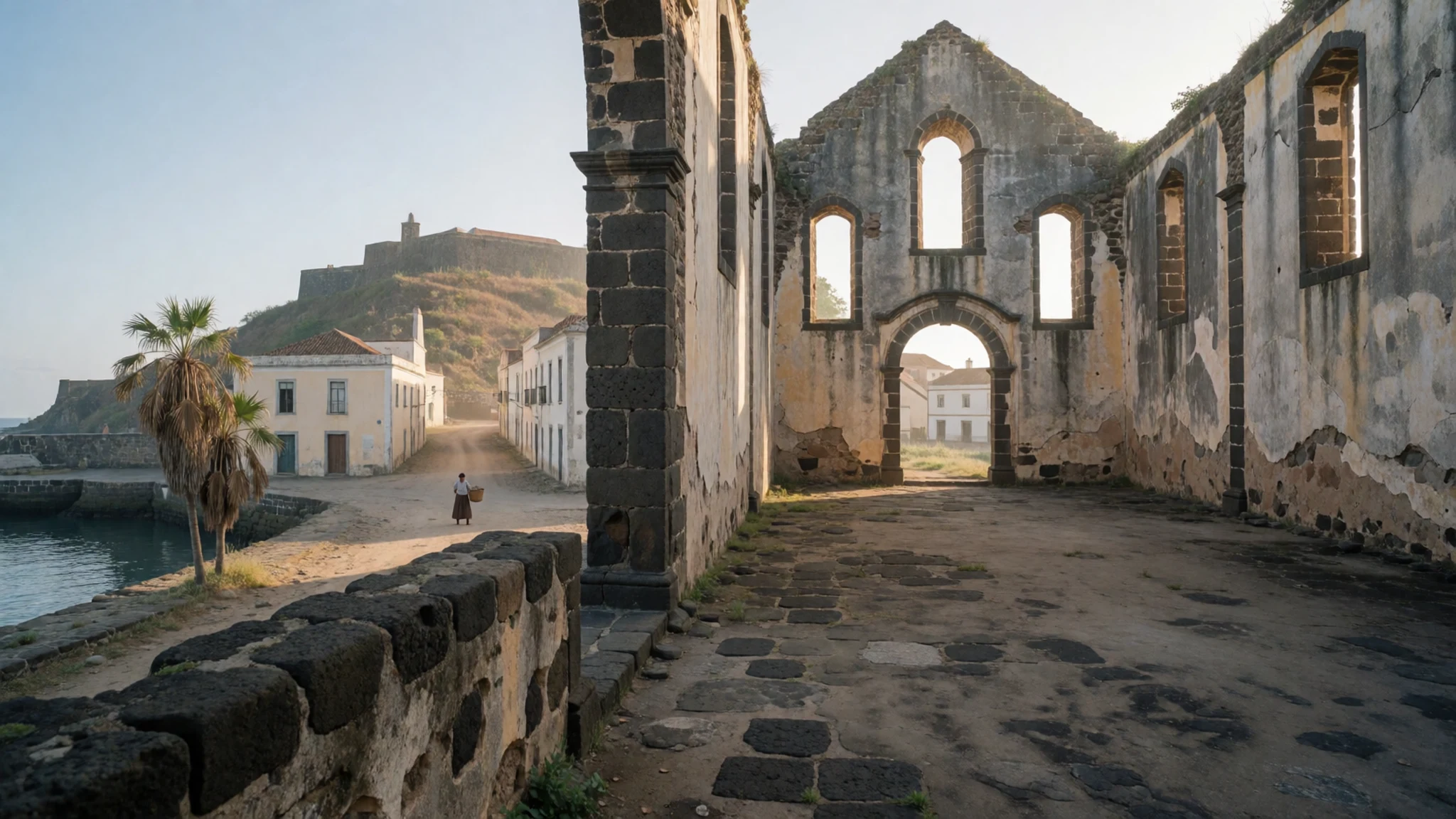
- Praia and the Plateau — Praia, south coast
Praia is the capital, and most of the island's museums and historical buildings are found around its old hilltop quarter, the Plateau. Wander the colonial streets, then drop down to the busy market for a sense of everyday Cape Verdean city life, noisy, practical and friendly.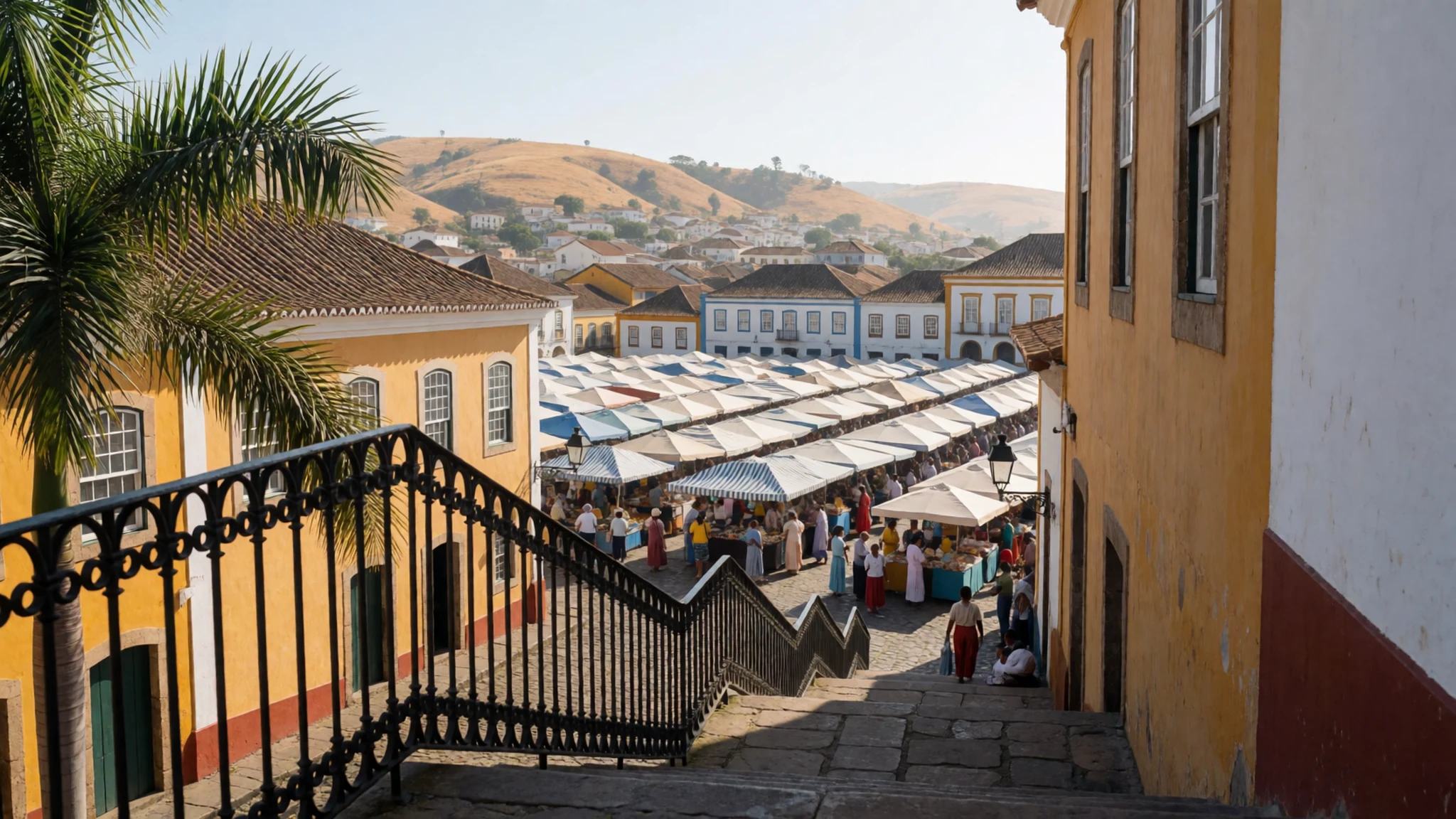
- Tarrafal and its former prison — North coast
Tarrafal is a relaxed northern town with a calm bay and a sandy beach where locals swim. Nearby stands the former prison used under the dictatorship, now a sombre place of memory. Allow time for both, and expect a heavy but worthwhile visit.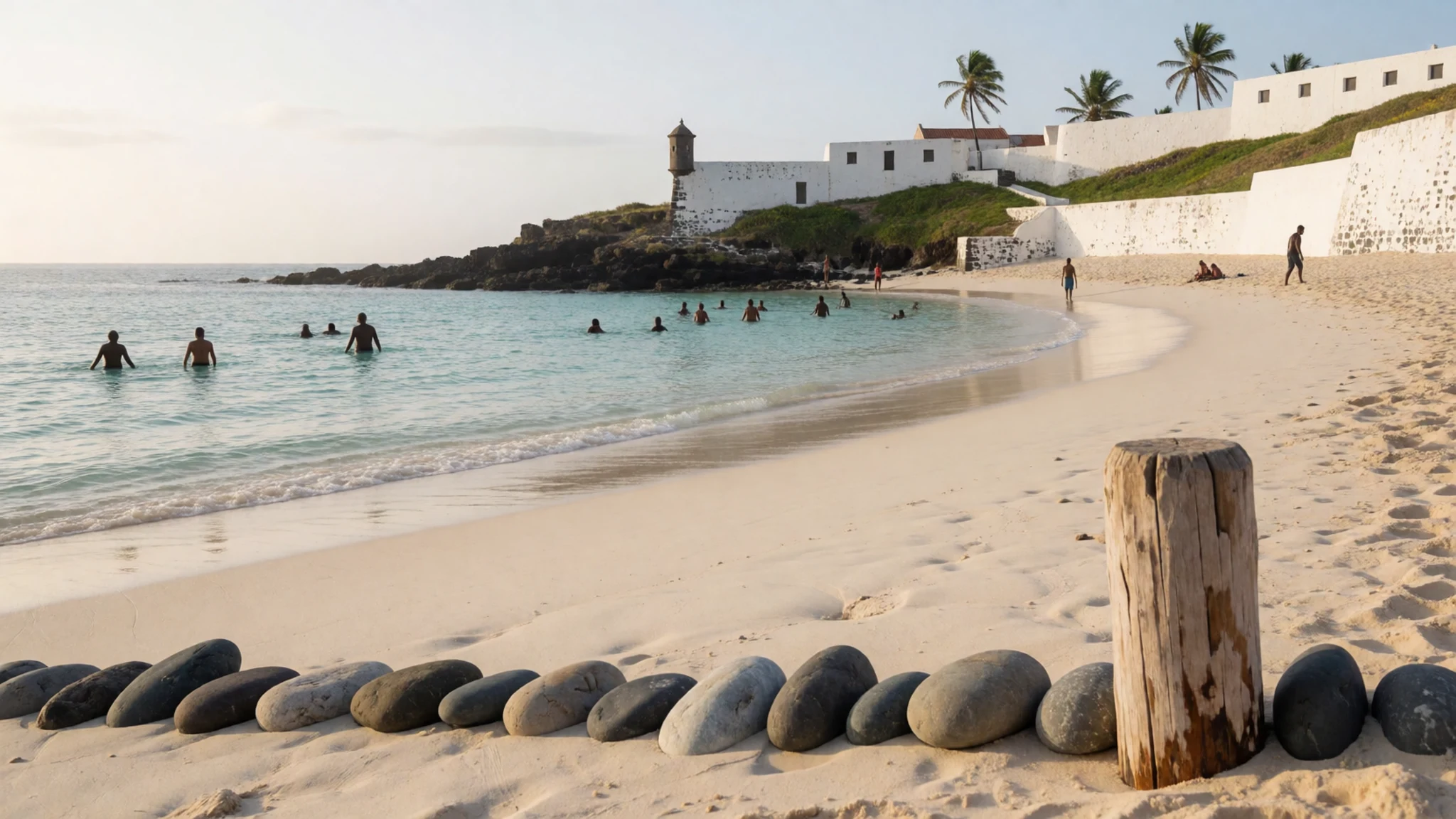
- Serra Malagueta — North of the island, between Assomada and Tarrafal
Serra Malagueta is the island's green northern range, cooler and often misty compared with the dry south. Trails run through farmland and scrub to ridge viewpoints. Hire a local guide if possible, since paths are poorly signed and the weather can turn quickly.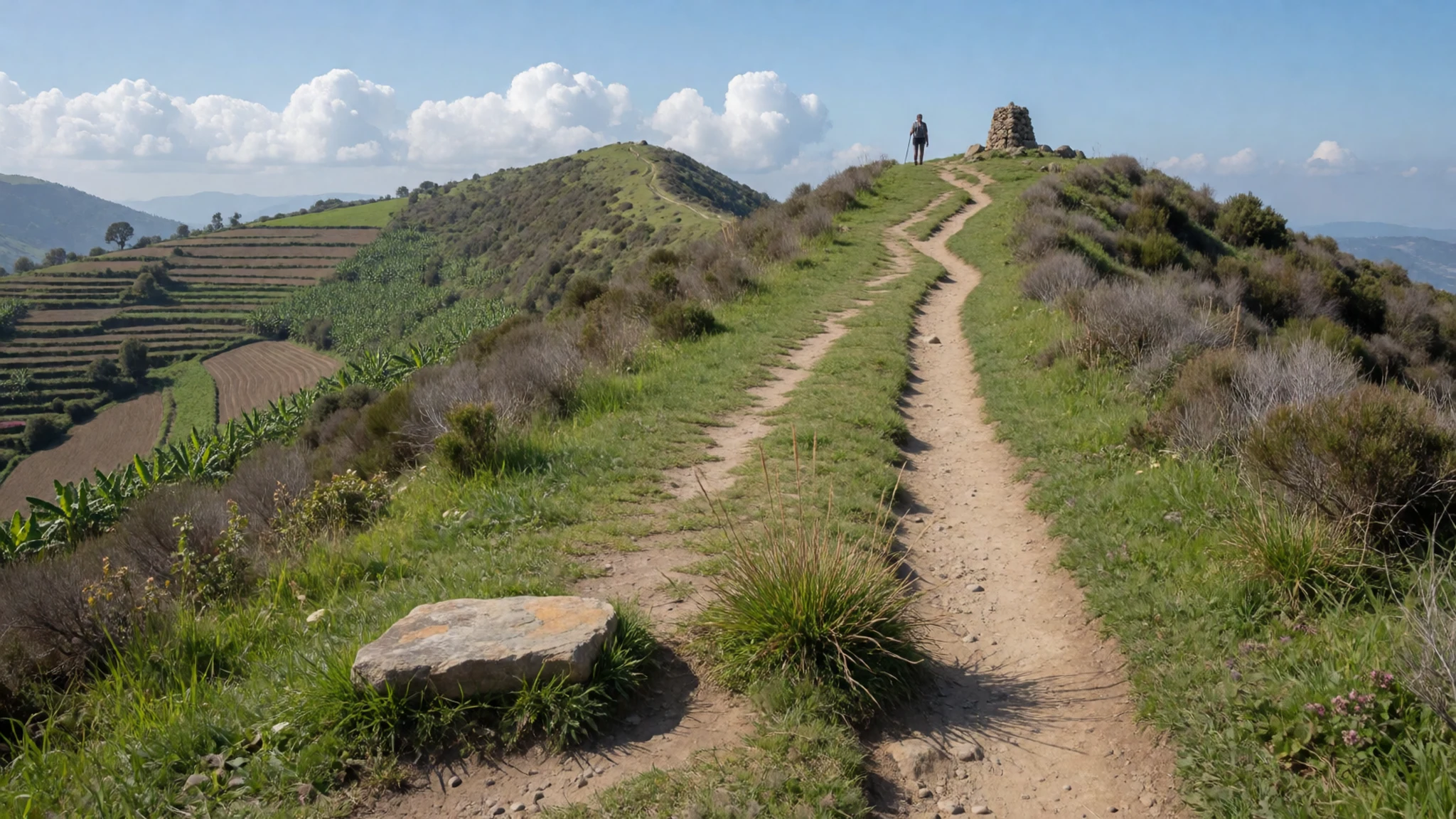
- Picos and Pico de Antónia — Central uplands
Picos is a small farming town in the central uplands, beneath Pico de Antónia, the island's highest point. Terraced fields climb the slopes, and the views over folded ridges are wide. The roads are twisty, so allow plenty of time and take water.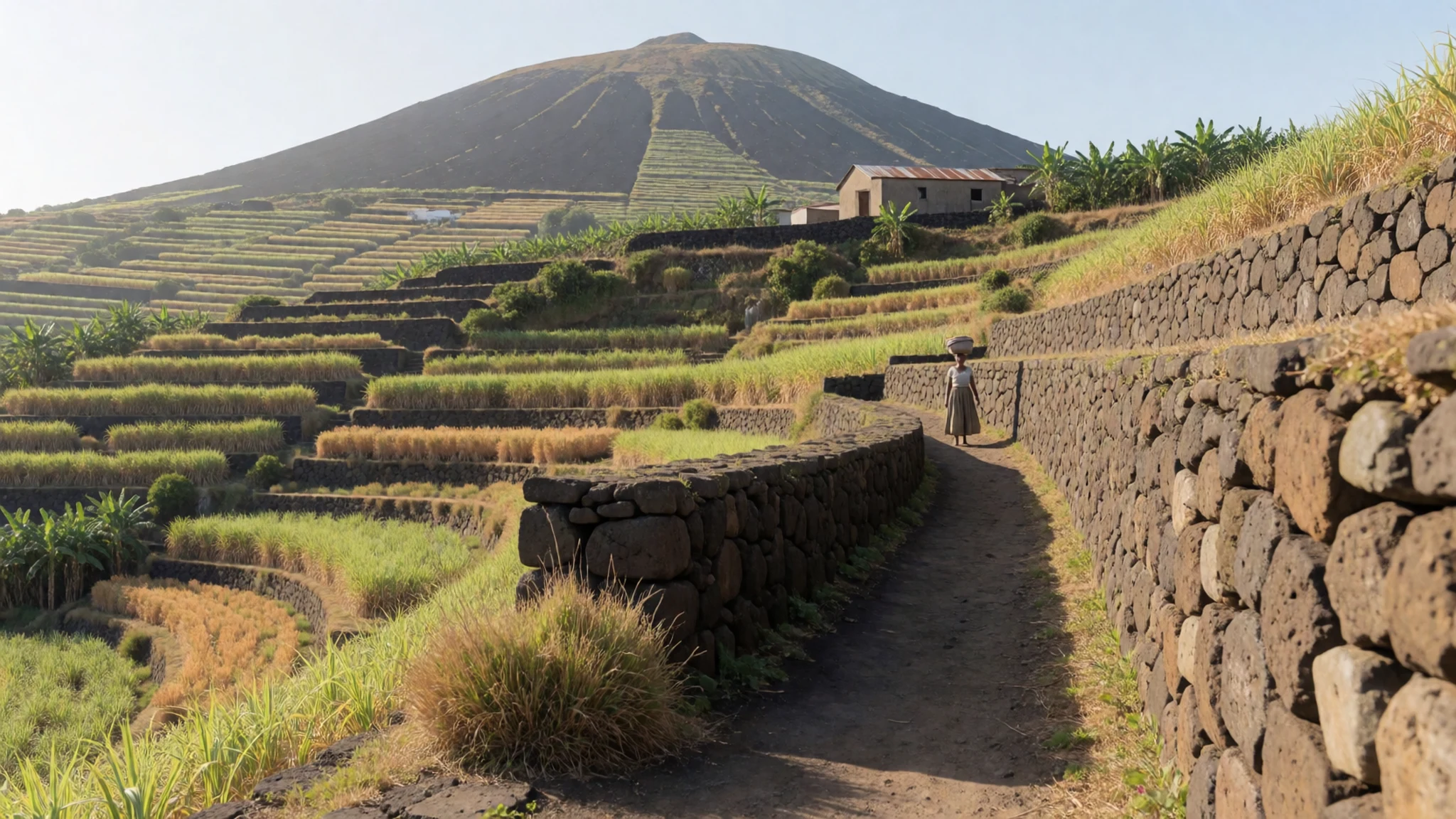
Culture
Santiago's culture is Creole at heart, a blend of Portuguese and West African influences that shows in the language, the music and the way people greet strangers. Portuguese is the official language, but conversation happens in Kriolu, and the version spoken on Santiago is often called the most African-sounding of the islands' dialects, a point locals will happily debate. Music is central to life. The island is the home of batuku, a rhythmic tradition of drumming, chanting and swaying led largely by women, and of funaná, a fast accordion dance that fills weekend nights in towns and villages. Cape Verde's better-known morna is shared across the islands. Religion is mostly Catholic, and village festivals honouring saints bring processions, food and dancing. Praia feels modern and fast, while the interior keeps a slower, farming rhythm, with people gathering at roadside stalls, in small shops and around water points. Hospitality is real, and a visitor who stops to talk will quickly be offered a drink or a seat. The country's past as a hub of the slave trade is not hidden, and many Santiago families speak about independence with pride. Politeness goes a long way, and so does a few words of Portuguese. When you want to photograph people, especially market traders or batuku performers, ask first and accept a no with a smile.
What to wear
Santiago's best-known traditional textile is the pano di terra, a handwoven cotton cloth made in narrow strips stitched together in bold stripes of indigo, white and other colours. Historically it was worn by women as a wrap around the waist or shoulders, and it was valued as a gift and as a marker of status. Today it appears mainly at batuku performances, festivals and ceremonies, where dancers knot it at the hip and sway to the drums. Everyday dress on the island is relaxed and modern. In Praia, people wear jeans, shirts, summer dresses and football shirts, with smarter outfits for church and office work, and schoolchildren appear in neat uniforms. In villages, clothing is practical for farm work and heat, with headscarves and hats common. Visitors should pack light cotton or linen clothes, a wide-brimmed hat, strong sun protection and sunglasses, since the south is dry and exposed. For hikes in the Serra Malagueta or around Picos, wear sturdy shoes with grip on loose stony paths, and carry a thin waterproof layer, as the highlands can be damp and cool. Cover shoulders and knees when entering a church. Save swimwear for the beach, because walking around town in it looks out of place.
What to eat
- Cachupa — Family-run eateries and café-restaurants across the island, especially at lunchtime
Cachupa is Cape Verde's national dish, a slow-cooked stew of dried maize and beans with meat or fish. It is a distant cousin of Portuguese feijoada. Leftovers are often fried for breakfast, and a fried egg usually tops them.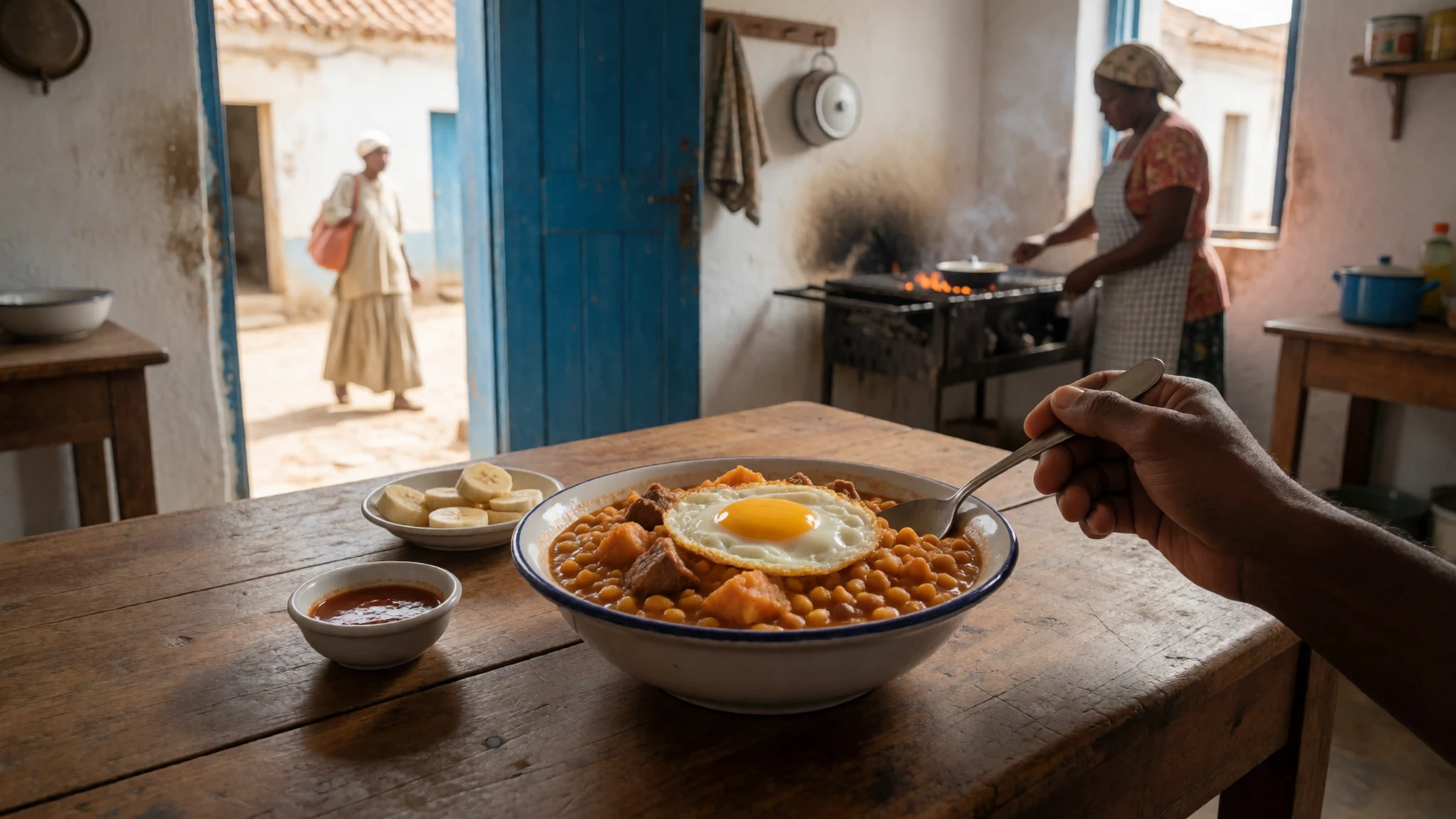
- Canjo — Home-style eateries in villages; ask locally, as it is less common on menus
Canjo is a comforting chicken and rice stew. It is harder to find than cachupa, so ask around at small neighbourhood places or at a family table if you are invited. It is gently flavoured and filling.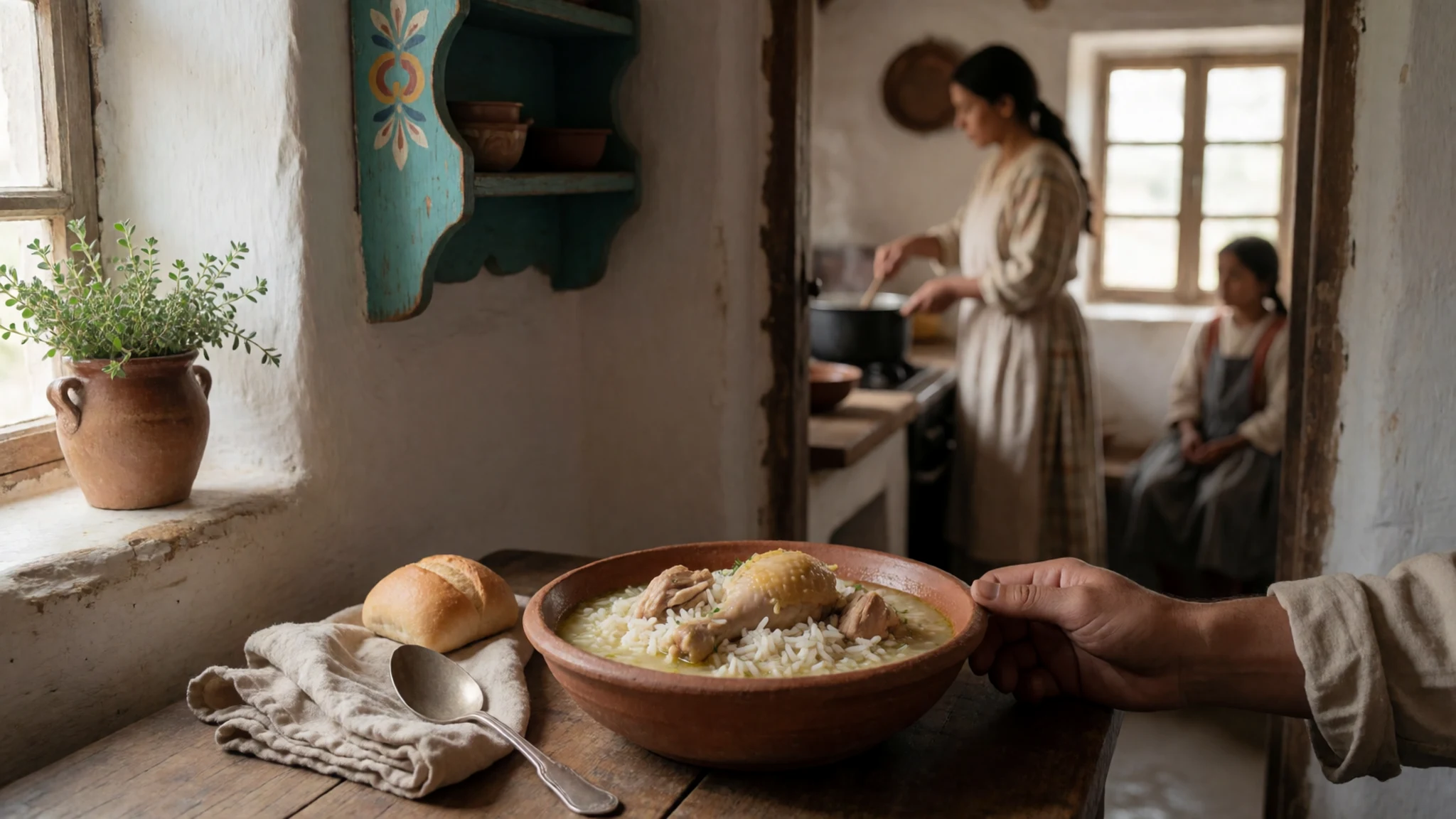
- Pastéis — Bakeries in Praia and other towns, best in the morning
Pastéis are small fried or baked pastries and a morning habit in the towns. Fillings include sweet cream, savoury fish, beef and pork, or chicken. Buy a couple warm from the bakery counter with coffee. - Grogue — Bars, village shops and roadside stalls
Grogue is the national drink, a cane spirit usually served neat in small measures. Flavoured versions are widely made, and a darker local rum also appears. Sip it slowly and ask what flavour a bottle holds before buying. - Papaya and banana — Local markets and roadside fruit sellers
Papaya and bananas grow on the island and taste very good when bought ripe from market stalls or the roadside. They make an easy breakfast, a cooling snack on a hot drive and a simple companion to a bakery pastry.
Plan it
Best time. November to February is the usual sweet spot, with drier, cooler weather that suits walking. Late summer into autumn brings the rains and more heat, though the hills are then at their greenest. The south stays dry and dusty for much of the year.
How long. 4–5
Getting there. Fly to Praia international airport, which is also the domestic hub, then take a taxi or shared minibus into town. Ferries connect Praia with other islands, so check the operator's official site for current sailings.
Budget. mid
Tips
- Rent a car with a driver or hire a local guide for the mountain roads, which are steep and twisty.
- Plan to be off the roads by dusk; there is little street lighting, so ask your host about getting around after dark.
- Carry water, sun protection and some cash, as small villages may not take cards.
- Visit Cidade Velha early in the morning to avoid the worst of the heat.
- Leave extra time for each journey, because distances look short on the map but drive slowly.
Etiquette
- Ask before photographing people, especially in markets and at batuku gatherings.
- Greet shopkeepers and neighbours before asking questions or bargaining.
- Take your rubbish with you, as locals are strict about recycling bottles.
Nearby
Sources
- Wikidata Q108448 (CC0)
- Wikipedia: Santiago, Cape Verde (rev 1364198122) (CC BY-SA 4.0)
- Wikivoyage: Santiago (Cape Verde) (rev 4564818) (CC BY-SA 4.0)
- Photo: Locator map of Santiago, Cape Verde (CC BY-SA 1.0)
- Photo: Serra Malagueta, Ingo Wölbern (Public domain)
- Photo: Picos, Cape Verde, Xandu (Public domain)
- Photo: Vues de l'isle de Mai et de St Jago (Public domain)
- Photo: Apollo 9 AS09-20-3130 (Public domain)
- Photo: Apollo 9 AS09-22-3429 (Public domain)
- Photo: Apollo 9 AS09-22-3432 (Public domain)
- Photo: Apollo 9 AS09-23-3490 (Public domain)


