Sana'a
Sana'a, Yemen
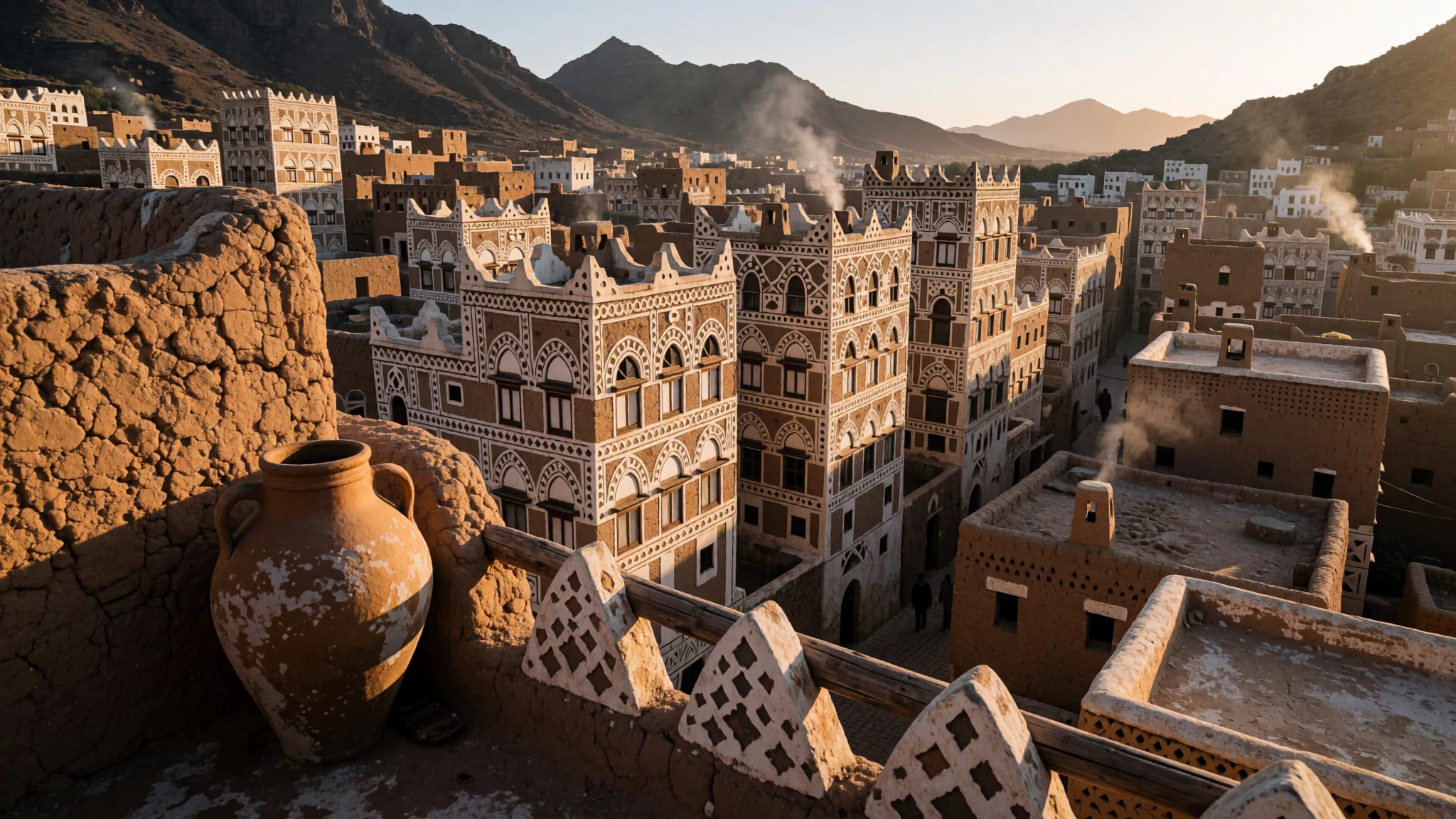
Sana'a's Old City is a living walled town of decorated tower houses, but check current travel advice before you plan a trip.
The place
Sana'a is the capital of Yemen and its largest city, home to about 3 million people. It stands on a broad plain, the Haql Sanaa, at about 2,150 metres above sea level, so the air feels thinner than on the coast and the nights are noticeably cooler. The city has two faces. Inside its old walls, the streets are narrow and wind between multi-storey tower houses, whose upper floors carry geometric patterns and tall, narrow windows with carved frames. Outside the walls, the newer city spreads across the plain with wide roads, traffic and modern offices. Bab al-Yaman, the main gate into the Old City, is the usual starting point, with the souk and several eateries close by. Mountains including the Sarawat range rise around the plain, giving the city its sweeping horizons. The political situation shapes everything. Since the Houthi takeover of the capital, the internationally recognised government has operated from Aden, and the city has been difficult for foreign visitors, with access and movement often restricted. Current advice from foreign governments should be checked closely before any trip is planned.
Its story
Sana'a began as a secondary capital of the Kingdom of Saba, which kept its main seat at the oasis of Marib to the east. Inscriptions in the Sabaic language attest to the city's name, which probably means something like "well-fortified". A folk explanation links it instead to the excellence of the local trades and crafts, and both ideas suit a settlement on a defensible plain that drew skilled workers. Sabaean rulers used the city as a base for campaigns against Himyar to the south. Royal texts boast of triumphant returns to Sana'a after war, and they mention the Ghumdan Palace, a building later writers remembered as a symbol of the city. Under the last Himyarite king, Yousef Athar, also known as Dhu Nuwas, Sana'a became the capital of the Axumite viceroys, which placed it within a wider regional order. The plain it sits on, Haql Sanaa, is ringed by mountains, and the high ground gave the city its defensive character for centuries. In more recent times Sana'a has been at the centre of national conflict. The Houthis took the city from the government of President Abdrabbuh Mansur Hadi, which then moved its seat to Aden, the former capital of South Yemen. Hadi declared Aden the temporary capital, and that arrangement has shaped the city's position ever since.
What to see
- Bab al-Yaman — Old City, southern gate
Bab al-Yaman is the main gate into the Old City, set in the surrounding ancient walls, and it is the usual starting point for a walk through the historic core. The souk begins close by, and several eateries cluster in the streets around it. Arriving in the morning means the stalls are at their busiest and the light falls kindly on the old stone.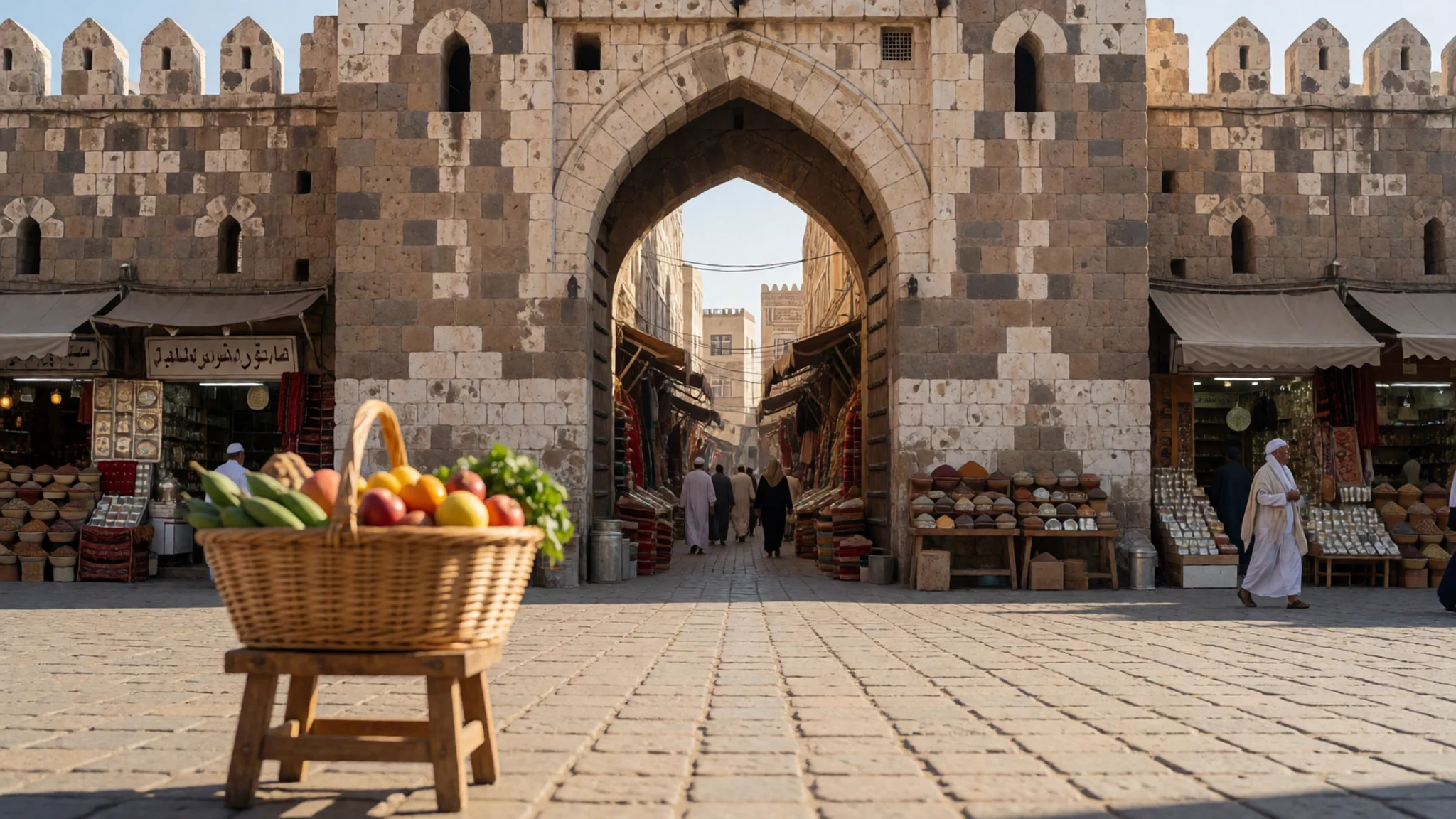
- Great Mosque of Sana'a — Old City
The Great Mosque is among the oldest mosques in the world, and the oldest known written copy of the Quran was found here. Its historic fabric is the reason to visit, although the building has been altered many times over the centuries. Access arrangements can change, so confirm them locally before heading over.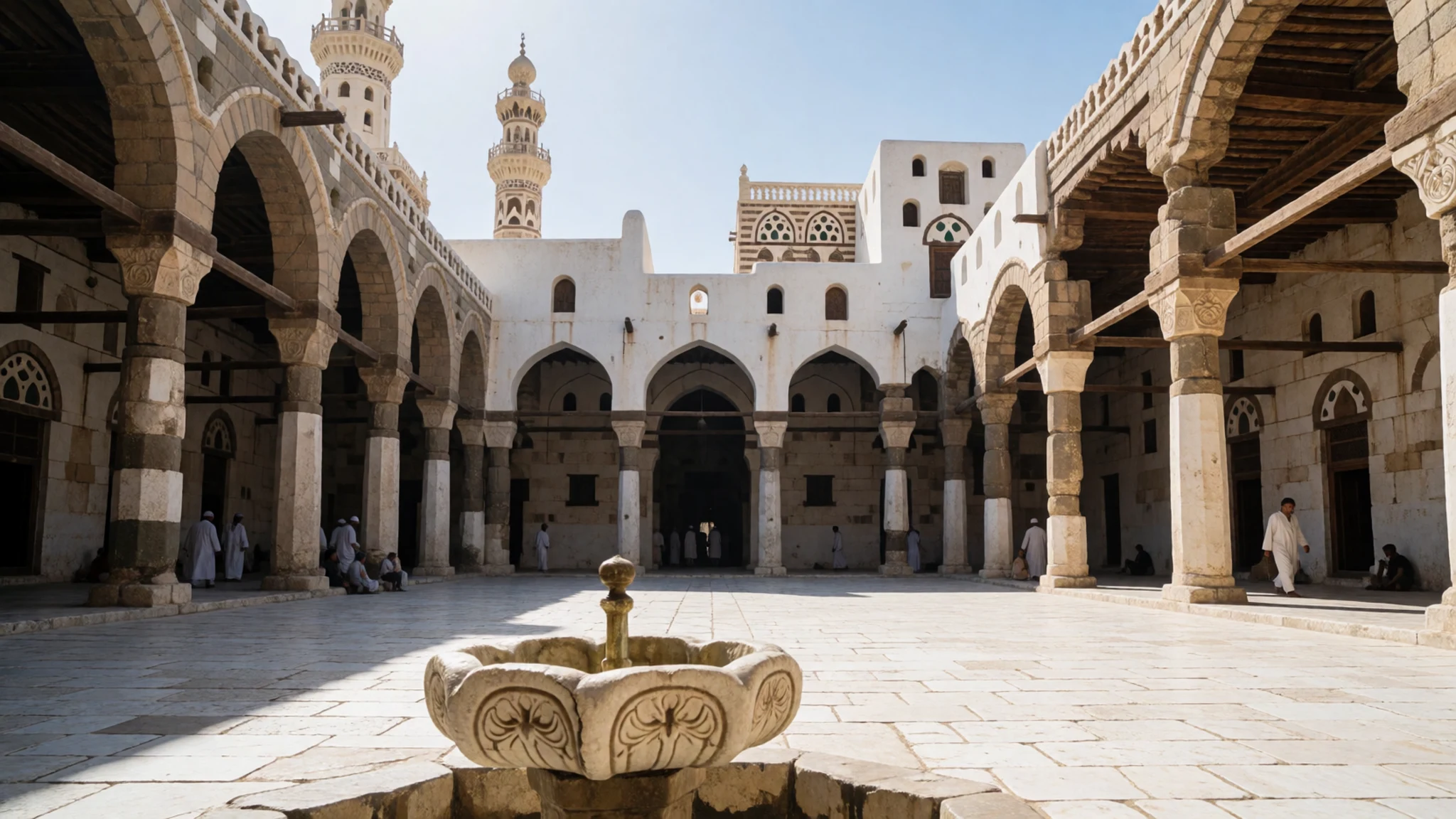
- National Museum of Yemen — Old City edge
Housed in a former palace that was restored and converted into a museum, the National Museum sets out the nation's history and culture. Most exhibits carry English descriptions alongside the Arabic, which makes it one of the easier places in the city to follow the wider story. The palace building is worth the time on its own.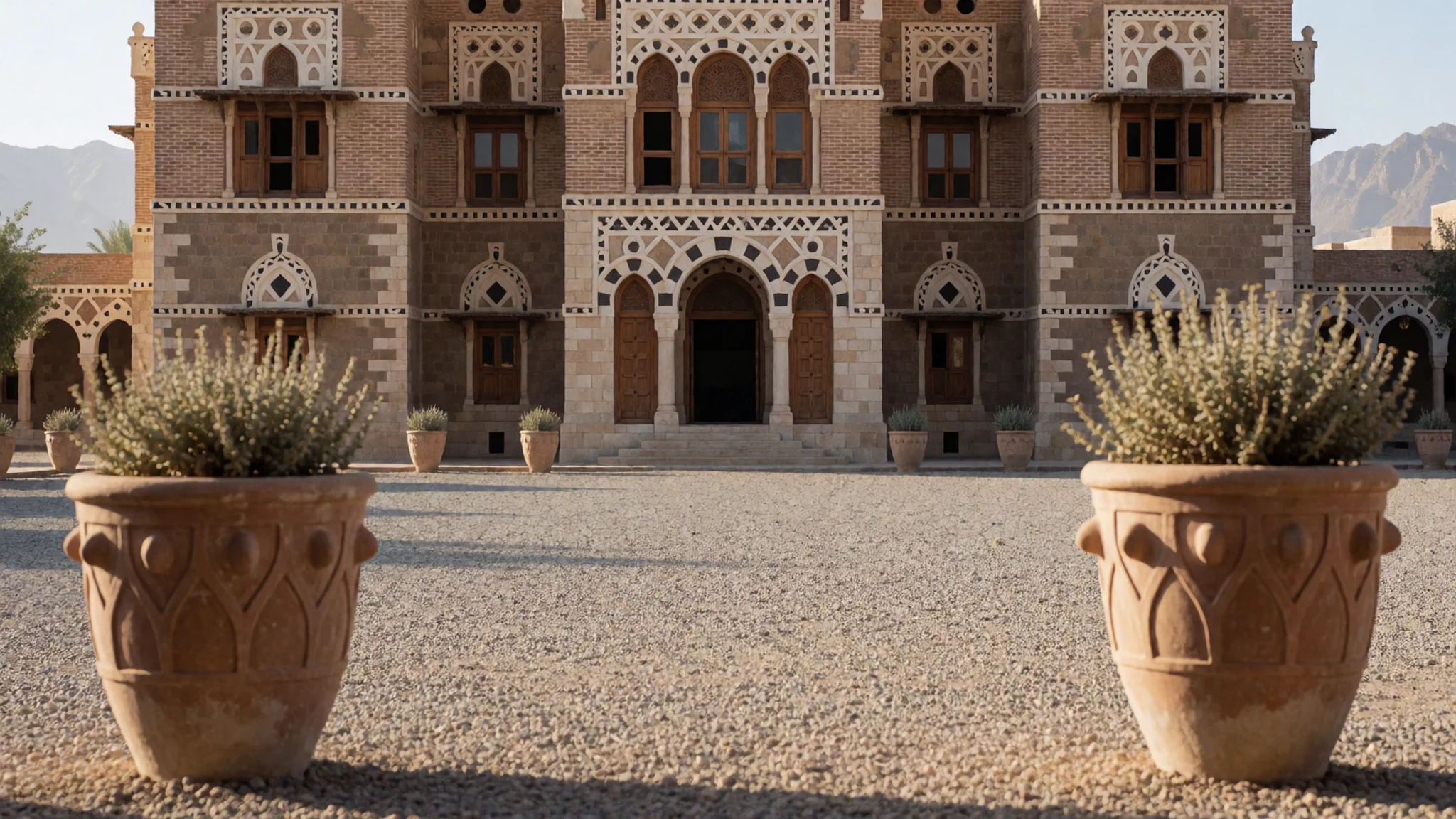
- Al Saleh Mosque — Southern outskirts
Al Saleh Mosque sits on the southern outskirts of the city, near the heavily guarded Presidential Palace, and it is one of the largest mosques in the world. Its scale is the point, with courtyards and prayer halls built to hold very large congregations. Security in the palace area is tight, so expect checks on the approach.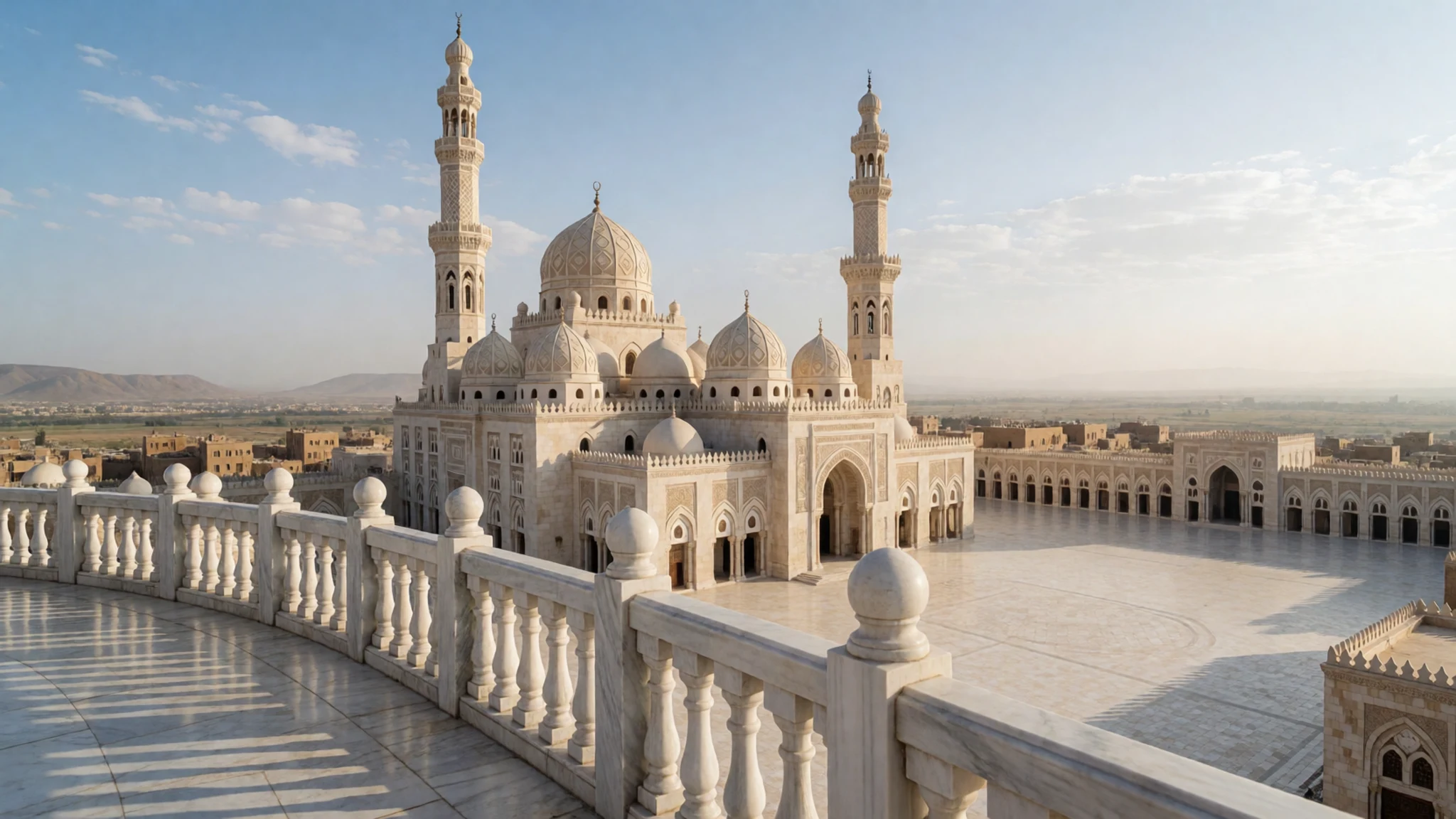
- Wadi Dhahr — Valley north of the city
Wadi Dhahr is a valley a short drive from the city, green with fields and dotted with villages. A rock-built palace associated with a Yemeni imam sits above the valley, so the cultivated floor and the barren slopes meet in one view. It makes a calm outing, and the air is noticeably cooler than in town.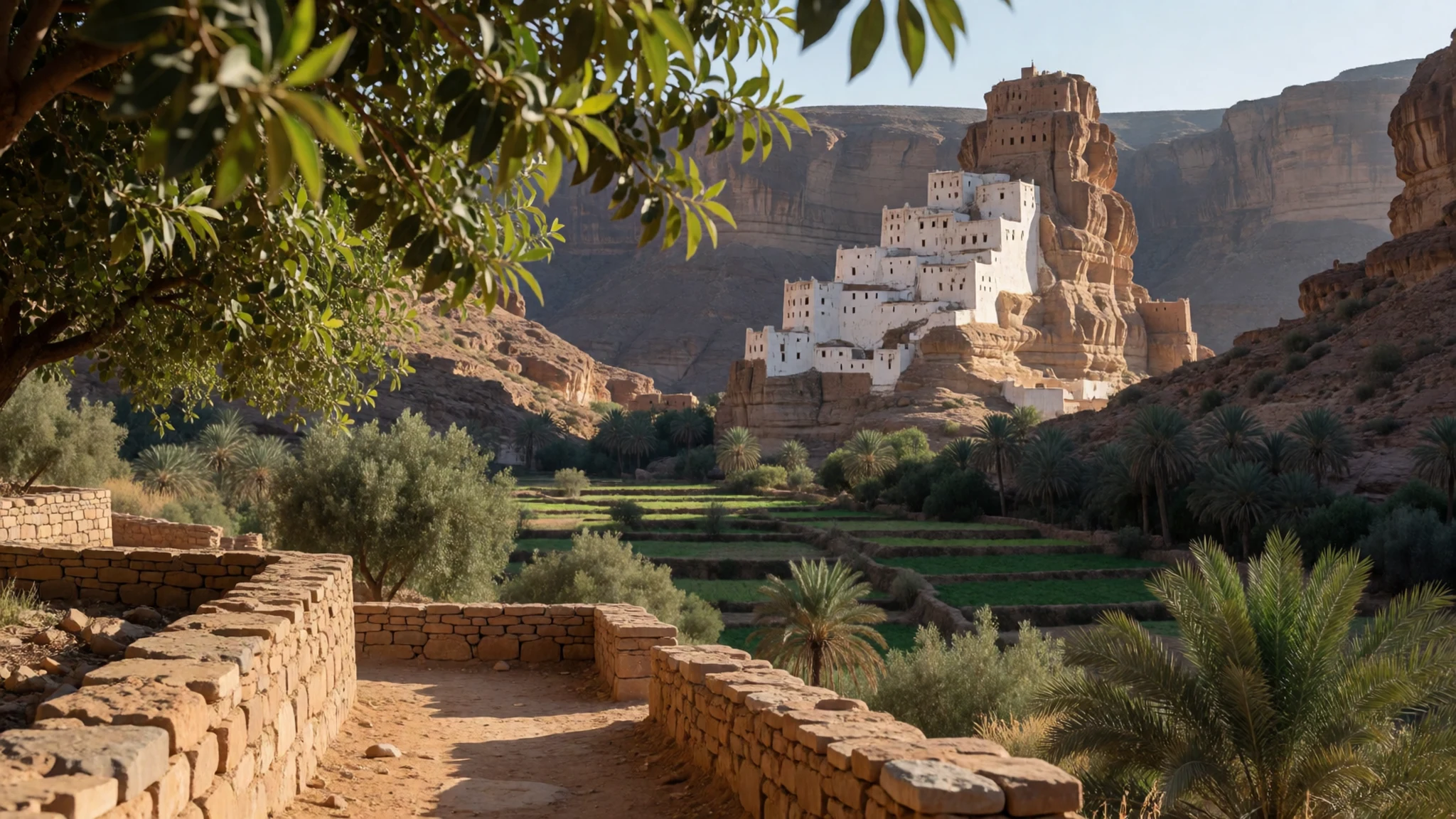
Culture
Sana'a has a strong musical life, and its best-known tradition is al-Ghina al-San'ani, often translated as the song of Sanaa. It is recognised by UNESCO as Intangible Cultural Heritage and is found elsewhere in Yemen, but it is most closely linked to the city. A typical performance has a singer, a qanbus, which is a Yemeni lute, and a player who strikes a copper tray called a sahn nuhasi, balanced on the thumbs and played with the other fingers. Songs mix classical Arabic with Yemeni Arabic and are prized for their wordplay and emotional content. The music belongs to social life: it features at the samra, the evening wedding party, and at the magyal, the daily afternoon gathering of friends. Those gatherings are private as much as public, so an invitation matters. Dress modestly, ask before photographing anyone, and wait to be invited before joining a wedding or a family gathering.
What to wear
Traditional dress in Sana'a is shaped by conservative norms and by a dry, high-altitude climate. Men have long worn a wrap-around cloth, often with a long shirt, and a curved dagger, the jambiya, worn at the waist as a mark of identity and status. Women's clothing traditionally includes long, loose dresses and head coverings, and many women in the Old City wear a dark cloak over their clothes when out. Textiles are mainly cotton and wool, with embroidery and woven borders on the older garments. Today the city mixes styles. Many men wear Western trousers and shirts, with the wrap and the jambiya kept for formal occasions, while women's outfits vary widely by family and background. A visitor should wear loose, long trousers or skirts, sleeves that cover the shoulders, and a scarf to carry for mosques. Closed, sturdy shoes suit the uneven streets and steps of the Old City, and a light layer suits the cool nights at altitude.
What to eat
- Salta — casual lunch eateries across the city
Salta is a popular lunch dish, a very hot stew that is best eaten straight away. It is a meal for sitting down with company rather than grabbing on the move, and it suits a long midday break.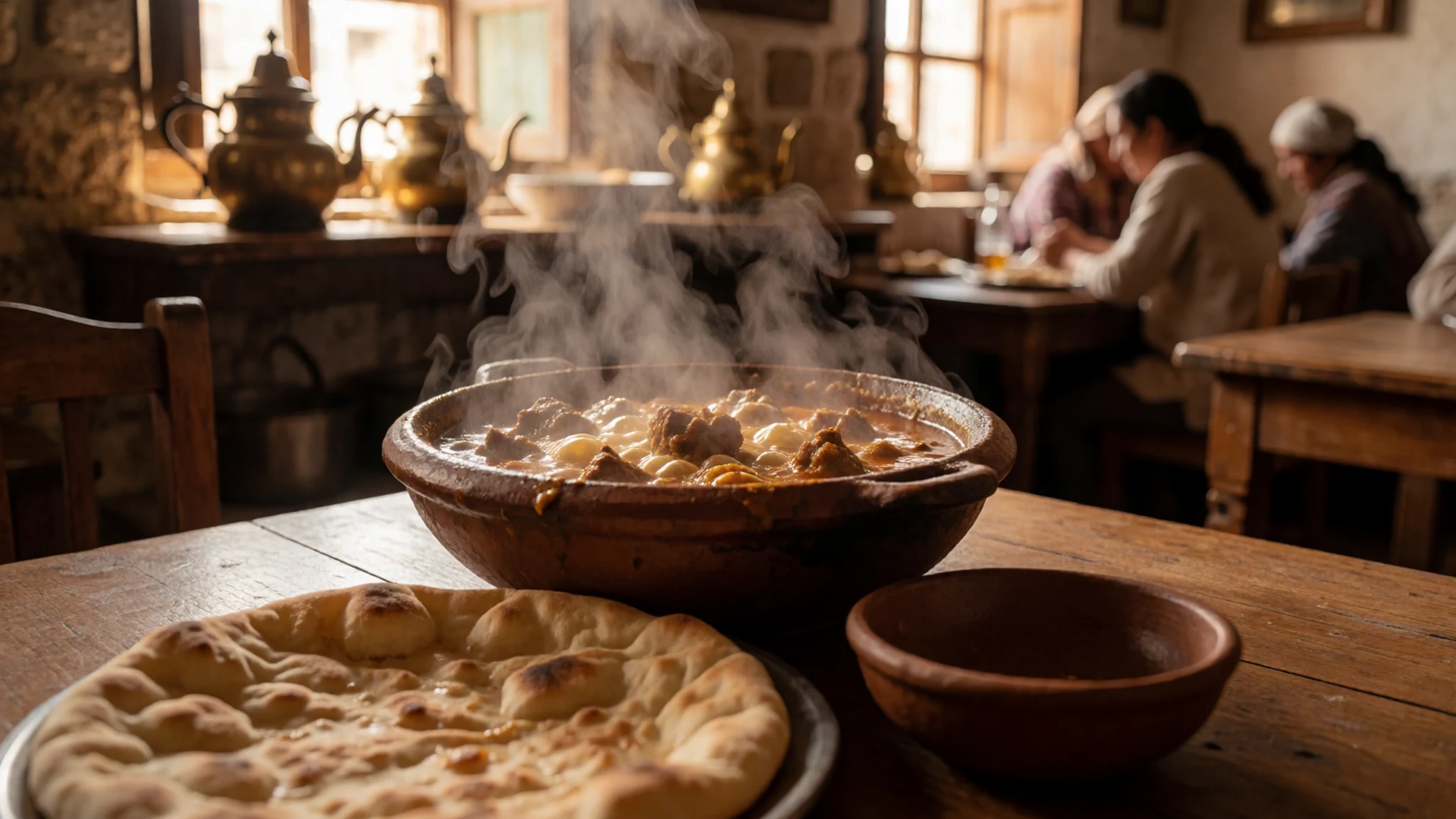
- Grilled chicken — grill houses around the Old City souk
Chicken is everywhere in Sana'a, grilled or roasted and served with bread, rice and salad in simple restaurants. It is one of the cheapest ways to fill up. Choose a place where the bird is cooked fresh and served hot, and avoid food that has been left standing.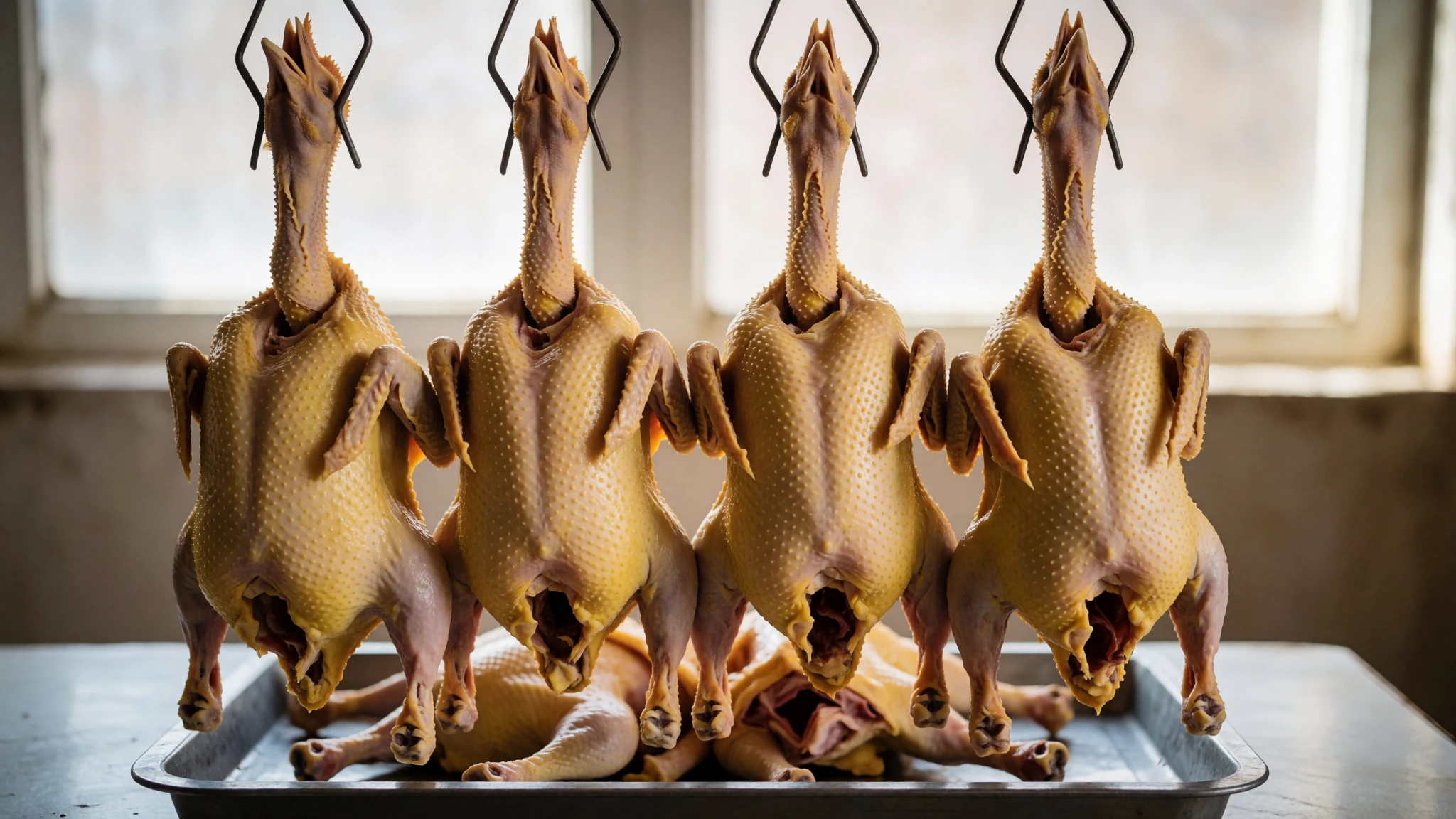
- Fish or tuna steak with rice — Hadda Street restaurants
Hadda Street is where the more upscale restaurants cluster, and it is a good place for a fish or tuna steak served with rice. The restaurants there have wider menus and cleaner dining rooms than the cheap eateries. It suits an evening meal when a calmer setting is wanted. - Pizza, burgers and fried chicken — newer districts and hotel rooftops
Fast-food outlets serving pizza, burgers and fried chicken are easy to find in the newer districts. They are a reliable choice when a familiar meal is wanted. Rooftop restaurants in the newer hotels offer meals with views over both the old and new parts of the city.
Plan it
Best time. October–November, when the temperatures are mildest and the high plain is at its most pleasant. Summer days are warmer, and winter nights are cold at this altitude.
How long. 2–3
Getting there. Sana'a International Airport, which has daily commercial flights from Amman operated by Yemenia, the national carrier. Buses run from other major Yemeni cities, but overland travel needs a travel permit.
Budget. low
Tips
- Check current government travel advice and speak to a specialist operator before booking, because conditions change
- Obtain a travel permit from the Ministry of Tourism before any overland journey; it is free of charge
- Carry several photocopies of your passport photo page and your travel permit, as checkpoints may ask for them
- Walk the Old City in the morning, when it is cooler and the souk is busiest
- Drink only bottled or boiled water, and be cautious with food from street stands
Etiquette
- Ask before photographing people, especially women
- Dress modestly in the Old City and at mosques
- Wait to be invited into a home or a family gathering
Nearby
Sources
- Wikidata Q2471 (CC0)
- Wikipedia: Sanaa (rev 1381637392) (CC BY-SA 4.0)
- Wikivoyage: Sana'a (rev 5208333) (CC BY-SA 4.0)
- Franco Pecchio, Sana'a from the roof (CC BY 2.5)
- Ferdinand Reus, Sana'a (CC BY-SA 2.0)
- Dan, Sana'a (CC BY-SA 2.0)
- Om Eshak, Al Saleh Mosque - Sana'a 2013 (CC BY 4.0)
- BluesyPete, Sana'a un (rare) jour de pluie (CC BY 3.0)
- Dan, Bab-ul-Yemen, Sana'a (CC BY-SA 2.0)
- Rod Waddington, National Museum of Yemen (CC BY-SA 2.0)
- Al-Omari, Sana'a in the 1950s (Public domain)


