San Ignacio Miní
San Ignacio Miní, Argentina
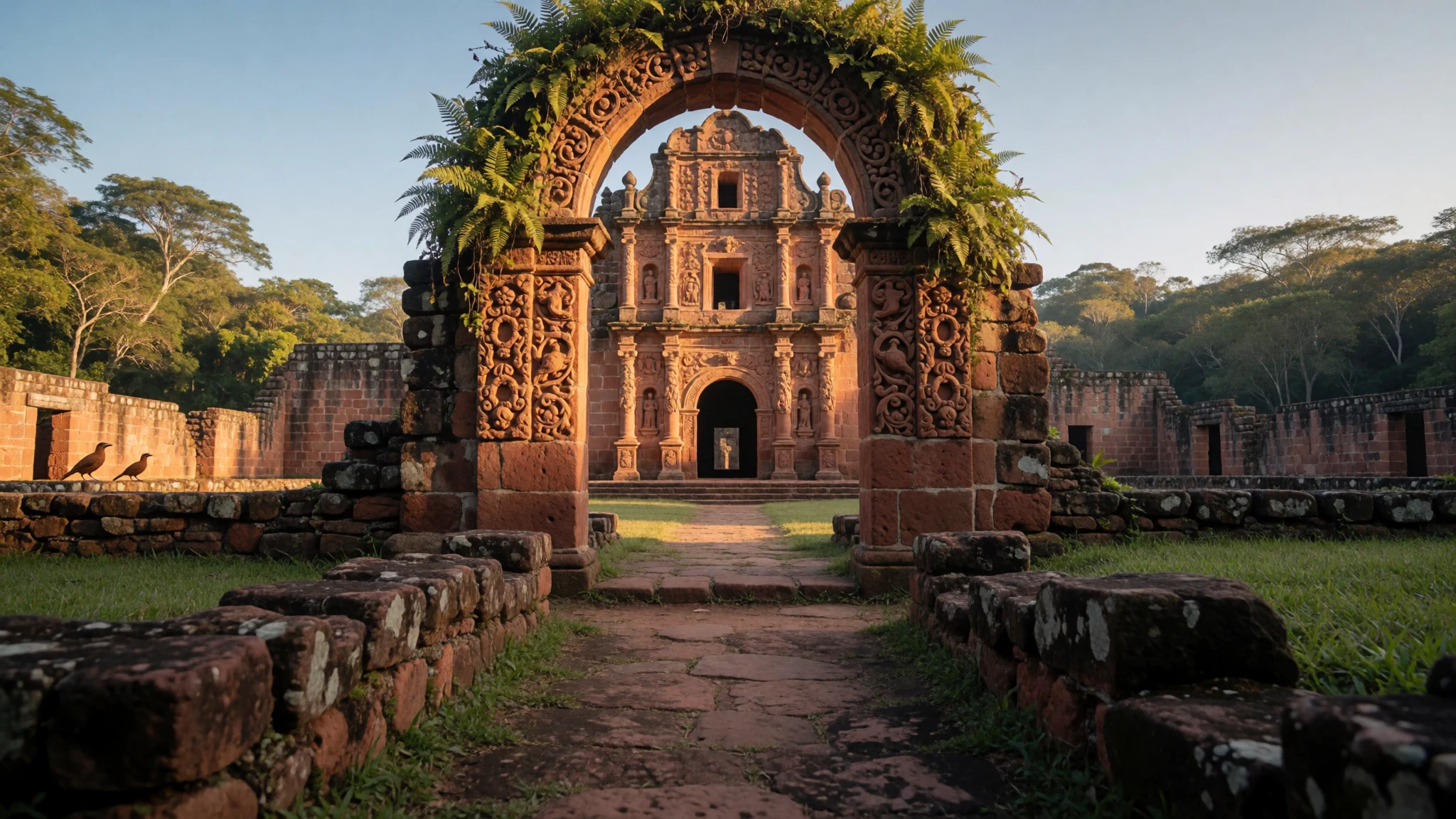
San Ignacio Miní preserves some of South America's most striking Guaraní baroque stone architecture, standing as a quiet testament to a complex colonial past.
The place
San Ignacio Miní sits in the northern reaches of Argentina, tucked within the undulating landscape of Misiones Province. Set back slightly from the Paraná River valley, the archaeological zone occupies a warm, subtropical enclave where dense forest once swallowed the stone walls entirely. Founded during the Spanish colonial period as part of a vast network of settlements organised by Jesuit priests, the mission lies within easy reach of the modern settlement of San Ignacio.
Visitors arrive to find an extensive collection of red sandstone structures rising directly from open-air courtyards. The stone, quarried locally, absorbs the fierce regional sun and turns a deep rust colour as daylight shifts. Unlike many archaeological sites that have been heavily reconstructed, San Ignacio Miní retains an authentic, weathered texture. Tree roots once gripped the masonry, and today the remaining walls reveal intricate low reliefs of flowers, angels and traditional motifs carved by indigenous artisans under European direction.
The layout follows a strict geometric grid around a central plaza, echoing the administrative ideals of the era. Visitors wander between the skeletal remains of the main church, former residential quarters for indigenous families, workshops, and communal cooking areas. Because the site is compact, it can be explored thoroughly on foot in a single morning, offering an intimate perspective on a unique chapter of South American history without the overwhelming scale or crowds found at larger continental landmarks.
Its story
The origins of San Ignacio Miní stretch back to the early seventeenth century, when Jesuit missionaries established the initial settlement far to the north in a territory known to native inhabitants as Guayrá. Constant raids by slave-raiding groups forced the community to abandon their homes and embark on a difficult migration south. After decades of relocation, the mission settled permanently in its present location near the close of the seventeenth century, taking the suffix 'Miní'—meaning minor in the Guaraní language—to differentiate it from a larger sister mission across the river.
During its eighteenth-century peak, the settlement functioned as a self-sustaining community numbering thousands of indigenous residents. Artisans and farmers produced fine crafts, textiles, and agricultural goods that were transported down the Paraná River for commercial trade. This era of relative stability ended abruptly following the expulsion of the Jesuit order from Spanish territories. Left without their administration, the missions entered a rapid decline. Decades later, during conflicts surrounding regional independence movements, Luso-Brazilian forces attacked and heavily damaged the settlement, leaving it abandoned and vulnerable to the encroaching jungle.
For generations, the stone walls lay forgotten beneath thick vegetation until explorers and poets brought renewed attention to the overgrown ruins at the turn of the twentieth century. Formal archaeological excavations and restoration efforts eventually cleared the brush, stabilising the fragile sandstone facades and uncovering the exceptional Guaraní baroque artistry that earned the site international heritage recognition.
What to see
- The Former Church Ruins
The monumental heart of the mission features towering red sandstone walls and elaborately carved doorways designed by Italian architects and executed by Guaraní craftsmen. The surviving stonework showcases intricate floral motifs and figurative low reliefs.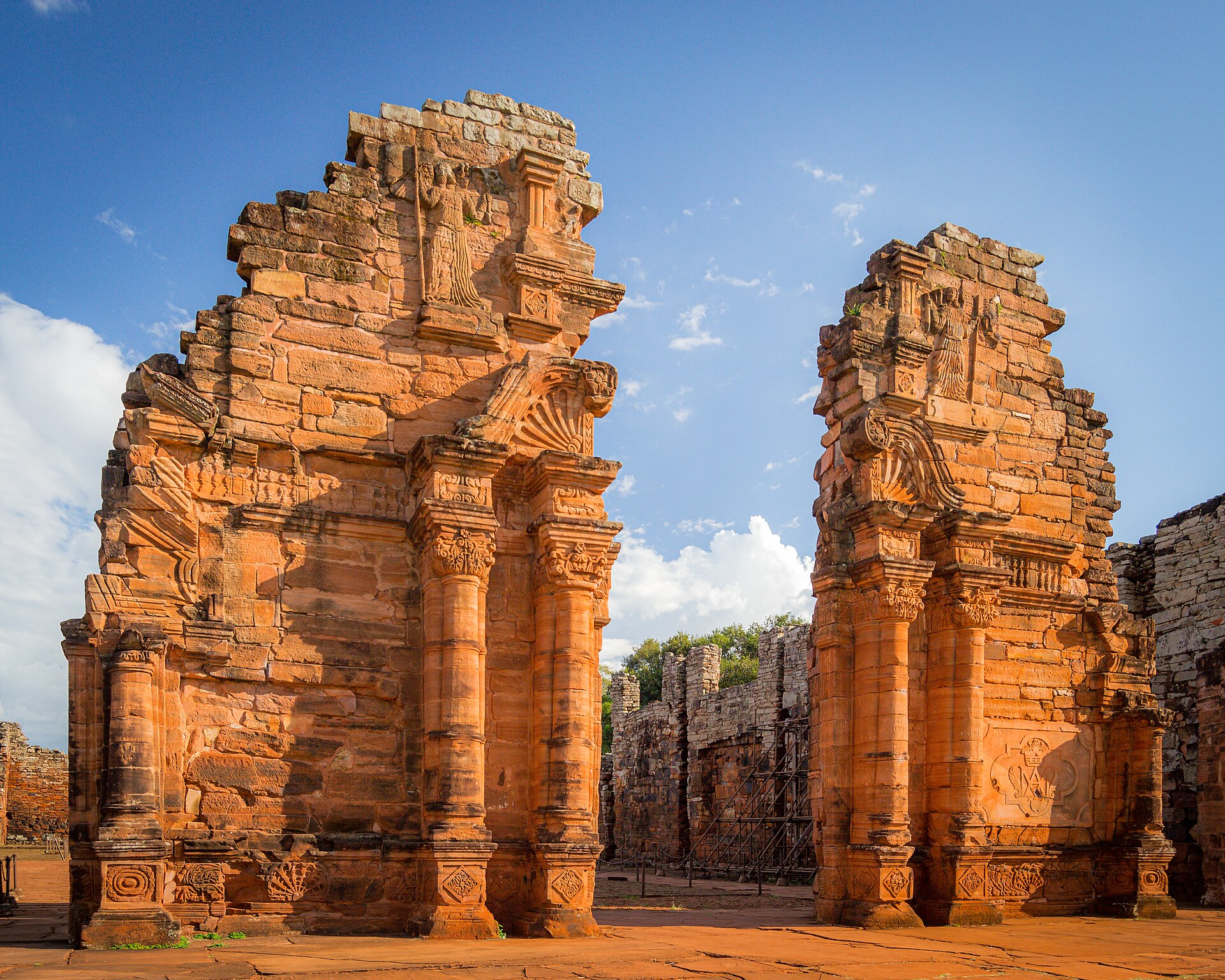
- Museo Jesuítico de San Ignacio Miní
Situated directly beside the archaeological zone, this dedicated museum houses artefacts recovered during excavations, including religious sculptures, everyday iron tools, and pottery fragments that explain daily life within the reduction.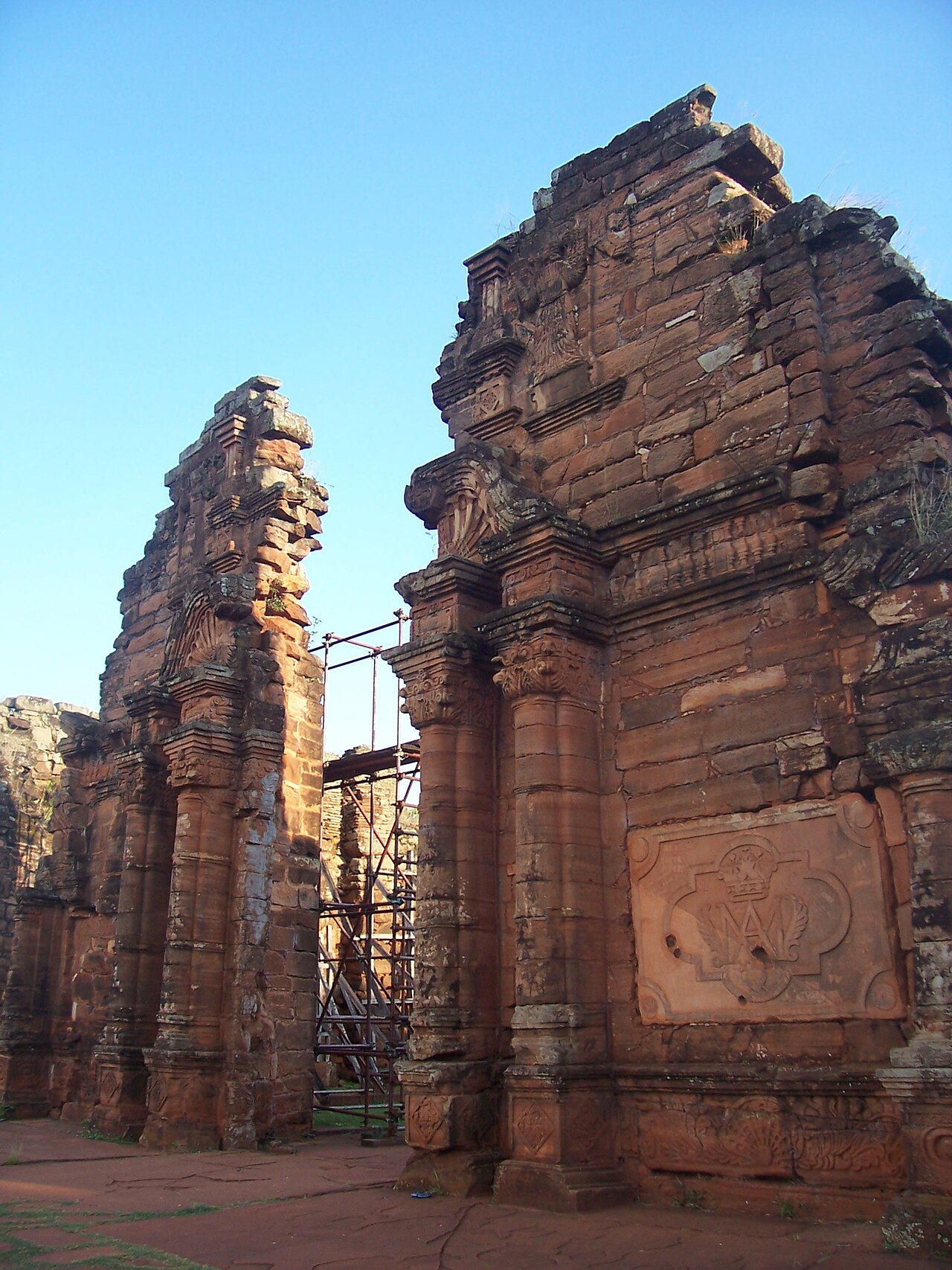
- Indigenous Residential Area
Stroll through the foundations of the long, communal housing blocks where Guaraní families once lived. The layout provides a clear picture of the organised, communal domestic life structured by the Jesuit administration.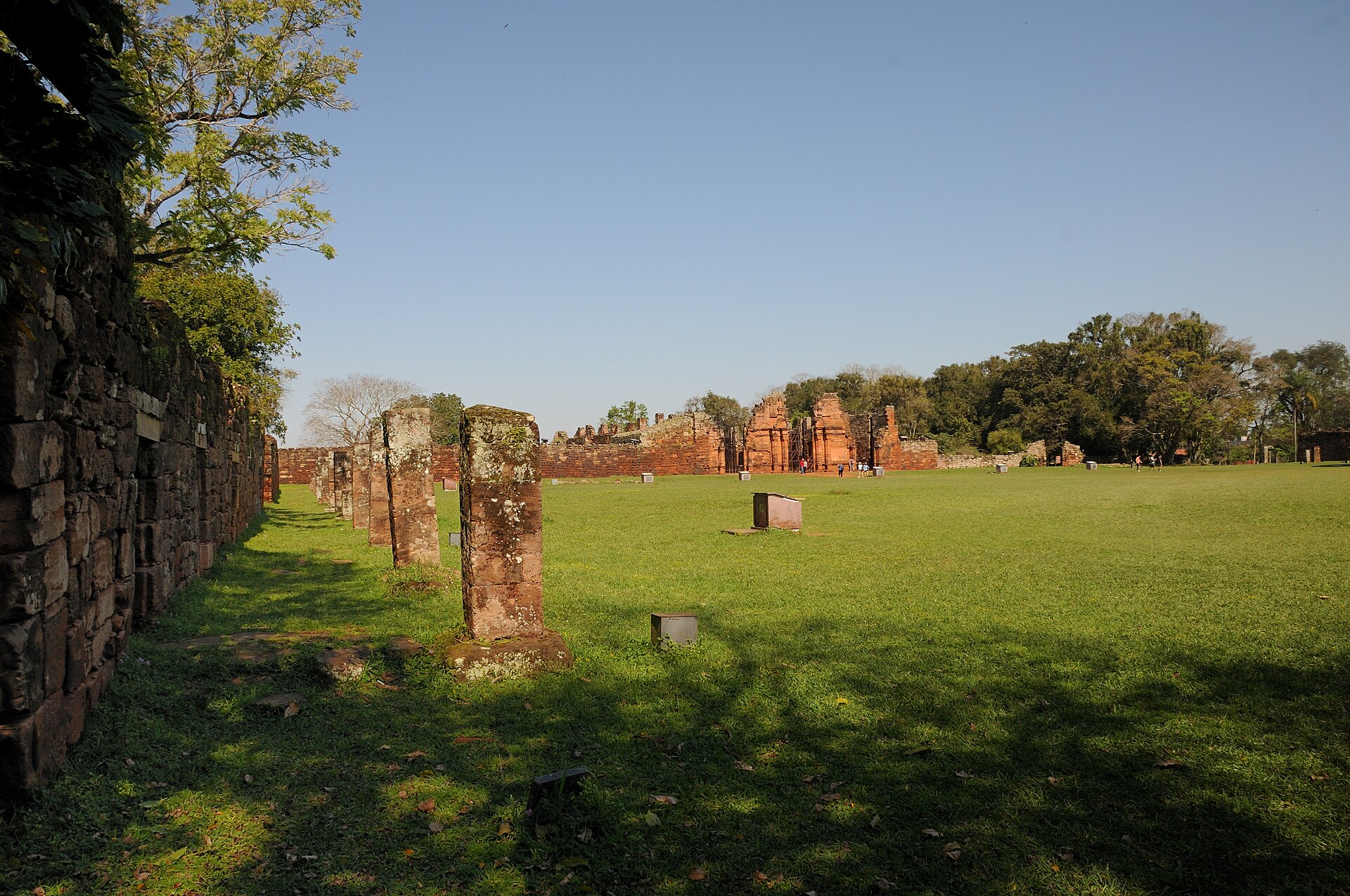
- The Workshop Ranges
A succession of arched doorways marks the remains of the old craft workshops where artisans produced textiles, carpentry, and metalwork for the community. The rhythmic repetition of the stone portals is a favourite spot for photography.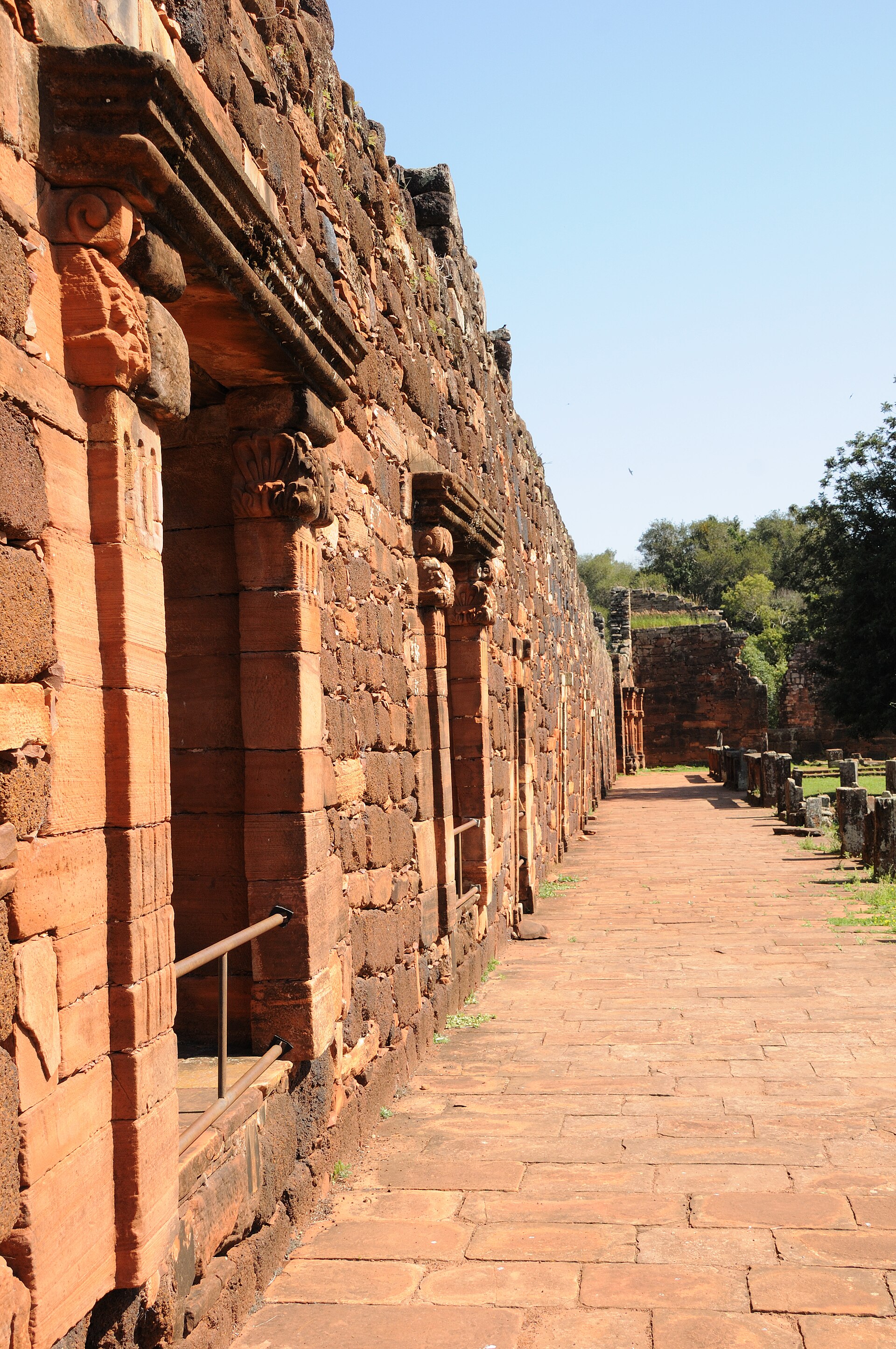
Culture
The cultural fabric of Misiones Province is a living blend of European missionary heritage and deep-rooted Guaraní traditions, visible in local dialects, music, and social rituals. Mate drinking is not merely a beverage choice here but a continuous social ritual that bridges generations, symbolizing hospitality and shared community bonds. Traditional craftsmanship, passed down through families, relies on natural materials harvested from the surrounding subtropical woodlands. Festivals throughout the region frequently celebrate regional folklore, blending acoustic folk melodies with traditional dance. When visiting the archaeological site or local communities, dress respectfully and always ask permission before photographing local residents or indigenous artisans.
What to wear
Traditional clothing in the rural expanse of Misiones historically reflected practical needs for working in a humid, subtropical climate, featuring durable cotton garments suited for agricultural labour. While historical indigenous attire involved light woven textiles, modern inhabitants dress in casual, contemporary western clothing similar to the rest of Argentina, favouring lightweight fabrics, denim, and comfortable walking shoes.
Visitors should pack breathable, light cotton or linen clothing to cope with the significant regional heat and humidity. Sturdy walking shoes or trainers are essential for navigating uneven stone paths, loose gravel, and grassy terrain around the ruins. Bring a wide-brimmed hat, sunglasses, and an effective insect repellent, as the subtropical environment brings persistent mosquitoes and biting insects, especially after rainfall.
What to eat
- River Fish — Local grills and family-run eateries along the Paraná River valley
Fresh catches from the nearby waterways, including pacu, surubi, and dorado, prepared simply on a grill or in rich regional stews. Enjoy them at traditional parrillas and local eateries throughout the province. - Chipa — Street vendors and morning bakeries across San Ignacio and Posadas
Small, chewy corn and cassava flour rolls baked with plenty of semi-hard cheese. They are a staple snack sold fresh and piping hot from street carts and neighbourhood bakeries throughout the morning. - Sopa Paraguaya — Traditional regional restaurants and Sunday markets
A dense, savoury cornbread baked with onions, cheese, and milk, traditionally sliced into thick squares and served alongside grilled meats or hearty river fish dishes. - Papaya Jam with Cheese — Local cafés and regional sweet shops
A sweet, translucent fruit preserve made from locally harvested papaya, traditionally served alongside a wedge of mild fresh cheese for a sweet-and-savoury dessert. - Mate and Tereré — Public squares, local plazas, and roadside cafés everywhere
The defining regional drink made from dried yerba mate leaves. Sip it hot with water or chilled with fruit juice and ice (known as tereré) during hot summer afternoons.
Plan it
Best time. September to November and March to April offer comfortable daytime temperatures and avoid the intense, humid heat of mid-summer.
How long. 1–2
Getting there. Fly into Posadas or Puerto Iguazú, then take a frequent long-distance bus or drive south along National Road 12.
Budget. mid
Tips
- Arrive early in the morning to beat the midday subtropical heat.
- Carry cash for entry fees, small bakeries, and craft stalls.
- Wear high-factor sunscreen and apply strong mosquito repellent.
- Combine your visit with nearby Jesuit missions such as Santa Ana.
Etiquette
- Do not climb on fragile historic stone walls or structural reliefs.
- Always greet shopkeepers and locals politely before asking questions.
Nearby
Sources
- Wikidata Q868799 (CC0)
- Wikipedia (San Ignacio Miní) (CC BY-SA 4.0)
- Wikivoyage (Misiones) (CC BY-SA 4.0)