Samos
Samos, Greece
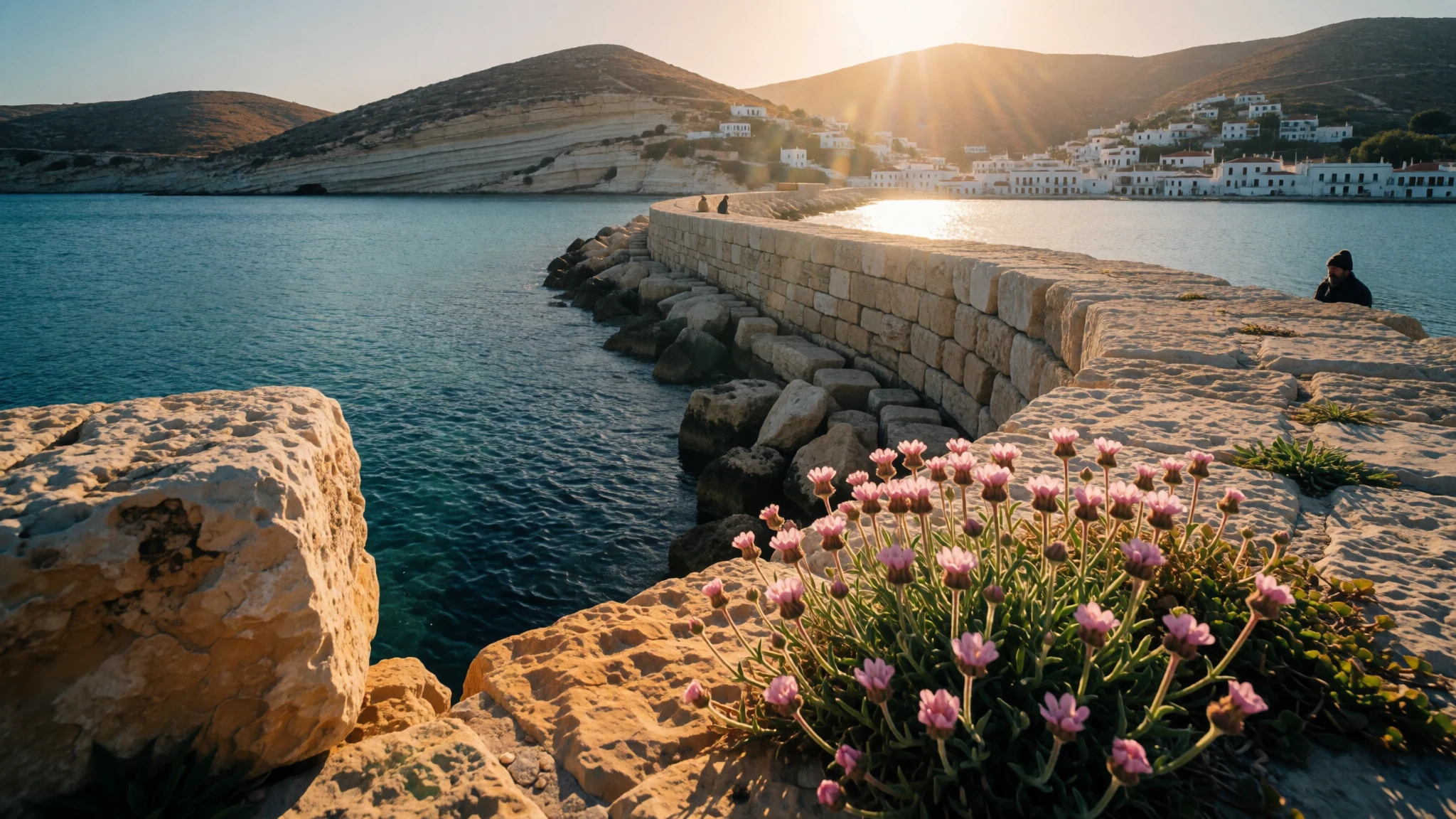
Samos pairs ancient engineering and the birthplace of Pythagoras with vine-covered hills, quiet coves and a Turkish coastline close enough to see.
The place
Samos is a Greek island in the eastern Aegean, so close to the Turkish coast that only a narrow strait separates the two shores. It lies south of Chios and north of Patmos and the Dodecanese, and it forms its own regional unit within the North Aegean. About 33,000 people live here. The island is long and narrow and mostly mountainous, with a few fertile plains where vines, olives and market gardens fill the lowlands. Muscat grapes cover a large share of the farmland, and the sweet wine made from them is a famous local product.
Vathy, in the northeast, is the capital and main port, a working harbour town stacked up the slopes of a deep bay. Karlovasi, in the northwest, has an easygoing café life around its squares. Pythagoreio, in the southeast, is the pretty yacht harbour beside the ancient city. Marathokampos, in the southwest, is quieter, with hill villages above the beaches.
Distances are short but the roads bend constantly, so a hired car or scooter, or the local buses, shapes how much gets seen in a day. Summer brings heat, full ferries, Greek families and Turkish day-trippers, and busy beaches. Spring and autumn are calmer and kinder for walking. Samos suits travellers who want archaeology, swimming and village tavernas in one trip rather than a single headline sight, and who are happy to move at island speed.
Its story
Samos was a wealthy and confident city-state in the ancient Greek world. Settlers from the mainland brought Ionian culture to the island, and Samos became a member of the Ionian League. By the seventh century BC it was a leading trading centre, helped by its position near sea routes and by textiles arriving from inner Anatolia. Samian ships worked the Black Sea, Egypt, Libya and Corinth, and colonists founded settlements from Thrace and Crete to southern Anatolia, Italy and Egypt.
That trade made Samos a bitter rival of nearby Miletus. Its alliance with Egypt and its powerful fleet let it prosper even as Persia grew stronger. The island was known for its wine and for glossy red pottery that the Romans called Samian ware. Its most famous building was the great temple of Hera, the Heraion, in the Ionic style.
The island also produced thinkers. Pythagoras, the mathematician and philosopher, was born here, as were the philosopher Epicurus and the astronomer Aristarchus, who proposed that the Earth goes around the Sun. Later centuries brought Roman, Byzantine and Ottoman rule. In the nineteenth century Samos became a semi-autonomous principality under Ottoman overlordship, and it joined Greece in the early twentieth century. Much of what visitors see today, from the harbour works to the hillside tunnel, dates from the era when Samos was among the richest places in the Aegean.
What to see
- Tunnel of Eupalinos — Above Pythagoreio
This ancient water tunnel was cut through a hill above Pythagoreio to carry water into the city and, if needed, to serve as an escape route during a siege. Part of it is open to walk through, with low ceilings and narrow passages. Opening times change, so check the official site before going.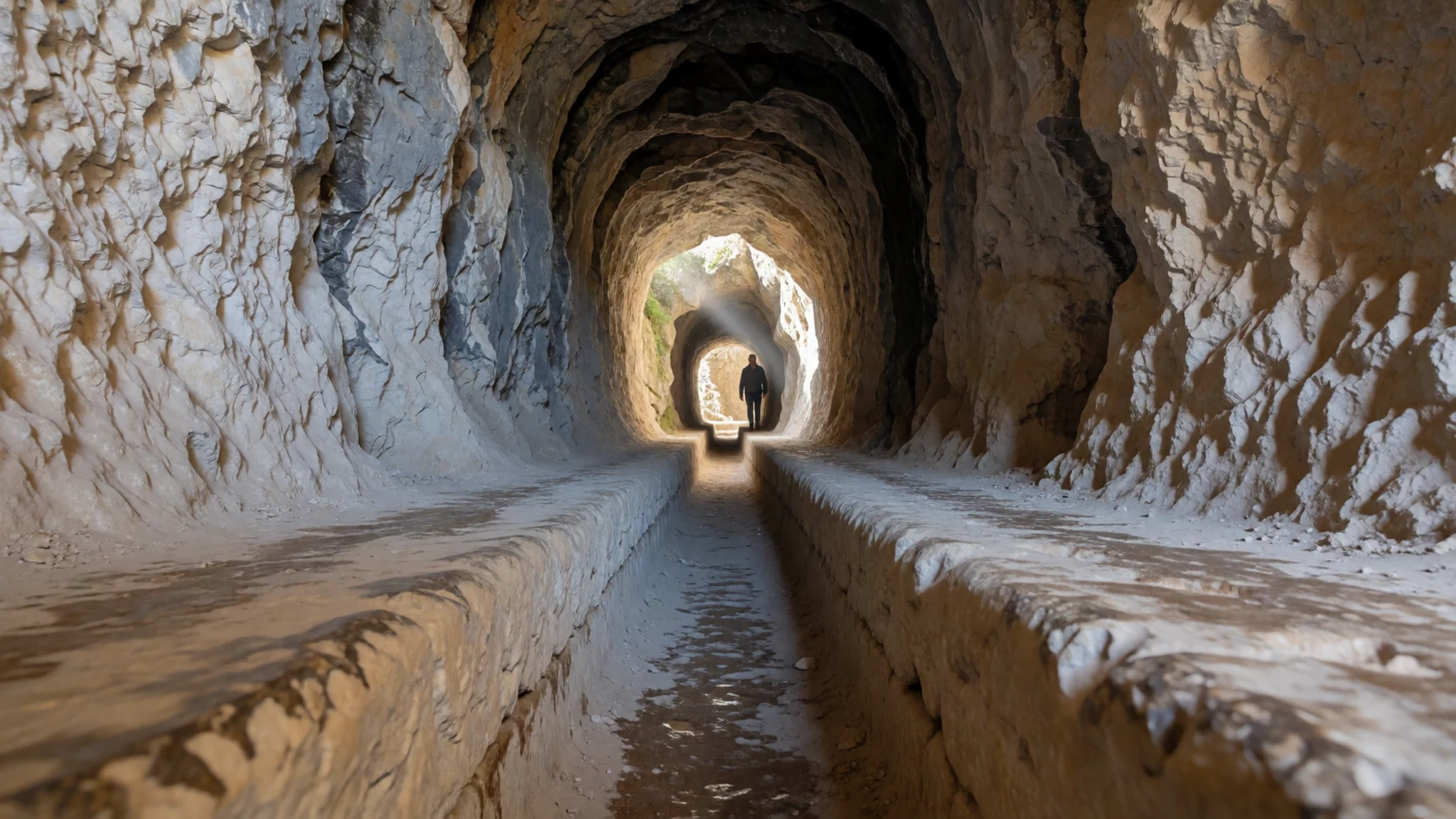
- Heraion of Samos — Southern coast near Pythagoreio
The Heraion was a major sanctuary of the goddess Hera, once crowned by a vast Ionic temple. Today one lone column stands among low foundations, olive trees and wildflowers on a flat coastal plain. It is atmospheric rather than monumental, and best in the soft light of early morning or late afternoon.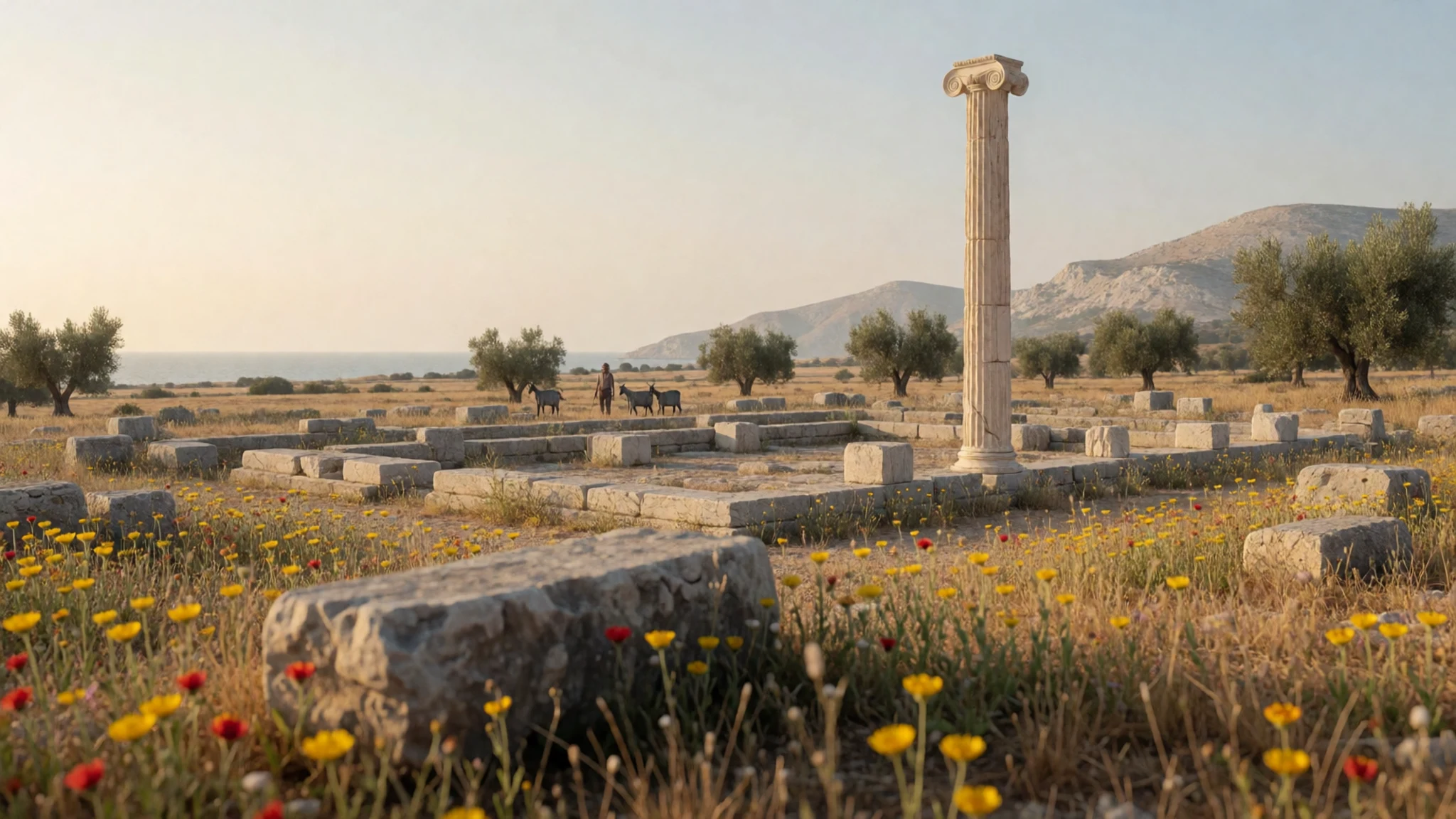
- Pythagoreio harbour and mole — Pythagoreio
The curving harbour at Pythagoreio is still protected by an ancient breakwater, the mole, which is described as the first purpose-built technical port in the Mediterranean. Today it is lined with cafés and fishing boats. A stroll along the waterfront at dusk is the easiest introduction to the ancient city.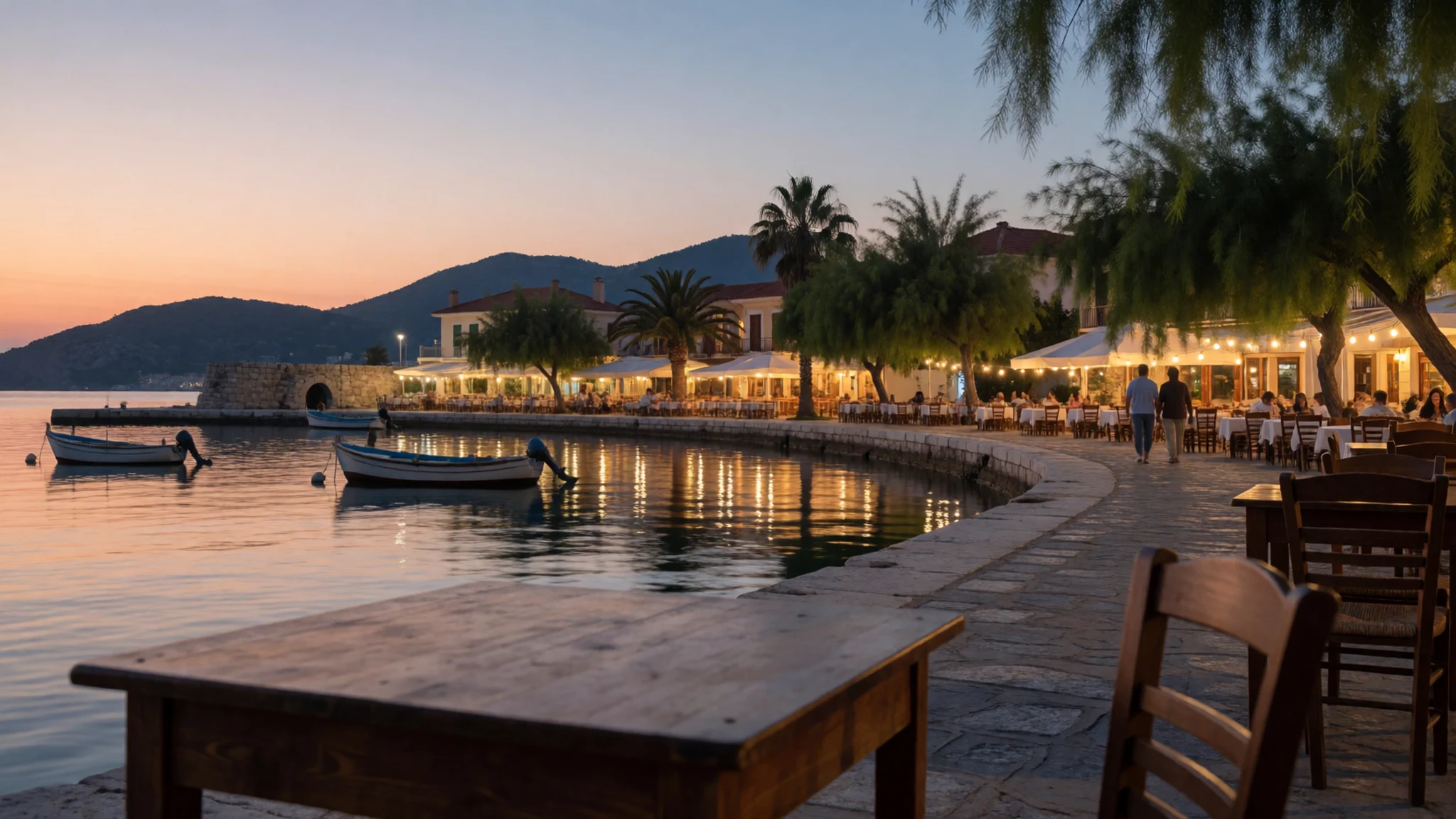
- The cyclopean wall — Hills above Pythagoreio
Pythagoreio was once ringed by a defensive wall of fitted polygonal stone. The Samians had to pull it down after losing a war with Athens, then rebuilt it soon afterwards. Stretches survive on the hillside above town, and short sections can be followed on foot between olive trees.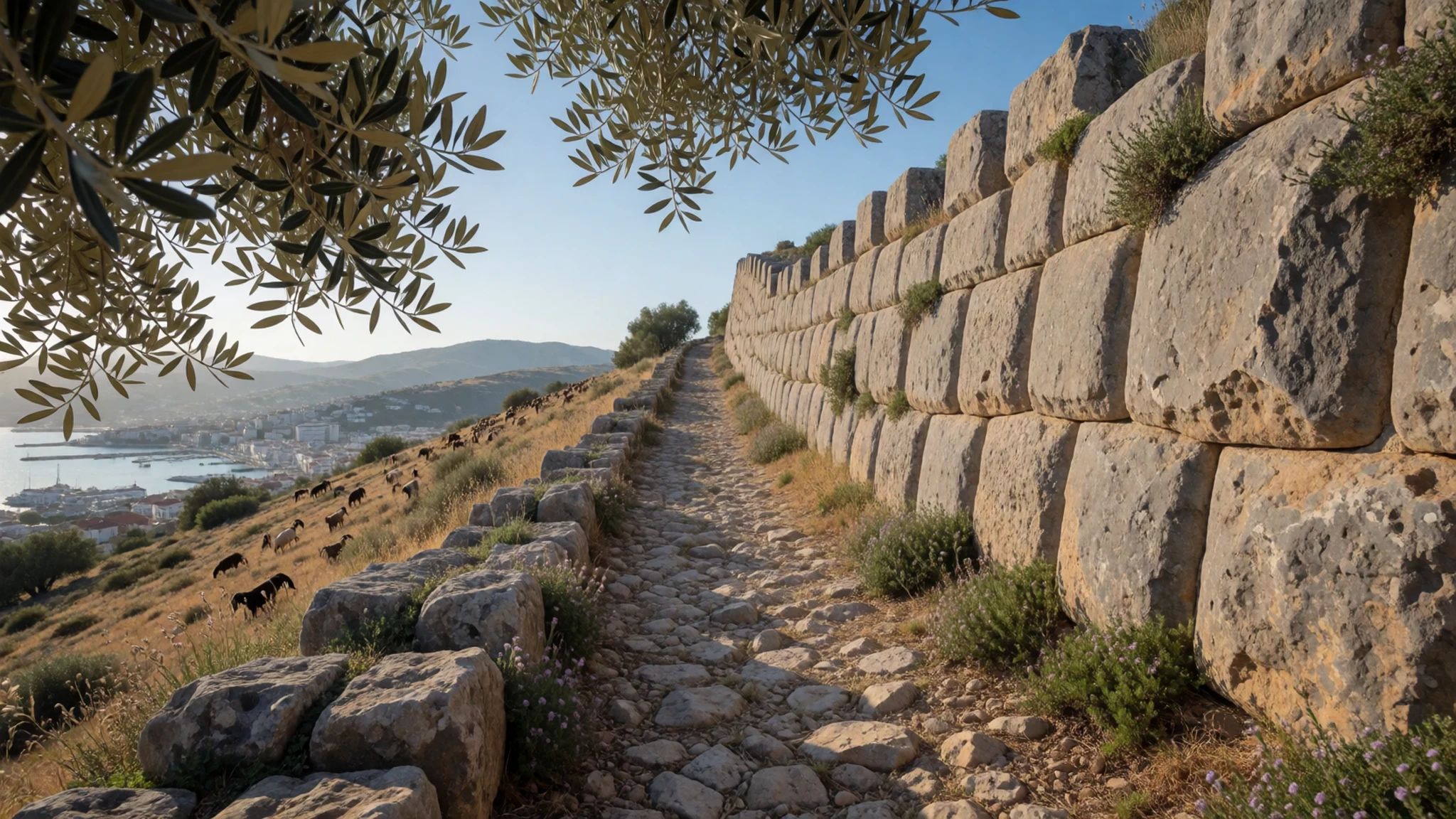
- Vathy waterfront and old town — Northeast coast
Vathy is the island's capital and busiest port, with a long harbour front of cafés and ferries and older lanes climbing the hillside behind. It is a practical base for buses and boats, and a good place to sit with a coffee and watch island life pass.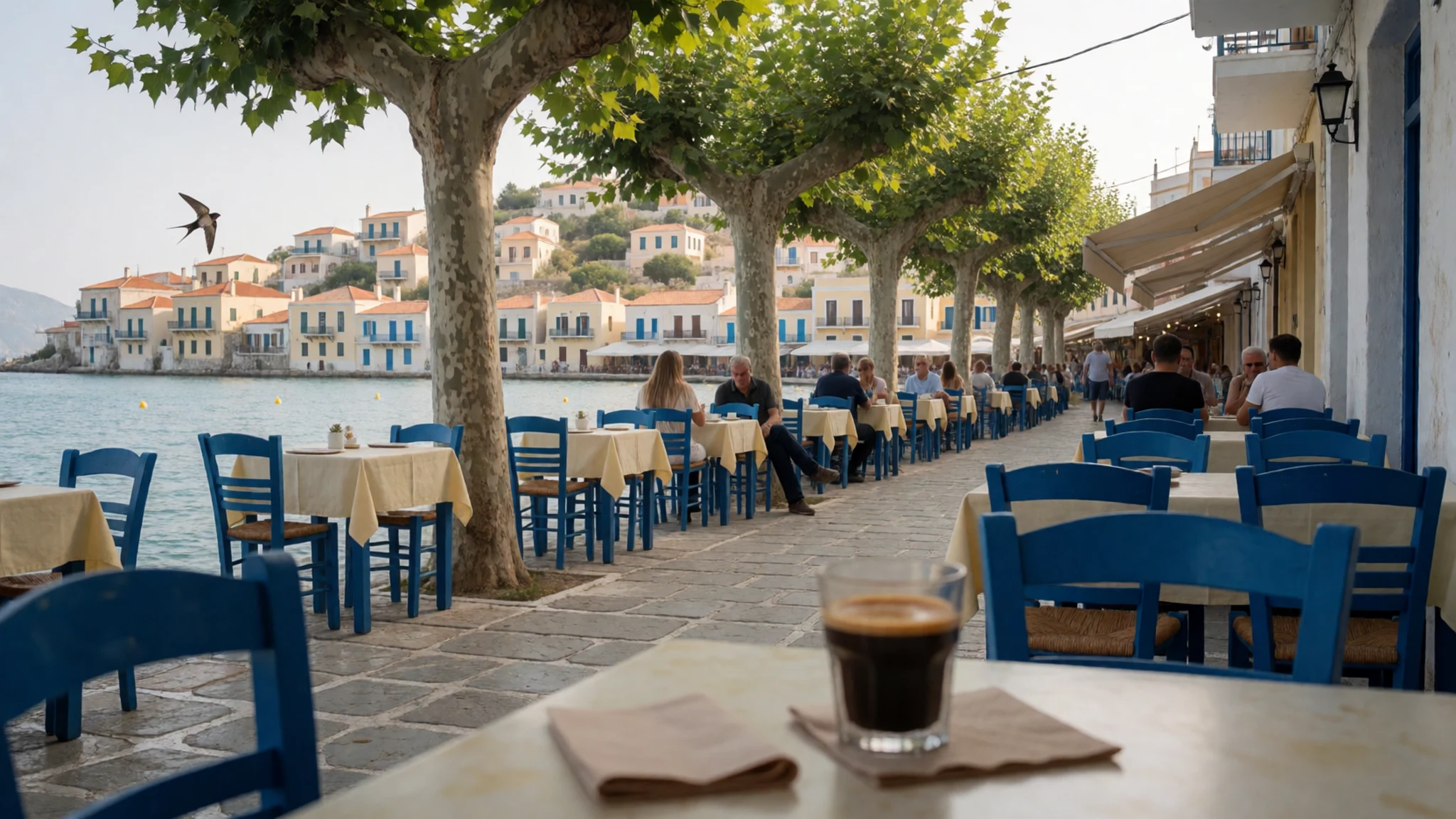
- Pythagoras' cave — Western Samos, Mount Kerkis
High on the slopes of Mount Kerkis, a cave is traditionally linked with Pythagoras, who is said to have used it for teaching and testing early students. The approach is a real hike on rough paths, so it suits walkers with sturdy shoes, water and a cool part of the day.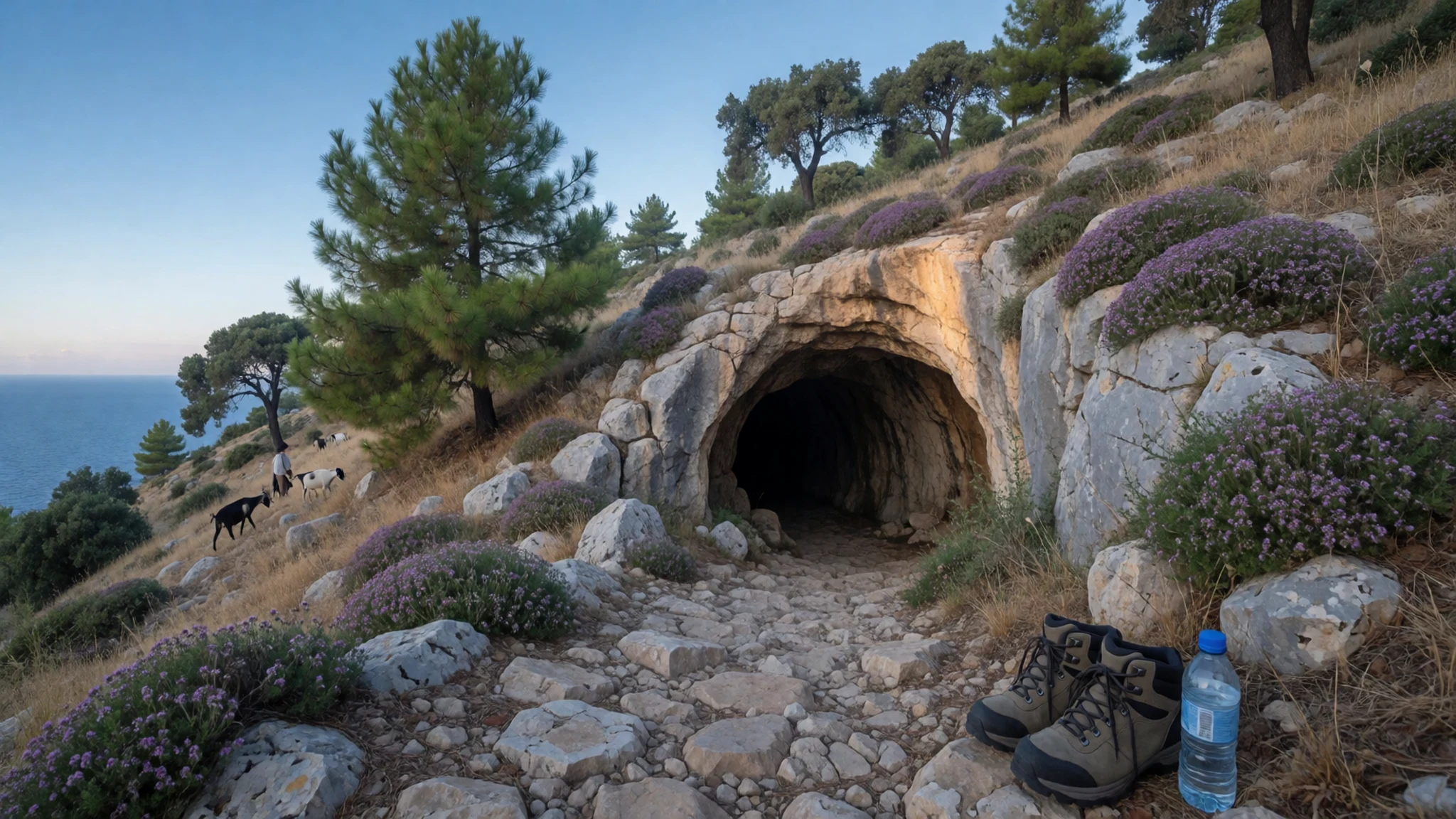
Culture
Samos has a layered cultural identity. Greek Orthodox tradition shapes the calendar, with village saints' days, church bells and festivals (panigyria) bringing music, dancing, food and wine to squares across the island during summer. Many of these are family events that welcome visitors with warmth, though they are not staged for tourists.
The island's history faces two ways. Ancient Greece lives on in its archaeology and in pride over Pythagoras and other great thinkers, while the Ottoman period and the nearness of Turkey remain part of local memory. Day-trip boats still link the island to Kuşadası, and the two coasts trade more than they argue.
Wine is a living tradition. Muscat grapes grow on terraced slopes, and many villages have their own bottling or cooperative cellars where a tasting costs little and a chat comes free. Daily rhythm matters too: shops often close in the afternoon heat, dinner starts late, and a coffee in the square can fill an hour without anyone hurrying the table.
In small villages, older residents often gather at the kafeneio, the traditional coffee house, and a greeting goes a long way. Conversation tends to be direct, generous and curious about where visitors come from.
When visiting a chapel or monastery, cover shoulders and knees, speak quietly, and ask before photographing icons, priests or anyone at prayer.
What to wear
Samos has no single famous costume, but the island shares in the wider Aegean tradition of village dress. Older women's festival outfits typically combined embroidered linen or cotton blouses with long pleated skirts, woollen or cotton aprons and silk or cotton headscarves, while men wore dark wool waistcoats, trousers gathered at the knee or baggy at the leg, and sashes. Cotton and wool were spun and woven locally, and embroidery often marked weddings and festivals. Today these garments appear mainly at folk-dance groups, church festivals and museum displays rather than on the street.
Everyday dress on Samos is relaxed and practical. Locals wear light cotton and linen in summer, and in winter jackets and jumpers for the damp, windy months. In Vathy and Pythagoreio people dress up a little for evening promenades, but nothing is formal. Fishermen and farmers wear working clothes, and sunhats are common.
Visitors should pack for sun, sea and rough paths. Light, breathable fabrics, a brimmed hat and strong sun protection matter from late spring to early autumn. Sturdy shoes or trainers are far better than sandals for ancient sites, which have loose stone, and for the walk to Pythagoras' cave. Bring something warmer for breezy evenings and ferry decks. Swimwear belongs on the beach, so cover up in towns, restaurants and especially churches and monasteries, where shoulders and knees should be covered.
What to eat
- Samian Muscat wine — Wine cooperatives and village cellars around Vathy and the hills
The island's sweet and dry muscat wines are its signature drink, made from grapes grown on terraced hillsides. Look for cooperative cellars near Vathy and villages in the hills, where tastings are common. A glass with fruit or cheese suits an afternoon.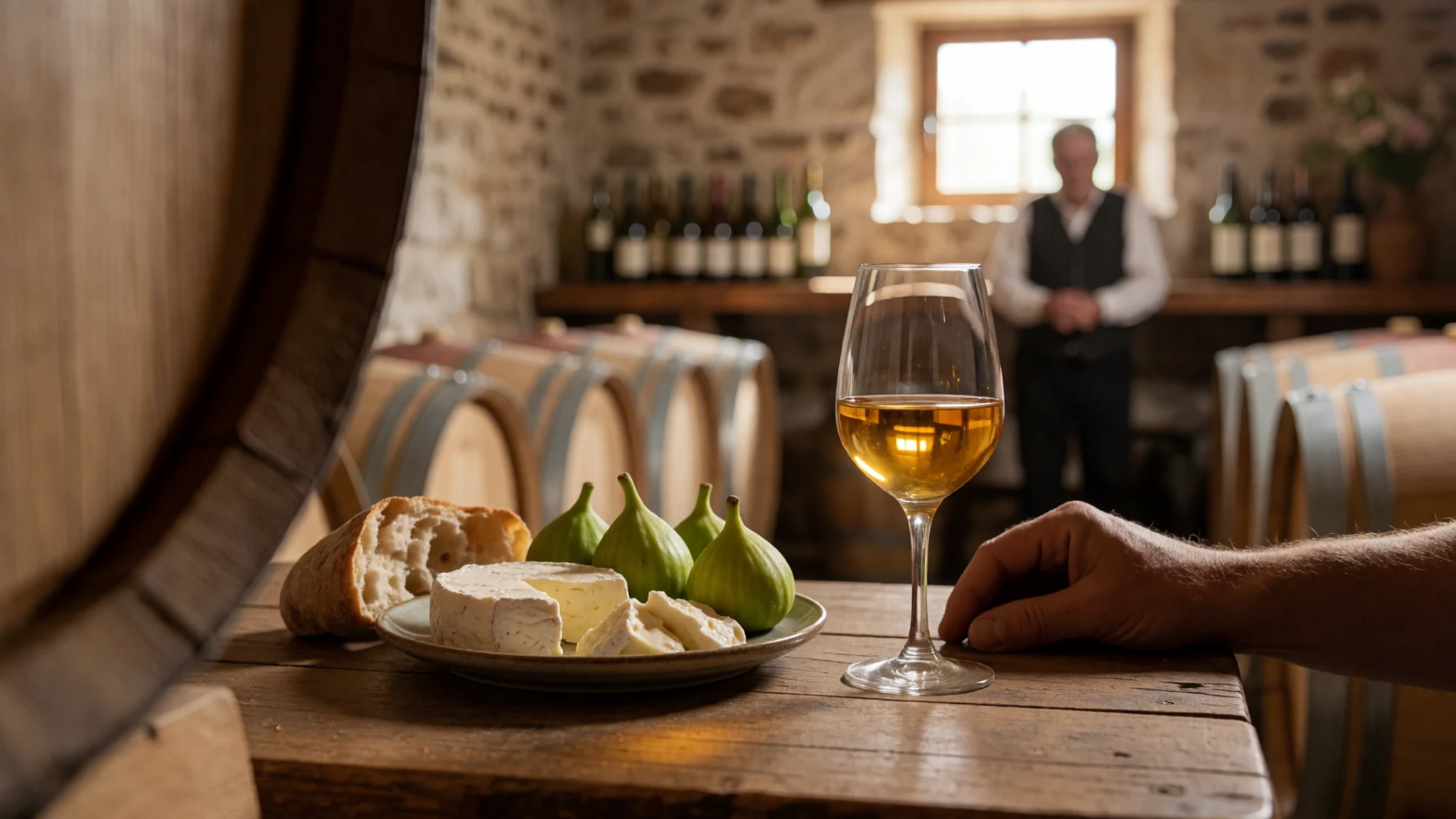
- Grilled fresh fish — Harbour-front tavernas in Pythagoreio and Vathy
As on most Aegean islands, the catch of the day is typically grilled whole with olive oil and lemon and sold by weight. Ask what came in that morning and let the cook suggest what is freshest, with a salad and bread alongside.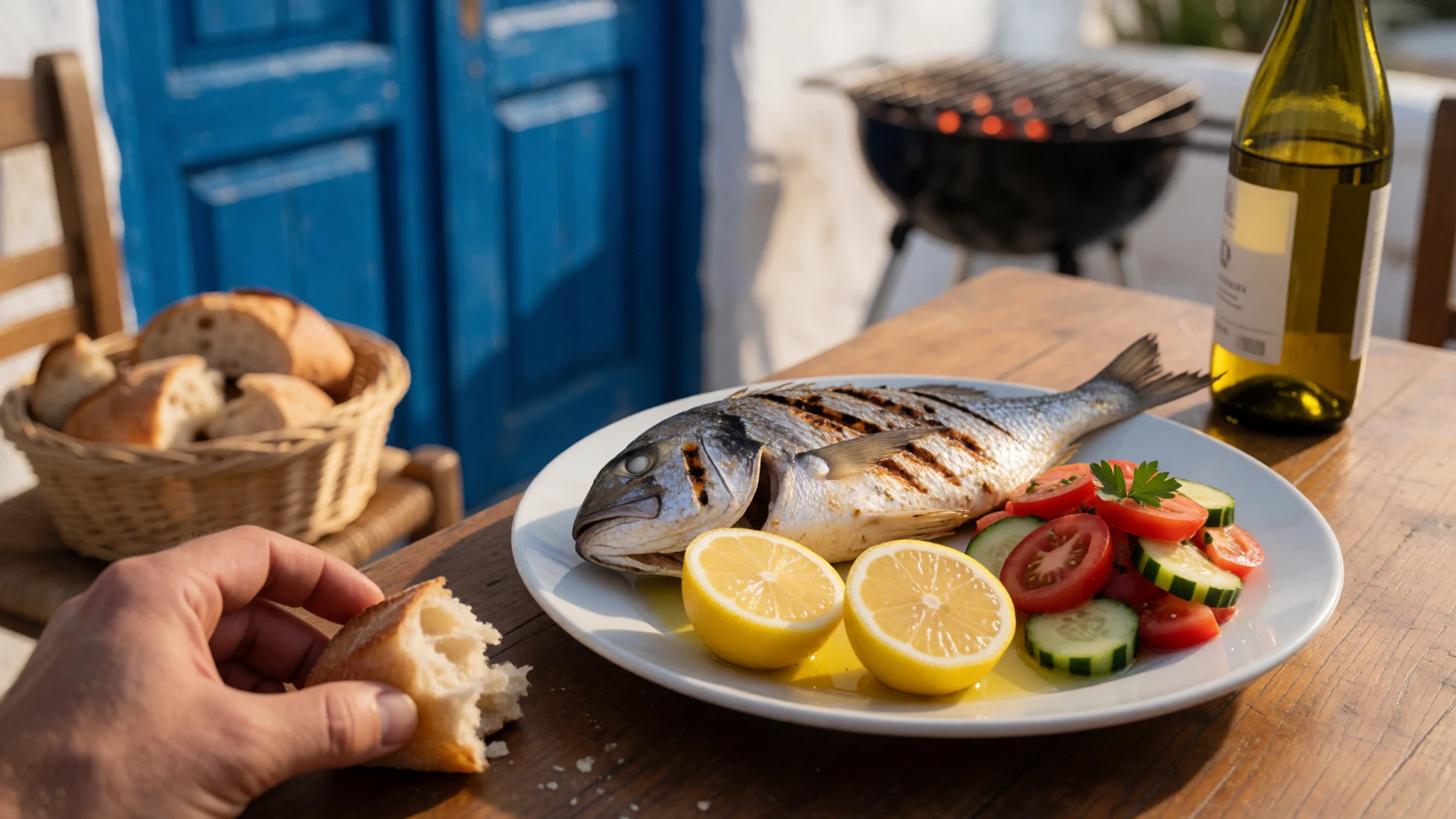
- Local honey and thyme honey — Village shops and weekly markets
Hill villages produce fragrant island honey, often scented with thyme and wild herbs. It goes well with thick Greek yoghurt for breakfast and makes a handy souvenir that travels easily if the jar is sealed. - Meze plates — Tavernas around the central squares of Karlovasi and Vathy
A table of small dishes works well for sharing: tzatziki, fried courgette, grilled cheese, olives, stuffed vine leaves and whatever vegetables are in season. It is a relaxed way to try several flavours in one sitting. - Gemista — Family-run tavernas in inland villages
Tomatoes and peppers stuffed with rice and herbs, then baked in olive oil until soft and sweet, are a classic summer home dish. They often appear on taverna menus as a vegetarian main and taste better lukewarm than hot.
Plan it
Best time. May–June and September–October. Spring is green and warm enough for swimming from late May, while the sea stays warm into autumn. July and August are hot, busy and windy, and winter is mild but wet, with reduced services.
How long. 3–5
Getting there. Samos has its own airport near Pythagoreio, with flights from Athens and seasonal services from Europe, so check current timetables with the airlines. Overnight and day ferries connect the island to the mainland port of Piraeus and some Aegean islands, usually docking at Vathy or Karlovasi. In the warmer months, foot-passenger boats cross from Kuşadası in Turkey; check sailing days and passport rules before booking.
Budget. mid
Tips
- Book ferries and summer accommodation well ahead for July and August
- Hire a car or scooter for beaches and villages, since buses thin out in the afternoon
- Carry cash for village shops and smaller tavernas, though cards work in towns
- Visit ancient sites in the early morning before the heat builds
- Bring a refillable water bottle, sun protection and sturdy shoes for hill paths
- Check the official site, samos.gr, for current opening times of museums and archaeological sites
Etiquette
- Cover shoulders and knees when entering churches and monasteries
- Ask before photographing people, especially older villagers and worshippers
- Do not climb on or remove stones from archaeological sites
Nearby
Sources
- Wikidata Q156882 (CC0)
- Wikipedia: Samos (rev 1378908030) (CC BY-SA 4.0)
- Wikivoyage: Samos (rev 5416885) (CC BY-SA 4.0)
- Photo: View of Samos town (Pe-sa) (CC BY 3.0)
- Photo: Locator map for Samos municipality (Pitichinaccio) (CC BY 3.0)
- Photo: Map of Samos (Kelisi) (CC BY-SA 4.0)
- Photo: View to Posidonio (Pe-sa) (CC BY-SA 1.0)
- Photo: Colonies of Samos (Hans van Deukeren) (CC BY-SA 4.0)
- Photo: Heraion of Samos (Tomisti) (CC BY-SA 4.0)
- Photo: Eupalinian aqueduct (Moumouza) (Public domain)
- Photo: Pythagorion from Panagia Spiliani (KPFC) (CC BY-SA 4.0)


