Samara
Samara, Russia
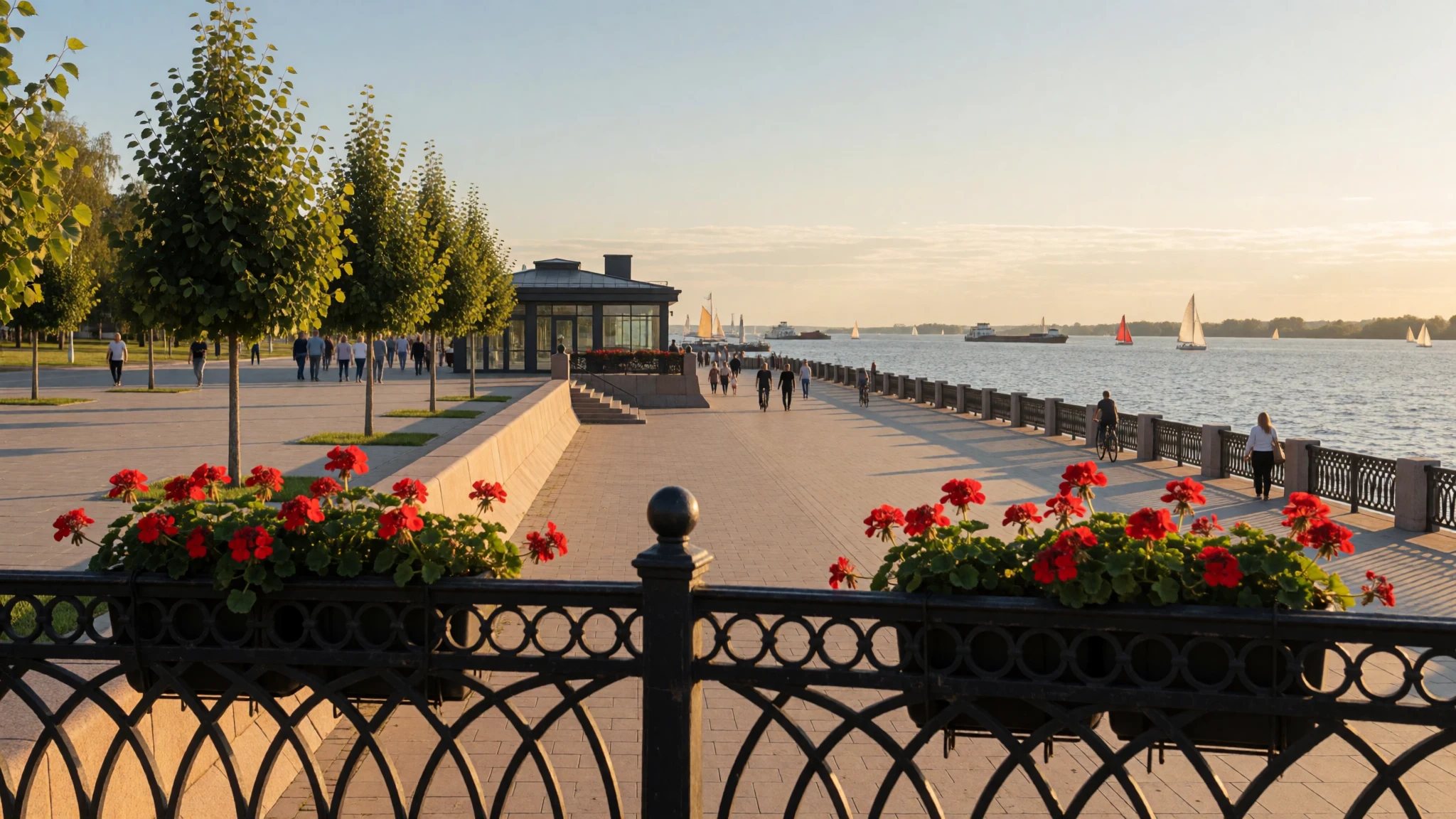
Discover Samara for its sweeping Volga riverfront, deep space heritage, and bustling pedestrian avenues far off the standard tourist trail.
The place
Sited where the Samara River empties into the mighty Volga, Samara stands as a major social, industrial, and cultural heartland in Russia. Home to a population of about 1.15 million people, the city stretches along a continental belt characterized by long, crisp winters and warm summers. Daily life here has always turned toward the water. The grand riverfront embankment serves as the primary gathering space for residents and travellers alike, offering wide promenades and expansive views across the broad channel.
Historically designated as a closed zone, the city has evolved into an accessible hub of commerce and manufacturing without losing its distinctive riverside character. Urban development fans out from old trading roots into wide avenues and leafy squares. Visitors find an energetic atmosphere where historic merchant mansions sit alongside striking Soviet-era monuments and contemporary art galleries. The local economy and identity remain tied to heavy industry, aerospace engineering, and river navigation, shaping a destination that feels genuinely industrious, unpretentious, and deeply connected to the Russian interior.
Its story
Long before official settlement, the strategic lands around the Samara Bend attracted travellers and outlaws alike. As early as the fourteenth century, Italian maps marked the Volga port here. Prior to its formal foundation, the peninsula served as a notorious base for river pirates who used local topography to ambush passing merchant vessels. To secure the eastern boundaries of the realm, a fortified post was established here in the late sixteenth century.
Gradually, the outpost transitioned from a frontier garrison into a thriving customs and trading post, welcoming merchants and diplomats travelling between Russia and eastern lands. The town also opened its gates to peasant rebellion leaders such as Stepan Razin and Yemelyan Pugachyov, who were greeted with traditional bread and salt by local townspeople. Later centuries brought visits from tsars, including Peter the Great, cementing the settlement's status as an administrative hub within the Simbirsk Governorate. In the twentieth century, the city underwent a major chapter under the name Kuybyshev, serving as an industrial powerhouse and a wartime alternate capital before returning to its historic name.
What to see
- Leningradskaya ulitsa — Old Town
Stroll down this vibrant pedestrian street in the Old Town, lined with historic merchant buildings, small shops, cafes, and street musicians. It offers an easygoing introduction to local urban life and preservation efforts. - Klodt Manor — Old Town
Admire this late nineteenth-century architectural landmark built for merchant Ivan Klodt. Designed by architect Shcherbachov, the distinctive estate showcases fine historic detailing and intricate craftsmanship from the region's prosperous trading era. - Pokrov Cathedral — City Centre
Visit this striking Orthodox cathedral completed in the mid-nineteenth century. The design draws inspiration from classic seventeenth-century Moscow church architecture, featuring ornate domes and rich interior devotional art. - Choral Synagogue — City Centre
Marvel at the architectural styling of the city's historic synagogue, erected in the early twentieth century by architect Kleinerman. Its Moorish Revival exterior stands out as a unique cultural landmark in the urban landscape. - Church of the Sacred Heart of Jesus — City Centre
Step inside this striking Roman Catholic church, widely celebrated for its soaring neo-Gothic spires and handsome red-brick facade. It remains one of the most visually distinctive religious structures in the region. - Stalin's Bunker — City Centre
Descend deep underground to explore the reinforced subterranean command bunker built during the mid-twentieth century. Although historical records indicate it was never actually used by Stalin himself, the subterranean structure remains a fascinating draw for curious visitors.
Culture
Samara nurtures a lively cultural scene anchored by its opera and ballet theatre, a renowned philharmonic orchestra, multiple drama stages, and the historic regional museum founded in the late nineteenth century. The museum's extensive collections span local archaeology, paleontology, and regional ethnography, while other institutions celebrate the city's proud legacy as a powerhouse of Soviet aerospace development and rocket building. Contemporary galleries add a modern edge to the traditional arts.
Social interactions are grounded in traditional hospitality, though daily life moves at a relaxed pace compared to western metropolises. English is not universally spoken outside major hotels and upscale eateries, so having a translation app or a few Russian phrases handy makes navigating the city much smoother. When entering an Orthodox church or a quiet indoor gallery, keep your voice low and dress modestly, covering shoulders and knees out of respect for local custom.
What to wear
Traditional dress in the Volga region historically featured heavy linen shirts, embroidered tunics, and woollen layers suited for continental extremes, though traditional attire is now preserved mostly in folk museums and cultural festivals rather than worn on the street. Contemporary residents dress in standard European styles, leaning toward practical, weather-appropriate layers. Jeans, jackets, and comfortable footwear are everyday staples across the city.
Visitors should pack according to the season. Summers call for breathable fabrics and good walking shoes for the long river embankments and pedestrian avenues. Winters demand thermal layers, a heavy insulated coat, sturdy boots with good grip for ice, and a warm hat. When visiting churches or monasteries, women should carry a scarf to cover their head, and both men and women should wear modest clothing that covers shoulders and knees.
What to eat
- Zhigulyovskoye Beer — Volzhskiy prospekt near the old brewery
Sample the legendary regional lager produced right by the old brewery near the riverfront. Enjoy it fresh at the iconic Na dne bar or in the grand dining rooms of the U Vakano restaurant. - Georgian Khachapuri and Khinkali — Old Town neighbourhood
Savour hearty Caucasian dishes, including cheese-filled breads and spiced meat dumplings, served alongside traditional Georgian wines at cosy spots like Cafe Puri in the old quarter. - Russian Pelmeni — Local cafes and eateries across the city centre
Warm up with traditional boiled meat dumplings served with a generous dollop of smetana (sour cream) and fresh dill, available in traditional dining rooms and cafes throughout the centre. - Volga Fish Delicacies — Riverfront food stalls and local restaurants
Try smoked or salted freshwater fish pulled straight from the river, traditionally paired with local brews along the embankment during the warm summer months. - Russian Chocolate Confections — Speciality sweet shops and central markets
Sample rich sweets and artisanal chocolates produced by local confectionery institutions, perfect for an energy boost while exploring the pedestrian shopping streets.
Plan it
Best time. May to September brings warm weather ideal for walking the expansive Volga riverfront, while winter offers crisp snowscapes.
How long. 2–3
Getting there. Arrive by long-distance train from Moscow, Saint Petersburg, or Yekaterinburg into the central railway station, or drive along the M5 Ural Highway.
Budget. mid
Tips
- Book tours to Stalin's Bunker well in advance
- Carry cash in roubles for small kiosks, markets, and rural transport
- Wear comfortable shoes for exploring the lengthy riverside embankment
- Download an offline translation app to ease navigation
- Check official websites or ask at your lodging for current opening hours
Etiquette
- Cover your shoulders and knees when visiting Orthodox churches and sacred sites
- Remove your hat when entering indoor cultural venues and places of worship
Nearby
Sources
- Wikidata Q894 (CC0)
- Wikipedia (rev 1374868771) (CC-BY-SA 4.0)
- Wikivoyage (rev 5416875) (CC-BY-SA 4.0)