Salalah
Salalah, Oman
Salalah is a green, misty coastal city in southern Oman, best known for its monsoon season and as a gentle base for the wider region.
The place
Salalah is the capital of Dhofar, the southern governorate of Oman, and the largest city in the region. It has about 330,000 people and ranks as the third-largest city in the country, which surprises many visitors whose picture of Oman comes from Muscat and the dry interior. The town sits on the Arabian Sea coast, and the air feels different from the rest of the country: softer, damper and often cloudy or misty in July and August.
Much of that comes from the monsoon. Between June and September the wind brings cloud and fine mist that settles over the hills and turns the brown lowlands green. The gardens inside the city produce coconuts, bananas and vegetables that rarely grow elsewhere in Oman, and walking through them in the cooler hours is one of the easiest pleasures here. They explain why the town feels like a refuge after the long drive from Muscat.
Salalah is also a working city, with a port, a broad downtown of shops and offices, and a growing number of hotels and restaurants. The clocktower at the centre is the city's emblem and appears on the coat of arms of the governorate. The city was the birthplace of Sultan Qaboos bin Said, and local people still speak about him with evident affection.
For most travellers the question is timing. Winter is mild and pleasant, and the coast is milder in summer than the inland desert. The khareef season is the busiest time, so book rooms well ahead. Salalah works best as a base: spend a few days in the city, then head out into the wider region, where places to eat and stay are far scarcer.
Its story
Salalah has long been the traditional capital of Dhofar. Its importance grew with the incense trade, since frankincense from the hills behind the town travelled along routes that carried it to the coast and onward to distant markets. The nearby port of Zafar grew rich on that traffic, and its ruins at Al Baleed are the physical traces of that trading world. The town reached its height in the thirteenth century, and later its influence faded.
In the nineteenth century the region became part of the Sultanate of Muscat and Oman. Between 1932 and 1970 Salalah was the seat of government and the residence of Sultan Said bin Taimur. When his son Qaboos came to the throne in 1970, he moved the capital to Muscat, and Salalah lost its place at the centre of power. People in the town felt that loss for many years. The palace in Salalah was kept ready for the Sultan's visits, and his return was always eagerly anticipated.
He did come back from time to time. He visited in 2006 to meet tribal and local leaders, and in 2010 a parade marking forty years since his accession drew an estimated 100,000 spectators over several hours. His mother came from a prominent Jebbali tribe in the region, and the family's links with Dhofar remained strong, so the city has never quite lost its sense of importance.
In 2011 Salalah saw peaceful protests lasting several months, part of the wave of unrest that spread across the Arab world that year. Demonstrators asked for the dismissal of some ministers, more jobs, higher pay, relief from rising living costs and the creation of Islamic banks.
What to see
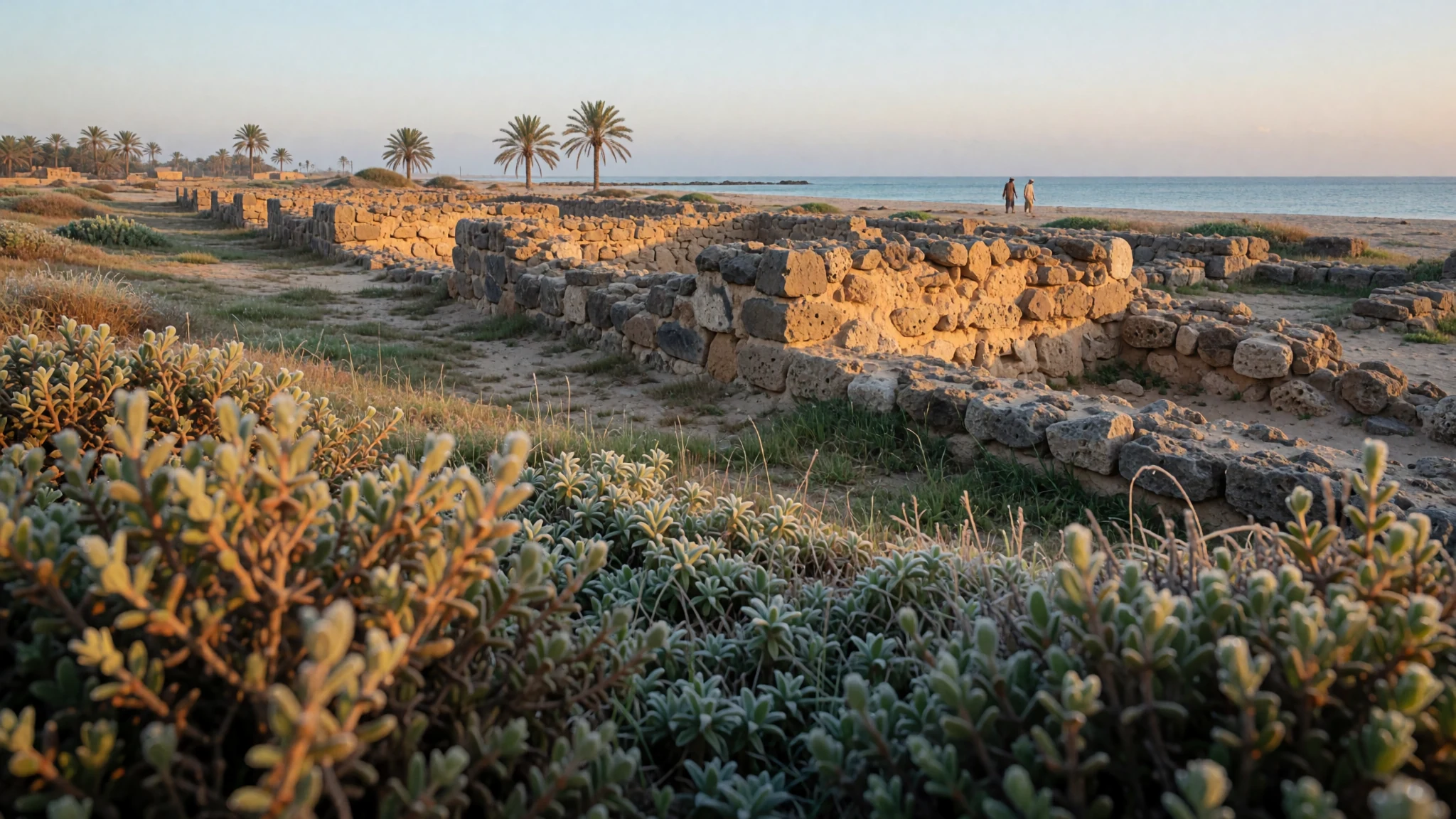
- Al Baleed Archaeological Park — Coast east of the city centre
Al Baleed Archaeological Park holds the extensive ruins of Zafar, a trading port that flourished on the coast east of the city. Marco Polo is recorded as visiting in 1285, and the walls and foundations give a sense of how busy the harbour once was. Go in the cooler morning or late afternoon, bring water, and wear sturdy shoes, because the paths cross open ground with little shade.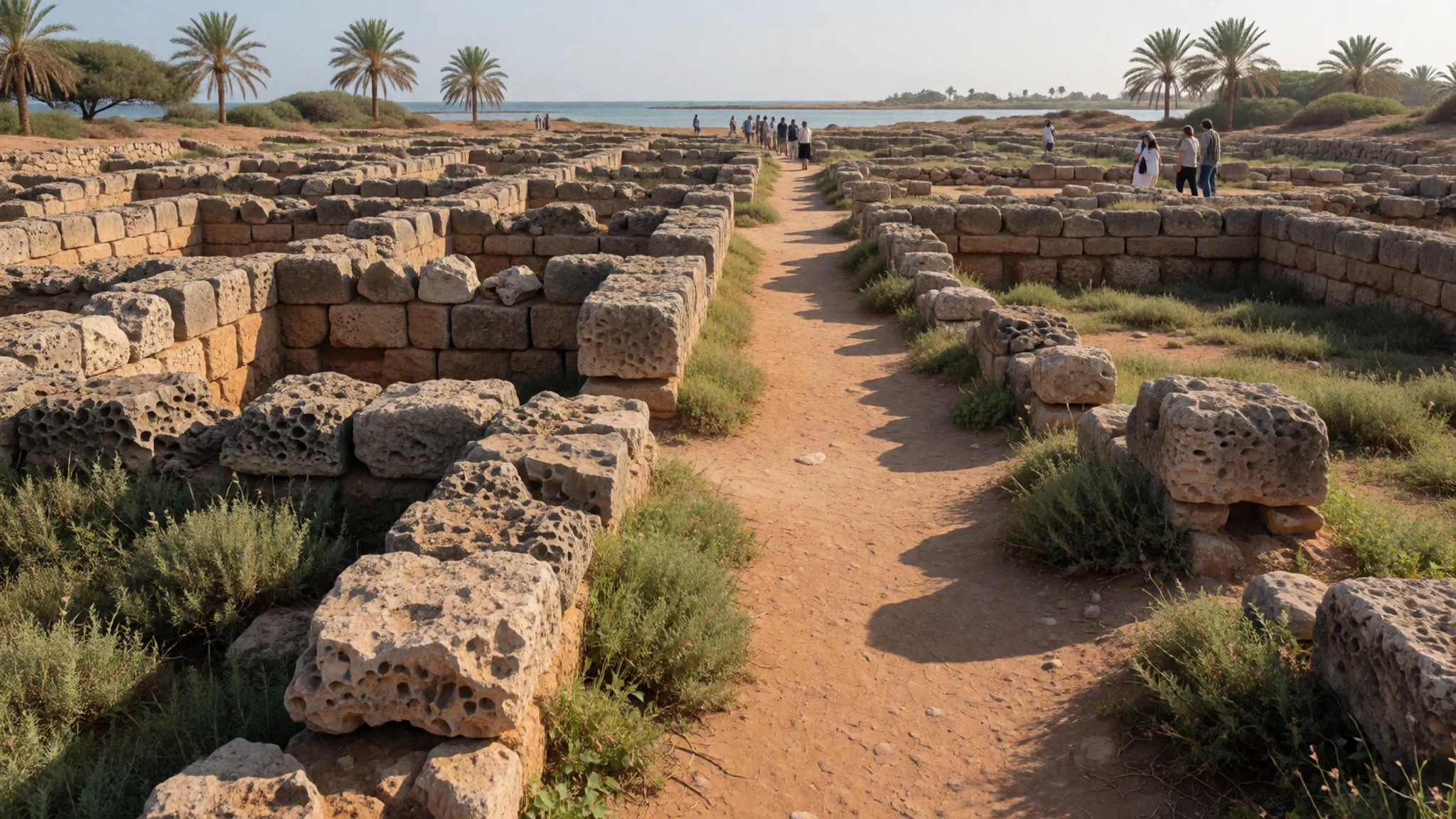
- Museum of Frankincense Land — Beside Al Baleed, on the coast east of the centre
The Museum of Frankincense Land sits close to the Al Baleed site and tells the story of the port and the wider region. Its displays explain the incense trade that made Salalah rich, so it is a good place to go before or after visiting the ruins. Allow an hour or so, and check the official site for current opening times before you set out.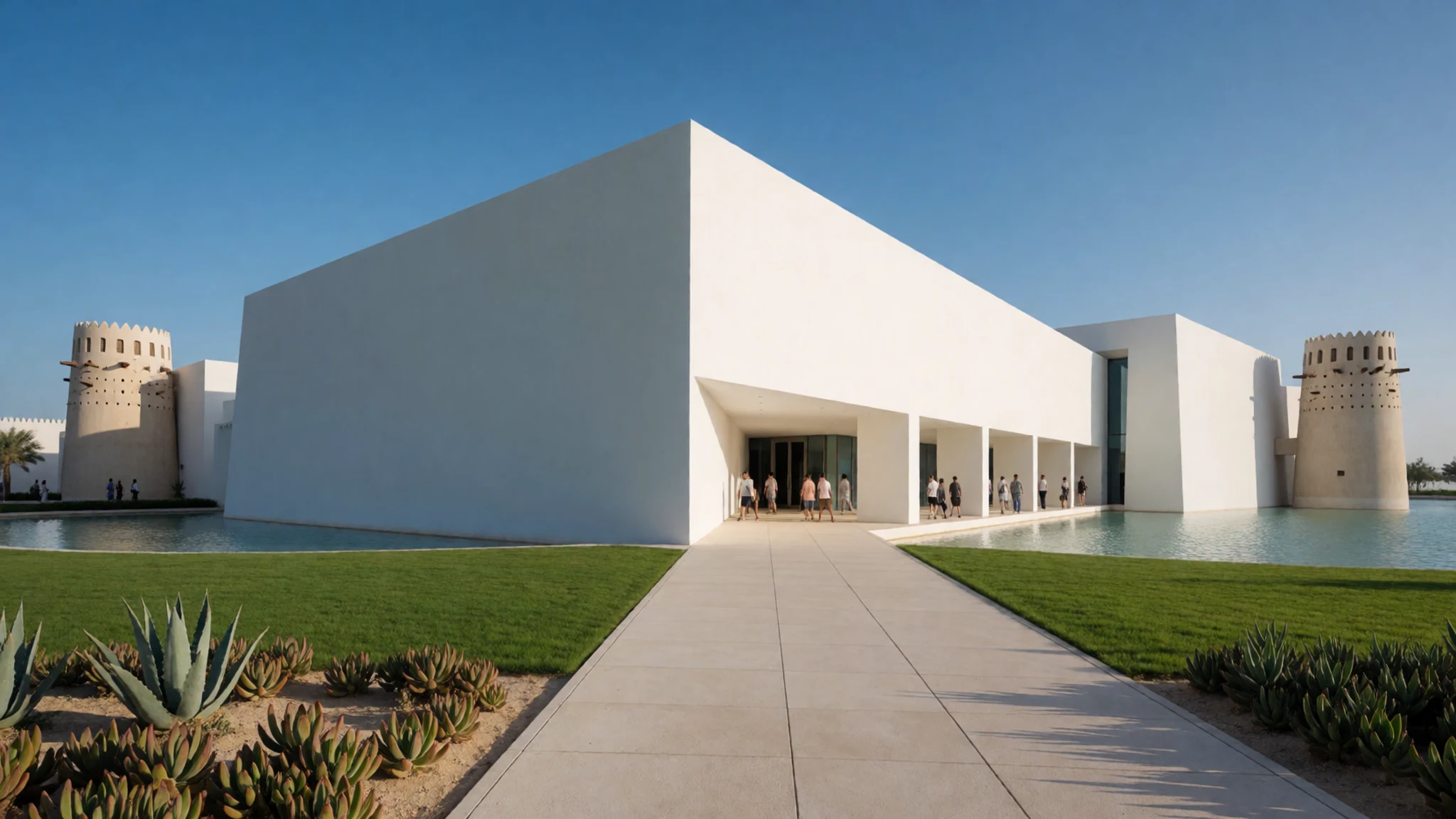
- Burj an-Nadha — Downtown Salalah
Burj an-Nadha is the clocktower that serves as the emblem of Salalah and appears on the coat of arms of Dhofar governorate. It is not a skyscraper, but it is the landmark people use to find their way downtown. In the evening it is lit in colour, which makes it a pleasant stop for a stroll on foot.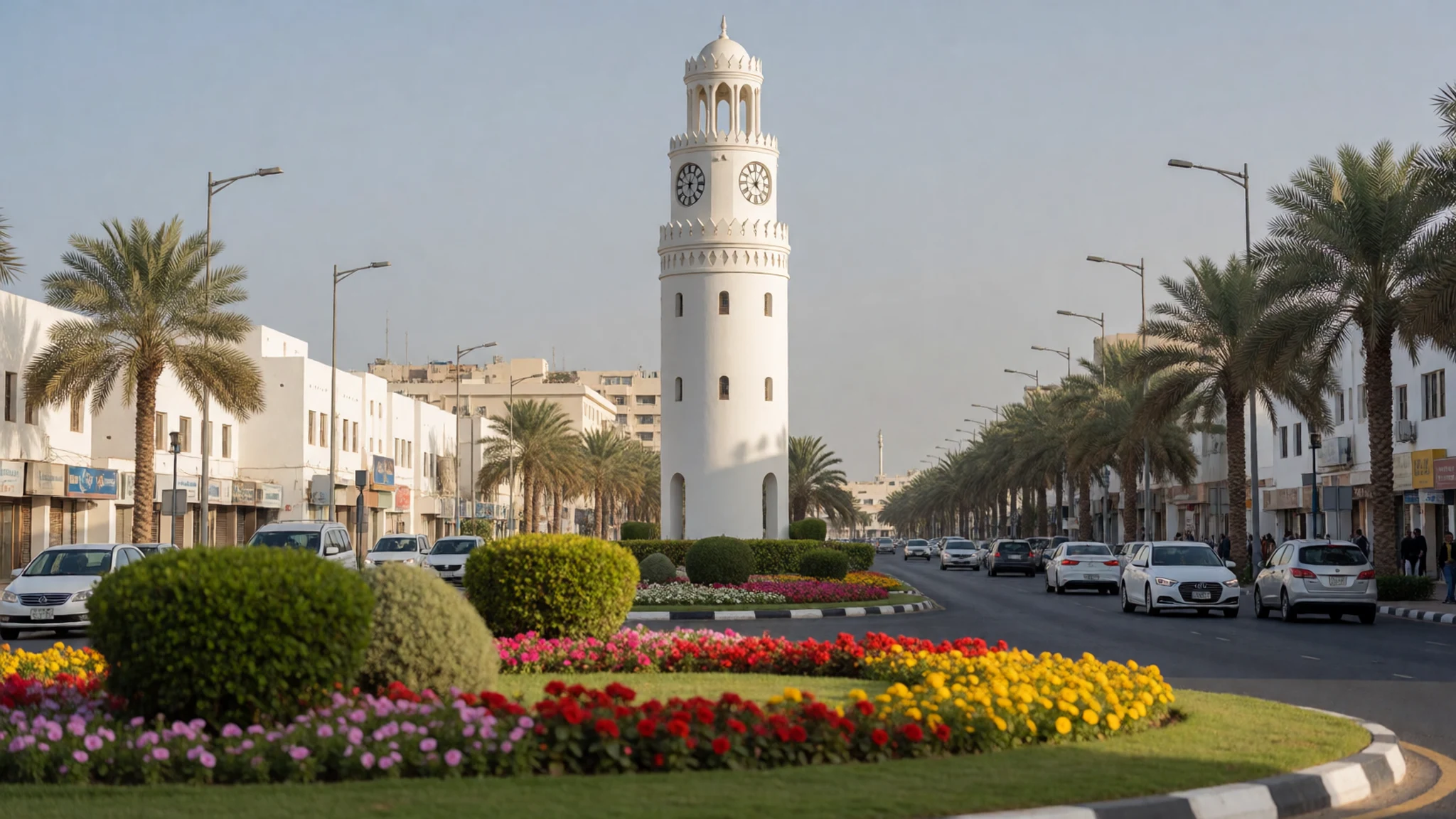
- Sultan Qaboos Grand Mosque — City centre
The Sultan Qaboos Grand Mosque was completed in 2009 and is one of the largest mosques in the city. Its scale and white stone make it an easy landmark. Conservative dress is required, and women must cover their hair, ankles and wrists before entering. Non-Muslim visitors should check the official site or ask locally about visiting hours.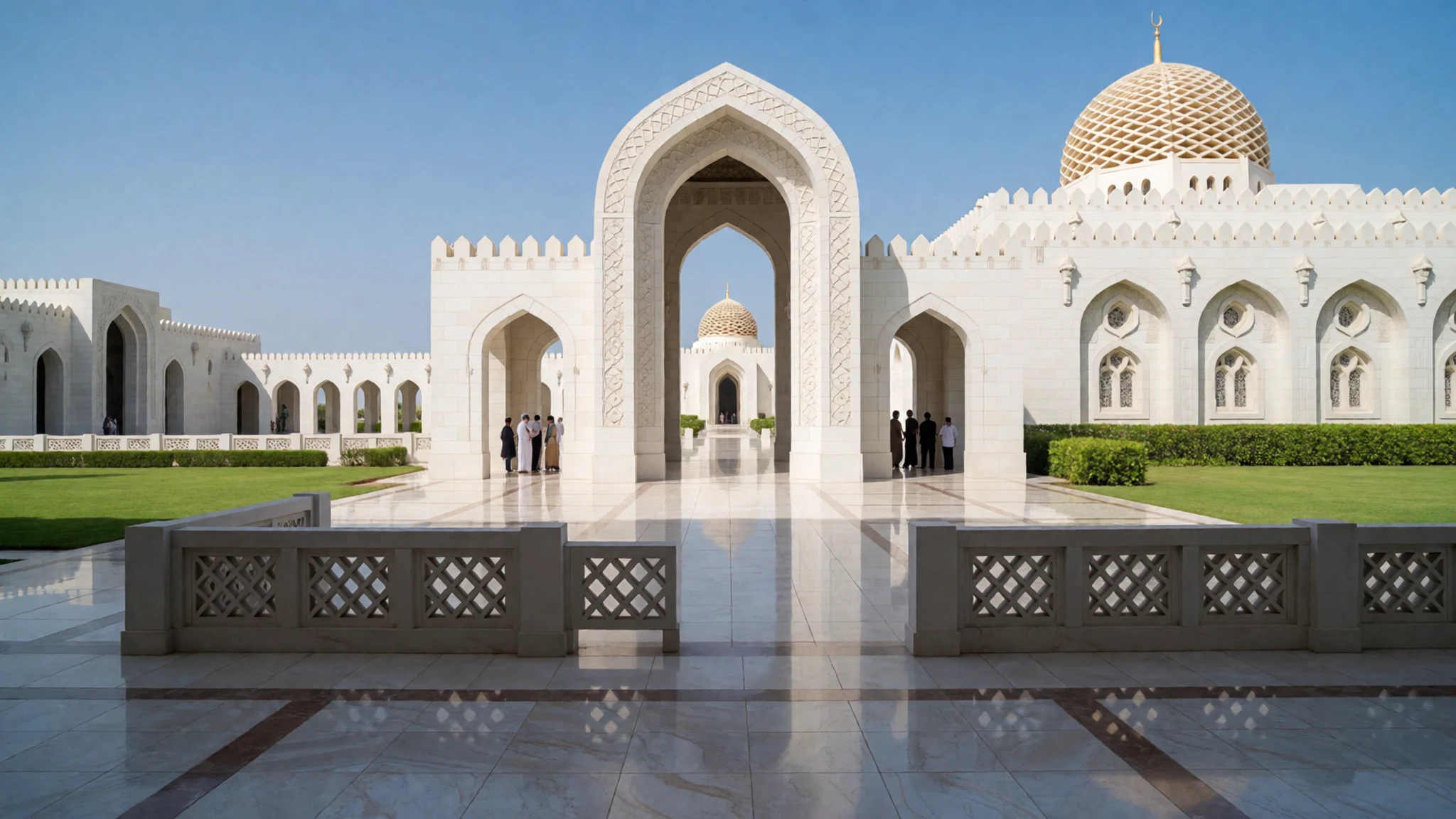
- Salalah Museum — Central Salalah
The Salalah Museum has an eclectic collection, with sections on the geology and history of the region. A permanent display of photographs by Wilfred Thesiger gives a clear view of the desert and mountain life of the twentieth century. It is a useful stop on a rainy or very hot afternoon, when the downtown streets are least inviting.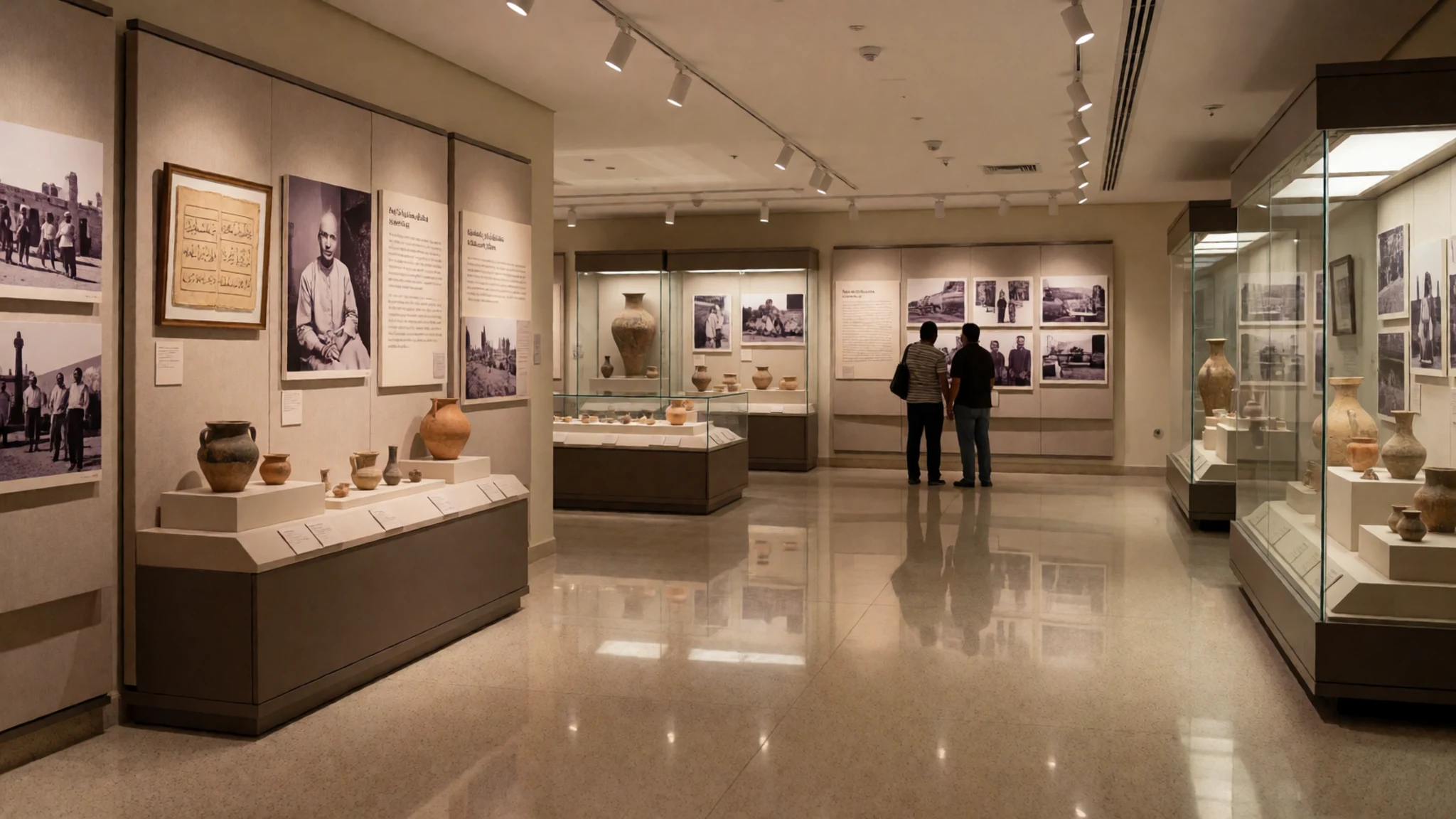
Culture
Salalah sits within a Gulf society where Islam shapes daily life, and the city's identity is closely tied to Dhofar's own history, its frankincense heritage and its rhythm of monsoon and dry season. Omani hospitality is generous: offering coffee and dates to a guest is a gesture of welcome, and accepting it with the right hand is a courtesy. Many people here are proud of the city's distinct dialect and customs, which differ from those of Muscat and the north, and a short greeting in Arabic is always appreciated. Visitors should take care with photography. Ask before photographing people, especially women, and avoid taking pictures inside mosques or at the Sultan's palace grounds, which can be viewed only from the outside. During Ramadan, avoid eating, drinking or smoking in public during daylight hours. In a conservative city, dress modestly in the streets and remove your shoes when a mosque or home asks you to.
What to wear
Traditional dress in Salalah follows the wider Omani pattern. Men wear the dishdasha, a long white or pale robe with a collar, often paired with a small embroidered cap called a kumma. Women traditionally wear long, loose garments and a headscarf, and in the south many women also wear colourful embroidered clothing and shawls that reflect Dhofar's own craft traditions. Cotton and light synthetic fabrics dominate everyday clothing because they suit the heat and humidity, while finer silks and embroidered brocades are kept for weddings and festivals.
What people wear now is a mix. In the streets of Salalah you will see dishdashas and abayas alongside jeans, trainers and Western office clothes, and the khareef season brings a noticeable flow of visitors from other parts of the Gulf and beyond. Many younger women wear fashionable abayas with contemporary cuts, and the dishdasha remains the default for men at prayer and at family events.
For a visitor, the advice is simple. Choose loose, lightweight clothes that cover shoulders and knees, and carry a scarf so you can cover your hair when entering a mosque. Closed, comfortable shoes suit the paths at archaeological sites, while sandals are fine downtown. In the monsoon months a light layer helps against the damp, cool air on the hills.
What to eat
- Shuwa — Omani restaurants and family-style eateries, usually booked for groups
Shuwa is slow-cooked meat, traditionally lamb, wrapped and roasted over many hours in an earth oven until it falls apart. It is a dish for celebrations and family gatherings. Ask at a restaurant that serves Omani food, especially on weekends, and expect to wait for it to be prepared.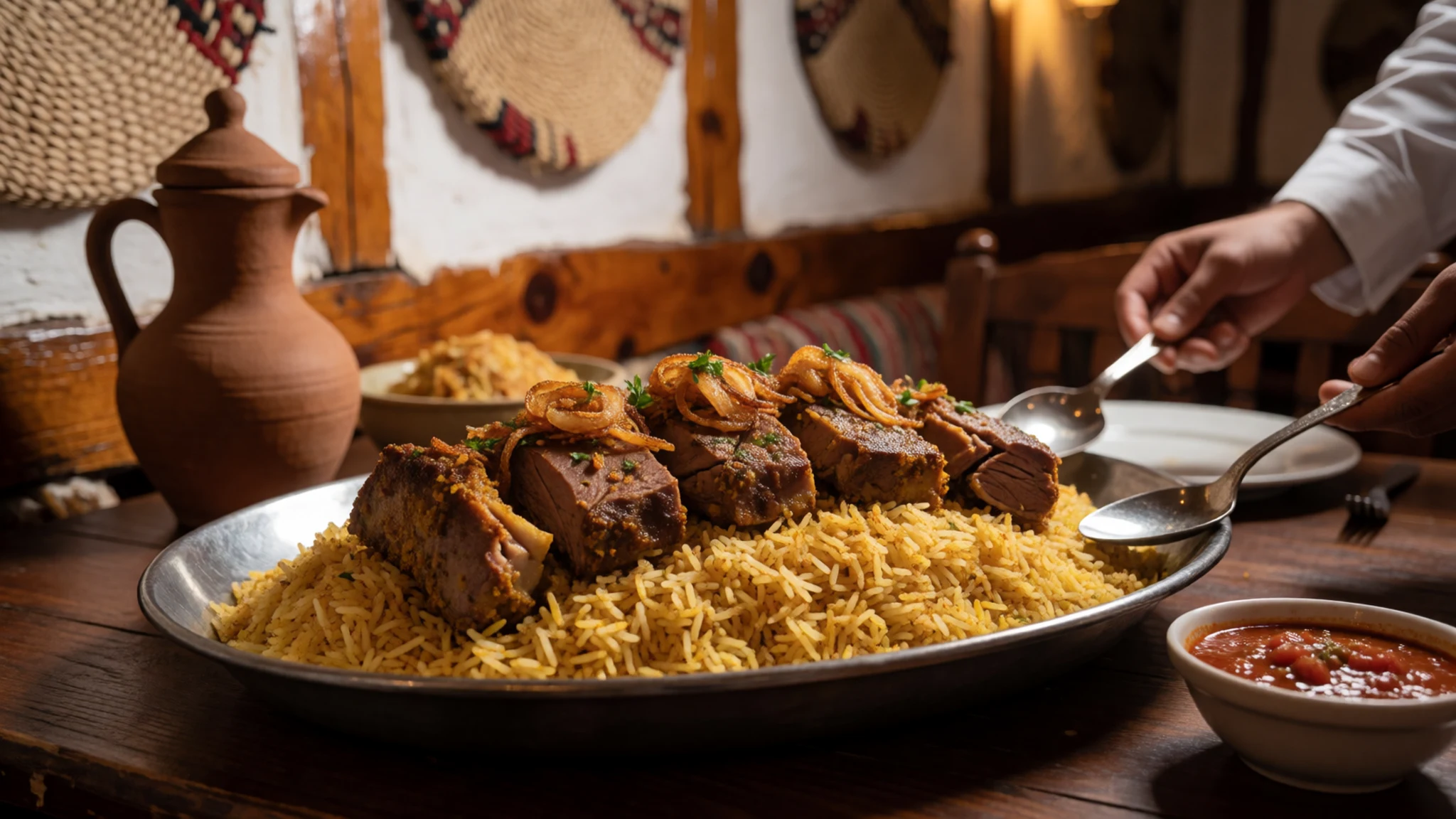
- Machboos — Omani restaurants in the downtown area
Machboos is a spiced rice dish cooked with meat or chicken, dried lime and aromatic spices, shared from a large platter. It is the everyday Omani meal that many locals eat at lunch. Look for it at the Omani restaurants downtown, where it is often served with a fresh salad.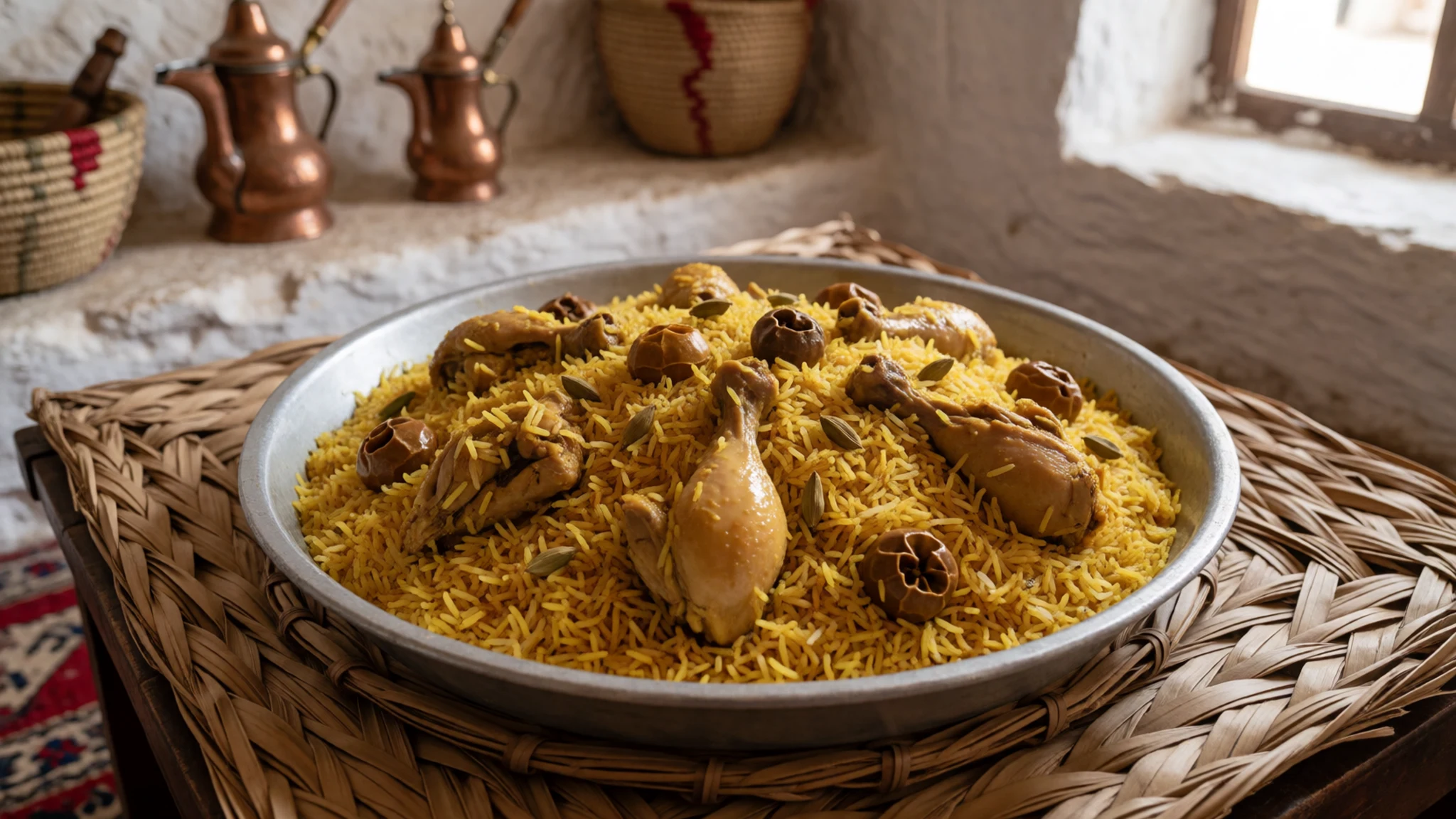
- Omani halwa — Sweet shops and the traditional markets around the city centre
Omani halwa is a dense, glossy sweet made from sugar, rosewater or saffron, and nuts. It is served in small portions with Arabic coffee, and it is a traditional way to mark a welcome. Sweet shops and souqs sell it by the box, so buy a small piece to try before committing to a larger one. - Fresh coconut and banana — Roadside stalls and garden stands on the edges of the city
The gardens inside Salalah produce coconuts and bananas, which is unusual in Oman. Fresh coconut water and banana are sold at roadside stalls and garden stands. They make a refreshing break from the heat at any time of year. - Vindaloo and South Indian vegetarian — Indian and South Indian restaurants in the city centre
Salalah has a large South Asian community, and Indian restaurants here are a reliable choice. The vindaloo is especially well regarded in town, and the South Indian vegetarian restaurants serve dosas and thalis. Both are good options if you want a change from Omani food after a few days.
Plan it
Best time. October to April suits most visitors, with cooler, drier days and comfortable evenings. The khareef monsoon from June to September brings cloud, mist and a green landscape, but also crowds and higher prices. Summer inland is hotter, so the coast is the better choice then.
How long. 3–4
Getting there. Salalah Airport is a short ride from the city. Taxis from the airport charge far more than the normal rate, so agree the fare beforehand or use the official rank. Driving from Muscat takes roughly 12 hours; the first stretch is scenic, passing Rusayl and Nizwa, but the rest is long and tiring.
Budget. mid
Tips
- Book accommodation early for the khareef season, as places fill quickly
- Visit the ruins and gardens in the early morning or late afternoon to avoid the heat
- Carry water and snacks when you travel outside the city, because restaurants are scarce
- Check the official site for opening times of museums and the mosque before you go
- Use taxis or arranged transport rather than hailing cars, and agree the fare first
Etiquette
- Dress modestly in the city and cover your hair and ankles when entering a mosque
- Ask before photographing people, and do not photograph the palace grounds from inside
- Avoid eating or drinking in public during daylight in Ramadan
Nearby
Sources
- Wikidata Q1294439 (CC0)
- Wikipedia: Salalah (rev 1377526846) (CC BY-SA 4.0)
- Wikivoyage: Salalah (rev 5370707) (CC BY-SA 4.0)
- Photo: Downtown Salalah, Oman (StellarD) (CC BY 3.0)
- Photo: Burj al Nahda (Bernhard Dunst) (CC BY-SA 4.0)
- Photo: Al-Baleed Zafar (9591353082) (CC BY 3.0)
- Photo: Dhofar University (Neil Turner) (CC BY-SA 2.0)
- Photo: Salalah port and cement works (Balou46) (CC BY-SA 4.0)
- Photo: Sultan Qaboos Mosque (Riyadh Al Balushi) (CC BY-SA 2.0)
- Photo: Salalah filled red (ChristianSP124) (CC0 1.0)
- Photo: Dishdasha (Mary Paulose) (CC BY 2.5)


