Saint Stepanos Monastery
Saint Stepanos Monastery, Iran
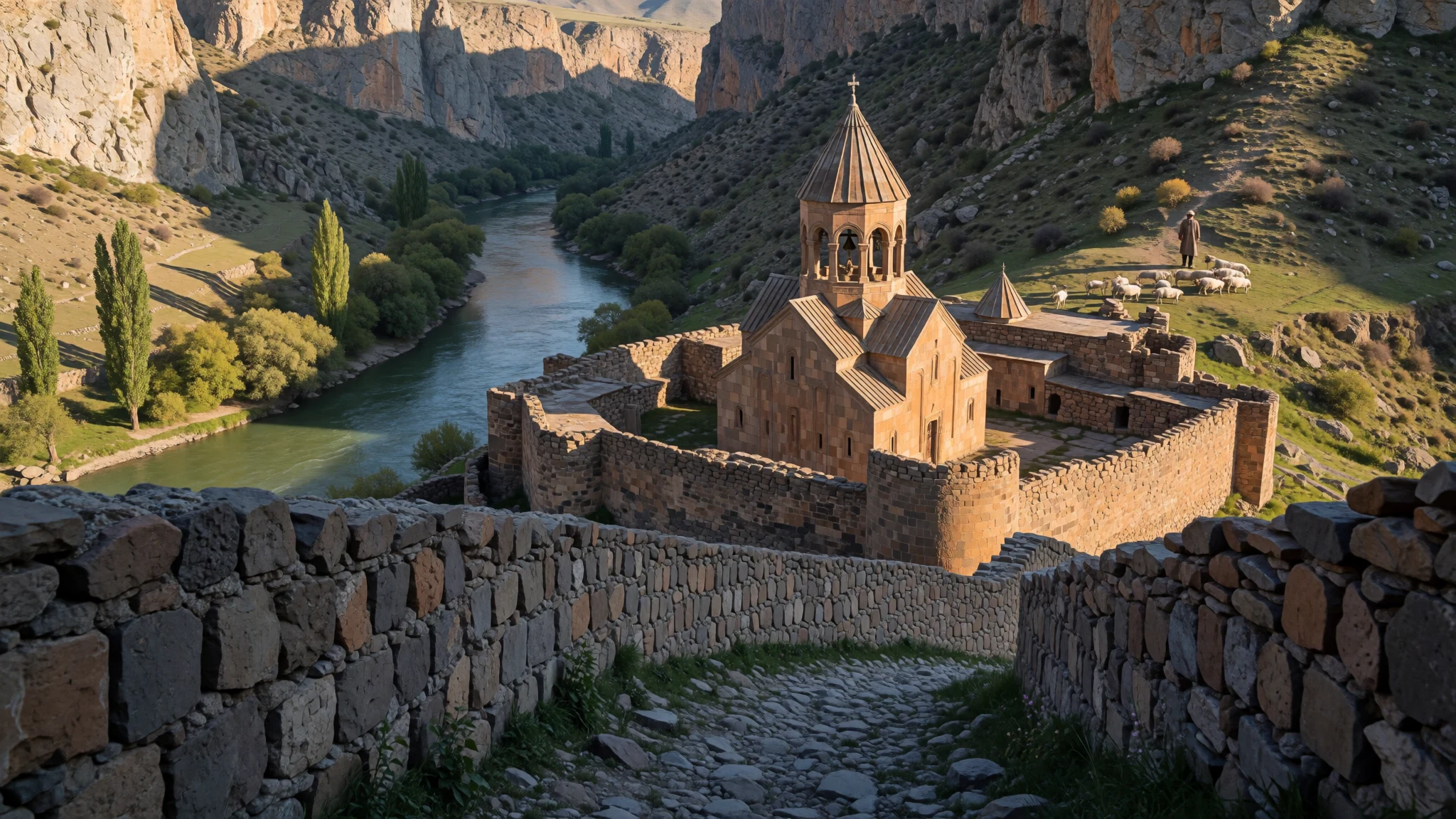
Saint Stepanos Monastery is a fortified Armenian church tucked into a river gorge on Iran's northern border, quiet, remote and richly historic.
The place
Saint Stepanos Monastery stands in a deep canyon cut by the Araxes river, in the far north-west of Iran, with the border of Nakhchivan on the opposite bank. It lies about 15 km north-west of the town of Jolfa (Julfa) in East Azarbaijan province. Armenians call it Surb Stepanos Vank (Սուրբ Ստեփանոս վանք) and also Maghardavank; in Persian it appears as Kelisā-ye Sant Estepānus. The setting does much of the work. Rock walls rise on either side of the water, and the compound sits low in the gorge, so the first sight is a fortified stone enclosure with a church and bell tower inside its ramparts, not a building on a skyline. The monastery belongs to the Armenian Monastic Ensembles of Iran, a group inscribed on the UNESCO World Heritage List. What stands today is largely a Safavid-era rebuilding of a much older foundation, after wars and earthquakes had done their damage. It is Armenian Christian heritage in a country whose state religion is Islam, and Iran's Armenian community is long established. Expect a quiet place. It is remote, reached by road from Jolfa, and sees far fewer visitors than Isfahan or Shiraz. Because the river is a border, military posts and document checks are part of the journey, so visitors should carry a passport and point cameras at the monastery, not across the water.
Its story
Saint Stepanos Monastery has a history that tradition places in the first century, when the apostle Bartholomew is said to have founded a church here. The first true monastery came in the seventh century and was enlarged in the tenth. Wars between the Seljuks and the Byzantine Empire damaged it in the eleventh and twelfth centuries. In the thirteenth century the Mongols under Hulagu Khan took control of the region, but an agreement between the Armenian Church and the Ilkhanate left Christians in a fairly settled position. The monastery was restored, then rebuilt completely under a leader named Zachariah in 1330. The fourteenth and fifteenth centuries were its high point, when its scribes and painters produced illuminated manuscripts on religion, history and philosophy. After that the frontier turned dangerous. The Safavid dynasty protected Armenians, yet the region became a battleground with the Ottomans, who invaded Western Armenia in 1513. The monastery slid into decline through the sixteenth century. In 1604 Abbas the Great expelled the people of the region, and the monastery was left empty. Its present form comes from rebuilding in the Safavid era, after the damage of war and earthquakes. The result is a layered building: a place of learning, a casualty of border politics, and now a protected heritage site.
What to see
- The ramparts from outside — Approach path, Araxes gorge
Saint Stepanos Monastery is wrapped in fortified walls, and the best first look is from outside them, where the stone curtain, the church roof and the bell tower rise together above the gorge. The walls show this was a frontier monastery, built to shelter its community as much as to host prayer. Allow time for the approach.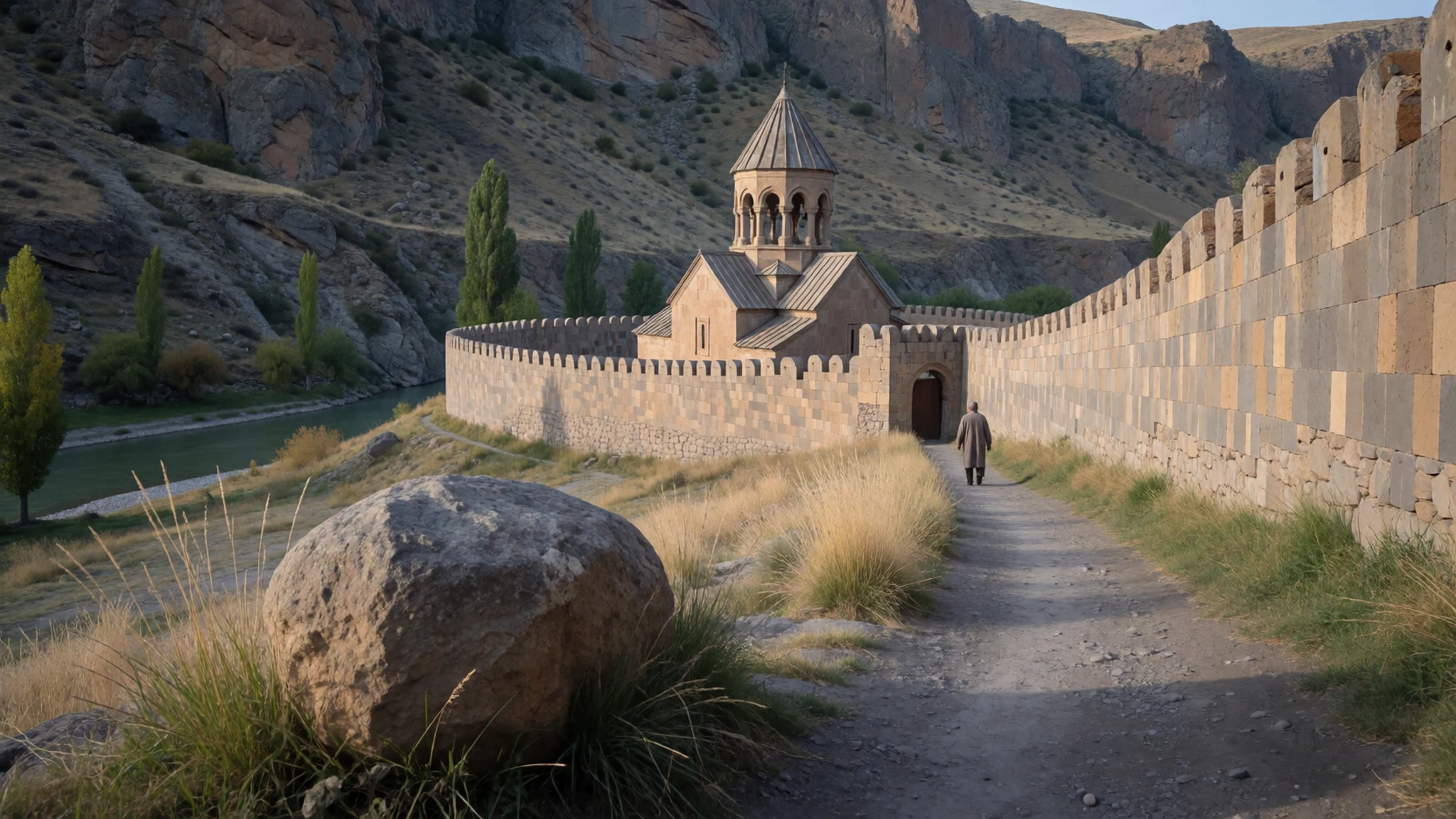
- The church of Saint Stepanos — Inside the monastery enclosure
The main church is the heart of Saint Stepanos Monastery and the part most shaped by Safavid-era rebuilding. Spend time on the proportions of the stone body and the roofline, then step inside for the cool, dim interior. Look at the masonry closely; the weathering tells the story of repair after earthquakes.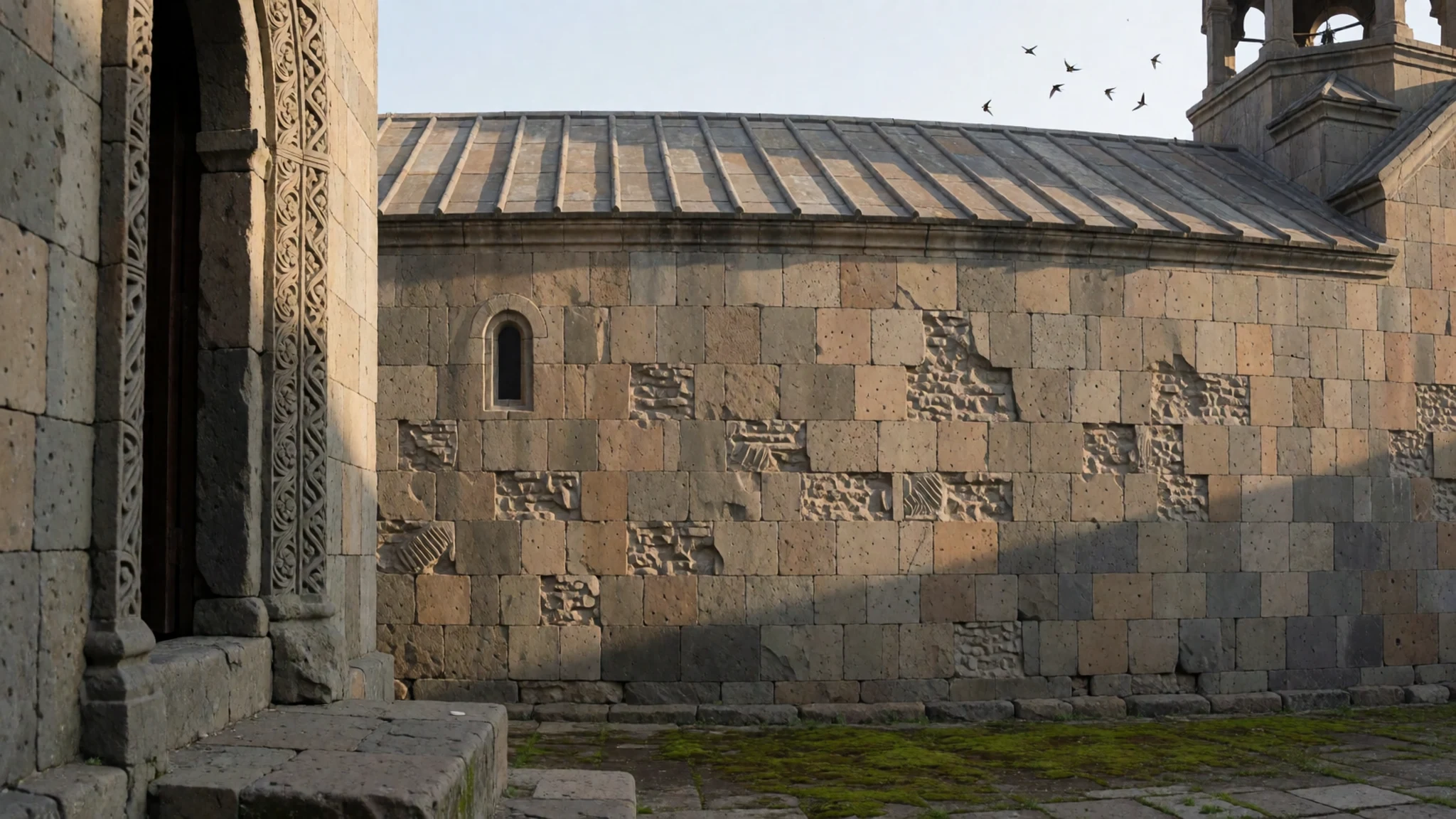
- The bell tower — Inside the monastery enclosure
Within the walls of Saint Stepanos Monastery, the bell tower gives the compound its vertical accent against the canyon. It is one of the best subjects for photographs, especially when low light catches the stone. Look at how it relates to the church beside it, then compare angles from inside and outside the ramparts.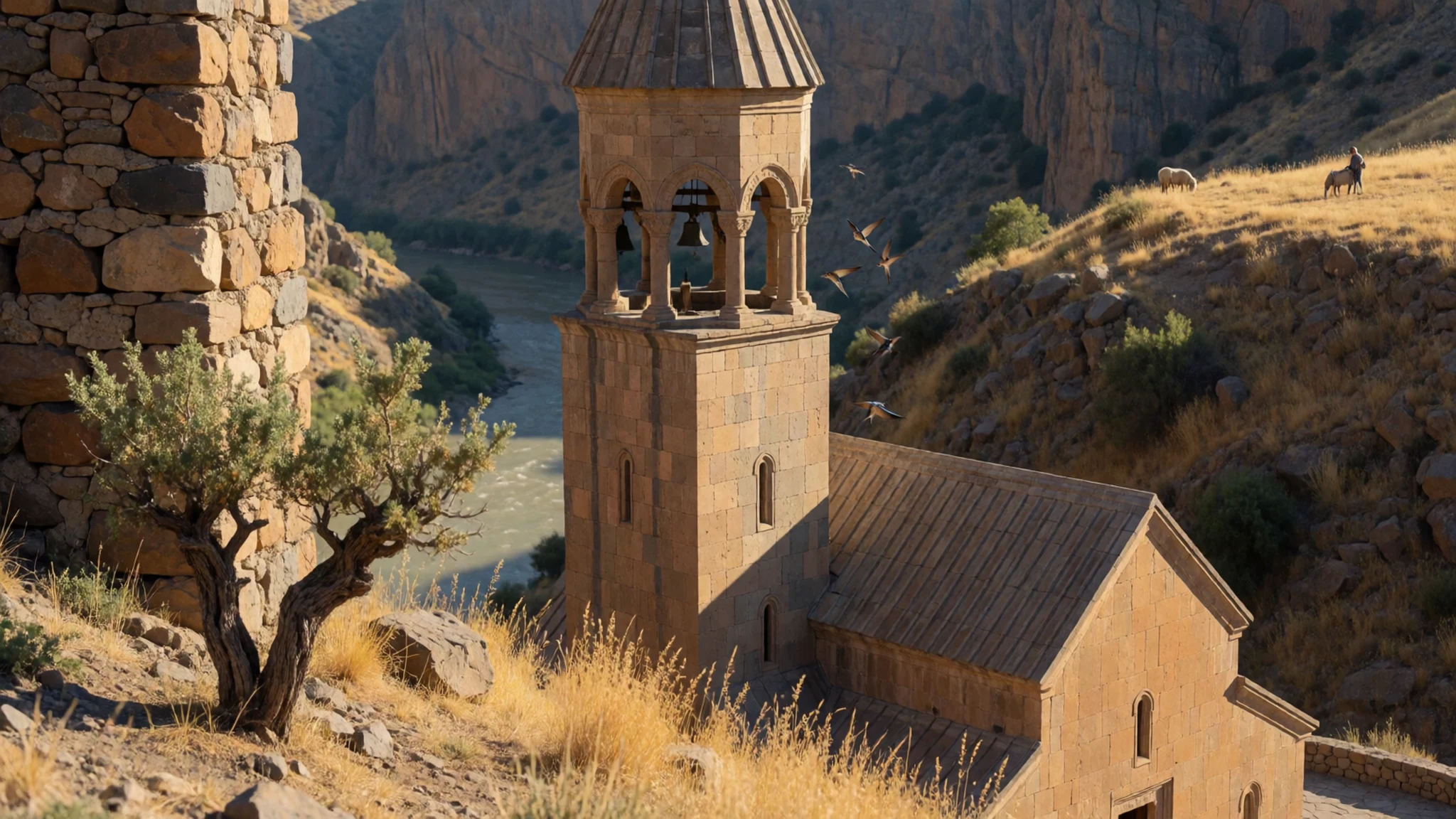
- The Araxes canyon — Along the Araxes river
The gorge is half the reason to come. The Araxes runs below the monastery, with pale rock walls rising on both banks, and the compound seems small against them. Walk the approach slowly and pause where the view opens along the river. The far bank is another country, so keep photographs pointed towards the monastery.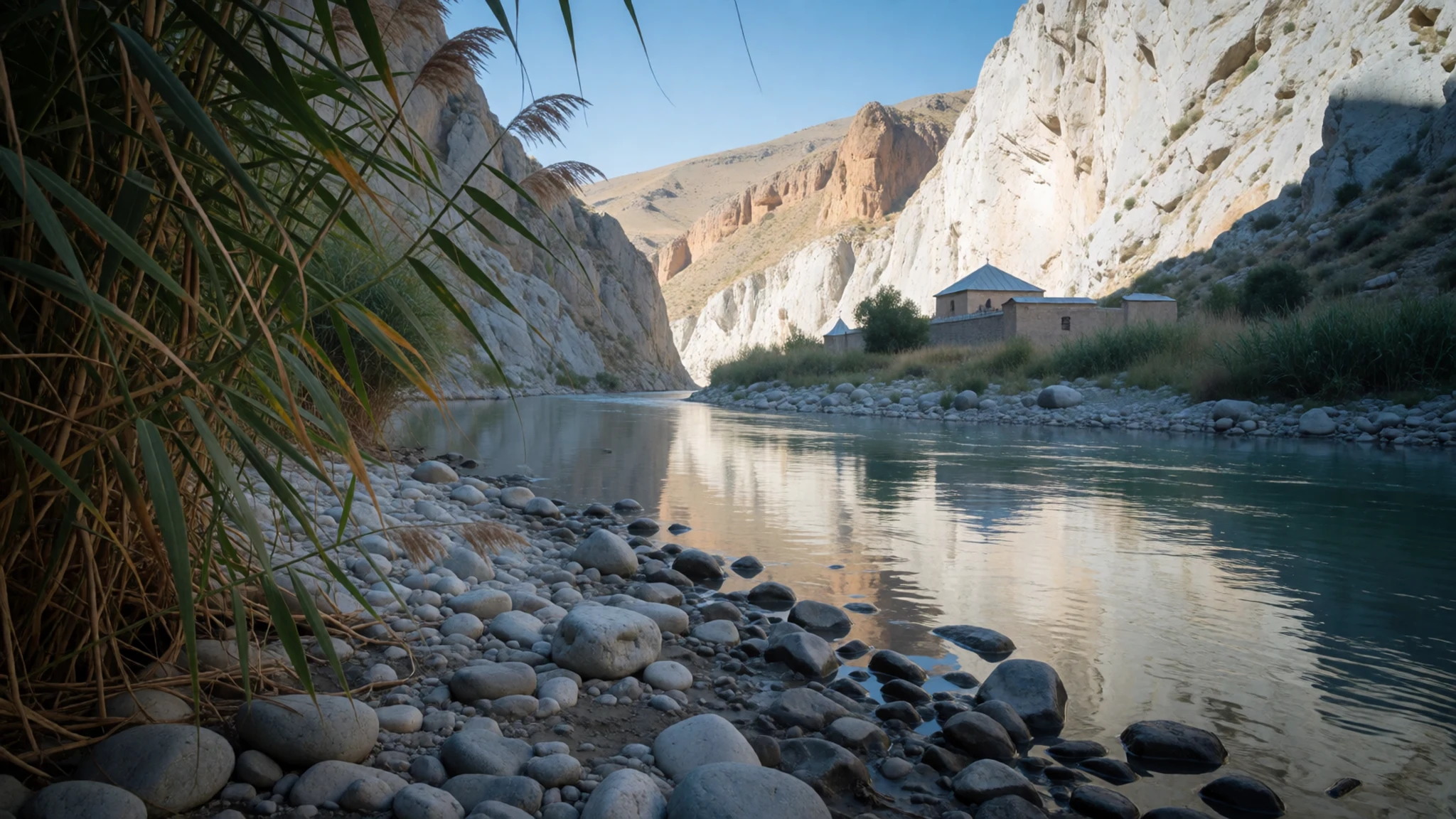
- The wider view of the compound — Viewpoints around the gorge
For a sense of how Saint Stepanos Monastery sits in its landscape, find a spot with a view across the whole enclosure, church, tower and walls together against the canyon slope. Photographers often do best in the softer light of morning or late afternoon, when the stone looks warmer and shadows pick out the masonry.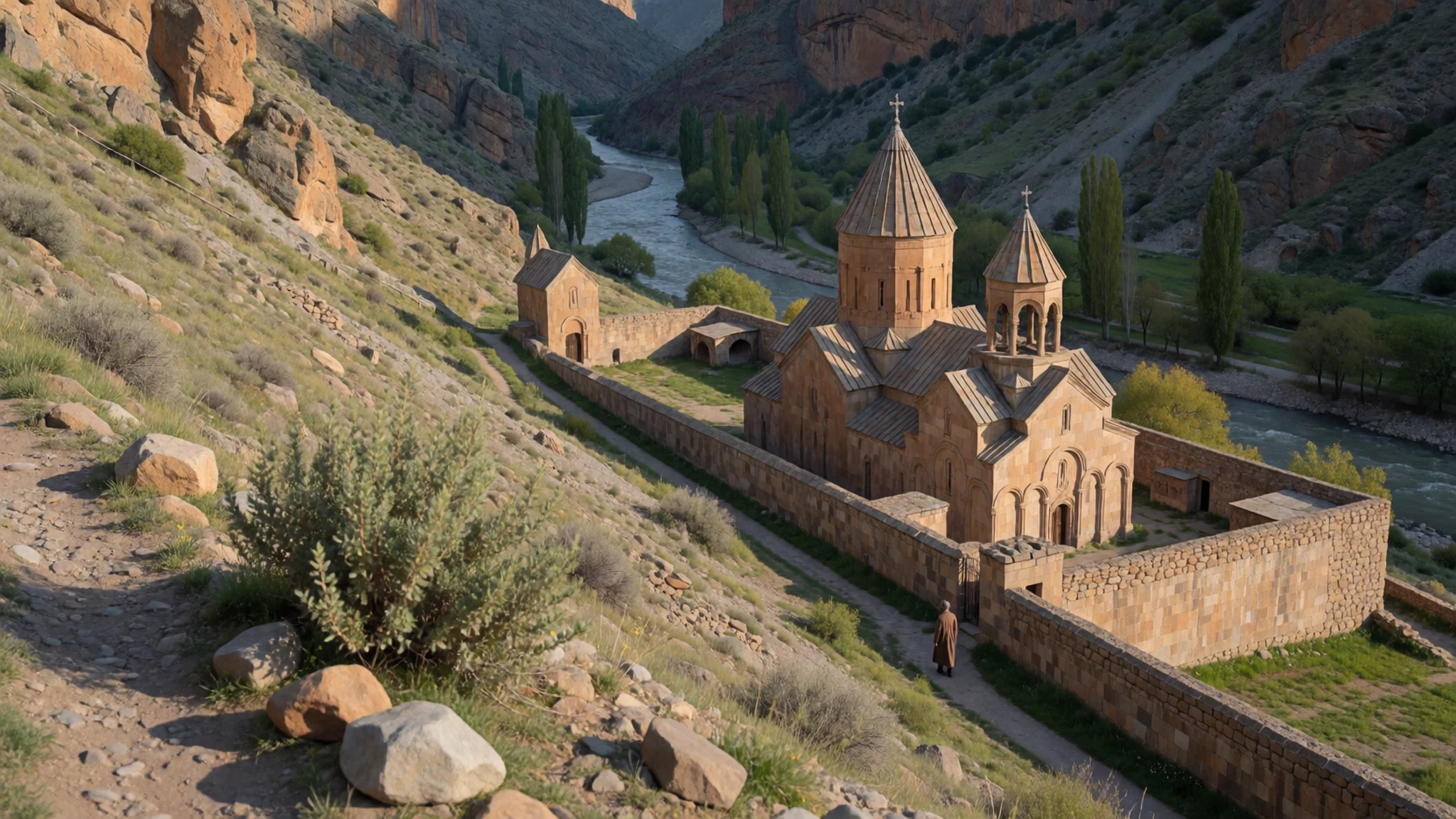
Culture
Saint Stepanos Monastery is an Armenian church in a country where most people are Muslim, and that mix is the cultural point of a visit. Armenians have lived in Iran for a very long time, with their own church, language and script, and the monastery is a reminder of a scholarly tradition that produced illuminated manuscripts here in the fourteenth and fifteenth centuries. Iranian hospitality is strong, and guests are often treated generously, so expect questions about where you come from and offers of tea or fruit. Refusing what is served can seem rude, so accept graciously even if you only taste it. Polite forms of address matter: Aghaye and Khanoome are the equivalents of Mr and Ms, and plural verbs are used for respect. Greetings may involve a handshake or a hug between people of the same sex. At the same time, some people are cautious with foreigners, so a friendly, unhurried manner goes a long way. The site is also a protected heritage place close to a sensitive border, so photography rules and instructions from local staff or guards should be followed without argument. At Saint Stepanos Monastery, dress modestly, speak quietly inside the church, and do not photograph people, guards or military posts without clear permission.
What to wear
Around Saint Stepanos Monastery, traditional dress comes from the Azerbaijani and Armenian communities of the north-west. Older clothing used wool, felt and cotton in layers suited to cold winters: long coats and sashes for men, and full skirts, fitted jackets and embroidered headcloths for women. Such outfits now appear mainly at festivals, weddings and folk performances, not in daily life. Everyday clothing in Jolfa and the surrounding villages is simple and practical. Women usually wear a headscarf with a long tunic or coat over trousers or a skirt, and many older women choose a chador in public. Men wear shirts, trousers and often a jacket, with sturdy shoes for farm and road work. Visitors should dress to Iranian legal and social norms, which are stricter than in India or the UK. Women need a headscarf and a loose top covering hips and arms, plus long trousers or a long skirt. Men should wear long trousers and a shirt with sleeves, not shorts or sleeveless tops. The canyon is rocky and the approach can be uneven, so wear closed shoes with a good grip. Add a hat and sunscreen for summer and a warm layer for spring and autumn mornings, since the gorge can feel cool in the shade.
What to eat
- Ash — Local eateries in Jolfa and nearby market towns
A thick soup of herbs, pulses and noodles, often finished with yoghurt or whey. It is a staple across the north-west and suits cold gorge mornings. Look for it in simple local eateries in Jolfa and in nearby market towns.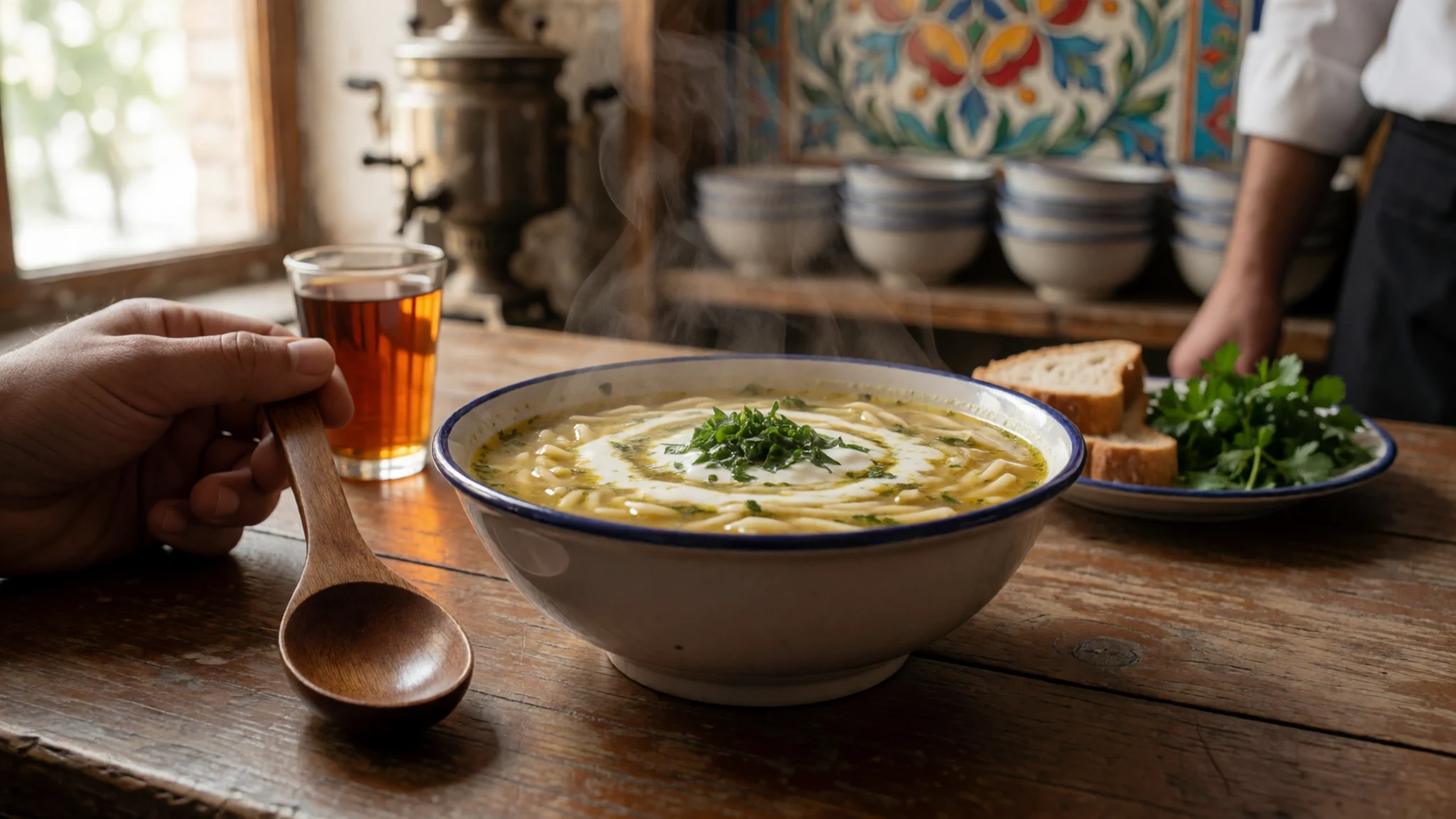
- Tabriz kofte — Traditional restaurants in Tabriz, the usual gateway city
A large spiced meatball filled with rice, herbs and sometimes dried fruit, served in a rich broth. It is a regional speciality of East Azarbaijan, usually found in restaurants specialising in northern Iranian home cooking.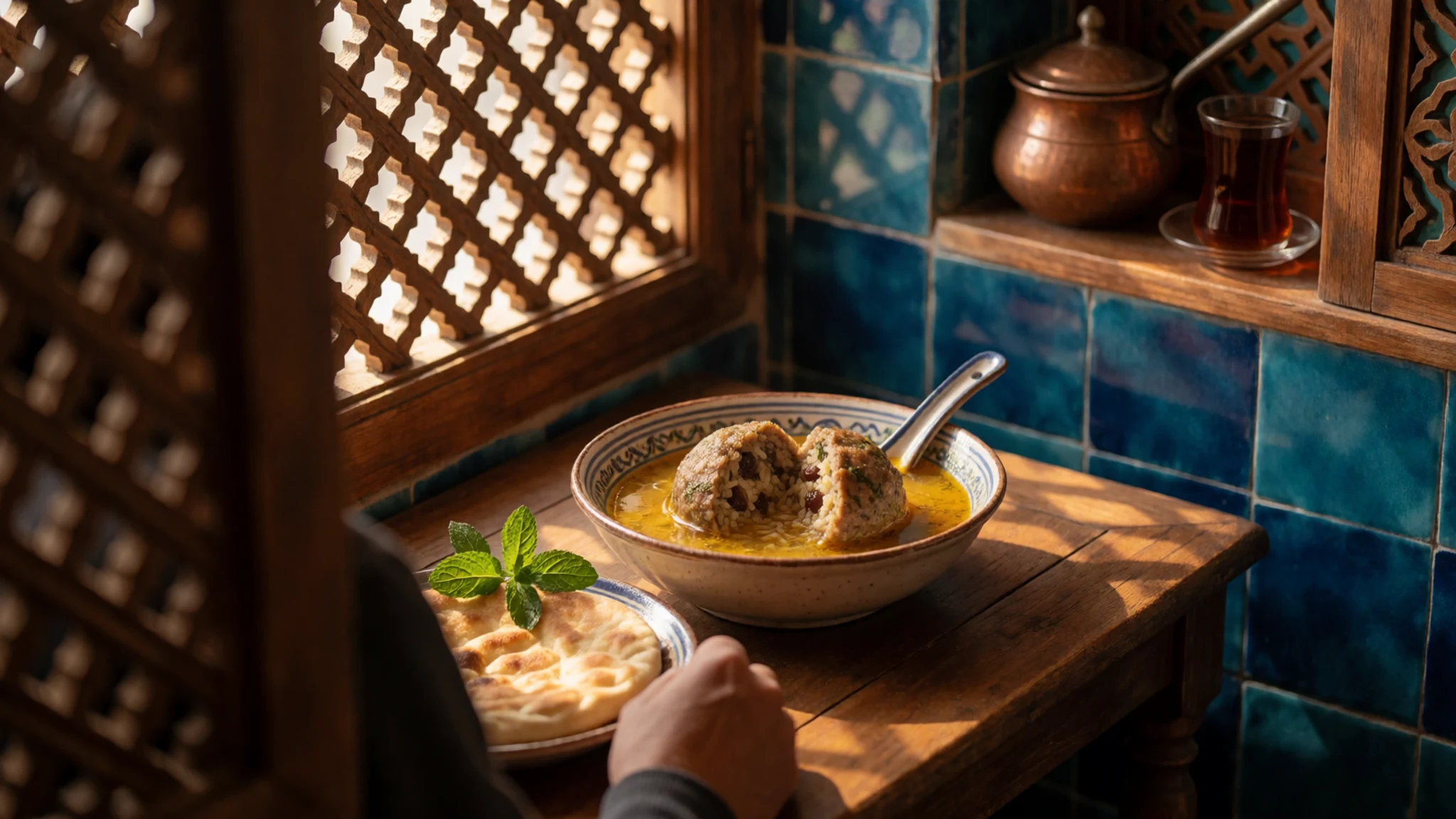
- Chelo kabab — Kebab restaurants in towns along the road to Jolfa
Grilled minced or sliced meat served with saffron-tinted rice, a grilled tomato and flatbread. It is the most familiar Iranian restaurant meal and easy to find, including on the road between Tabriz and Jolfa. - Dizi (abgoosht) — Traditional dizi restaurants in Tabriz and larger towns
A hearty lamb and chickpea stew served in two stages: broth with bread first, then the mashed solids. It is slow food that suits a long afternoon, available at traditional restaurants that specialise in it. - Sabzi khordan with bread and cheese — Served at most local eateries and at family meals
A plate of fresh herbs, radishes and spring onions eaten with soft white cheese and flatbread. Many Iranian meals begin with it, reflecting the focus on fresh produce and aromatic herbs, and it appears at most tables.
Plan it
Best time. Late spring (May–June) and early autumn (September–October) are the most comfortable for the gorge, with milder days and clearer light. Winters in the north-west are cold, so check road and weather conditions if travelling then.
How long. 1–2
Getting there. Fly to Tabriz, the usual gateway city in East Azarbaijan, then continue by road to Jolfa and on to the monastery in the canyon, about 15 km north-west of the town. Local taxis and organised day trips are the usual options; check the current arrangements locally.
Budget. low
Tips
- Carry your passport and keep it with you, as checks are common near the border
- Go in the morning for softer light and fewer visitors
- Bring cash and water, as services near the canyon are limited
- Check visa and entry rules with official government sources before booking, as they change and differ by nationality; Indian citizens entering by air may stay up to 15 days without a visa, while UK visitors should check separately
Etiquette
- Dress modestly and cover your head if you are a woman, following Iranian rules
- Do not photograph soldiers, border posts or people without permission
- Speak quietly and respect any prayers or services under way
Nearby
Sources
- Wikidata Q957628 (CC0)
- Wikipedia: Saint Stepanos Monastery (rev 1381218391) (CC BY-SA 4.0)
- Wikivoyage: Iran (rev 5412767) (CC BY-SA 4.0)
- Photo 01: Aras - Jolfa - St. Stepanos Monastery, Alireza Javaheri (CC BY 3.0)
- Photo 02: Saint Stepanous Cathedral, Jolfa, Iran, Shervinafshar (CC BY 3.0)
- Photo 03: Saint Stepanos Monastery, Babak Farrokhi (CC BY 2.5)
- Photo 04: Saint Stepanos Monastery, farrokhi (CC BY 2.5)
- Photo 05: Monastery of Saint Stepanos, Jb-mhr (CC BY-SA 4.0)
- Photo 06: Saint Stepanos Monastery, Jolfa, Iran, farrokhi (CC BY 2.5)
- Photo 07: Saint Estepanos, Amir.fila (CC BY-SA 4.0)
- Photo 08: Church and bell tower from outside the ramparts, Andrehmarouti (CC BY-SA 4.0)


