Saint-Étienne
Saint-Étienne, France
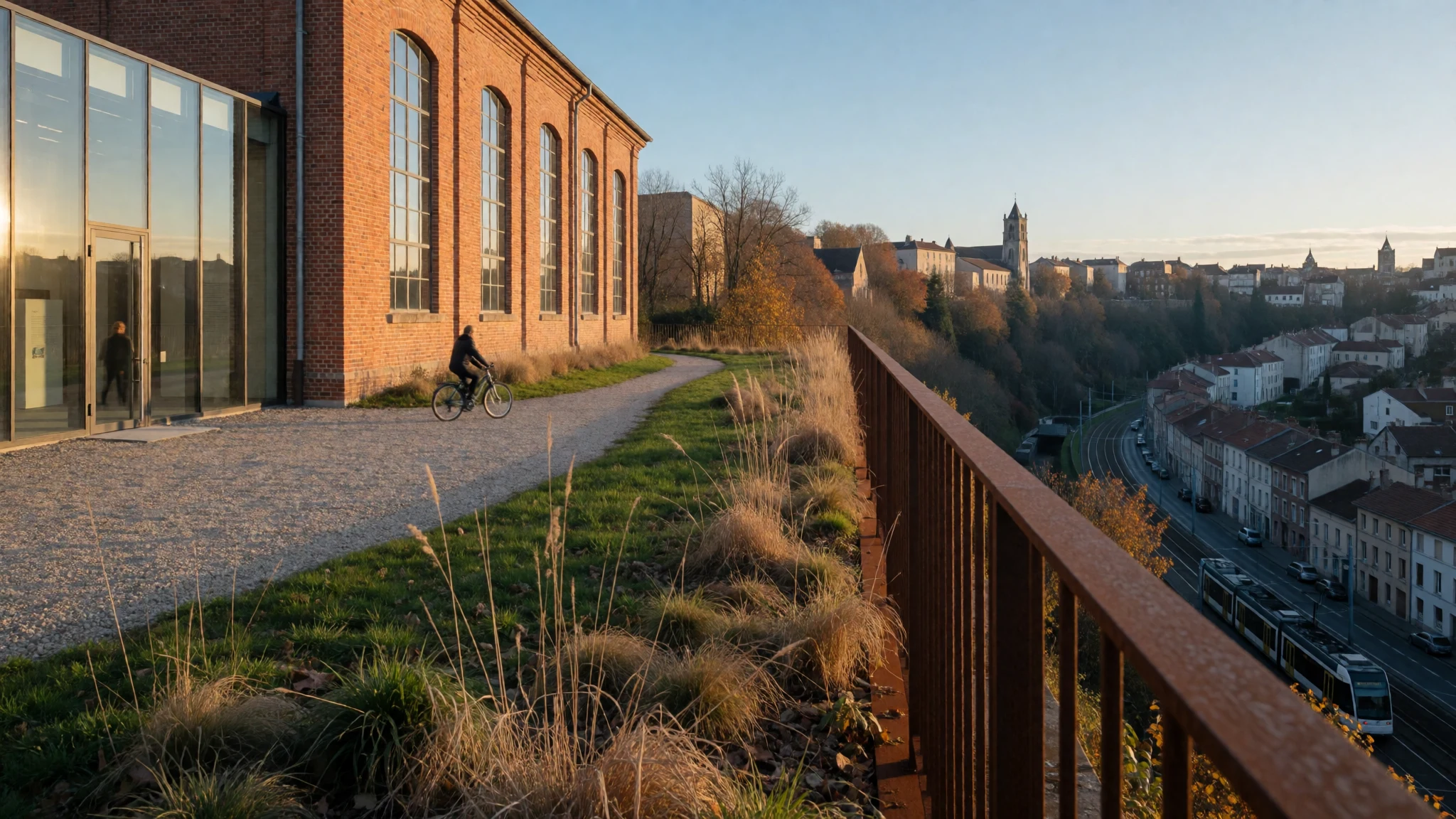
Saint-Étienne is a former coal-and-weapons city in the Massif Central, now reinventing itself through design, modernist architecture and football.
The place
Saint-Étienne sits in the hills of the Massif Central in eastern-central France, about 60 km south-west of Lyon, and is the prefecture of the Loire département. The centre stands at around 515 m, which explains why the city is cooler and snowier than its low-lying weather station suggests, and why winter here is a proper season. With about 173,000 inhabitants, it is a working city rather than a postcard one. Tram lines run along a long, narrow valley and streets climb steeply on either side. People from here are called Stéphanois. Its money once came from coal, guns, bicycles and ribbons, and the traces are everywhere: brick workshops, old mining sites, tall worker housing and wide squares laid out when industry paid for them. The present chapter is reinvention. The former arms factory is now a design campus, and the city joined the UNESCO Creative Cities network for design in 2010. Visitors hoping for polish may be disappointed, while those who enjoy a place still deciding what it will become tend to like it. It is rarely crowded, and it feels gentler on the wallet than Lyon. The Place du Peuple area works well as a base on foot. Football shapes the rhythm too: on match days the streets near the stadium fill with green shirts and loud singing, and the hills around offer quick escapes into woodland and villages.
Its story
Saint-Étienne takes its name from Saint Stephen, and early records call it Saint-Étienne de Furan, after the small river Furan that flows towards the Loire. In the Middle Ages it was a modest parish under the Valbenoîte abbey, which Cistercian monks founded in 1222 near a pilgrim route. A small walled town grew around the parish church, and a later king allowed it to build proper fortifications. The turning point came in the sixteenth century, when gunmaking took hold and made the town an important market centre. Ribbon weaving and passementerie, the craft of braids, tassels and decorative trimmings, followed in the seventeenth century and kept many households busy. Then came coal. The surrounding Loire basin turned Saint-Étienne into a mining city, and factories drew workers in from across the region. The Hôtel de Ville was completed in 1830, a sign of civic confidence just before growth accelerated. Over the following decades the population grew several times over. That rapid, uneven expansion explains the city's shape today, with industry and housing packed along the valley and little grand planning. When coal and heavy industry faded, the city needed a second act. Design became the answer: a biennale began in 1998, and in 2009 the Cité du design opened on the site of the old arms factory, turning a symbol of the industrial past into a symbol of what comes next.
What to see
- Cité du design — Manufacture d'armes district
The Cité du design occupies the former arms factory, and the contrast between old industrial brick and new exhibition space is the best summary of Saint-Étienne's change. The grounds work as a viewpoint across the city. Check the official site for exhibitions, since the biennale and temporary shows change what is open.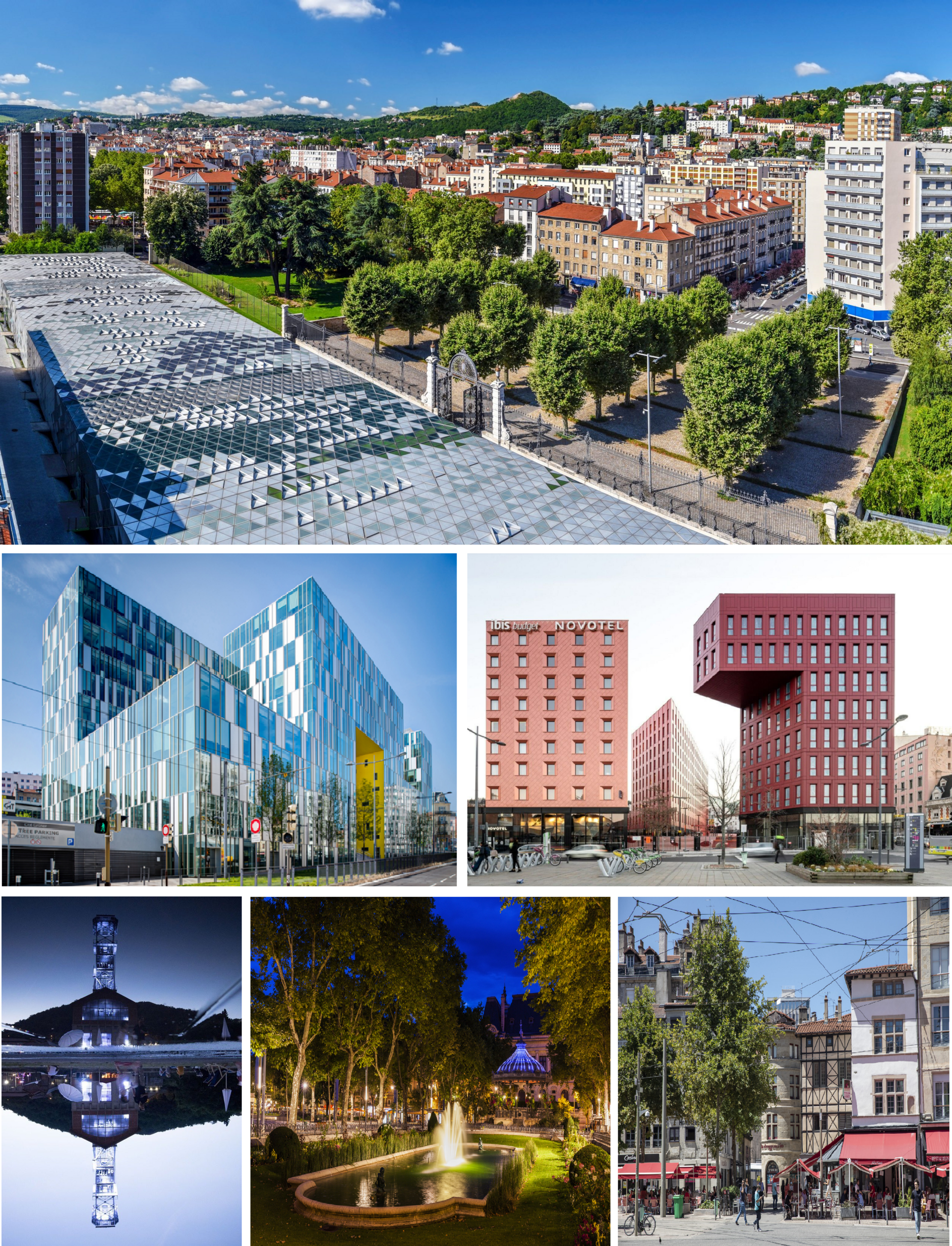
- Hôtel de Ville — City centre, near Place de l'Hôtel de Ville
Saint-Étienne's city hall was completed in 1830 and shows how confident the town felt as industry took off. It is worth a look from the square even if you never go inside. The surrounding streets are good for a slow loop through the elegant central blocks.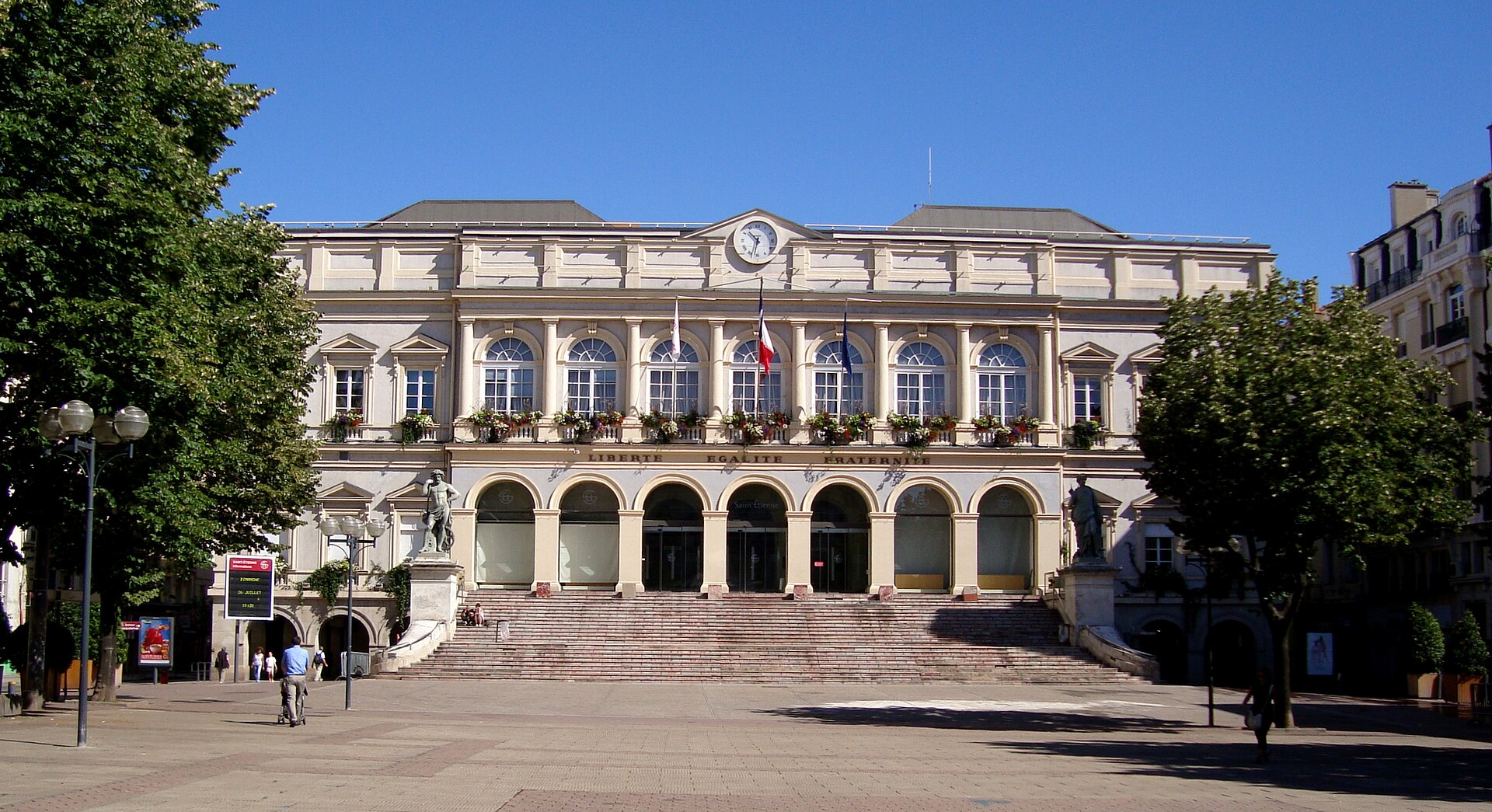
- Museum of Modern Art — Northern outskirts, towards La Terrasse
The modern art museum lies on the edge of the built-up area and is a good place to spend a wet or cold afternoon. Collections and temporary shows change, so check the official site before travelling. A taxi or local transport is easier than walking from the centre. - Musée des transports urbains — North-west of the centre
This small museum tells the story of public transport in the city, with old trams and buses and many smaller objects. It suits anyone interested in how a steep, industrial valley kept its workers moving. It is a modest, specialist stop, best paired with a ride on the modern tram. - Église Saint-Pierre, Firminy — Firminy, a short trip south-west
Just outside the city, Firminy holds a modernist church designed by Le Corbusier and completed decades after his death. It belongs to the Firminy-Vert complex and to the group of Le Corbusier works on the UNESCO list. Concrete and shifting light make it striking. - Stade Geoffroy-Guichard — La Terrasse district
The home of the city's football club is a landmark for local identity, with green everywhere on match days. Even without a ticket, the neighbourhood is worth a visit for the atmosphere, the pubs and the shirts. Check the club's official site for fixtures and stadium tours.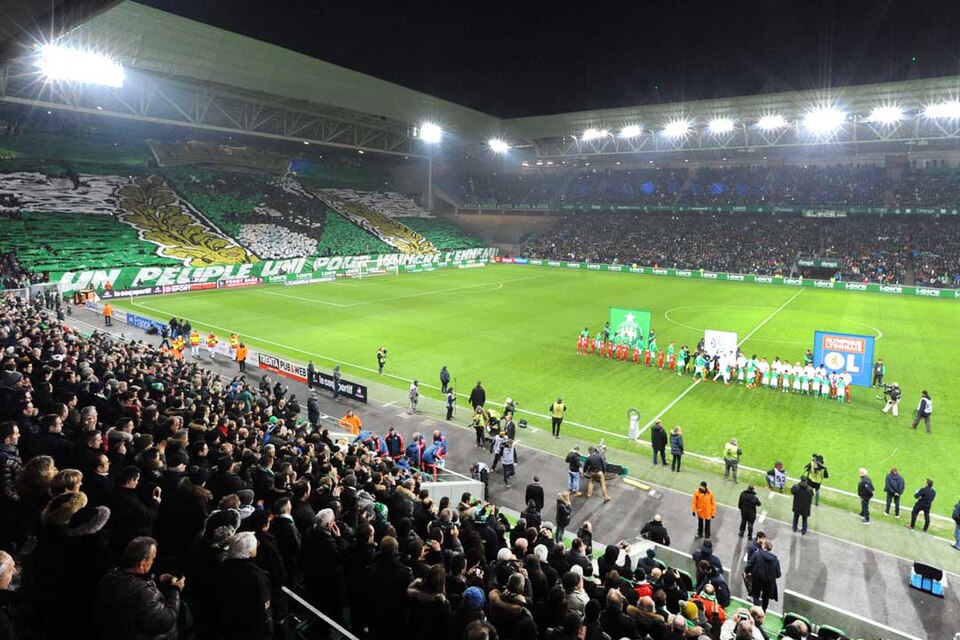
Culture
Saint-Étienne's culture comes from labour rather than court life. The mining, weaving and gunmaking past left a civic pride that is practical, unshowy and slightly defensive about being overlooked next to Lyon. Design is the public face of that pride. The city holds a design biennale, first staged in 1998, which fills the Cité du design and other venues for around two weeks, and the city's design work earned its place in the UNESCO Creative Cities network. Music runs through the story too, since the composer Jules Massenet came from the area and a festival devoted mainly to his operas is held here. The city also carries the French label of Town of Art and History. Football is the other civic religion. The local club, nicknamed Les Verts, draws loyal crowds to the Stade Geoffroy-Guichard, and green is worn with feeling. Everyday life is French provincial: long lunches, quiet Sundays, small shops that close in the middle of the day, and a habit of greeting people when entering a room. Residents are friendly once the first bonjour is exchanged, and even a halting attempt at French is appreciated. In summer the squares fill with café terraces, while in winter the city turns inward and the cafés feel warm. Always say "Bonjour" to staff when entering a shop, café or restaurant, and only then ask your question.
What to wear
Saint-Étienne has no single regional costume that people still wear, and it would be misleading to invent one. Its textile heritage is ribbon and passementerie: woven silk ribbons, braids, cords and tassels that once trimmed hats, uniforms, furniture and ceremonial dress across France. Workwear is the other tradition, above all the blue cotton overalls of miners and factory hands, which shaped how ordinary people dressed here for generations. Today the look is practical and understated. Locals tend towards dark layers, jeans, sturdy shoes and good coats, because the weather can turn quickly and the streets are hilly. Students and design-school crowds add a more experimental edge around the Cité du design. On match days, the green football shirt is the true civic uniform. Visitors should dress for the climate rather than for a fashion capital. Pack layers and a proper waterproof, a warm coat and hat if travelling in winter, and comfortable shoes with grip for slopes, cobbles and wet pavements. In summer, light cotton clothing is fine, with a sweater for evenings. Churches and cemeteries do not demand strict dress, but covered shoulders and knees are polite when entering a religious building. Smart-casual is enough for almost any restaurant in town.
What to eat
- Rapée stéphanoise — Traditional restaurants and market stalls in the centre
A local potato dish, grated and cooked into a dense golden pancake, sometimes with egg and herbs. It is plain, filling and well suited to a cold day. Look for it in traditional local restaurants and at market stalls. - Sarasson — Local bistros and delicatessens
A fresh, creamy cheese eaten with chopped herbs, garlic and shallot, often alongside boiled potatoes. It is simple and tangy, and it tastes of the surrounding hill farms. Ask for it at a bistro or delicatessen counter. - Fourme de Montbrison — Cheese counters at covered markets
A mild blue cheese from the nearby Forez hills, softer and less sharp than many other blues. It appears on cheese boards across the region. Buy a wedge at a cheesemonger and try it with bread and local wine. - Quenelles — Brasseries and French regional restaurants
Light poached dumplings, typically of fish or poultry, served in a rich sauce. They belong to the wider Lyon food tradition, which Saint-Étienne shares, and suit a leisurely lunch. Choose a restaurant serving French regional cooking. - Bistro plates and fondue — Pedestrian streets around the central squares
For a meal built around melted cheese or hearty French cooking, the lanes near Place du Peuple and the central squares have several cosy eateries. They are friendly places for a long evening, especially in cold months.
Plan it
Best time. May–June and September–October, when the days are mild and the hills are green or golden. Summer is warm rather than extreme at this altitude, and winter is cold and often snowy, so it suits travellers who want a quiet city break more than outdoor sightseeing.
How long. 2
Getting there. Fly into Lyon Saint-Exupéry airport and continue by train or road to Saint-Étienne. Châteaucreux is the main station for national and regional services, and fast TGV trains link the city to Paris in about two hours. Carnot station is close to the Hôtel de Ville, and La Terrasse is near the stadium.
Budget. mid
Tips
- Check the official city site for biennale dates and museum opening times before building a trip around them
- Use the tram and buses rather than walking everywhere, since the streets are steep
- Pack a waterproof and warm layer, as the altitude makes the weather cooler than Lyon
- Combine a day trip to Firminy with the city so the Le Corbusier church fits in without rushing
- On football match days, book hotels early and expect crowds near the stadium
Etiquette
- Greet staff with a bonjour in shops, cafés and restaurants
- Keep voices low and dress modestly when entering a church in Saint-Étienne or Firminy
- Ask before photographing people, especially at markets
Nearby
Sources
- Wikidata Q42716 (CC0)
- Wikipedia: Saint-Étienne (rev 1382028179) (CC BY-SA 4.0)
- Wikivoyage: Saint-Étienne (rev 5416680) (CC BY-SA 4.0)
- Photo 01: Saint Etienne views, Km42ify (CC BY-SA 4.0)
- Photo 02: Hôtel de ville, Velvet (CC BY-SA 1.0)
- Photo 03: Cathédrale Saint-Charles, Aubry Françon (CC BY 3.0)
- Photo 04: Château de Rochetaillée, wikijoe (Public domain)
- Photo 05: Stade Geoffroy Guichard, ©ville de St Etienne (CC BY-SA 4.0)
- Photo 06: Vélivert Intermodalité STAS, Laurent Mercat (CC BY 3.0)
- Photo 07: Boîte à livres, Pierre Baizet (CC BY-SA 4.0)
- Photo 08: Tombe de Pierre Sayve, Bakelith (CC BY-SA 4.0)


