Sabratha
Sabratha, Libya
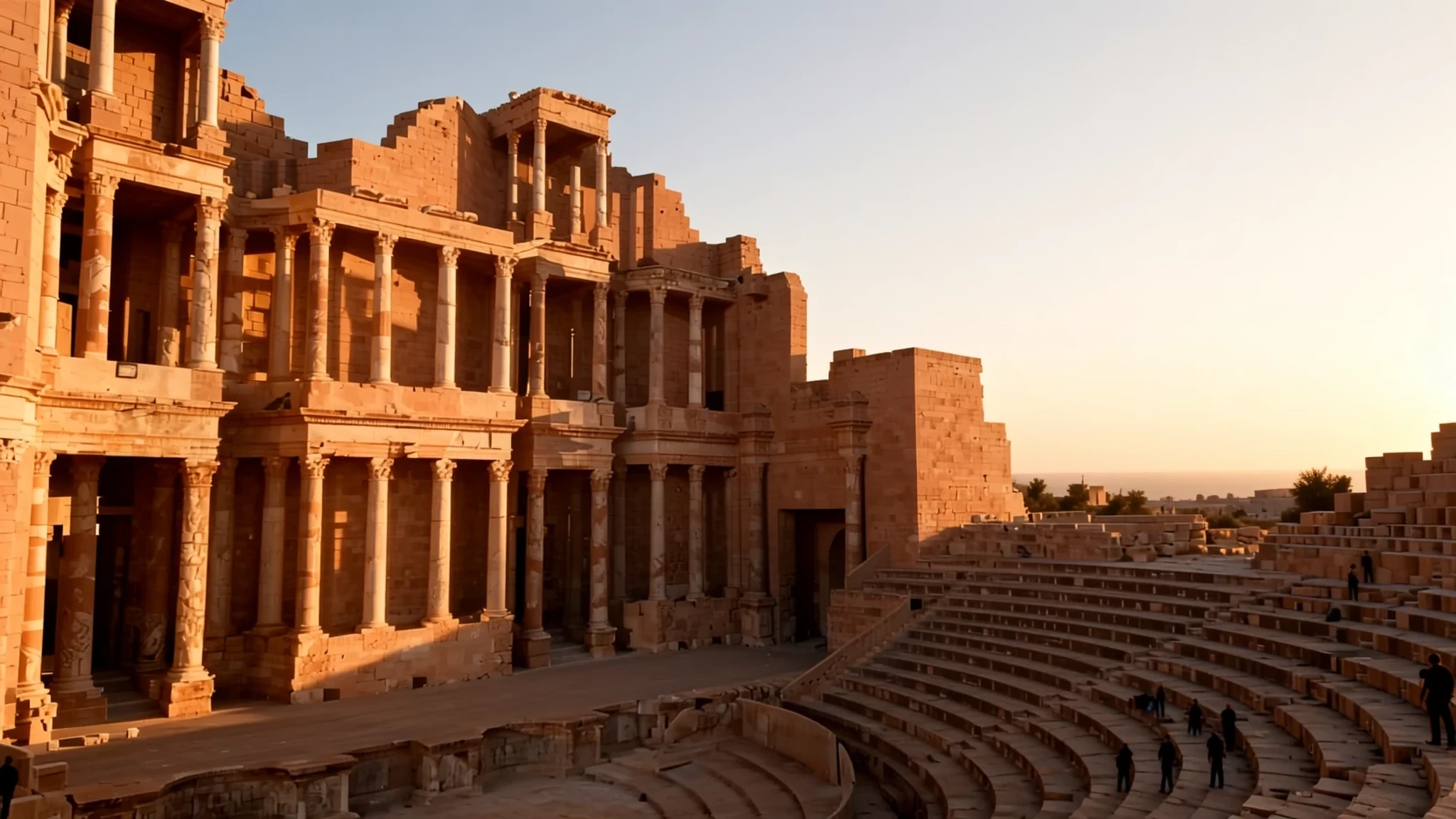
A Roman port on the Libyan coast, where a theatre and temples stand above the Mediterranean, usually reached on a guided tour.
The place
Sabratha is a Roman city on the Mediterranean coast of western Libya, in the Zawiya District, roughly 70 kilometres west of Tripoli. For a time it was the westernmost of the three Roman cities that together made up Tripolis, standing beside Oea and Leptis Magna. The modern town that has grown up around the site counts around 102,000 residents, and the ruins lie only 12 metres above sea level, so the water is never far from any part of the walk. The archaeological site was given UNESCO World Heritage status in 1982.
What you see today is mostly Roman-period stone: a theatre that faces the sea, temples dedicated to Liber Pater, Serapis and Isis, a Christian basilica from the later Byzantine years, and streets of houses with their floors still partly visible. The layout is easier to read than the names suggest, and a good guide will explain how the temples, the baths and the harbour relate to one another. Expect heat in summer and a fair amount of walking over uneven paving, so bring water and a hat. Crowds are rarely a problem here, and the site feels quiet when no tour group is in town. Most visitors come on a day trip, but the town itself rewards an unhurried afternoon before you head back along the coast road.
Its story
Sabratha began as a trading post, when Phoenician merchants used its harbour as an outlet for goods brought down from the African interior. The Phoenician name was Tsabratan, which may itself be a Berber name, hinting that a native settlement stood here before the traders arrived. Greek writers recorded the place under several names, and for a time the town fell within the orbit of Carthage, the powerful city across the gulf.
After the Punic Wars the area passed into the short-lived Numidian kingdom of Massinissa, and then into Roman hands as part of the province of Africa Nova in the first century BC. Under Rome the town was reshaped and rebuilt through the second and third centuries CE. Its great moment came under the Severan dynasty, founded by Septimius Severus, who was born in nearby Leptis Magna. In that period Sabratha expanded to nearly twice its earlier size, and much of the monumental stonework visitors see today dates from those decades.
Trouble arrived in the fourth century. Earthquakes, including a severe one remembered from that century, damaged buildings and weakened the city's fabric. The Vandals took control in the fifth century, and large areas were abandoned. A modest recovery followed under Byzantine rule, which added churches and a defensive wall enclosing only a small part of the old town. Within roughly a century of the Muslim conquest of the Maghreb, trade had moved to other harbours, and Sabratha shrank to a village, its grand buildings slowly lost beneath sand and time.
What to see
- The theatre — Archaeological site, seafront
The theatre is the site's best-known image, a stone auditorium rising in tiers with the Mediterranean behind its stage building. Ask at the gate or with your guide whether you may walk on the stage, and go early in the morning, because the stone soaks up heat quickly. Its seaward position gives the view some drama, and it is a natural place to begin a visit.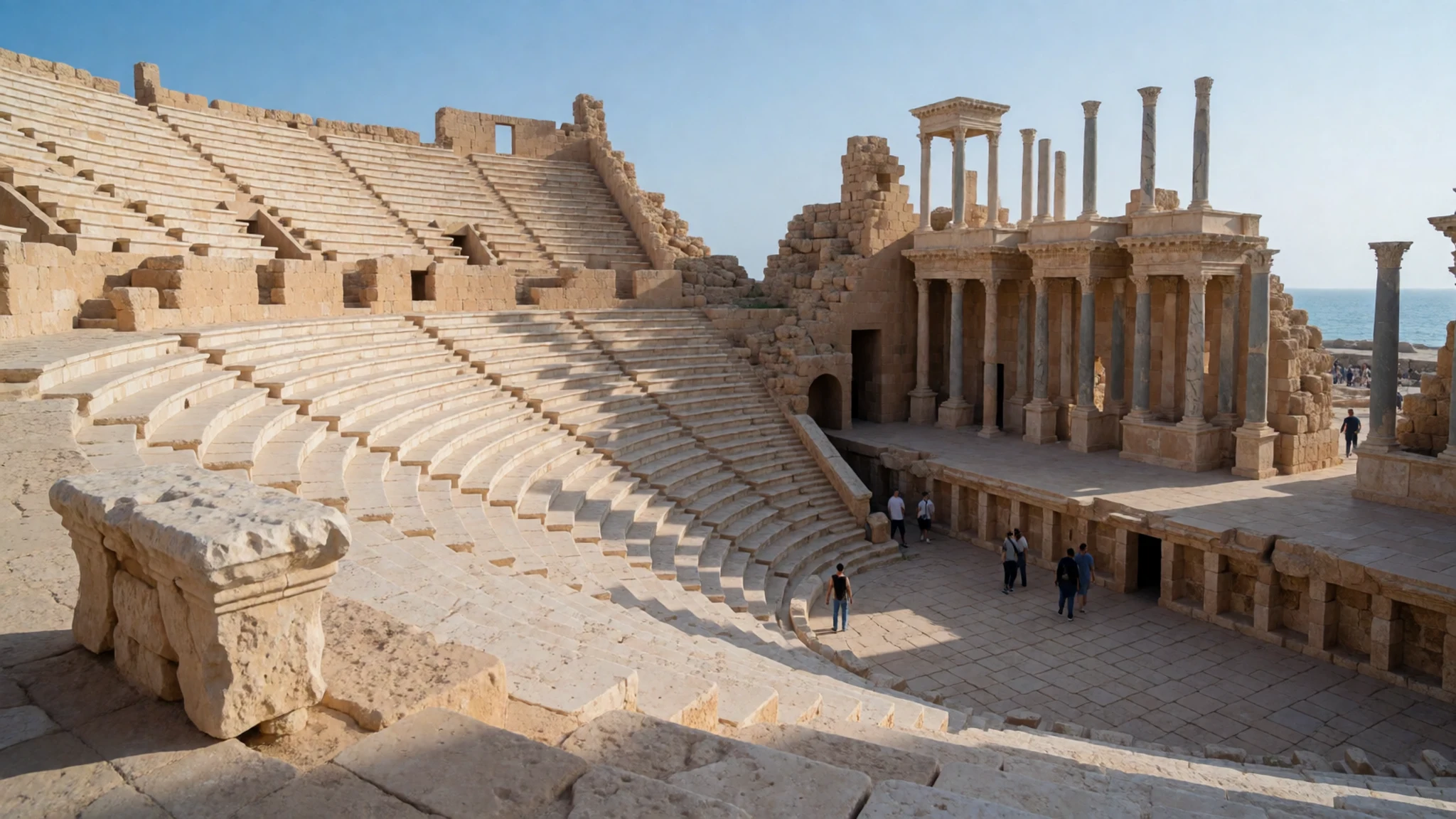
- Temple of Liber Pater — Archaeological site
The temple dedicated to Liber Pater stands among the main religious buildings on the site. Its remains show how Roman religious practice took root alongside older local traditions. Read the information boards, or ask your guide to point out the column bases and the altar area, which are easier to follow once you know the plan. Allow time, because the paths between the temples are uneven.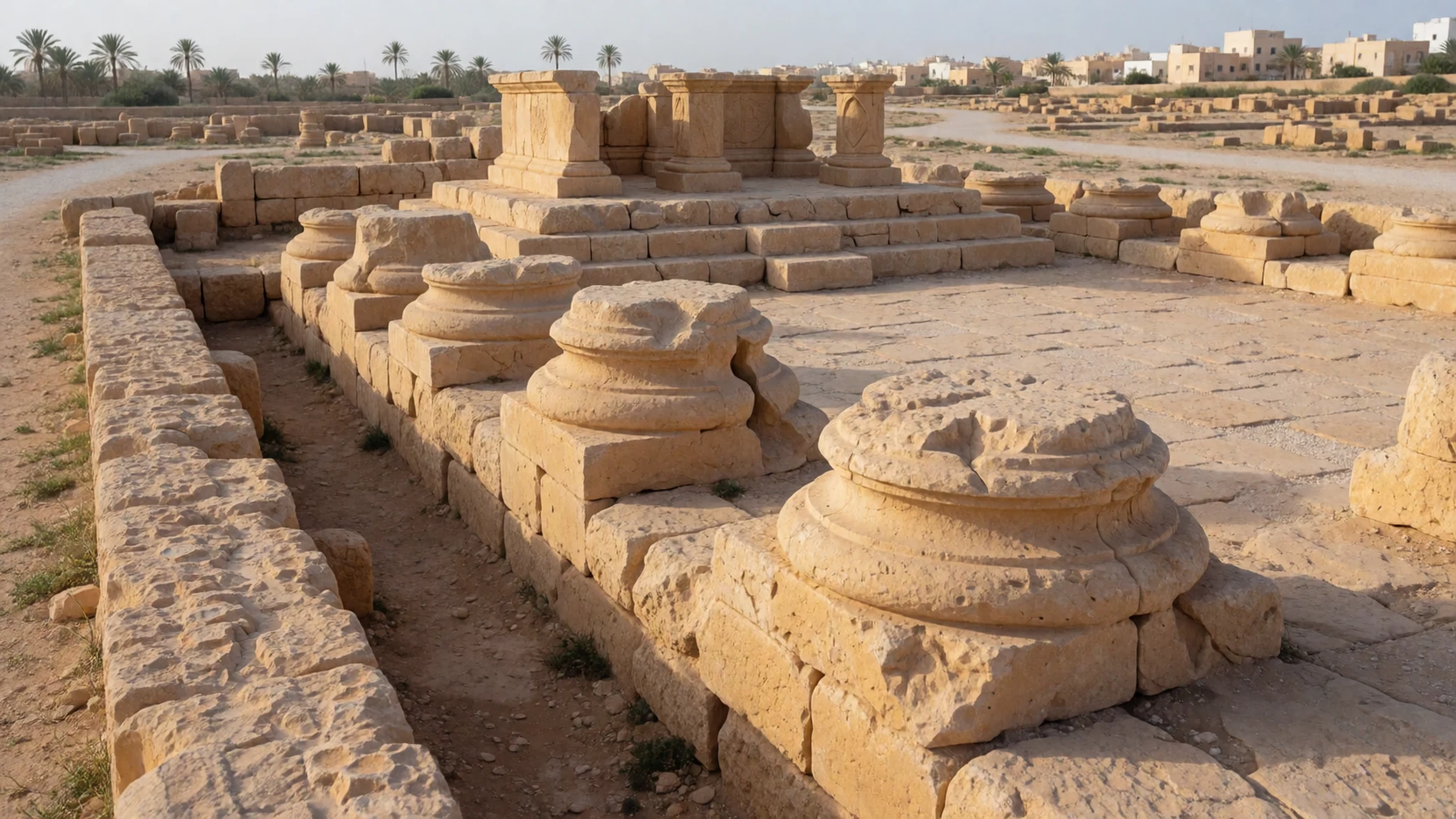
- Temple of Serapis — Archaeological site
Nearby, the temple of Serapis reflects the Graeco-Egyptian cult that spread along Mediterranean trade routes. Serapis was a deity shaped by both Greek and Egyptian traditions, and his worship reached ports like this one through merchants and travellers. The ruins are modest in scale, so combine a visit with the Isis temple to compare how the two cults were housed.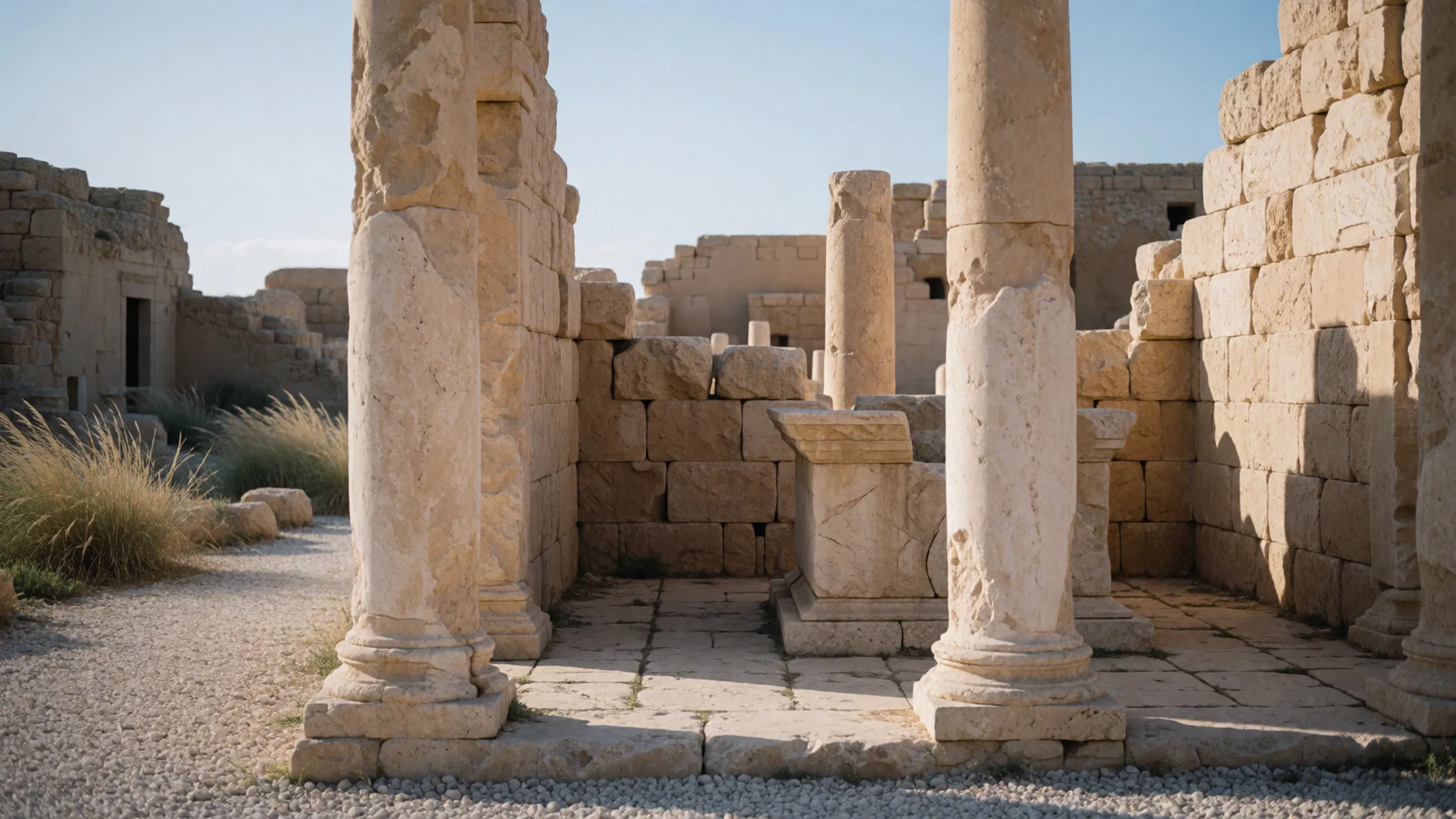
- Christian basilica — Archaeological site
The basilica is a reminder that Sabratha kept a Christian community into the Byzantine period, when churches were built within the old walls. Its plan reflects that later era, and the stonework is simpler than the Severan monuments. Notice the change in building style as you move from the earlier temples to this church. It is a good place to pause in the shade.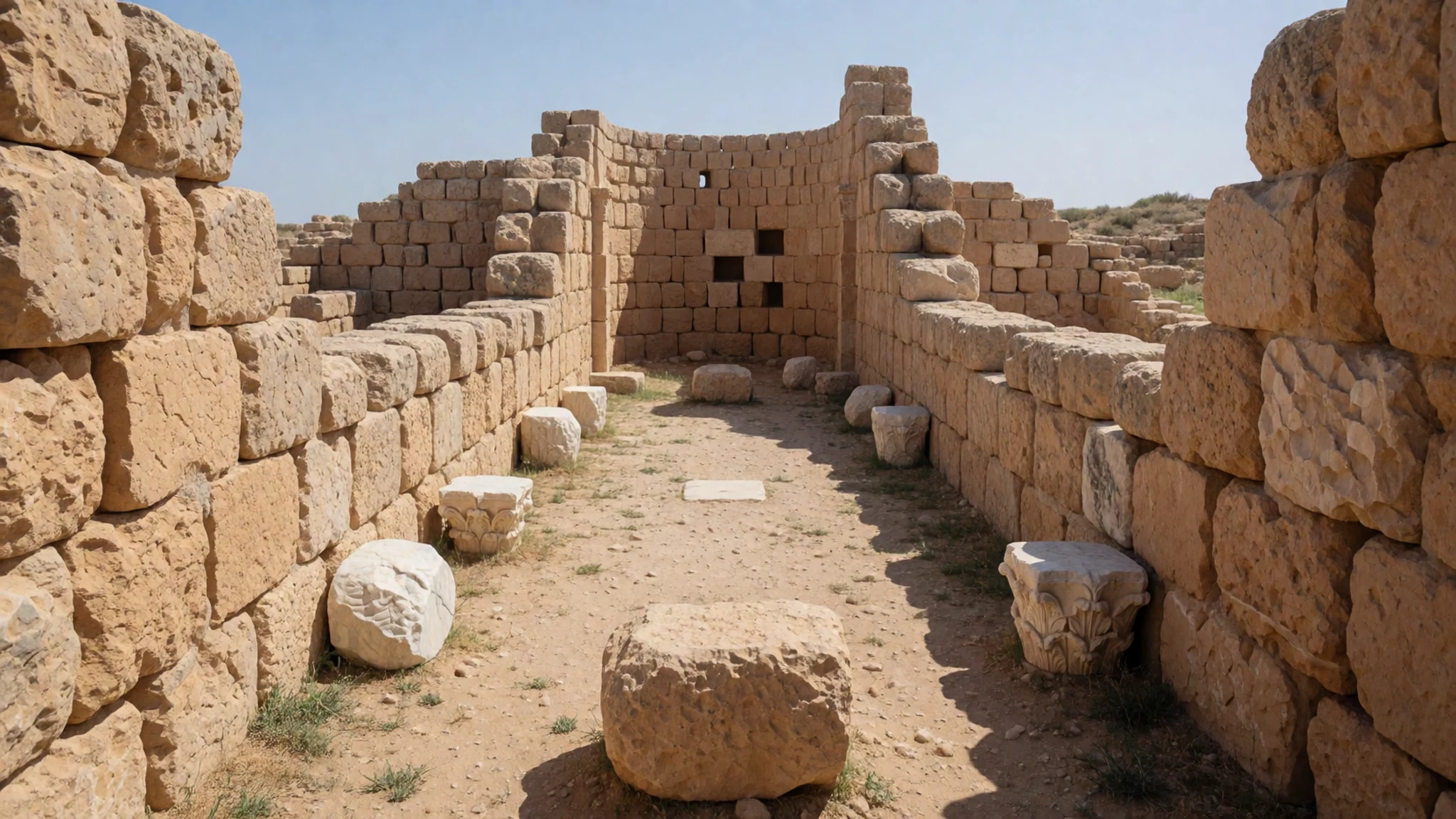
- Site museum — Beside the archaeological site
The museum beside the archaeological site displays artefacts recovered from the excavations. It is worth visiting before you walk the ruins, because the objects give scale and context to what still stands outside. Opening times and any charges can change, so check the official website and ask your guide, who can help with access.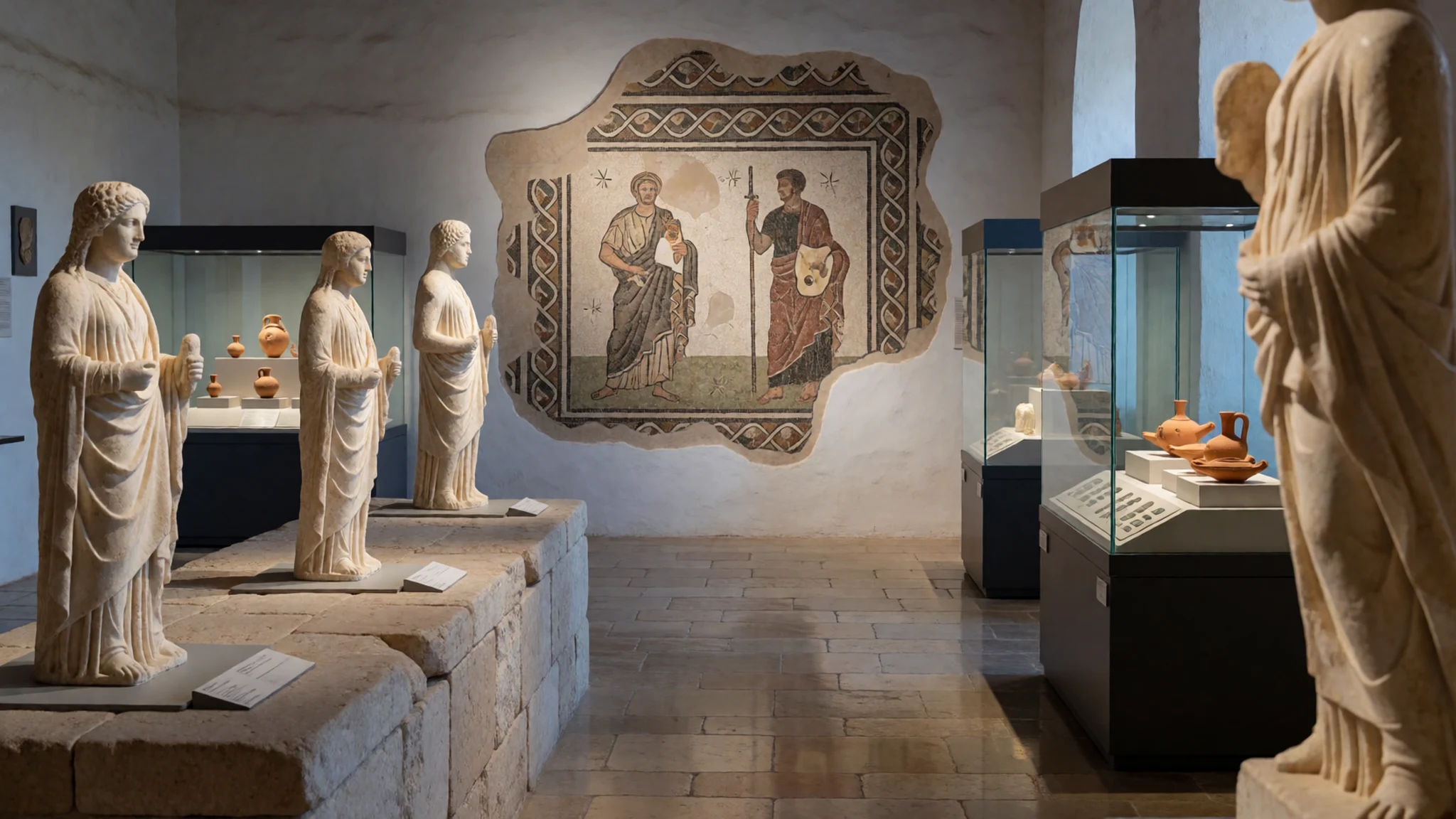
Culture
Sabratha sits in a Muslim-majority society, and daily life in the town follows Islamic rhythms. Prayer is called several times a day, and Friday midday is the main gathering, when many shops and offices slow down. Hospitality matters here, so if someone invites you for tea, accepting is a warm gesture. Greetings are important: men often shake hands with men, but many women prefer not to shake hands with men, so wait for a lead before offering your hand. Respect shows in how you treat the site too, since the ruins are cultural heritage and guides discourage climbing on fragile walls and mosaics. Political conversations can be sensitive after years of upheaval, so let your hosts raise such topics. Always ask before photographing people, and keep your camera away from checkpoints, officials and military sites.
What to wear
Sabratha's traditional dress reflects the wider Libyan coast, where clothing combined loose cuts with warm layers for winter and light fabrics for summer. Women have worn the malhafa, a large wrap of cloth draped over the head and body, and older styles included long embroidered robes called jebba. Men have worn the jebba too, often in wool or cotton, along with the burnous, a hooded woollen cloak used against cold and wind. Richly coloured silk and embroidery marked special occasions and weddings in the past. Today most people in the town wear Western-style clothing such as jeans, shirts, trousers and tunics, and many women choose a headscarf with loose long dresses or abayas. For a visitor, the sensible choice is light, loose cotton or linen that covers shoulders and knees, a sun hat and sunglasses for the ruins, and a thin scarf to carry for mosques or conservative settings. Wear sturdy closed shoes, since the paving at the site is uneven and sandals are easy to trip in.
What to eat
- Bazin — Family-run eateries in the town and in Tripoli
Bazin is the classic Libyan dish: a firm dough made from barley flour, shaped into a dome and served with a rich tomato-based stew, usually with lamb or fish. It is eaten from a shared plate, and every family has its own version. Ask a guest house or your guide to arrange it.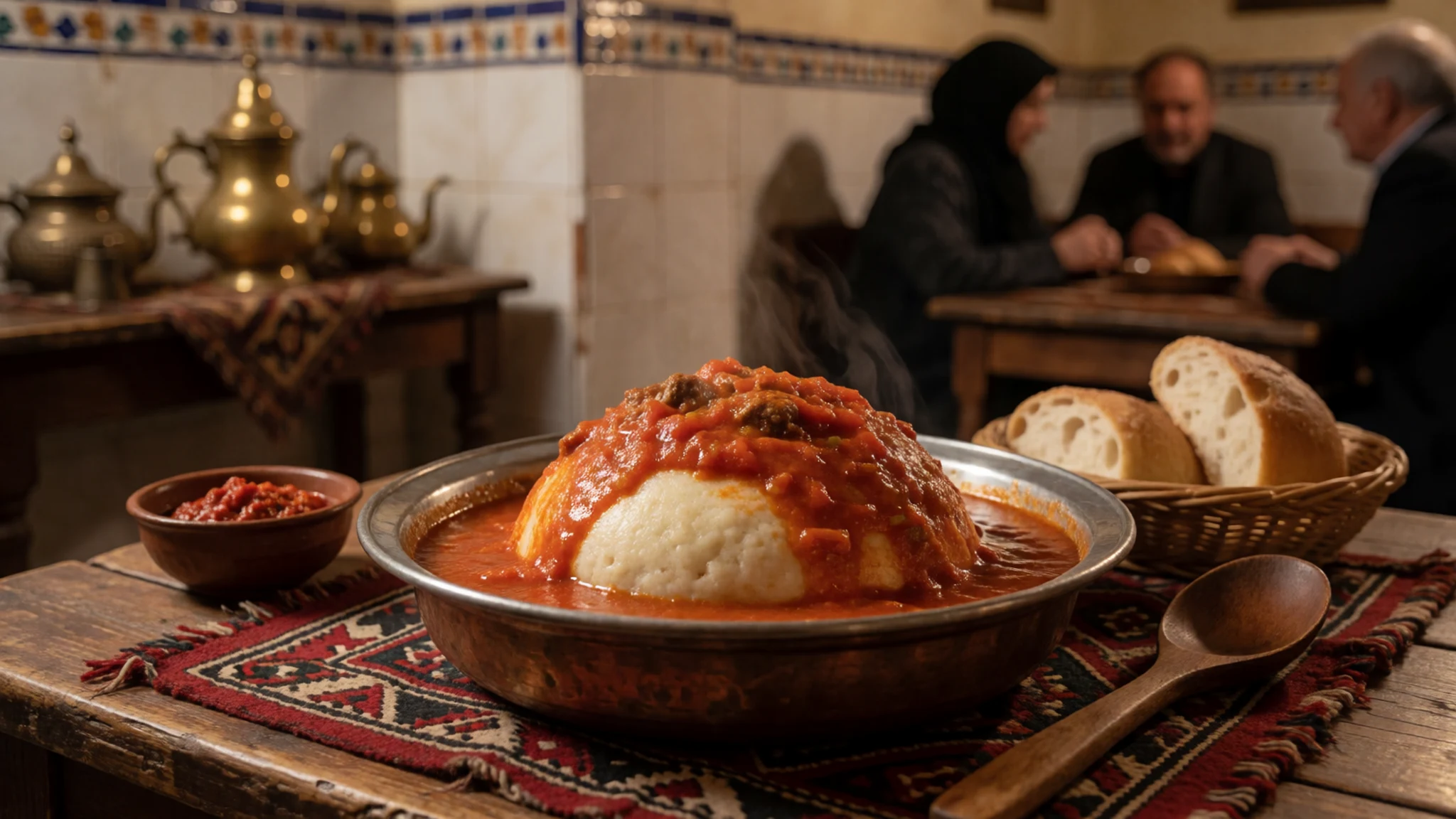
- Grilled fish — Grills and fish stalls near the harbour
Along the coast, fish is usually grilled whole over charcoal and served with lemon, salad and bread. The best catch arrives when the boats return to harbour, so eating early in the day means the freshest fish. Ask for it simply seasoned with olive oil and cumin.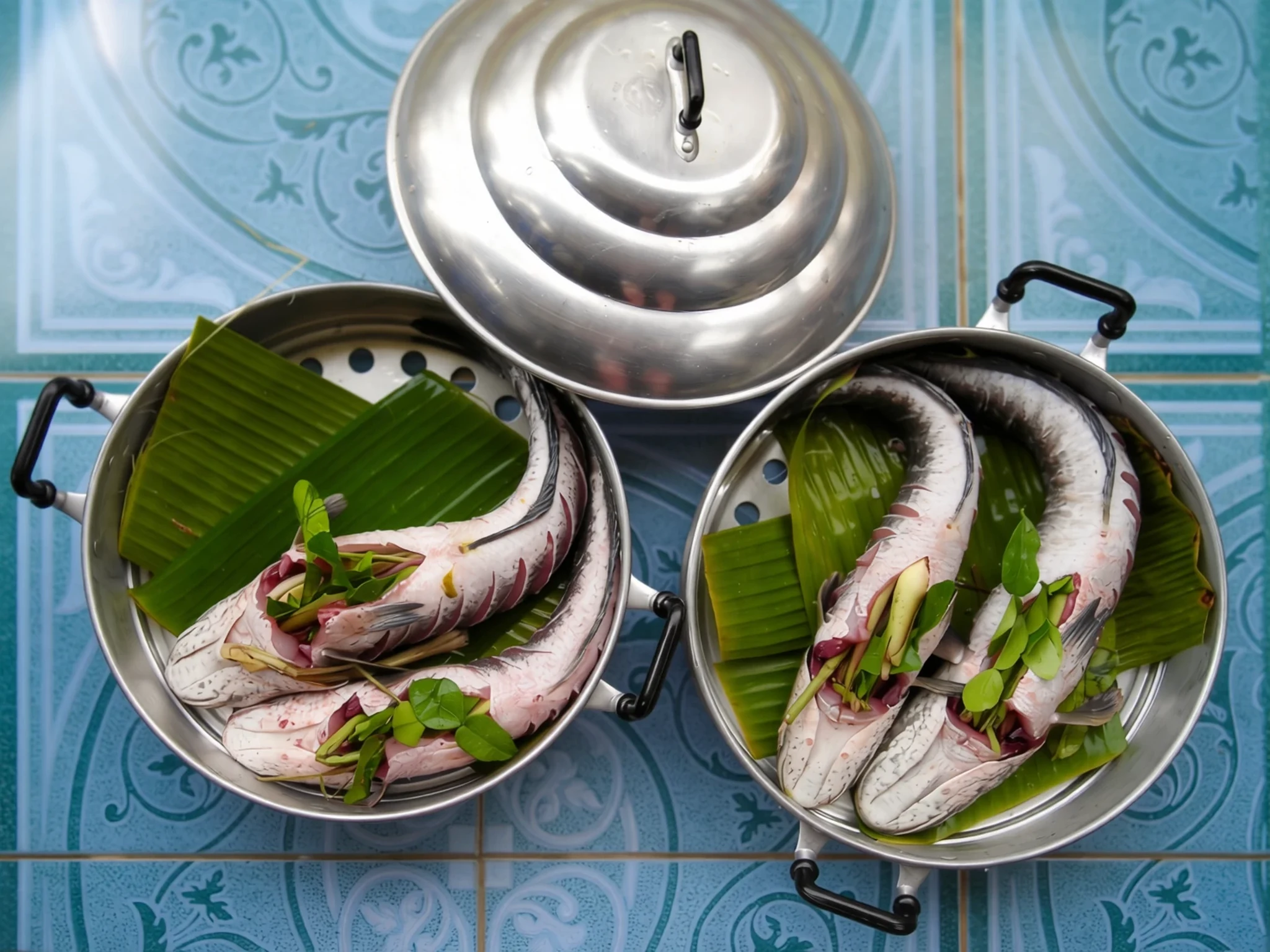
- Roast lamb — Grill houses on the main road through the town
Lamb is central to celebrations and Friday gatherings, roasted or grilled over coals with garlic and spices. Order it at a simple grill house, where the meat is cooked to order and served with bread, salad and a chilli paste on the side. - Chorba — Small home-style cafes in the town
Chorba is a hearty soup of tomato, chickpeas and lamb or chicken, seasoned with cumin and often finished with lemon. It is a comforting way to end a morning among the ruins, and cafes serve it at lunchtime. - Mint tea — Tea stalls and cafes near the town square
Mint tea is the everyday drink of hospitality across Libya. Green tea is brewed with fresh mint and plenty of sugar, then poured from a height to build a froth before it is served in small glasses. Accept a glass if one is offered; it is a welcome pause.
Plan it
Best time. Spring, roughly March to April, and autumn, October to November, are the most comfortable months, when the hot semi-arid climate eases and the coast is pleasant to walk. Summer is hot and dry, and the stone holds the heat, so mornings are the only sensible time to walk the site.
How long. one to two
Getting there. Fly into Tripoli International Airport, then travel along the coast road to Sabratha, roughly 70 kilometres west. Independent travel is difficult, so most visitors arrange this leg, and the site itself, through a tour operator.
Budget. mid
Tips
- Check current travel advice before booking, because access to Libya has changed and the site has only reopened to visitors in recent years.
- Book a guided tour through a licensed operator, who can also arrange accommodation if you are staying nearby.
- Start early, before the heat builds, and carry water and a hat.
- Carry cash in local currency, as cards are not reliably accepted outside larger hotels.
- Check the official website for current opening hours and charges rather than relying on older guidebook figures.
- Plan one full day at the site and keep the afternoon for a slower return along the coast.
Etiquette
- Dress modestly, covering shoulders and knees, especially in the town.
- Ask permission before photographing people.
- Do not climb on walls or mosaics, and follow your guide's directions.
Nearby
Sources
- Wikidata Q192918 (CC0)
- Wikipedia (rev 1378593216) (CC BY-SA 4.0)
- Wikivoyage (rev 4775181) (CC BY-SA 4.0)
- Photo photos/01-theatre-of-sabratha-libya.jpg (CC BY-SA 2.0)
- Photo photos/02-monnaie-bronze-sabratha-syrtique-btv1b113188359-1-of-2.jpg (Public domain)
- Photo photos/03-archaeological-site-of-sabratha-108976.jpg (CC BY-SA 3.0 igo)
- Photo photos/04-romans-in-libya-circi-1950-001-6205513374-o.jpg (CC BY-SA 4.0)
- Photo photos/05-nymphaeum-sabratha-01.jpg (CC BY 3.0)
- Photo photos/06-nymphaeum-sabratha-02.jpg (CC BY 3.0)
- Photo photos/07-seaside-bath-sabratha01.jpg (CC BY 3.0)
- Photo photos/08-toilet-sabratha-01.jpg (CC BY 3.0)


